
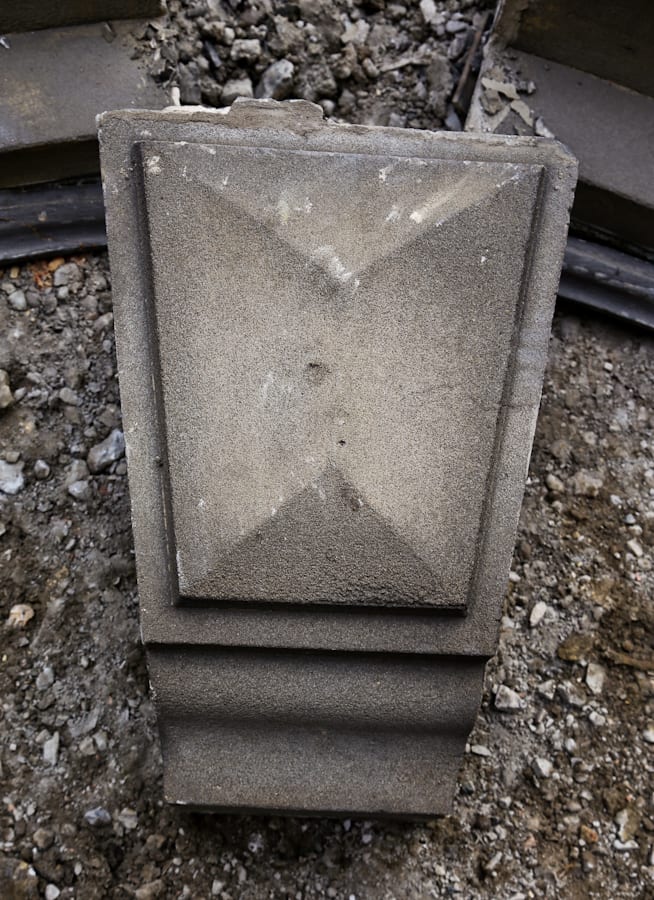
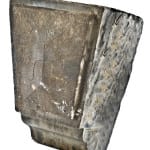
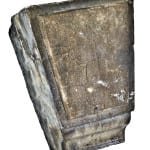
12 Jan bldg. 51 museum acquires an intact post fire “artificial stone” window keystone from the osborne and adams building
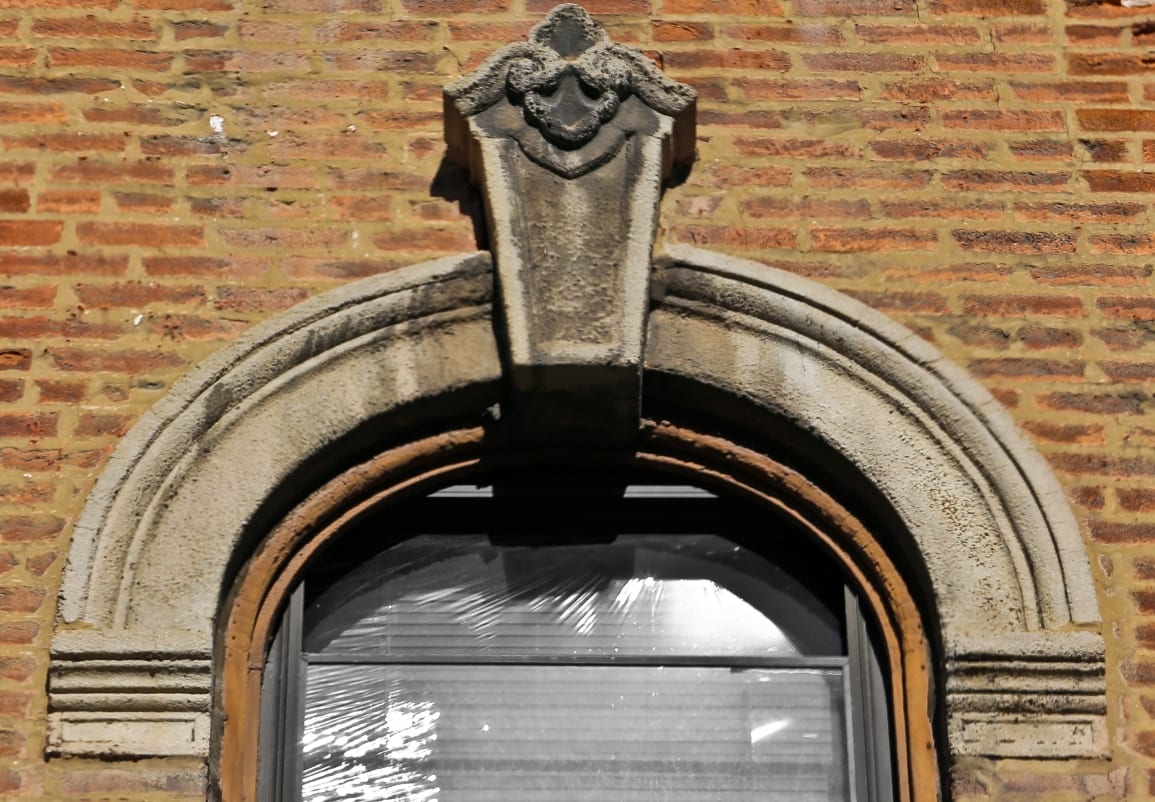
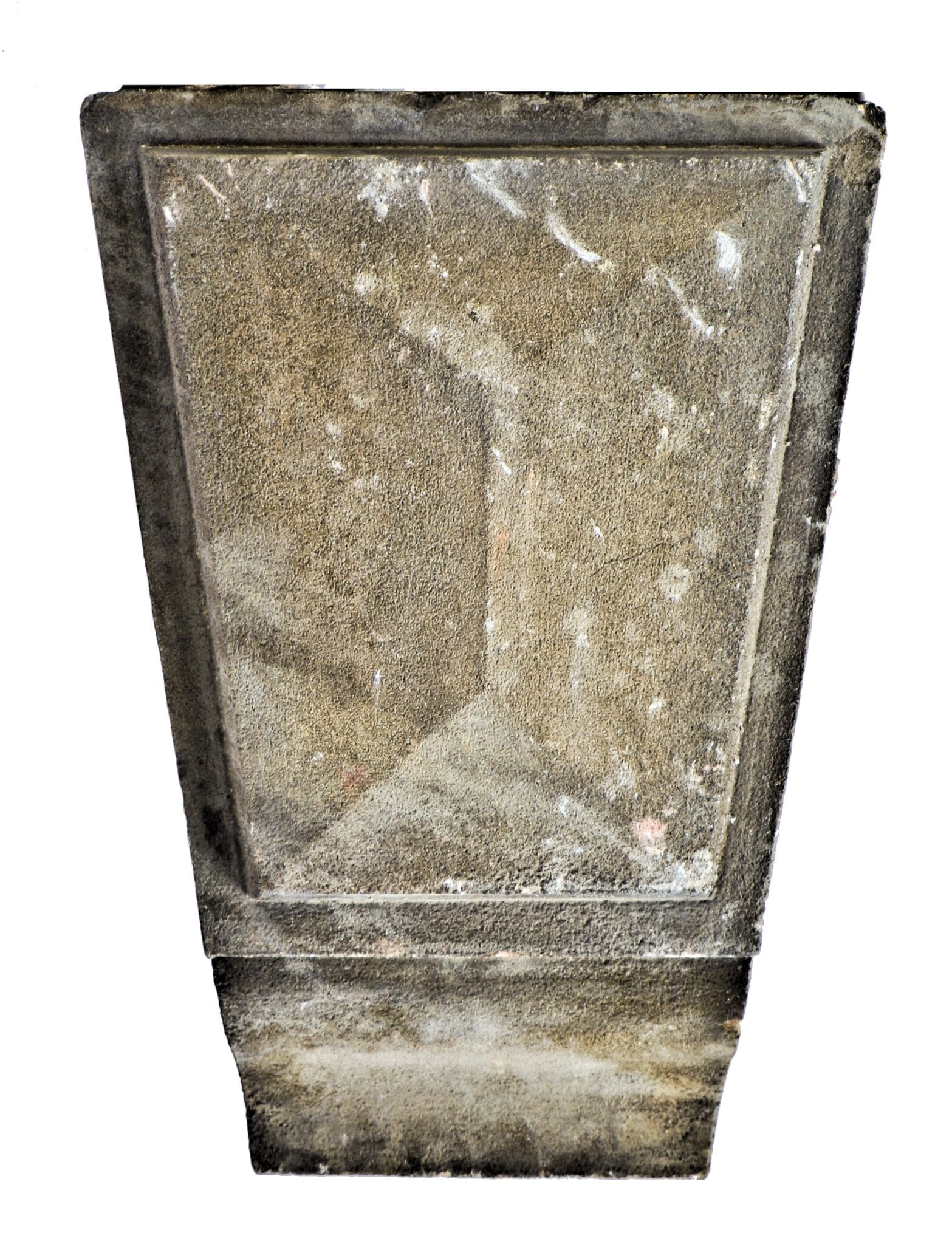
early in the morning i arrived onsite with a delivery of boxed donuts (per tim samuelson’s suggestion when negotiating with national wrecking). sure enough, mike — the foreman and son of the company founder butch mandell — delivered on his promise to set aside a single post-fire osborne and adams building “artificial stone” keystone, removed from the central window on the topmost floor.
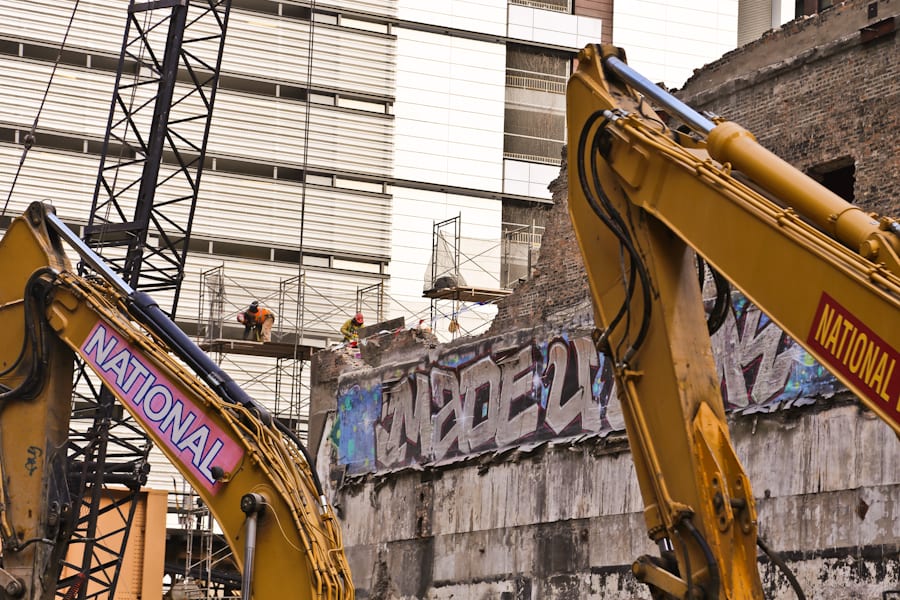
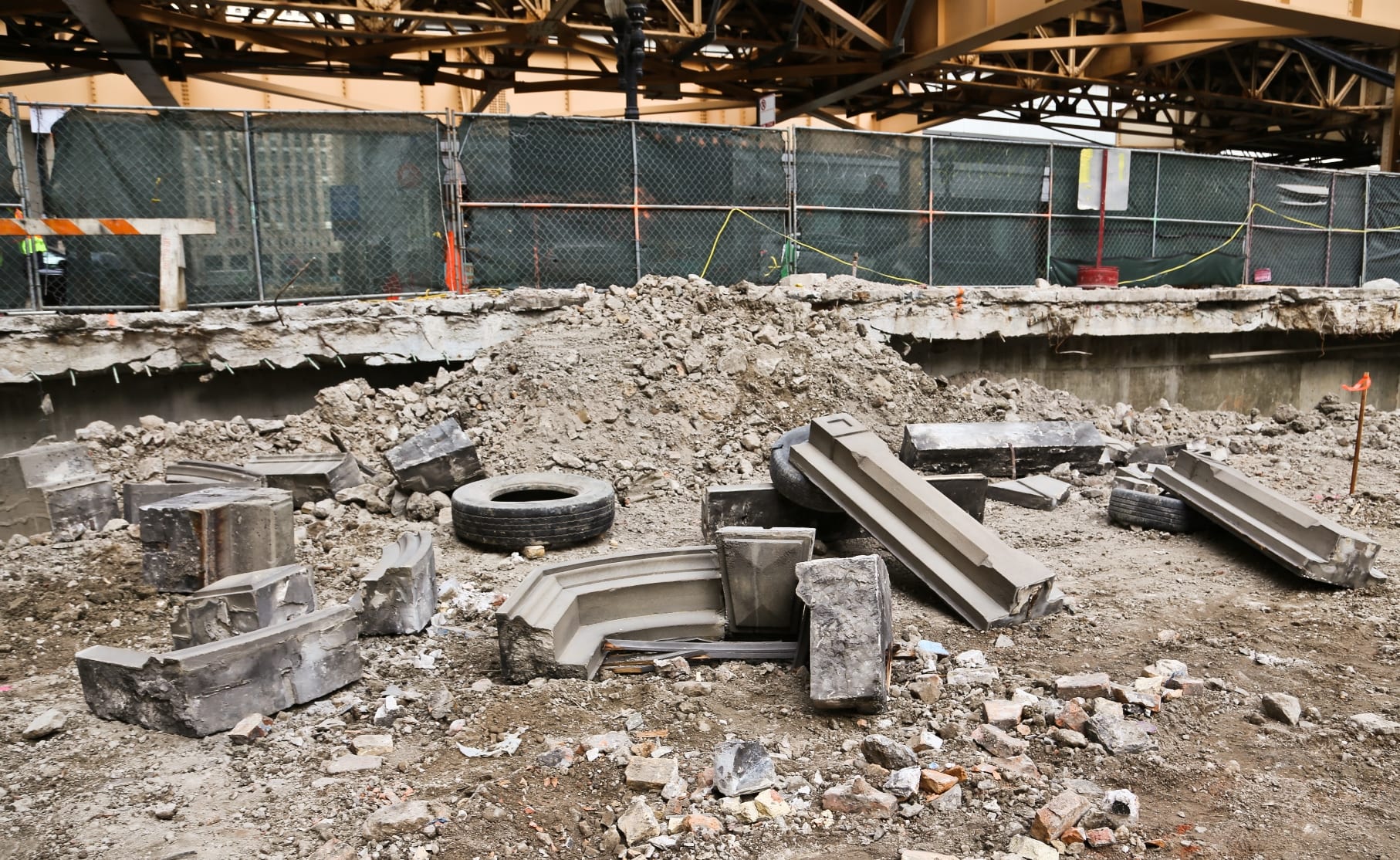
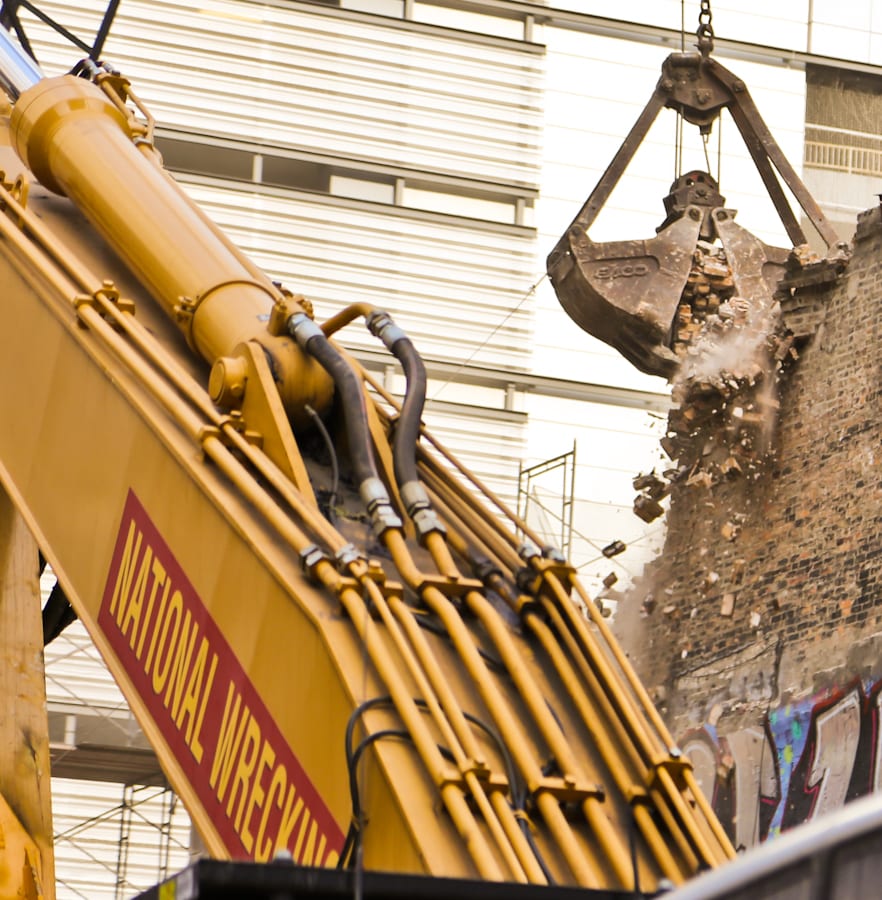
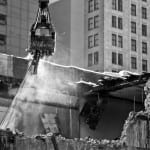
shortly beforehand, i had carefully worked my way into the chaos of falling brick, among orders being barked into walkie-talkies, the unforgettable screeching of excavator steel treads against drive sprockets and rollers, and the purring of diesel engines. the noise and pollution set a nice backdrop as i photographed the demolition from afar, trying to gain a better scope of the progress made since my visit the day before. as with all demolition projects, i have this unrelenting urge to capture the death of a building from the time the scaffolding goes up until the wall comes crashing down. the excavation to unearth long-buried artifacts is a completely different matter.
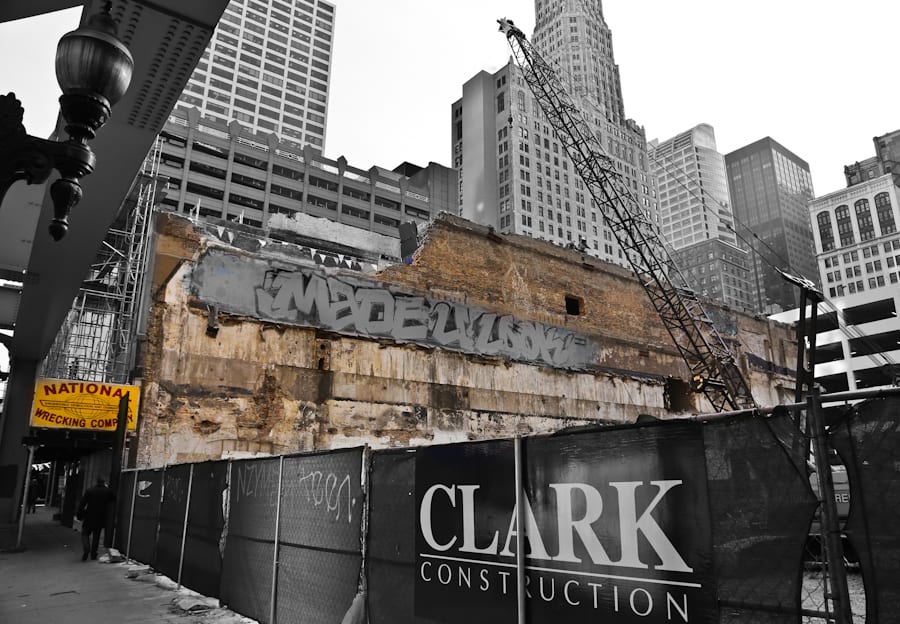
when i noticed several components of the building’s facade down on the ground and strewn about, my heart skipped a beat, and i stormed into dunkin’ donuts to buy my bartering chip or access pass onto the site. when i pulled up around back i spotted mike, and when the time was right, darted at him with the box of donuts in hand. when i mentioned what his father would say regarding the rolls, his facial expression slowly transfigured into a grin and an unspoken invitation to be on site.
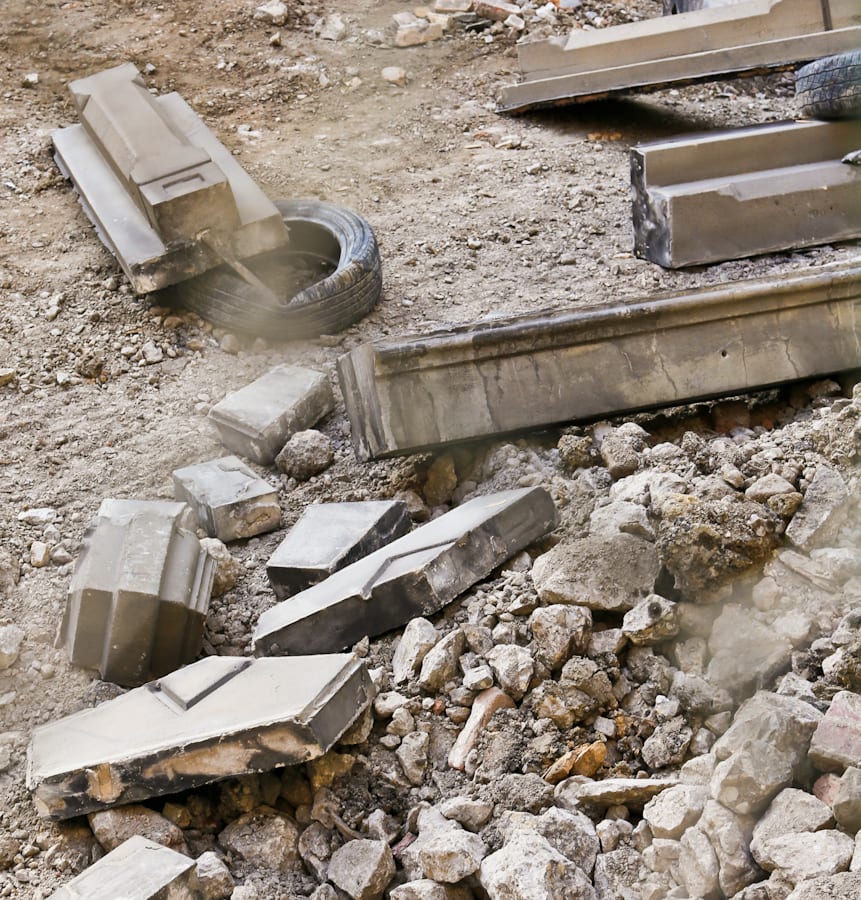
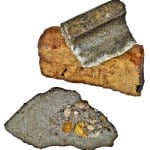
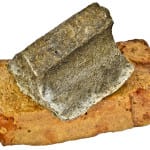
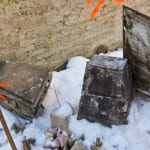
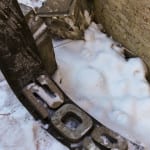
with their lunch break right around the corner, i waited patiently and continued to photograph more until the men and machines came to a halt. from there, i was given unabridged permission to wander near the remaining facade. i closely examined the surface characteristics of each “stone” to determine whether there were any major abnormalities in shape, size or surface treatment, considering they were all cast from the same mold. in addition, i managed to identify exactly how the components were fastened to the masonry structure when i discovered several wrought metal straps or anchors still tightly embedded in the castings with not nearly as much surface corrosion as i would have expected, given the number of stress cracks seen on the facade; these were likely caused when the building “settled” as well as from prolonged exposure to the elements, including freeze/thaw cycles and water. a few of the keystones were somewhat disfigured – likely from botched castings, but when installed, it was not noticable. next, i wanted to understand exactly what the composition of the cast components, aside from aggregate or crushed stone and lime. as of this writing, my research is still ongoing.
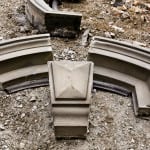
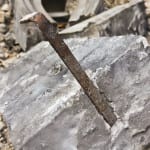
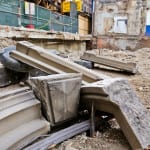
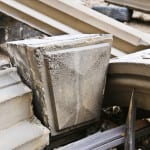
satisfied with the documentation of the pieces removed thus far, i went back to mike and talked a bit about the challenges they faced with this rather tricky demolition, surrounded by “l” tracks, heavy pedestrian traffic and/or automotive congestion along lake street and having the neighboring bar cease operations until the shared wall was taken down. as our conversation drew to a close, we hammered out the logistics of transporting one of the gargantuan keystones from the site to our waiting company truck. i was absolutely ecstatic and utterly delighted at the ease of the process, and obtaining a keystone for the museum. i was doubly grateful to know that two complete window surrounds would be reintegrated into the structure replacing this one. it will serve as a subtle, but visually striking reminder of the previous building constructed on this site, and of what existed immediately following the great chicago fire.
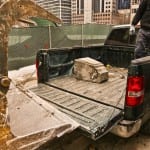
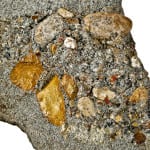
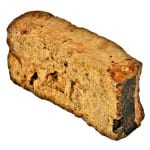
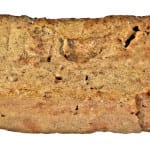
update as of 1-13-2016:
while documenting the continued demolition of the osborne and adams building, mike from national wrecking approached me asking whether i wanted to purchase two more keystones. i quickly made a deal onsite and will now have three in total. one will remain in the bldg. 51 museum, another will be donated, and the last will be sold on the public market through urban remains. the facade has been completely dismantled with only the entrance, consisting of plate glass between the first floor cast iron pilasters and/or columns, still standing.
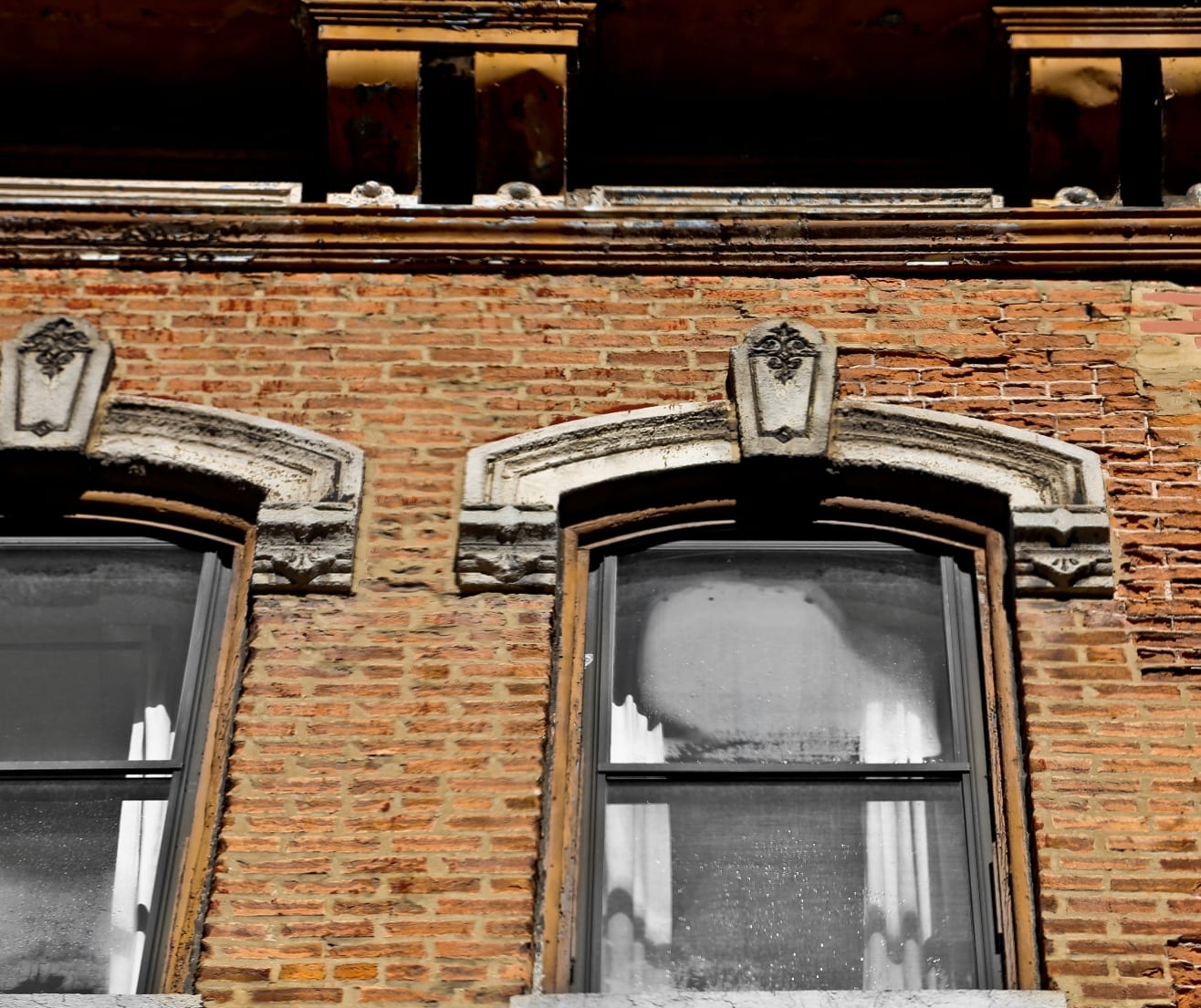
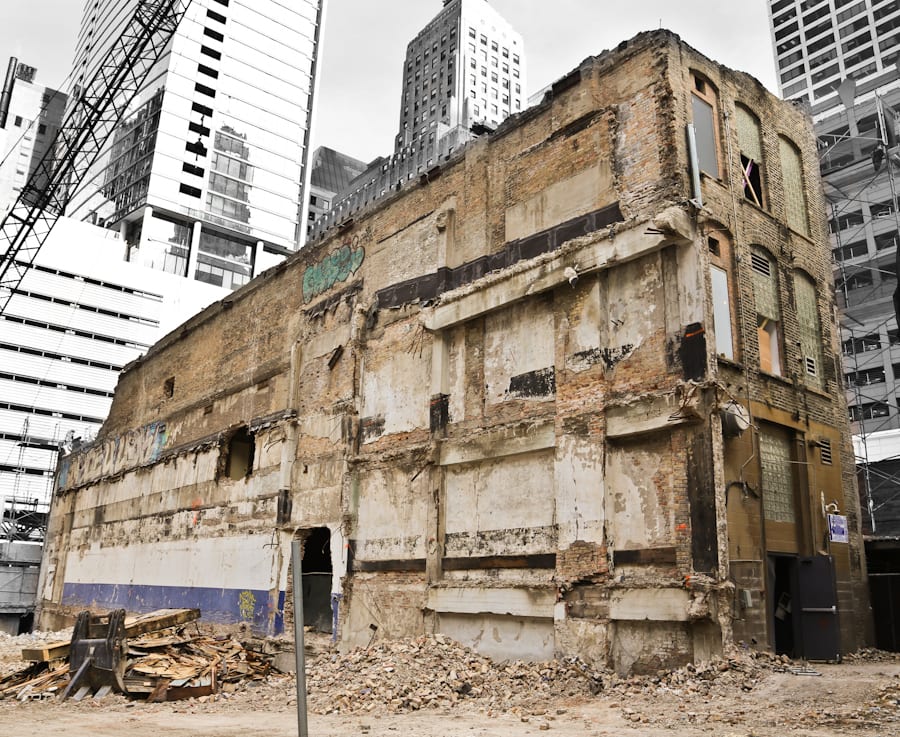
while visiting another jobsite i managed to capture images of the facade of this downtown chicago building (see below), no doubt constructed in the 1870’s. unlike the osborne and adams building, which contains an unusual facade comprised entirely of “artificial stone,” many more extant (i.e., brick) masonry buildings are accentuated with the same cast stone ornament in the form of window hoods, keystones, and so on.