
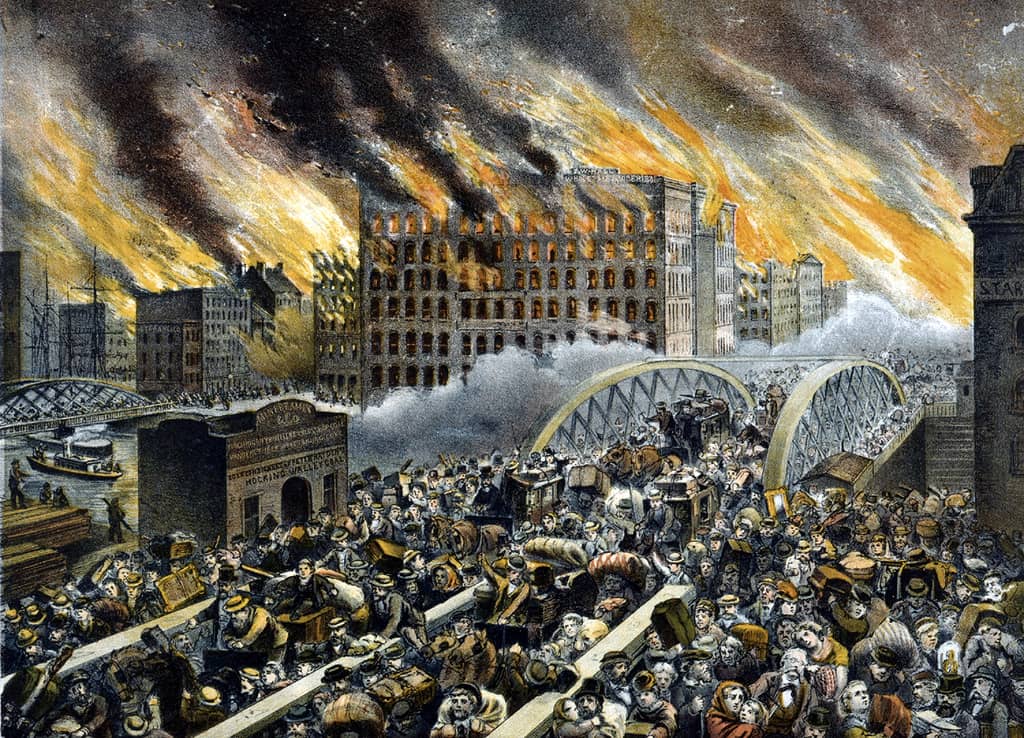
01 Dec chicago’s post-fire resilience as seen through remaining 19th century artifacts and buildings
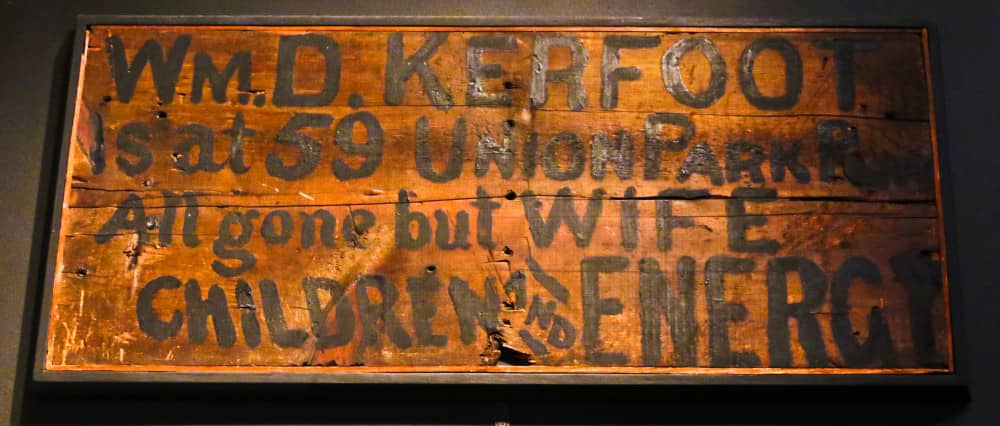
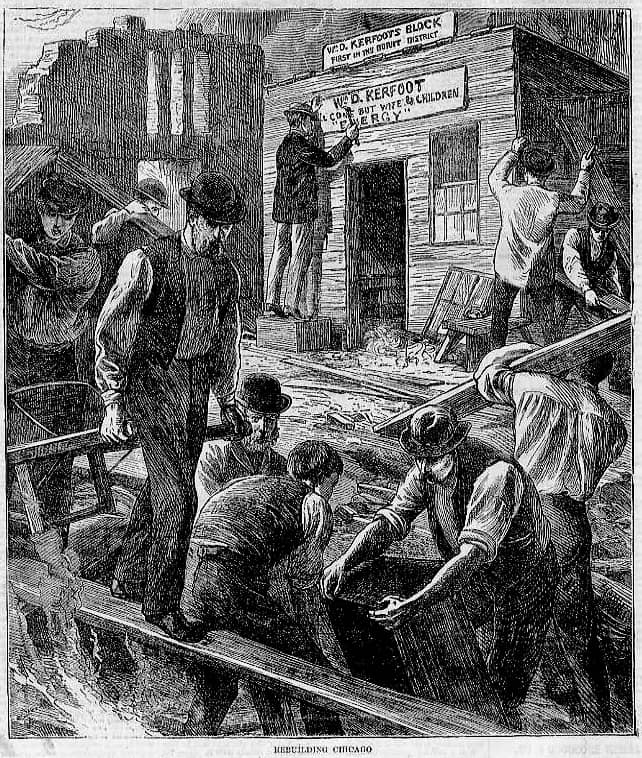
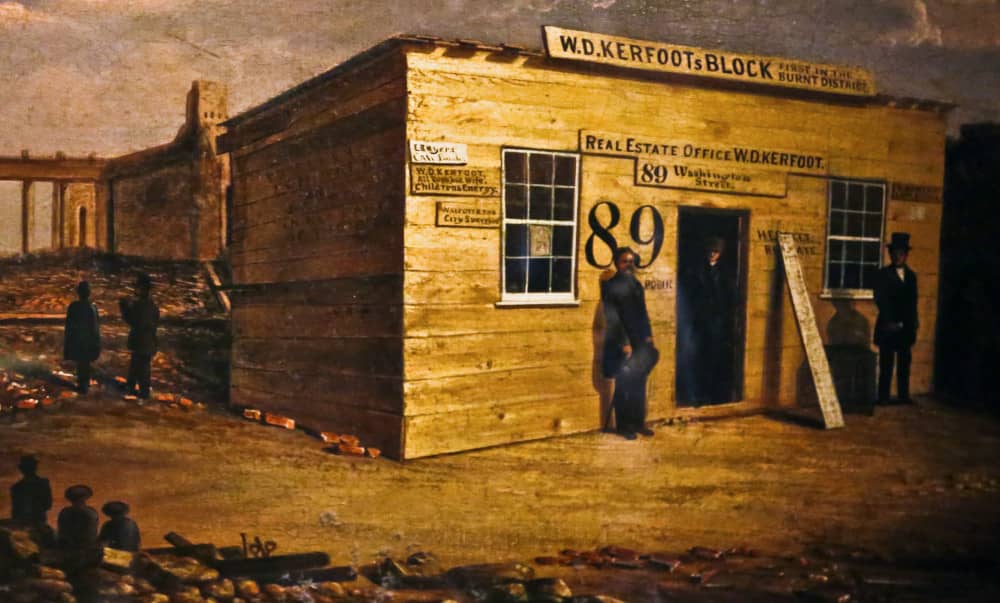
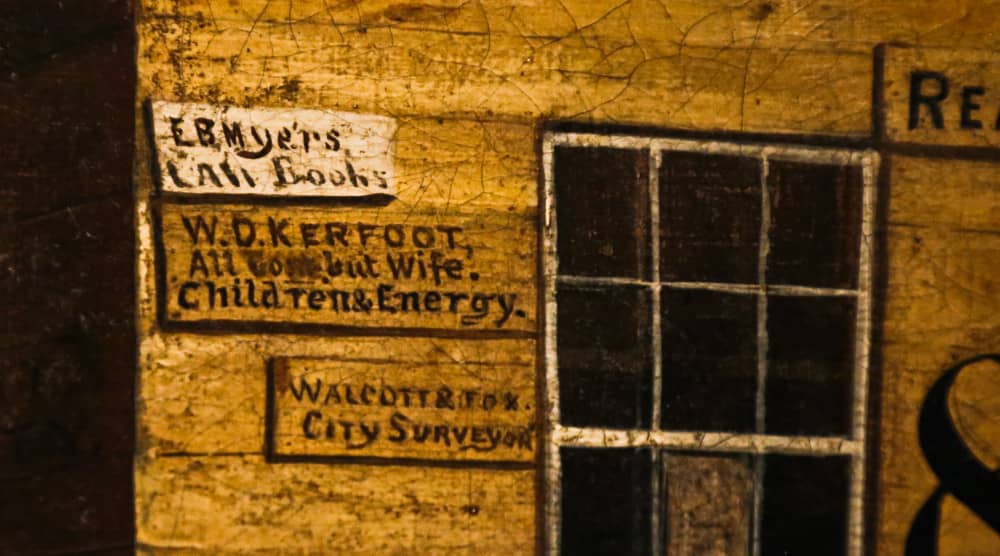
the above sign, housed in the chicago history museum, is a powerful historic artifact from the great fire of 1871: the first sign on the first building erected in the “burnt district” in the aftermath of the disaster. the man responsible for the still-surviving item was a chicagoan named william kerfoot, a well-respected and successful businessman whose real estate office and portfolio was utterly destroyed by the fire that ripped through downtown. kerfoot’s activities post-fire were indicative of the city’s wider reaction, responding by rapidly continuing business, and re-building on a grander scale than ever before.
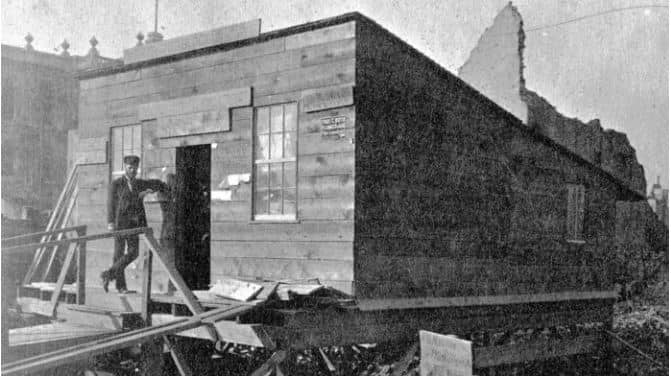
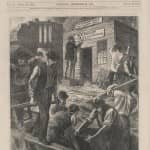
kerfoot created the wooden hand-painted sign, and another, “w.d. kerfoot’s block: first in the burned district” on shingles, and additionally placed an ad in the october 1871 chicago tribune, reading “all gone but wife, children, and energy.” though he set up shop temporarily at 36 canal street, kerfoot quickly moved back to his original place at 89 east washington street, where he purportedly had to wait for the bricks to cool before placing his wood shack on the original lot line. there, the very morning after the fire had ceased, kerfoot’s shanty became a haven for other destitute chicagoans who sought news and resources. people were magnetized to the make-shift directory hung outside. the building apparently served as an army headquarters, and all surveys of the burnt district were made from that office, re-establishing the lot lines and street lines.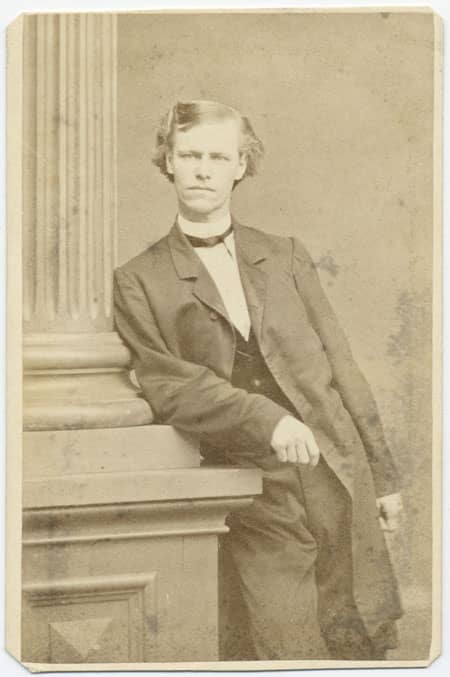
kerfoot would become a prominent figure in the city, he was on the board of directors for the 1893 exposition, and served as the city controller around the turn of the century. clearly, his gumption was unusual, but the sentiment embodied in the signage and in the effort to re-build extended to many other late 19th century chicagoans. other post-fire images depict people making do with very little, as seen by temporary structures risen among a landscape of ruins.
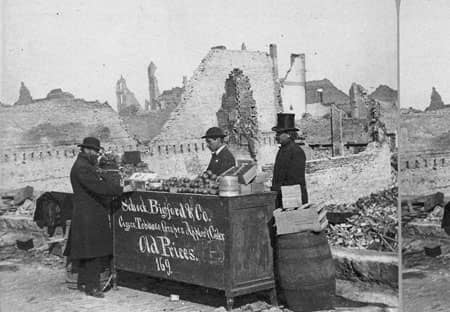
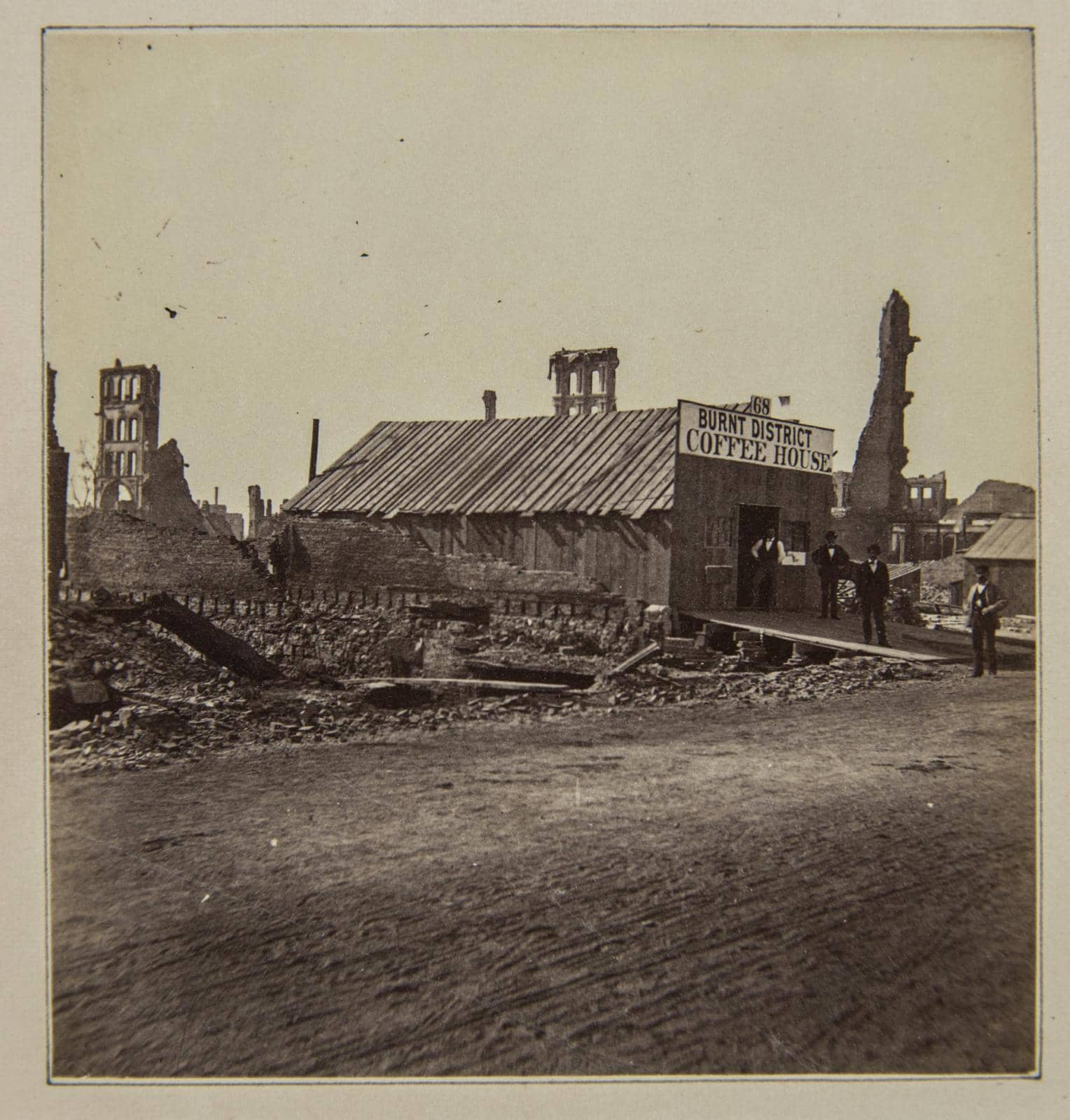
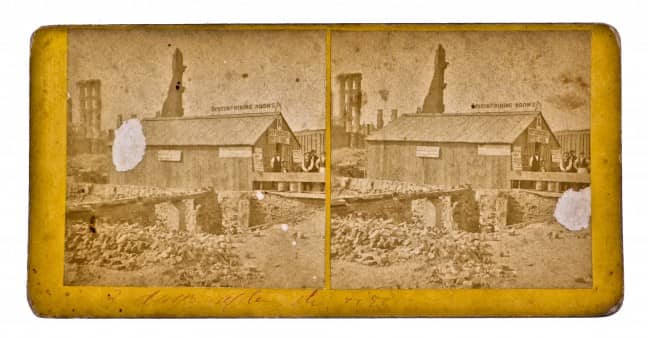 although more than 18,000 buildings had burnt to the ground, chicago was poised to re-establish its commercial district in materials and forms that were more resilient to the damages of time and natural disaster. today, discovering the late nineteenth century houses in the burnt district is a good reminder that the constructions from nearly 150 years ago still stand, often hidden in plain sight until demolition.
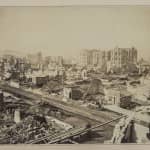
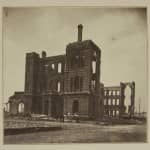
all too often the subsisting structures from that bygone era, which either managed to survive the fire or were raised immediately afterward, find themselves dwarfed by high rises, slowly encroached upon until finally handed a death sentence. especially in the “burnt district” the preservation of these buildings seems crucial, to ensure the future of more than fragments and signage, and to preserve an architecture that stands for the resilient new beginning of the city, as demarcated by the fire.