

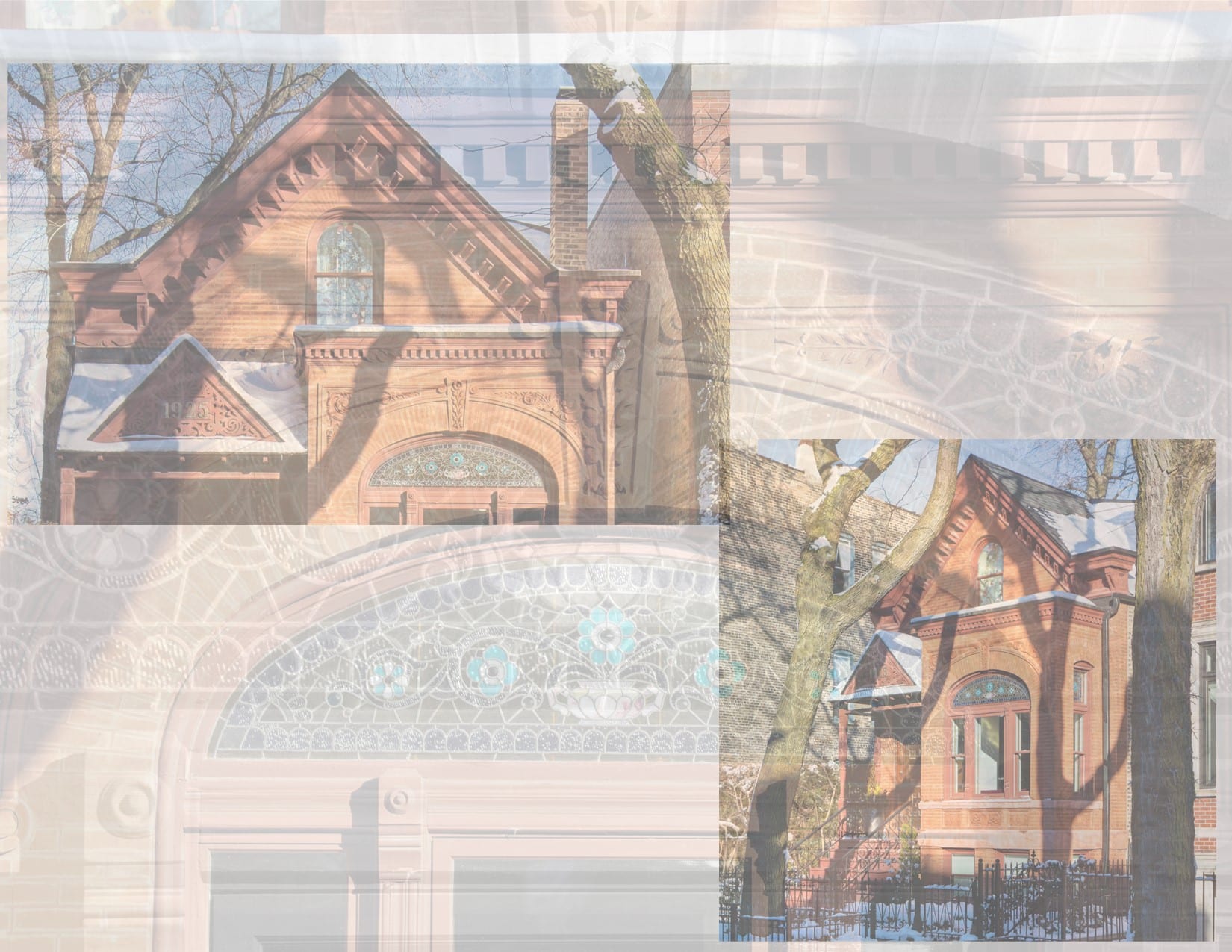
31 Jan martin schnitzius residence: the well-maintained posterchild of 19th century american worker cottages
one of the most widely recognized, largely intact, and well-maintained worker cottages is the martin schnitzius residence, built in 1891 by the architectural firm of bettinghofer and hermann. the unique design and/or use of ornamentation is a notable example of a more upscale queen anne style cottage when compared to the more traditional and/or common and frequently found cottages built by general contractors and developers employing a simple formula consisting of brick facades limited to dentiled cornices accentuated with fret-sawn pine wood brackets and deeply incised lemont limestone keystones above the windows and entrance.
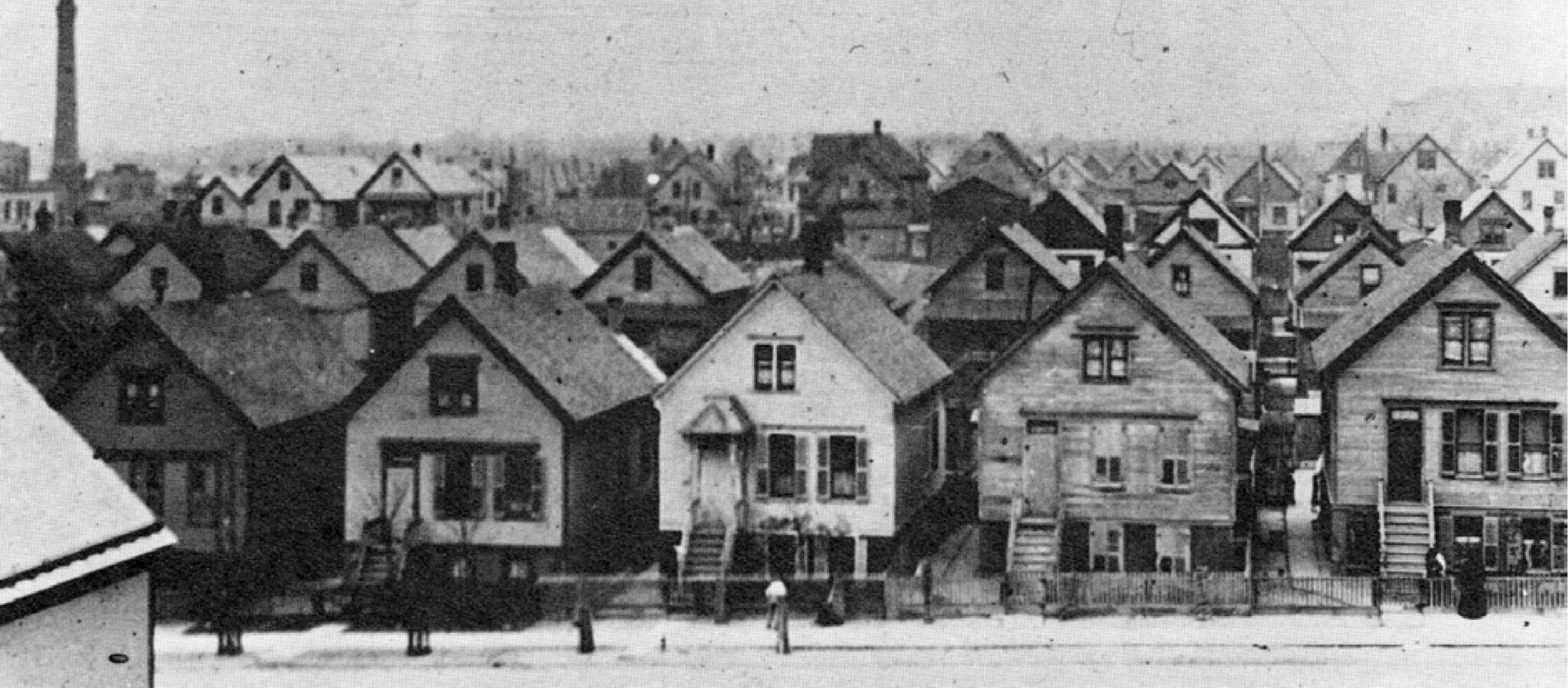
the range of building materials used on the schnitzius residence is truly exceptional, which includes, but not limited to, richly ornamented northwestern terra cotta panels, oversized lunette stained glass transom bedecked with faceted jewels, elaborate bracketed cornice and porch with fret-sawn wood pediment. the images taken of the façade as a whole in addition to images of the distinctive ornament are presented below.
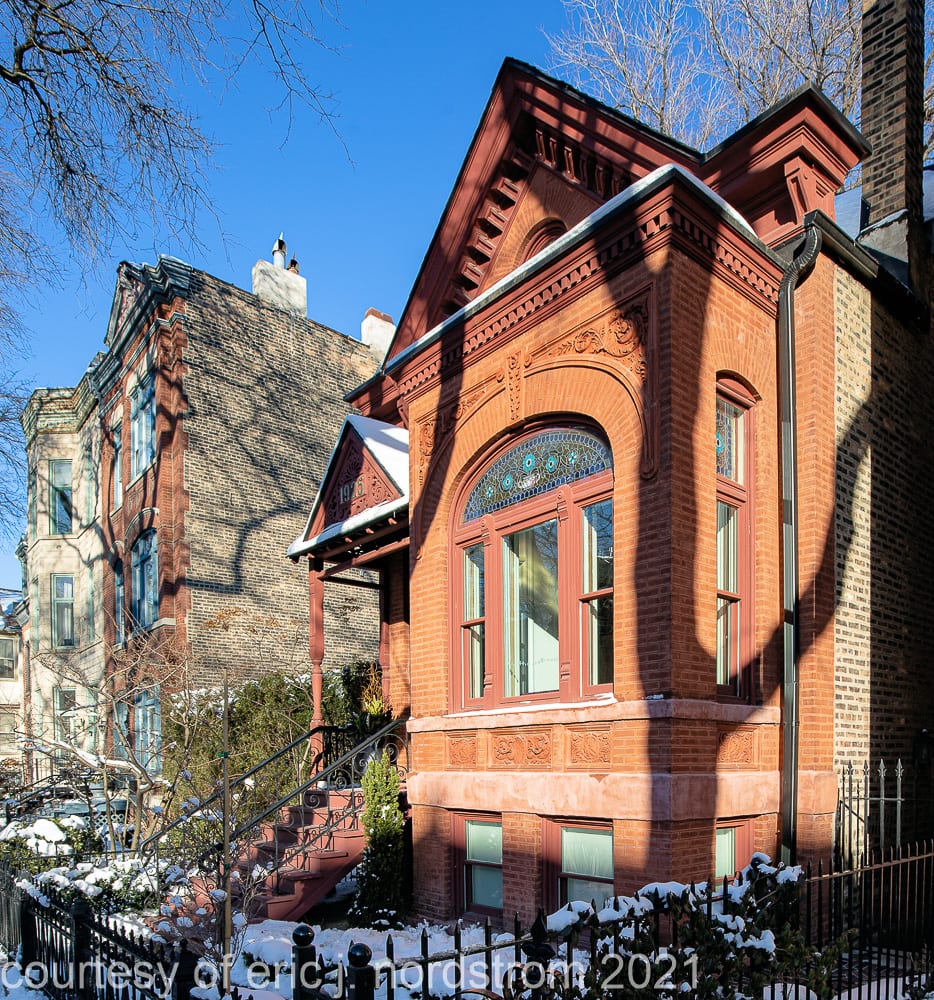
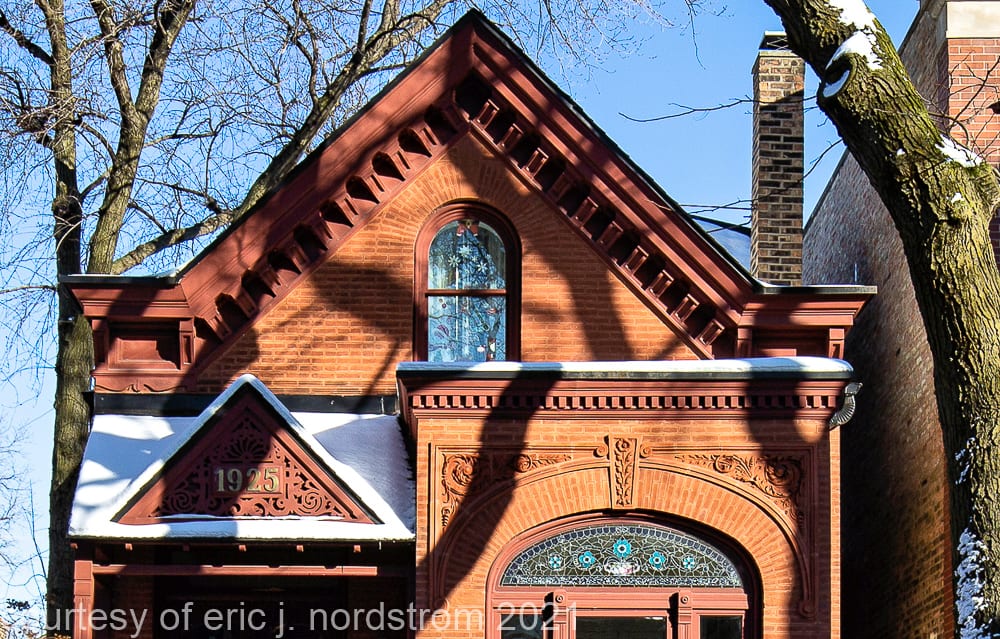
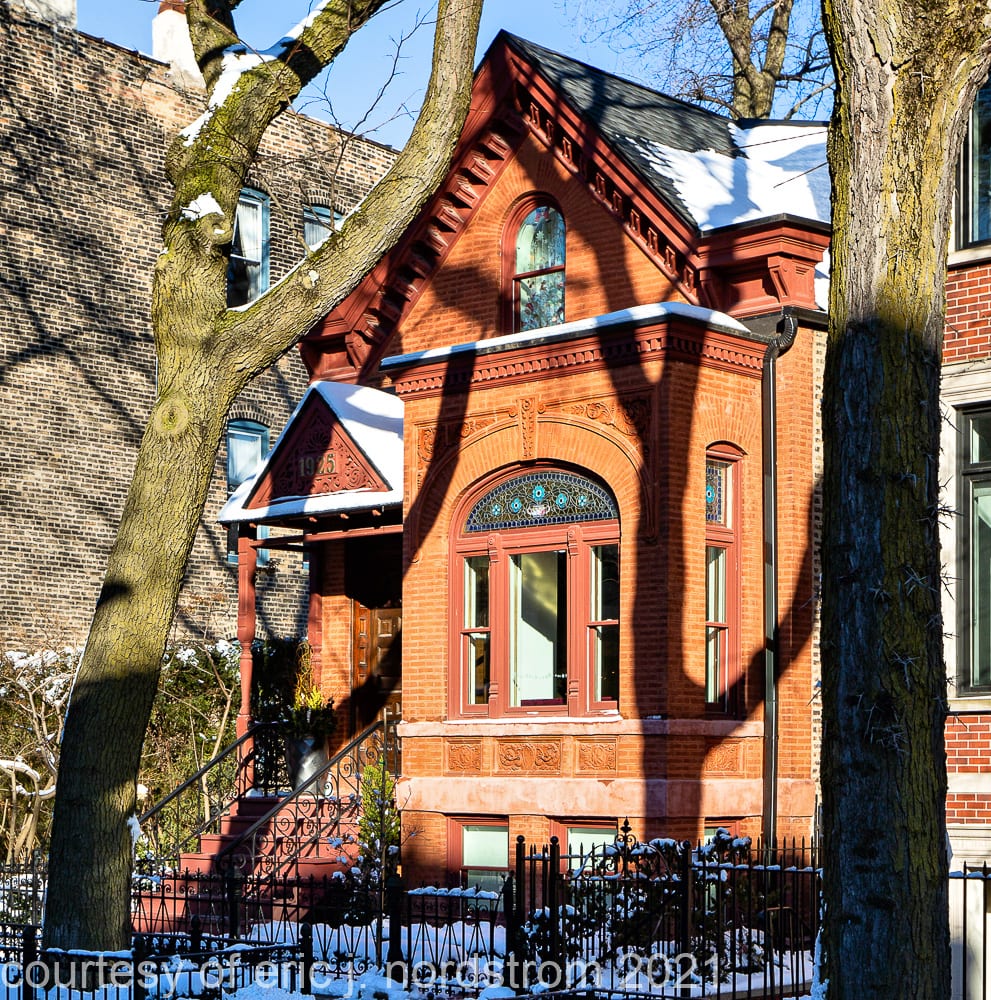
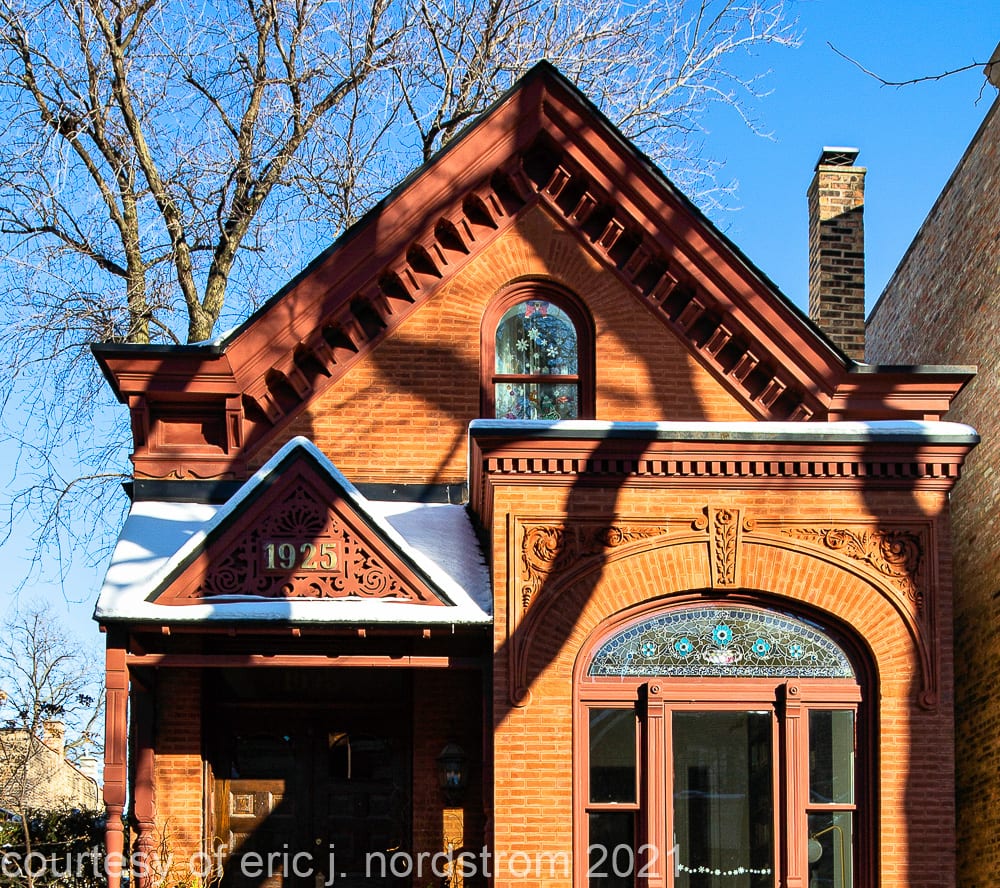
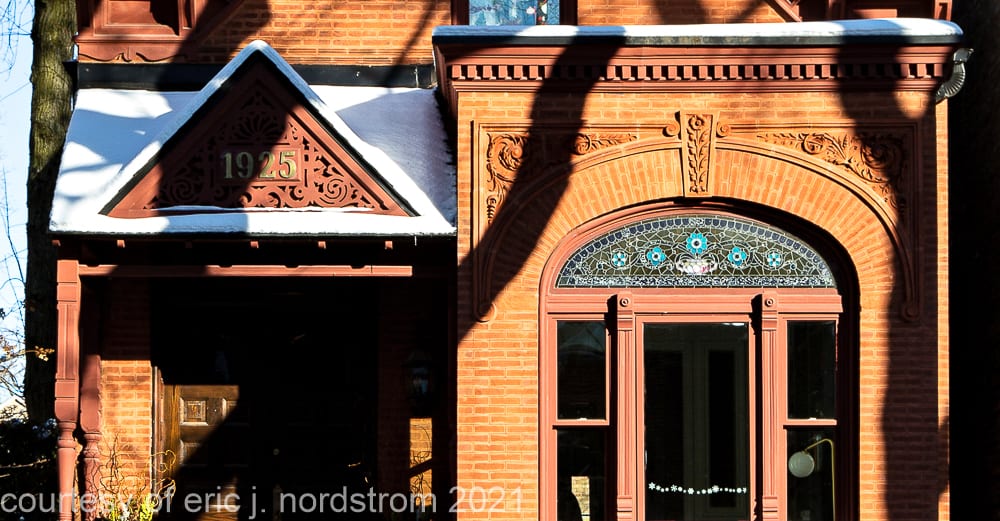
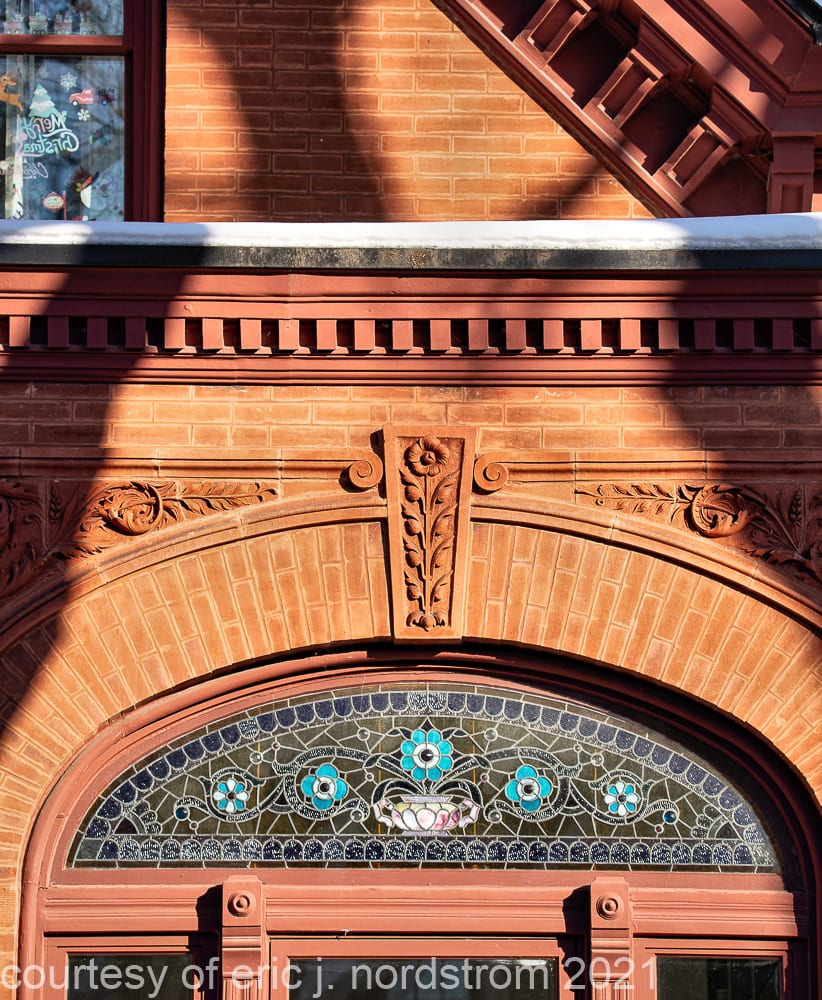
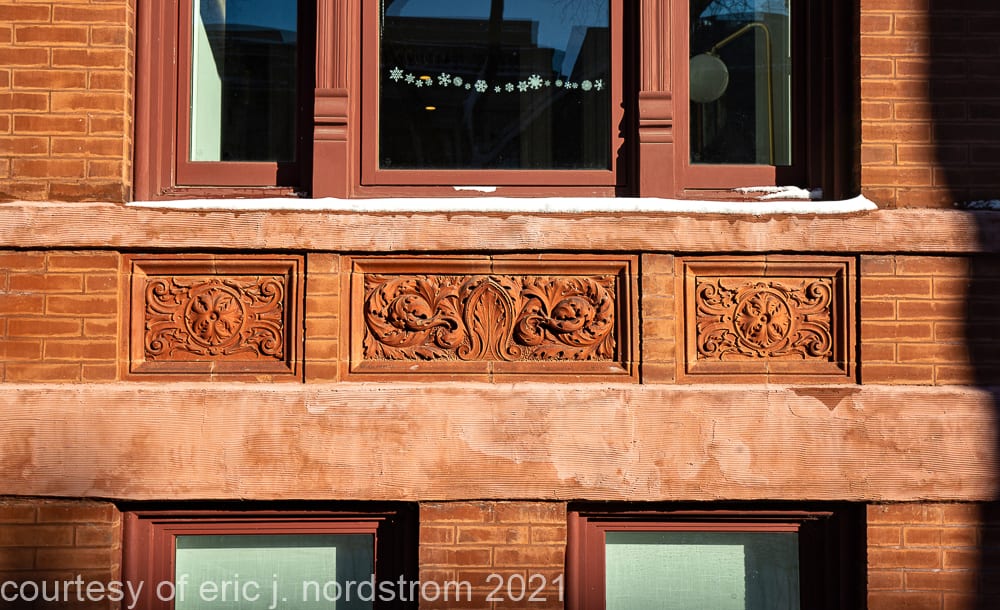
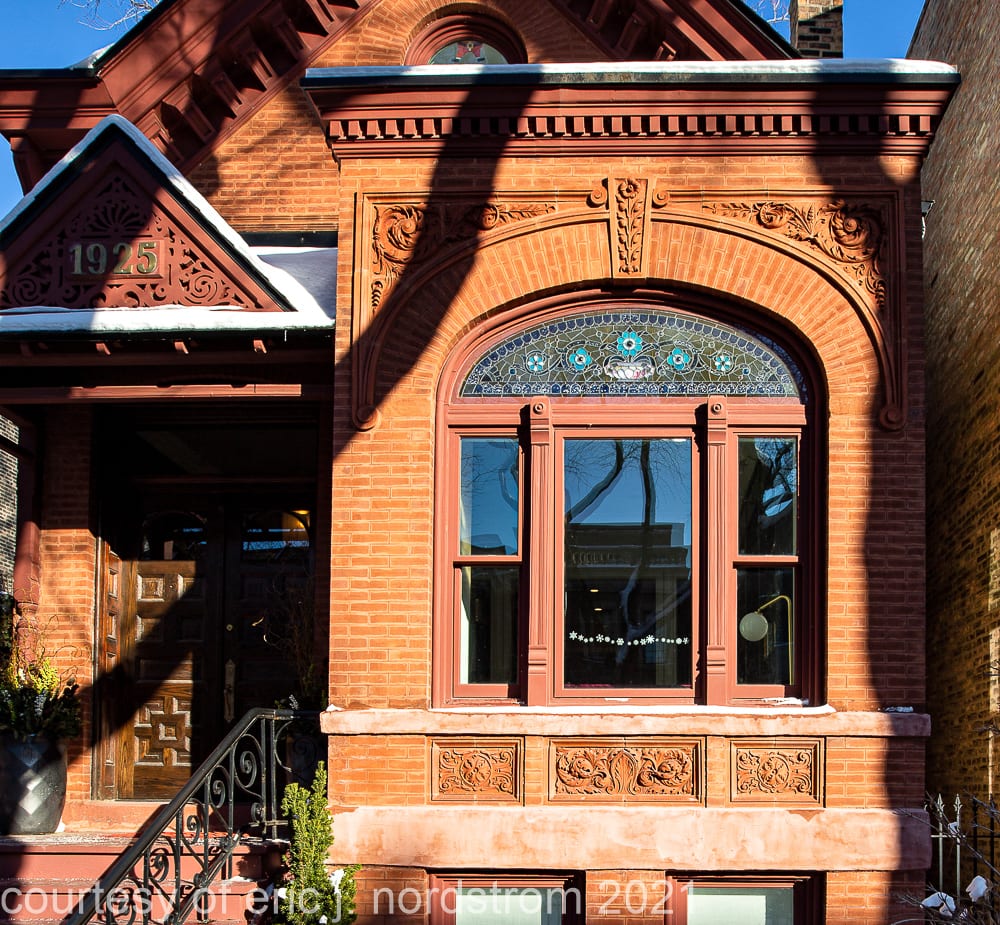
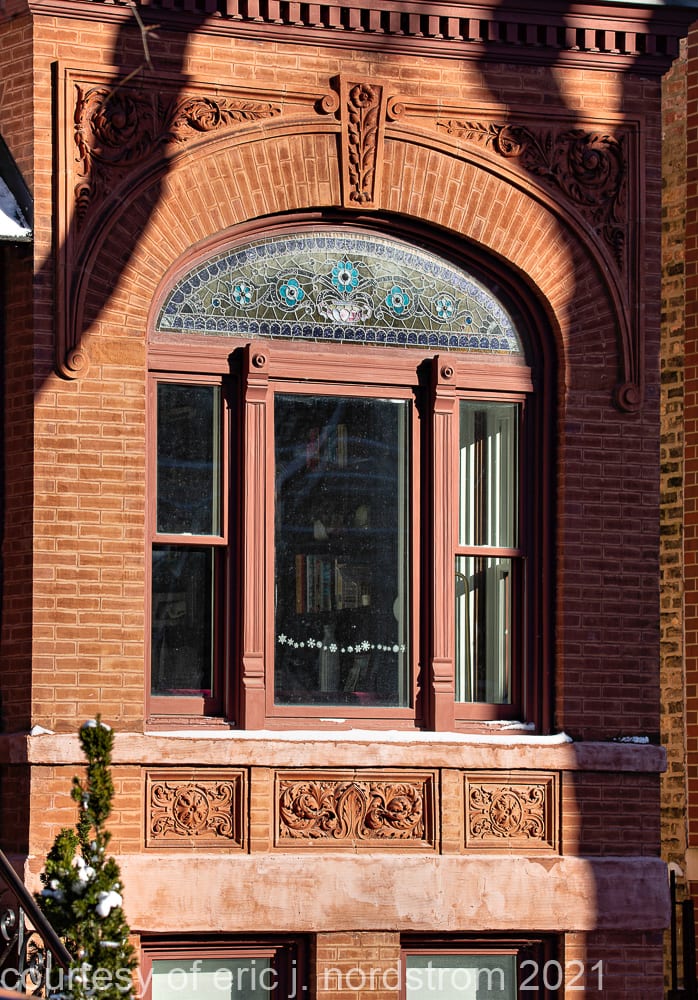
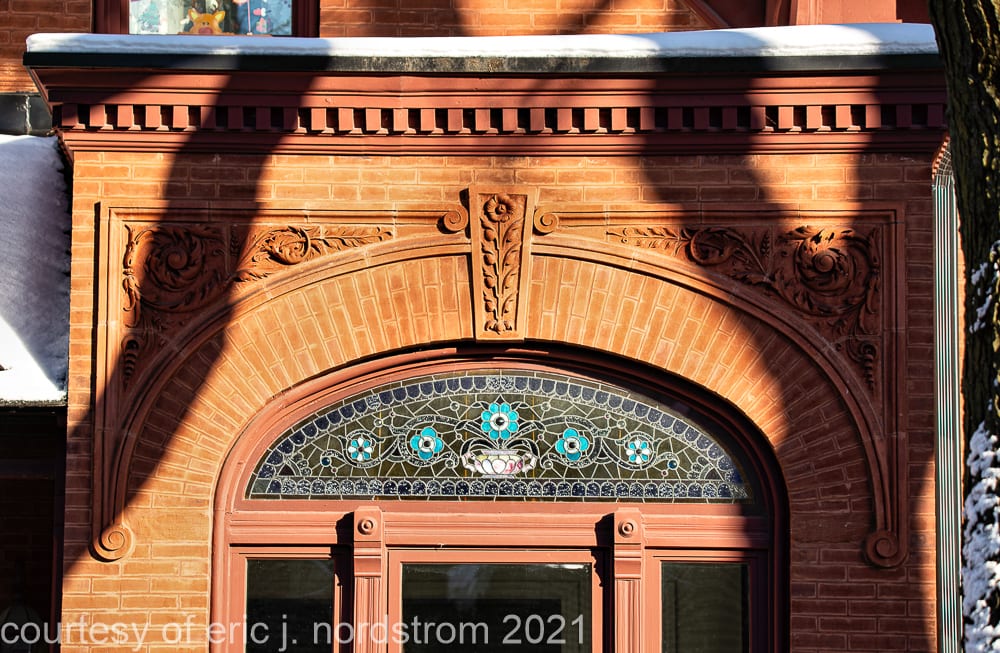
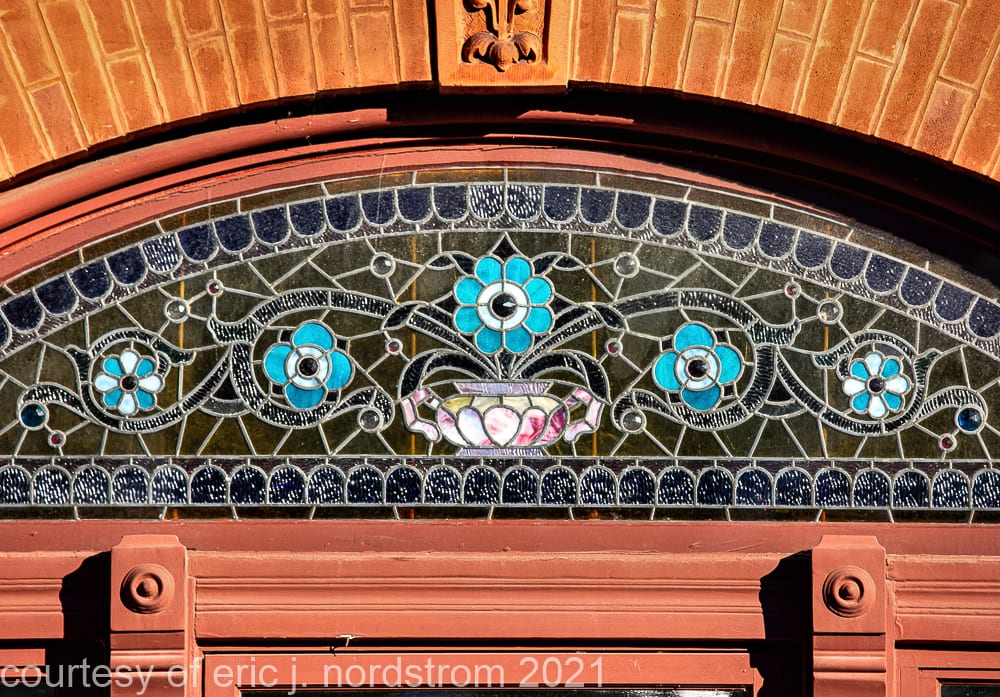
images courtesy of eric j. nordstrom and the bldg. 51 archive.
Architects Bettinghofer & Hermann:
The Martin Schnitzius Cottage was designed by Bettinghofer & Hermann, an architectural
partnership with offices on nearby North Avenue, at the time an important commercial and
institutional street for the North Side German-American community. At the time of the
Schnitzius Cottage’s design, Joseph Bettinghofer and Charles Hermann had recently taken
over the architectural practice of Adam F. Boos, and surviving documents associated with
the design and construction of the cottage were originally printed with Boos’ name, then
overprinted with the names of Bettinghofer and Hermann.
All of these architects appear, based on available documentation, to have catered to North
Side German-American clients, both private and institutional. Boos worked with a number
of German immigrants in the Old Town Triangle neighborhood, located east of the Sheffield
neighborhood. Boos is also credited with the renovation and new steeple for St. Michael Roman Catholic Church in Old Town, along with the original (1882) church building for St.
Alphonsus parish on N. Lincoln Ave. in what was then the outlying Town of Lake View. He
also worked on the design for the current St. Alphonsus church building in association with
the St. Louis firm of Schrader & Conradi.
Succeeding Boos, Bettinghofer & Hermann appear to have been partners for only a short period of time in the 1890s. Two known designs by the firm, other than the Schnitzius Cottage, are a pair of commercial-residential buildings built also in 1891 and located at 315 and
425 W. North Ave. Later commissions designed by Joseph Bettinghofer practicing alone
include the Aldine commercial building (now owned by the Old Town School of Folk Music) at 909 W. Armitage Ave., built in 1896 (a contributing building in the Armitage-Halsted
Chicago Landmark District). Bettinghofer also has been credited with a role, along with
Boos, in the design and construction of St. Alphonsus.
Charles Hermann is credited with the design in 1888 of the Hufmeyer commercialresidential building at 2780 N. Diversey Ave., which is a large brick-and-stone “flatiron”
building that visually dominates the Lincoln-Diversey-Seminary intersection on the northern
edge of the Lincoln Park community area. After working with Bettinghofer, Hermann later
became Chicago City Architect, designing a number of city-owned buildings such as firehouses. Two have been designated as Chicago Landmarks: Engine Company 98 at 202 E.
Chicago Ave., built in 1904, and Engine Company 104 at 1401 S. Michigan Ave., built in
1905. He also designed a city-built public bath house at 2138 W. Grand Ave. in 1905.
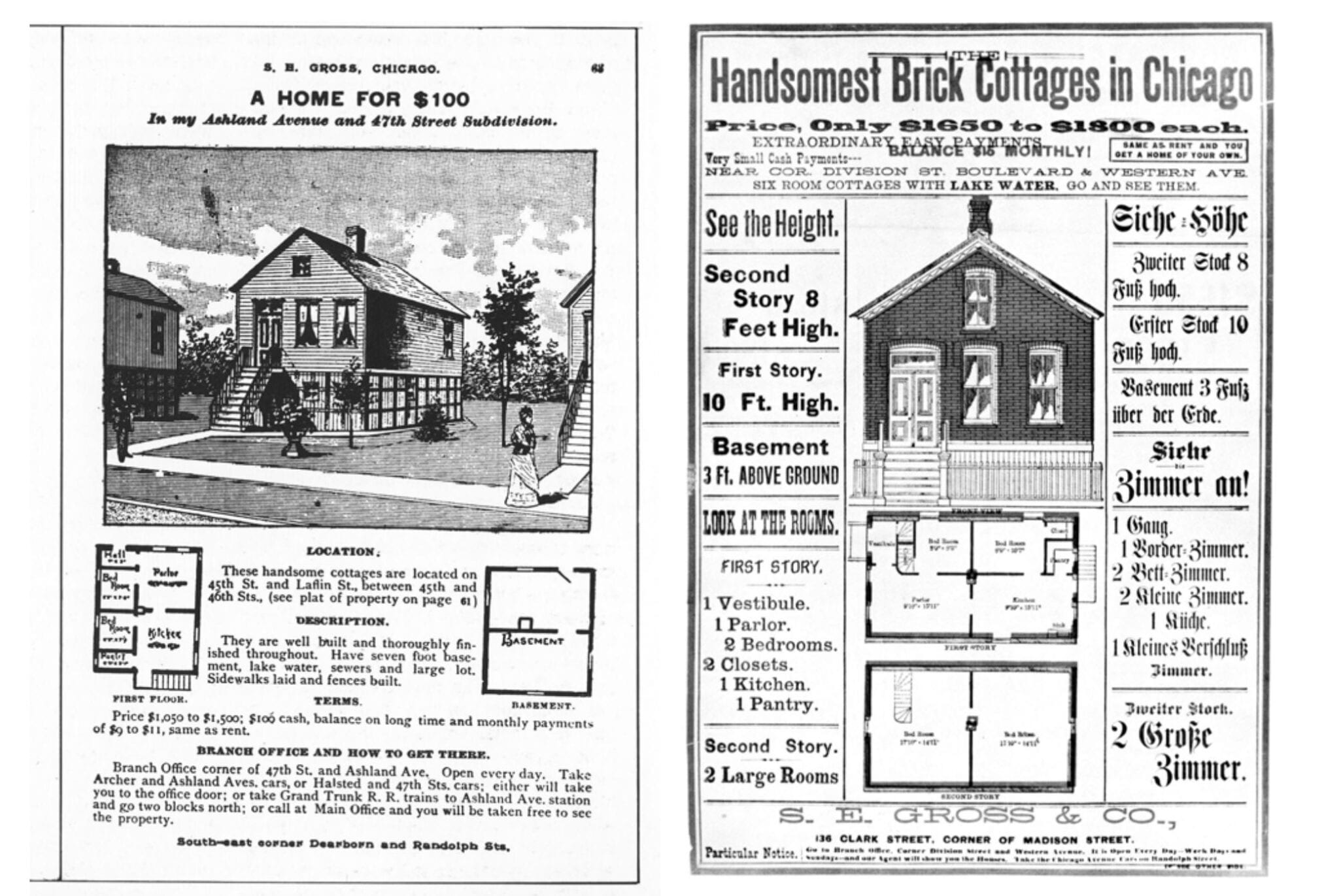
further reading:
AN INTENSIVE STUDY ON MATERIALS AND METHODS USED IN BUILDING THE CHICAGO WORKERS COTTAGE