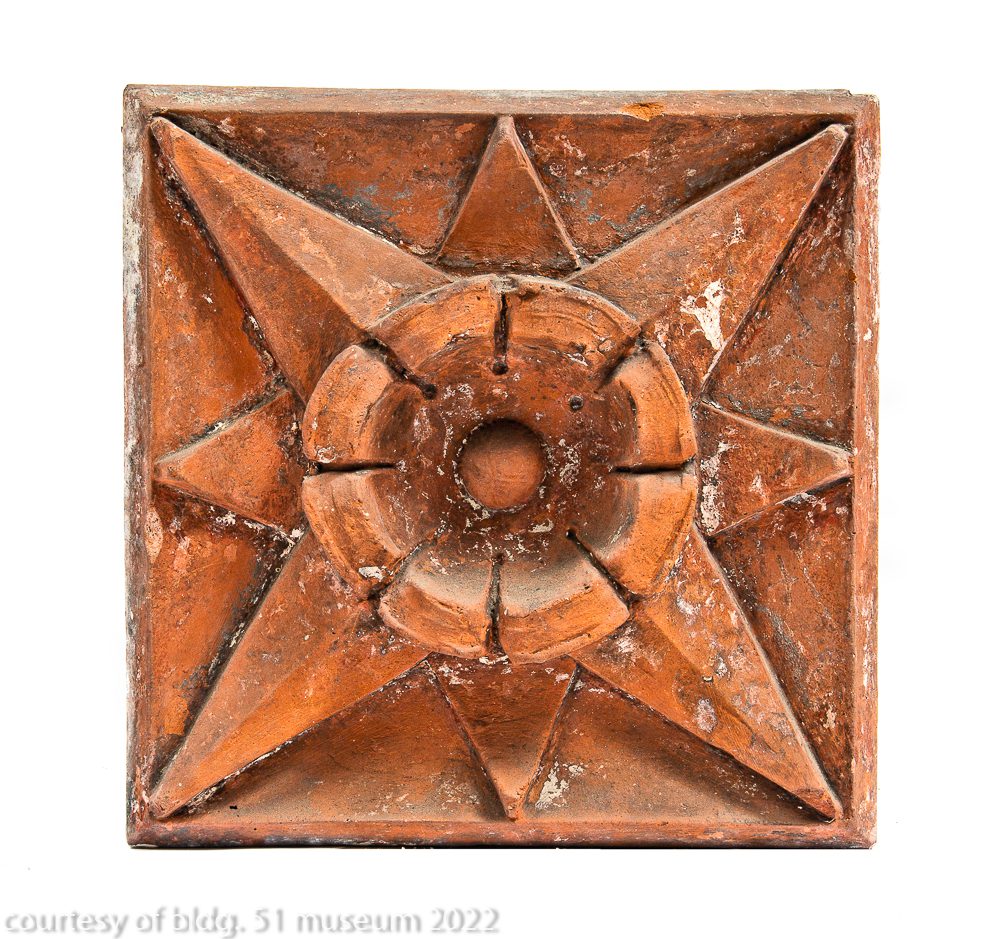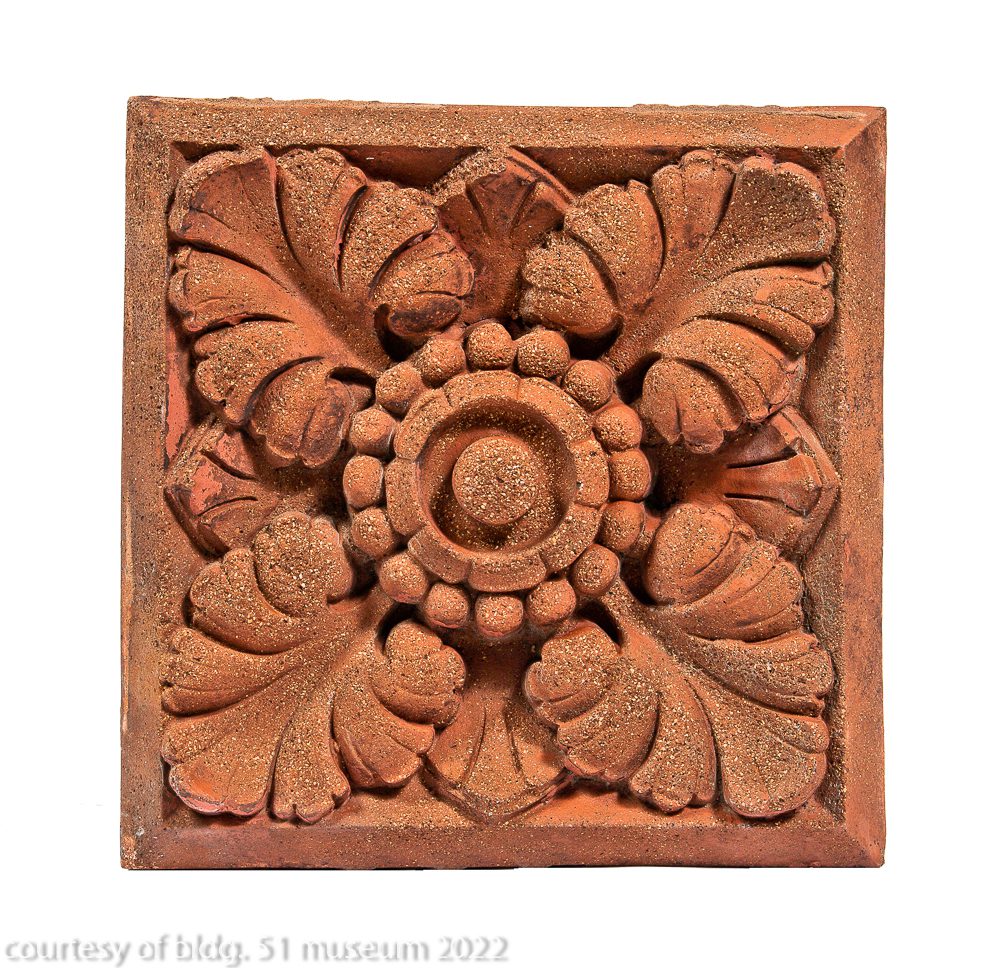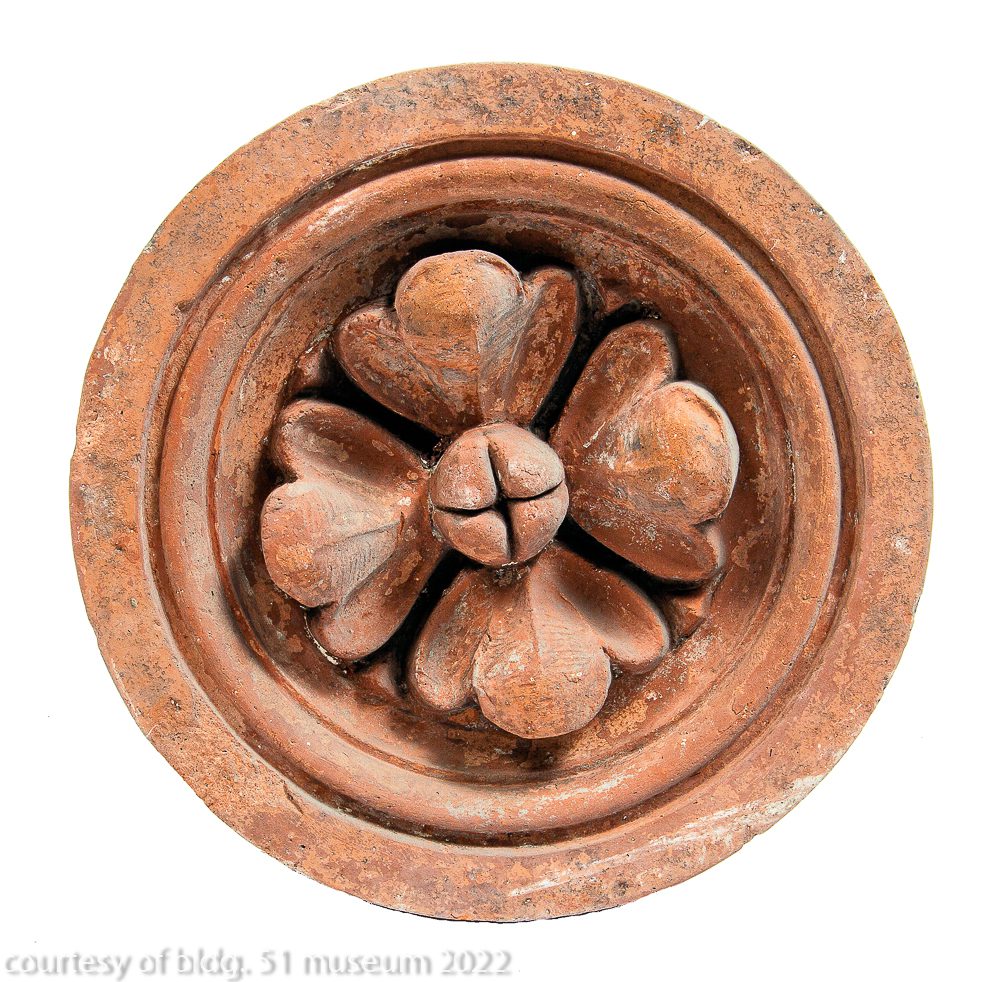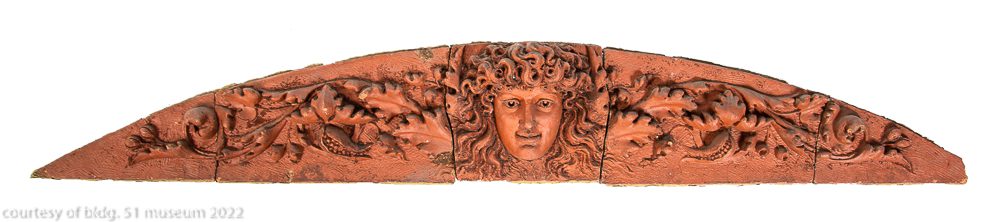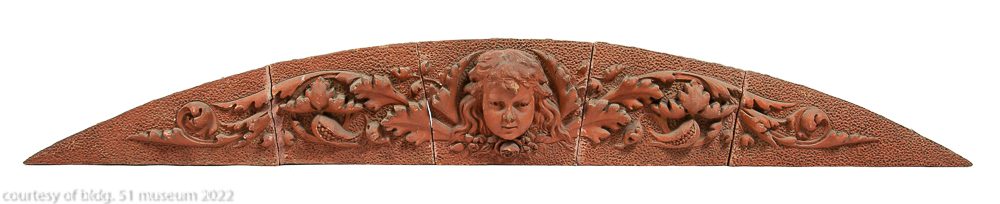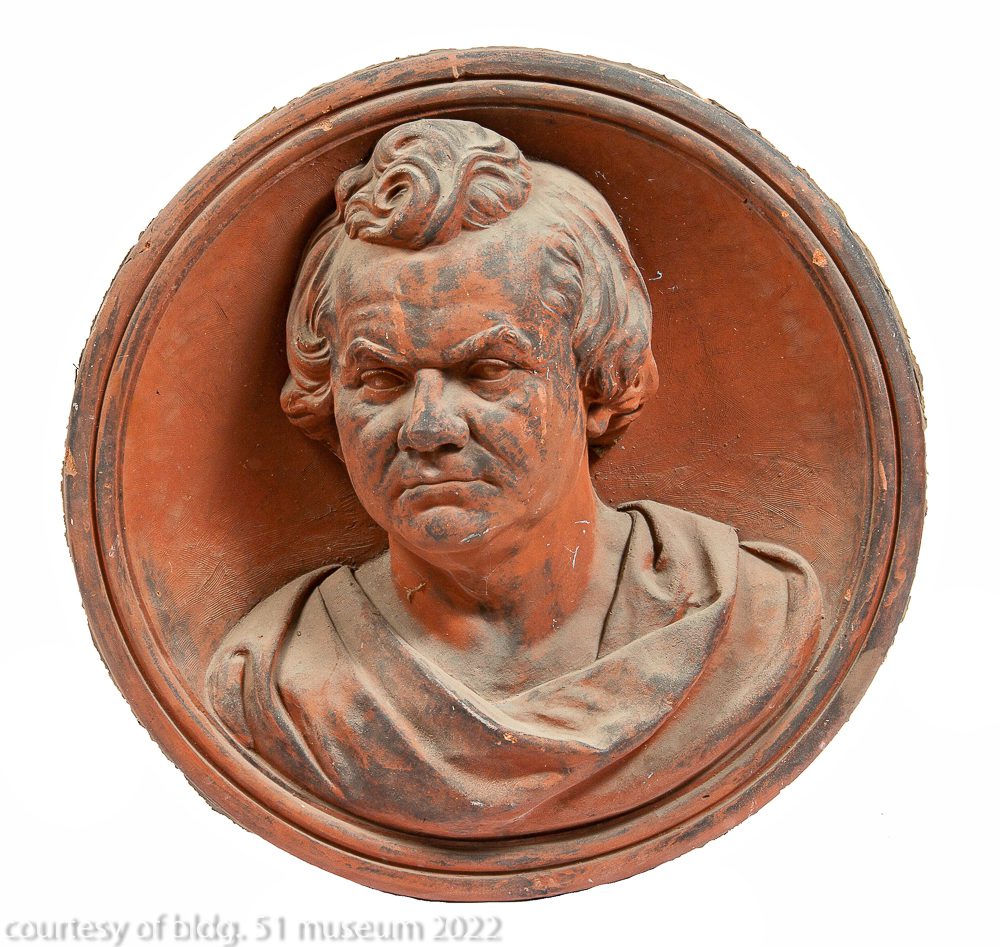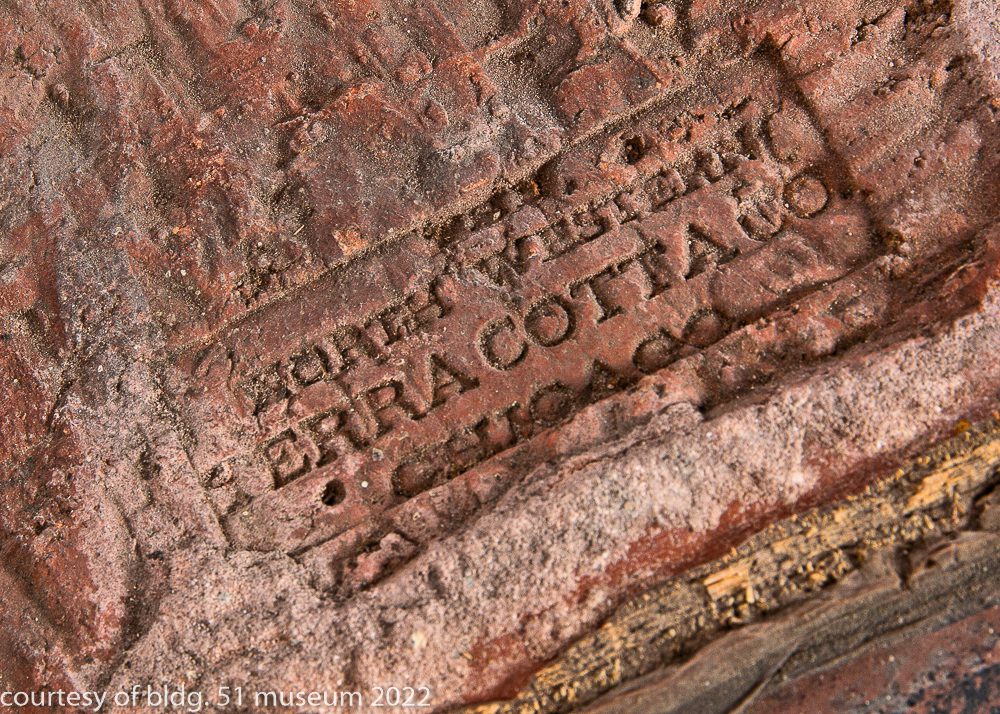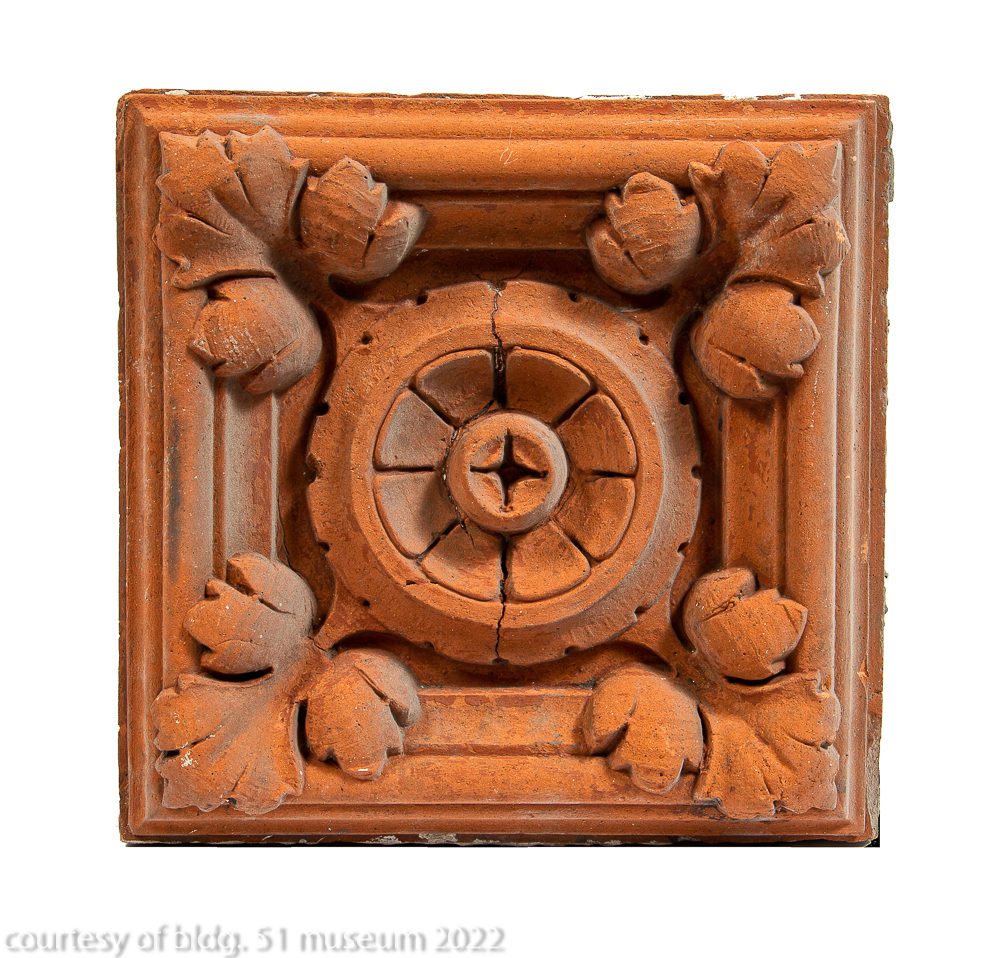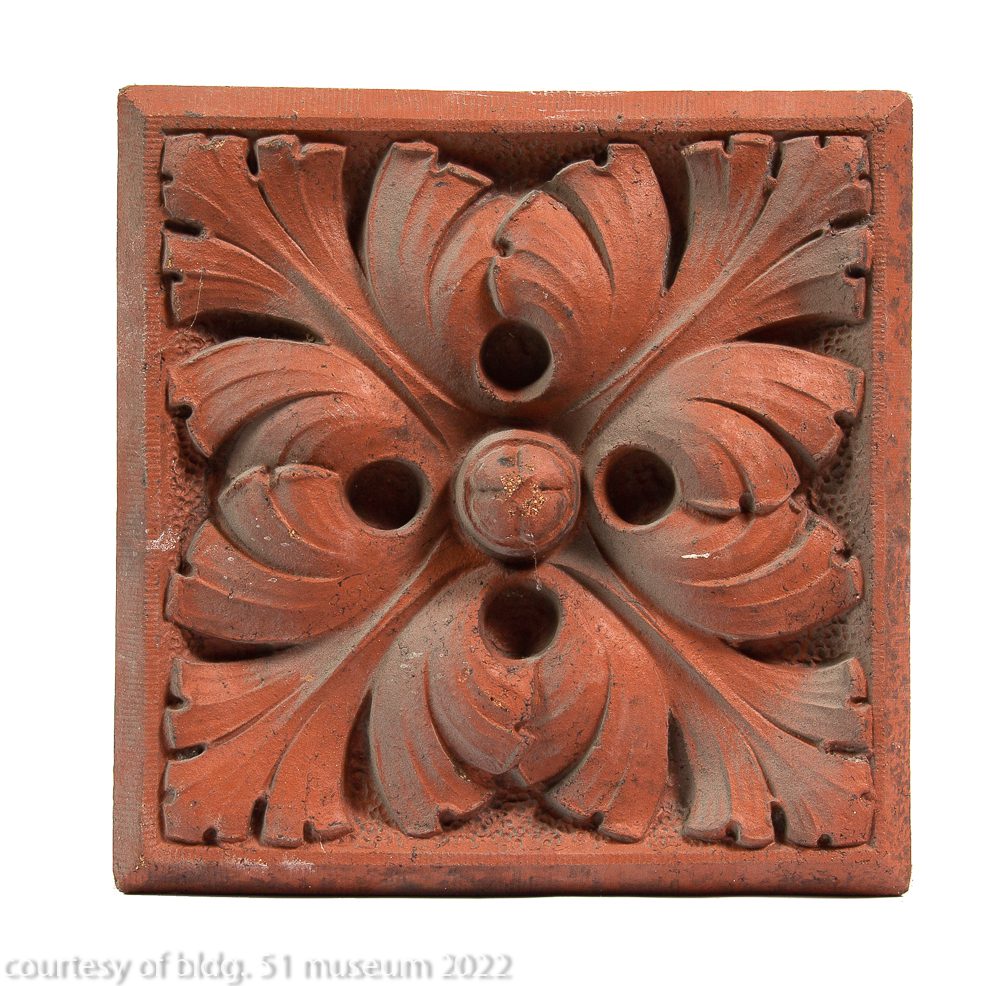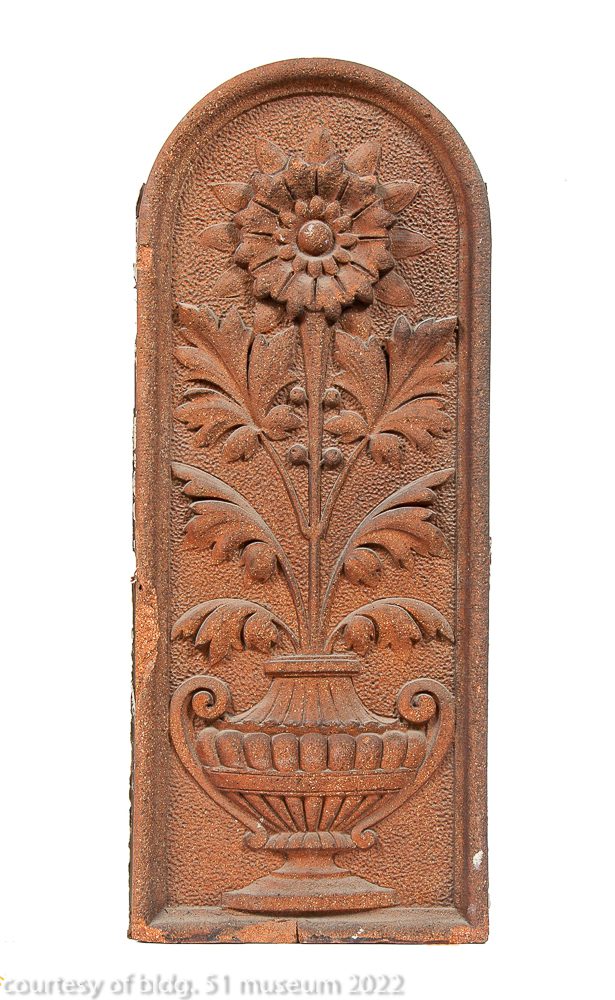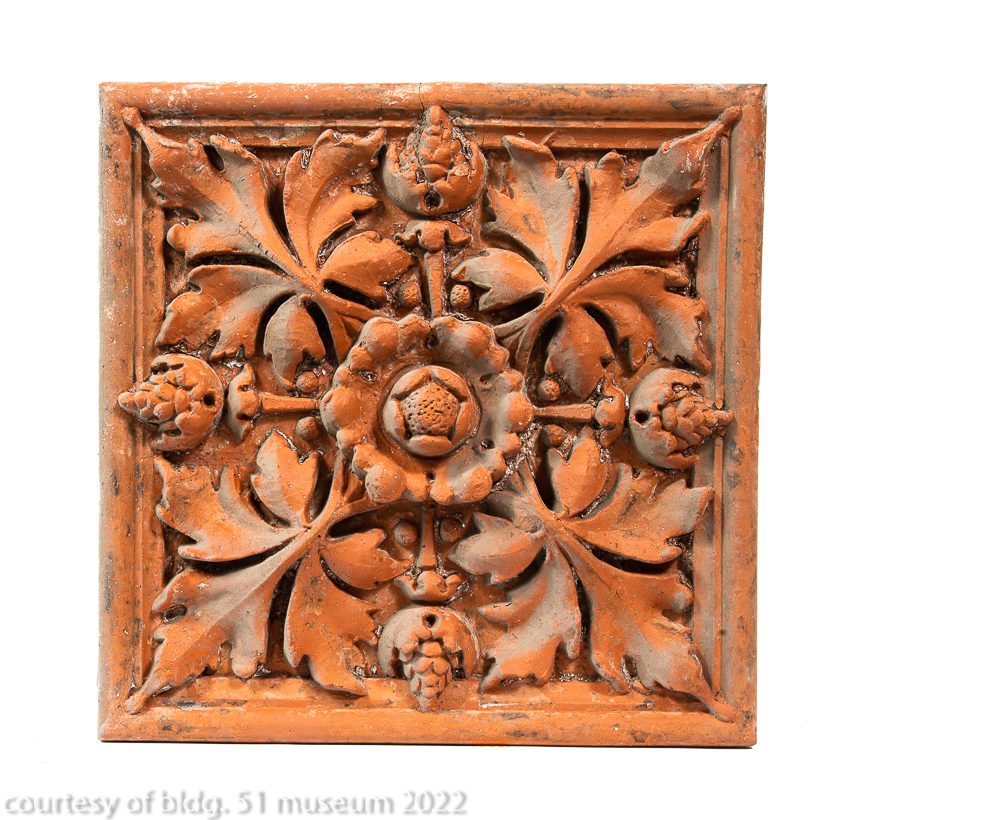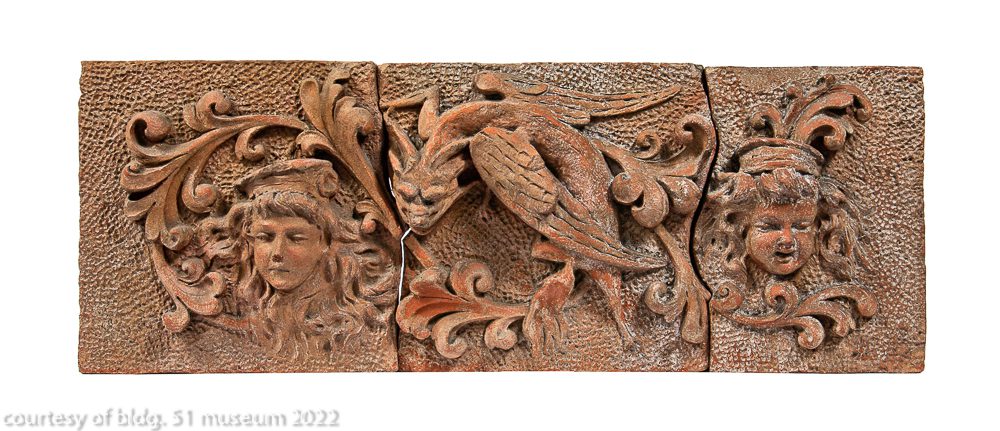

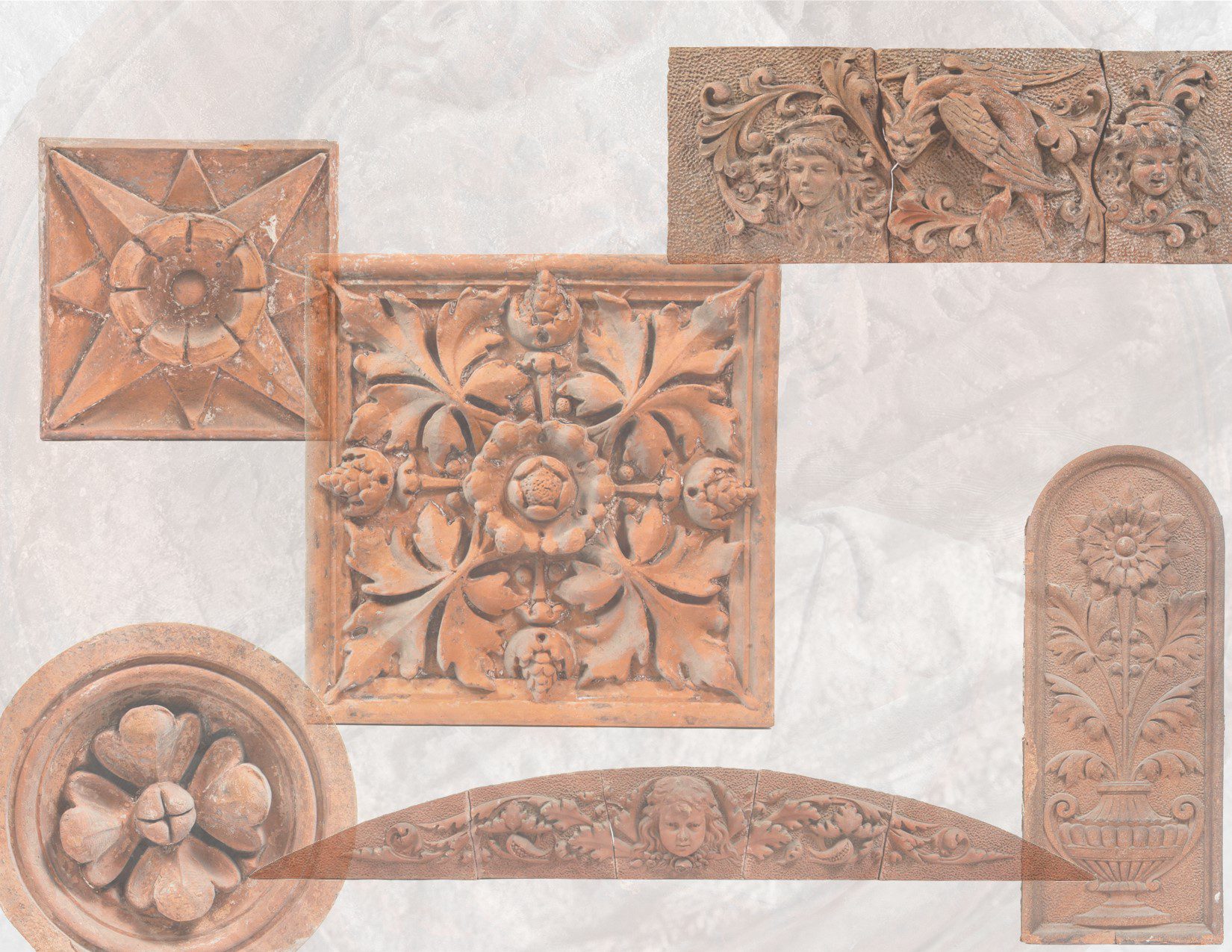
09 Feb carefully curated collection of early chicago residential and commercial building terra cotta ornament joins bldg. 51 museum.
several chicagoans have been credited with the idea of using terra cotta as fireproofing: george h. johnson, manager of architectural iron works, johnson’s associate, the architect john m. van osdel, and architect sanford e. loring in association his colleague peter b. wight.
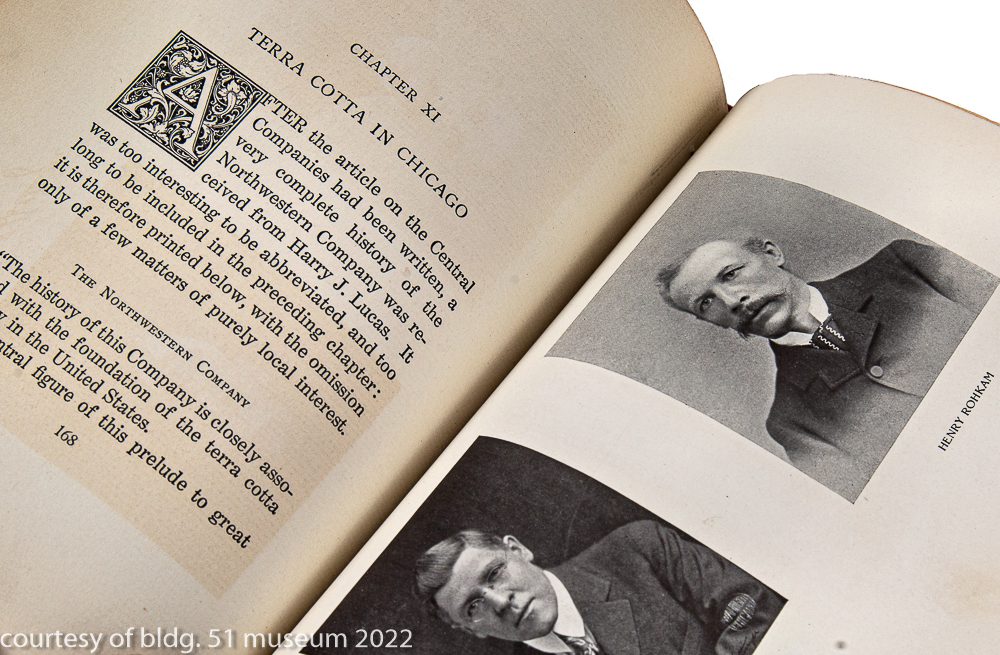
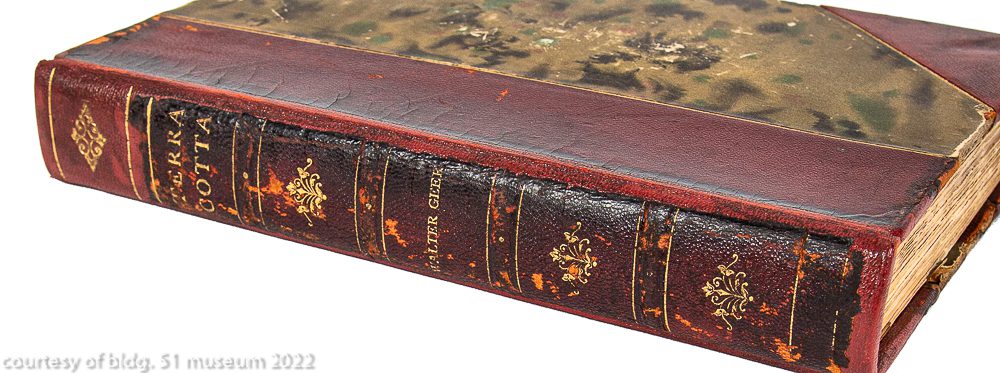
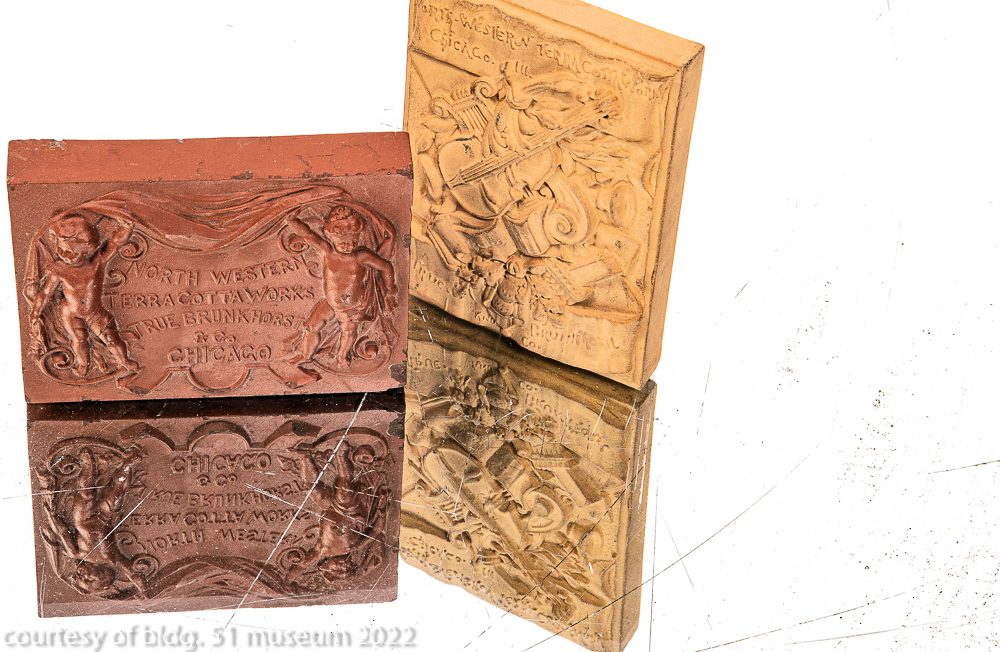
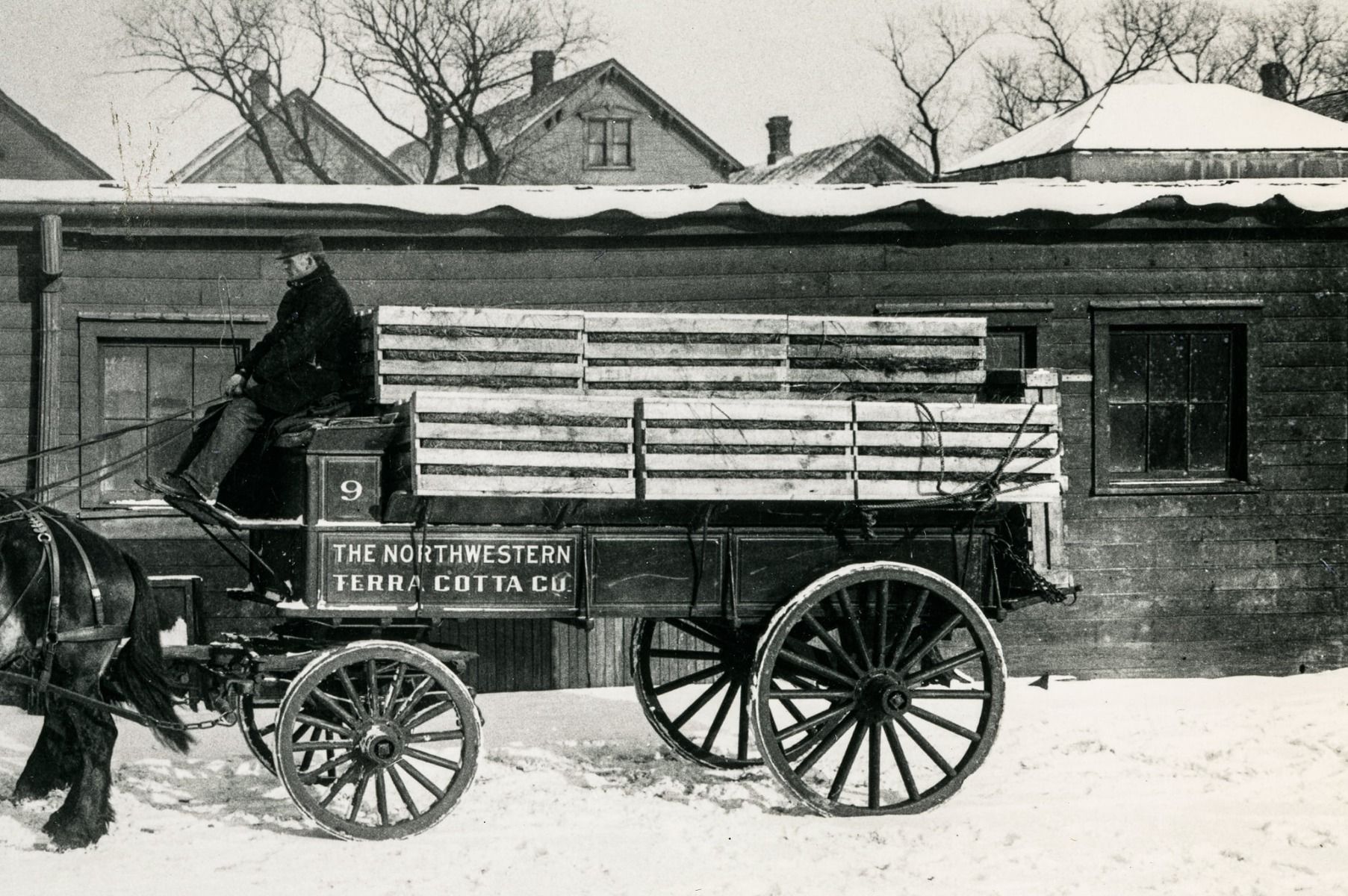
three companies dominated the industry: the chicago terra cotta company, established in 1868 and led by loring, true, brunkhorst & company, established by three former employees of chicago terra cotta in 1877 (later known as the northwestern terra cotta company), and the american terra cotta & ceramic company, founded by william day gates in 1881. these companies made both terra cotta tiles for fireproofing interior frames and exterior terra cotta blocks for commercial and residential façades, while smaller companies, such as the wight fireproofing company and the illinois terra cotta lumber company specialized in producing interior tiles.
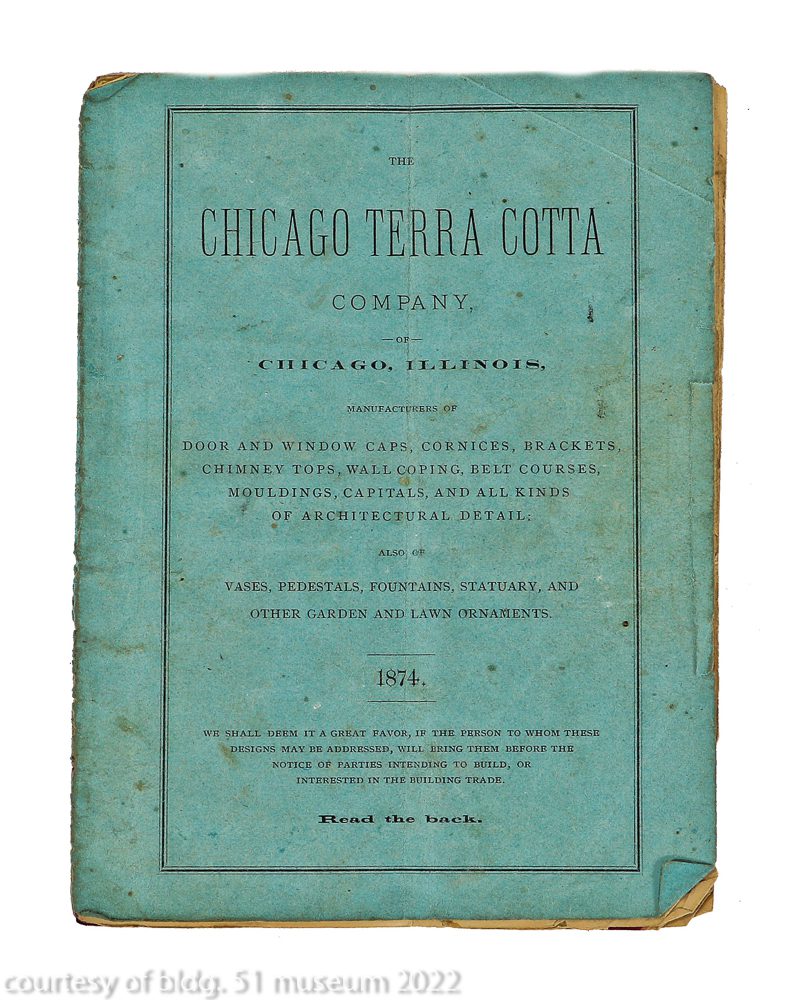
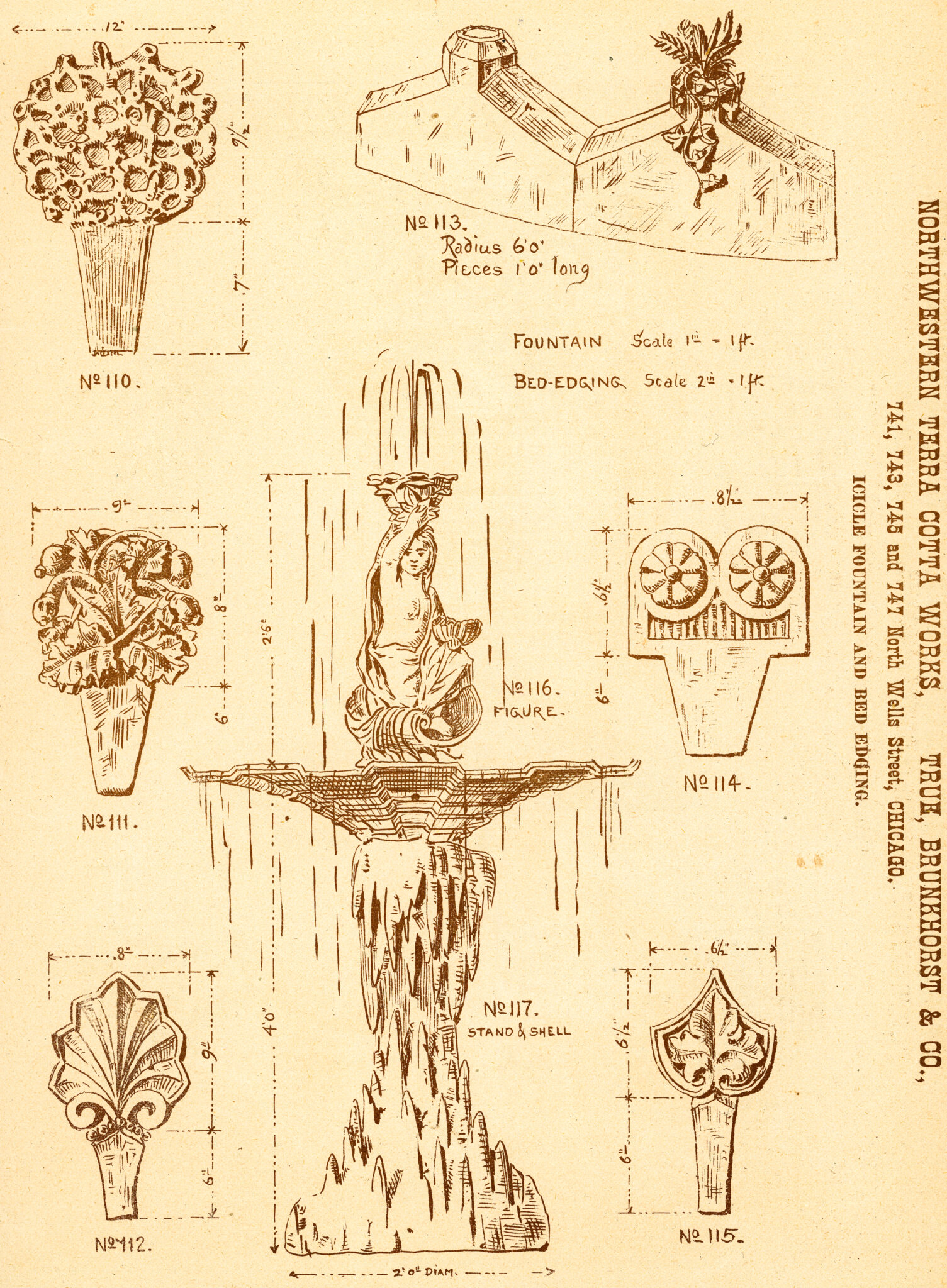
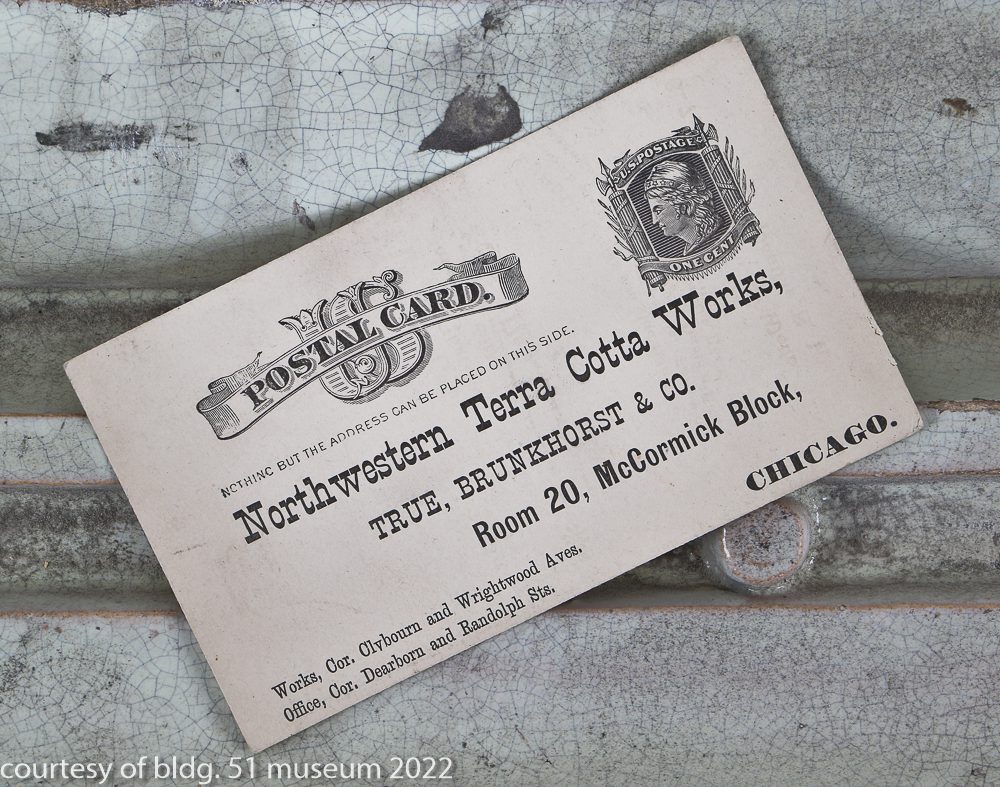
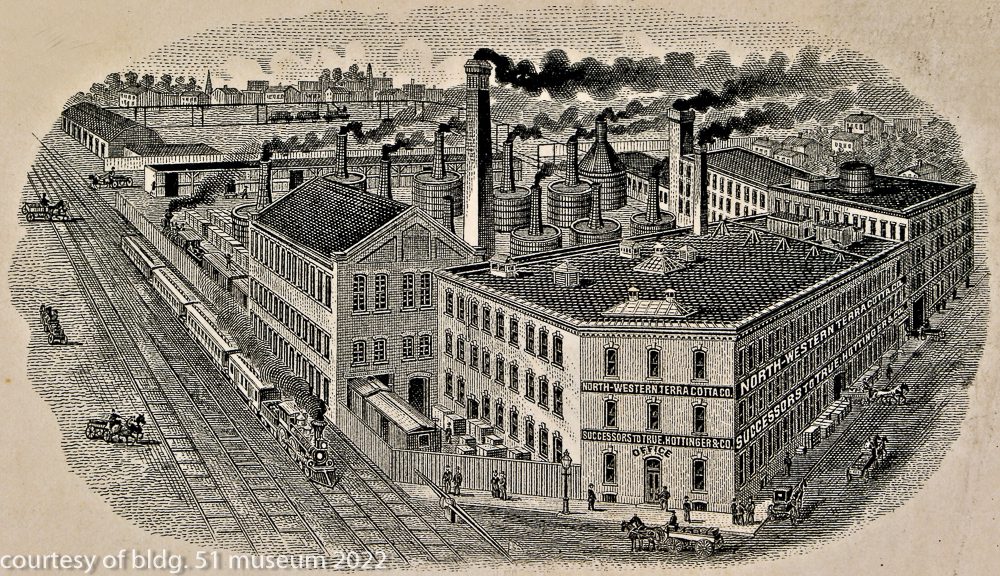
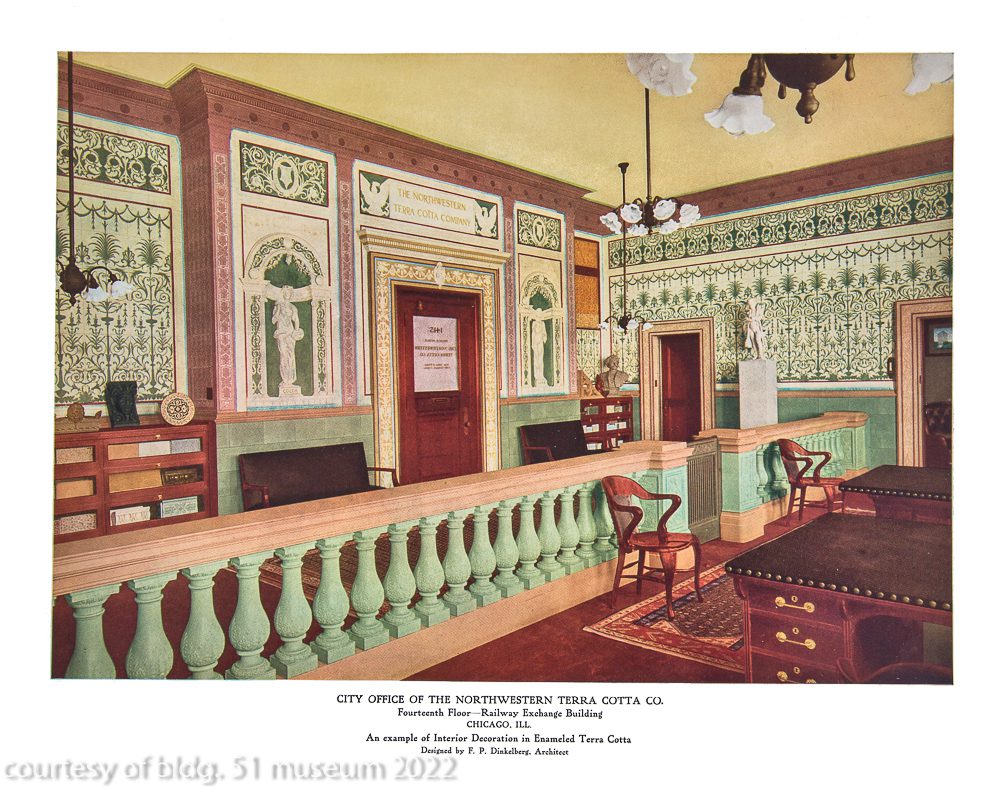
terra cotta allowed architects to design buildings that were taller, safer and aesthetic pleasing, given the material’s malleable qualities that allowed for elaborate ornamentation. during the 1880s, chicago’s building and terra cotta industries flourished. a city ordinance passed in 1886 requiring all buildings over ninety feet high to be fireproof furthered the industry’s fortunes. chicago leading architects and firms, such as william le baron jenney, burnham & root, and adler & sullivan, used terra cotta extensively, giving chicago a distinct look and feel with earthy red and cream-colored buildings. in fact, terra cotta became so closely associated with chicago that the city’s first flag of 1893 featured its colors.
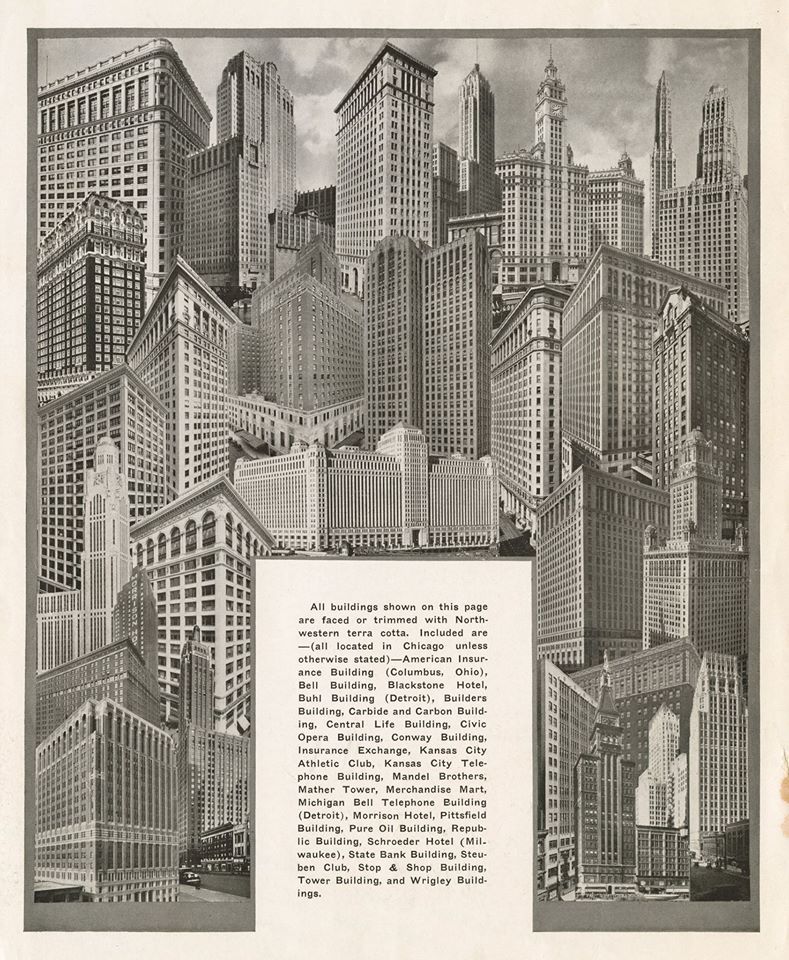
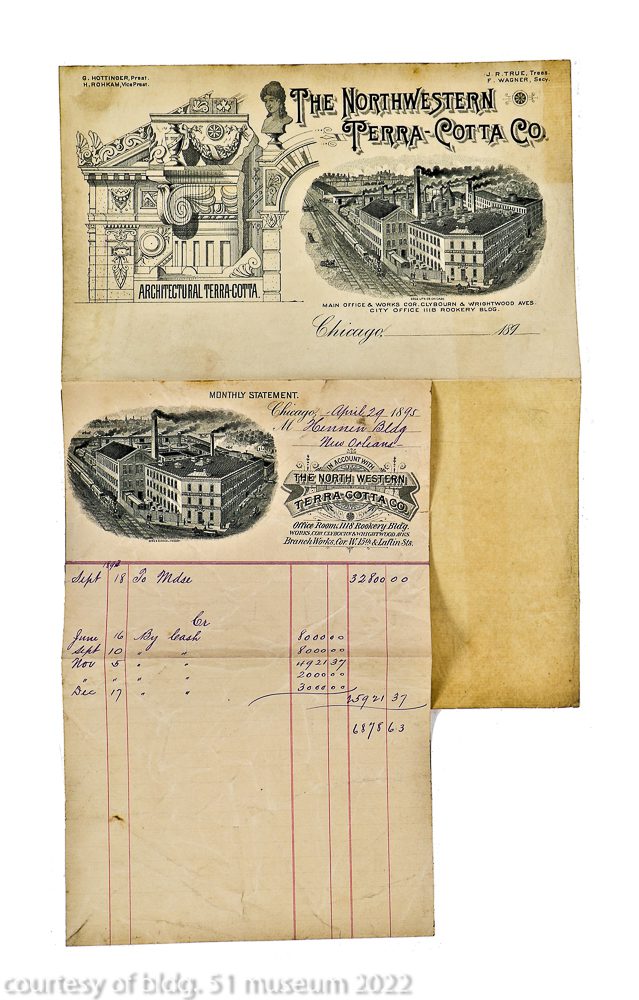
chicago architects continued to use terra-cotta well into the twentieth century, creating such spectacular examples as the railway exchange building, the wrigley building, the carbide & carbon building, and jewelers building (35 east wacker) chicago.