
25 Apr images, information and artifacts on burnham and root’s 1888 rookery building culled from the bldg. 51 archive
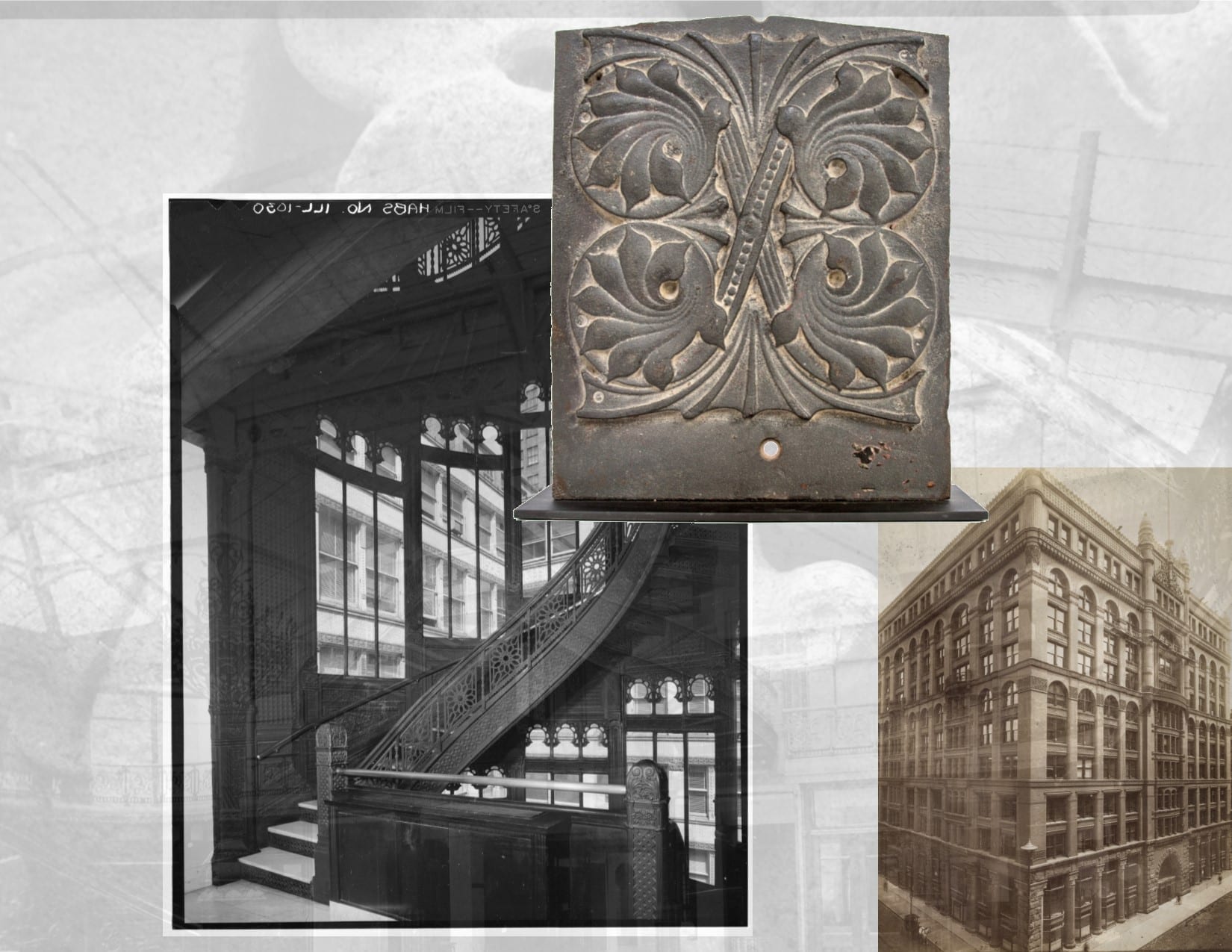
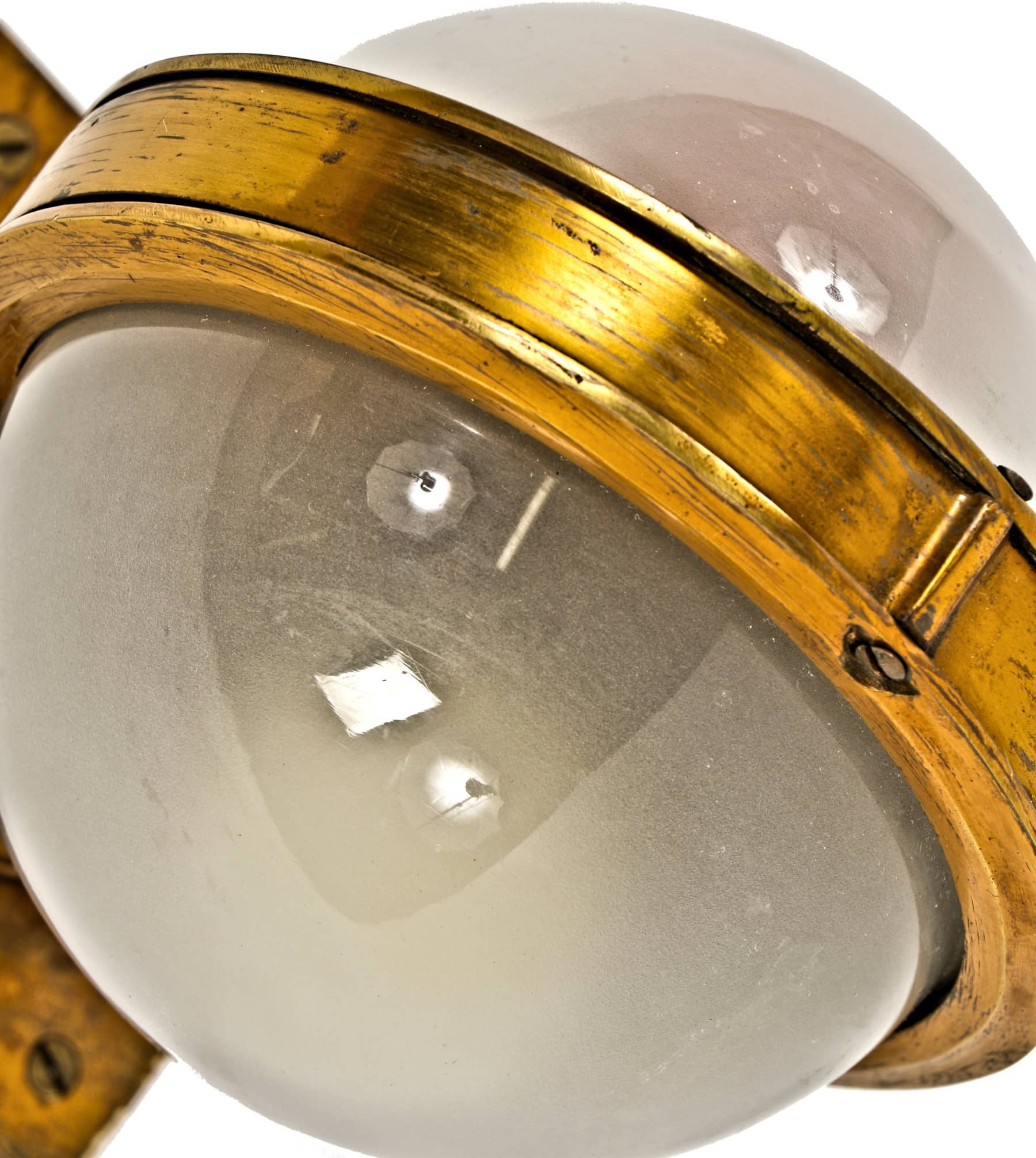
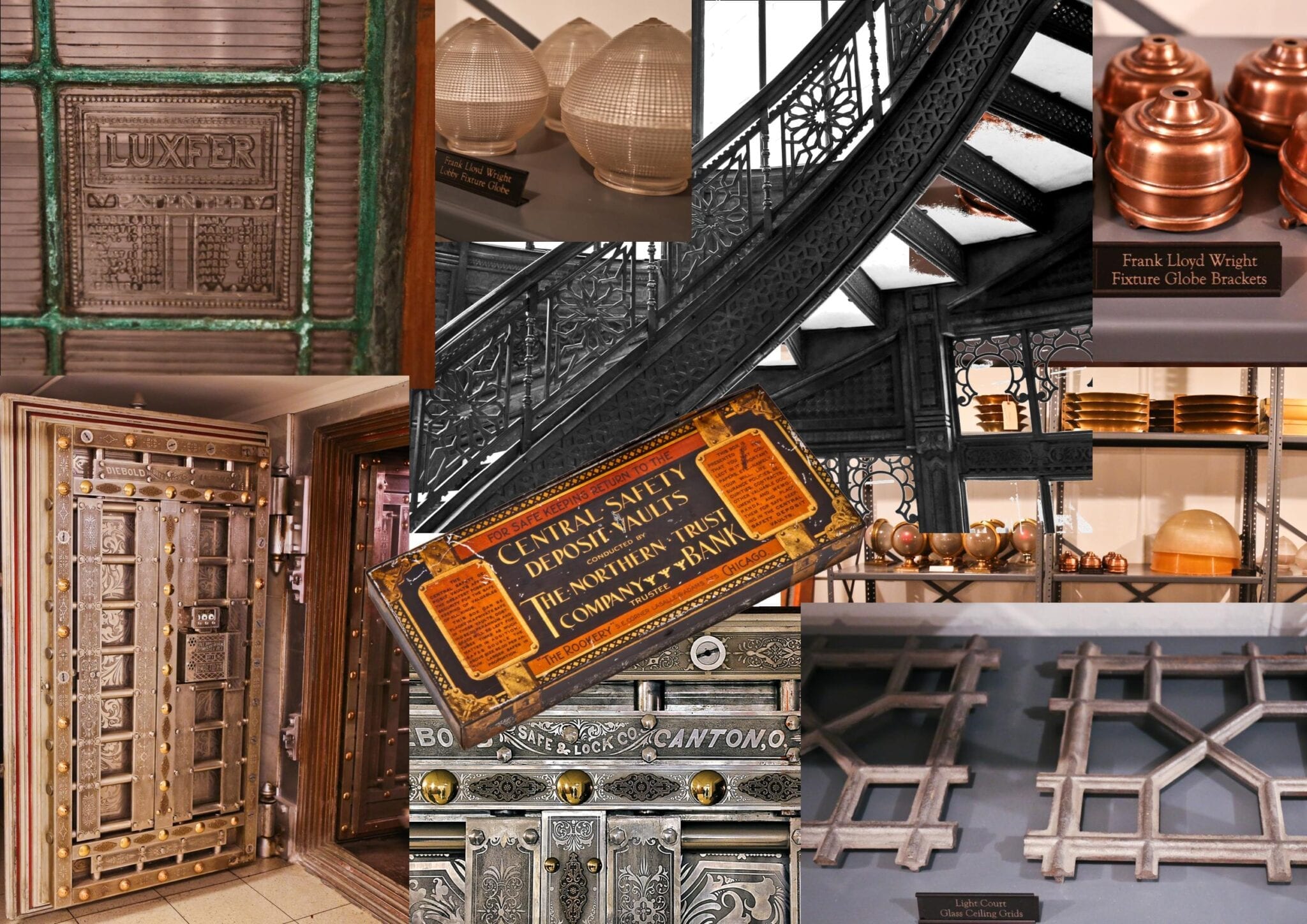
a selection of images and artifacts culled from the bldg. 51 museum archive on burnham and roots’ rookery building (1888).
any and all images courtesy of eric j. nordstrom and the bldg. 51 museum archive.
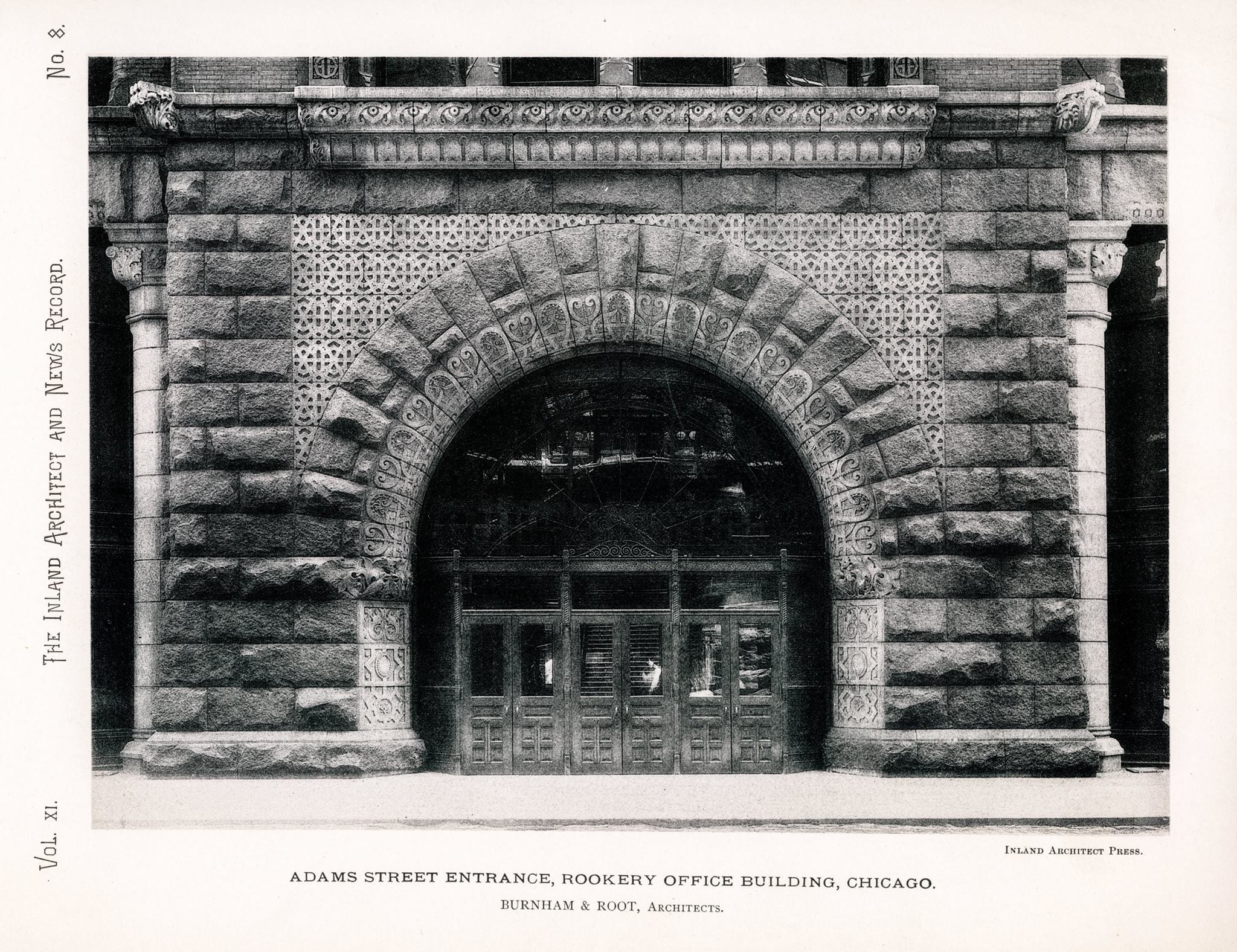
early view of rookery building’s adam street entrance. inland architect press.
courtesy of bldg. 51 archive.
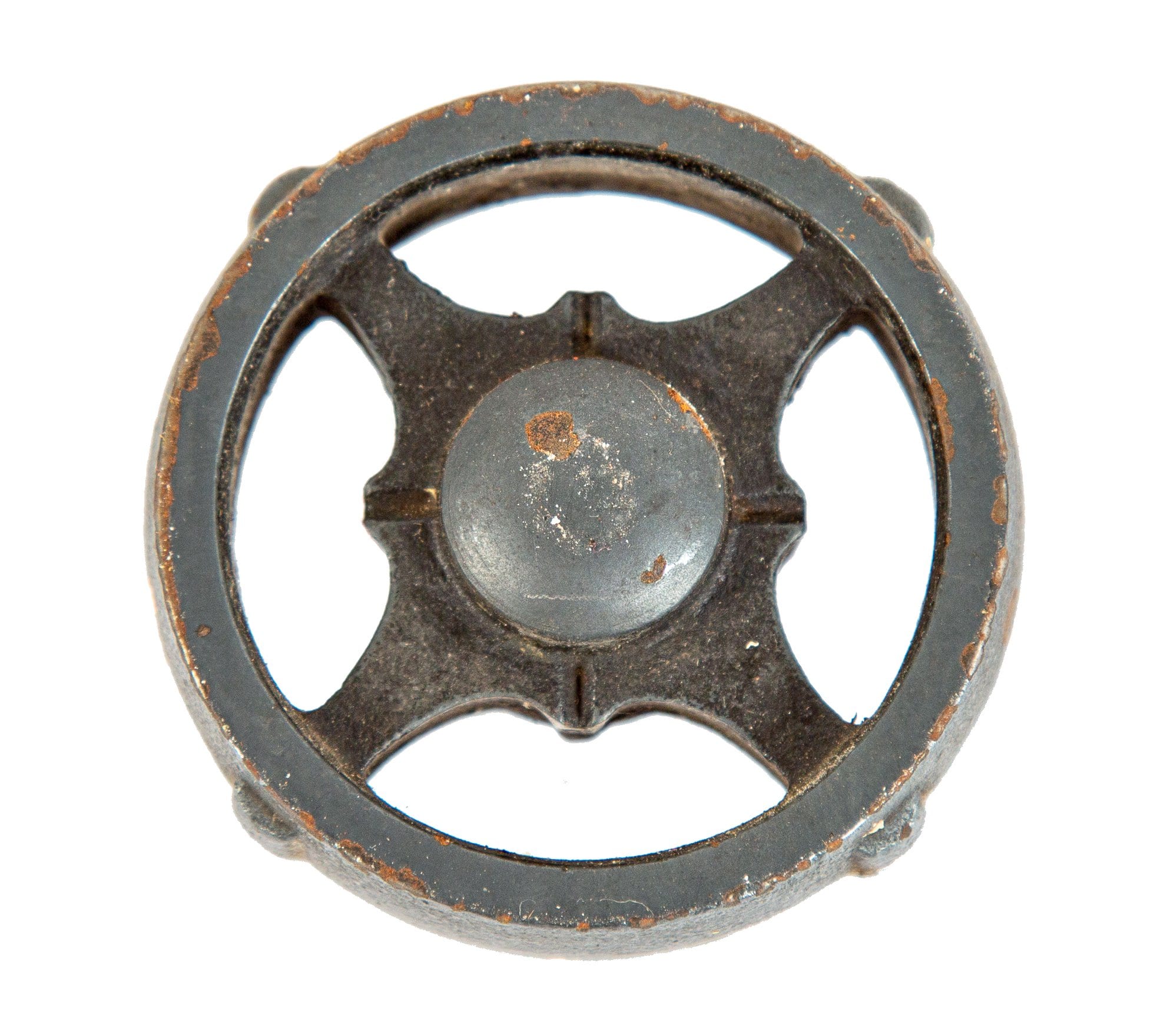
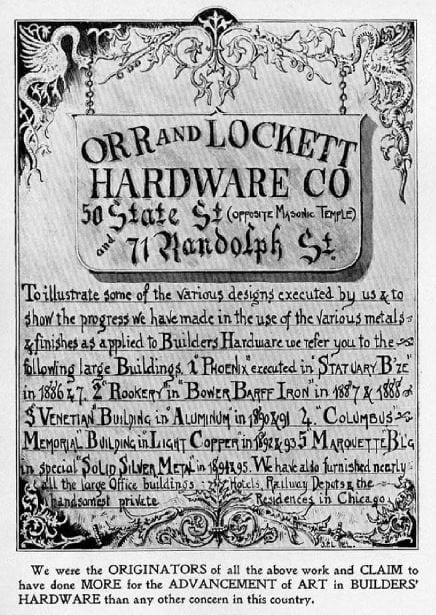
original 19th century rookery building (burnham and root, 1888) office door hardware likely designed by architects charles atwood and john root with assistance by the chicago-based orr & lockett hardware company.
the cast iron hardware was executed by the yale & towne mfg. co., stamford, ct.
the highly stylized backplate with scrollwork and dimpled edges and distinctive perforated “wheel” pattern doorknob retain the original bower-barff or “rust-proof” finish.
courtesy of the bldg. 51 archive.
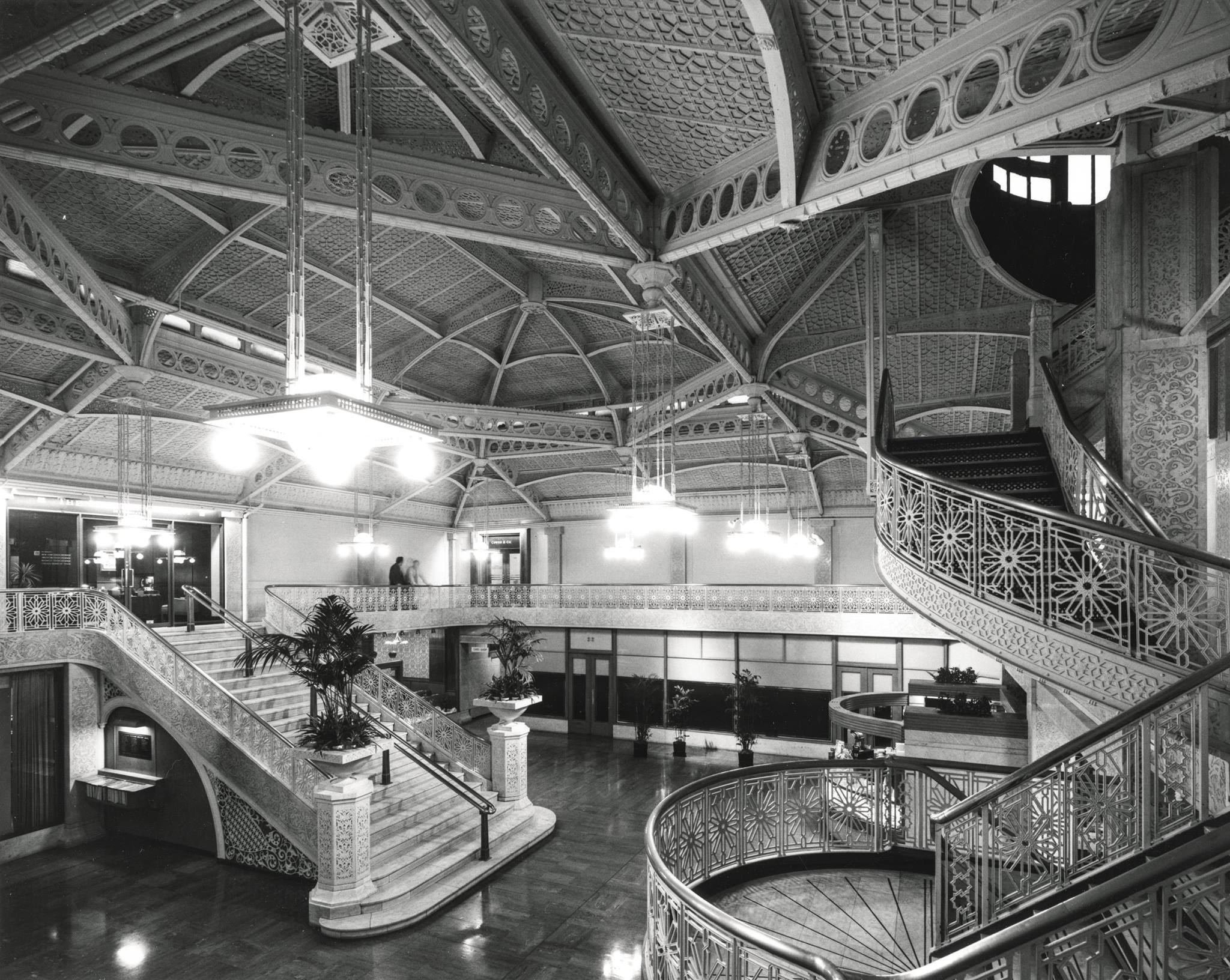
undated richard nickel photo of the rookery building (1888) atrium. burnham and root, architects. the covered skylight, (consisting of strongly geometric cast iron and translucent glass) was covered over on the outer surface with a waterproof membrane and painted a uniform gray on the inner surface. thankfully the skylight has been restored, but it must have been dark and gloomy during that time.
courtesy of bldg. 51 archive.
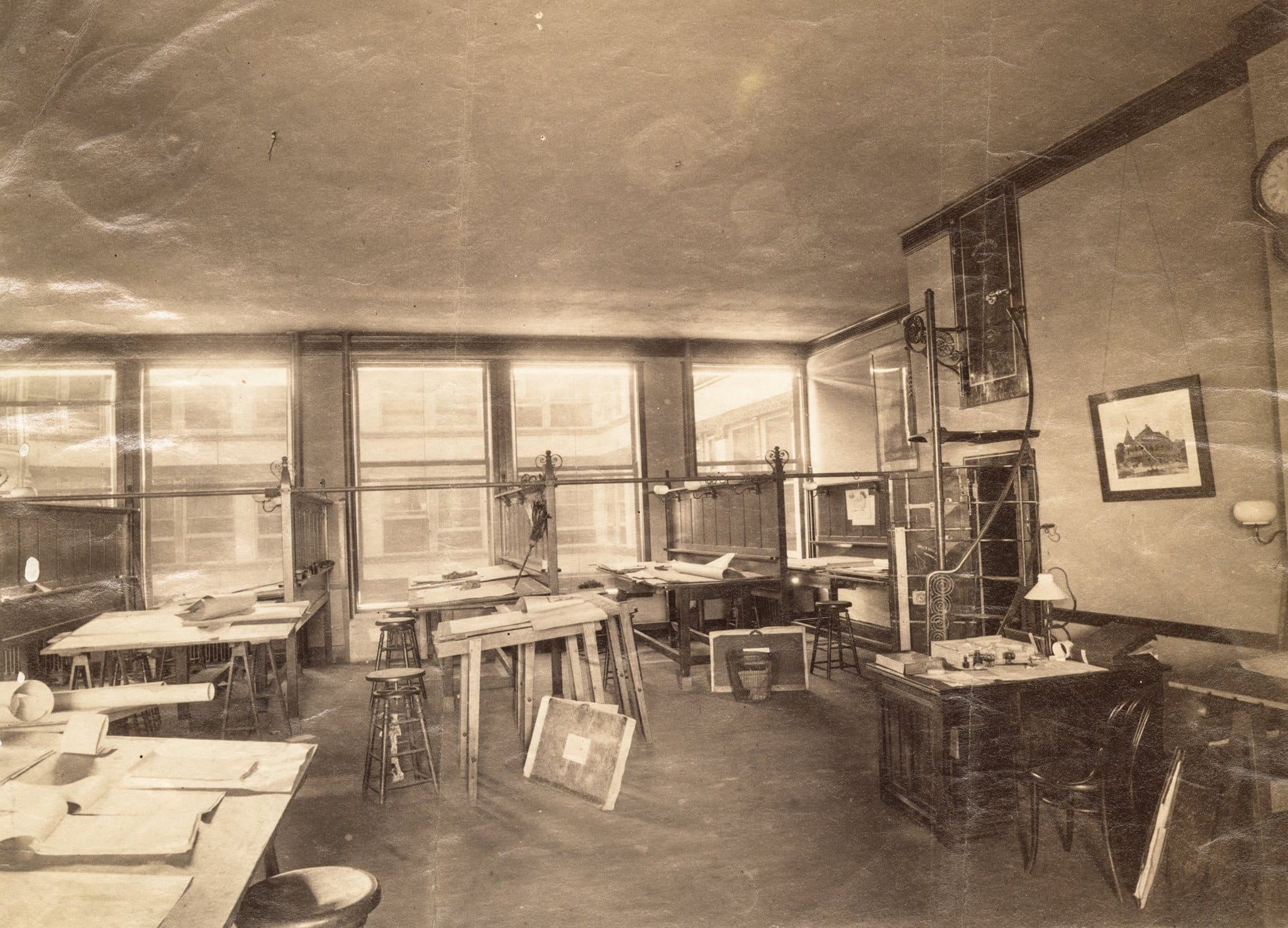
albumen print of burnham and root’s drafting room located on the top floor of the rookery building (burnham and root, 1888).
there’s a lot going on here if you look closely at the image. the coiled wire waste baskets, dietzgen stools, wall gasoliers with deep bowl shades, view of the atrium, bentwood chairs, and the built-in wall safes or vaults with heavily ornamented spiral staircase immediately caught my attention. the desk in the foreground has a few door hardware “samples” that were likely provided by orr and lockett. i could go on and on…
if i had my copy of hoffman’s “the architecture of john wellborn root” on hand, i could likely pinpoint where this room was located. if i recall correctly, hoffman’s book has a floor plan of burnham and root’s offices in the rookery.
the date and/or photographer is not known. image courtesy of ryerson and burnham, archive, art institute of chicago.
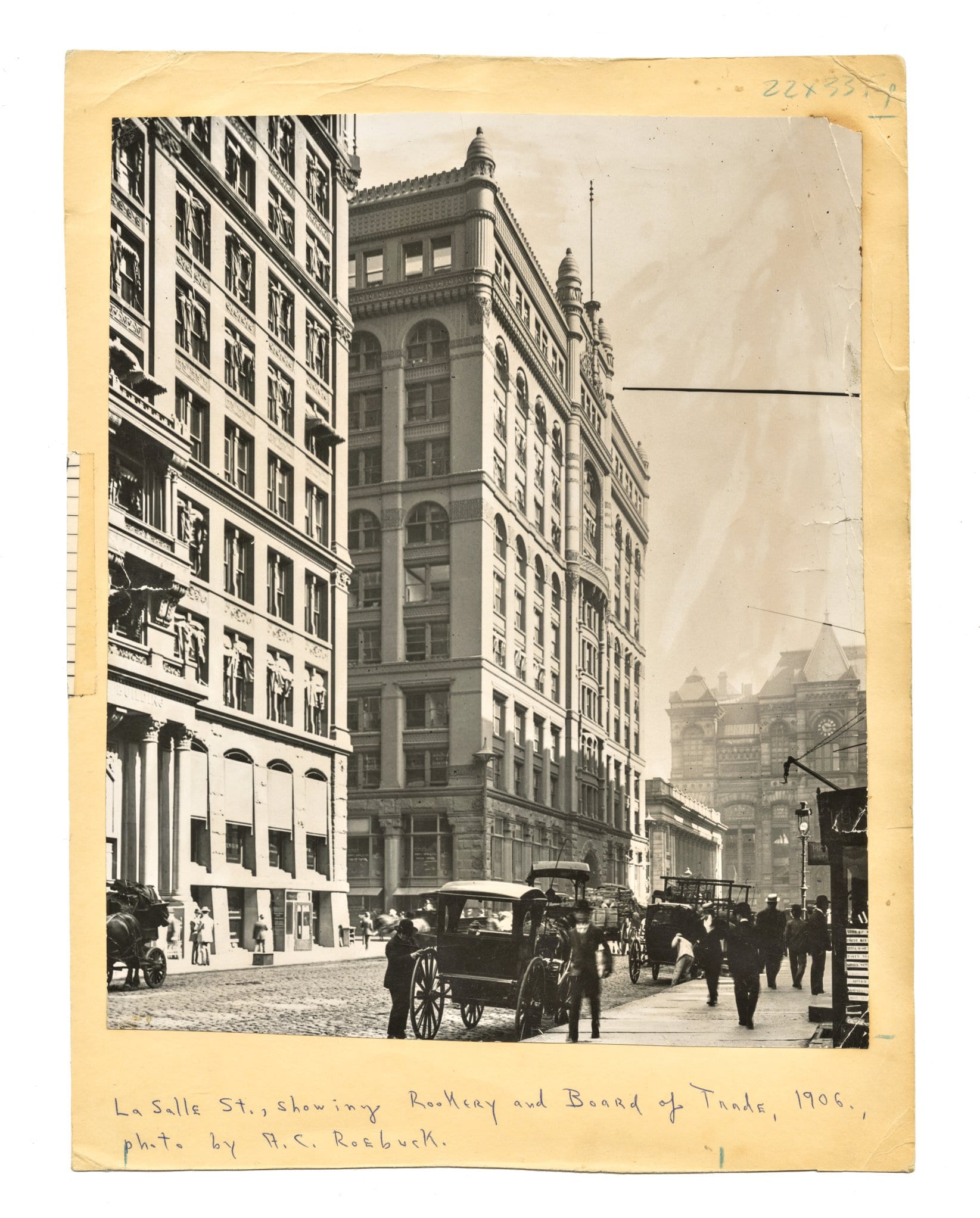
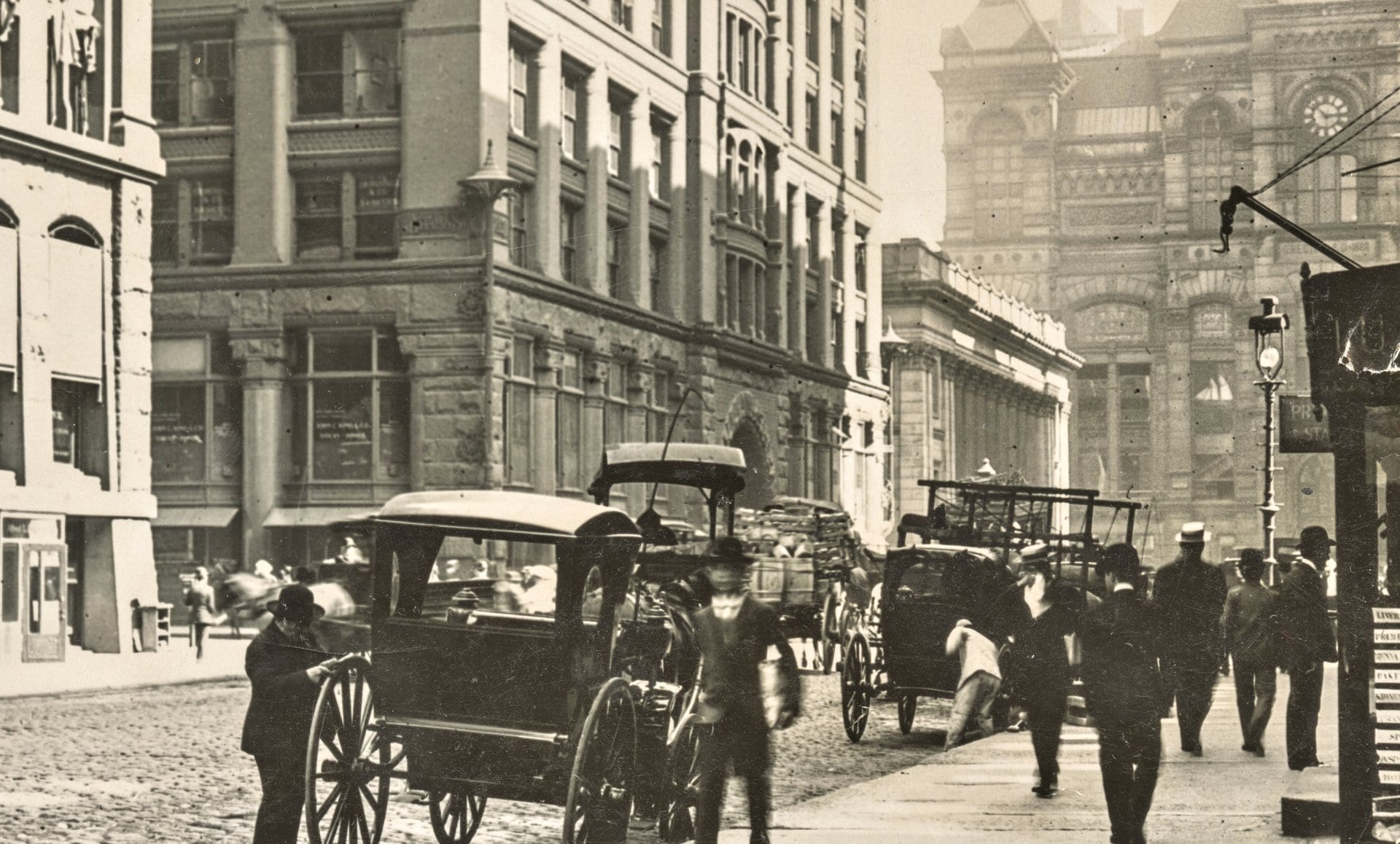
digitizing some interesting images from david lowe’s archive this week, including this 1906 street level view of lasalle street looking south with burnham and root’s rookery (1888), wm. boyington’s old board of trade building (1885), and several horse carriages and wagons on street.
courtesy of david lowe archive, ryerson and burnham, art institute of chicago.
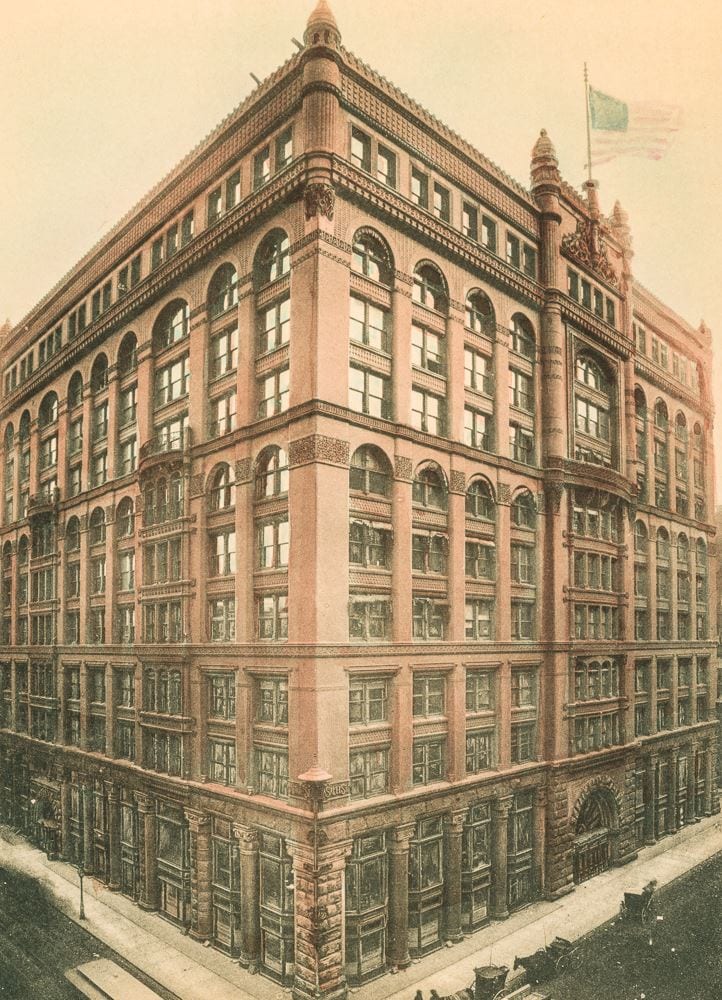
original undated chromolithograph of burham & root’s rookery building (1888). possibly from american architect and building news.
courtesy of bldg. 51 archive.
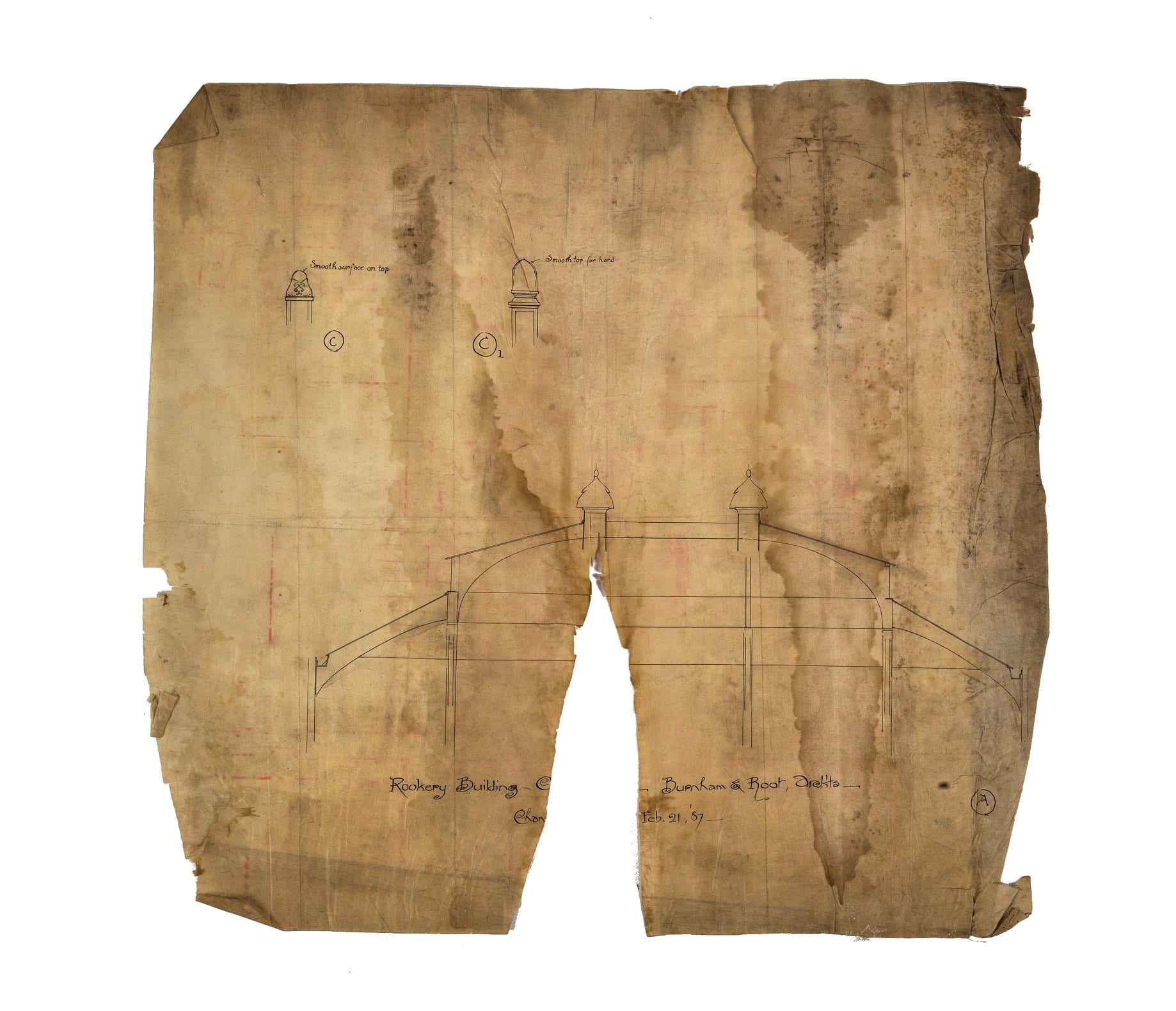
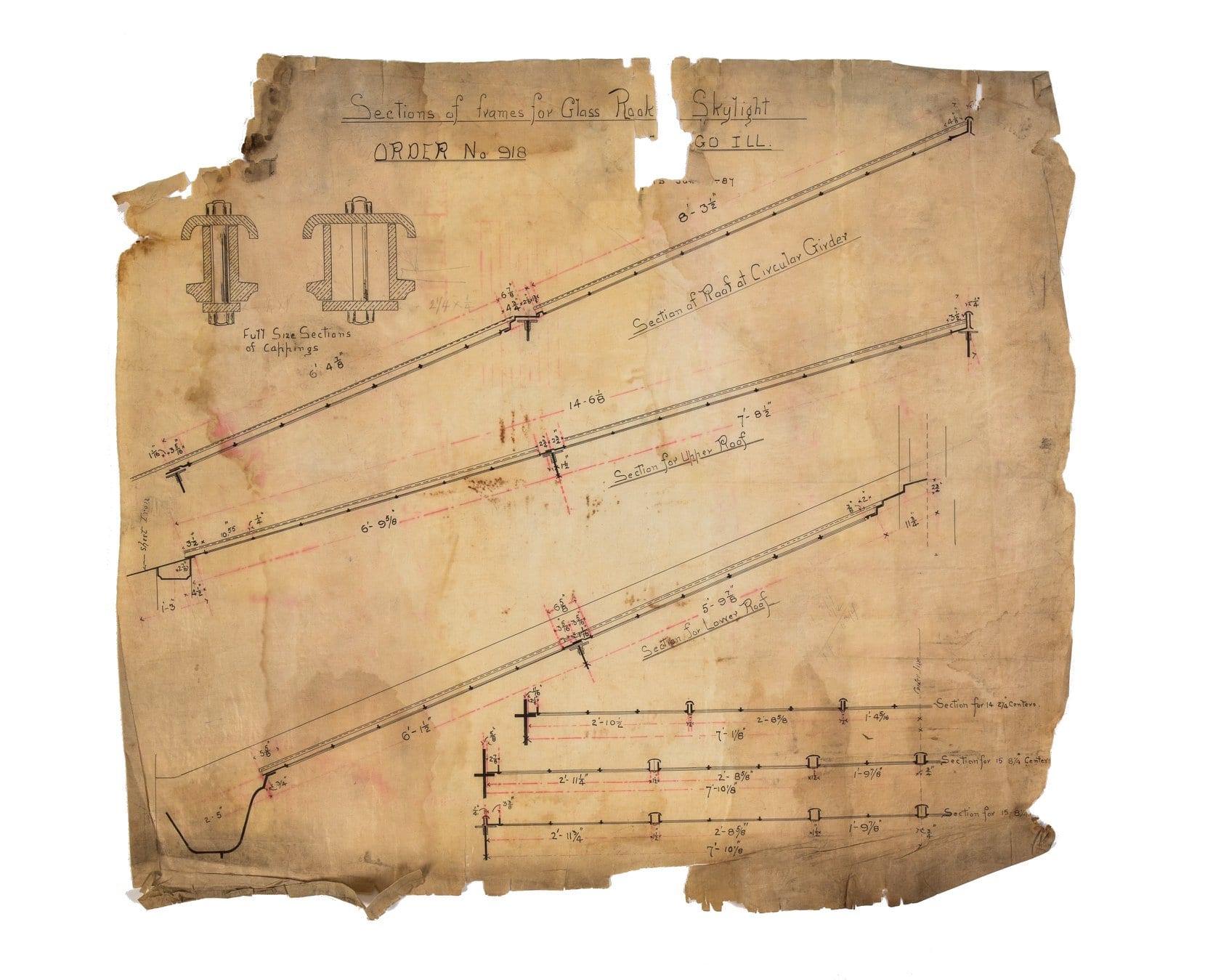
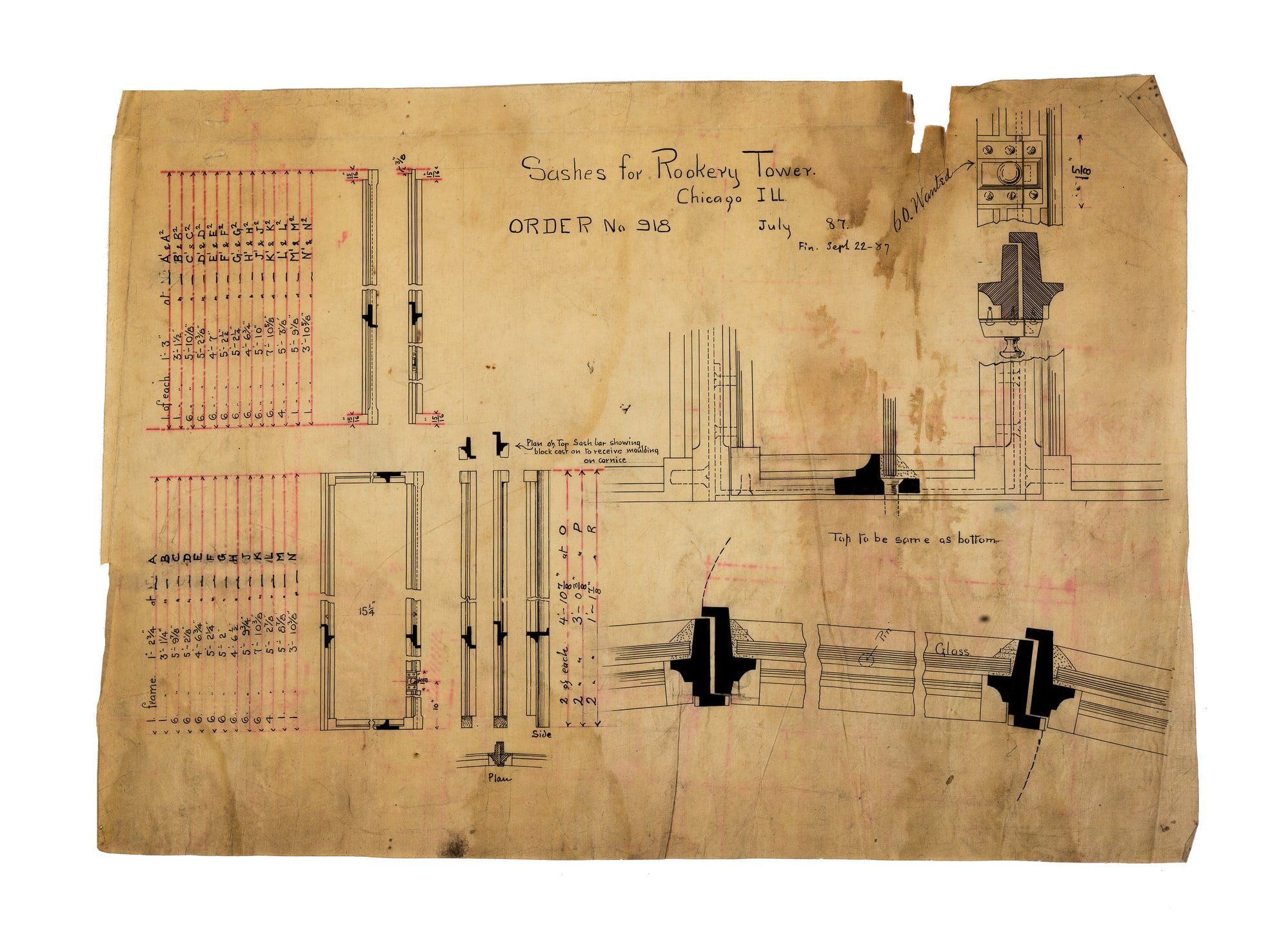
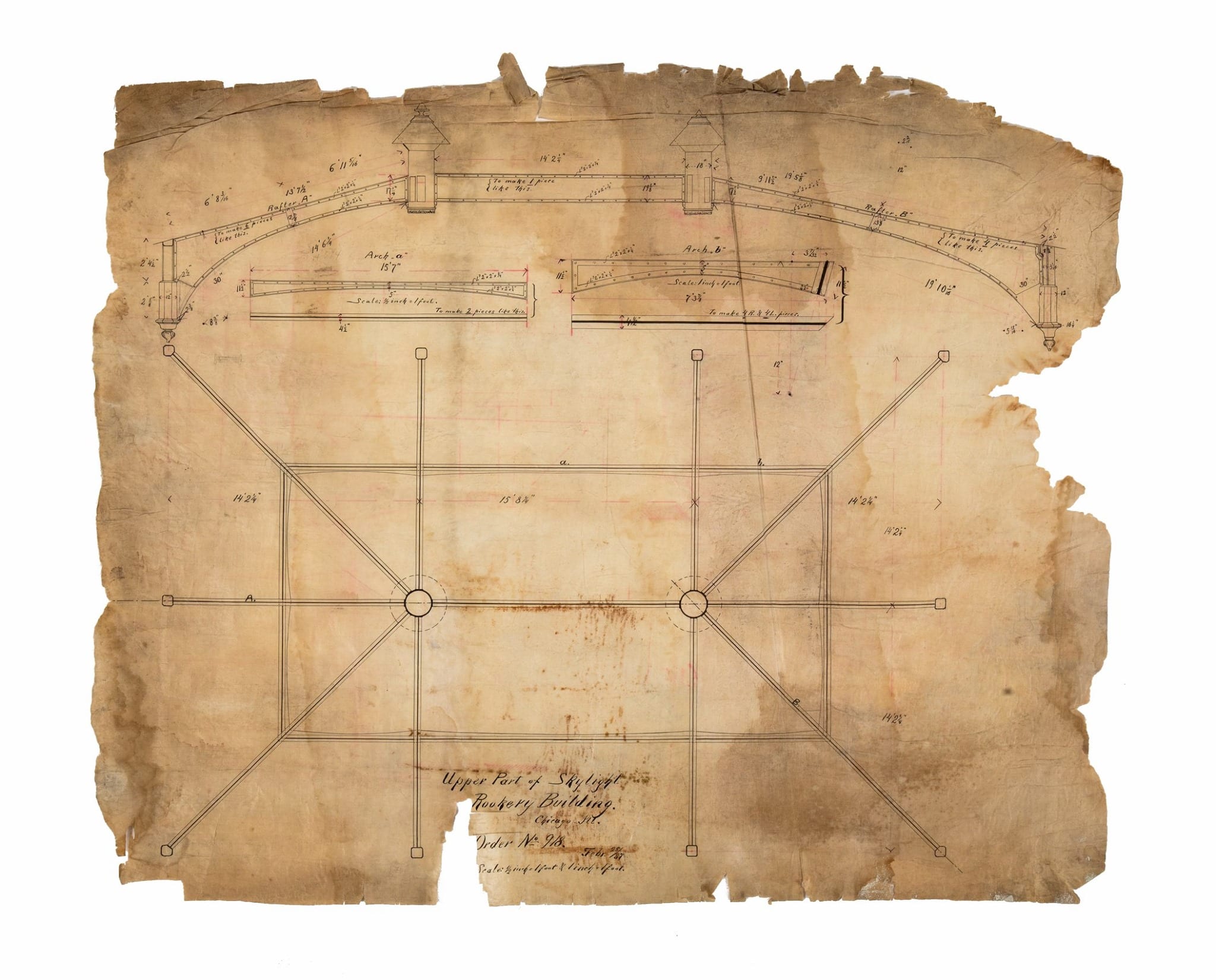
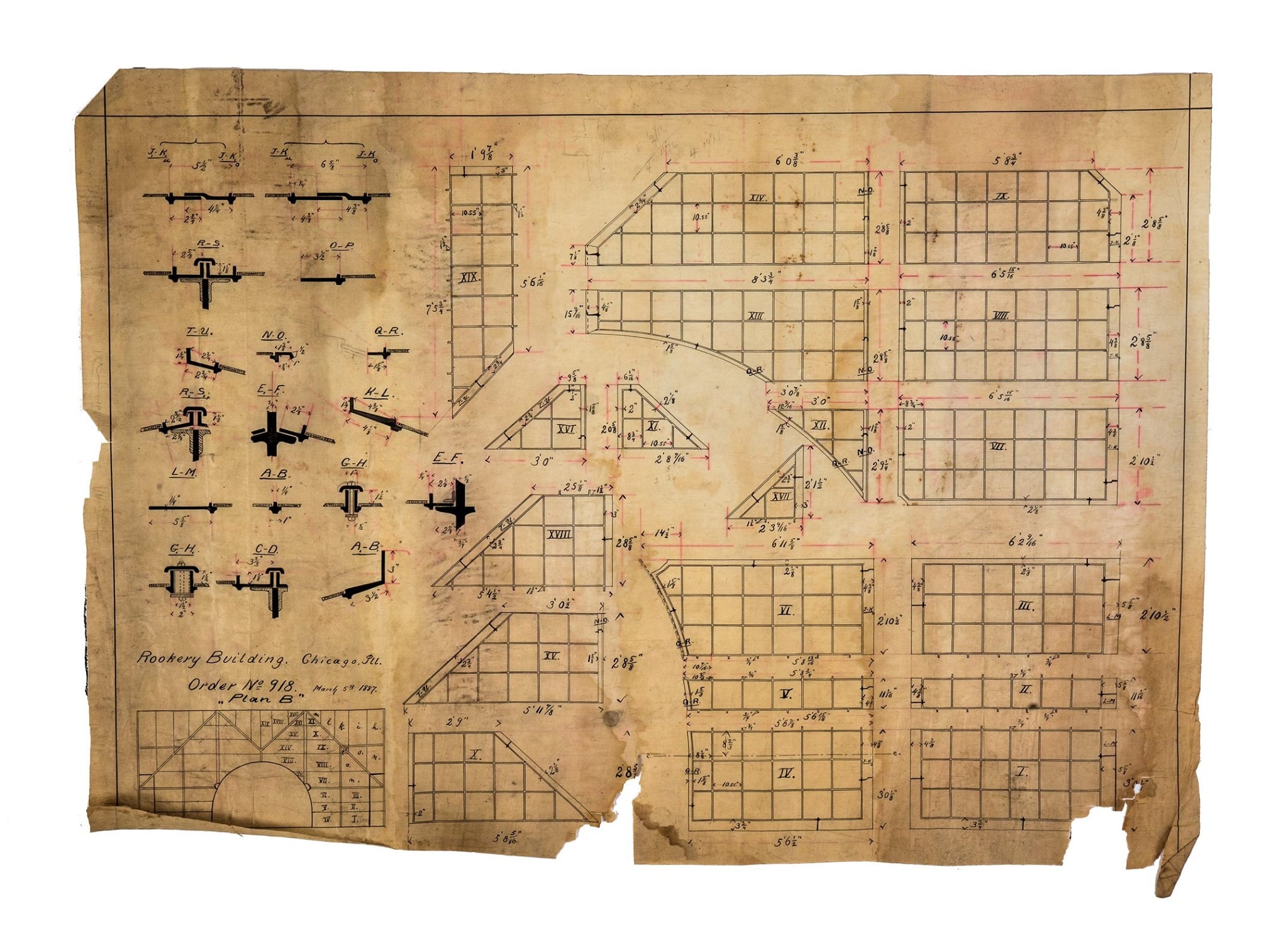
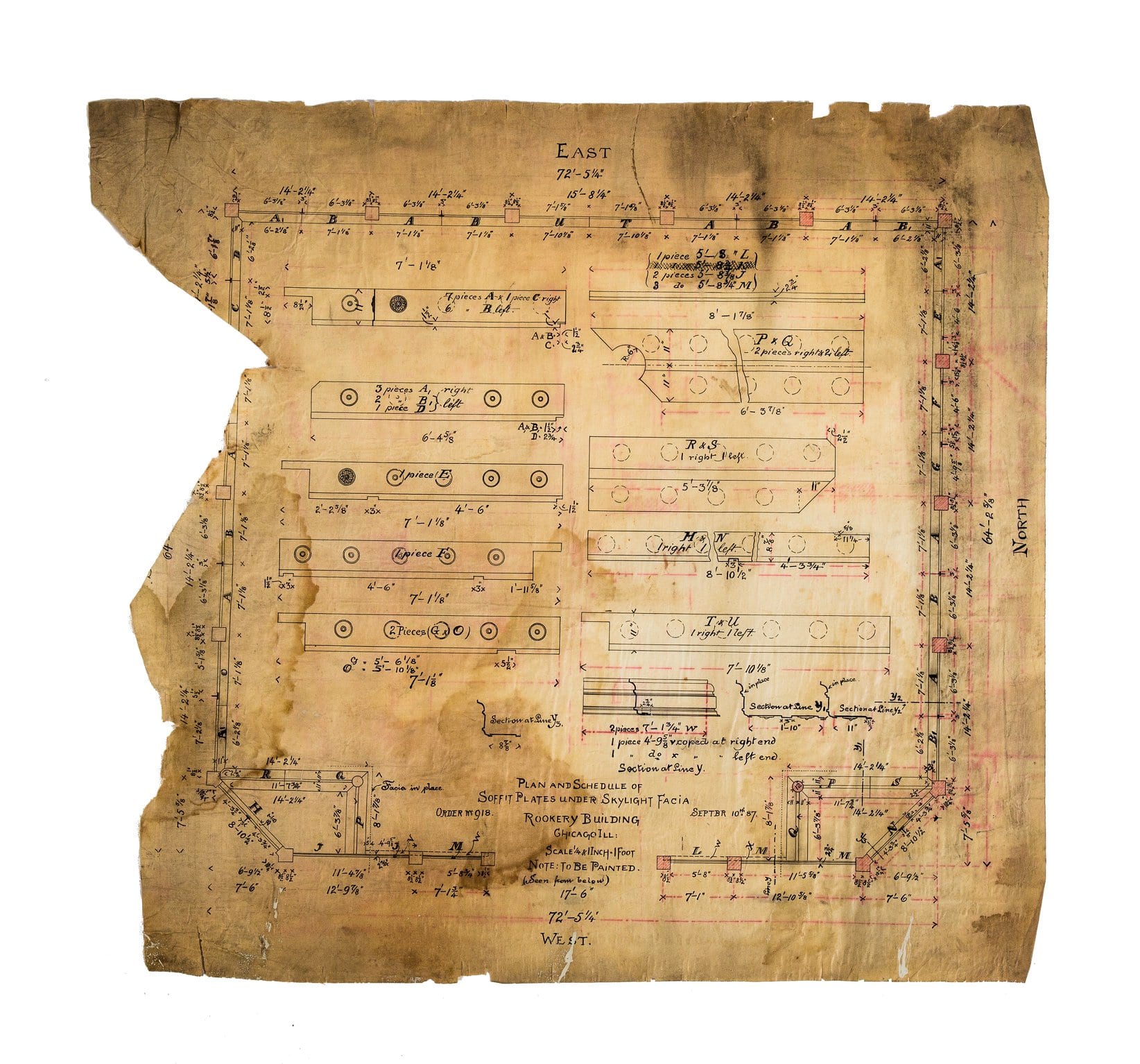
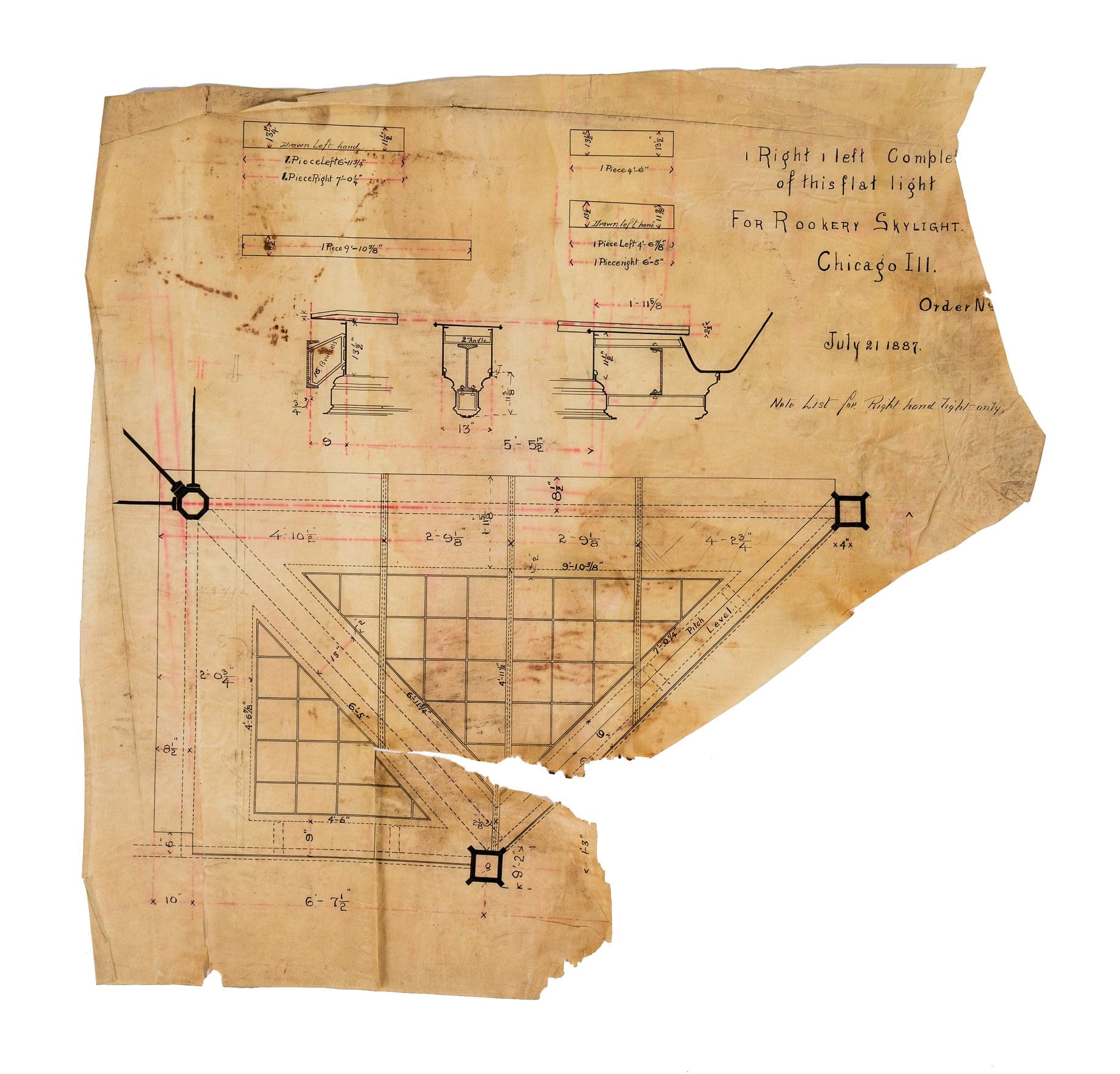
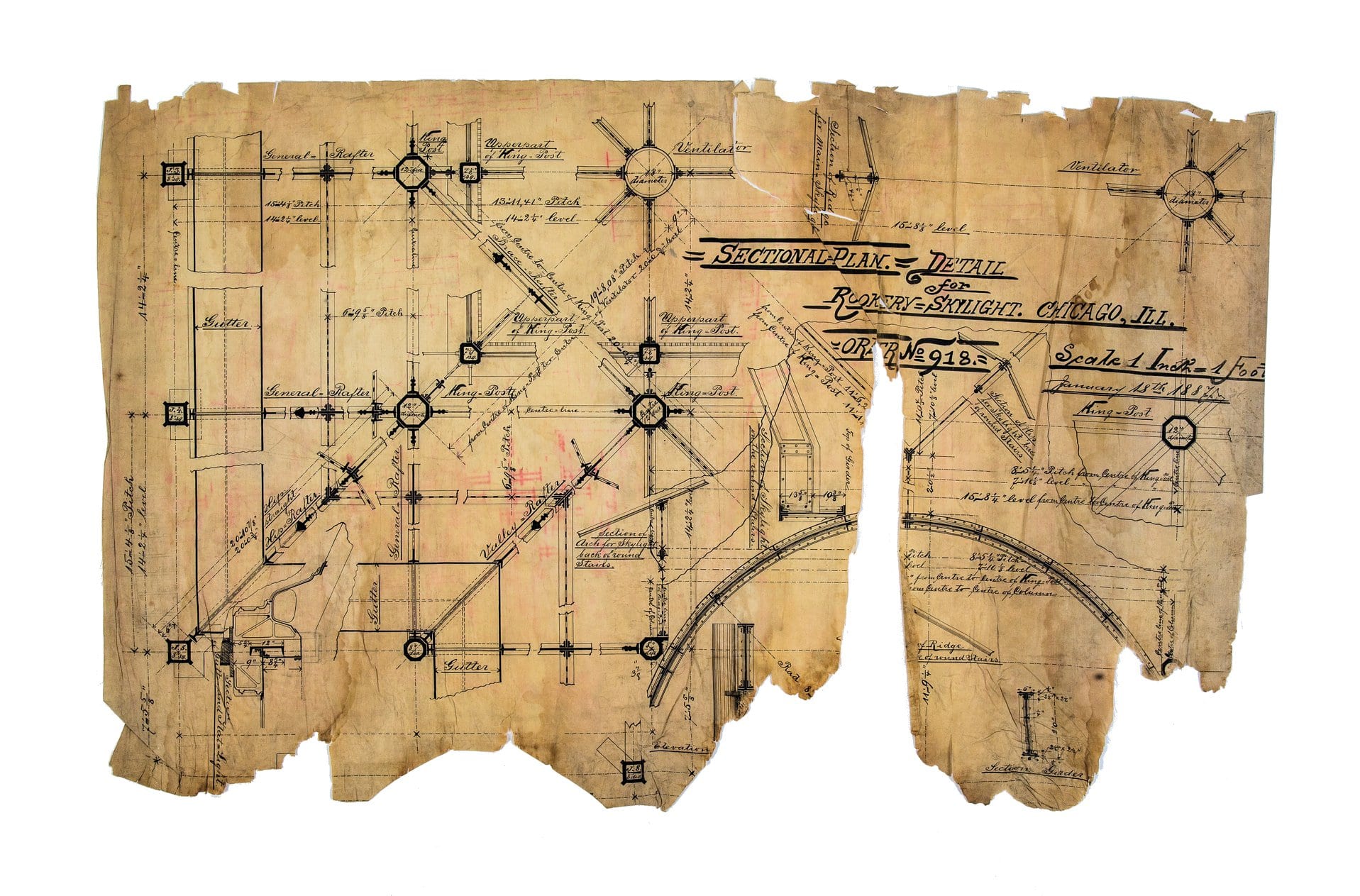
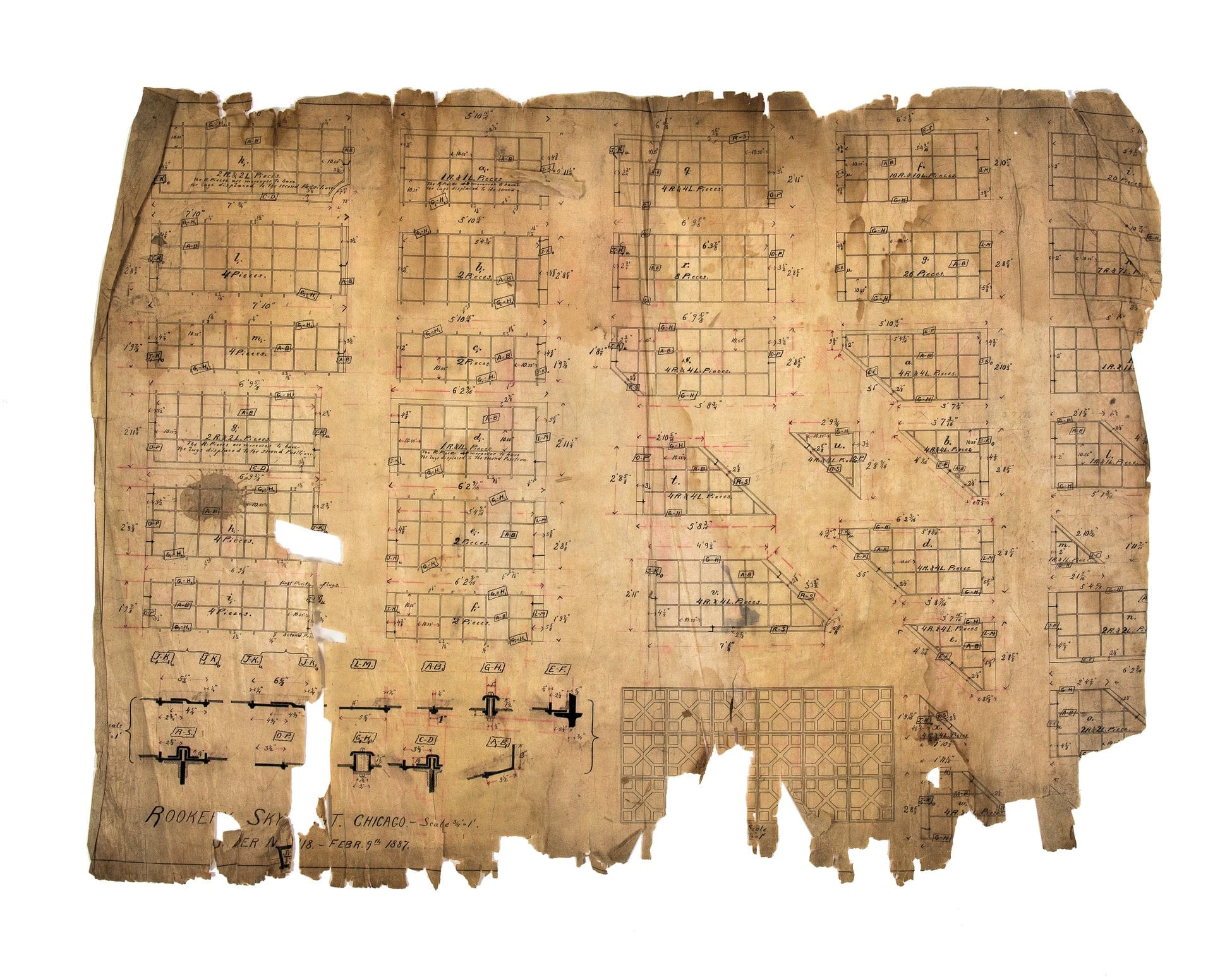
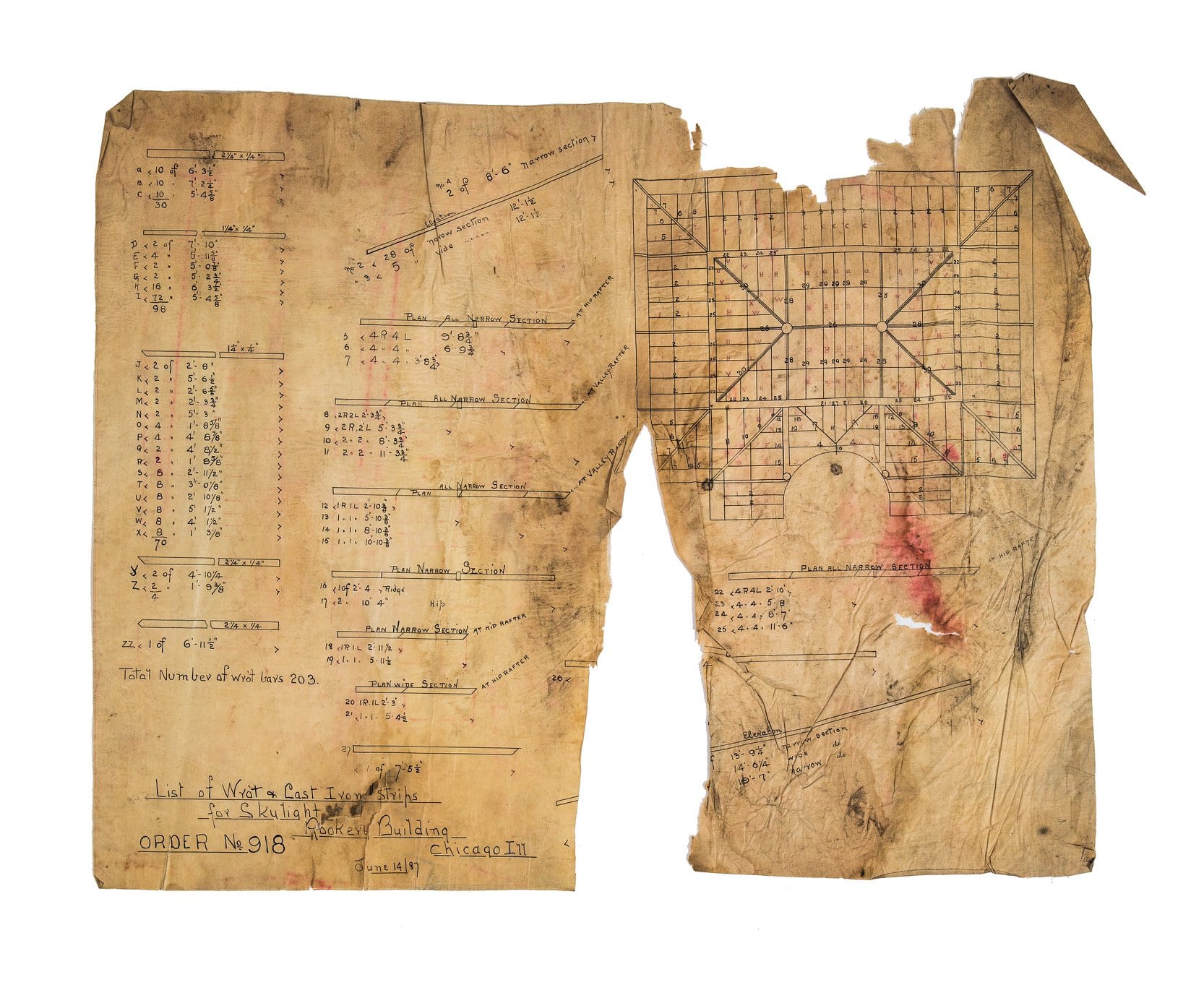
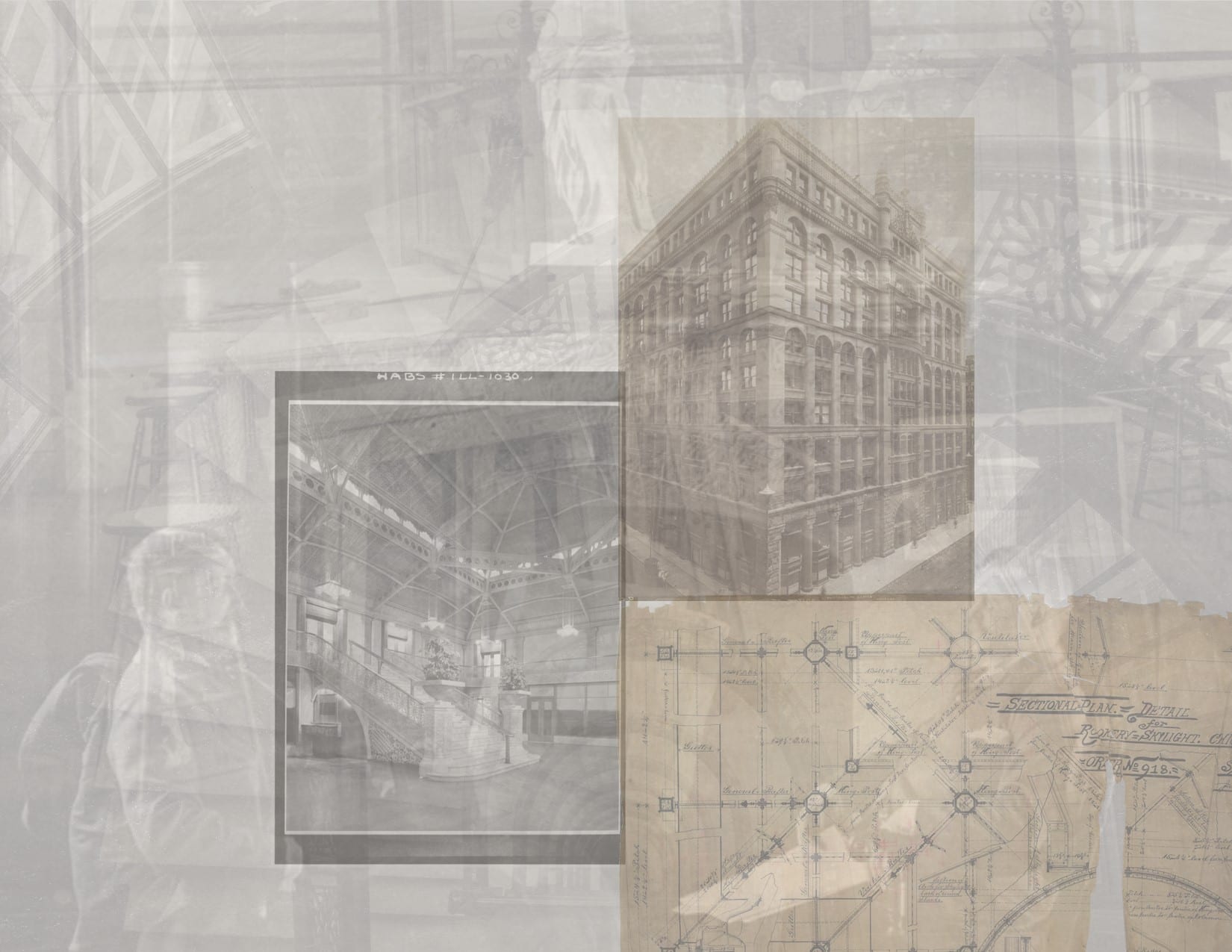
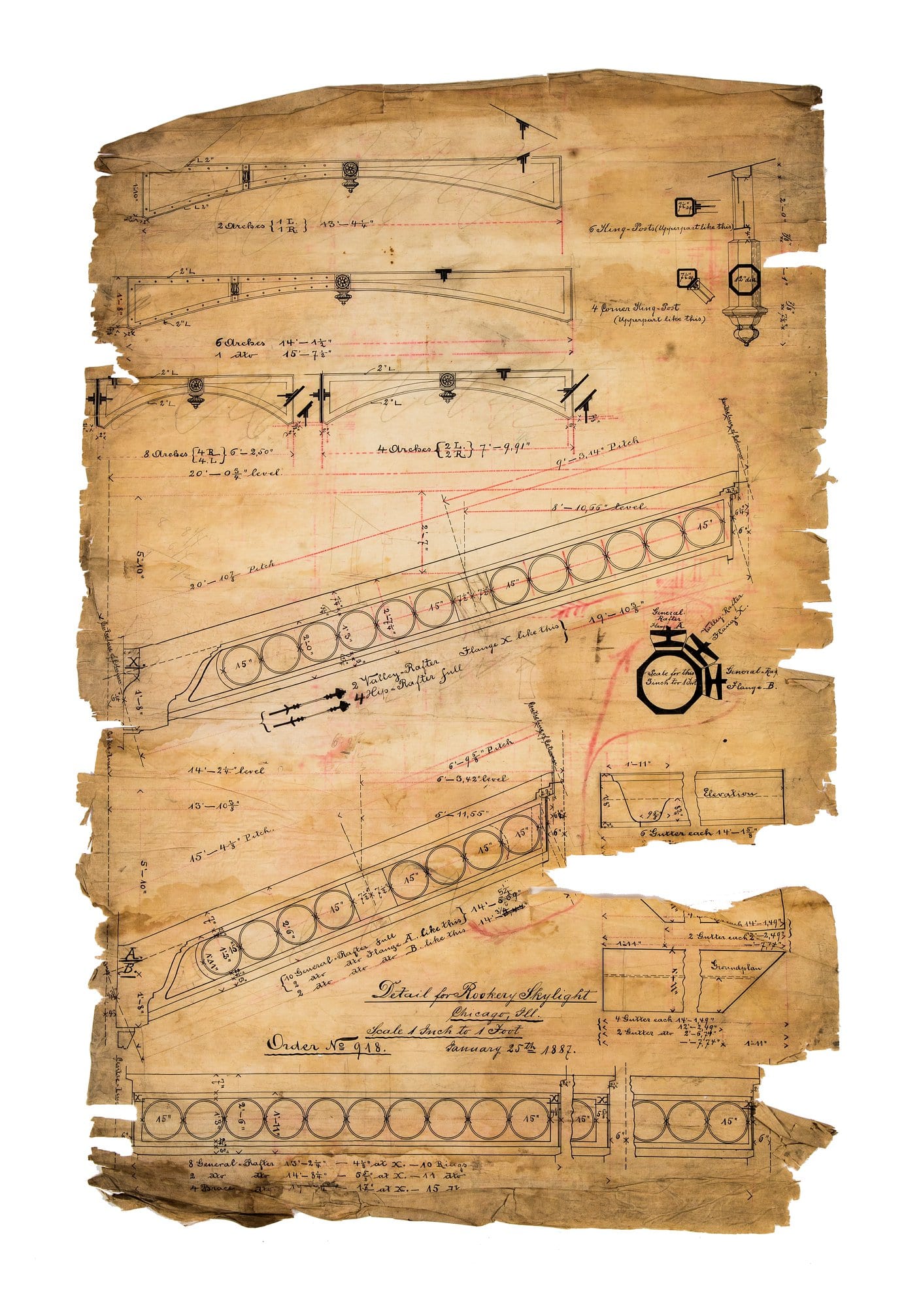 original drawings for burnham and root’s rookery building (1888).
courtesy of bldg. 51 archive.
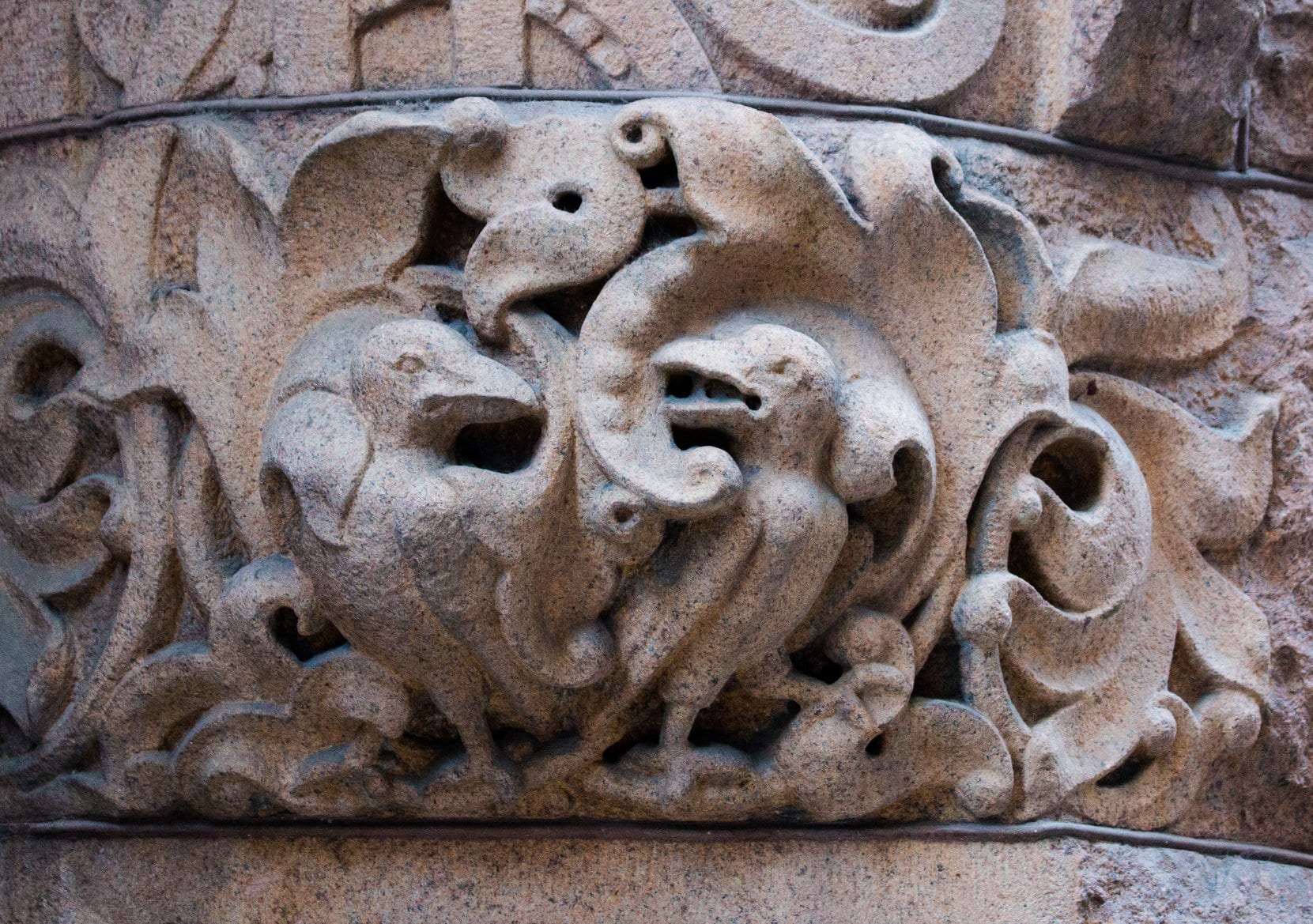
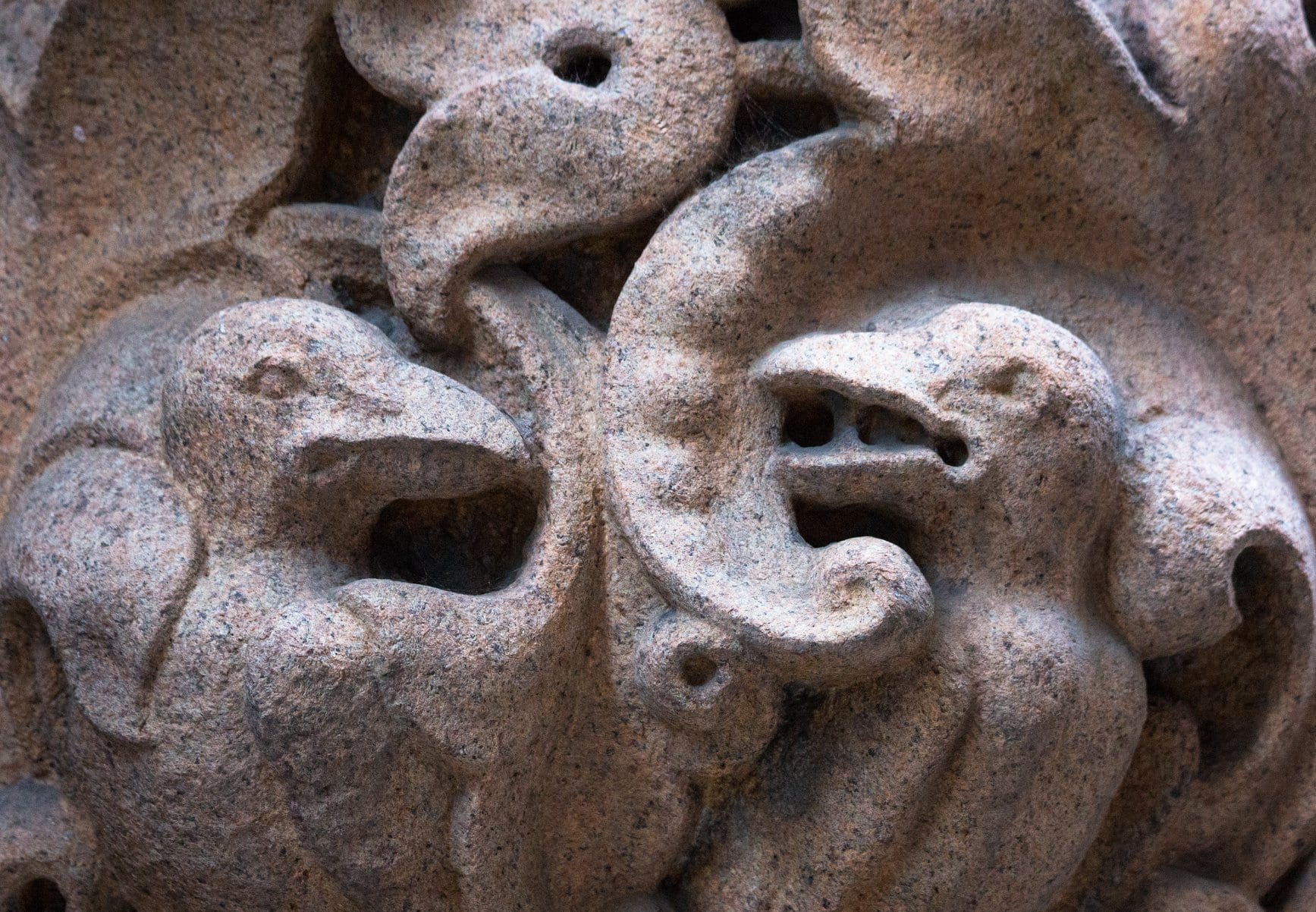
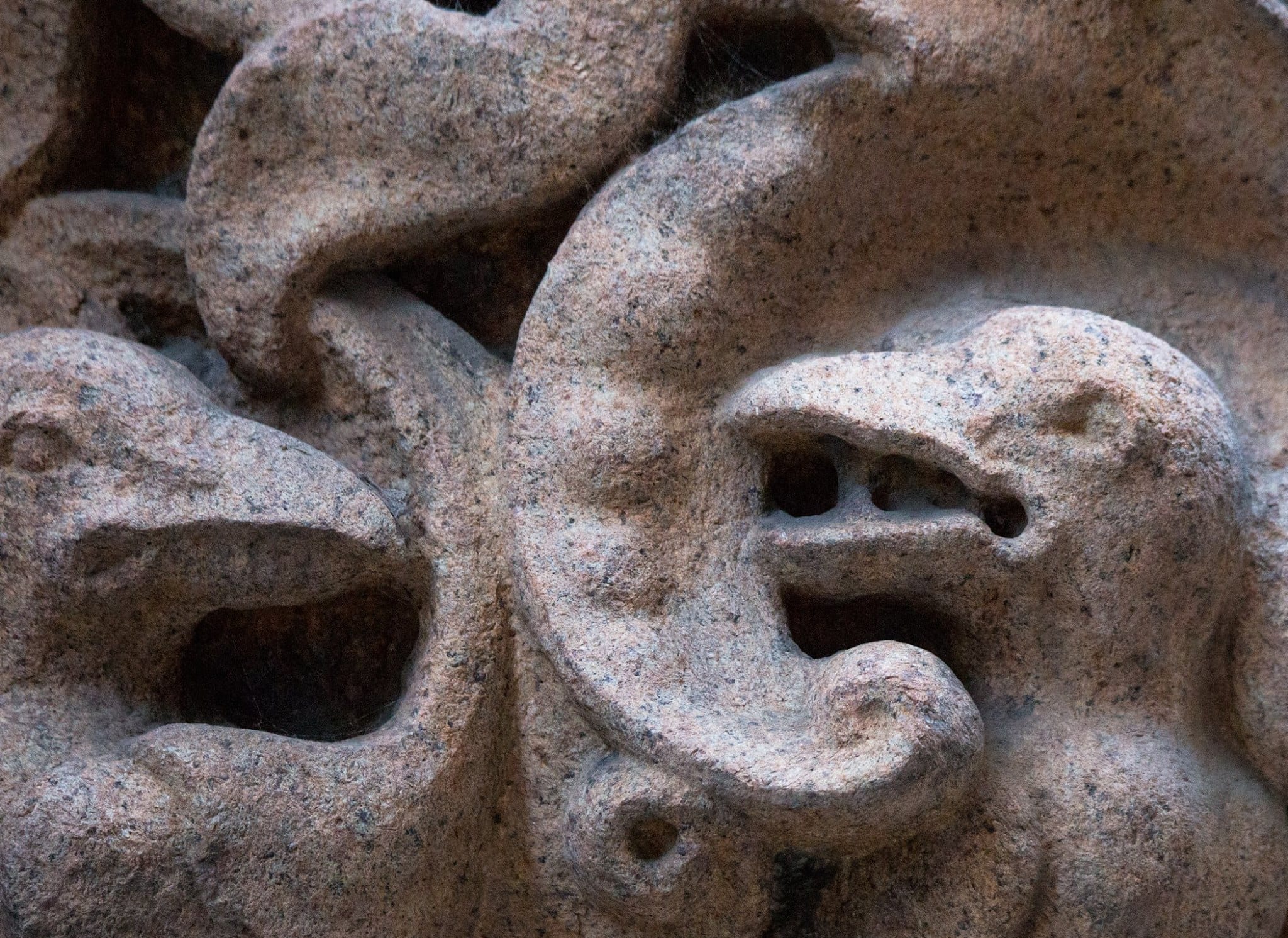
rookery building’s hand-carved red granite rooks designed by john wellborn root. the rooks flank the building’s lasalle street arched entrance. building completed in 1886. burnham and root, architects.
courtesy of bldg. 51 archive.
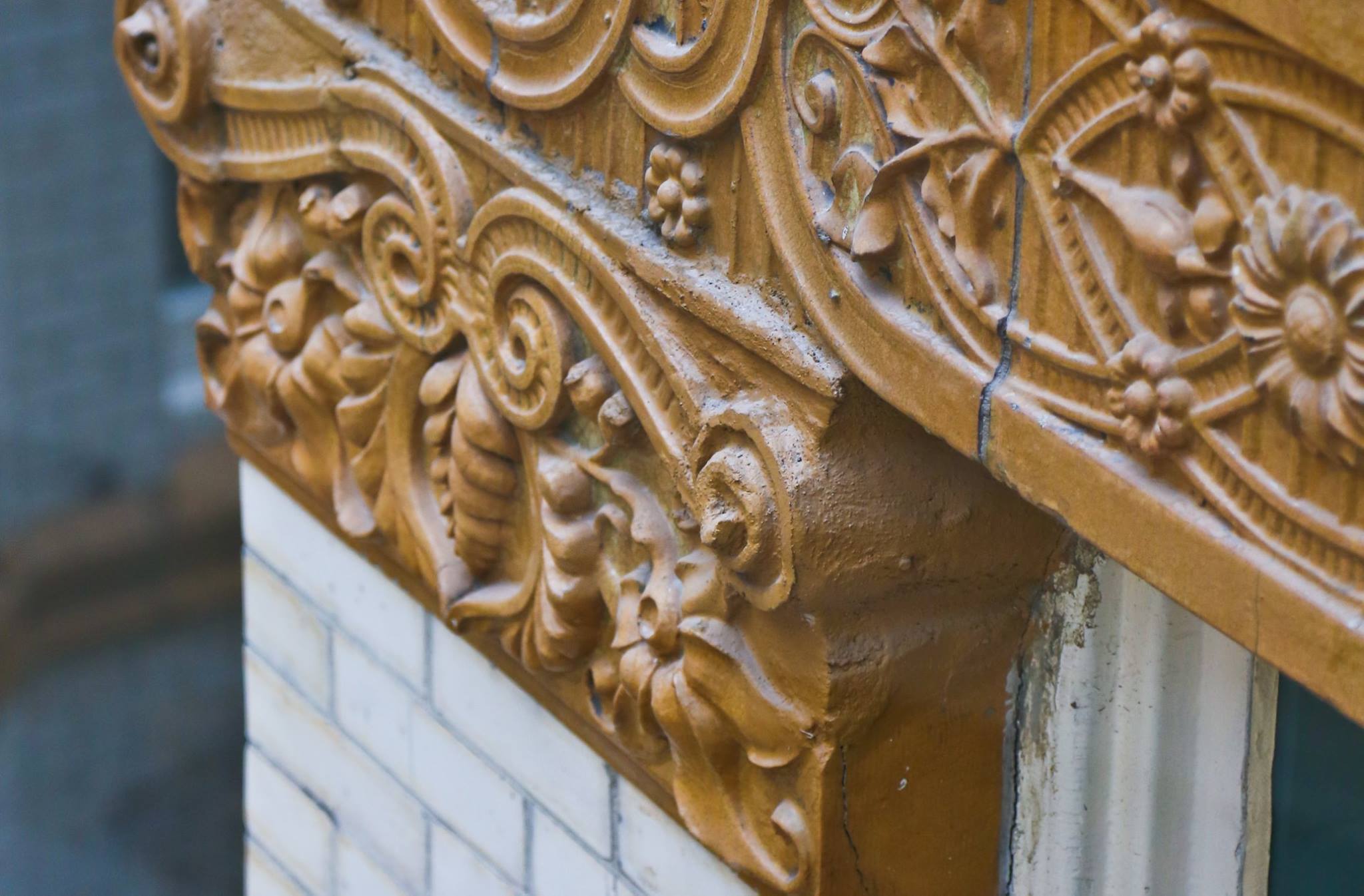
rookery building’s central light court gold-colored glazed terra cotta. designed by j.w. root, executed by northwestern terra cotta works, 1888.
courtesy of the bldg. 51 archive.
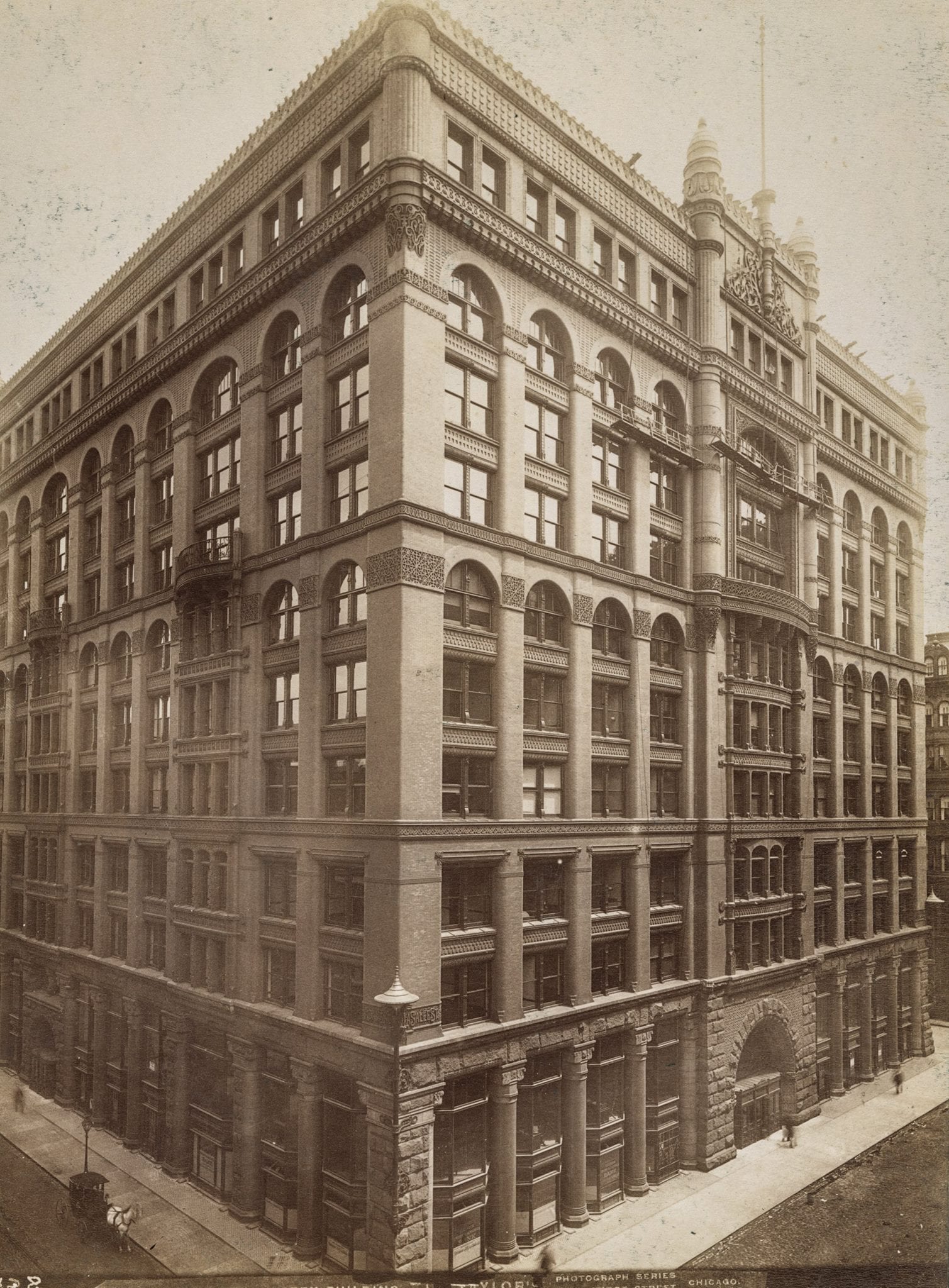
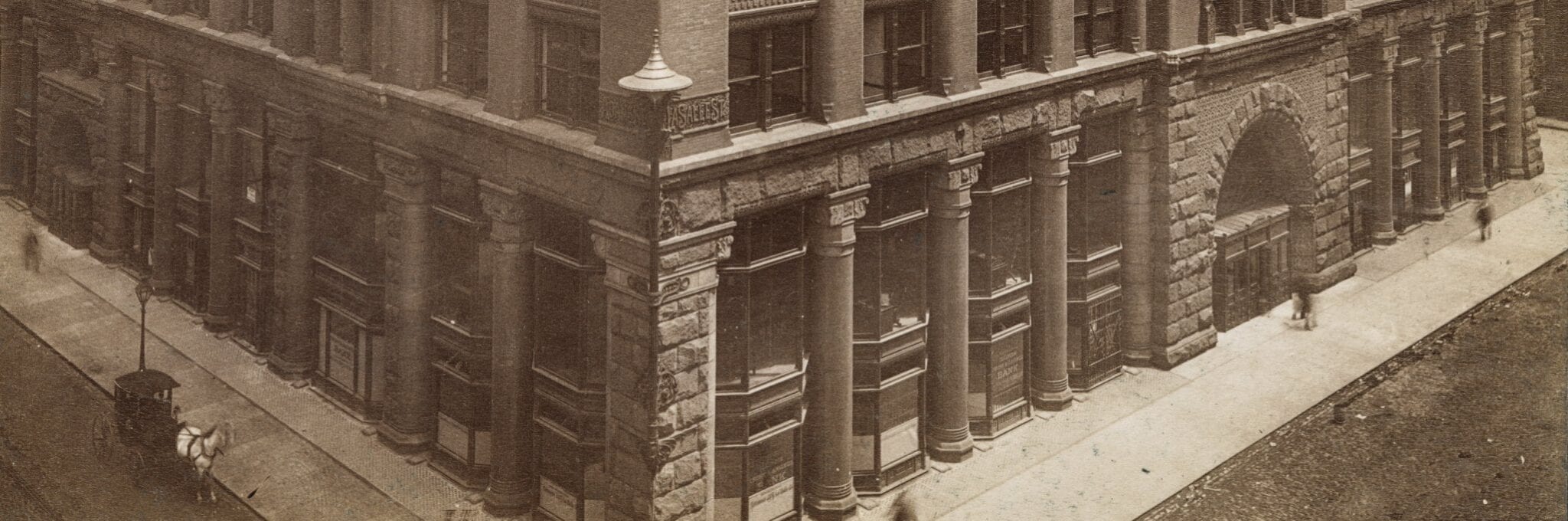
a selection of j.w. taylor albumen prints i scanned and edited the other day while working at the ryerson and burnham archive.
to see additional prints visit http://digital-libraries.saic.edu/cdm/ref/collection/findingaids/id/17541.
i chose a few buildings i find most appealing (e.g venetian, rookery, field store, etc.), along with two bird’s eye views (the one taken from adler and sullivan’s auditorium building tower is looking north).
included, are detailed views of first floor storefronts and street activity around each of the buildings. the post with ornament brackets wrapping around the northwest corner of the rookery is espeically interesting.
all images courtesy of ryerson and burnham archive, art institute of chicago.
taylor photographed buildings (including interiors) and landscapes across the country from 1889-1916.
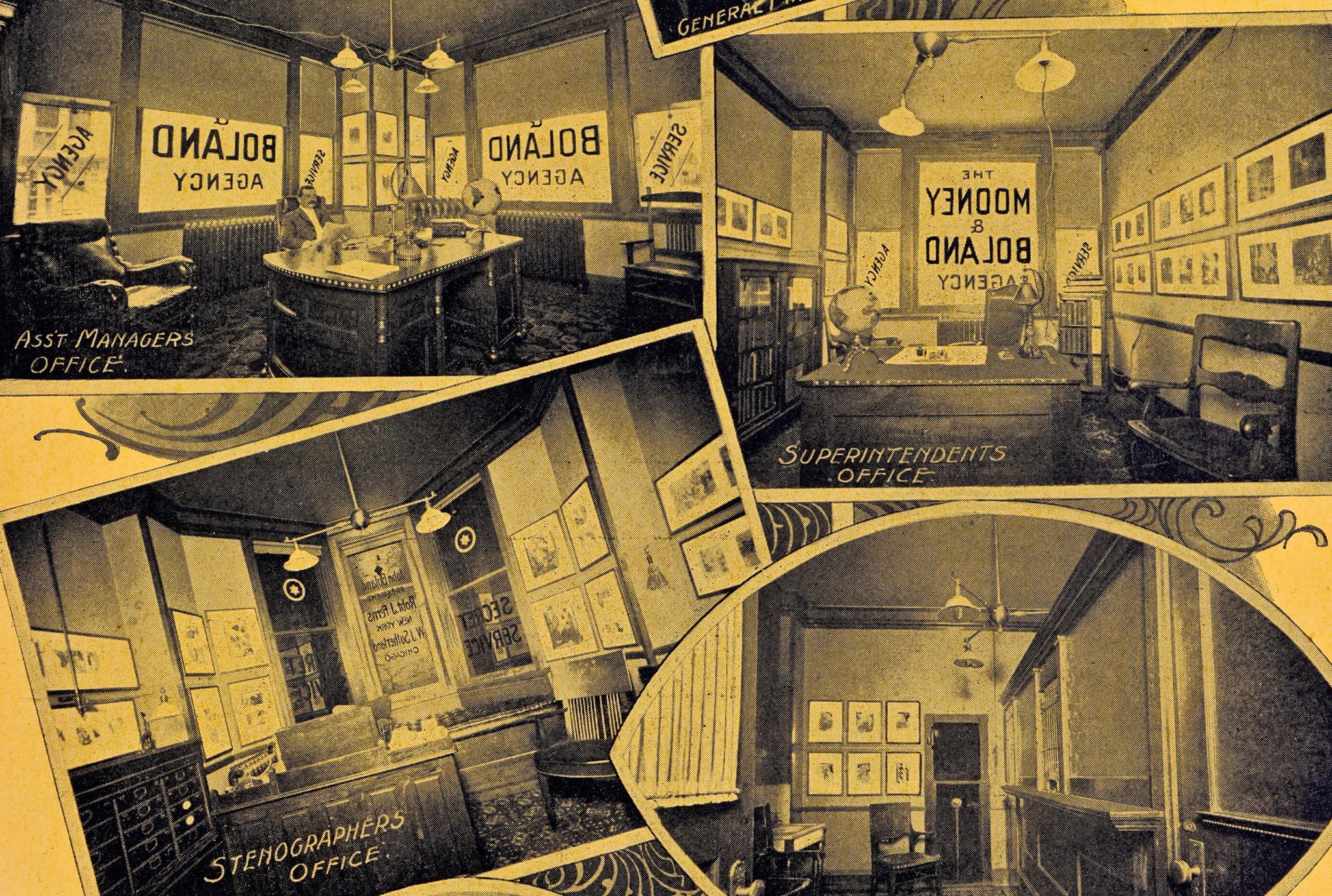
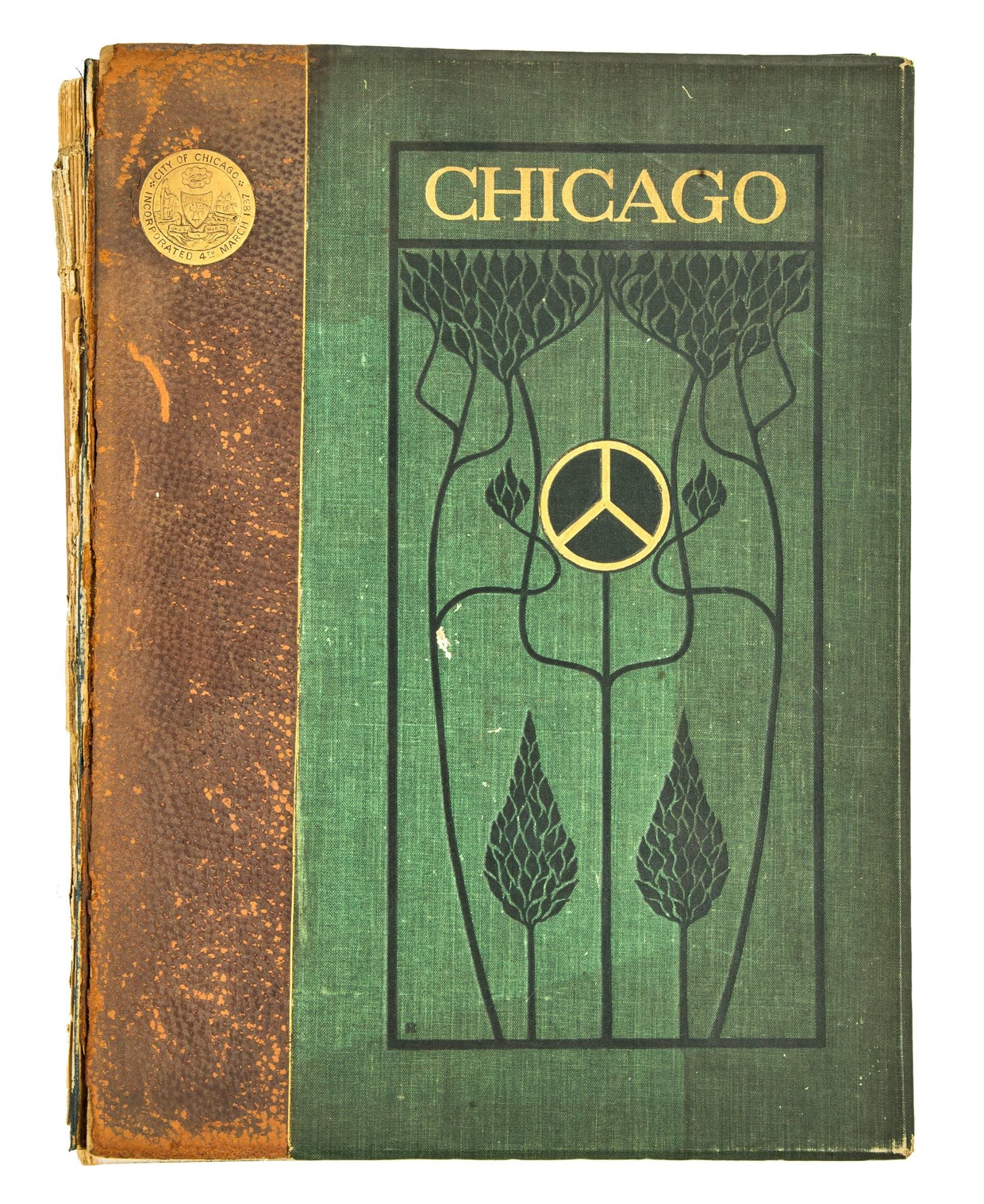
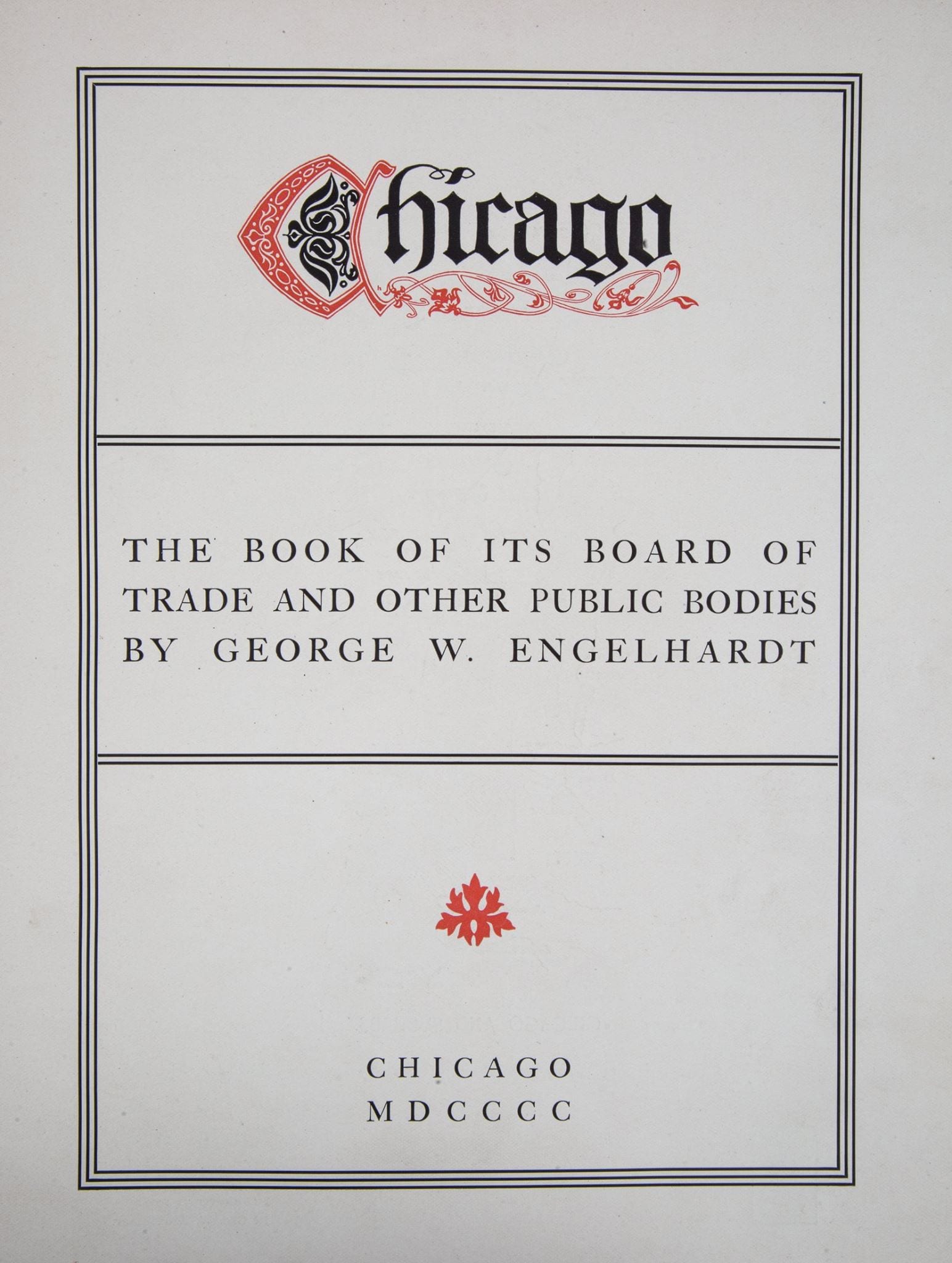
finally found and purchased this rare and incredibly resourceful book on chicago businesses banks, buildings, etc. perhaps most importantly, the book contains several images of period interiors – including home insurance, rookery, chicago stock exchange, etc.
will scan and upload more images.
i’m espeically interested in the jenney’s home insurance building (1885). i have been researching the methods used in its deconstruction/demolition in 1931 for weeks now.
courtesy of the bldg. 51 archive.
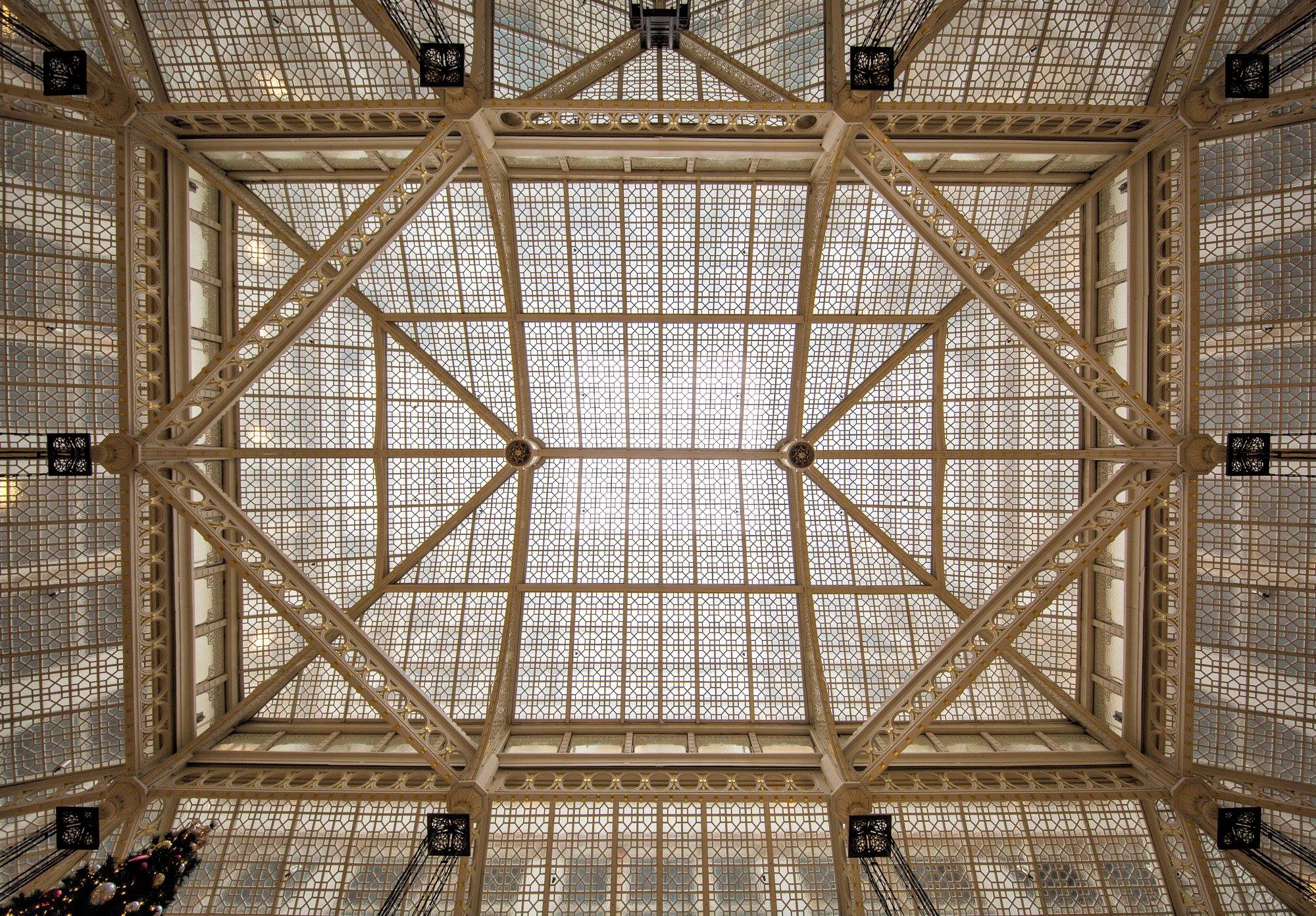
looking up at skylight from central court in burnham and root’s rookery building (1888).
courtesy of bldg. 51 archive.
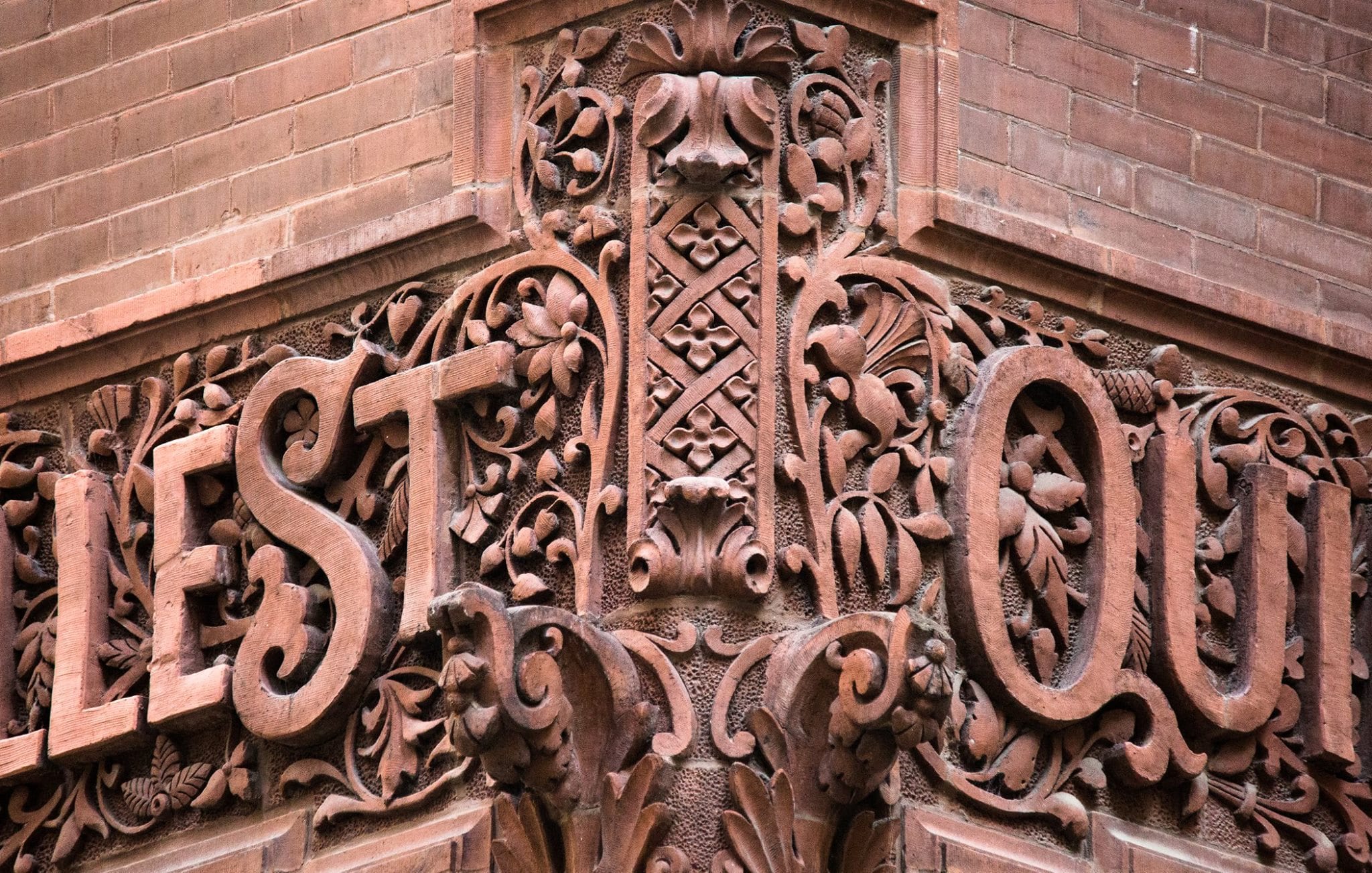
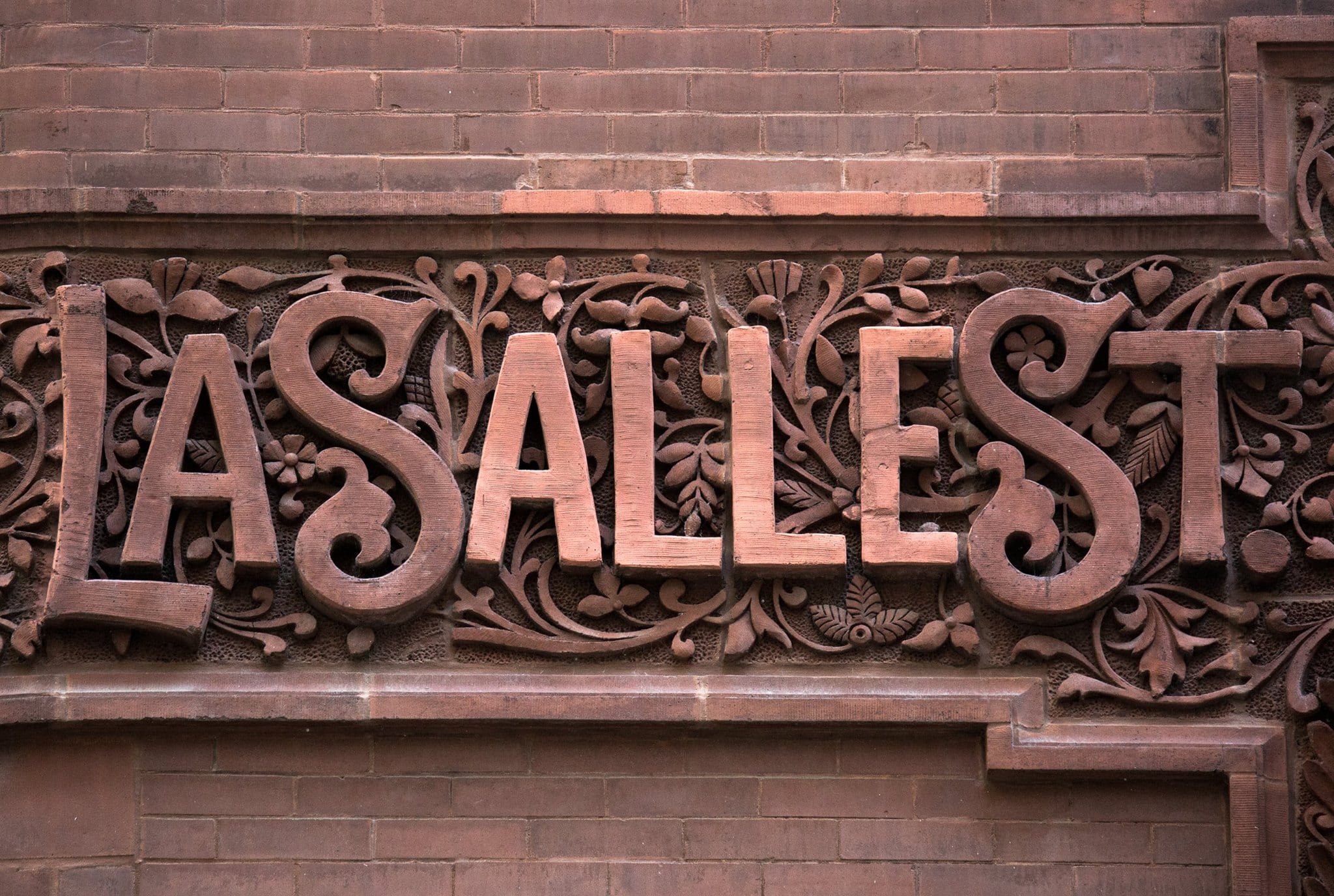
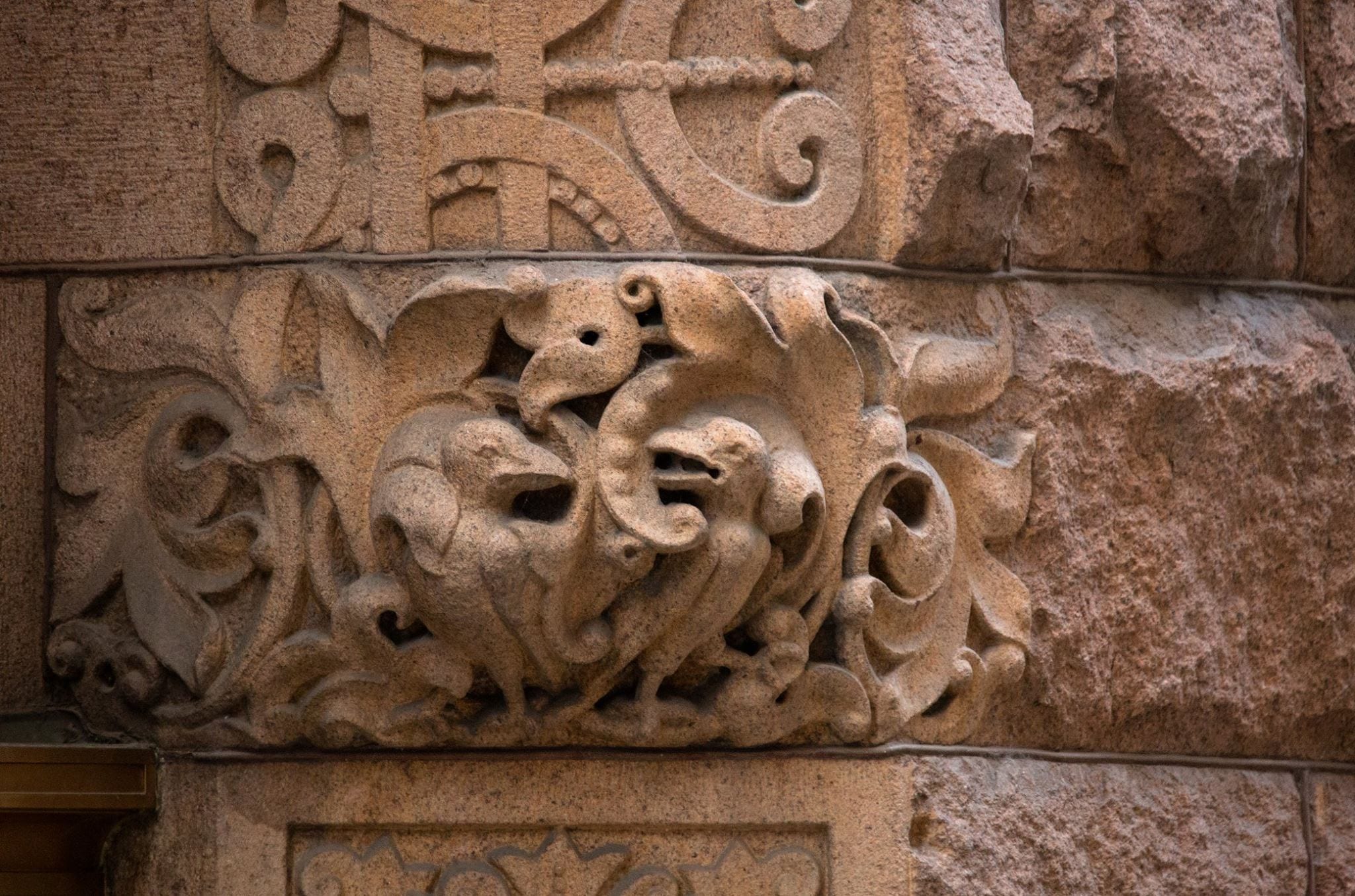
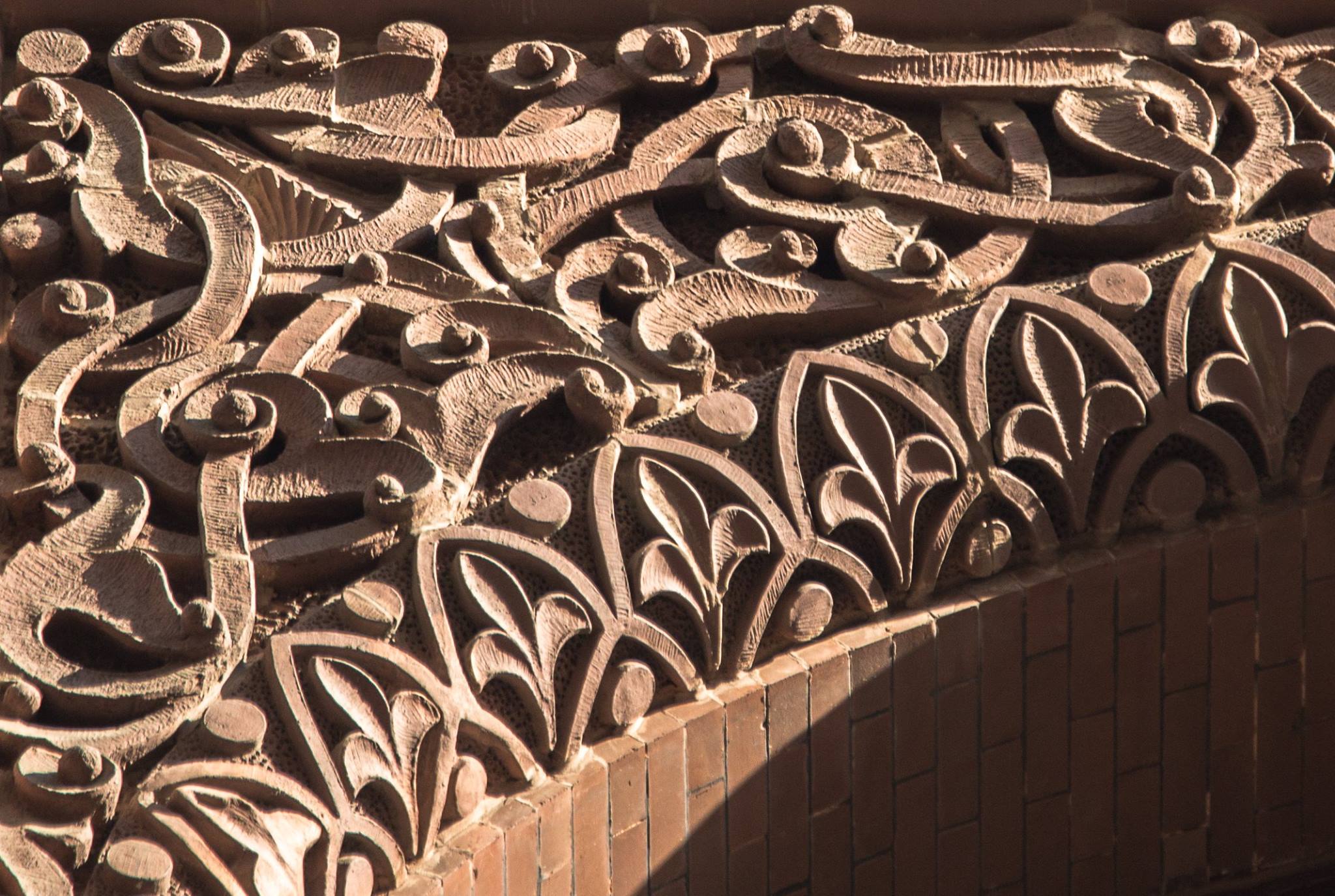
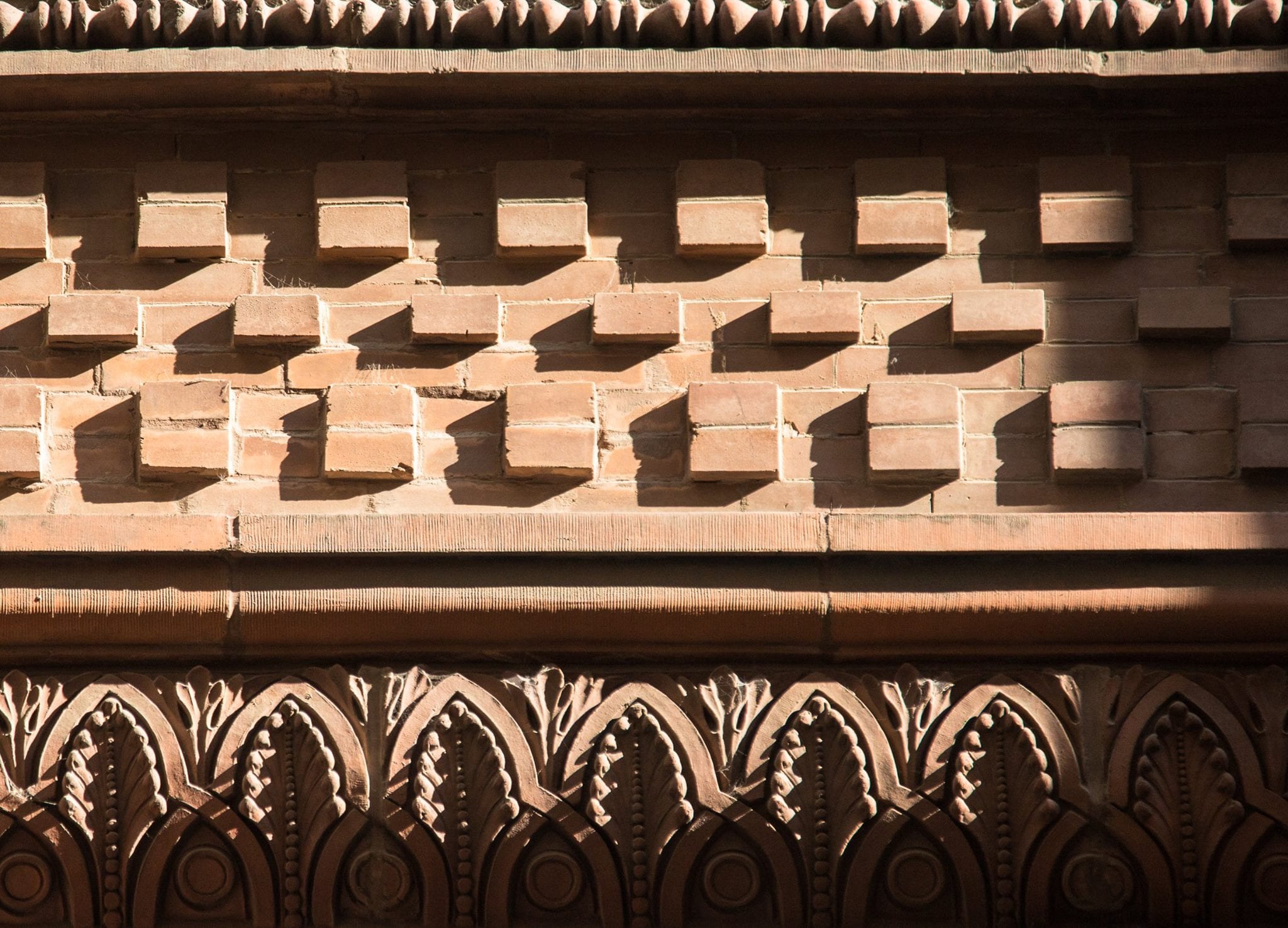
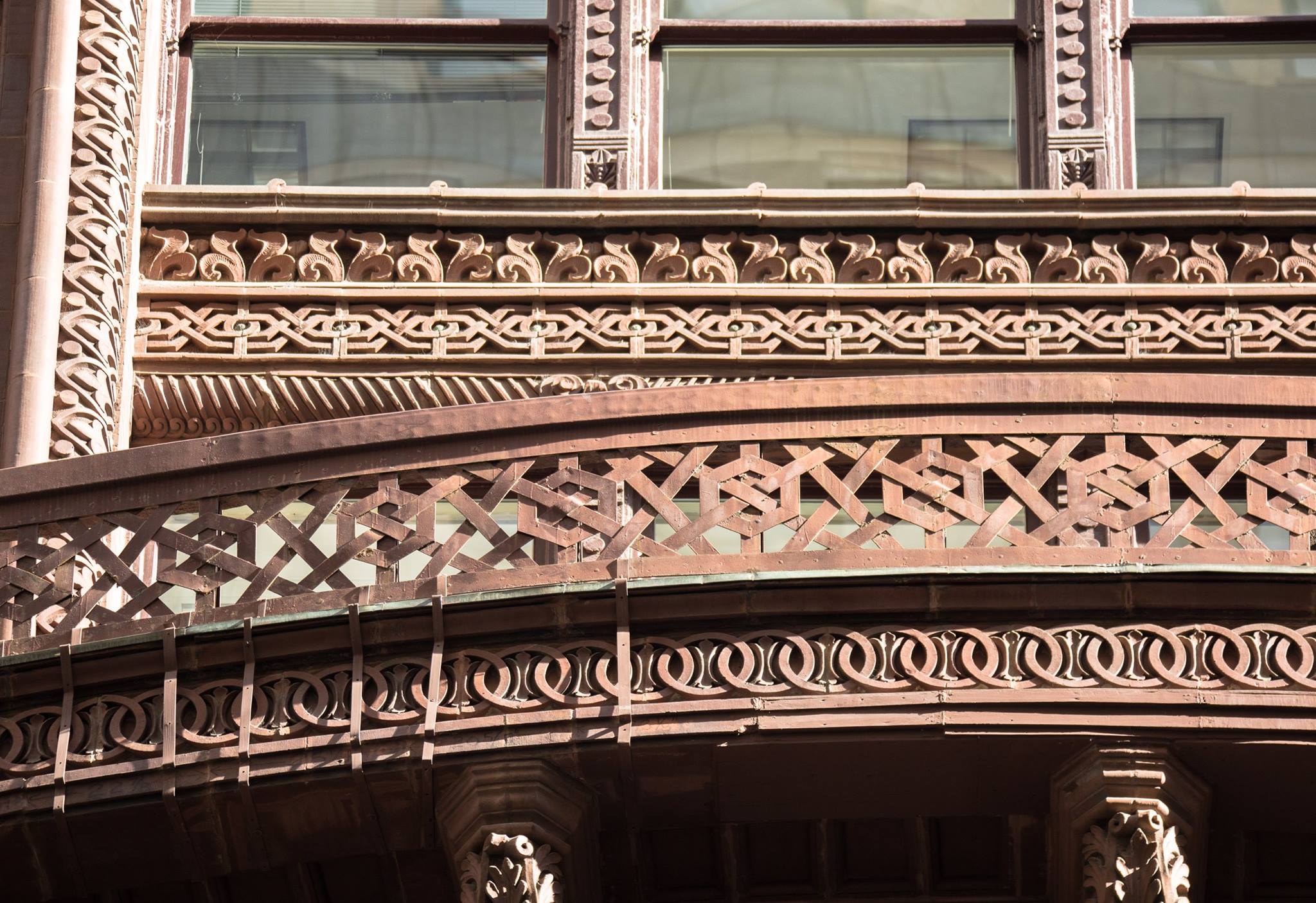
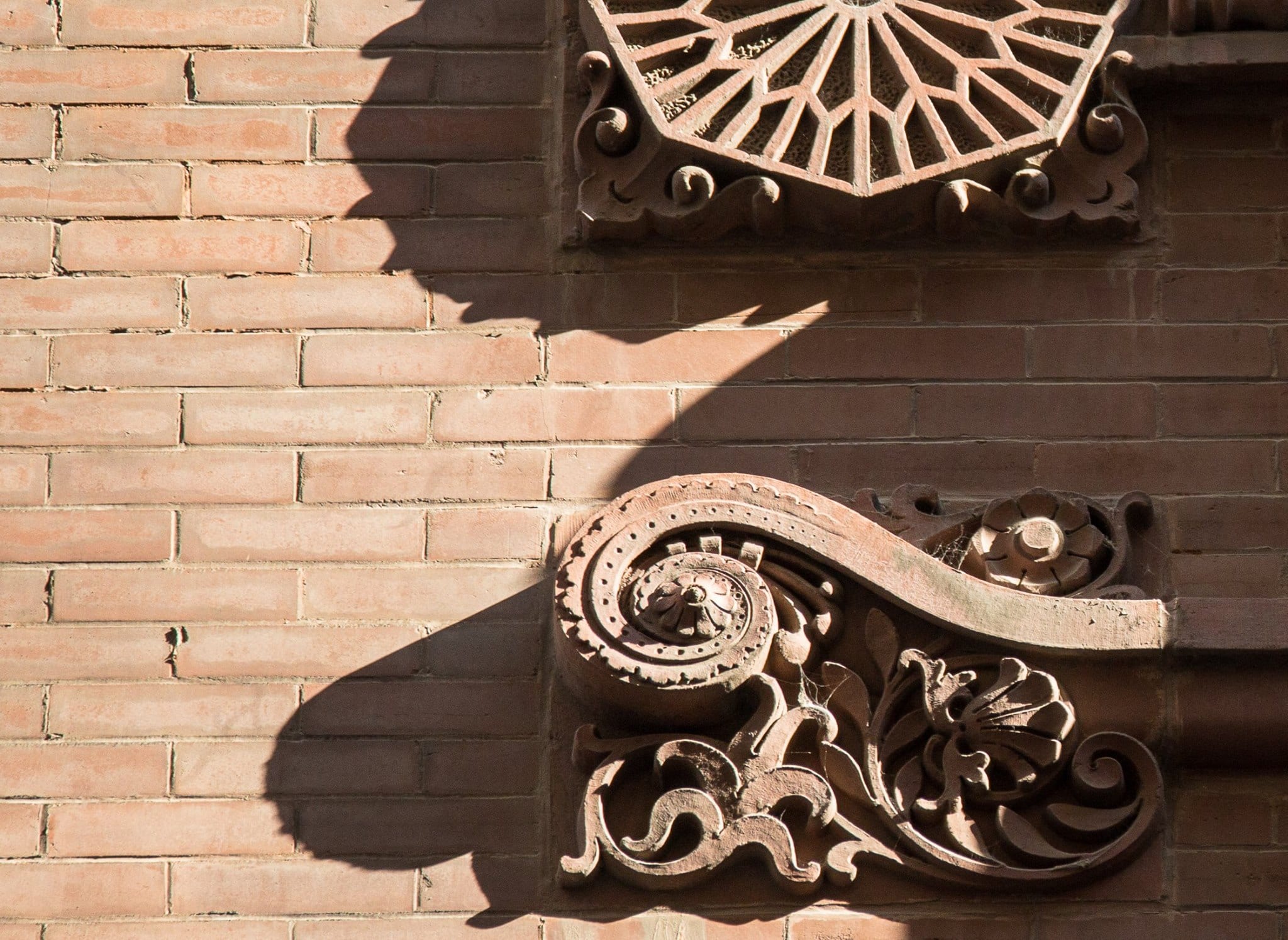
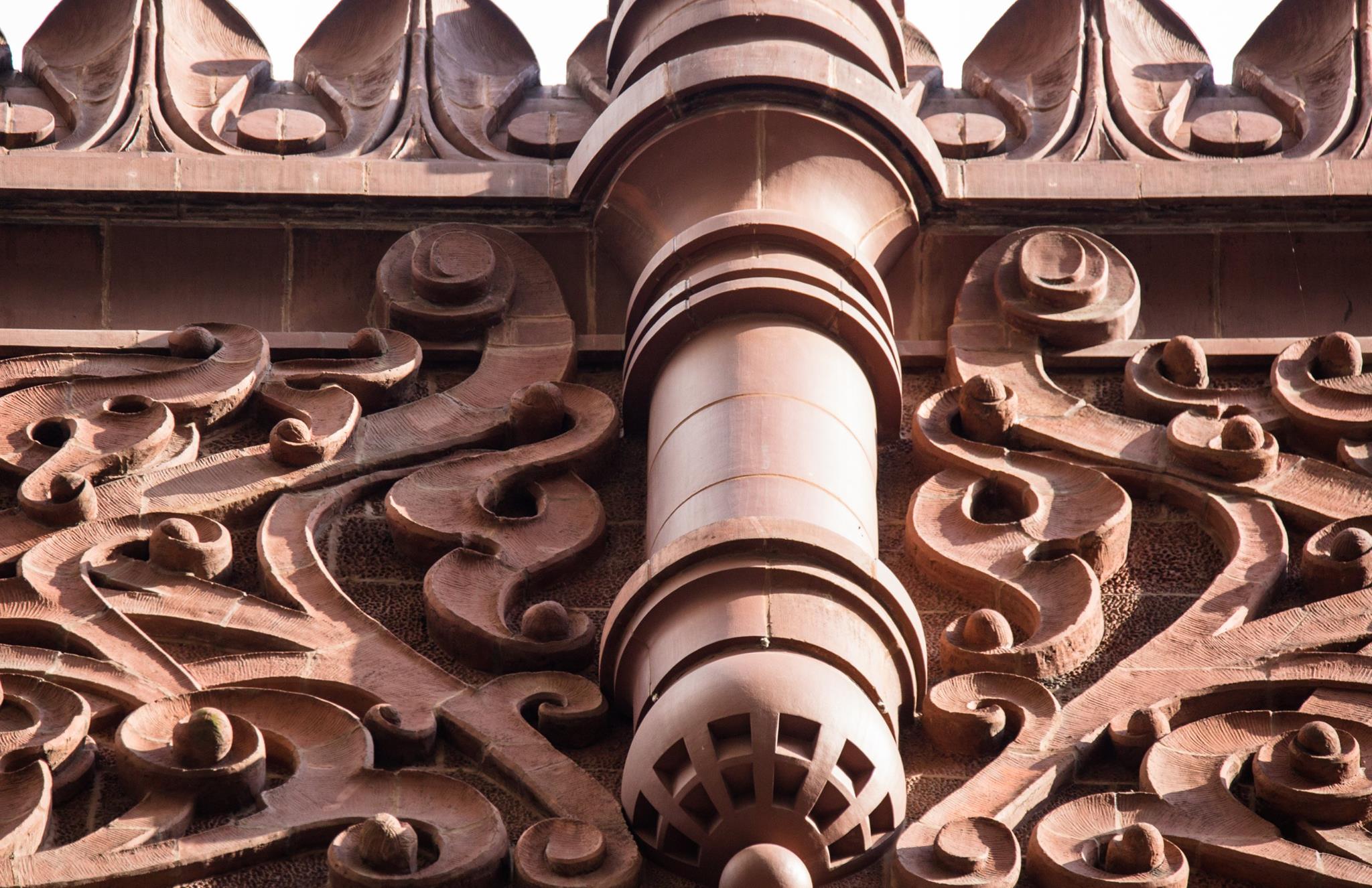
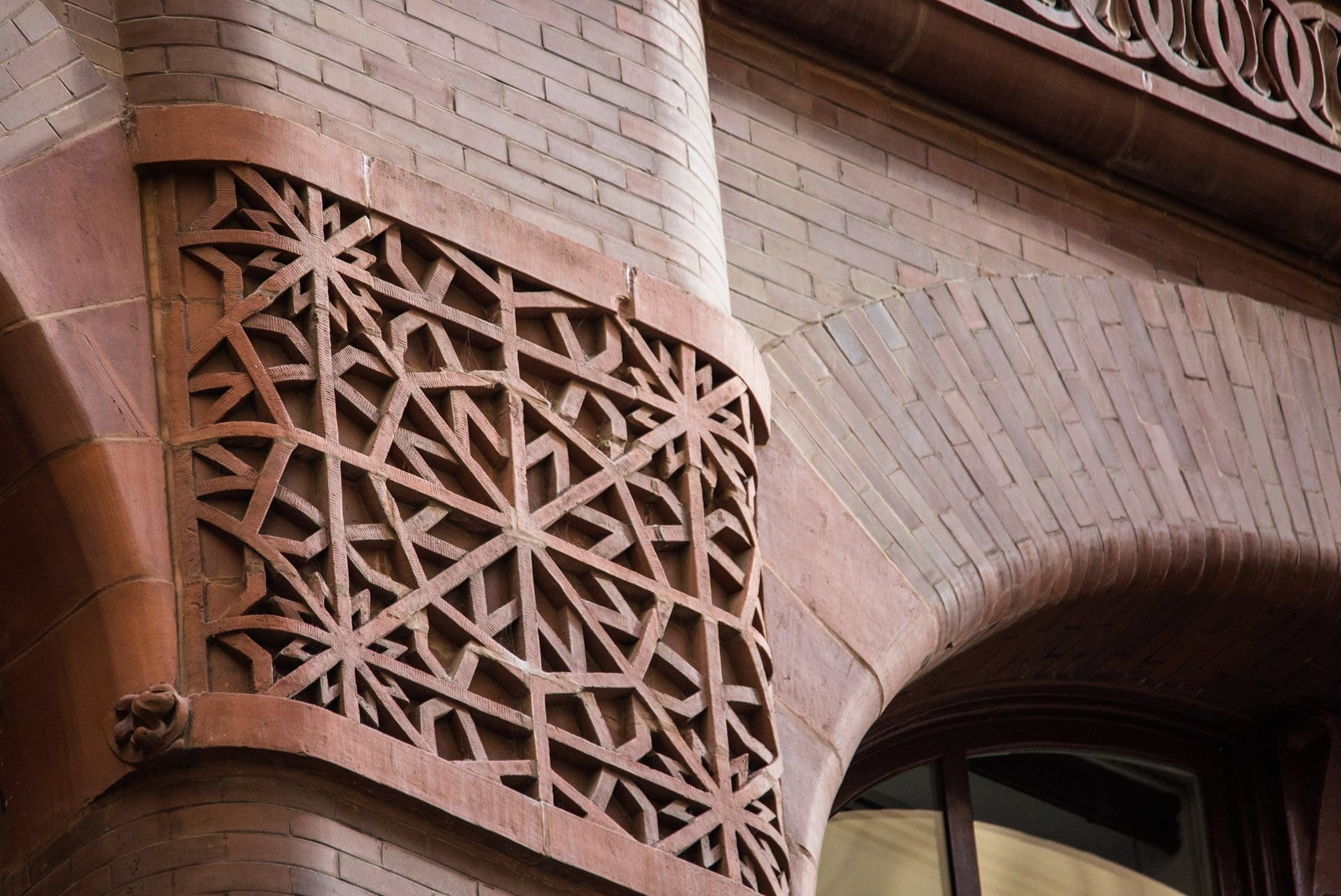
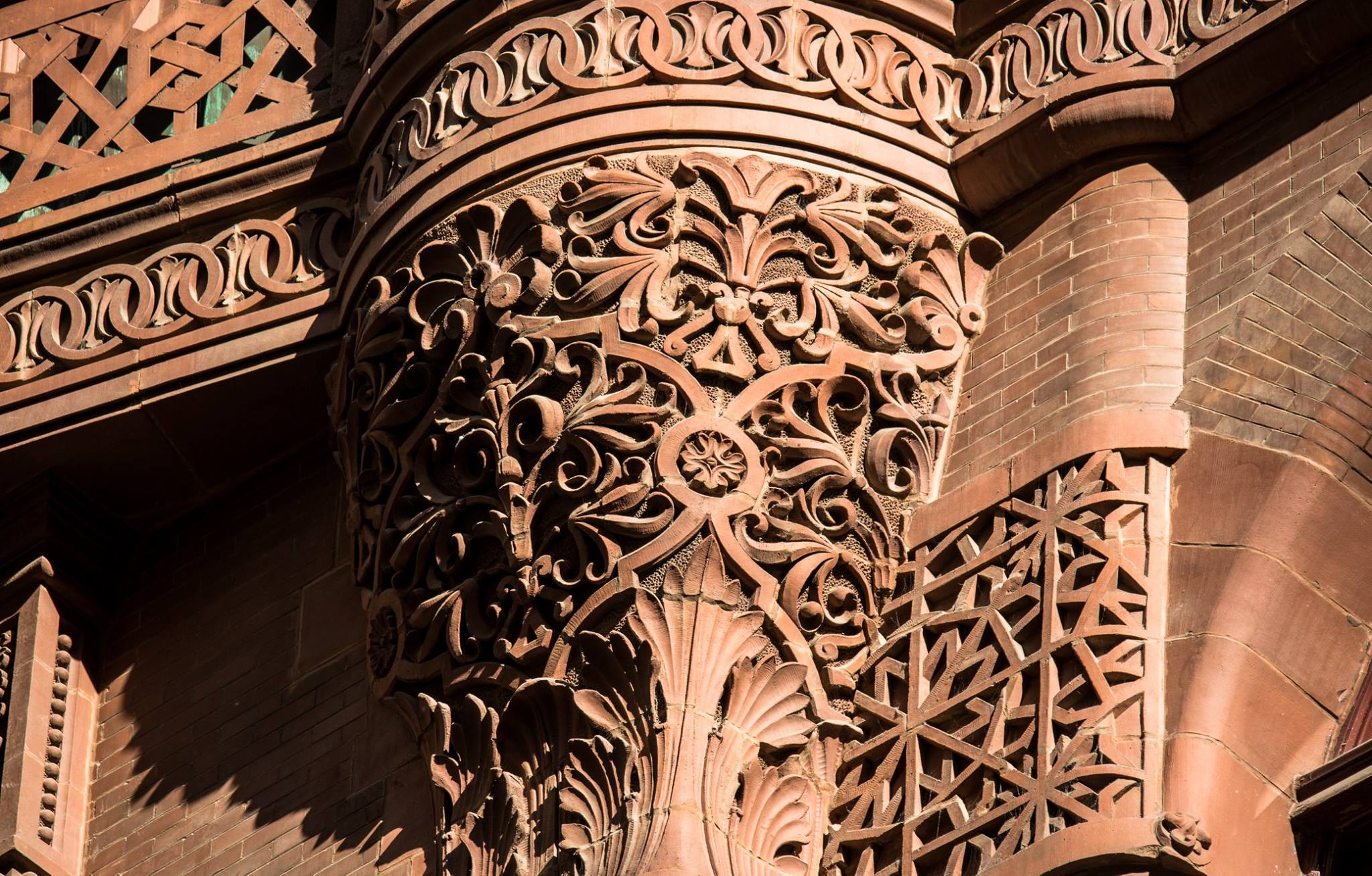
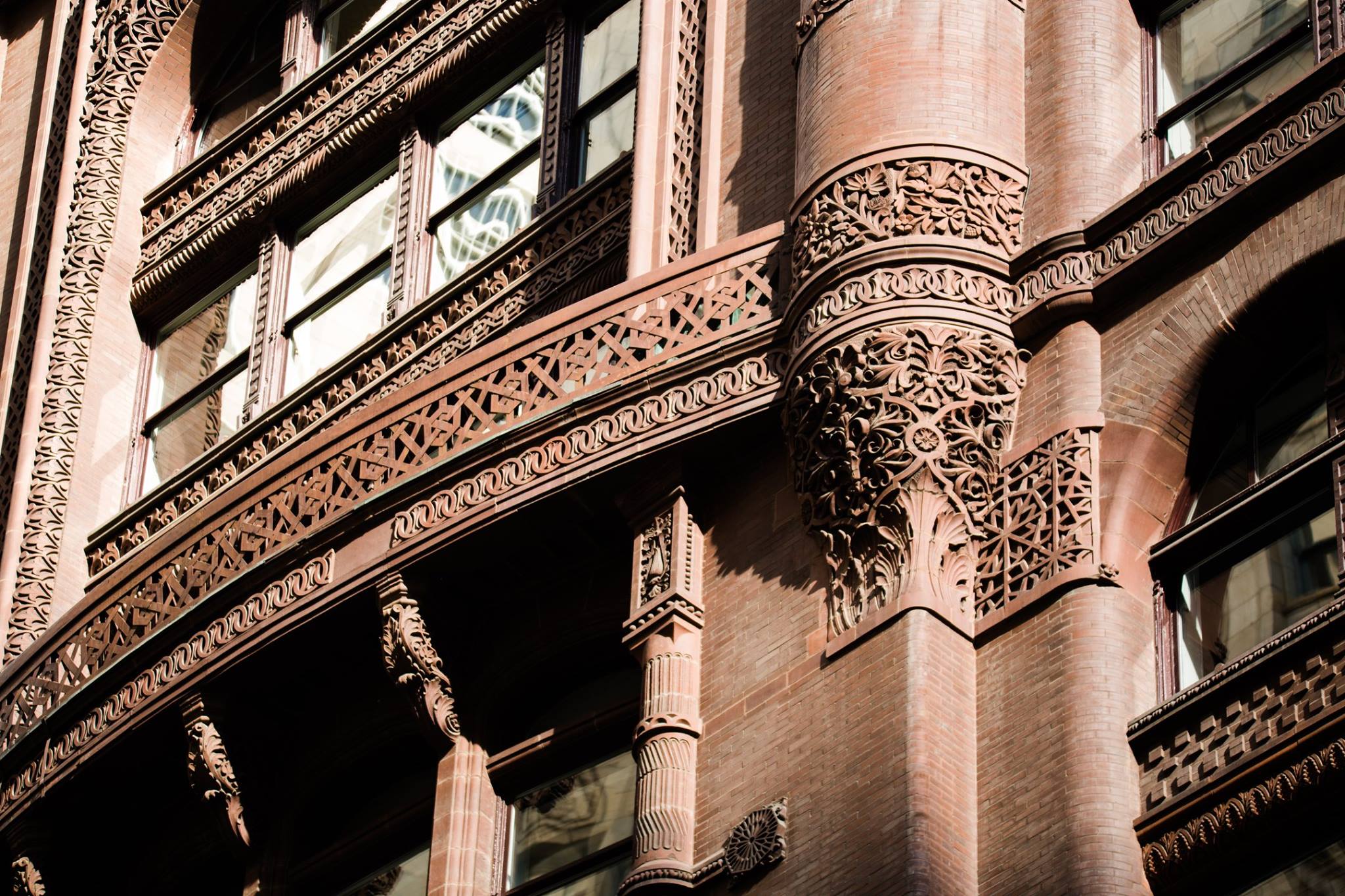
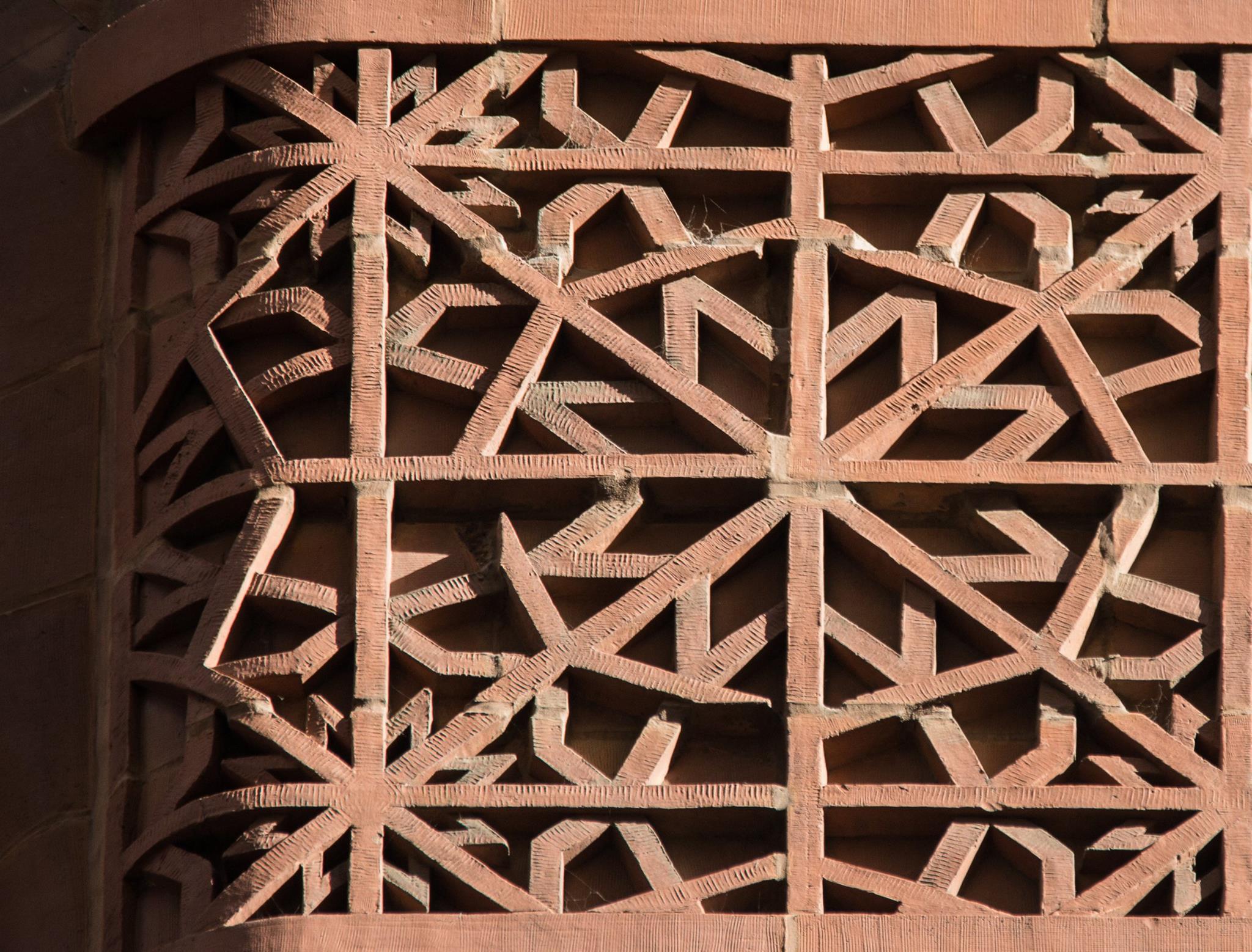
a closer look at john root’s terra cotta ornament adorning the west facade of the rookery building (1888). burnham and root, architects. northwestern fabricated the exterior terra cotta.
courtesy of bldg. 51 archive.
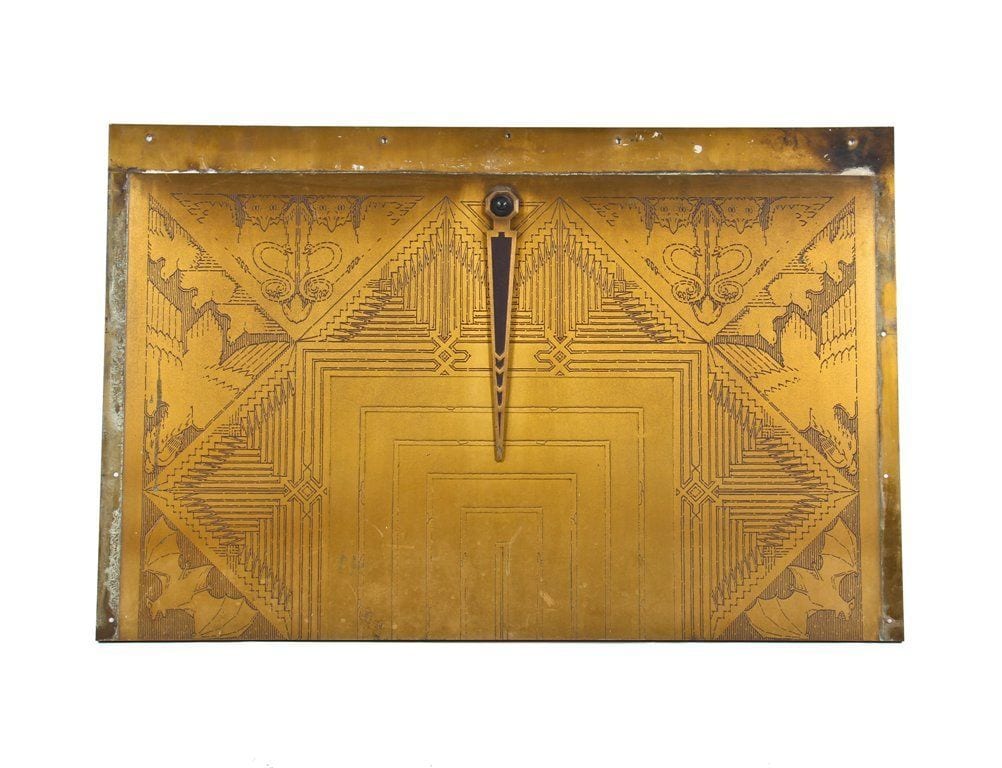
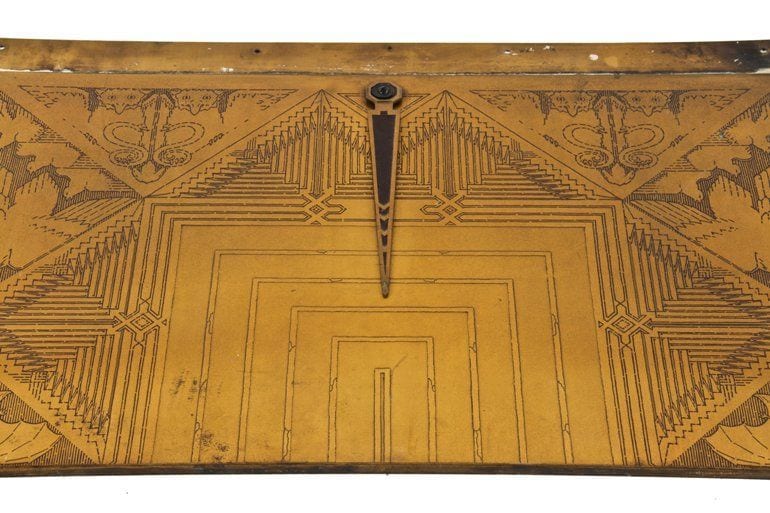
remarkable museum-quality american depression era interior rookery building art deco style die cut bronze elevator door transom or overhead panel attributed to the winslow brothers of chicago. the oversized single-sided panel contains a unique assemblage of geometric shapes, rooks, bats, owls and snakes. the distinctive design motifs contain a baked black enameled inlay to enhance the overall visibility and contrast against the background containing a nicely aged and uniform mellow surface patina. the original two-tone cast bronze pointer or indicator arrow is original and intact. the 12-story rookery building was built in 1887–1888 by the architectural partnership of daniel h. burnham and john wellborn root. by mixing modern building techniques, such as metal framing, fireproofing, elevators and plate glass, together with traditional ones, such as brick facades and elaborate ornamentation, burnham and root sought to create a bold architectural statement. at the same time, they intended their buildings to be commercially successful. the rookery is one of the few results of their partnership that is still standing and is considered the oldest standing high-rise in chicago . as the master artisan, root drew upon a variety of influences in designing the interior and exterior spaces. including moorish,byzantine, venetian and romanesque motifs. he also provided the architectural innovations that brought together many contemporary cutting edge building techniques. of particular note was a “floating” foundation—a reinforced concrete slab that provided the building’s weight with a solid platform atop chicago’s notoriously swampy soil. when wright was commissioned to work at the rookery in 1905, the light court’s elaborate ironwork and ornament had gone out of fashion. a full-blown prairie style scheme would have overwhelmed the space. to strike a balance, wright removed much of the iron and terra cotta detailing on the central staircase, balconies, and walls, replacing it with strong geometric patterns based on the railings of root’s oriel stairs. he encased the iron columns in white marble that was gilded and incised with root’s arabic motif found in the lasalle entrance. the fanciful electroliers that once flanked the central staircase were removed, and wright added bronze chandeliers with prismatic glass that still hang there today. in the lobbies, wright covered nearly every inch with incised and gilded marble, removing or hiding the original decorative panels and railings. the incising was copied from root’s original work and was likely inspired by owen jones’ the grammar of ornament, a source root also used. the staircases were squared-off and simplified, and wright added geometric urns to the adams street entrance. wright replaced the elevator grills with an open geometric cage that reflected his personal style. he made few changes to the building’s exterior except to add a canopy that projected from the lasalle street entry arches. as the united states entered into the great depression, the preference was to upgrade older structures, as money was not available for new construction. in 1931, the rookery’s owners selected william drummond to renovate the lobby and some of the interior office spaces. a former employee of frank lloyd wright (during the 1905 remodeling), architect william drummond had suffered through the slow period of world war i. the boom of the 1920’s had brought him steady residential and commercial projects, but the depression had again slowed progress. after winning the rookery commission, drummond laid out a plan to modernize the building and bring in an art deco aesthetic. to increase rentable floor space, drummond removed the double stairways and divided the lobby into separate floors. as the new office space now extended to the arched entrances, those windows under the arch were painted over. following wright’s example, he covered any exposed surface with marble, gilded and incised with stylistic bird motifs. drummond made a few changes to the light court. because of the major lobby renovations, he added a staircase that started at the second floor and protruded into the light court. he laid tennessee marble over the original mosaic flooring and encased some of the mezzanine storefronts in plaster. drummond enclosed the elevators with solid bronze doors and marble—probably due to changes in fire code. the etched elevator doors (designed by annette byrne) contained a unique art deco aesthetic played out in the form of rooks, flora and fauna and other motifs influenced by wright’s previous designs. measures 39 x 25 1/2 inches.
courtesy of the bldg. 51 archive.
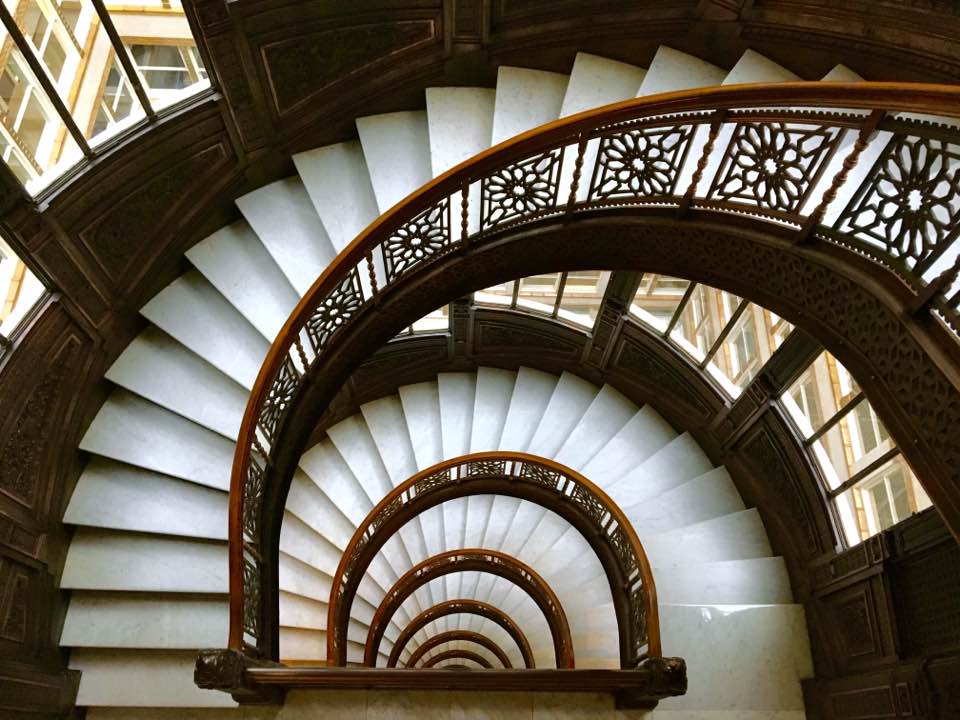
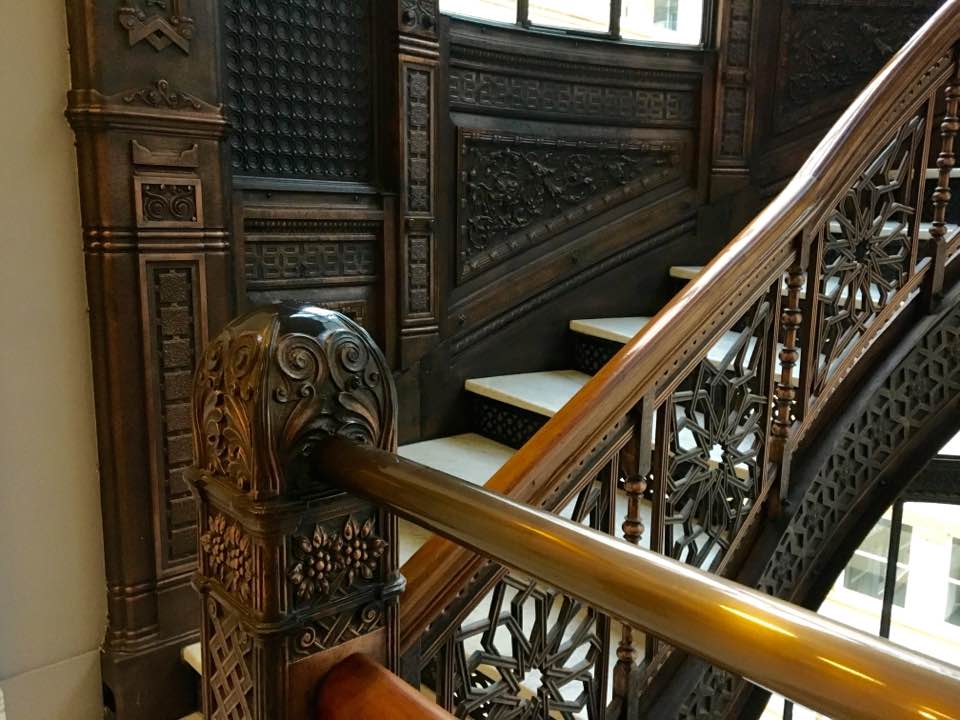
root-designed oriel staircase. the copper-plated cast iron staircase was executed by helca ironworks, new york city, ny.
courtesy of bldg. 51 archive.
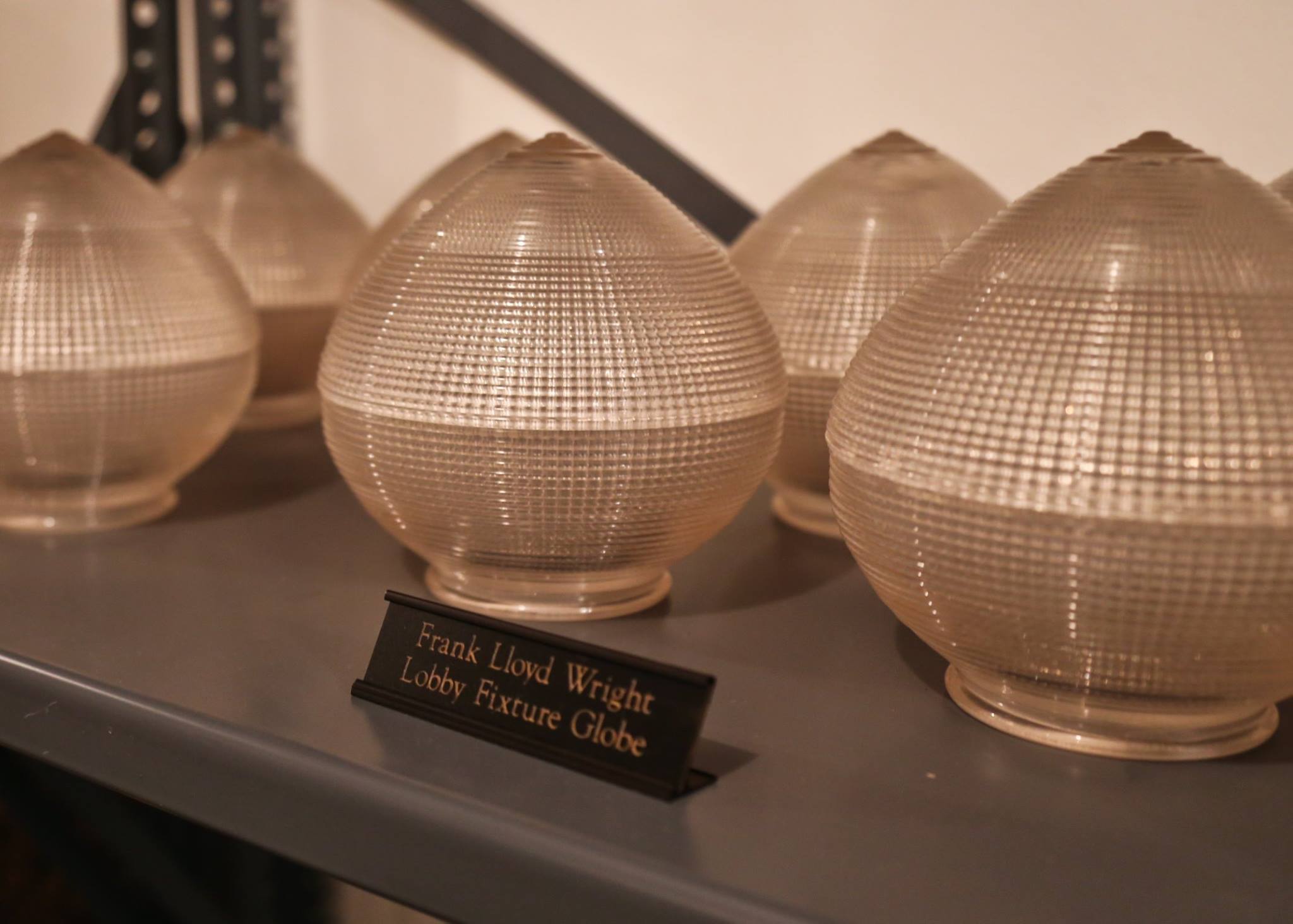
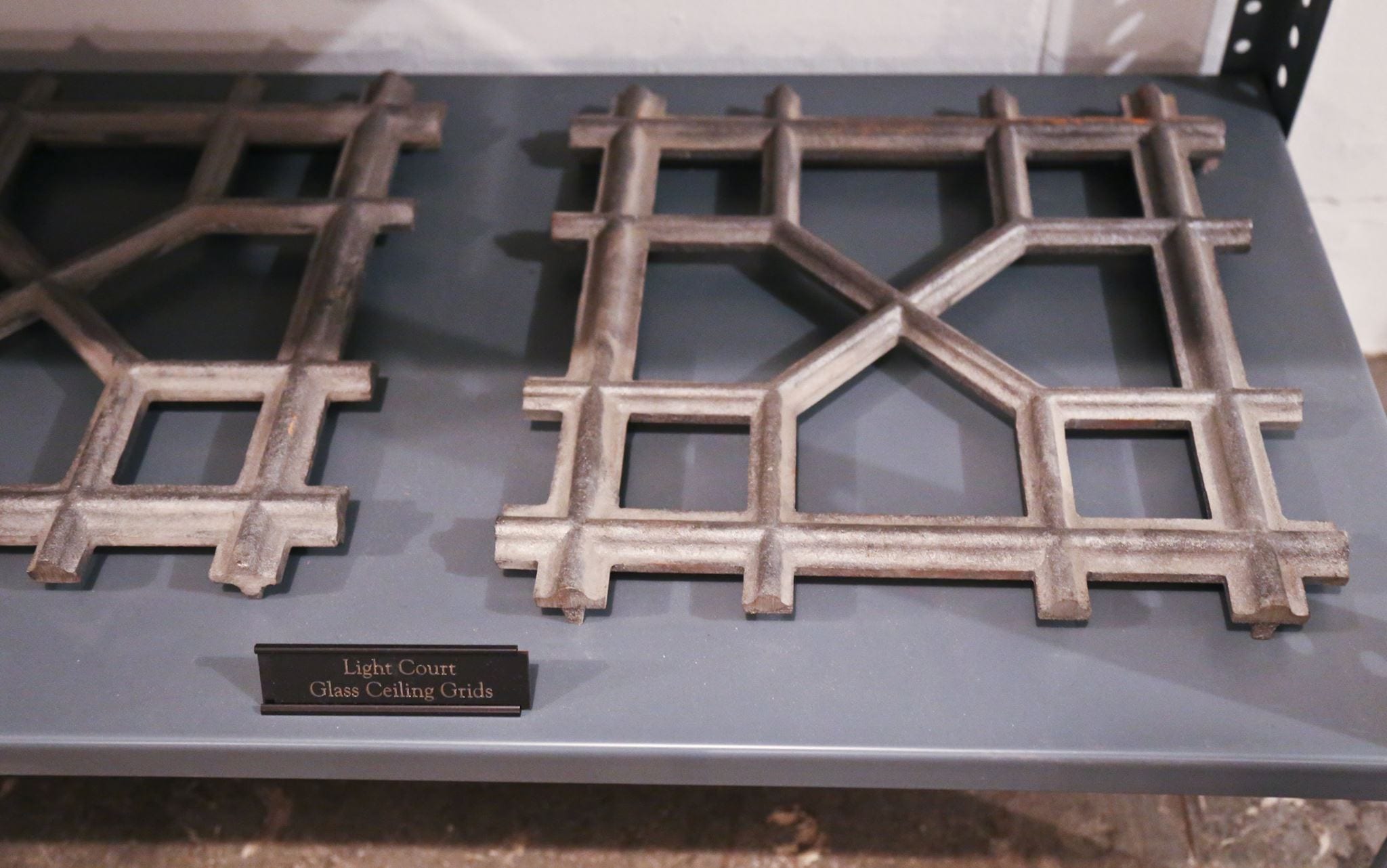
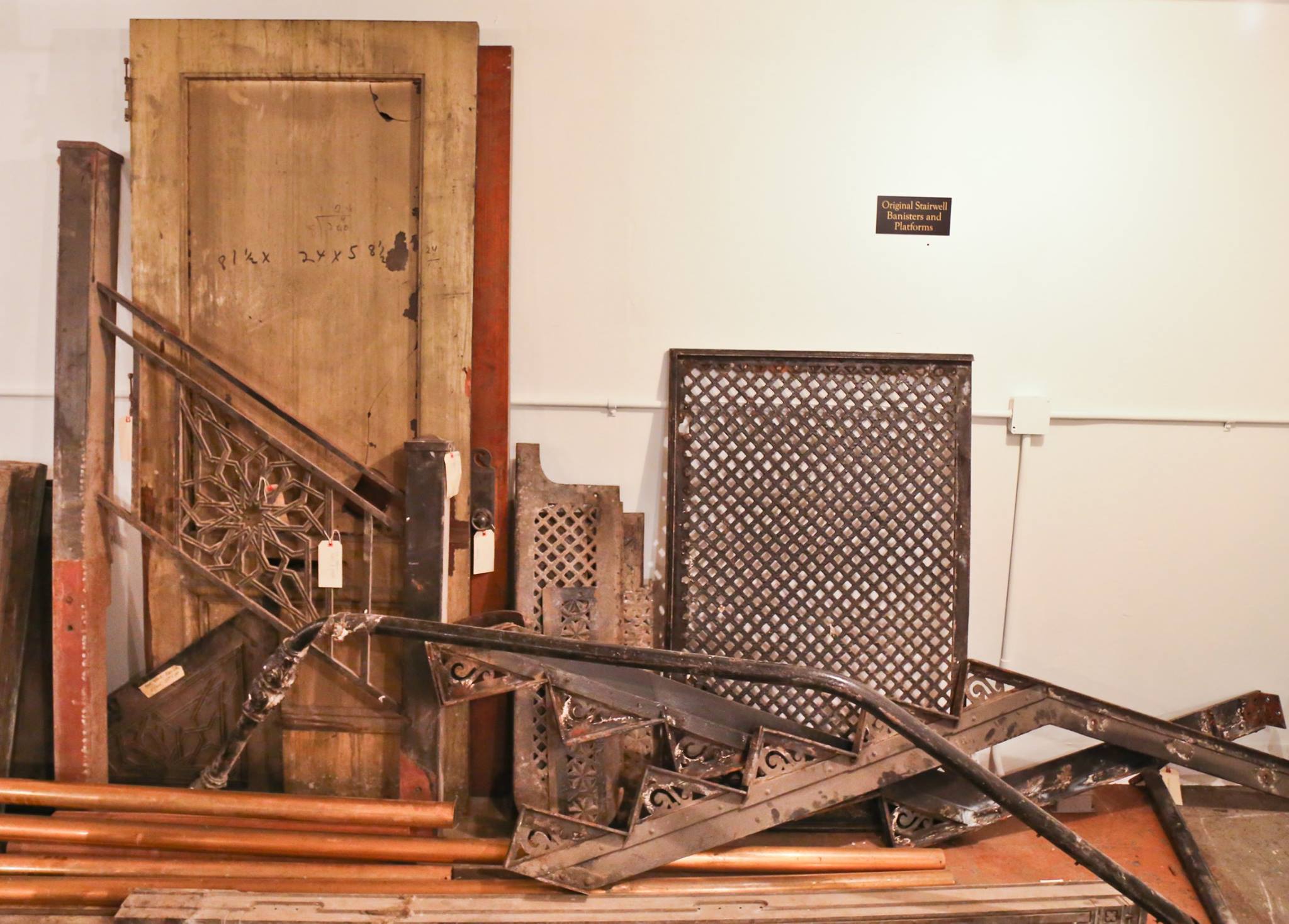
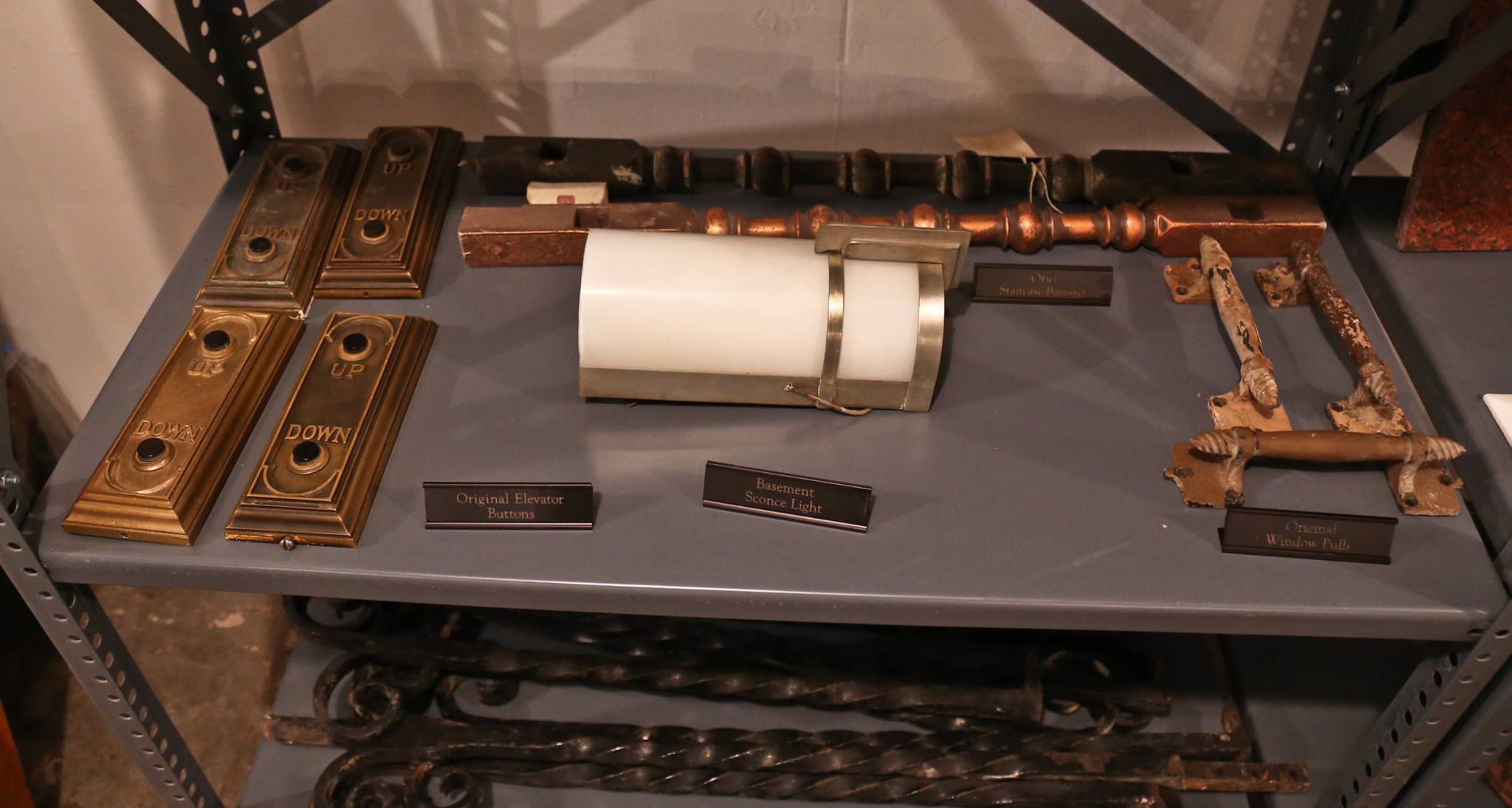
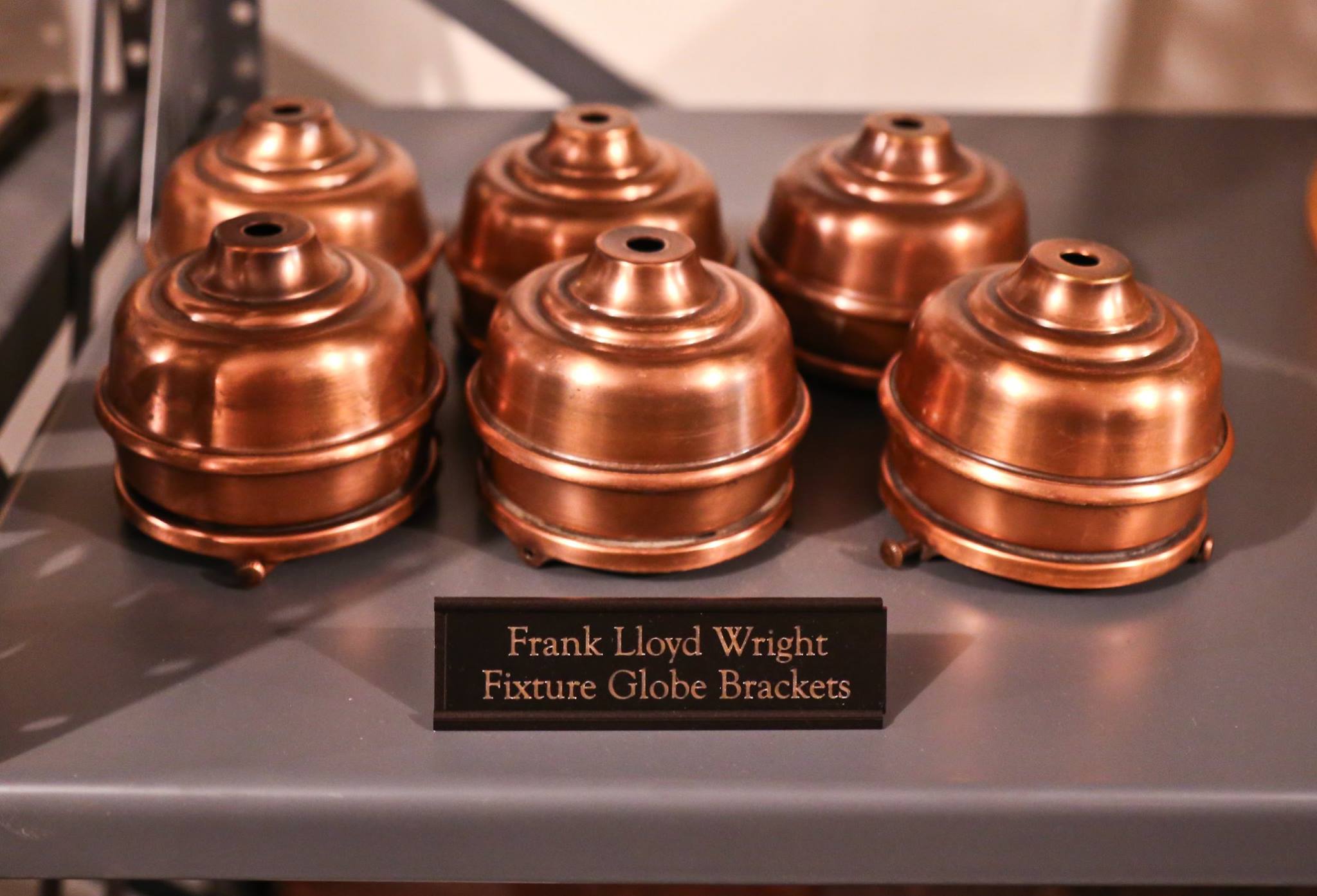
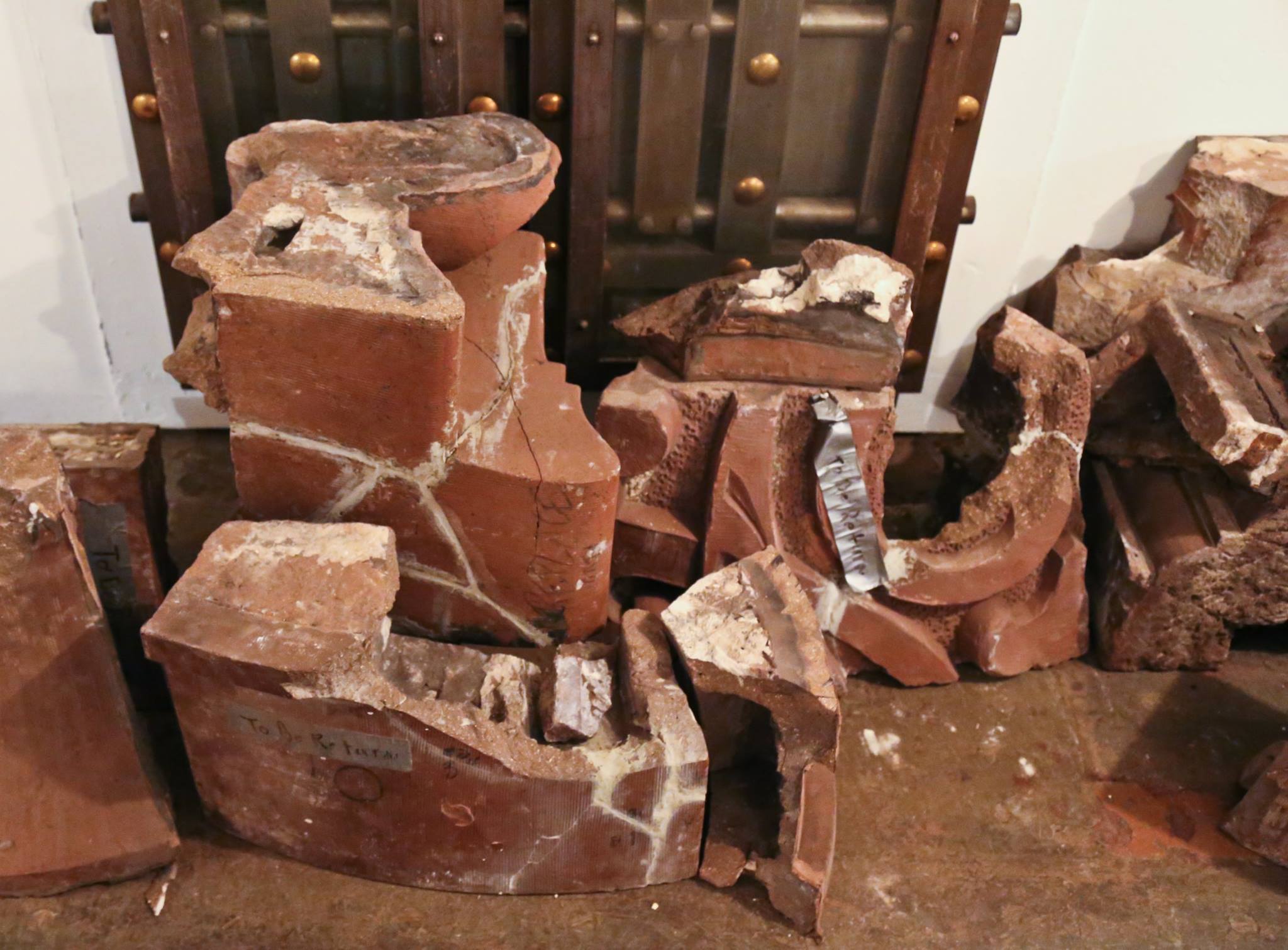
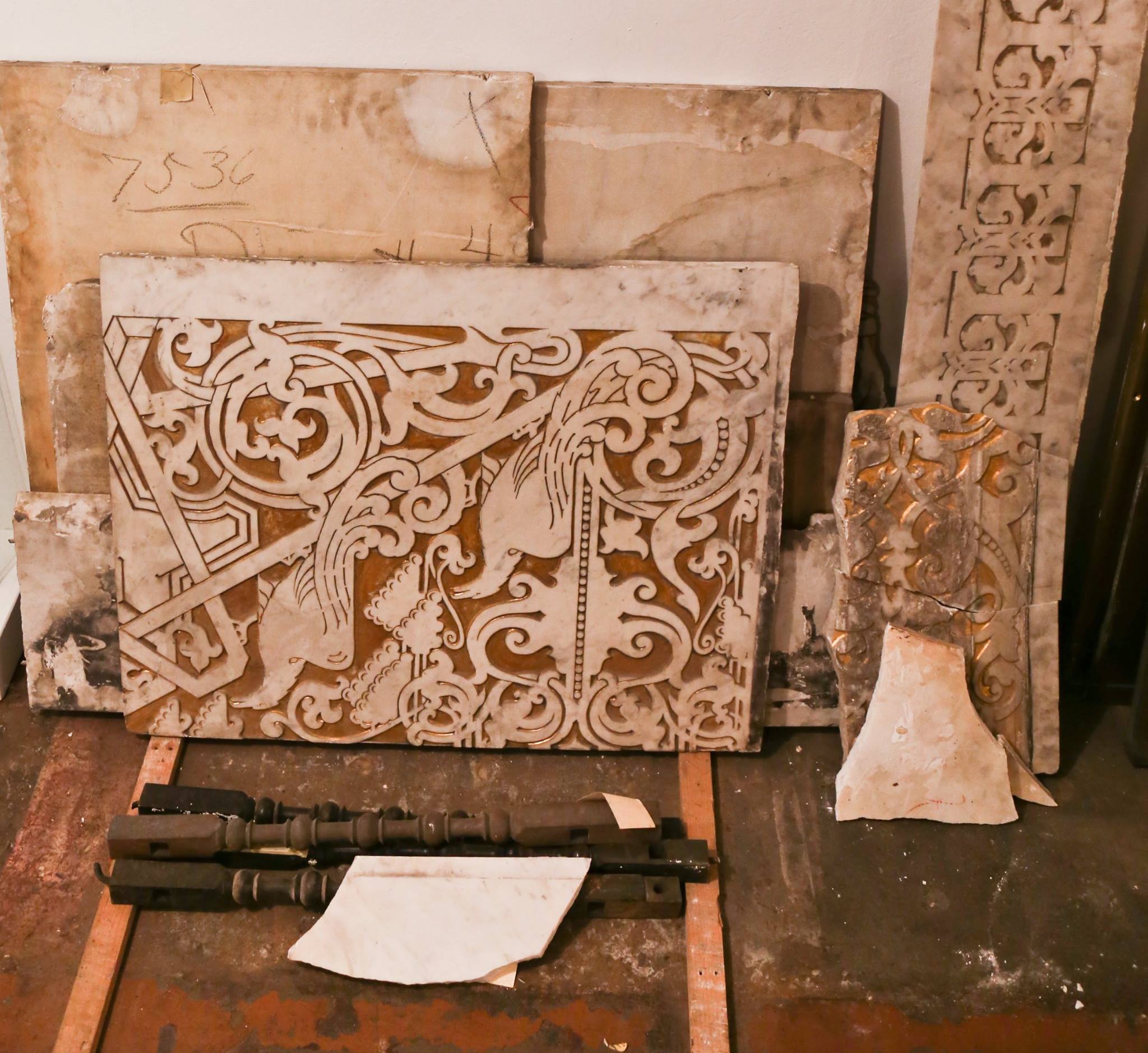
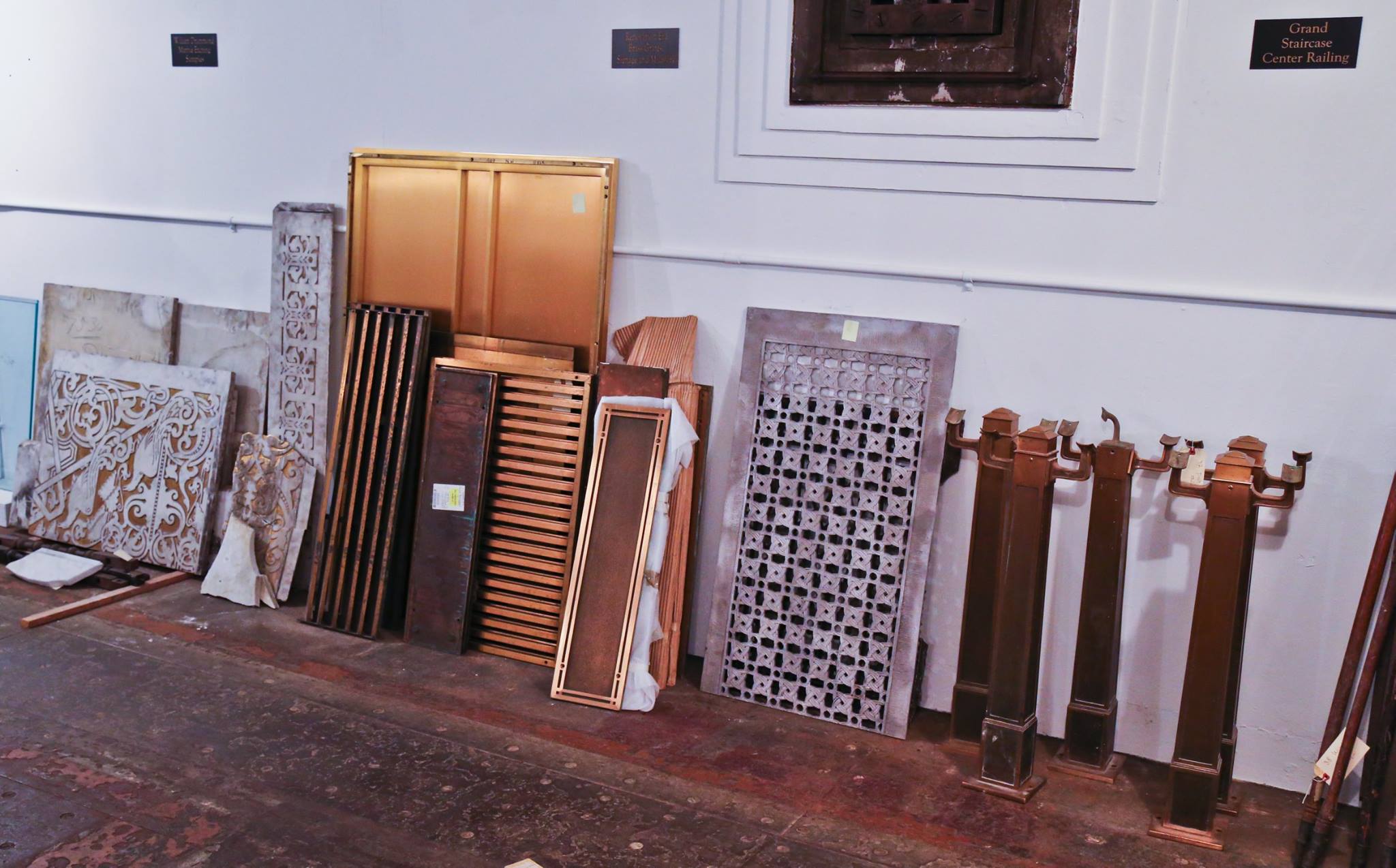
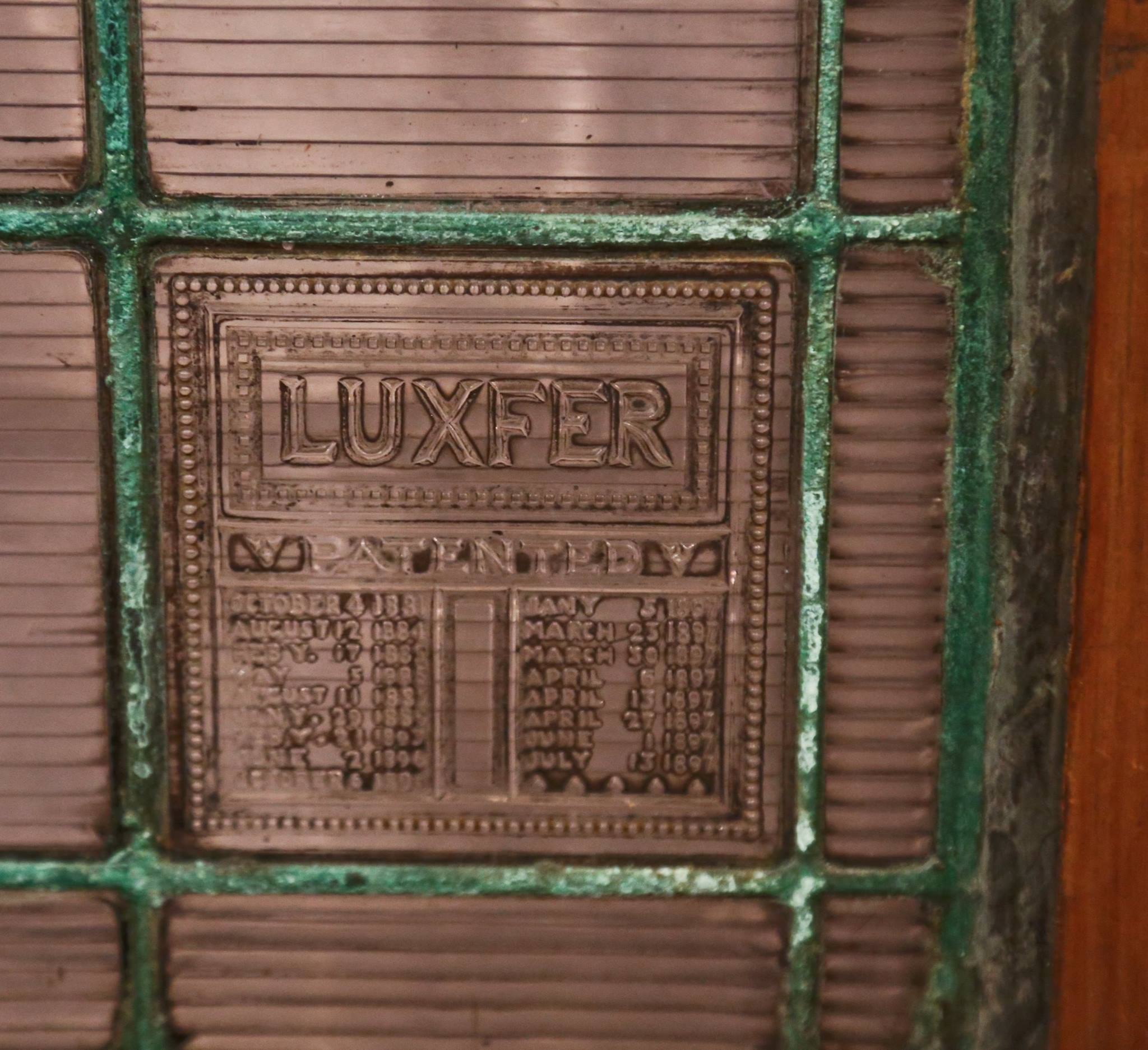
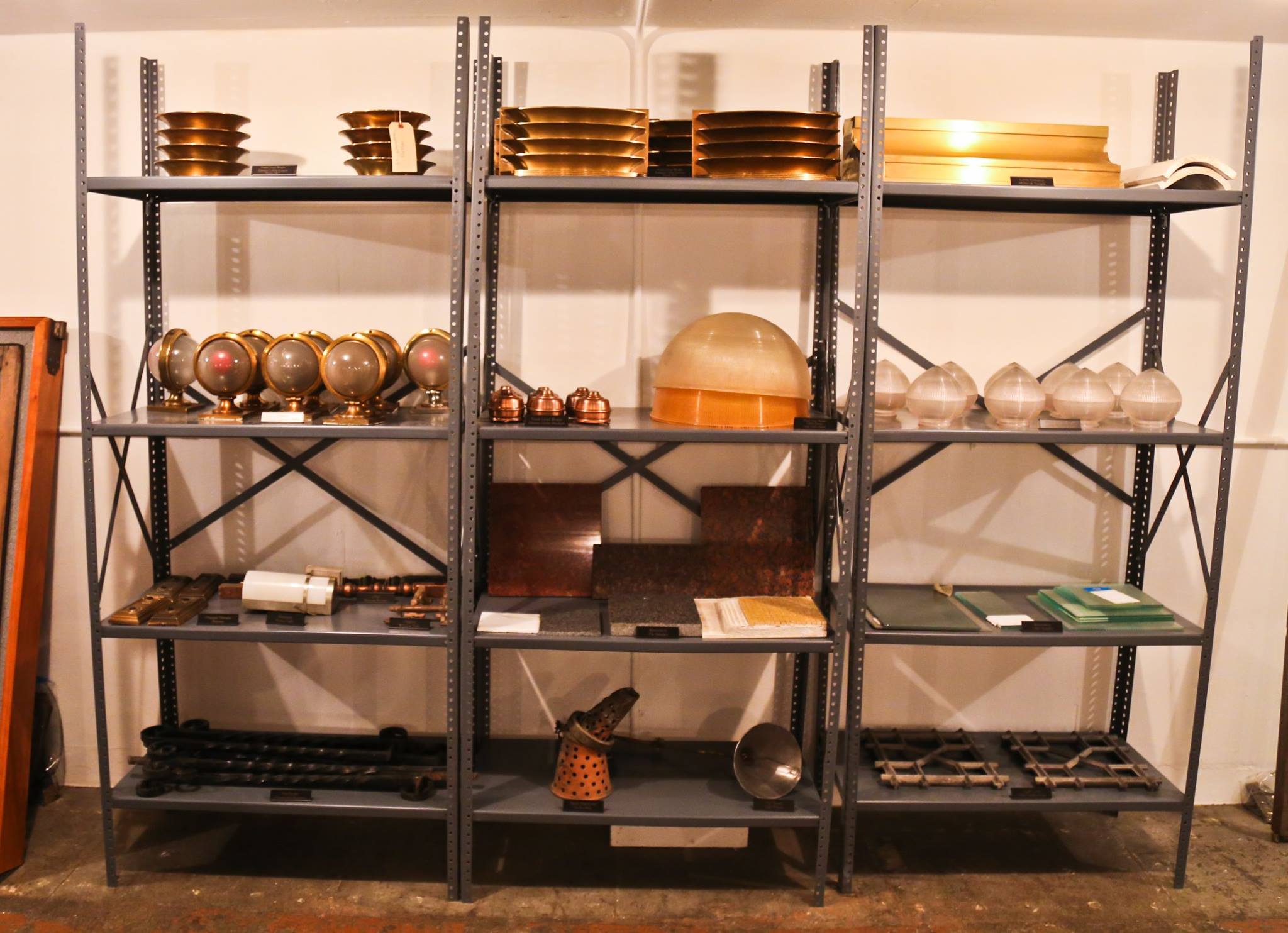
for those of you who have not had a chance to visit the rookery’s basement “building fragment” vault room, i’m posting several images of the artifacts stored away in that heavily fortified room. i’m not a huge fan of the “presentation,” but at least most of it was’t tossed. from luxfer prism tiles, to frank lloyd wright elevator doors, there is a vast collection of artifacts from repairs, alterations, etc.
images courtesy of bldg. 51 archive.
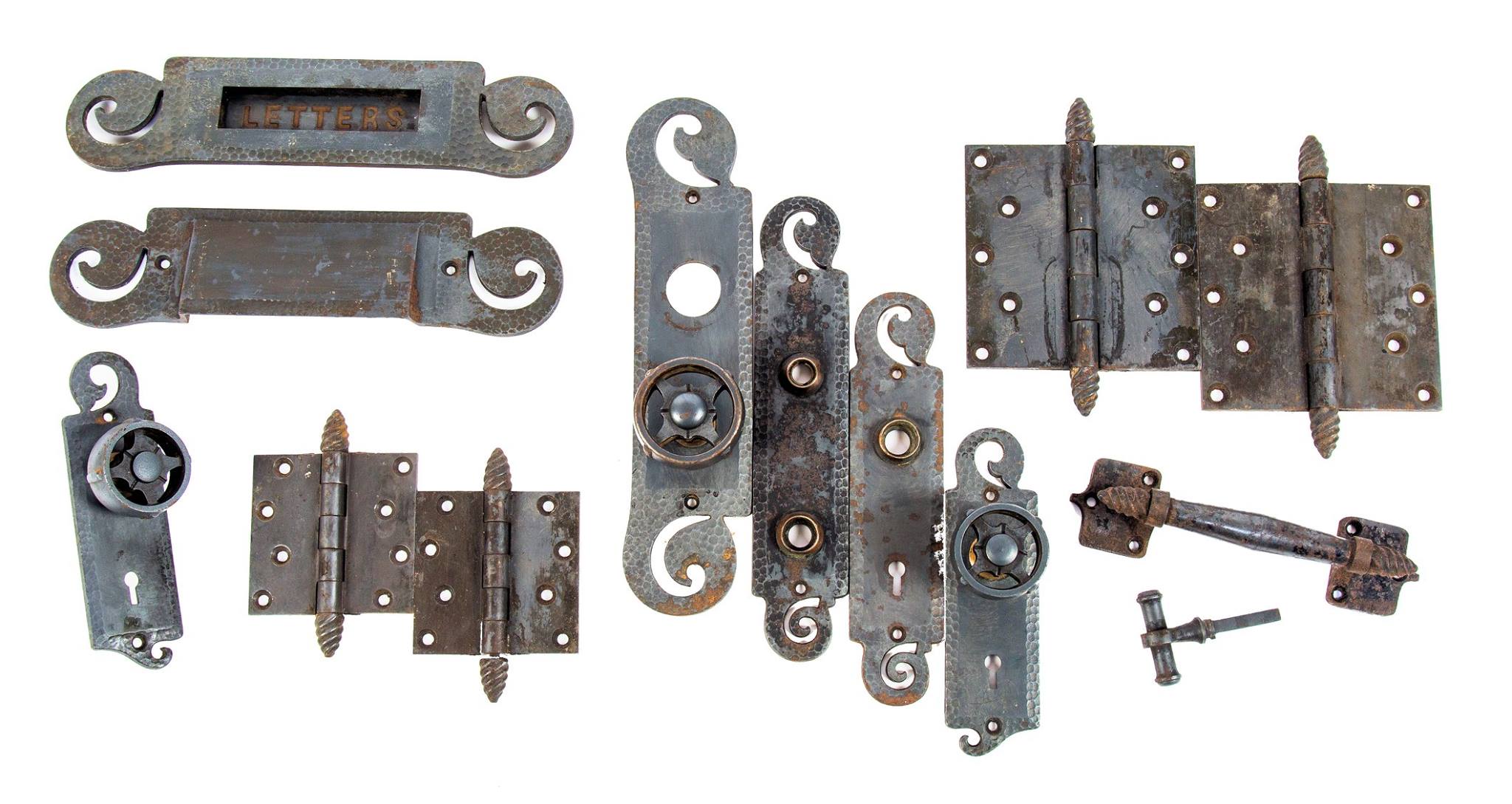
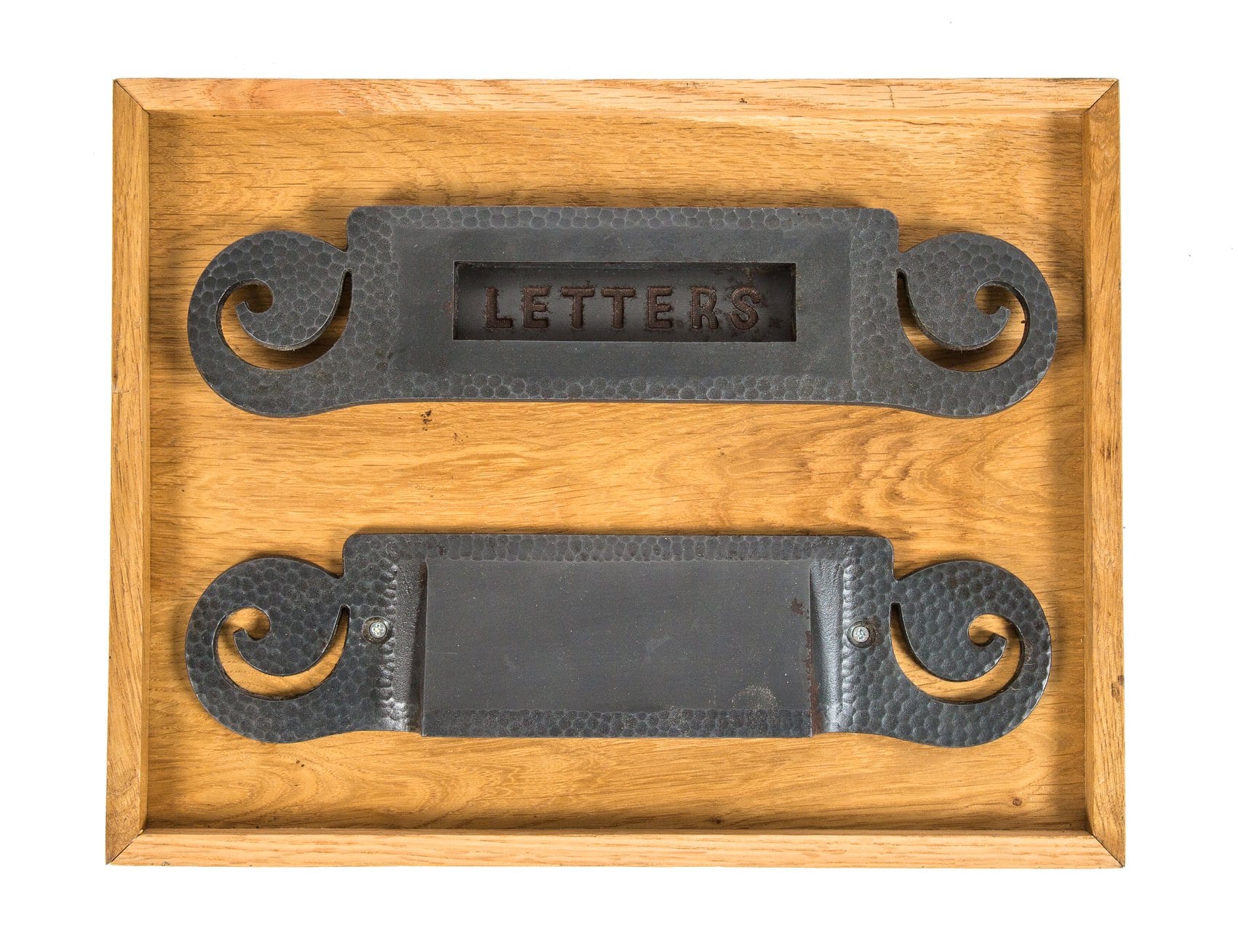
custom-designed rookery building (1888) ornamental cast iron office door mail slot and chute executed by the yale & towne mfg. company and orr and lockett. the building’s hardware – all finished in bowr-barff – was likely designed by john root.
now that i’ve amassed the majority of hardware used to outfit the building, i will devote a blog post to the importance of hardware functionality in early skyscrapers or commercial office buildings of the late 19th century.
the collection of rookery hardware (second image) is a great representation of the different types of hardware used to furnish a 19th century skyscraper.
courtesy of the bldg. 51 archive.
further reading:
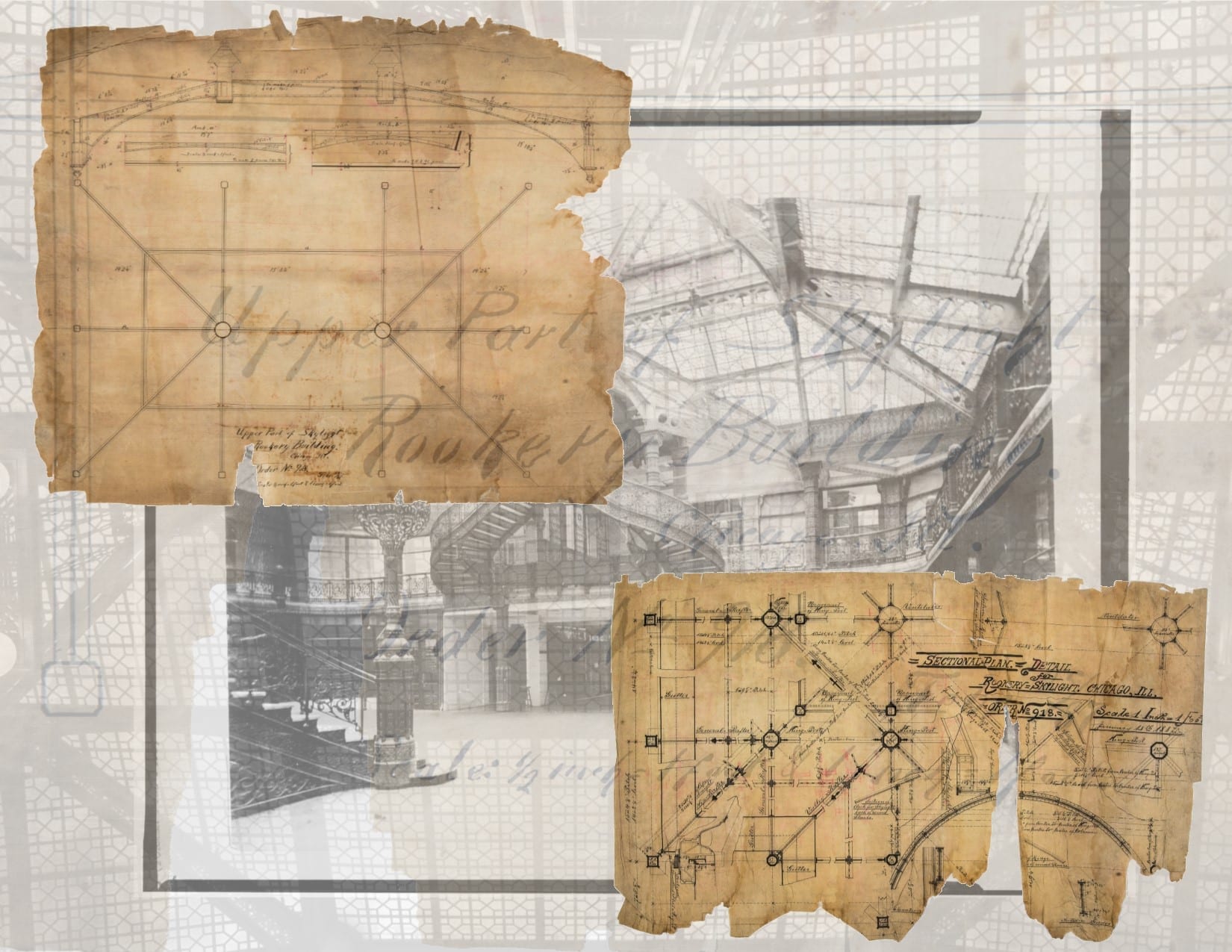
19TH CENTURY ARCHITECTURAL DRAWINGS OF BURNHAM AND ROOT’S ROOKERY’S SKYLIGHT ACQUIRED BY BLD. 51 MUSEUM ARCHIVE
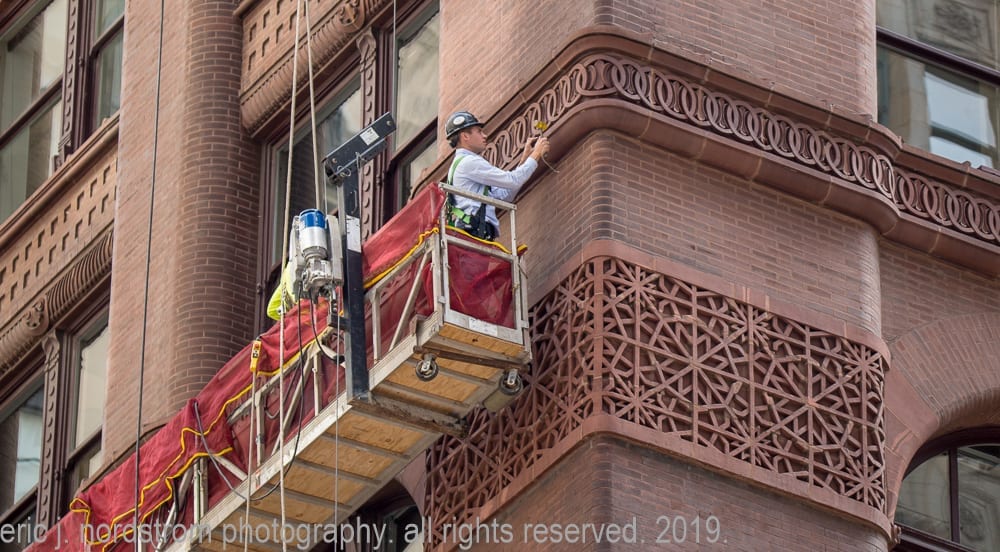
WITH SCAFFOLDING PARTIALLY ERECTED, BURNHAM AND ROOT’S 1888 ROOKERY BUILDING LATEST TO UNDERGO FACADE RESTORATION
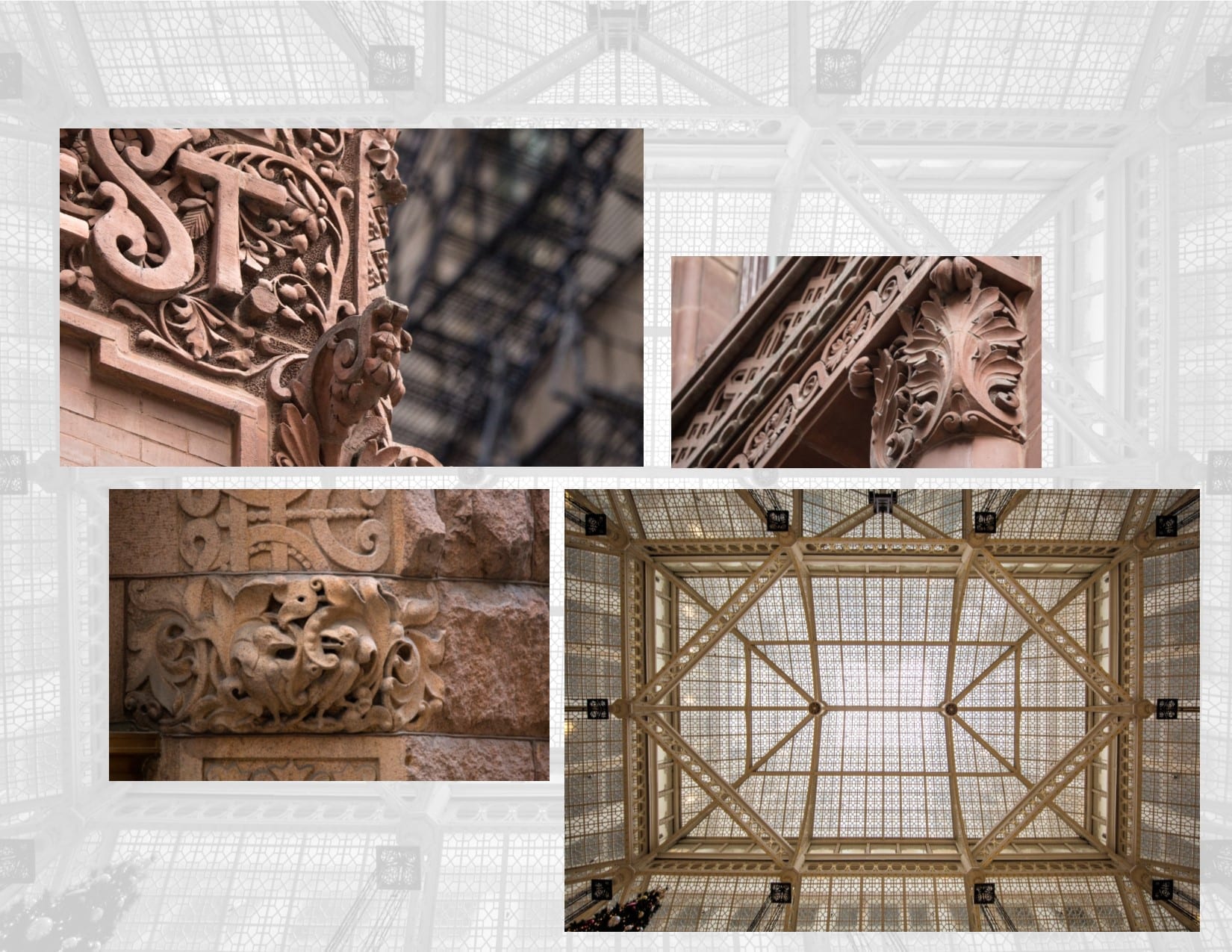
REPEATEDLY DOCUMENTING BURNHAM AND ROOT’S ROOKERY BUILDING YIELDS NEW DISCOVERIES