
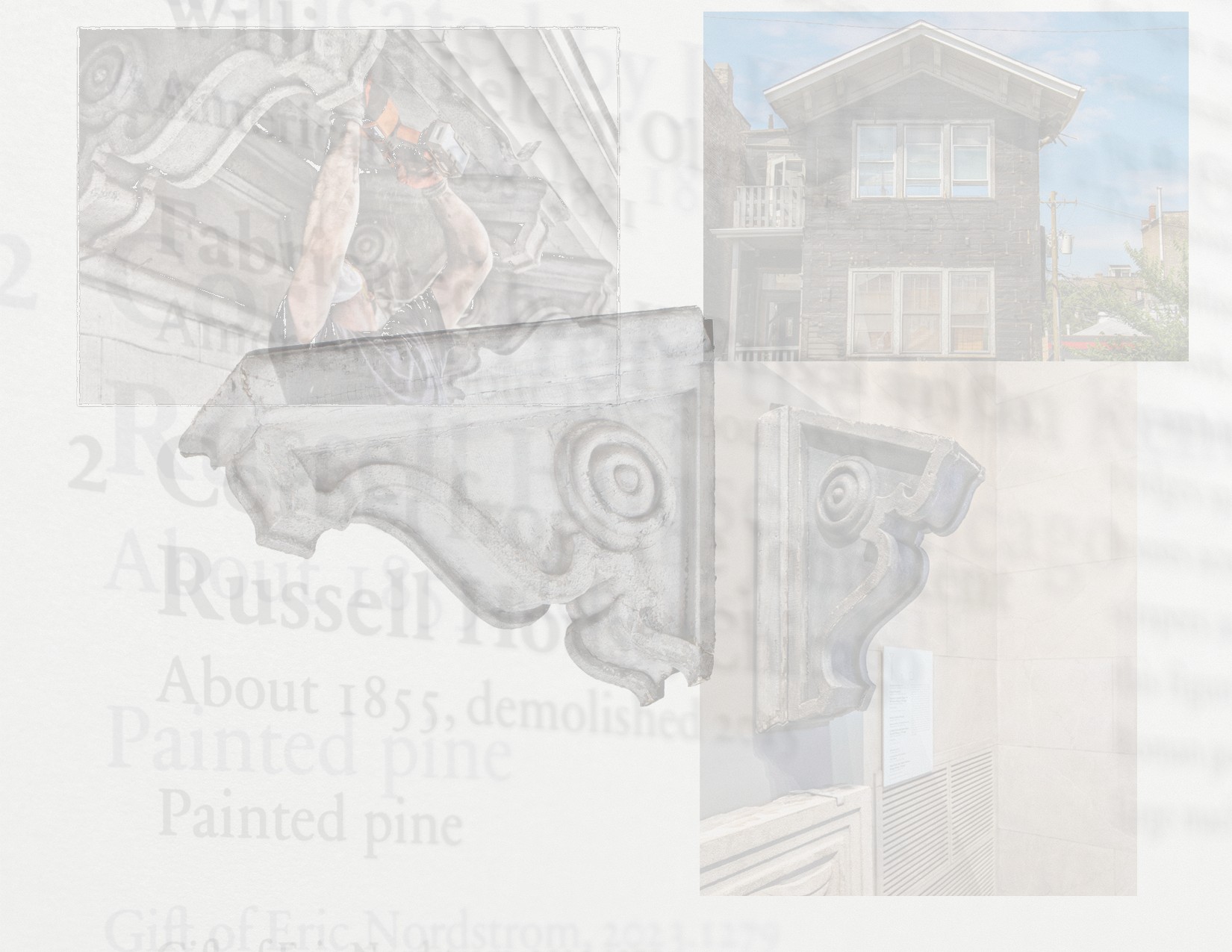
30 Nov john kent russell house ornament salvaged by eric j. nordstrom of urban remains on display at art institute of chicago
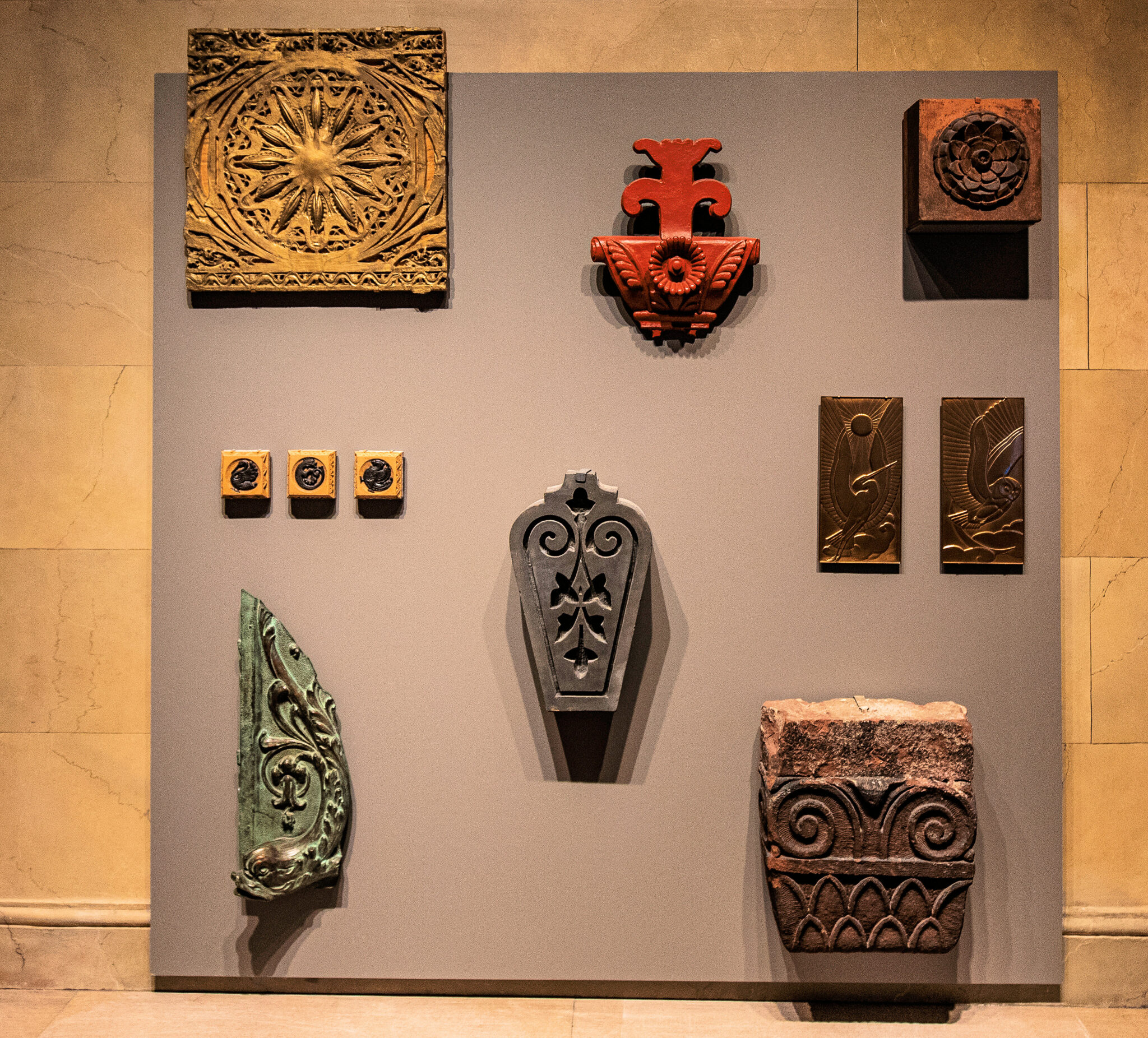
it was nice to see architectural ornament salvaged by me land at the art institute.
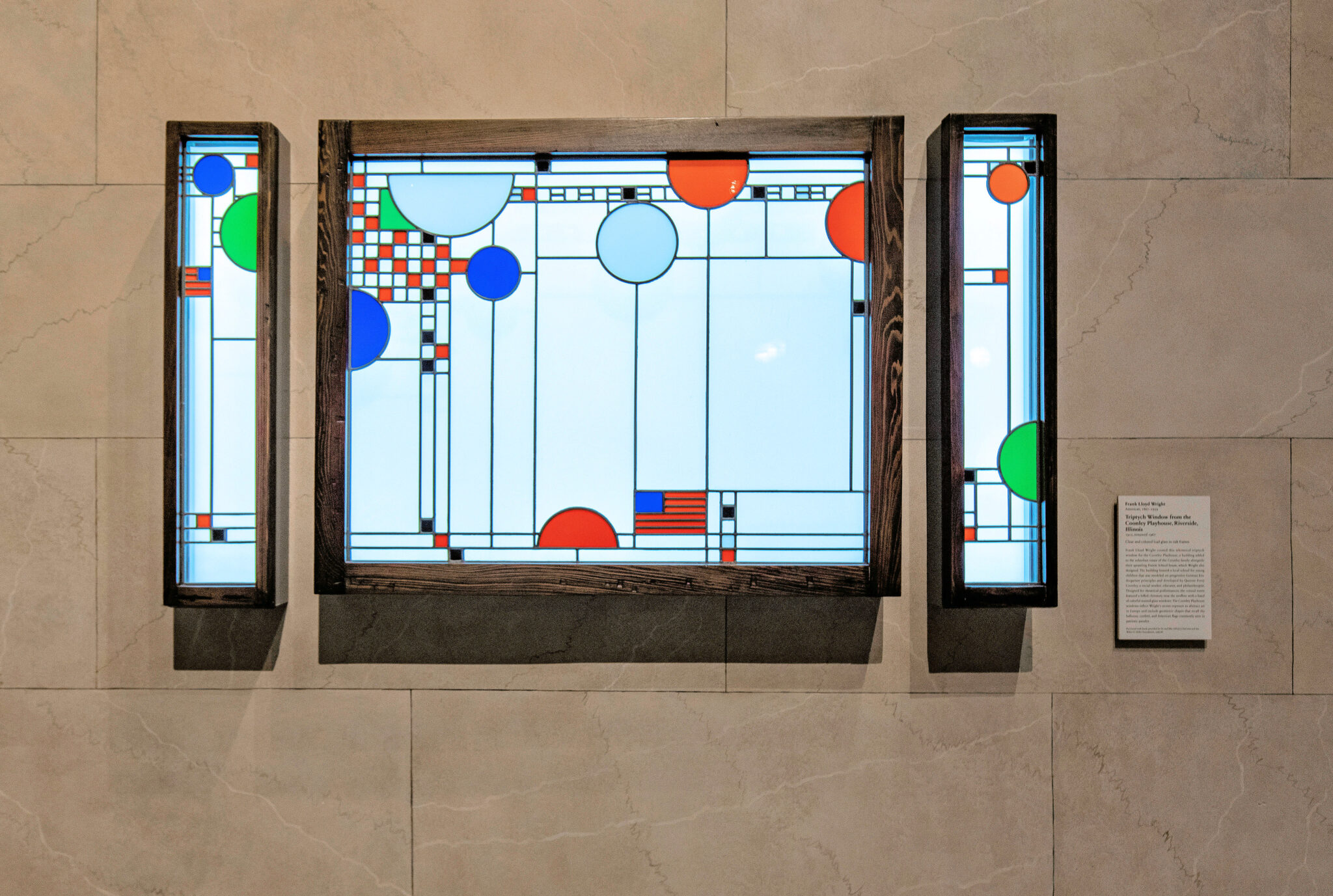
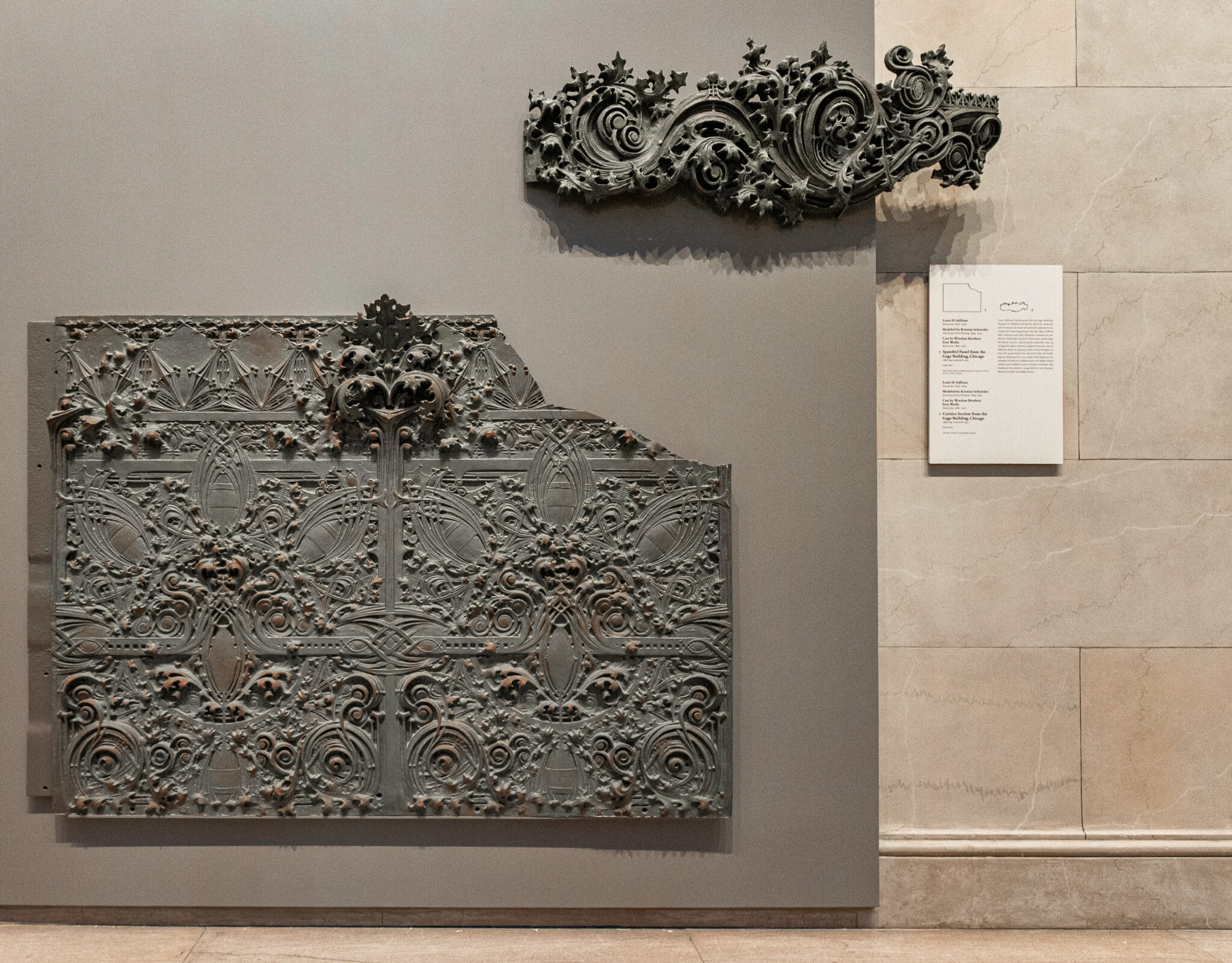
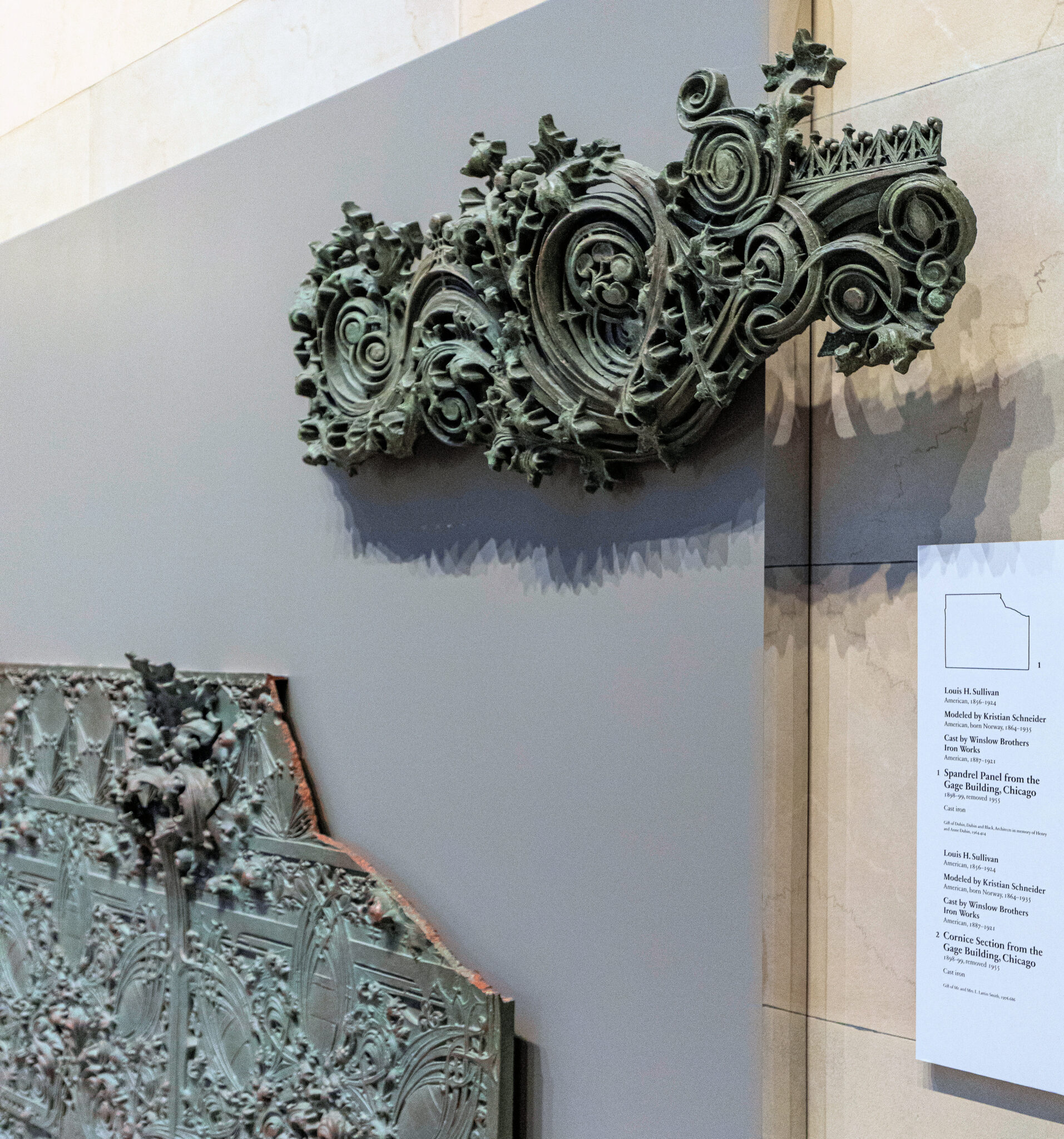
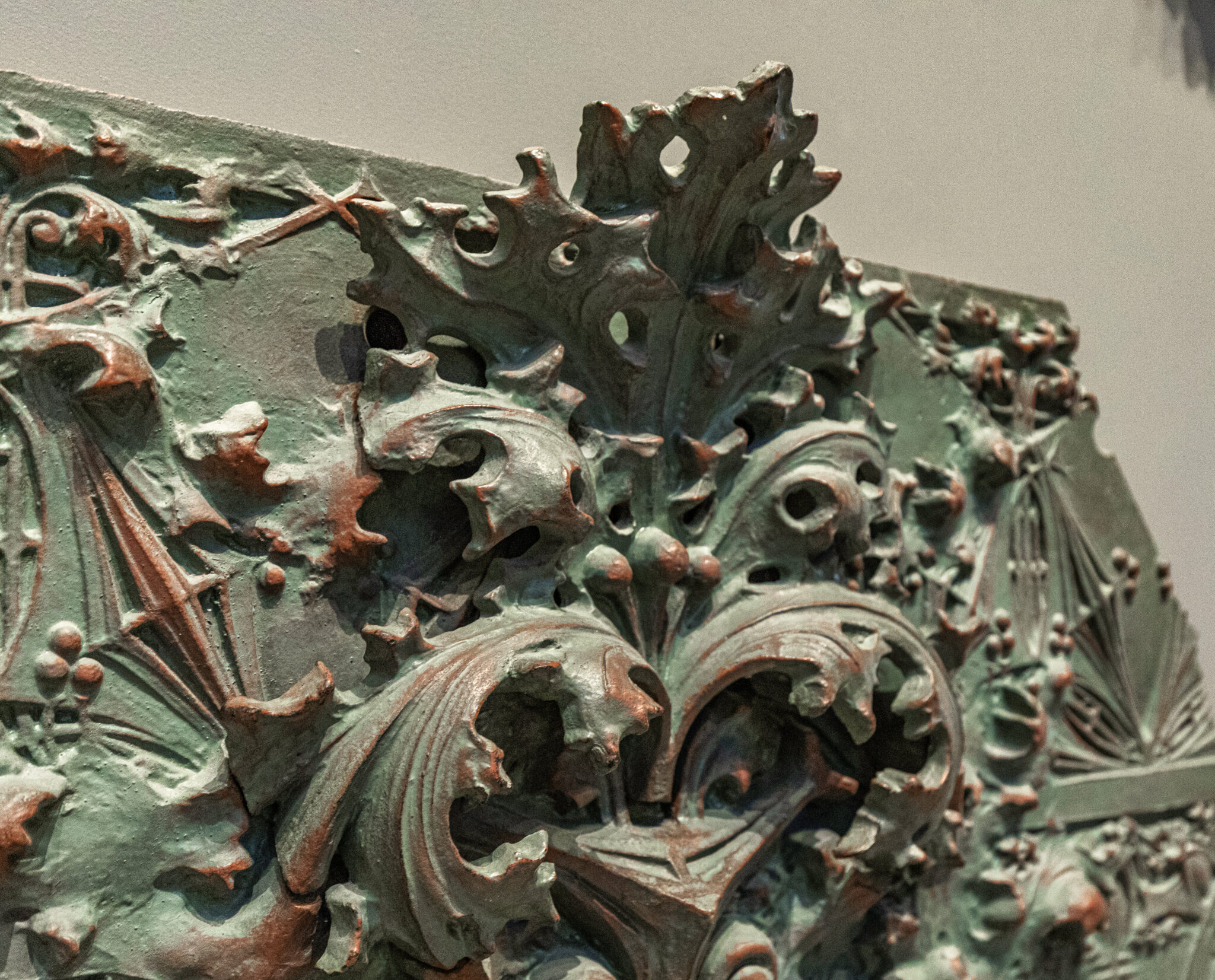
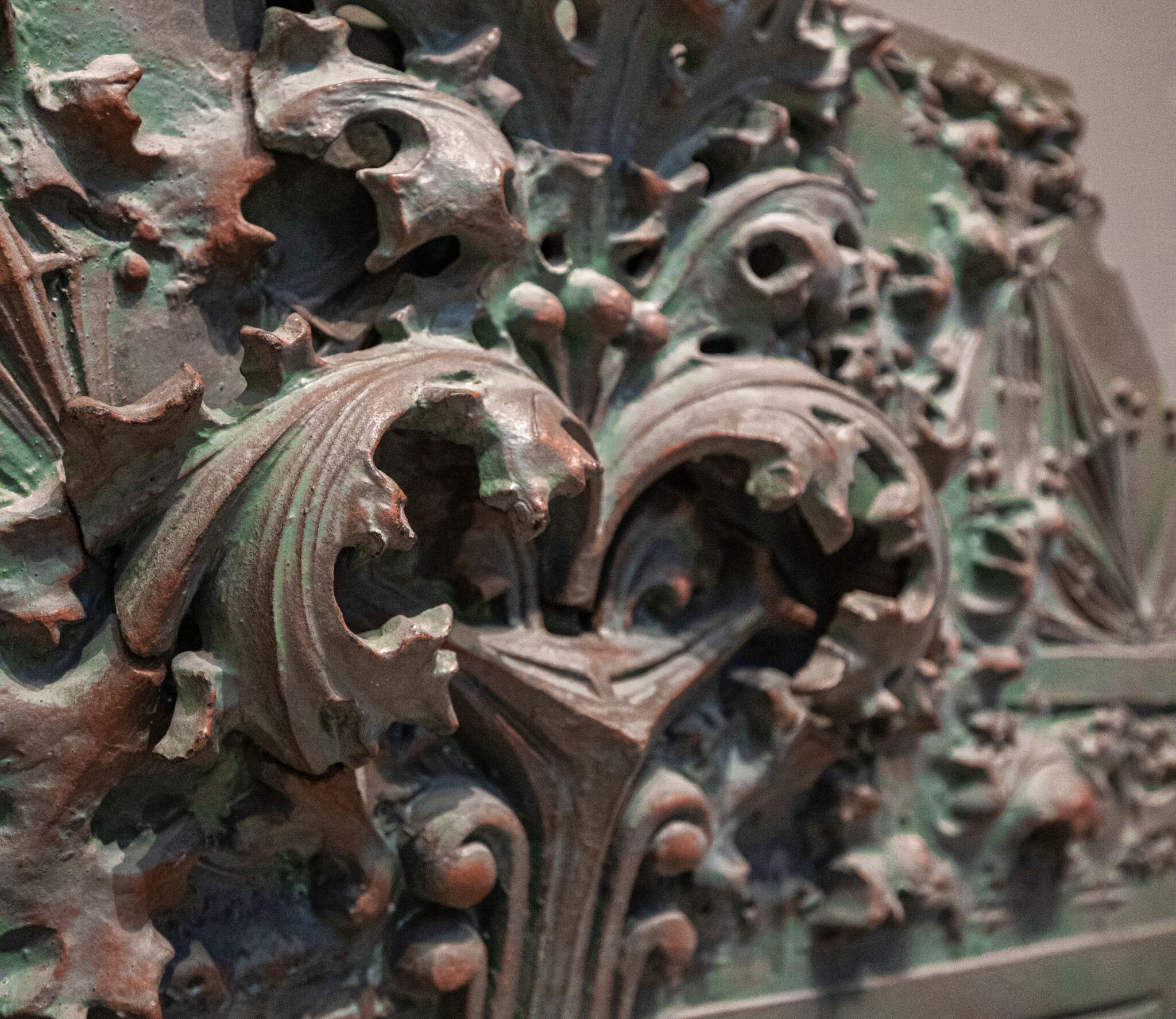
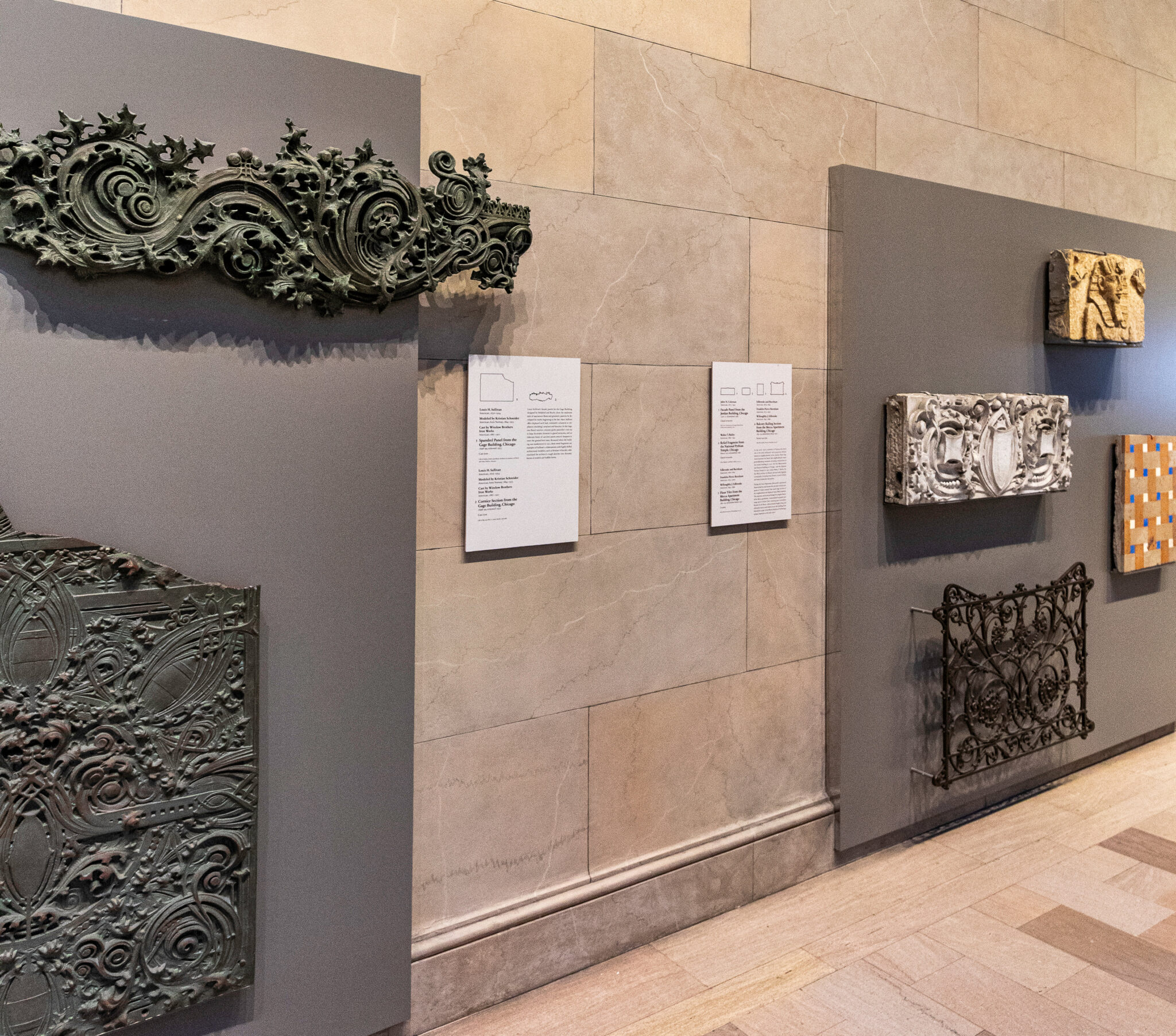
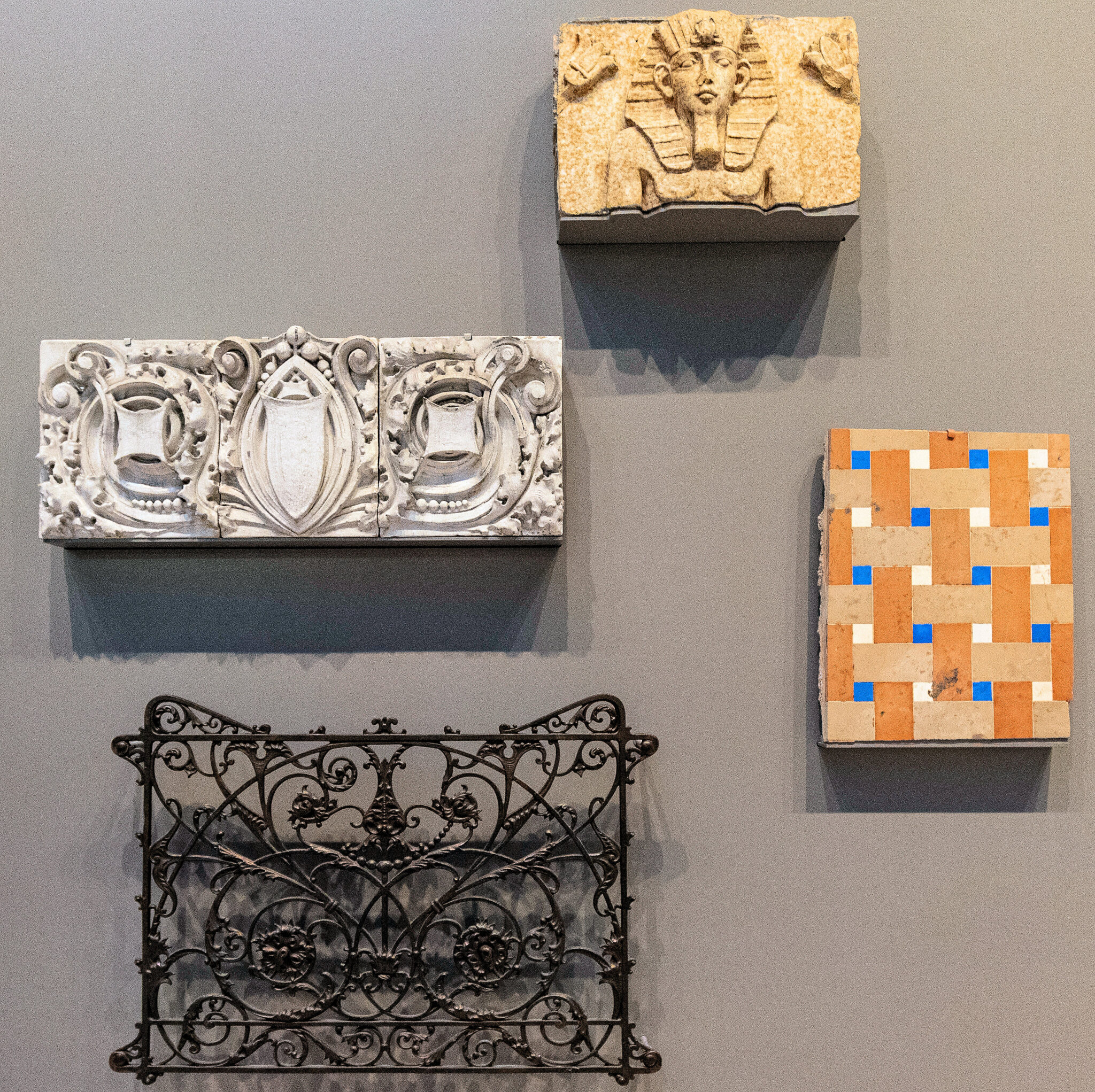
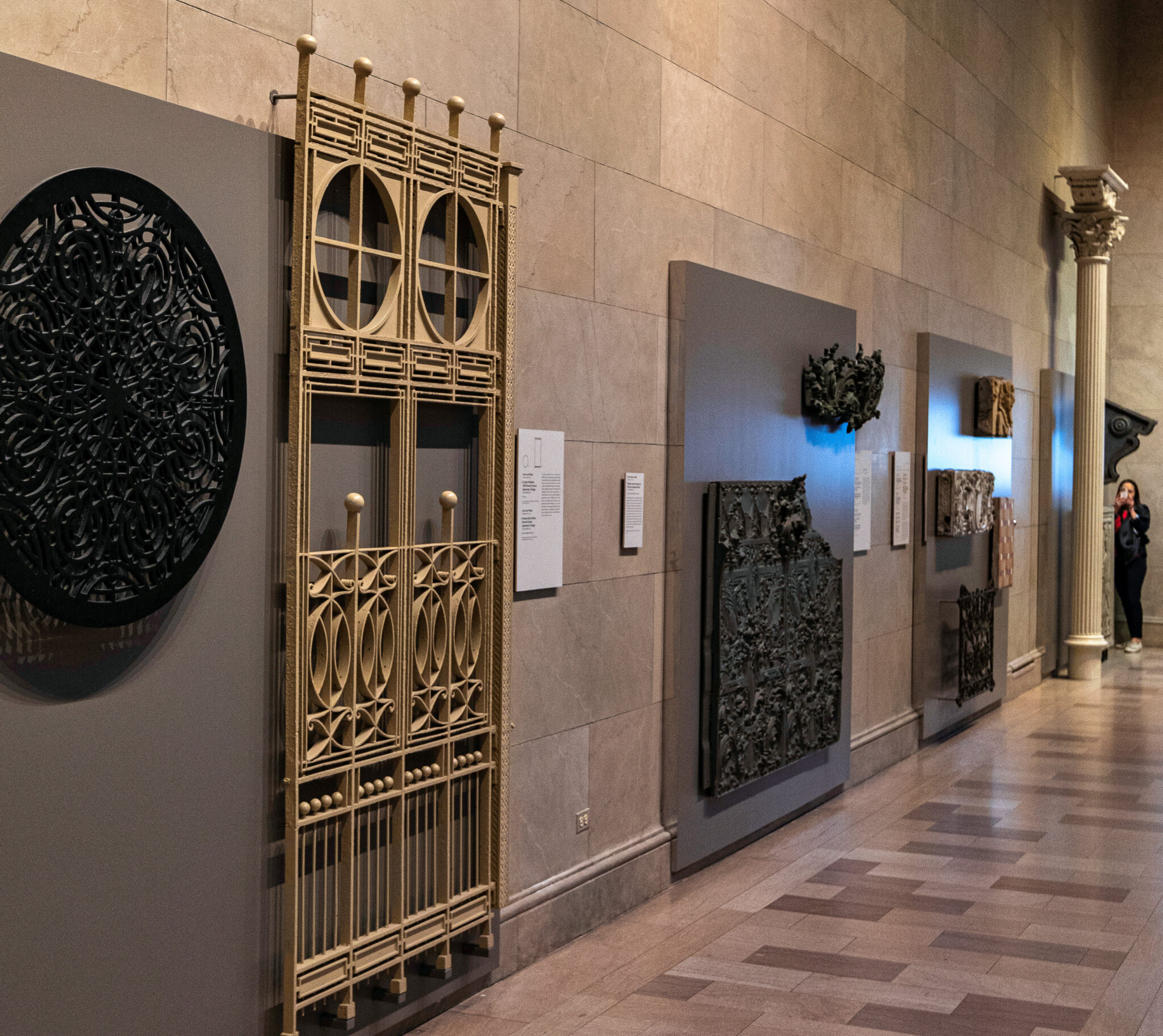
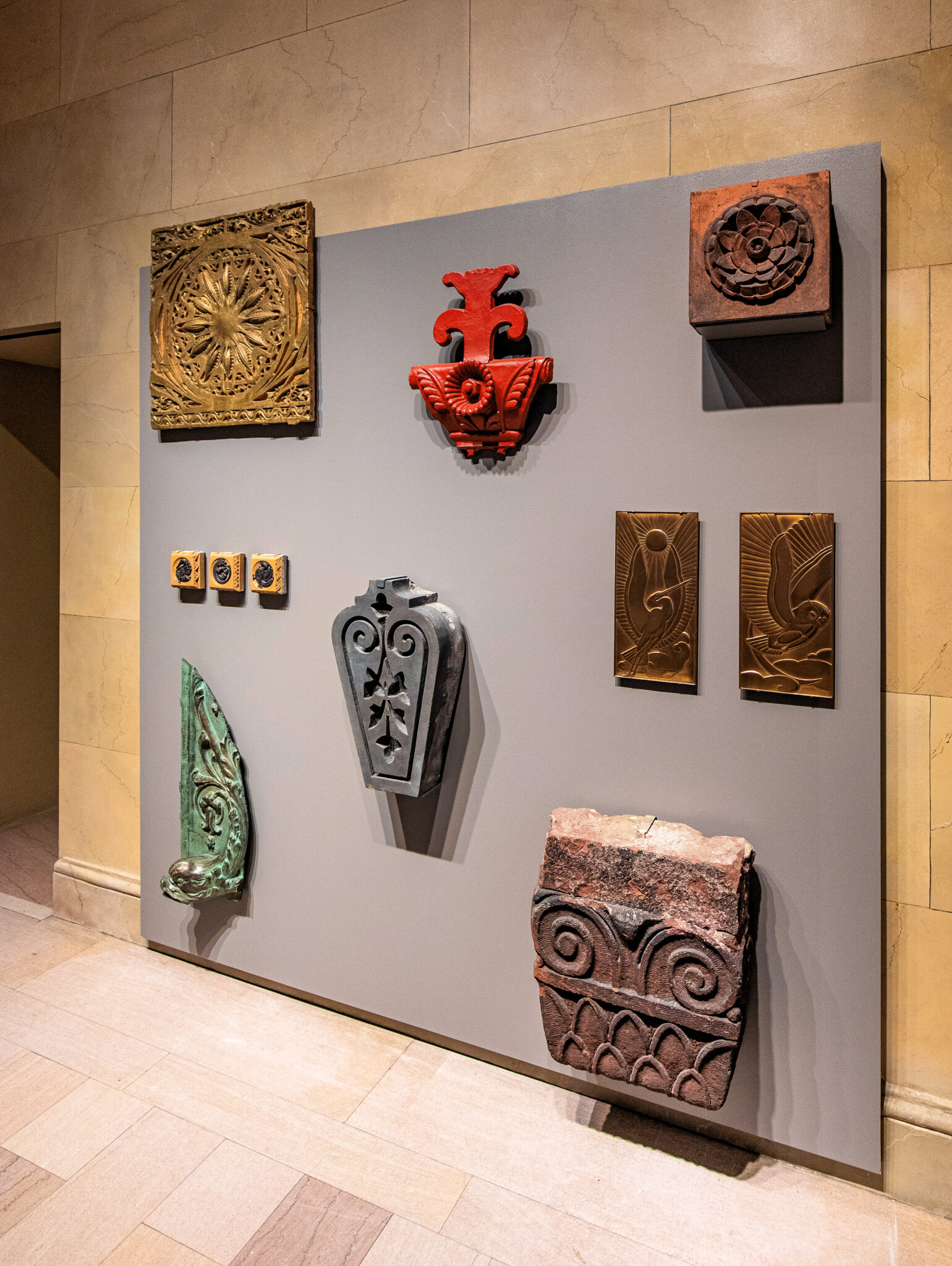
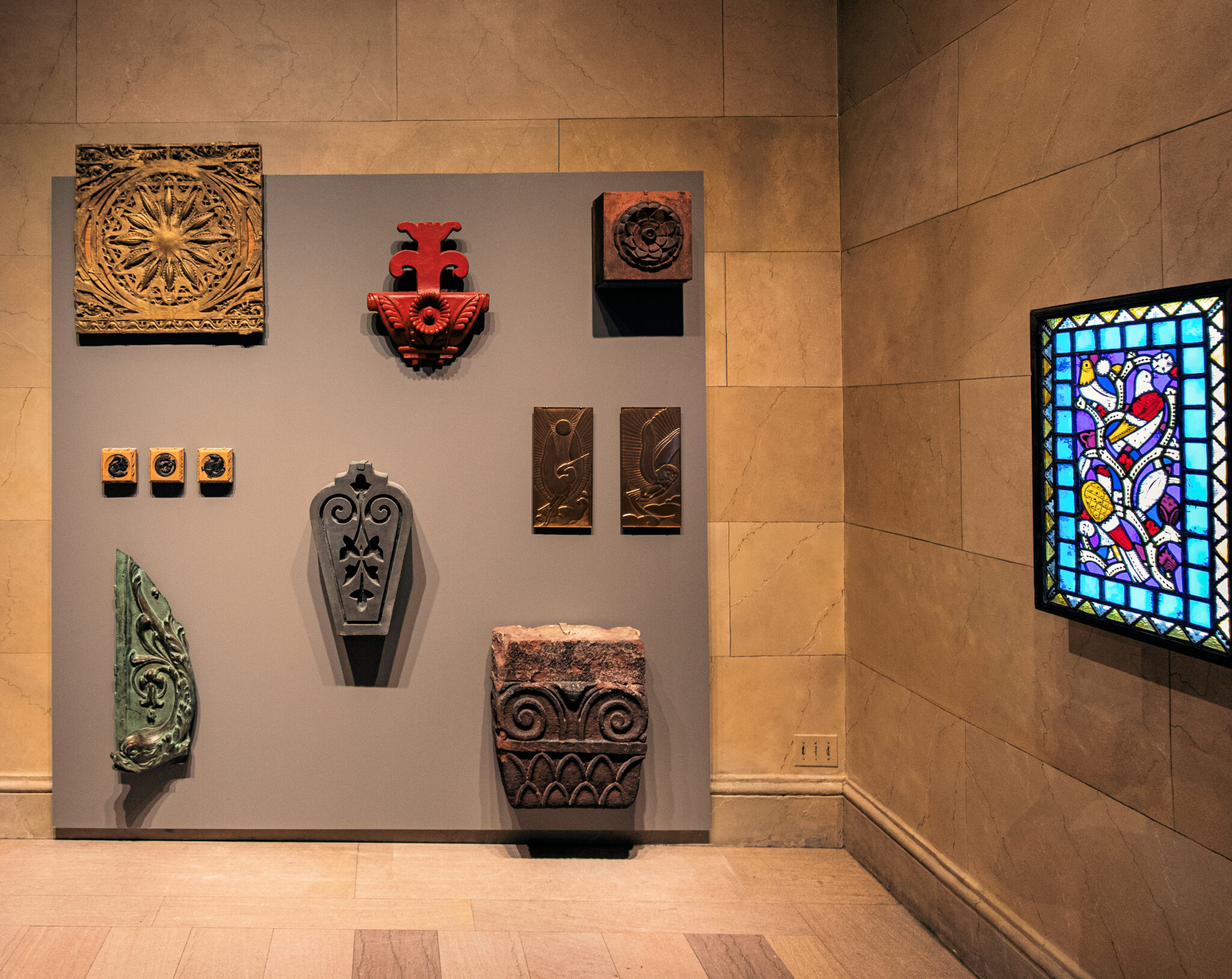
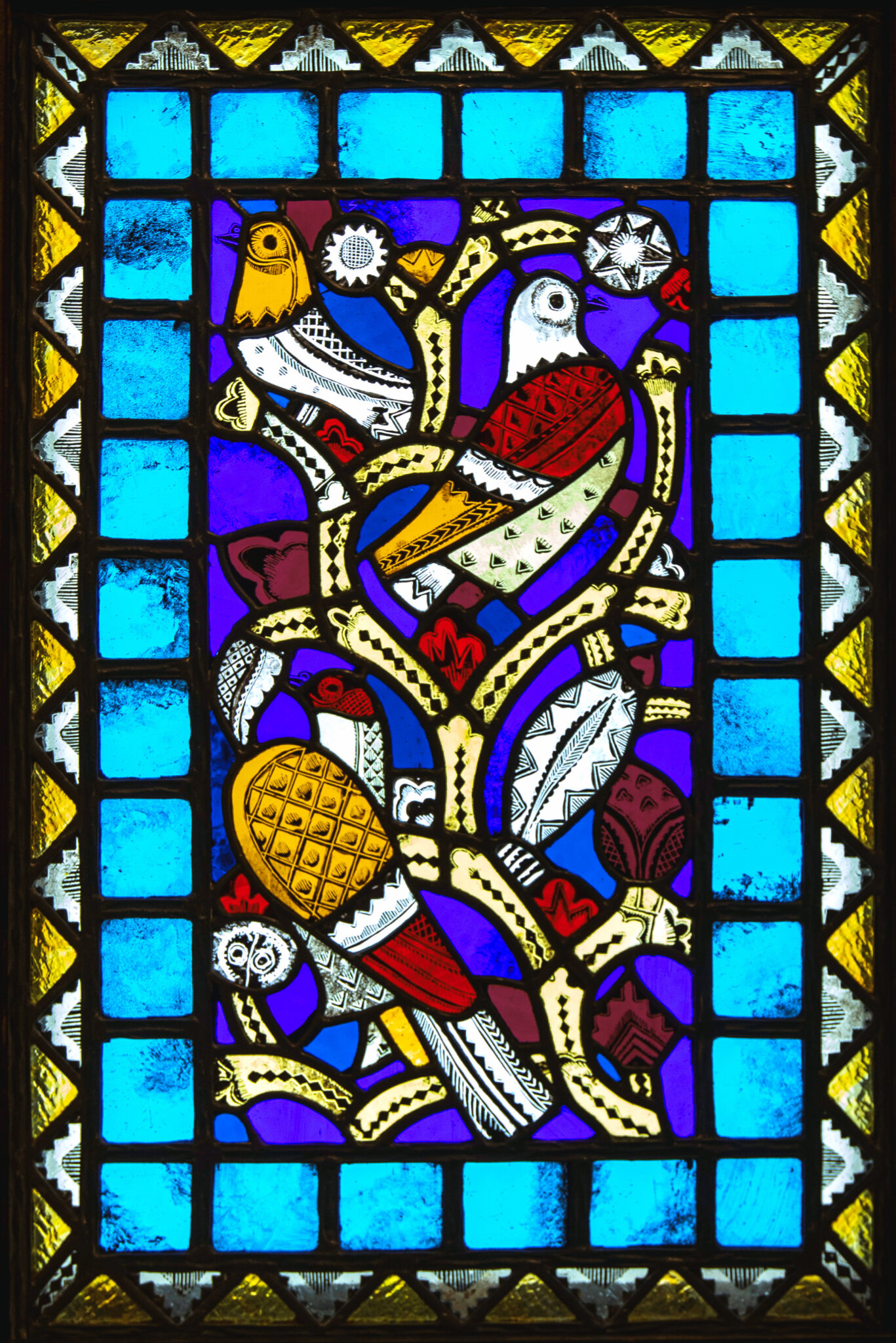
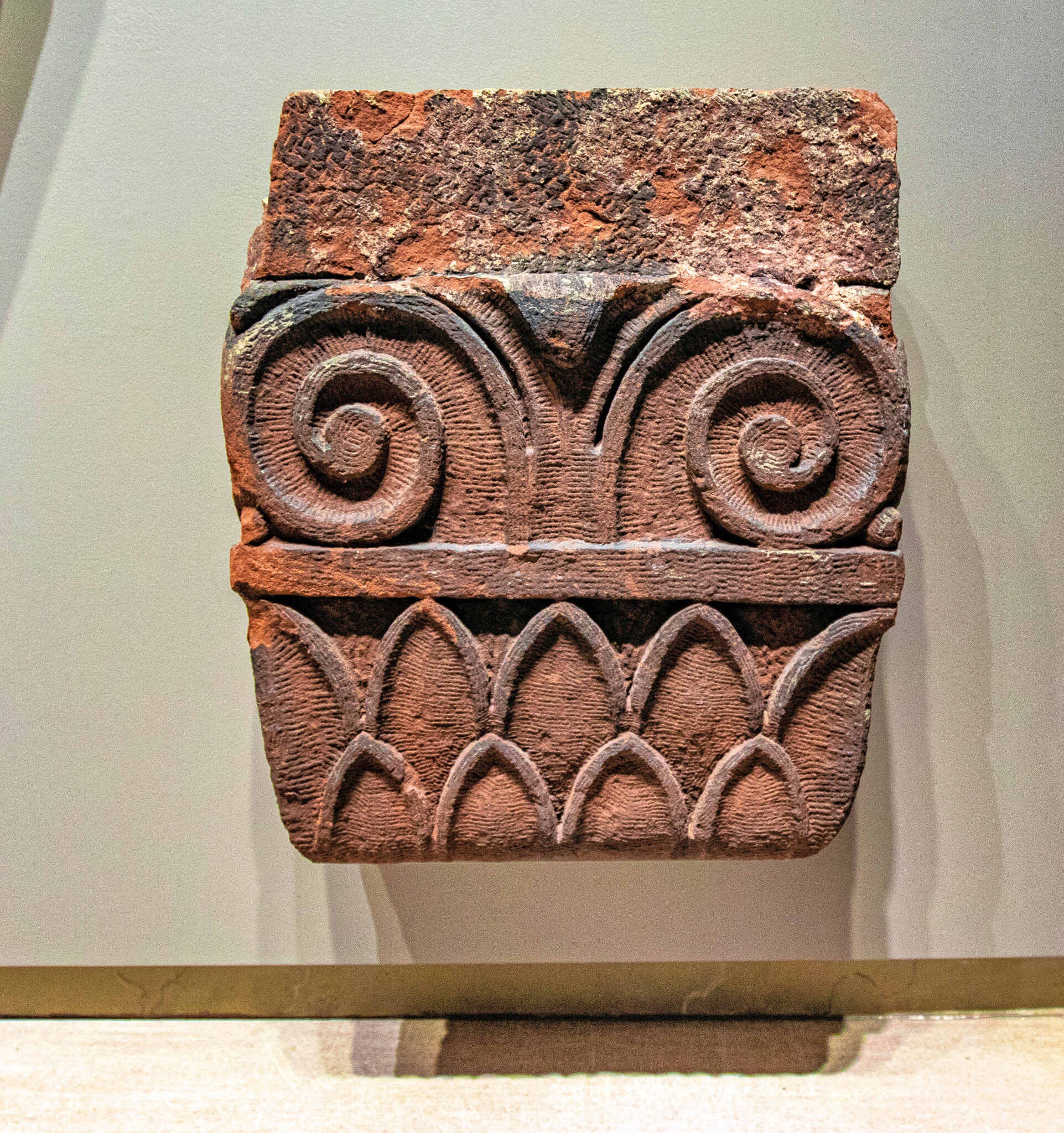
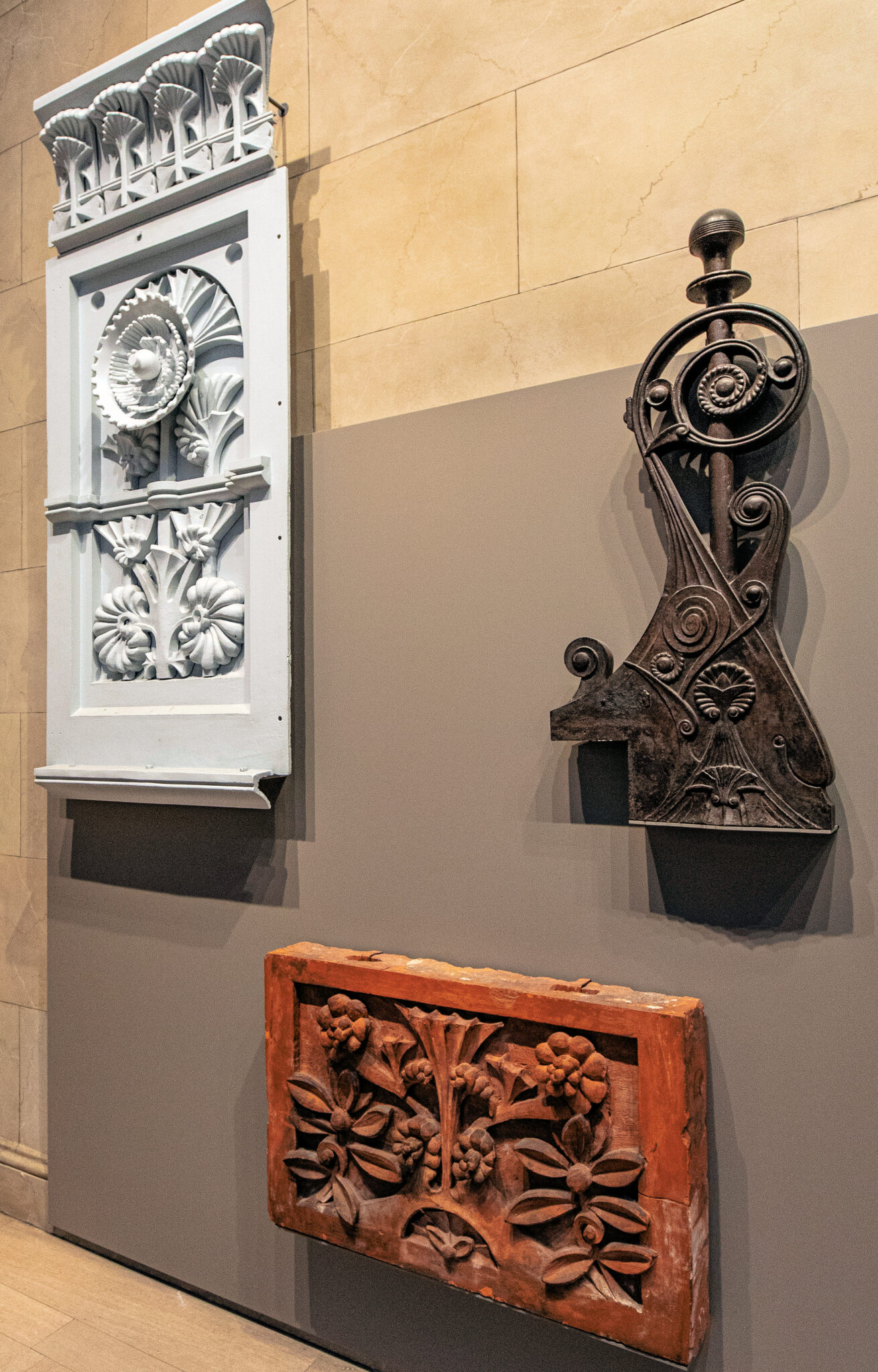
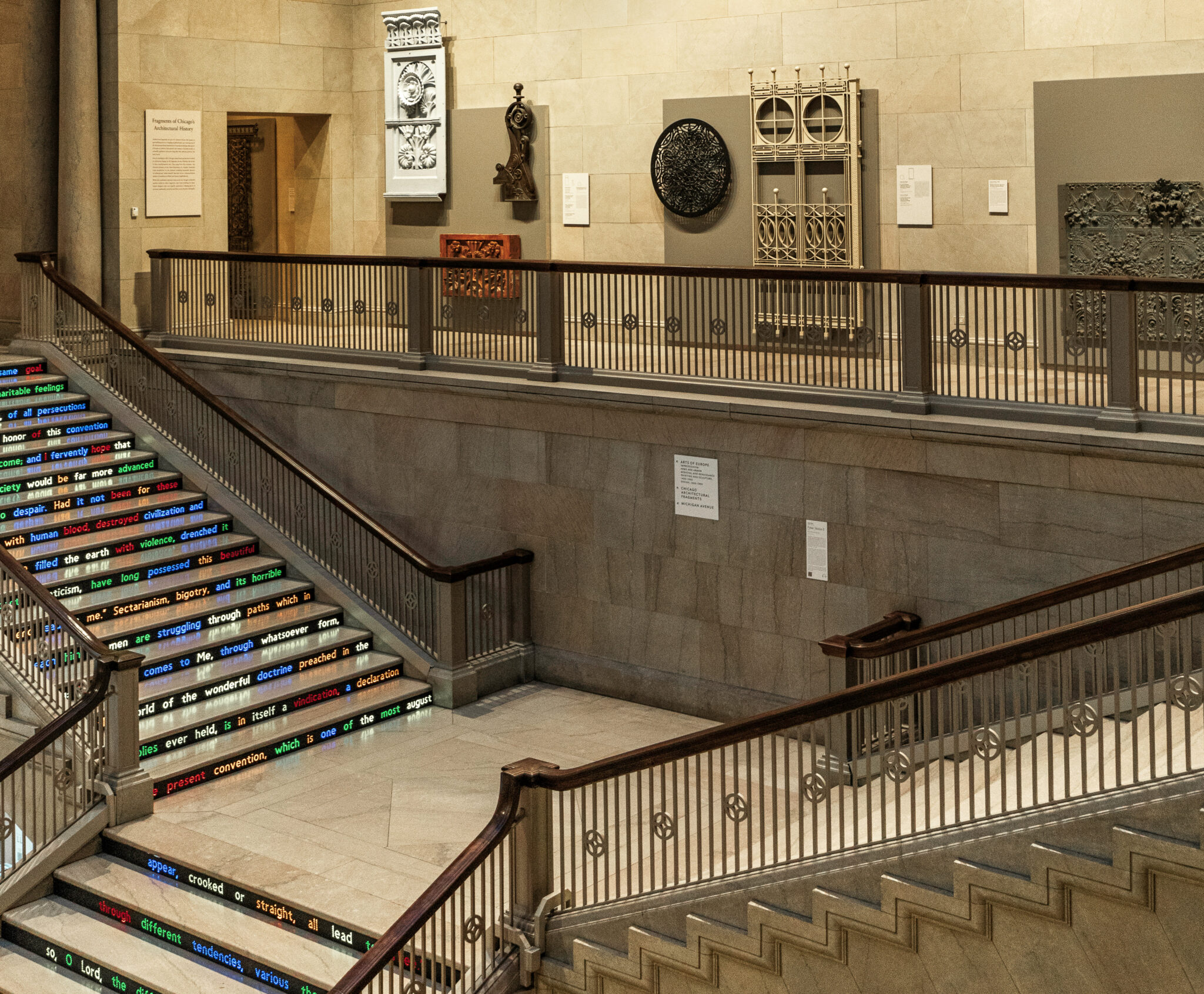
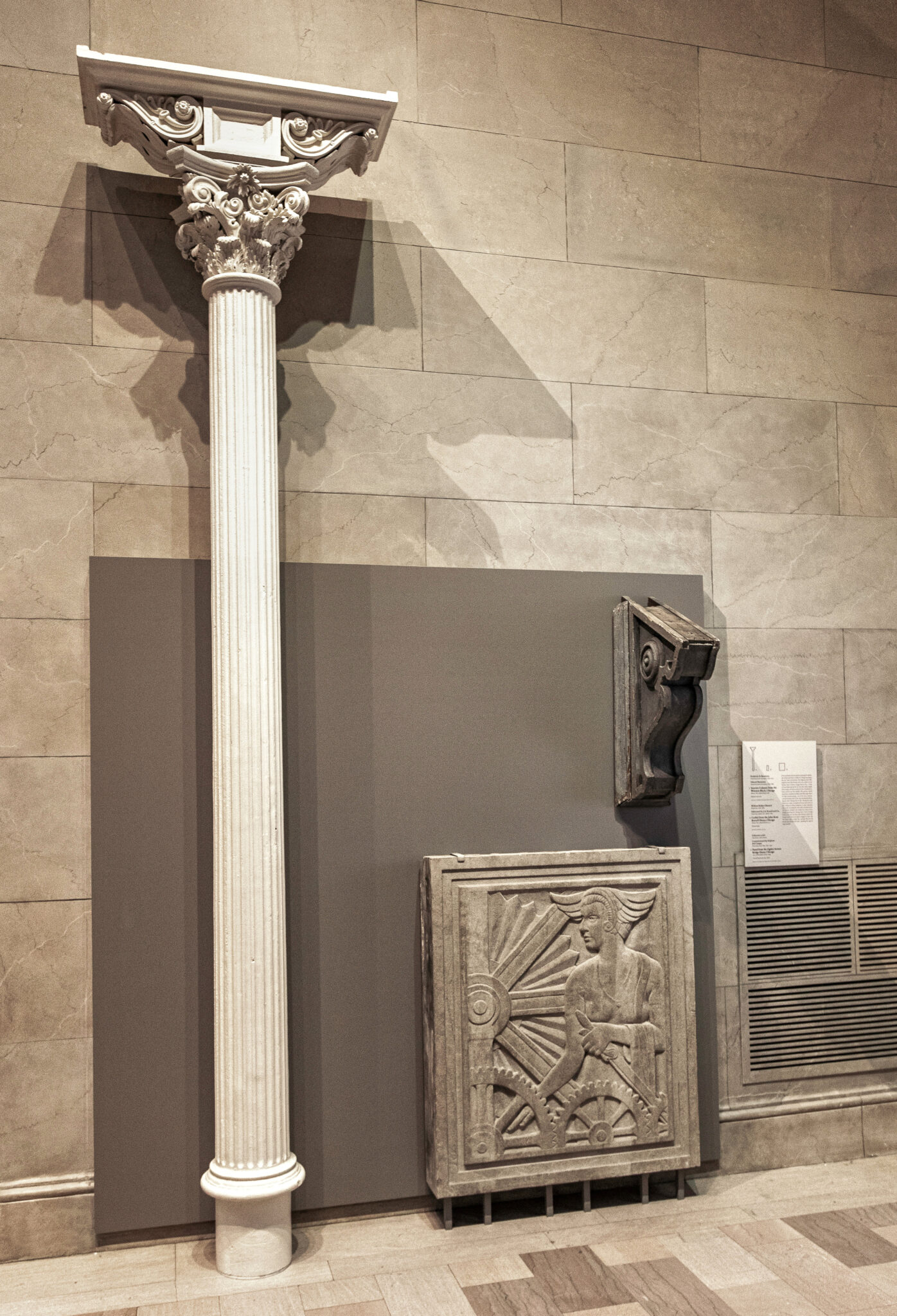
the majority of the images however, doument the reconfigured “fragments of chicago’s past exhibit,” mounted opposite the hartwell memorial tiffany window (1917) within the skylit henry crown gallery.
the majority of the images however, doument the reconfigured “fragments of chicago’s past exhibit,” mounted opposite the hartwell memorial tiffany window (1917) within the skylit henry crown gallery.
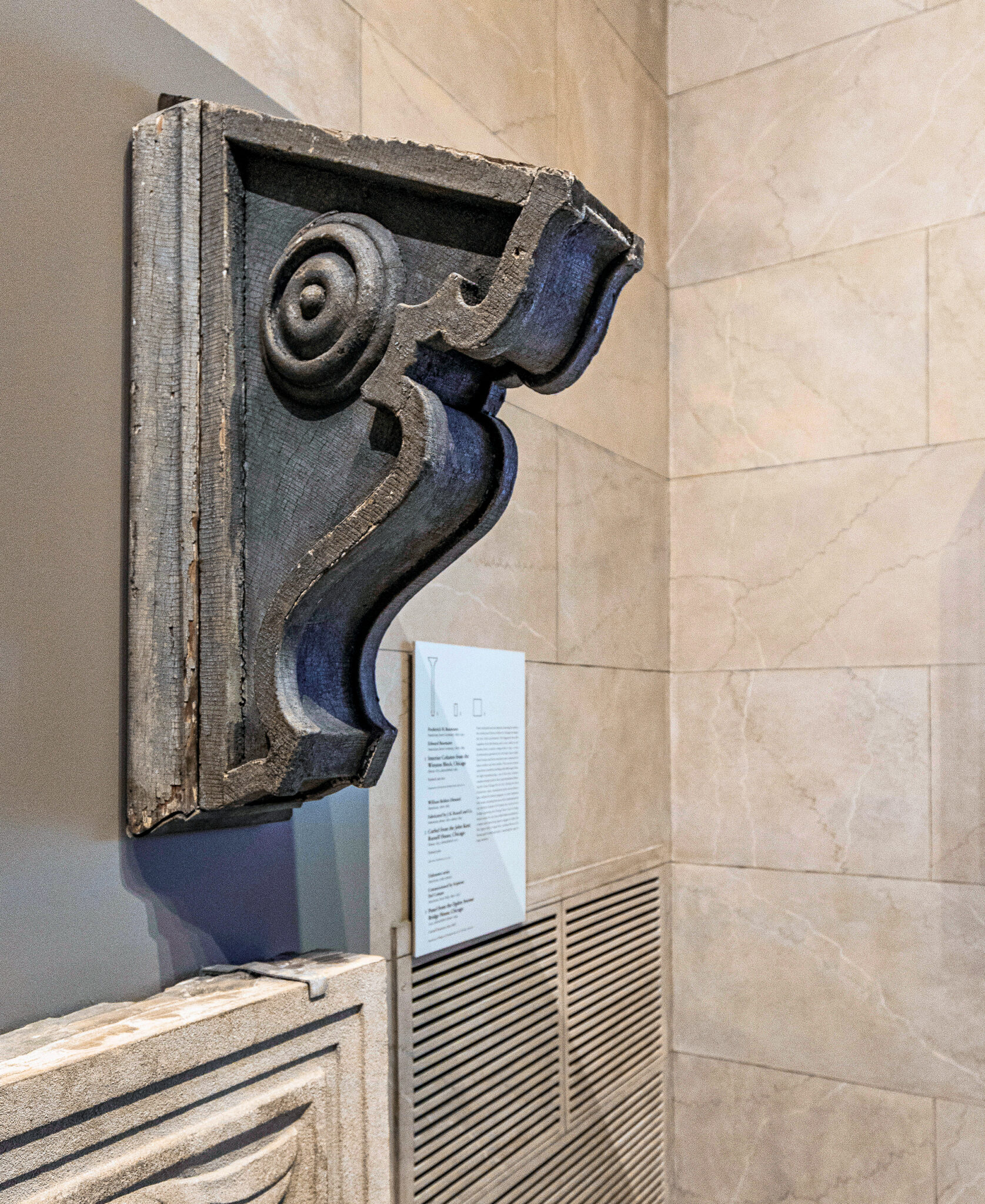
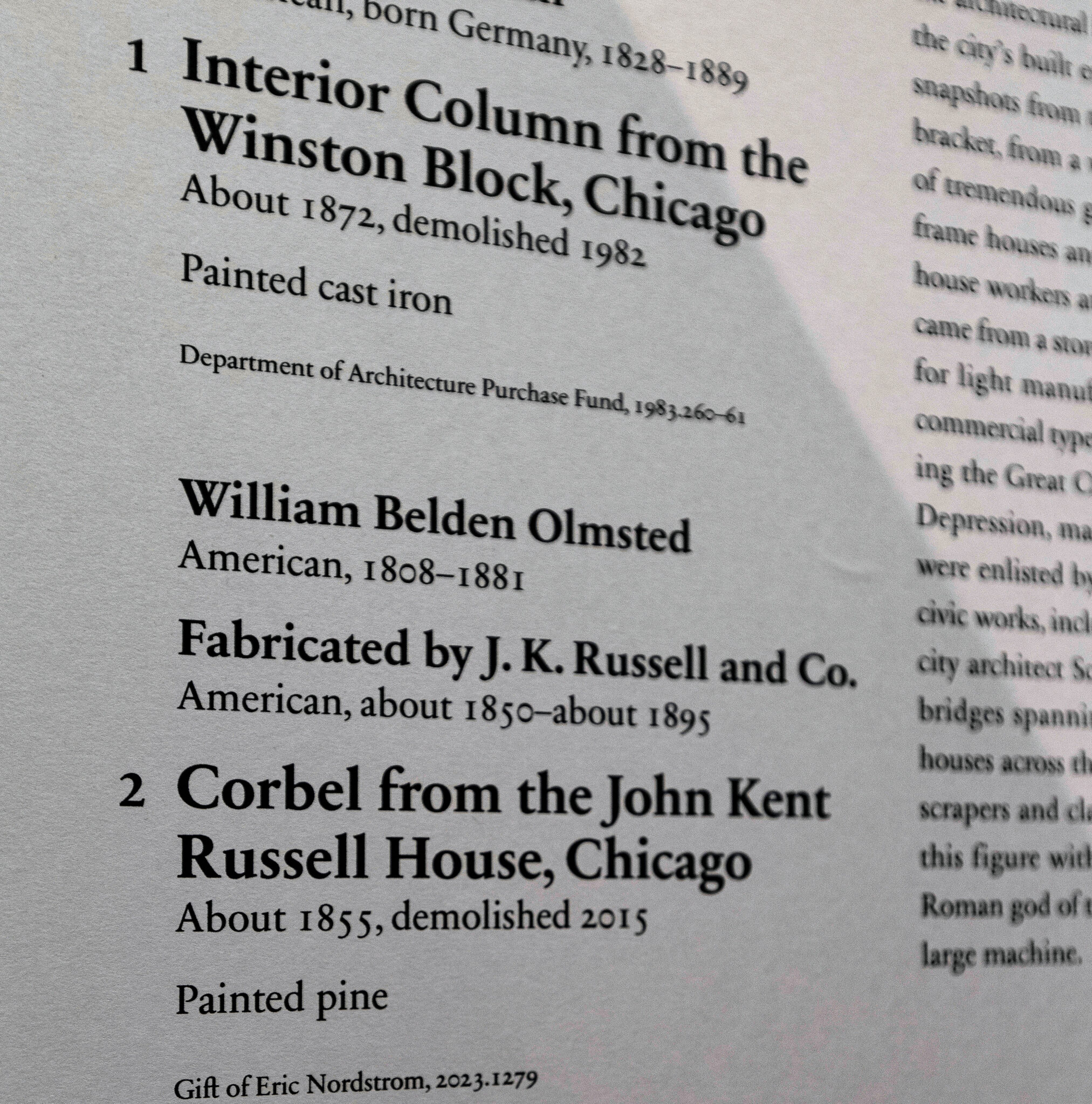
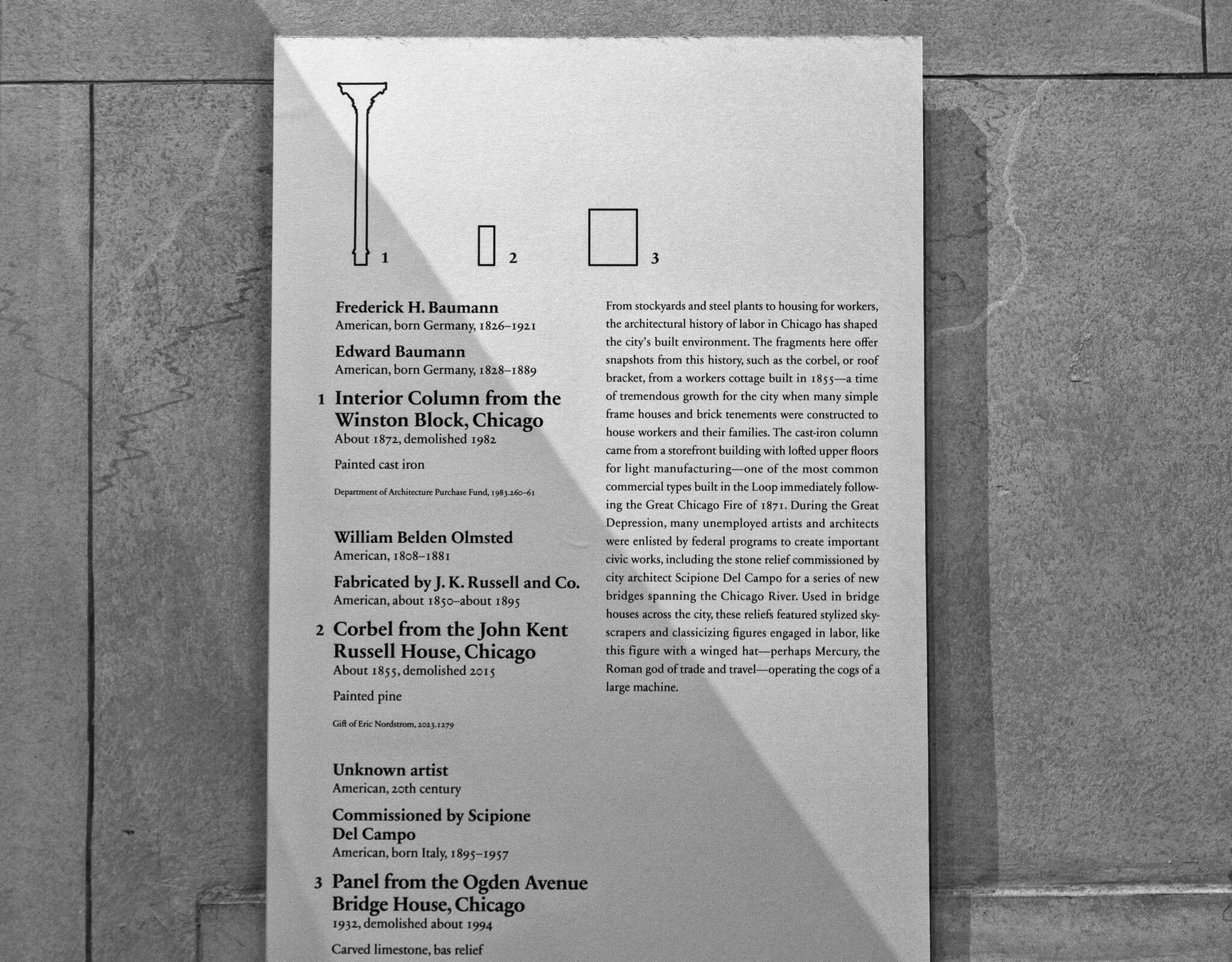
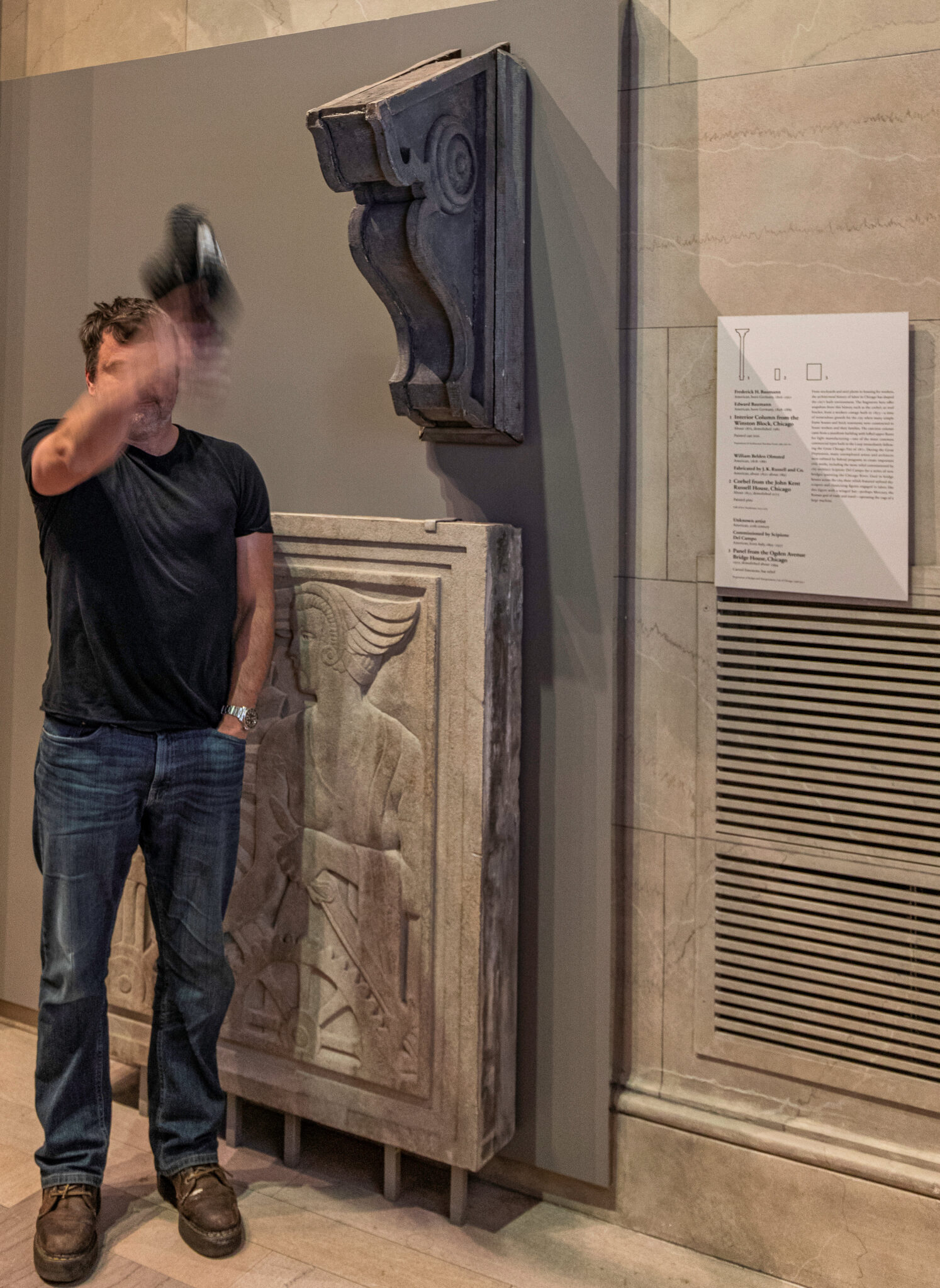

description of salvaged artifact:
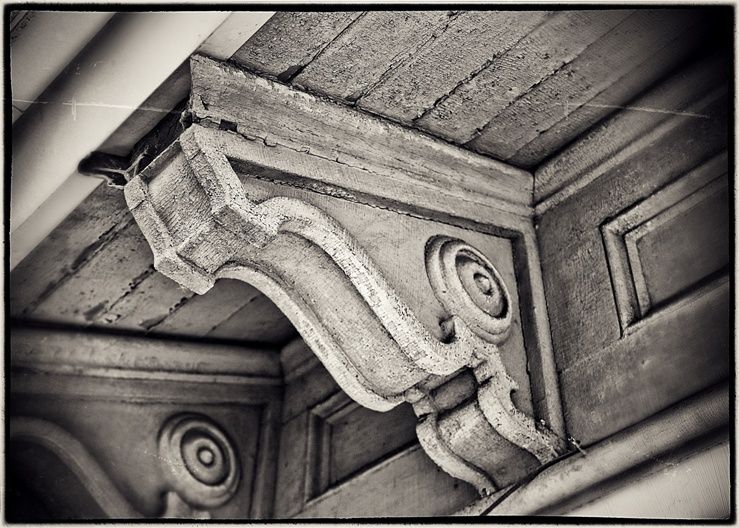
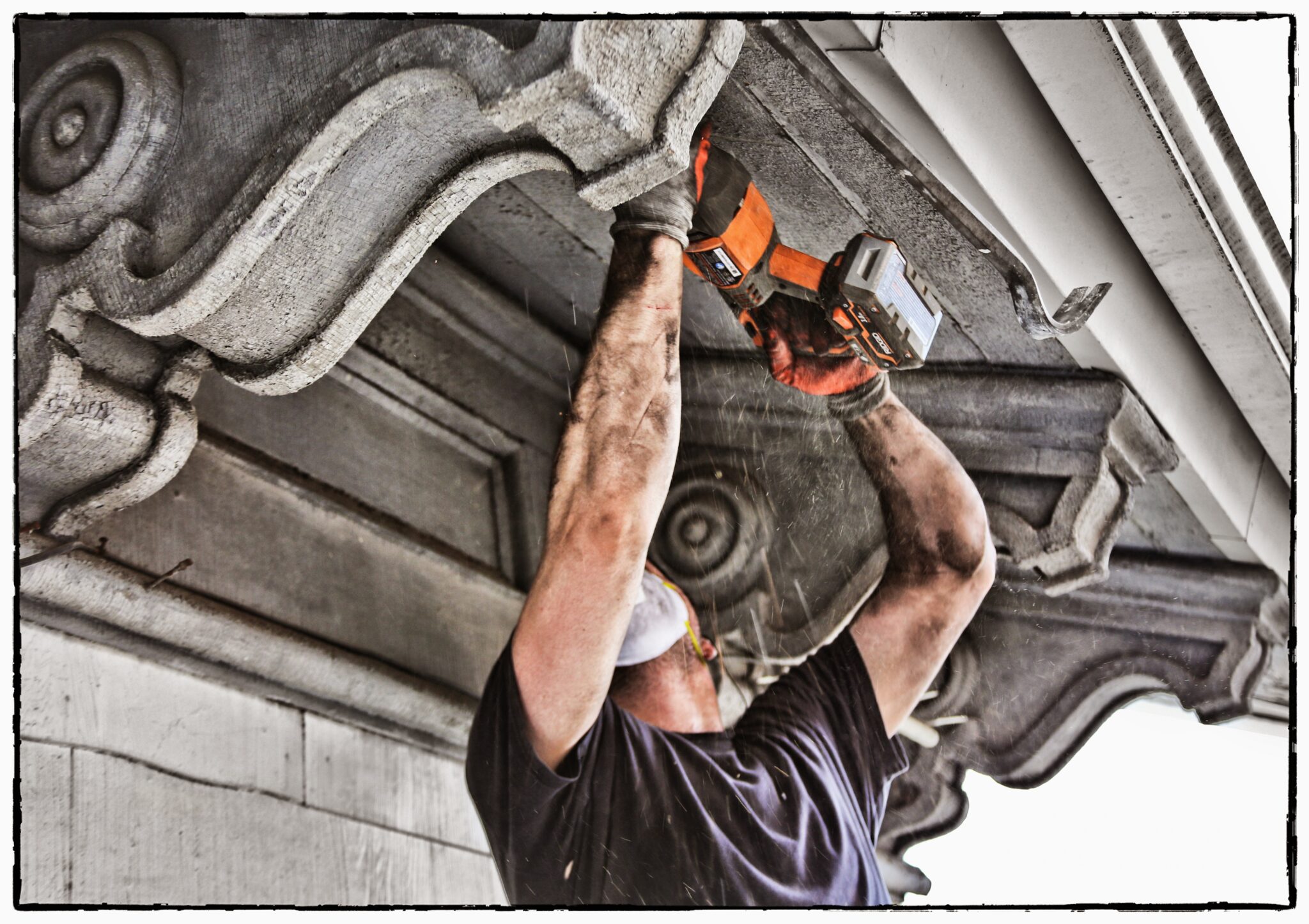
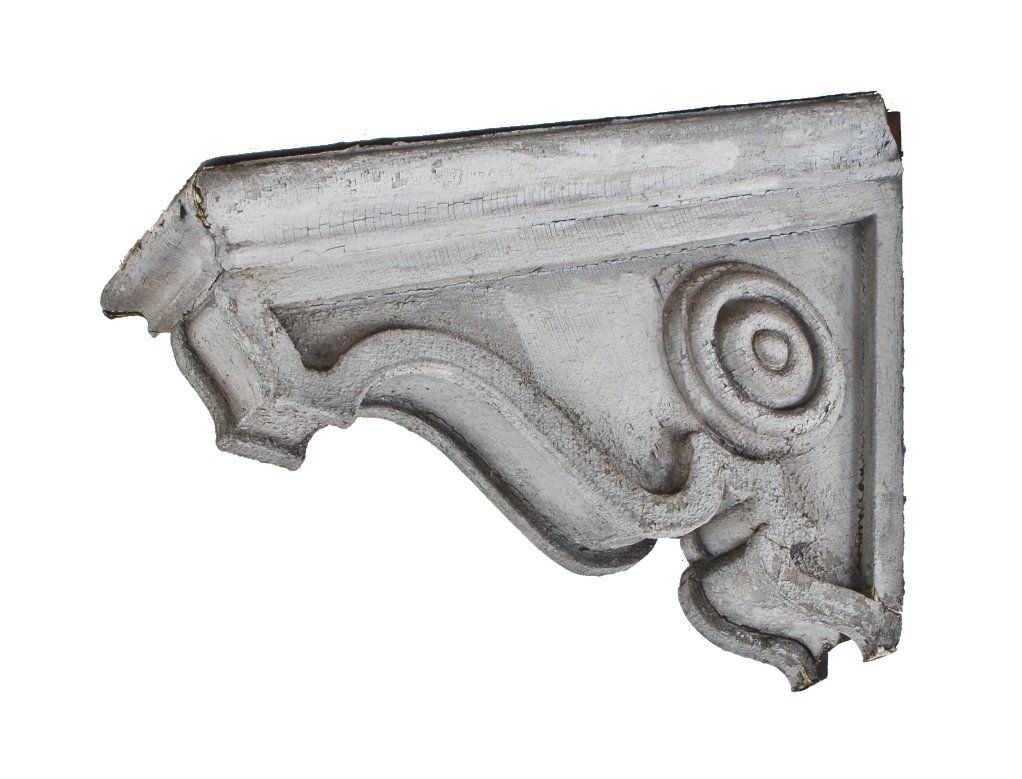
original rare pre-fire chicago italianate style painted pine wood exterior residential eave bracket or corbel designed and fabricated by j.k. russell & co., chicago, il. the oversized heavy solid wood bracket was salvaged from the historically important john kent russell residence (1855) prior to demolition in 2014. the double-sided bracket contains two large “bullseye” style rondels mounted flush to the bracket with square nails. the slightly raised curvaceous trim work follows the bracket’s profile. the heavy crown molding with beveled edge is affixed on three sides.
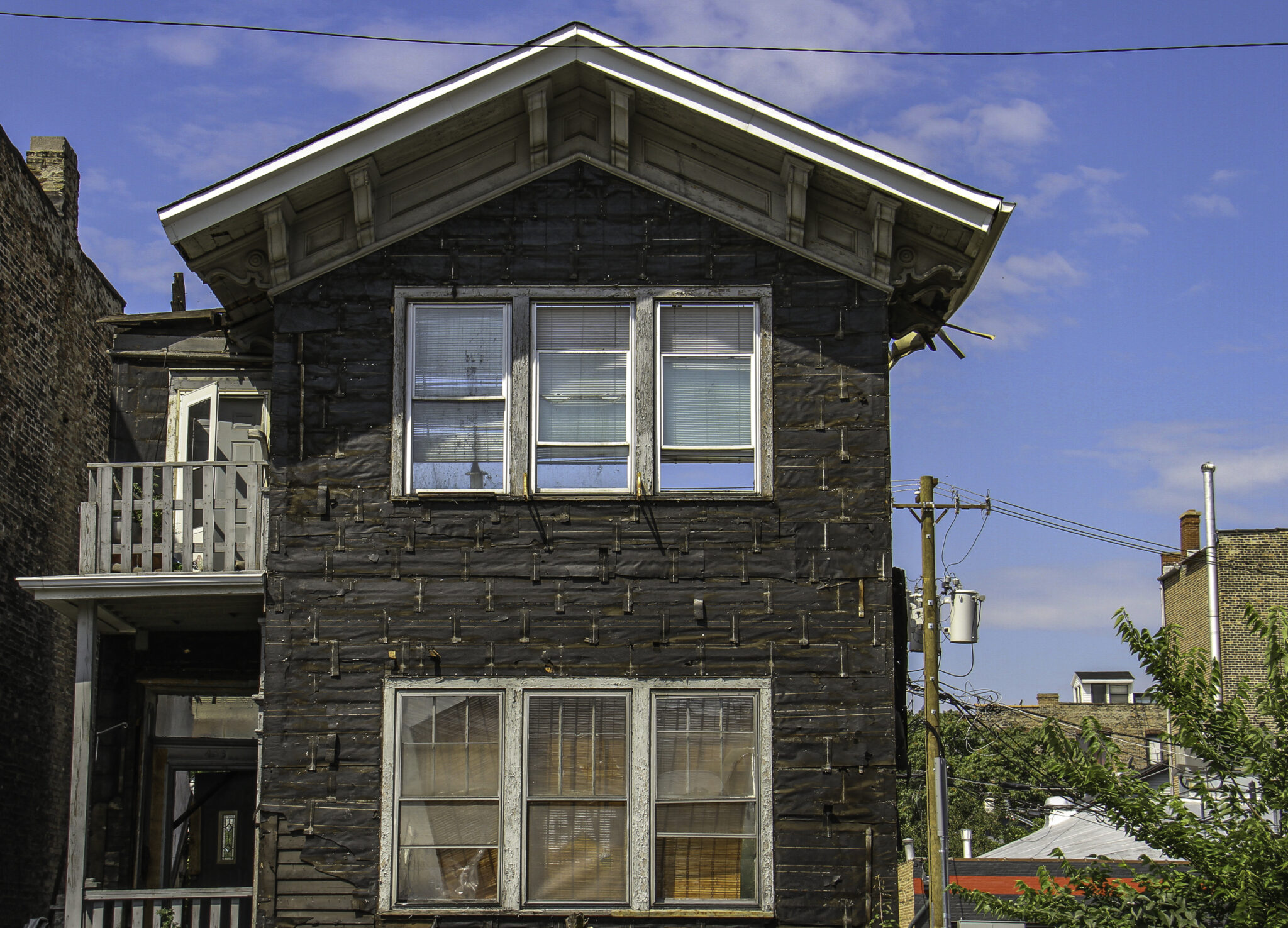
the historically important john kent russell residence (built in 1855) is a remarkable existing example of an early gable front italianate style cottage employing chicago balloon frame construction, located within chicago’s original 1837 city limits. the largely intact extant residence is considered to be a rare surviving example of architect william belden olmsted prior to his partnership with john mills osdel (considered chicago’s first architect), which together as a design firm, constructed several early chicago buildings prior to the great chicago fire (e.g., tremont house, first chicago city hall, etc).
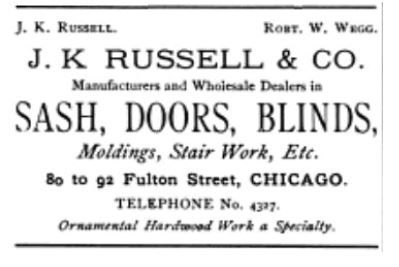
the combination of skill and availability of building materials used to construct russell’s early frame house was due largely to the fact that it was built by and for russell, who was a highly trained carpenter, and owner of j.k. russell & co., which was (at the time) a very large supplier of millwork (e.g., brackets, trimwork, doors, etc.) for some of the earliest chicago balloon-frame structures being built before and after the great chicago fire.
from the time of construction, the russell house was no doubt outfitted with building materials provided by his company, which likely included the fanciful oversized gabel brackets with “bullseye” rondels, turned staircase spindles and newel post, wood fireplace mantel (located on the 2nd floor), paneled doors and impressive built-up moldings and/or casings used on both the exterior as well as interior. two major alterations (both completed in the 1860’s), including the addition of a basement to raise the house to street and/or sidewalk level to accommodate the installation of a sewer pipe added along carpenter street and a substantial addition built to the west elevation dramatically transformed the house from the time it was first built.
in the 1880’s, ongoing remodeling was performed before and after the home was subdivided into five separate apartments. the highly outdated tenement was further upgraded or cosmetically altered with the addition of electrical, plumbing and asbestos siding used to cover over the dilapidated clapboard siding. the enclosed rear porch and main entrance were reconfigured, along with the addition of a garage built in the mid-1920’s. during its incredibly long and storied existence, the russell house has survived the great chicago fire, the ongoing expansion of the surrounding manufacturing district, the kennedy expressway, urban renewal and the like.
amazingly, the residence has been continuously occupied from the time it was built until the present, shortly before urban remains arrived on the site to begin salvaging the original architectural elements before demolition begins in the coming weeks. in addition to the careful and documented removal of surviving architectural elements dating to russell’s occupancy, urban remains, lead by eric j. nordstrom, intends to painstakingly document any and all changes the residence has underwent over time, to not only gain further insight into its evolution as a single family cottage to a now-dilapidated multi-family dwelling, but ultimately create a more detailed narrative focusing on the exact historical building methods used to construct this home.
measures approximately 34 x 10 x 24 inches.
additional images of the “fragments of chicago’s architectural history exhibit provided below: