

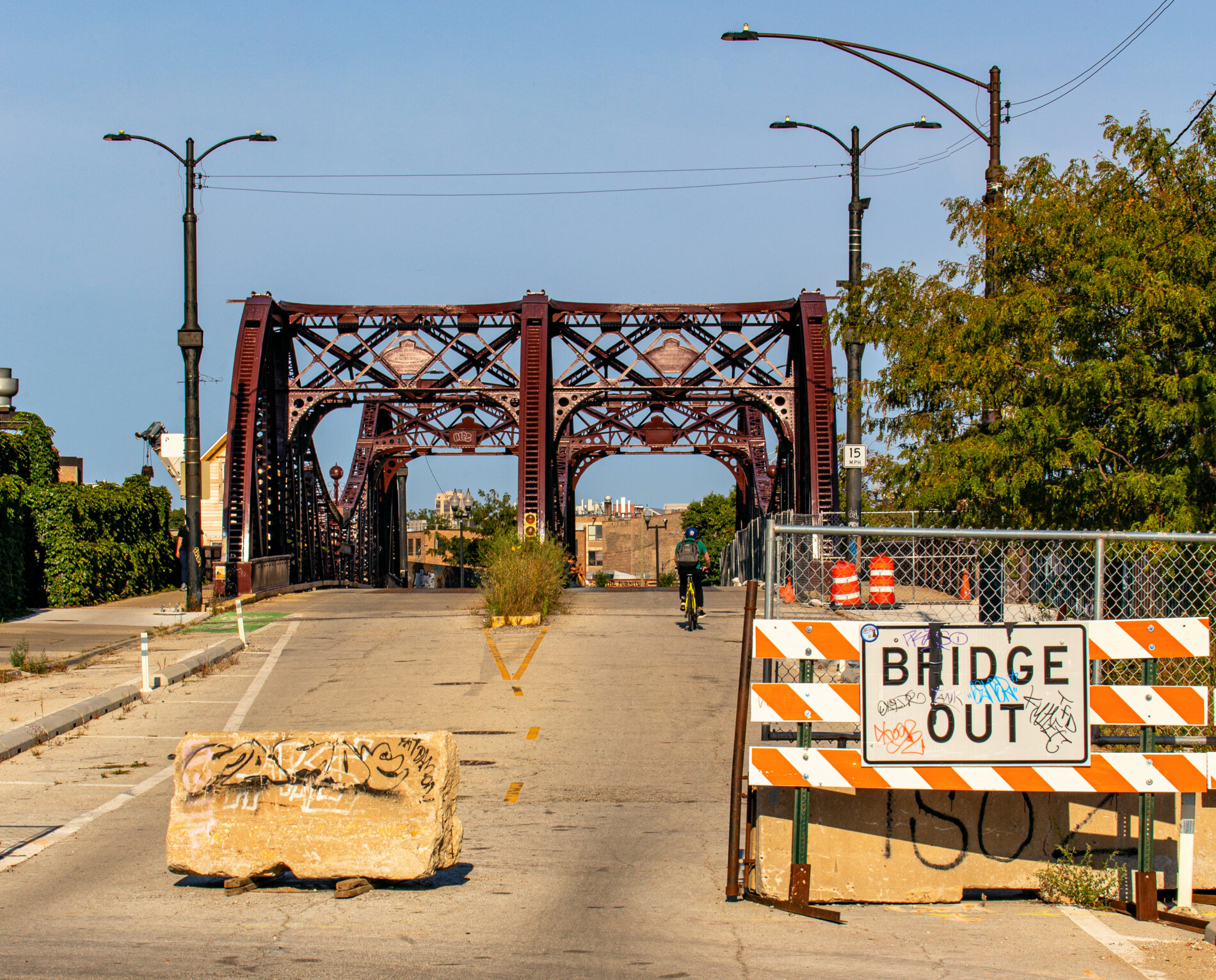
09 Sep clybourn place bridge – chicago’s first trunnion bascule bridge and launched the internationally recognized “chicago style” – faces destruction
chicago alderpeople are seeking to remove landmark protections from the historic cortland street bridge, potentially allowing its demolition and replacement. the 124-year-old bridge, which crosses the north branch of the chicago river between lincoln park and bucktown, has been closed to vehicles since september 2025 for a rehabilitation initially expected to take 18 to 24 months.

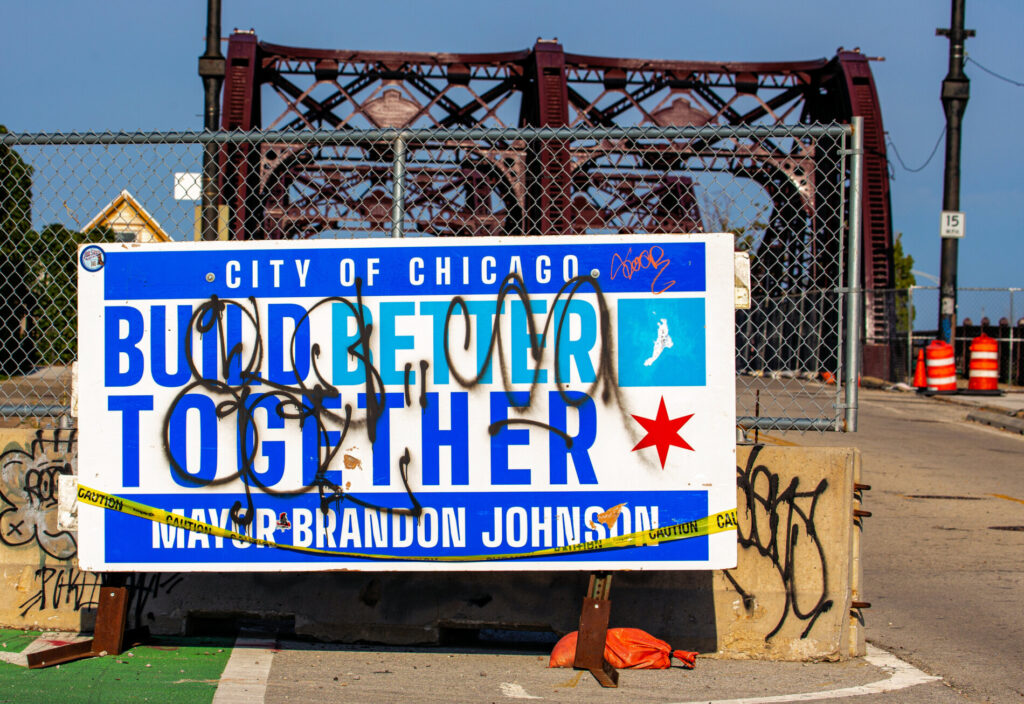

however, recent chicago department of transportation (cdot) inspections found extensive deterioration, and the city now says the closure could last several years. citing severe congestion and the uncertain repair timeline, aldermen brian hopkins (2nd ward) and scott waguespack (32nd ward) support replacing the bridge with a wider, modern structure to improve traffic flow.
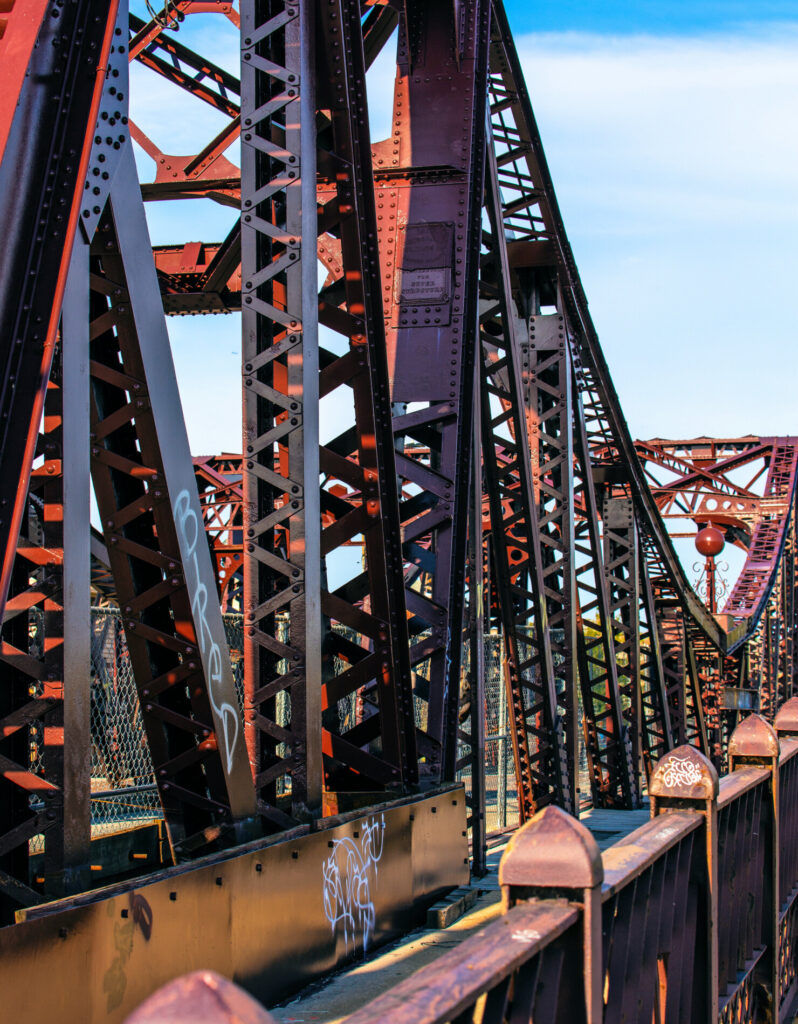


preservation groups oppose demolition, noting that the 1902 bridge was the first “chicago-style” fixed-trunnion bascule bridge. they propose converting it for pedestrian use and possibly connecting it to the nearby bloomingdale trail (the 606). even if its local landmark status is revoked, state and federal environmental and historic-preservation reviews would still apply, so replacement would not be immediate.
the bridge remains closed to vehicles but is open to cyclists and pedestrians on the north sidewalk. once expected to reopen in 2027, it is now closed indefinitely.
further reading:
the cortland street drawbridge, originally called the west clybourn place bridge, was chicago’s first trunnion bascule bridge and launched the internationally recognized “chicago style” of movable bridges. opened to traffic in 1902 after work began in 1901, it solved a major navigation problem on the chicago river’s narrow, industrial branches.

the design pivots vertically on a fixed axle, balanced by counterweights that descend into deep pits. adopted under mayor carter h. harrison jr., it replaced swing bridges whose large central piers obstructed the river channel. with counterweights descending into watertight pits below street level, the compact, uncluttered “chicago style” suited tight urban sites. plaques and structural features document the bridge’s history across several eras:
superstructure plaque (1901): identifies the city officials, engineers, and contractors who led the project:
carter h. harrison, mayor f.w. blocki, commissioner of public works john ericson, city engineer
american bridge co. (lassig plant), superstructure contractor


the substructure plaque (1901): recognizes the fitzsimons and connell co., which built the underwater foundations and counterweight pits. it also marks a major restoration under mayor richard m. daley with the inscription, “bridge restored – north river industrial corridor – richard m. daley, mayor.” the adjacent bridge tender house contains the span’s historic operating controls. although the bridge is now generally fixed in the down position because of current river-traffic constraints, the tender house remains essential to its chicago landmark designation.
