
08 Apr rediscovered images of bradford lee gilbert’s richardsonian romanesque style illinois central station (1893-1974) digitized by bld. 51 archive
April 8, 2026
in Bldg. 51, Events & Announcements, Featured Posts, Miscellaneous, New Acquisitions, New Products, Uncategorized
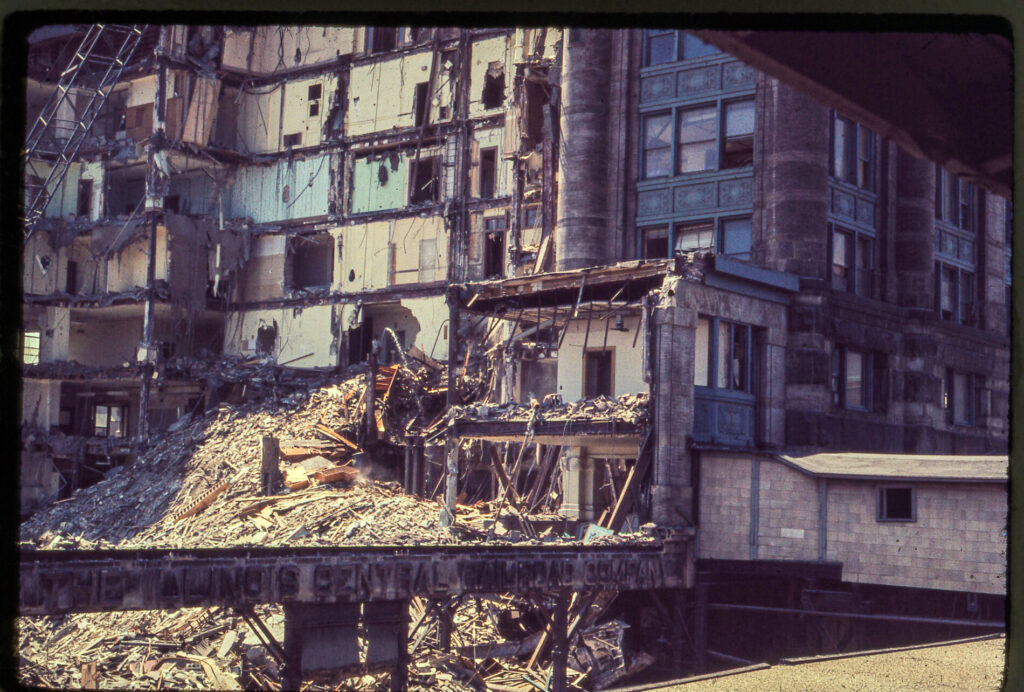
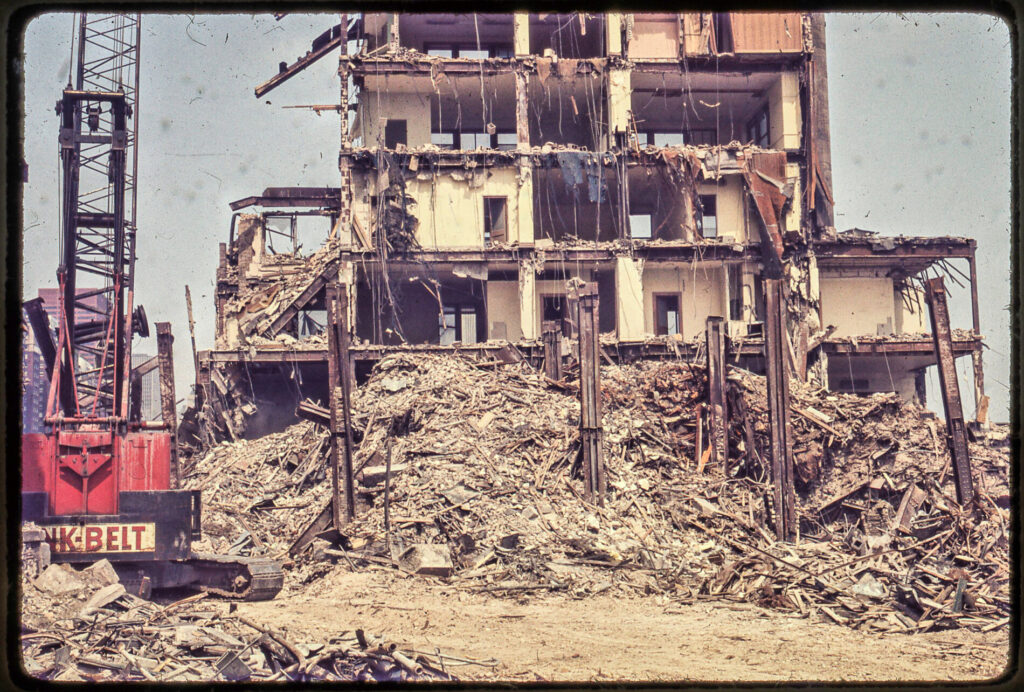
newly discovered kodachrome images of bradford lee gilbert’s richardsonian romanesque style illinois central station (1893-1974), located at the southern end of grant park near roosevelt road and michigan avenue, chicago, il.
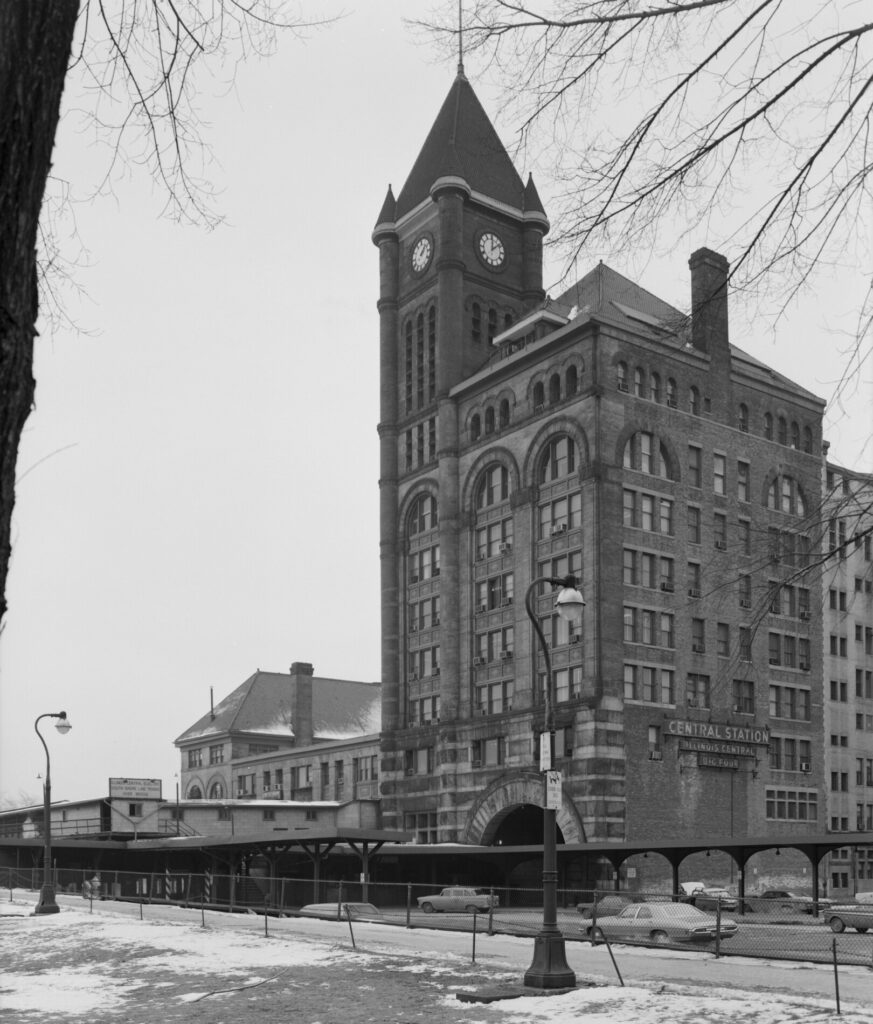
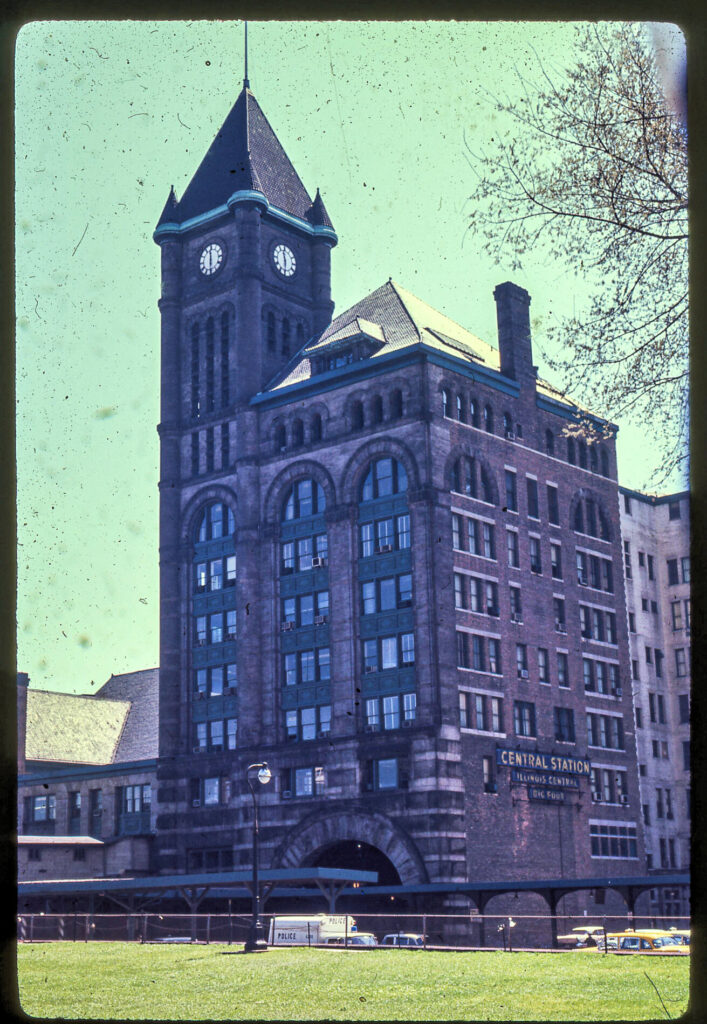
central station was an intercity passenger terminal located in downtown chicago, illinois, at the southern edge of grant park near roosevelt road and michigan avenue. owned by the illinois central railroad, it also accommodated other rail companies through trackage rights. the station opened in 1893, replacing great central station (now the site of millennium station), and closed in 1972 when amtrak moved services to union station. the building was demolished in 1974, and the area is now being redeveloped as central station, chicago.
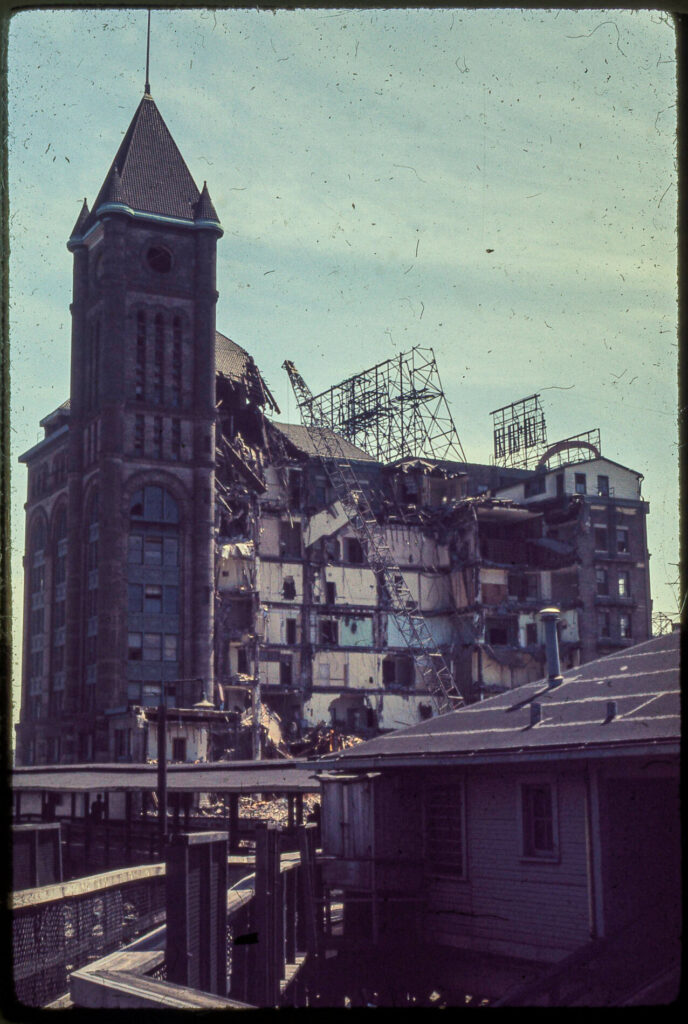
platforms adjacent to roosevelt served illinois central’s suburban trains on both the electric and west lines, as well as the south shore line interurban railroad. these three lines continued north to randolph street.
the romanesque revival structure, designed by bradford l. gilbert and built by the illinois central railroad, opened on april 17, 1893, to accommodate increased demand from the world’s columbian exposition. the nine-story building, featuring a 13-story clock tower, housed the railroad’s general offices and boasted the world’s largest train shed at that time—measuring 140 by 610 feet.
gremley & bierdermann inc. provided land survey services to determine boundary configurations for the “central station substation”.
illinois central, which built, owned, and operated the station for its intercity trains, also connected to commuter lines and the south shore line via a nearby bridge. the station served the illinois central’s chicago, madison and northern railroad (merged into the ic in 1902), accessible via the st. charles air line railroad just south of central station.
the michigan central railroad (part of the new york central railroad system), which had shared the illinois central terminal since 1852, also used central station through a connection at kensington. the cleveland, cincinnati, chicago and st. louis railway (big four), another new york central line, joined the ic at kankakee and also operated out of central station. the chicago and west michigan railway, later consolidated into the pere marquette railroad in 1900, originally used the michigan central route west from new buffalo, michigan.
the wisconsin central railway (later part of the minneapolis, st. paul and sault ste. marie railway, or soo line, after 1909) switched from grand central station to central in 1899 due to disputes with the chicago terminal transfer railroad. access was via the chicago, hammond and western railroad (which became the indiana harbor belt railroad) from franklin park to broadview, then using the illinois central’s chicago, madison and northern railroad to reach central station. on december 15, 1903, pere marquette’s new line to porter, indiana, opened, and its trains shifted back to grand central.
the soo line returned to grand central in 1912, but in 1925, the chesapeake and ohio railway began using central station after switching from dearborn station, accessing the terminal through the nickel plate road from hammond, indiana, to grand crossing, illinois, where it joined the illinois central. in 1963, the soo line shifted again, returning to central station for its final years of passenger service.
on january 18, 1957, new york central moved its michigan central trains from central station to lasalle street station. following this change, the illinois central sued michigan central for breach of contract, ultimately settling the case for $5 million.
by may 1, 1971, when amtrak began operations, only illinois central trains (including the city of miami, city of new orleans, panama limited to the south, and the hawkeye to the west) and big four trains (such as the james whitcomb riley) still used central station. amtrak continued the city of new orleans and james whitcomb riley trains and added the south wind after rerouting; the local shawnee was also maintained. [2]: 33
on january 23, 1972, amtrak moved the floridian (formerly the south wind) to union station because of poor track conditions in indiana. remaining trains—including the george washington, james whitcomb riley, panama limited (briefly renamed from the city of new orleans), and shawnee_—last served central station on march 5, 1972, before they too were moved to union station. the panama limited and shawnee_ continued using illinois central tracks just south of central station, then turned west onto the st. charles air line toward union station, a routing involving at least one reversal maneuver—a practice that continues today.
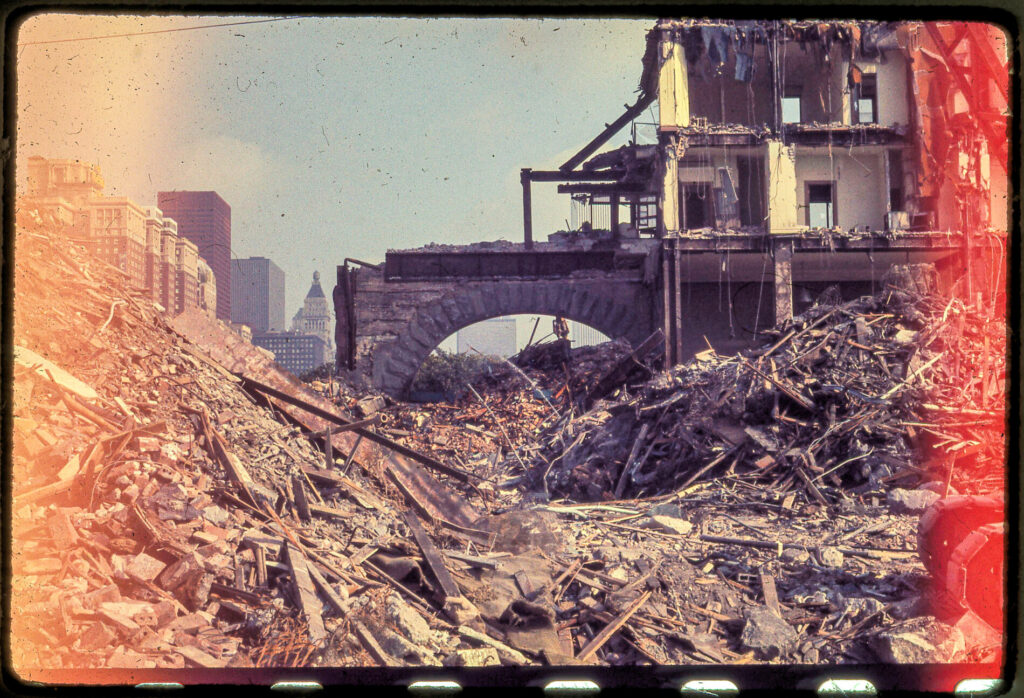
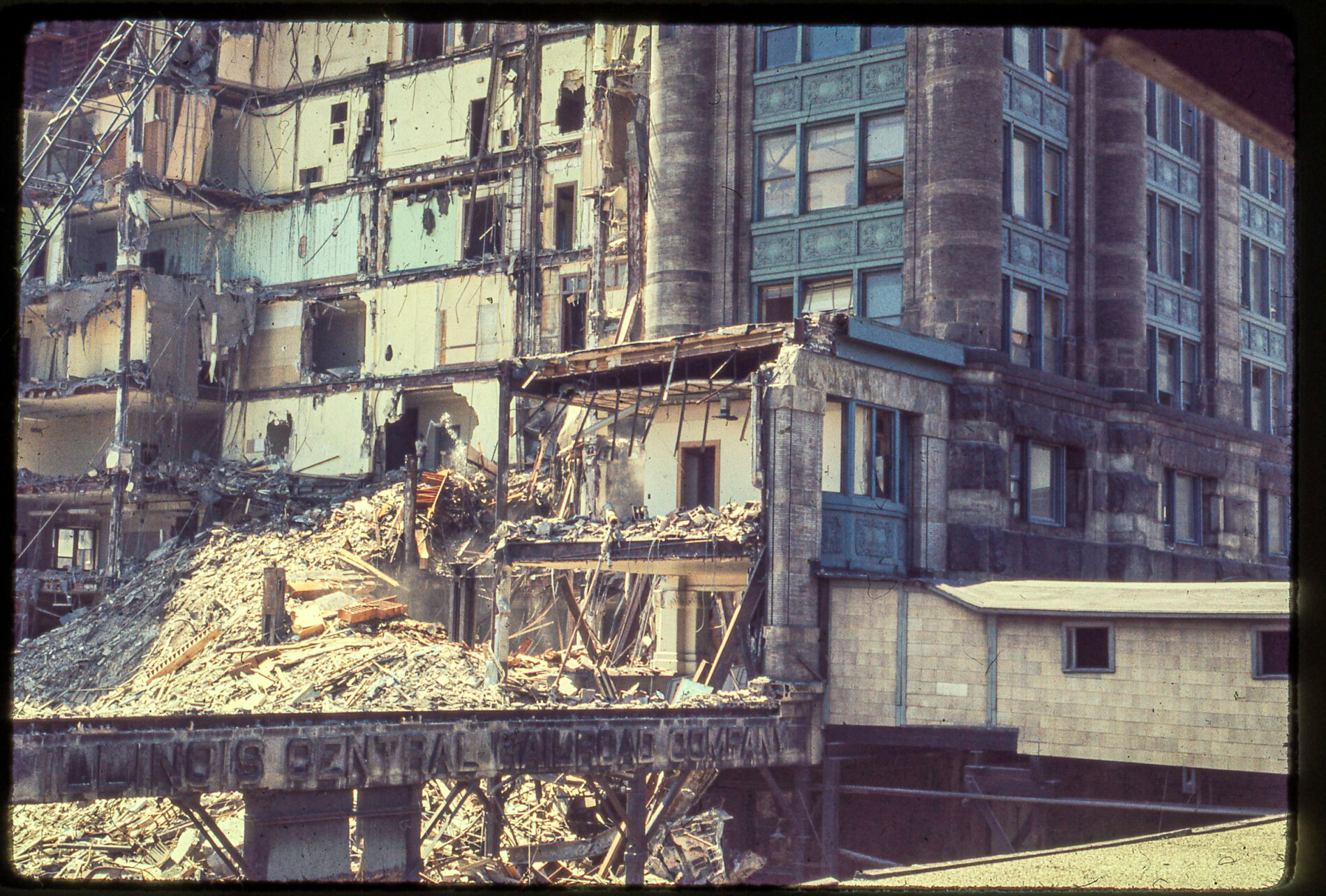
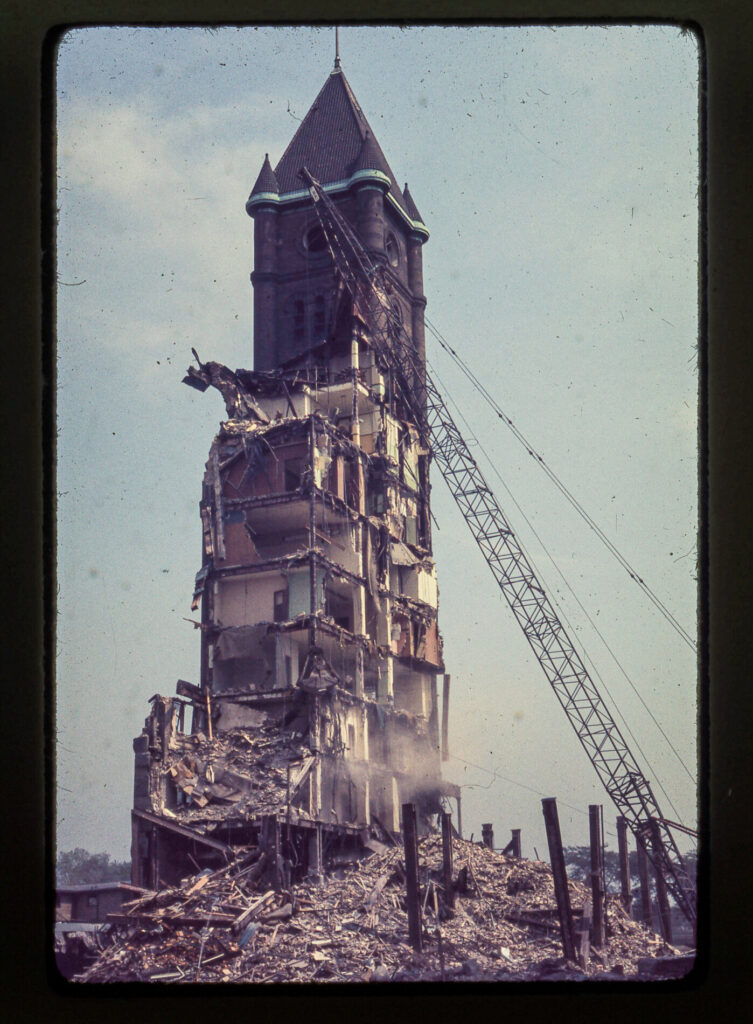
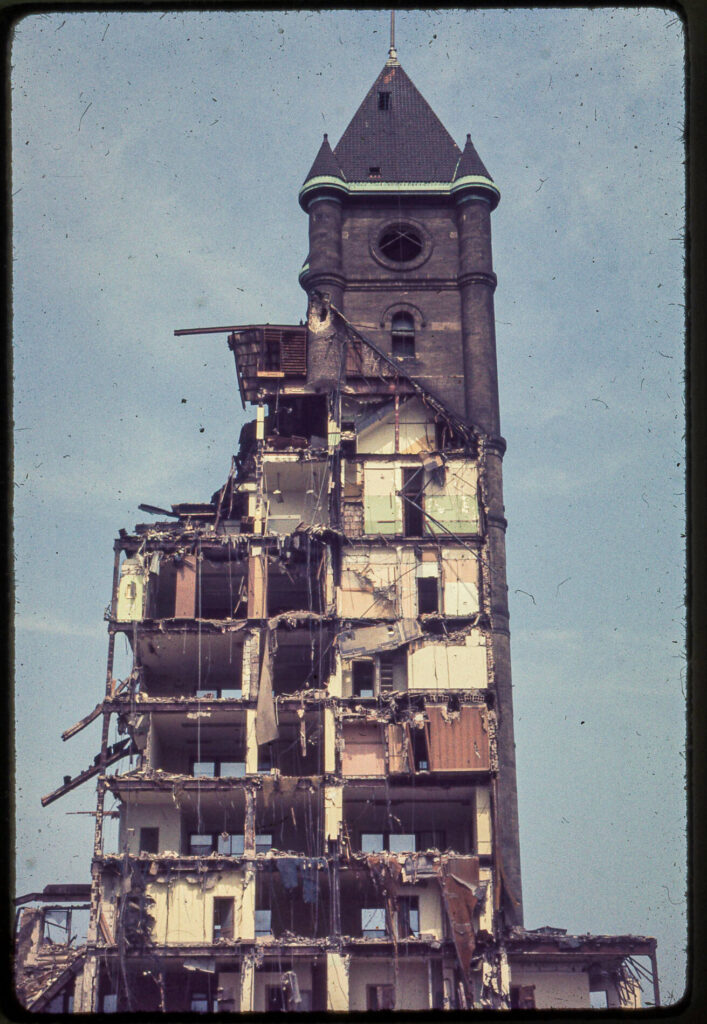
the illinois central relocated its headquarters to the new illinois center in late 1973, and demolition of central station and its train shed began on june 3, 1974. the commuter platforms remained until spring 2009, serving metra’s electric line and nictd’s south shore line, after which they were replaced by modern facilities and renamed museum campus/11th street station. the railyards south of the old station are currently part of the ongoing central station redevelopment project.
salvaged remnants on public display:
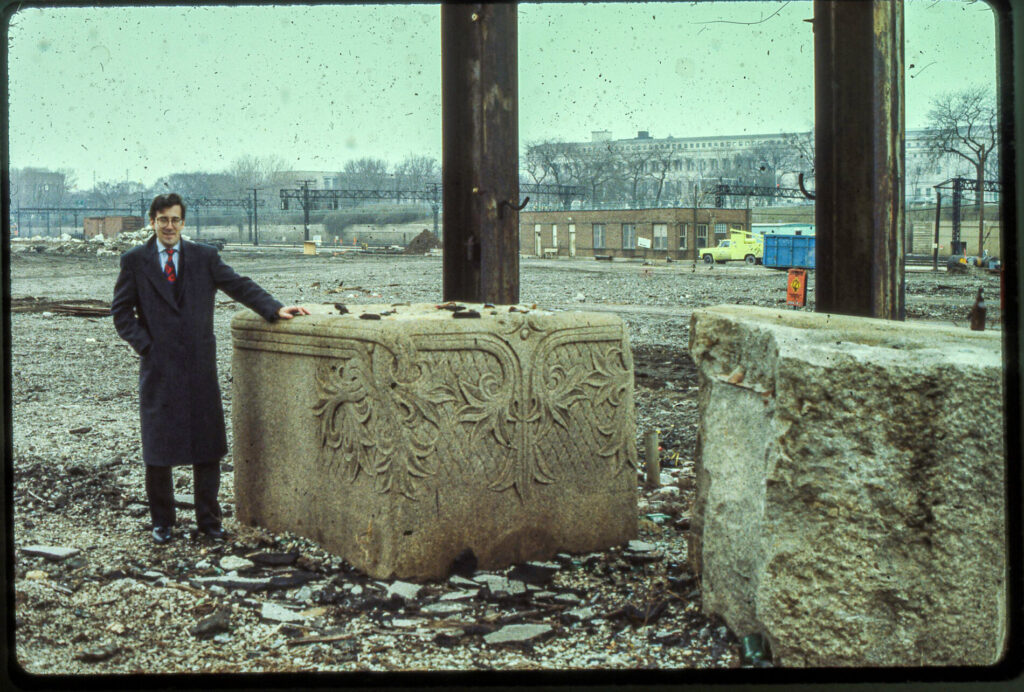
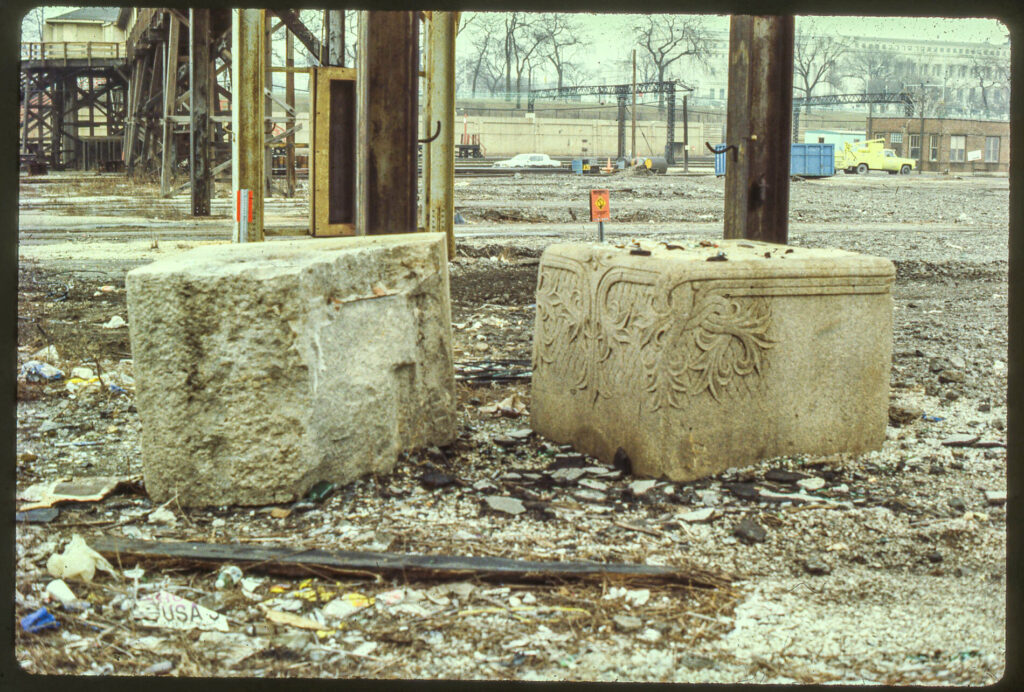
constructed from milford granite, these two architectural fragments are among the last remaining elements of chicago’s historic central station, which occupied the southwest perimeter of grant park from 1893 until its demolition in the mid-1970s. bradford lee gilbert (1853–1911), renowned for consulting with numerous railroad companies, designed the substantial romanesque-style structure that served as a primary station for the illinois central railroad company. the ornate granite blocks were originally part of a large archway traversed by arriving passengers to chicago.
when central station was demolished in 1974, a railroad employee preserved the granite fragments by relocating them to a railroad right-of-way, away from the demolition site. these fragments remained there for decades, later being integrated into landscape improvements at the southwest end of grant park in 2004, through collaboration between the city of chicago and the chicago park district.