
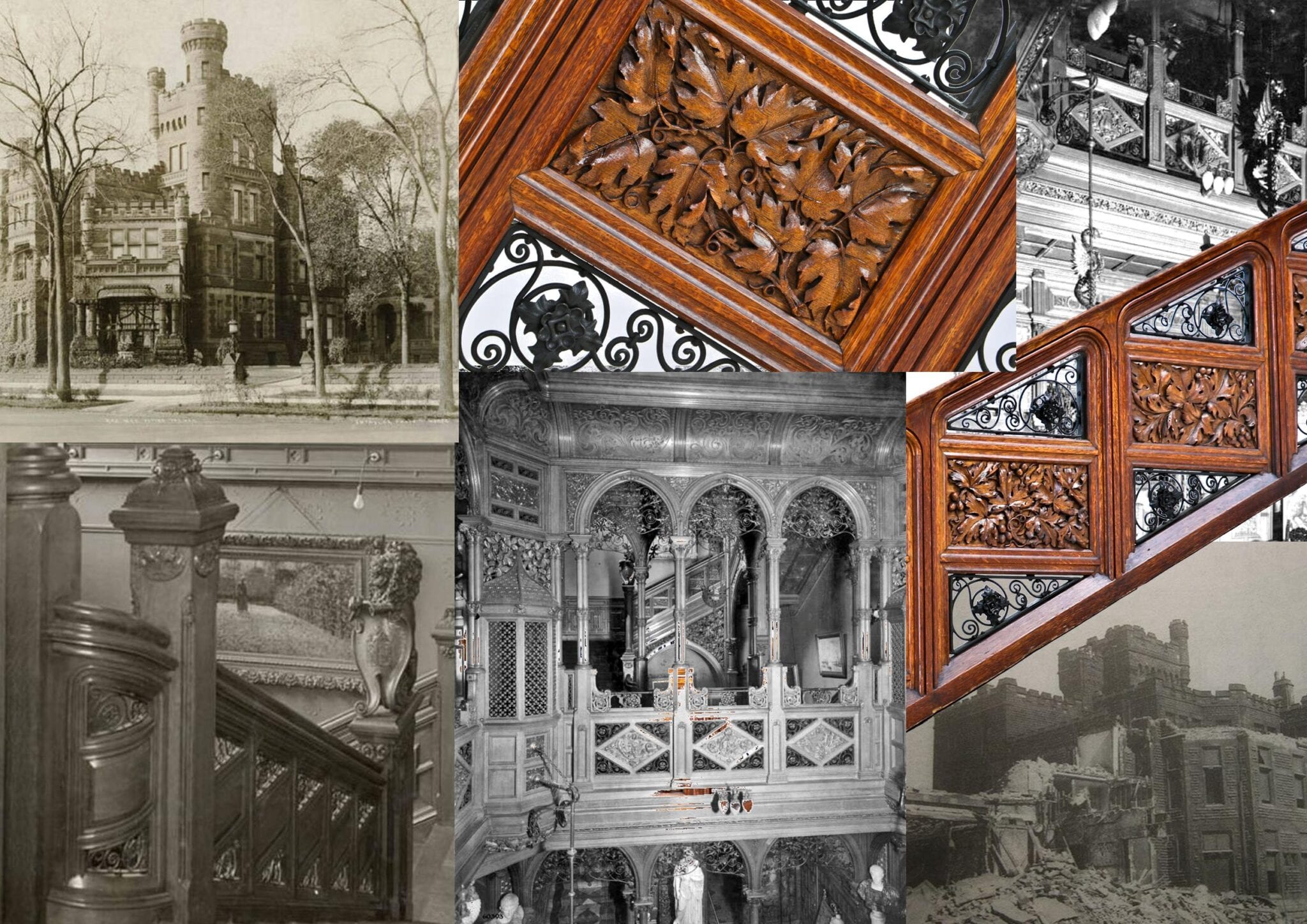
18 Dec interior remnants salvaged from potter palmer mansion surface decades after it was demolished in 1950
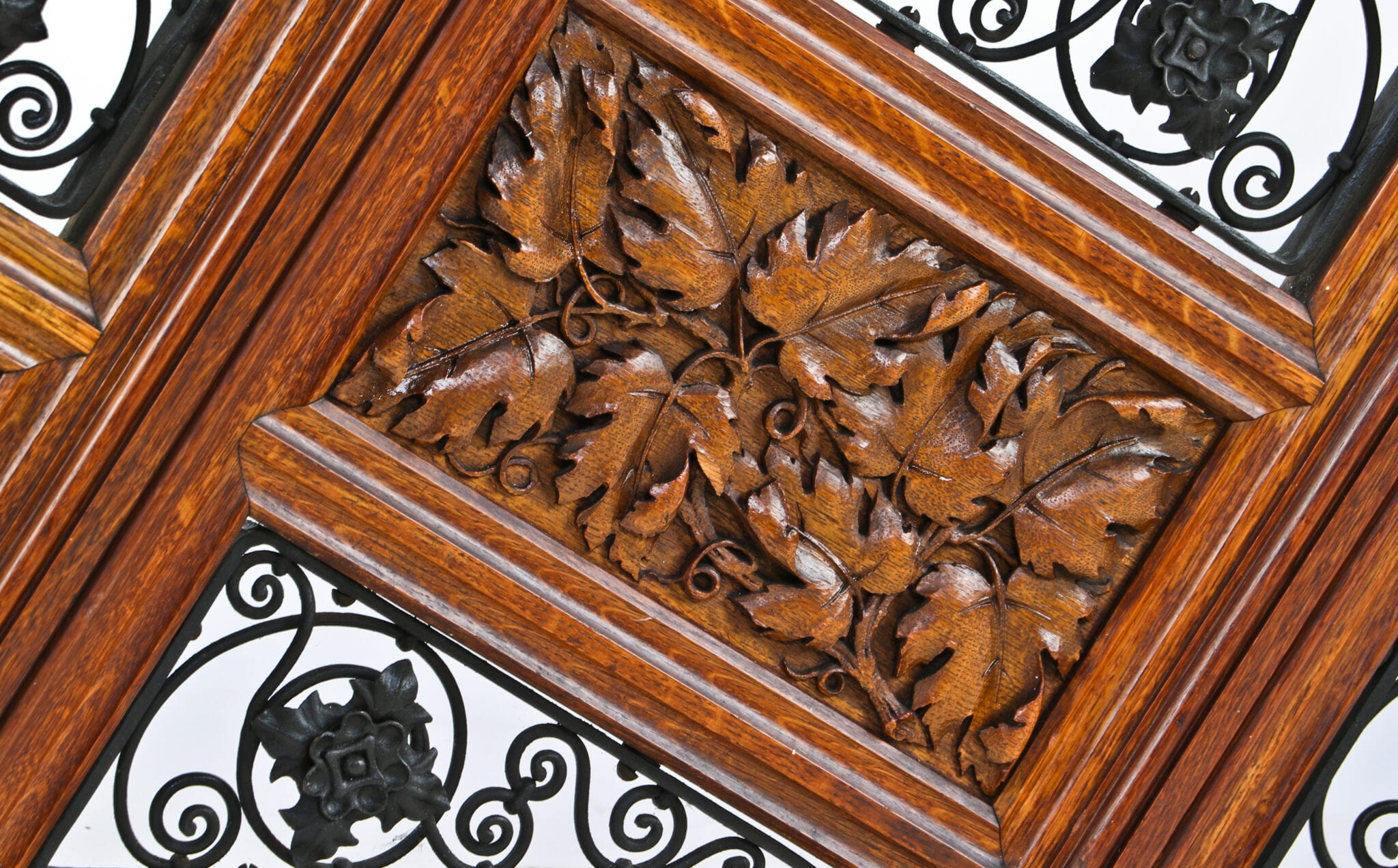
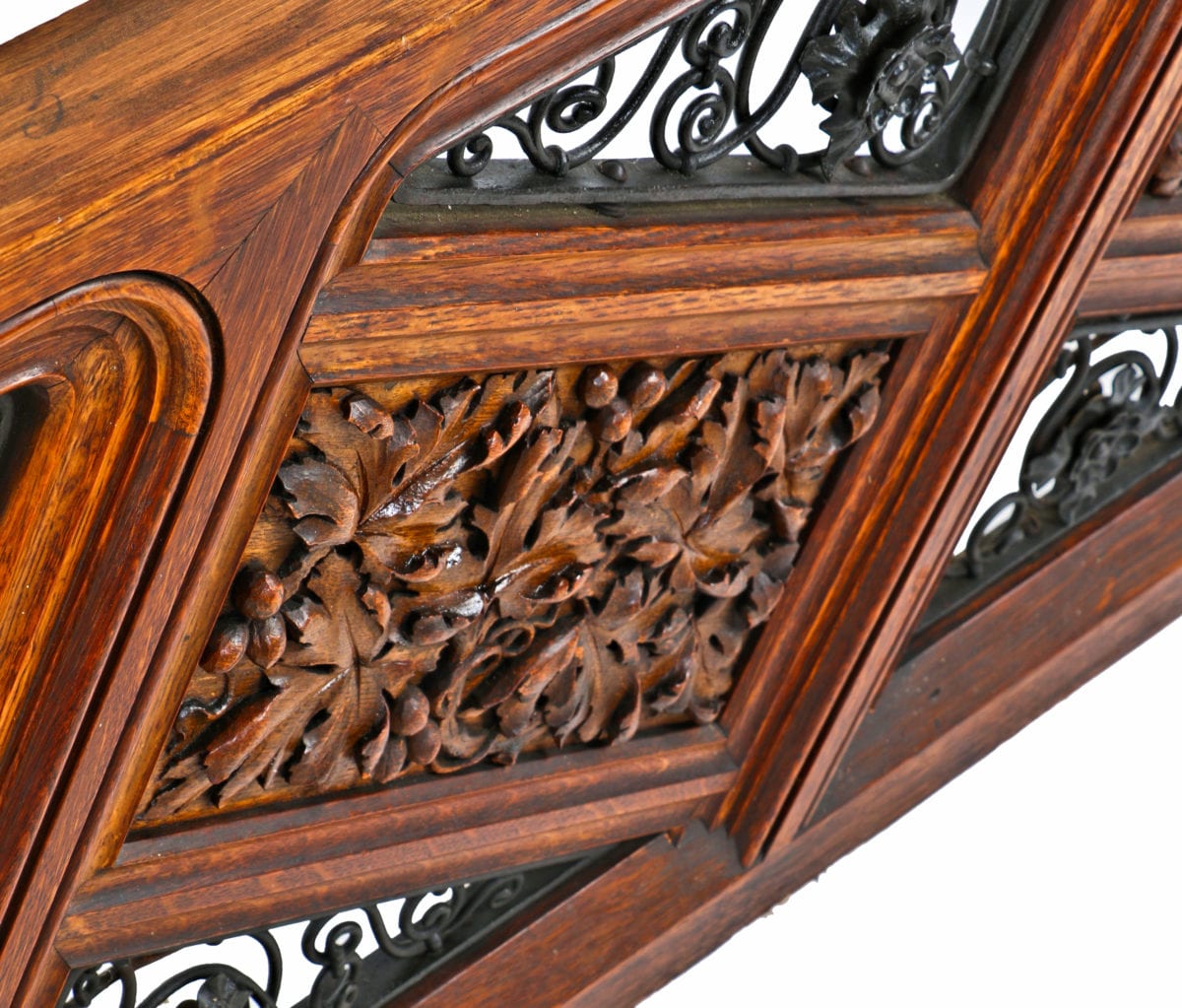
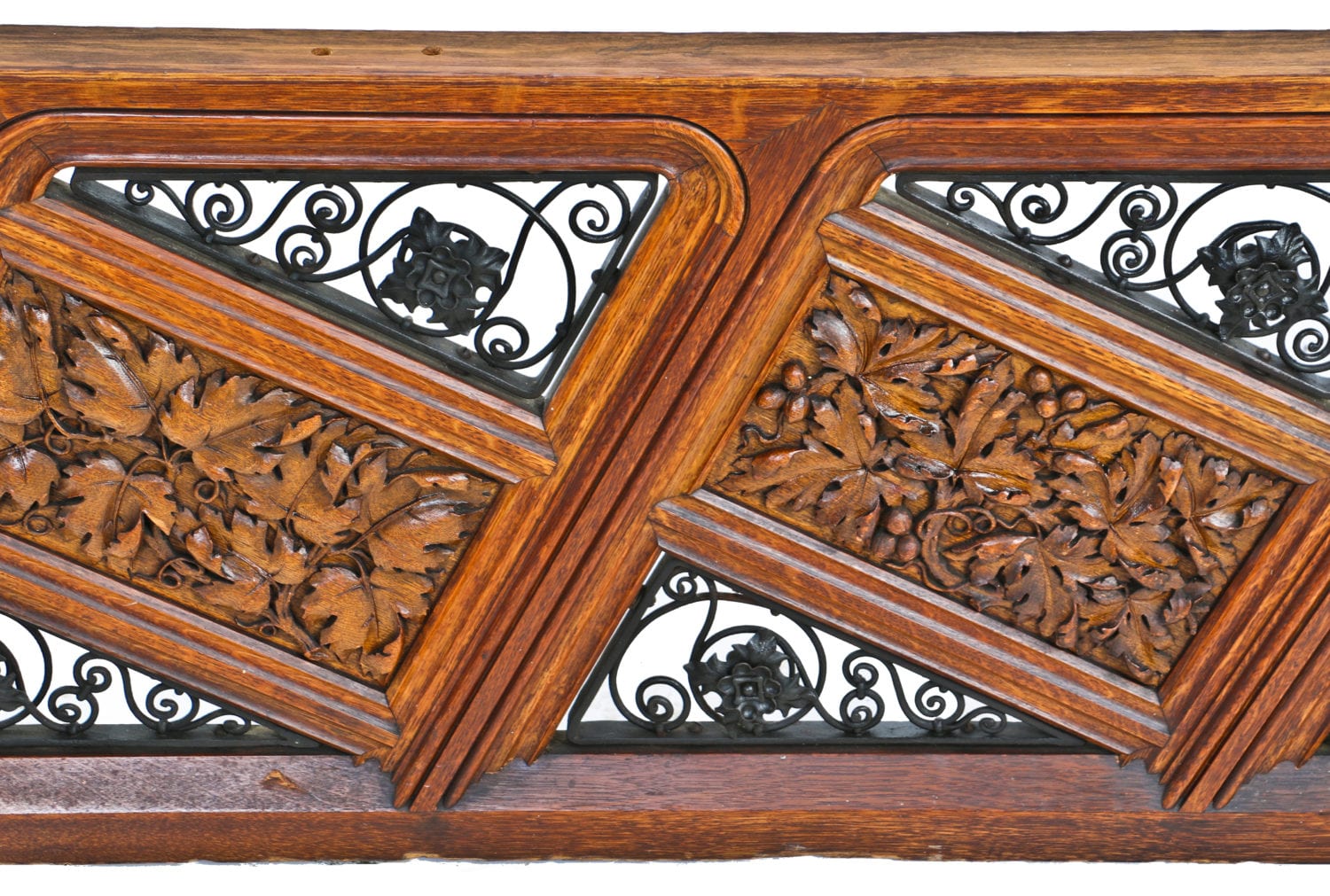
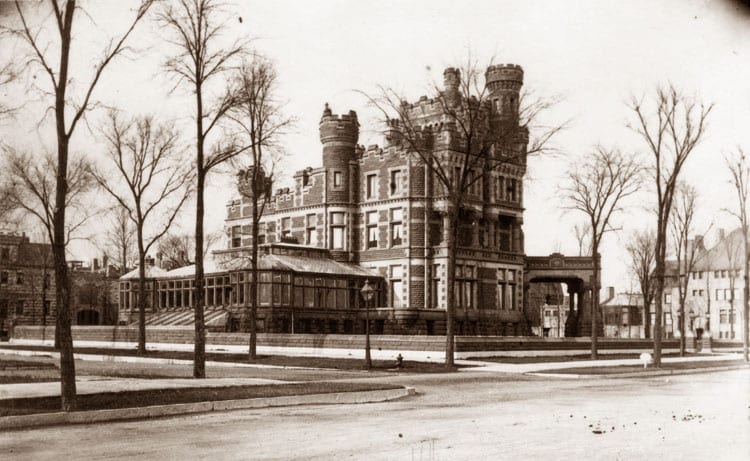
i am thrilled to have finally located and authenticated two heavily carved oak wood staircase railings salvaged from the potter palmer mansion or “castle,” designed and built by architects henry ives cobb and charles sumner frost between 1883-1885. the railings were acquired by the bldg. 51 museum collection after confirming their existence “in situ” through images of the palmer mansion interior taken during the early 20th century.
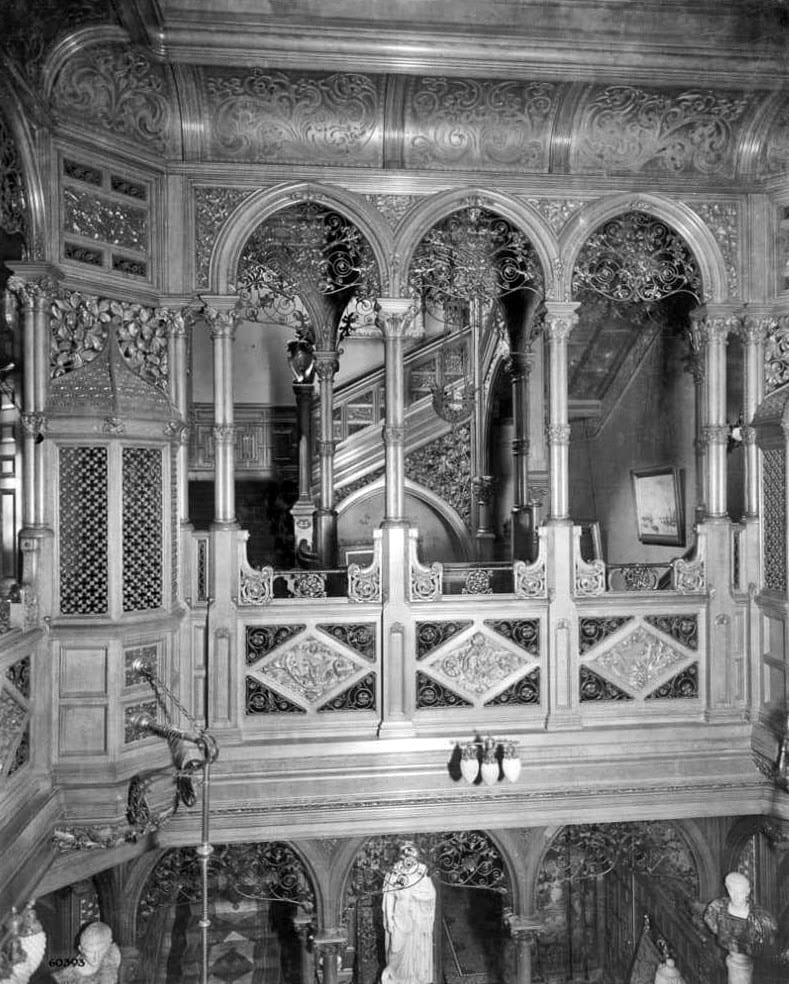
interior images showing staircase:
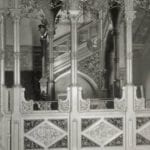
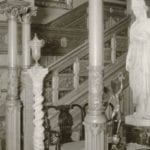
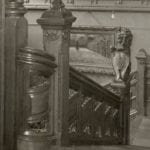
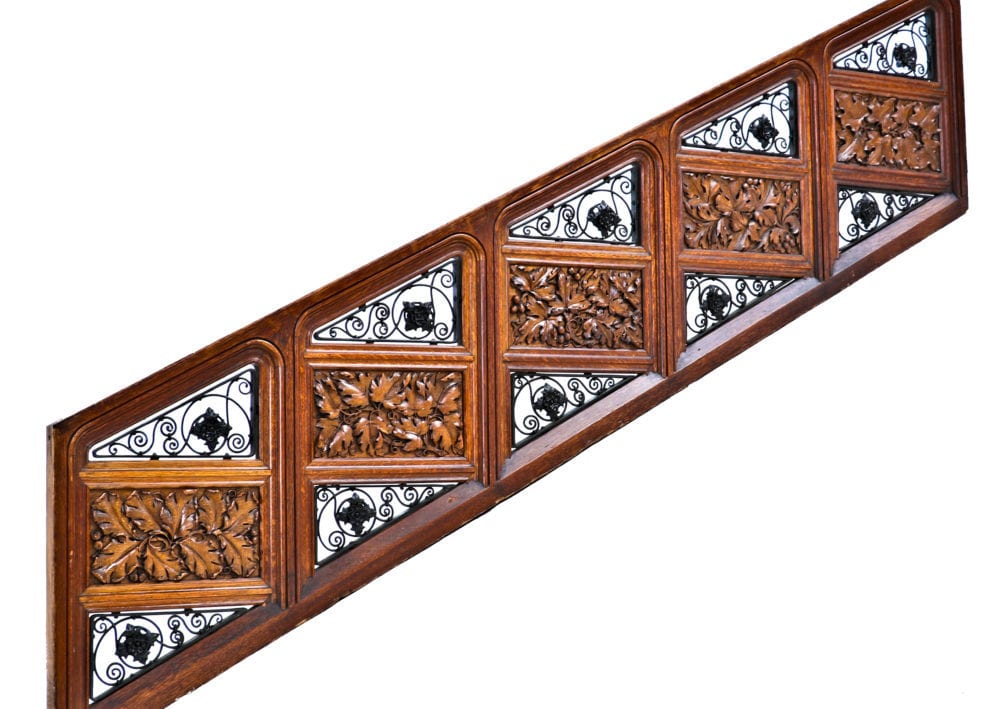
the historically important carved wood angled railings were salvaged from the mansion’s interior staircase shortly before its demolition in 1950 (it sat vacant for several years prior to demolition). the staircase components are comprised of both solid quartered oak wood with the original stained finish (darkened over time) and very intricate and delicate ornamental wrought iron filigree with original bower-barff finish. the foundry/fabricator is not known, although helca ironworks remains a possibility.
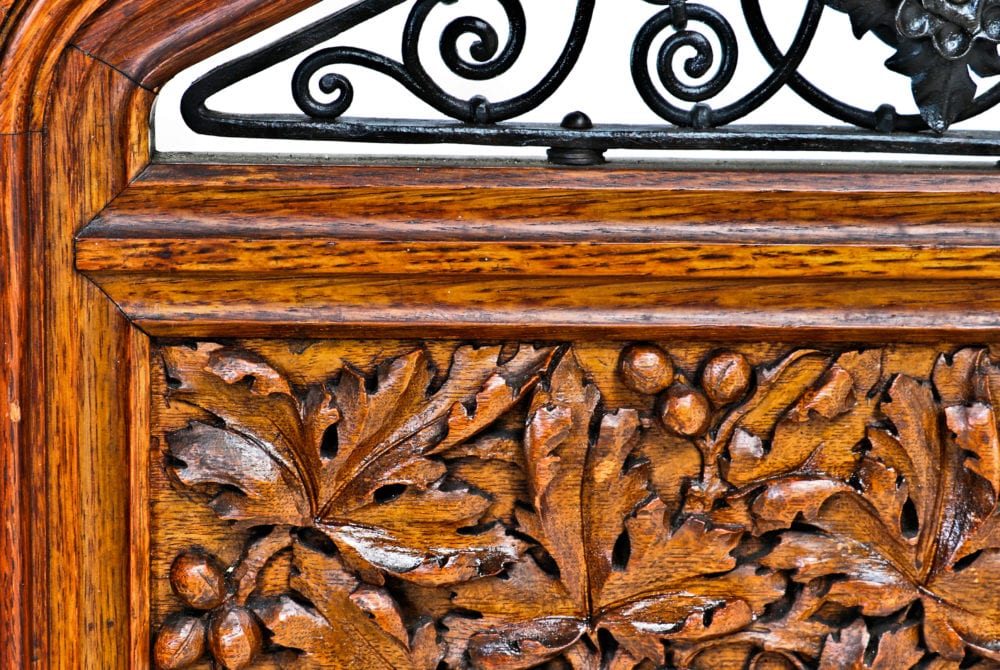
the overall design of each railing section exhibits a unique and visually appealing interplay between intricately hand-carved panels and foliated scrollwork. the integration of metal ornament within a railing constructed primarily of wood is rather unusual, but then again, after reviewing several pictures of the interior, just about everything within the mansion was excessive or exaggerated – to the point where one would likely experience sensory overload.
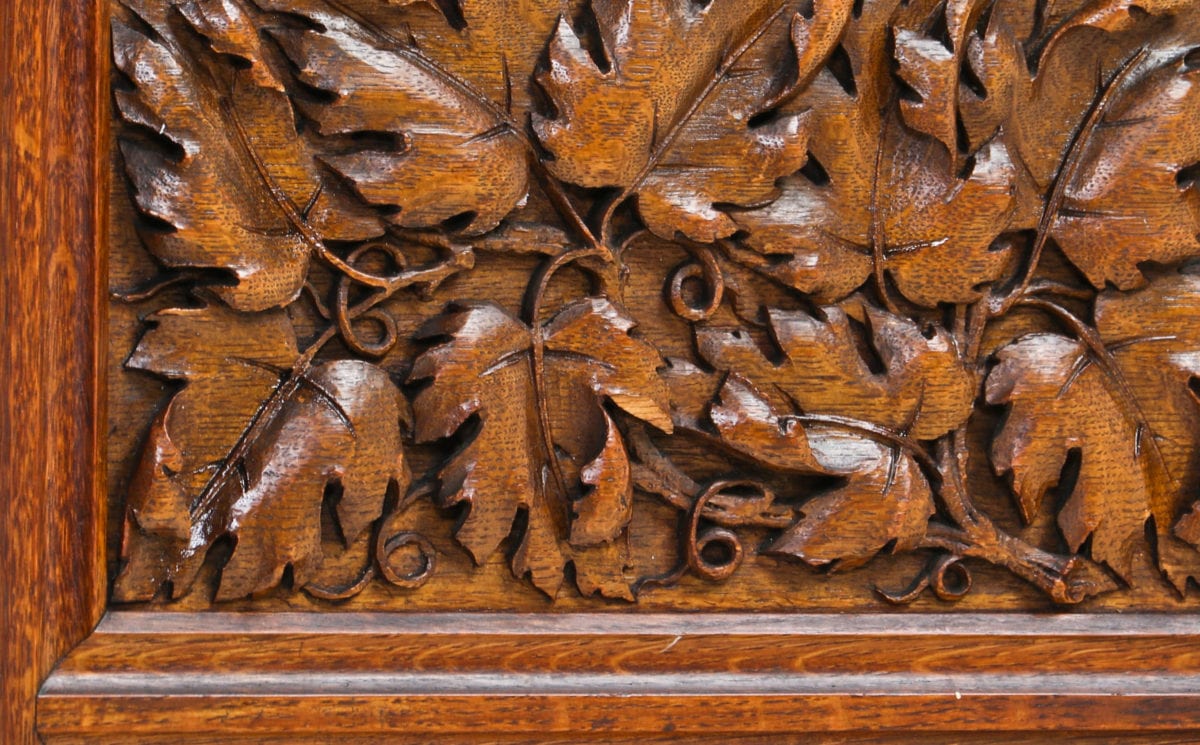
it’s not known whether cobb and/or sumner contributed directly to the design or general configuration of the staircase stylistic elements. the interiors were completed under the direction of architect joseph lyman silsbee, and john newquist was charged with the fabrication and assembly of the grand staircase.
john newquist was only twelve years of age, when he began learning carpentry. in 1869, he came to america and settled in minneapolis, minn., where he worked for a short time. in 1871, he moved to chicago, and was employed by the national school furniture company, in the manufacture of school-desks. in 1875, he became a a stair-builder where he employed nearly fifty men at the height of his business. notable commissions include ninety-two flights of hardwood stairs for the john v. farwell & co.’s wholesale store, the residence of john v. farwell, and four houses of potter palmer, including the “castle.”
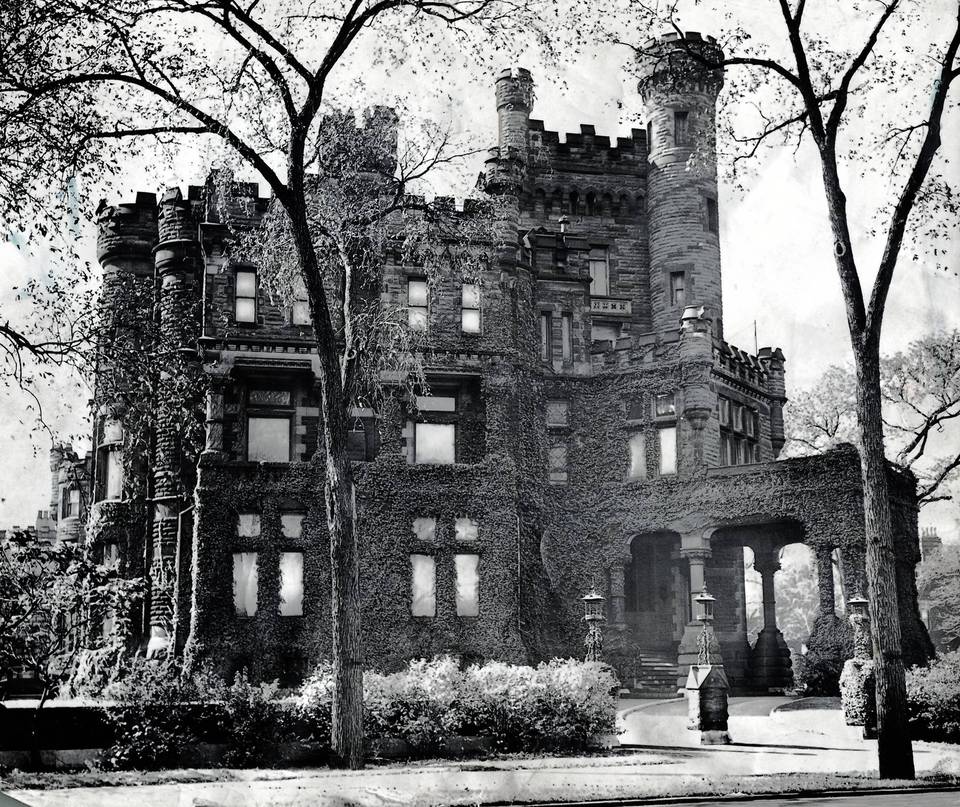
after reviewing the photographs taken of the interior (likely during the early 20th century) one can readily discern that the sections acquired for the bldg 51 museum collection were from the mansion. the provenance report accompanying the pieces further strengthens the fact that these panels are indeed from the potter mansion.
it is widely known that mrs. potter’s extensive art collection was handed over to the art institute of chicago, and the majority of the other furnishings (e.g., furniture) were sold off. however (and of more interest to me), not much is known or well-documented in terms of the fate of the “fixed” building elements.
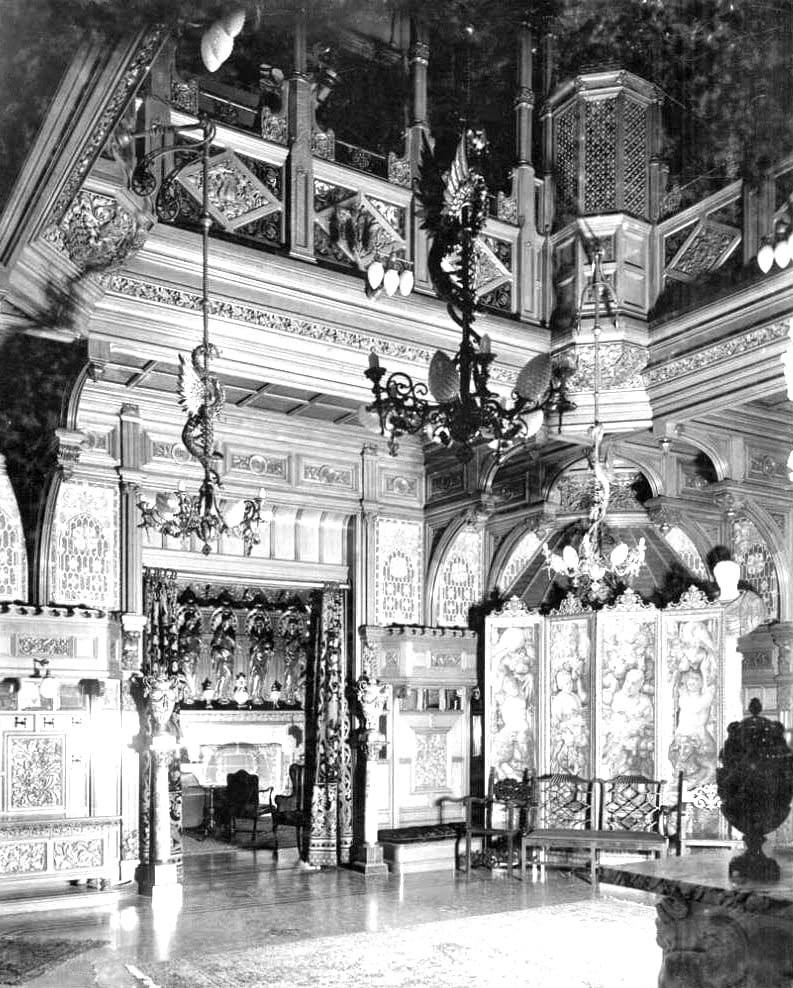
it’s likely that the majority of the mansion’s building materials were hauled off to the landfill, but one must wonder whether some of the “finer” things were saved (e.g., lighting fixtures, stained glass, woodwork, etc.). i did discover newspaper clippings from the chicago tribune that provided a rather detailed story of the impending demolition, along with several pictures of the mansion’s interior taken in 1950. amazingly, the house was still in fine shape, despite being abandoned for many years. there was mention about fireplaces and lighting fixtures being removed, but the salvage aspect was not covered in much detail.
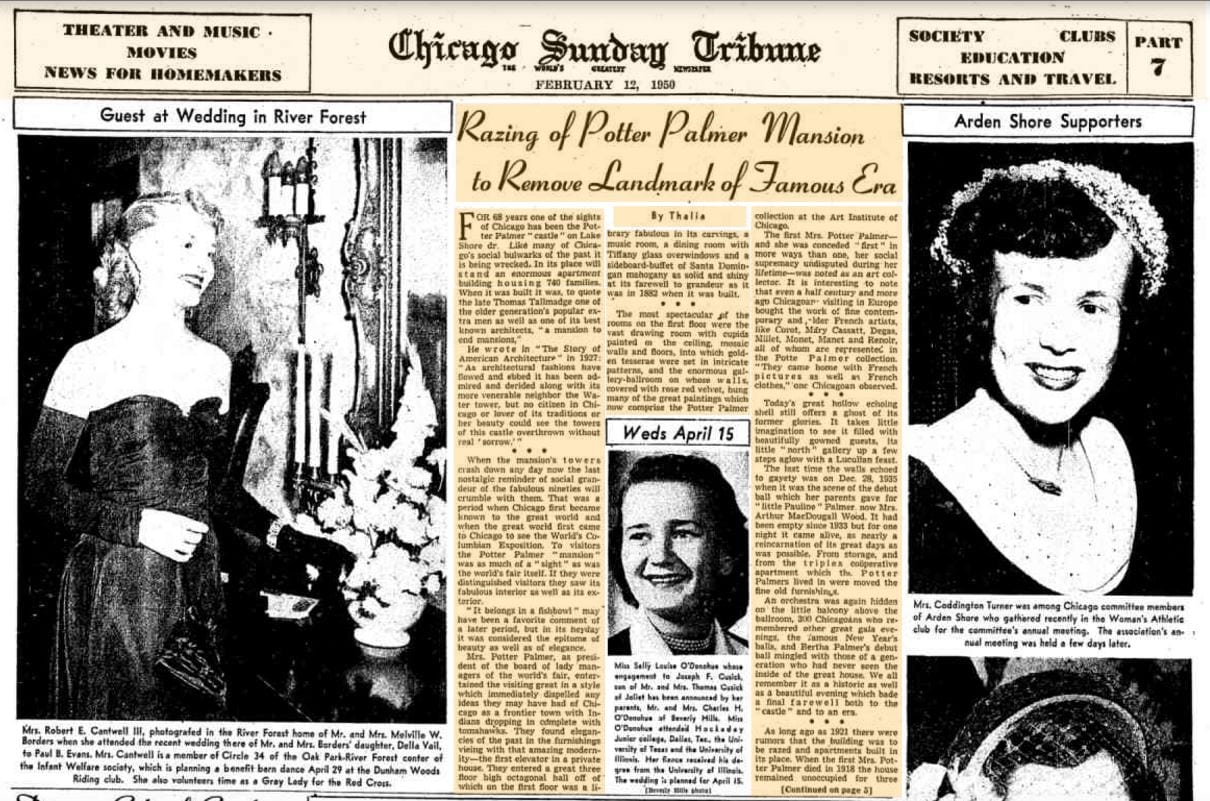
chicago tribune july 13, 1949
plan to raze palmer home for 740 flats
by al chase
chicago’s world famous potter palmer mansion at 1350 lake shore dr. is to be razed and two 21 story rental apartment buildings are to be erected on its site at a cost of 7 million dollars if present plans of a chicago syndicate are carried out, it was learned yesterday. the two structures will have 740 small apart- ments. ranging from 2 to 5 rooms and with rentals at about s40 per room, according to a tentative schedule.
if the federal housing administration makes a loan commitment, work will be started late this summer with the expectation of having the big project ready for tenants in the fall of 1950. loebl, schlossman & bennet, chicago architects, have drawn plans for structures of modem contemporary design. draper & kramer, one of chicago’s largest apartment management firms, is sponsoring the development.
a reporter traipsing thru the cold, barren, baronial halls felt the echoes of other footsteps around her, of presidents and princesses, kings and queens, fabled millionaires, and great artists who once were wined and dined lavishly there. but chiefly there seemed to be the stately tread of the chatelaine of the castle, mrs. potter palmer sr., the woman who ruled chicago’s society in its most gracious, splendid day.
it is symbolic somehow of the present way of life that the turreted old brownstone castle is being wrecked to make way for an enormous apartment building, accommodating families in apartments of 2 to 5 rooms, reportedly at s40 a room.
demolition of the quaint, imposing, old landmark has been opposed for years to no avail by old time chicagoans, who were successful in preserving the picturesque old water tower when it was to have been torn down. they feel that when the castle is gone, something of chicago, too, will be gone.
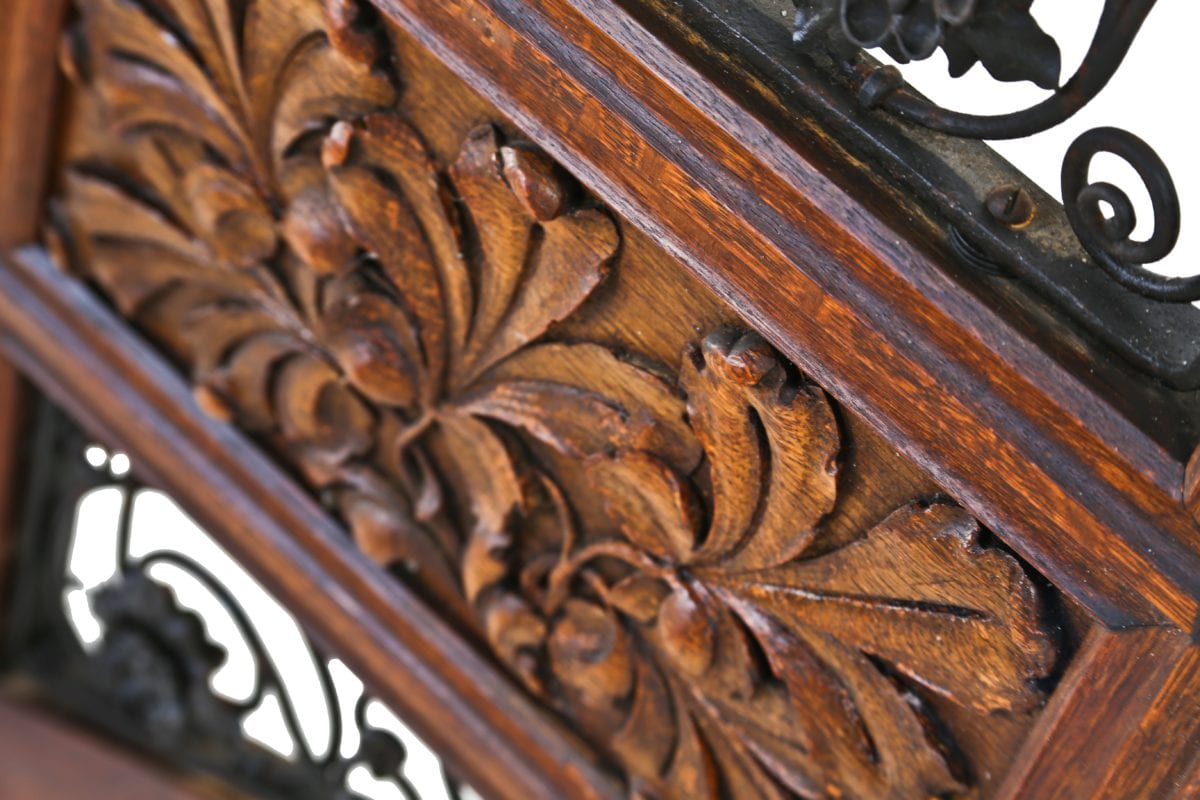
images of the palmer mansion staircase railing courtesy of eric j. nordstrom and the bldg. 51 museum archive.
given author’s accolade
and no doubt it will be. this was the mansion that thomas tallmadge in his “architecture in old chicago” asserted was “the mansion to end all mansions,” if this be true, then the razing is really the beginning of the end. already the servants’ quarters behind the castle, a stone building of 40 rooms, is clattering beneath the ruthless pummeling of the wrecking crews.
monday they will trudge with mud caked shoes into the beautiful old oak walled foyer of the castle itself and start to tear down murals and carvings, marbles and memories. like a wake for some revered personage, the public will be admitted until this sunday night to view the silent, dignified remains before they pass into.
more than 1,000 persons have toured the chilled, stately rooms since its doors were opened saturday. yesterday’s spectators seemed afraid to talk out loud, and whispered their comments to their companions. even in death, the castle is impressive.
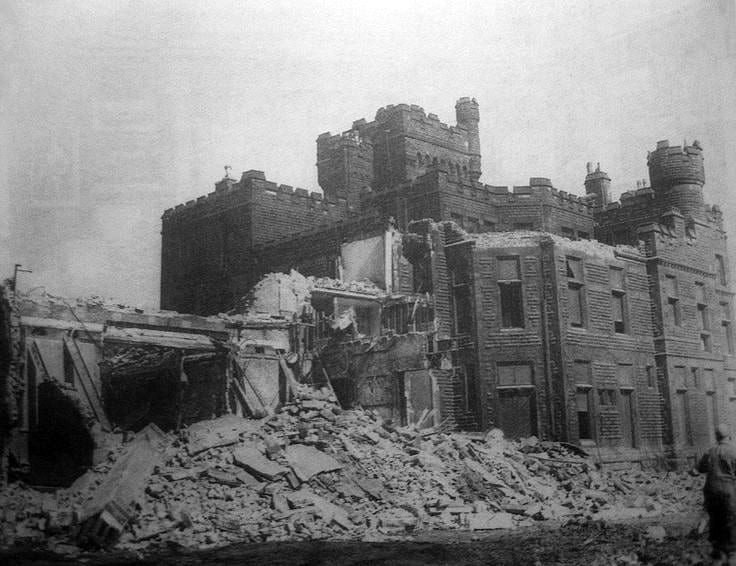
knowing that artifacts were rescued from the home prior to it being reduced to landfill provided me the opportunity to closely examine the artifacts in three dimensions, which is much more gratifying then a black and white image. in addition, i now have a better understanding of the types of material used, quality of craftsmanship and how these materials have aged over the course of several decades.