

17 May looking back at the catastrophic loss of adler & sullivan’s dexter building
located at 630 south wabash ave. in chicago’s south loop, the wirt dexter building was a landmark, commissioned by its namesake wirt dexter, a chicago attorney and real estate developer. designed by adler & sullivan and built in 1887 for a total cost of $100,000, it was one of the earliest surviving louis sullivan buildings and considered a precursor to the nearby auditorium building. it was designated as a chicago landmark in 1996 and was described by the landmarks division of the city of chicago department of planning and development as an “irreplaceable link in the chain of work of one of the nation’s most important architectural partnerships”. originally the building was used as a factory and showroom for the r. deimel & brothers furniture manufacturing firm. in 1967 it became the home of the george diamond steak house, and the upper floors later housed the sawyer secretarial college.
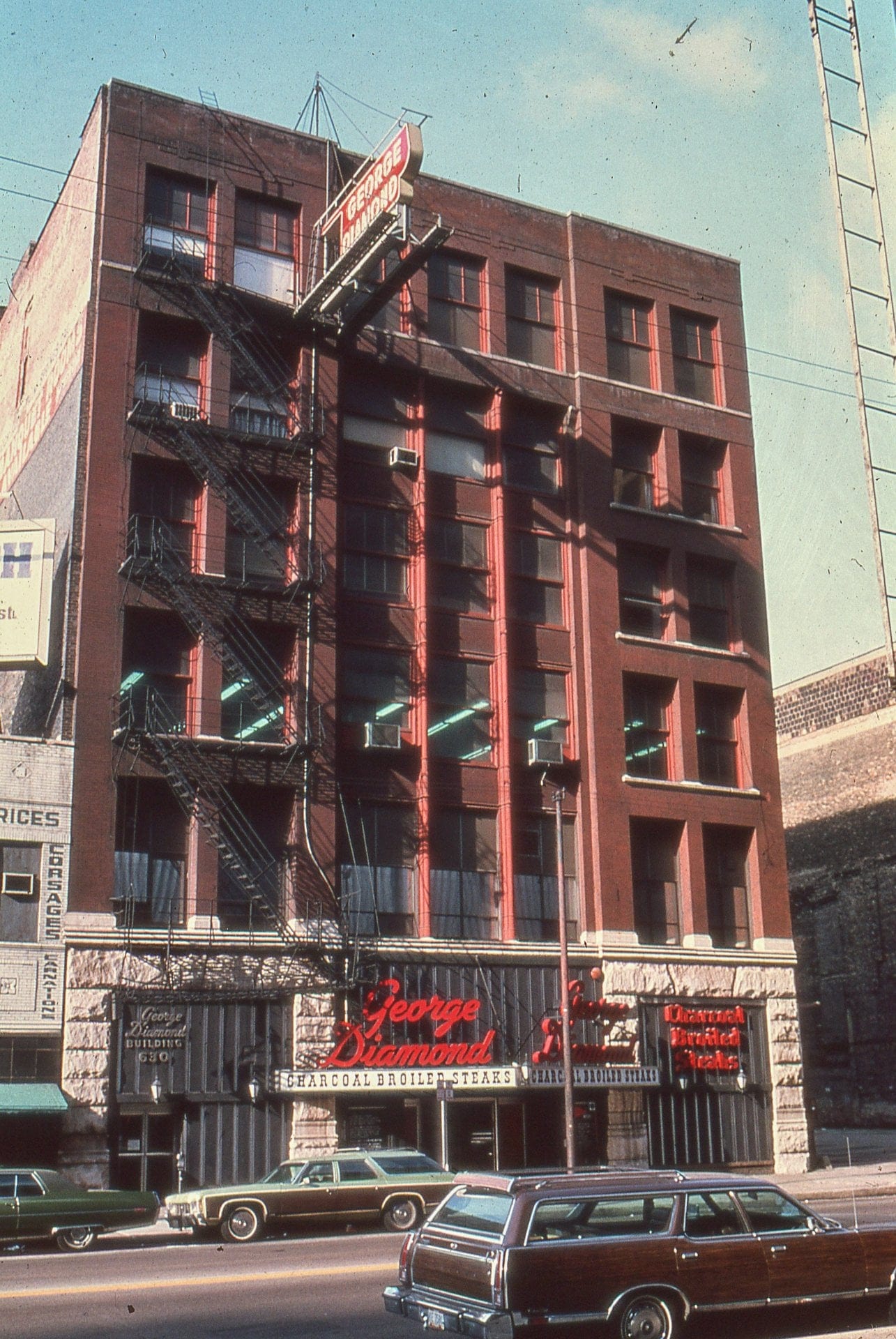
images courtesy of the bldg. 51 museum archive and eric j. nordstrom. all rights reserved.
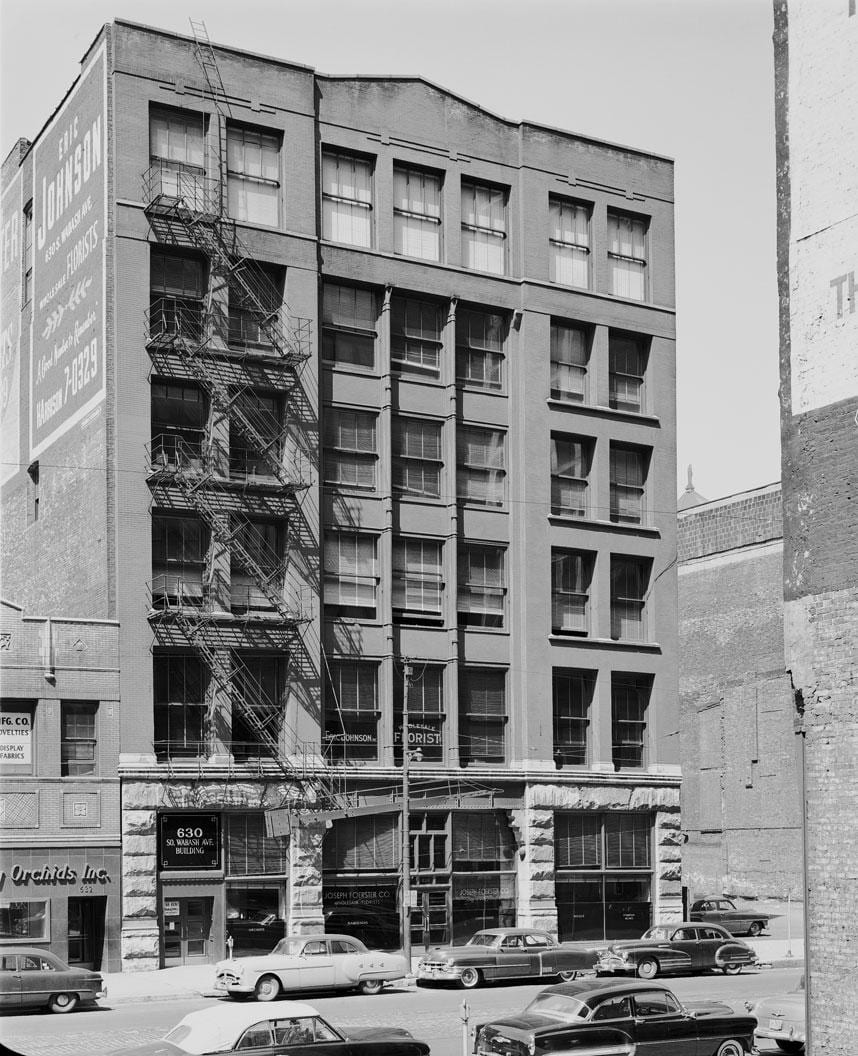
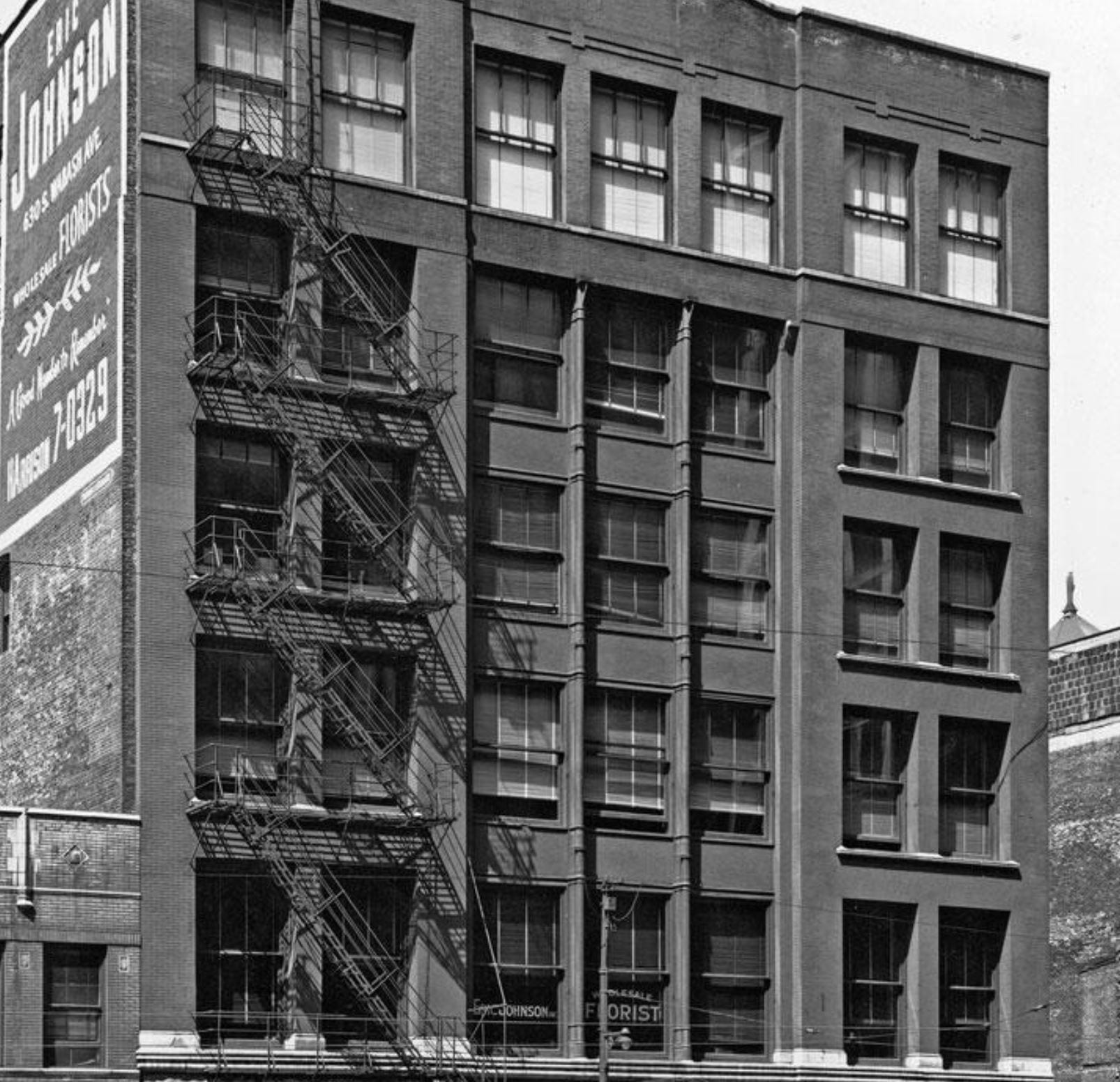
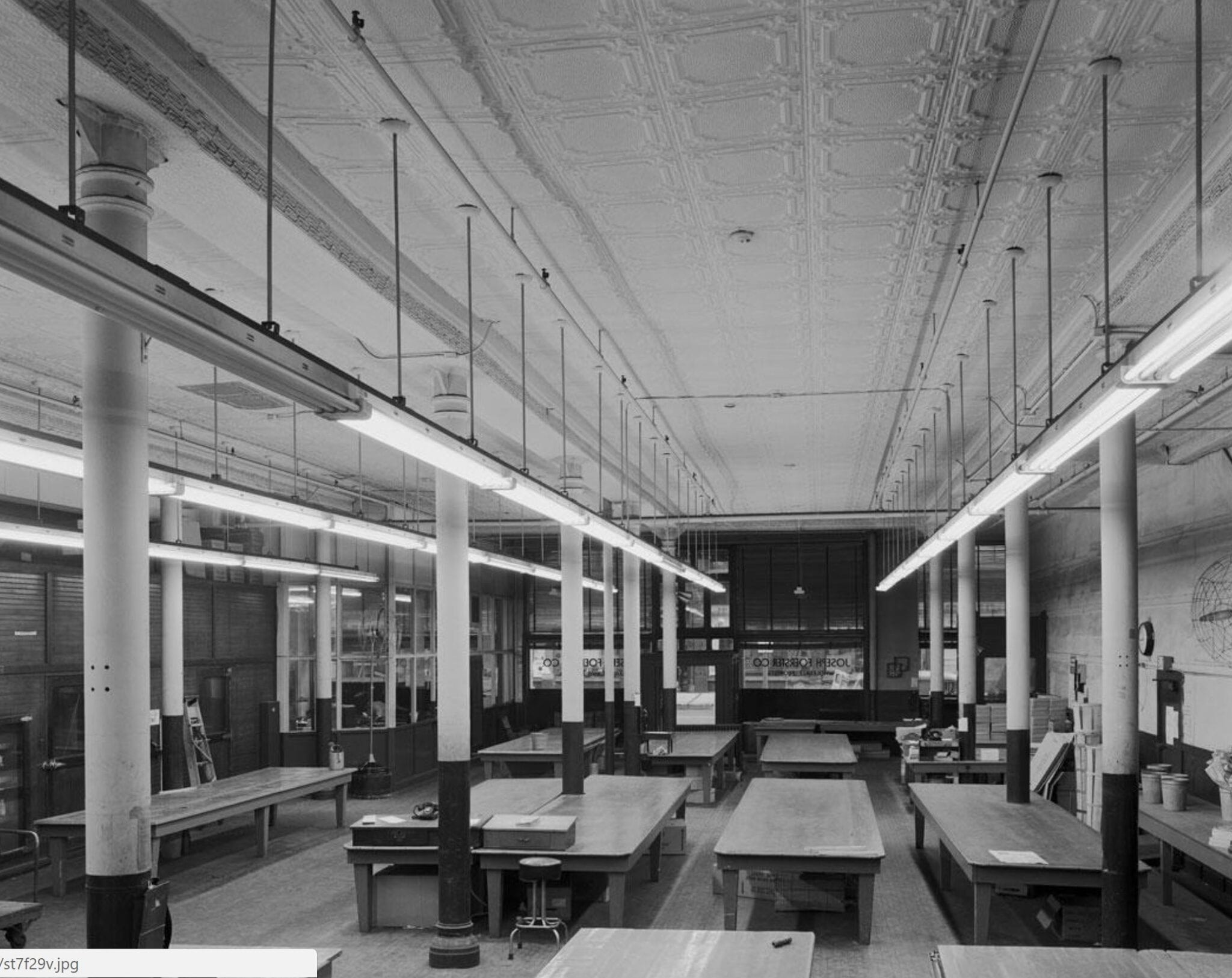
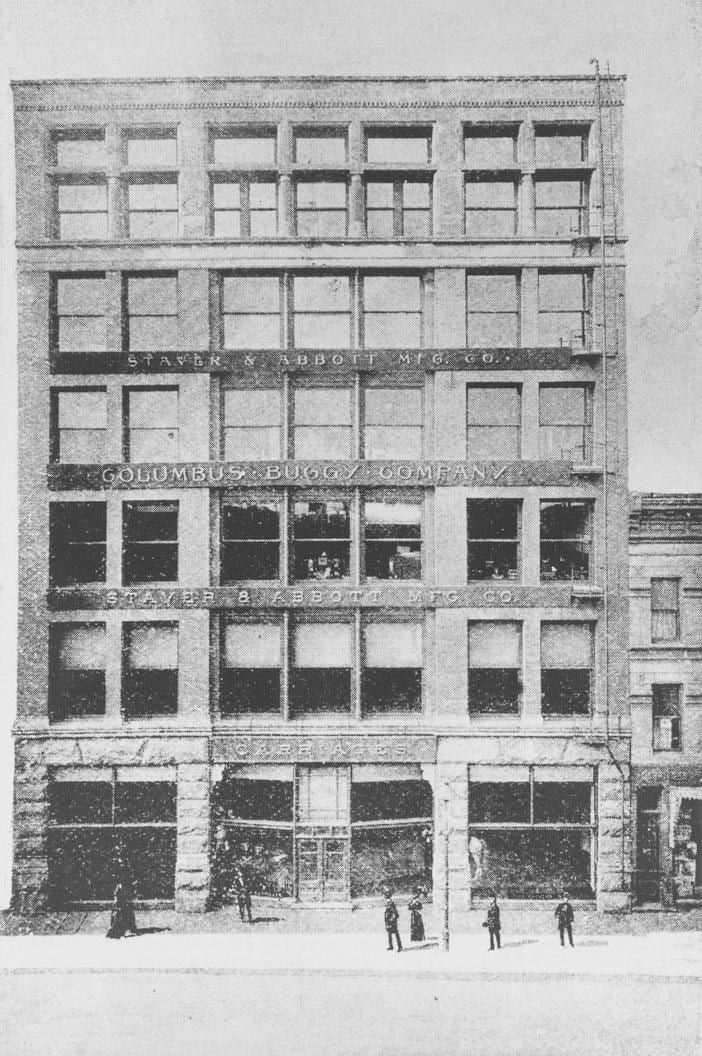
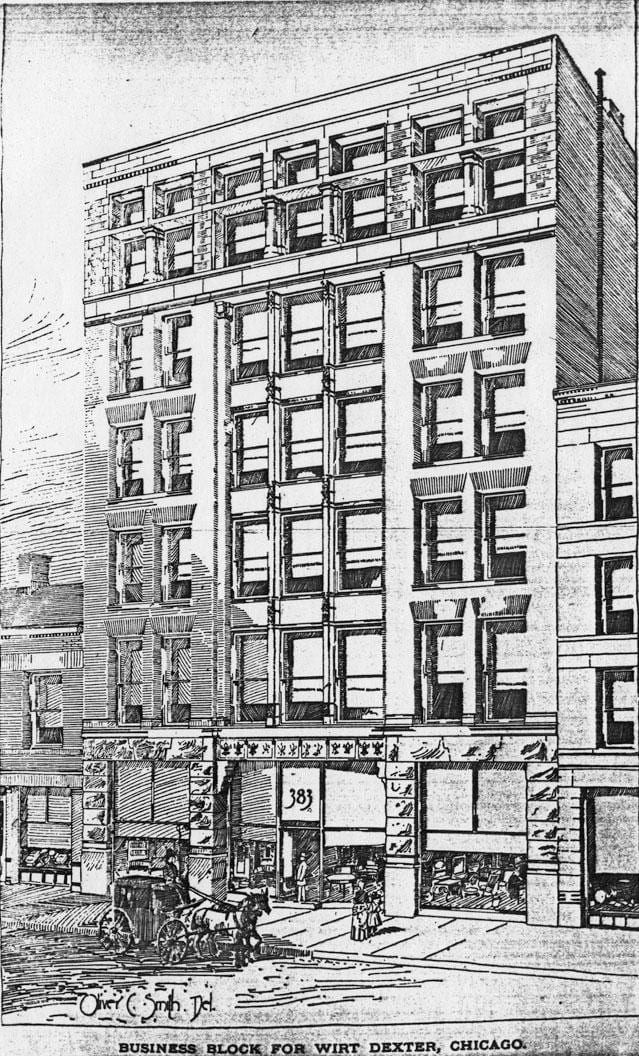
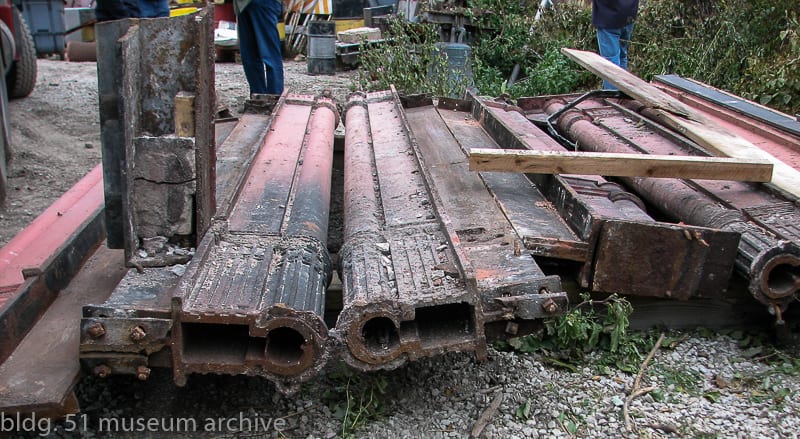
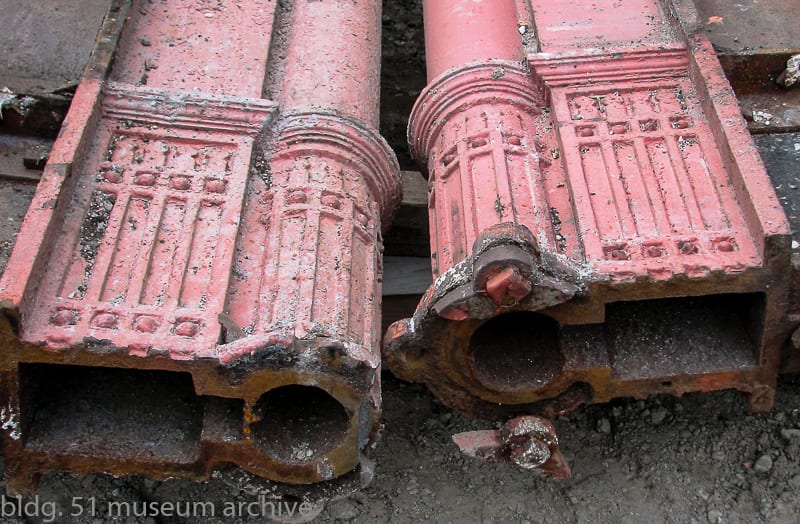
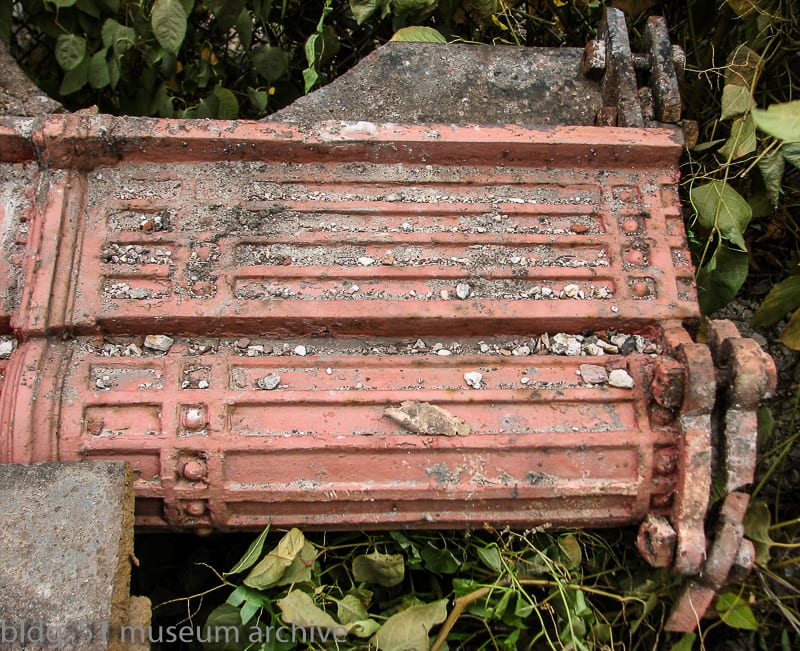
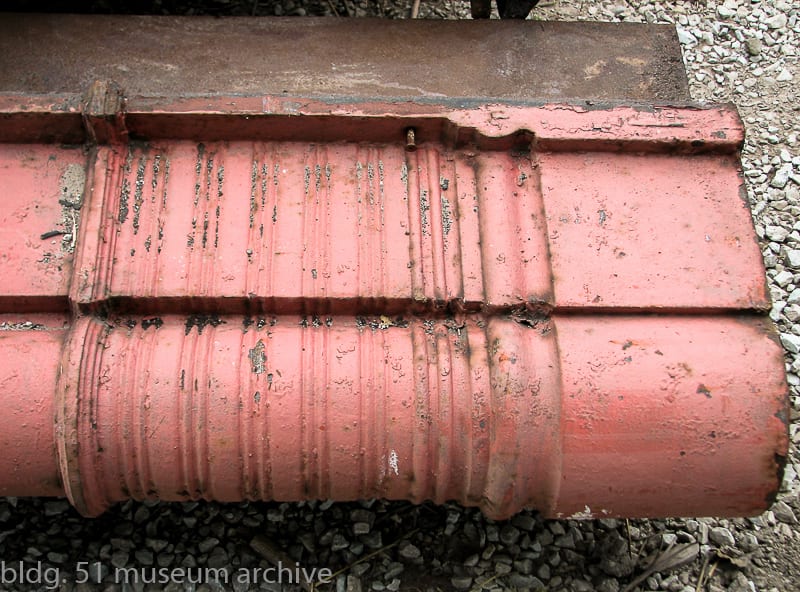
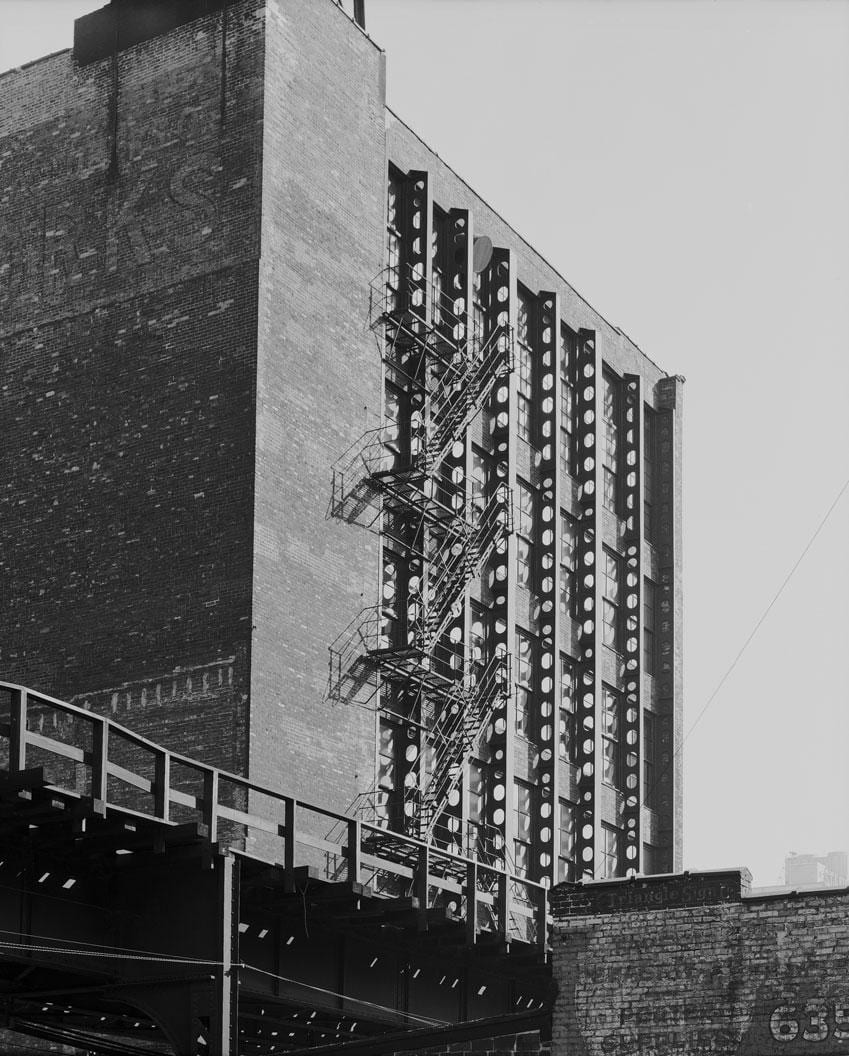
unlike the nearby auditorium, sullivan’s design work in the wirt dexter showed little of the romanesque modernism or characteristic leaf-ornament that he is so commonly known for. instead, this was a mature and simplistic building that was rigorously thought through. the entry level was of sparingly ornamented rusticated granite; the brick facade above is arranged into three simple vertical piers, two windows wide at each end, with a three-window-wide bay between them, slightly recessed and originally terminated in a small gable at the roofline. the openness and lightness of the facade, in the judgment of biographer, robert twombly “anticipated the aesthetics of the steel frame.” perhaps the structure’s most striking feature, visible along the el that went up a decade later in the alley behind it, is the series of tall, perforated iron support beams, placed outside the building to free up space in the interior, perhaps modern architecture’s first example of an exoskeleton. these distinctive perforated girders prefigured designs of seven decades later.
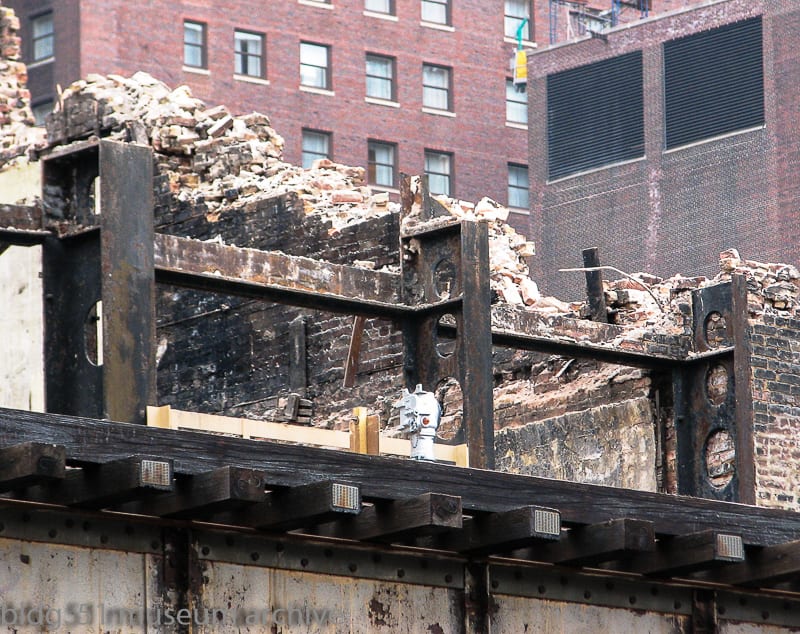
on october 24, 2006, scrap dealers were cutting up a boiler in the basement for salvage with acetylene torches that sparked a large fire. the fire was allowed to get out of control and gutted the building. at its peak, the fire, which started in the basement at around 3 pm, was a five-alarm fire, the chicago fire department’s highest level of alert, with over 250 firefighters responding. following the fire, the surviving shell of the building was too unstable to save and was demolished. at the time of the fire there was no insurance on the building.
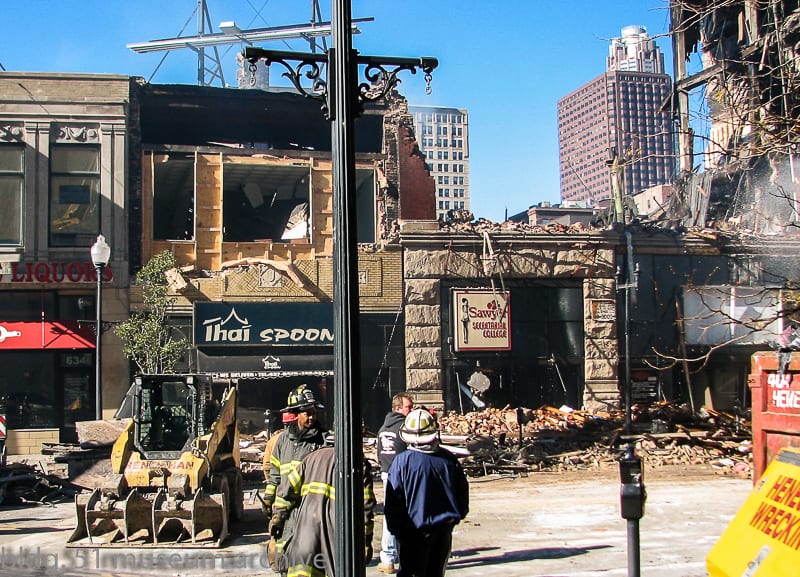
the following series of images were taken in 2006 – less than 24 hours after the fire destroyed the building. heneghan wrecking was brought onboard to demolish the burned out brick shell.

over two hundred fire fighters were on location.

many people stood watching in disbelief.
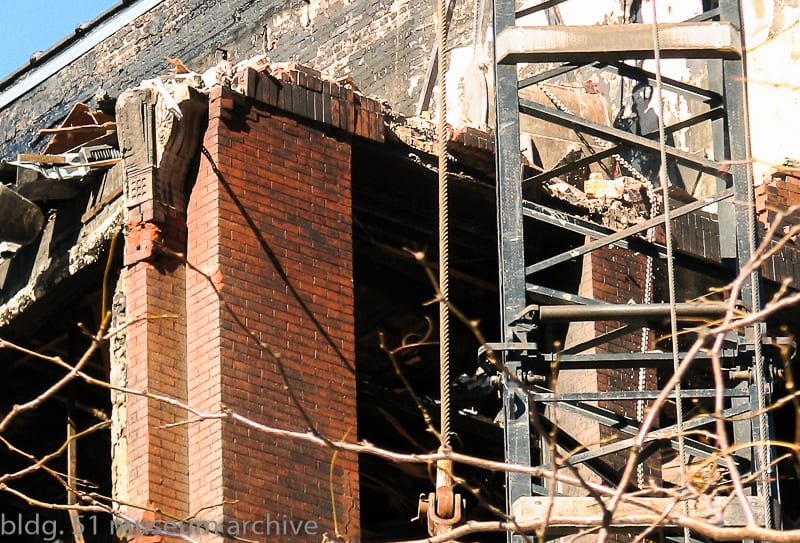
sadly, the two carved limestone corbels designed by l.h. sullivan, fell into the rubble – forever lost. i asked pat heneghan if i could look for the corbels in the pile of rubble, or worst case, wherever the building’s remains were to be dumped. the search never materialized.
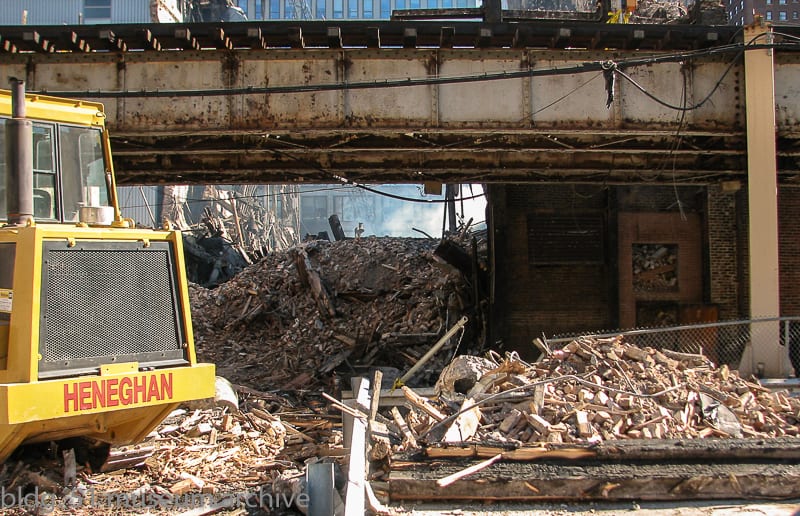
the backside of the building was equally chaotic.
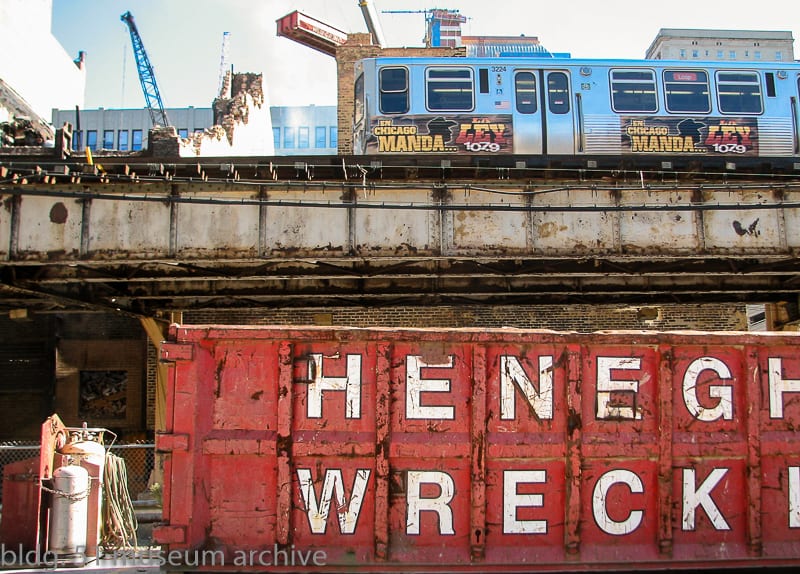
debris landed on the “l” tracks, suspending service for several hours.
as of this writing, historically important remnants from the dexter building reside in pat heneghan’s yard – nearly 12 years after the building was destroyed. this includes the ornamental iron columns, the perforated iron support beams, several blocks of rusticated stone, and face brick. i was invited to pat’s yard a few weeks after the site was cleared to document the remnants.