
04 Jan tracking the distribution of salvaged ornament after destruction of adler and sullivan’s garrick theater
the ornamental distribution legacy of richard nickel and the garrick theater salvage
richard nickel was born and raised in chicago’s humboldt park and logan square neighborhoods and from an early age was deeply moved by stained glass figures. after serving in the army, nickel enrolled at the institute of design, later part of the illinois institute of technology, where he first encountered louis sullivan’s work, photographing the architect’s buildings for a school project. during urban regeneration and renewal efforts of the 1960s and 1970s, nickel became a galvanizing figure in architectural preservation and salvage. nickel mad it his life’s work to meticulously document chicago’s great architectural masters like sullivan, frank lloyd wright, and burnham & root in the face of destructive public apathy and imminent demolition. the impact of his comprehensive work remains not only in the documentation of the salvages where he worked collaboratively with other like-minded preservationists such as tom stauffer and joe bensen, but also in the letters and catalogues he produced to ensure artifacts and their historical legacy made their way to notable institutions and individuals equipped for their care. before his death in the chicago stock exchange collapse, the garrick theater’s demolition and resulting documentation in 1961, to this day, remains one of the most well recorded salvages to take place and a shining example of nickel’s dedication to documentation and preservation in the communications resulted from his efforts.
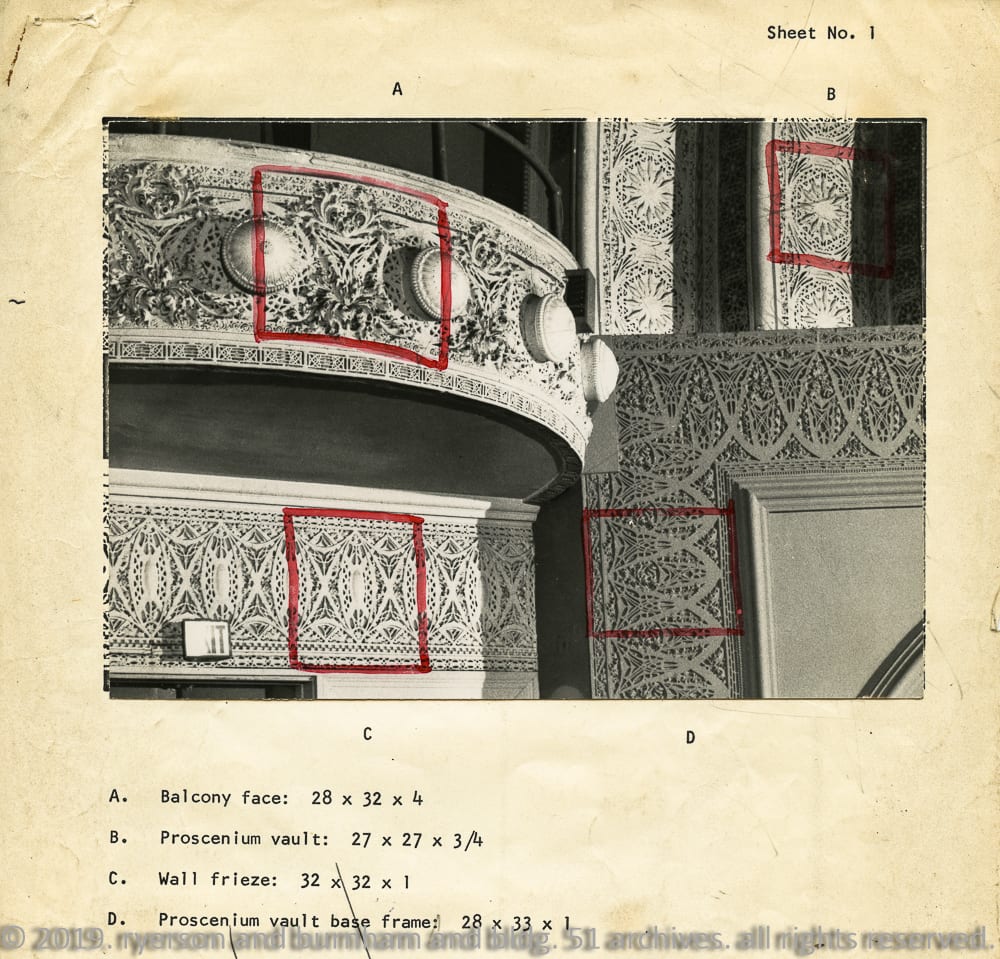
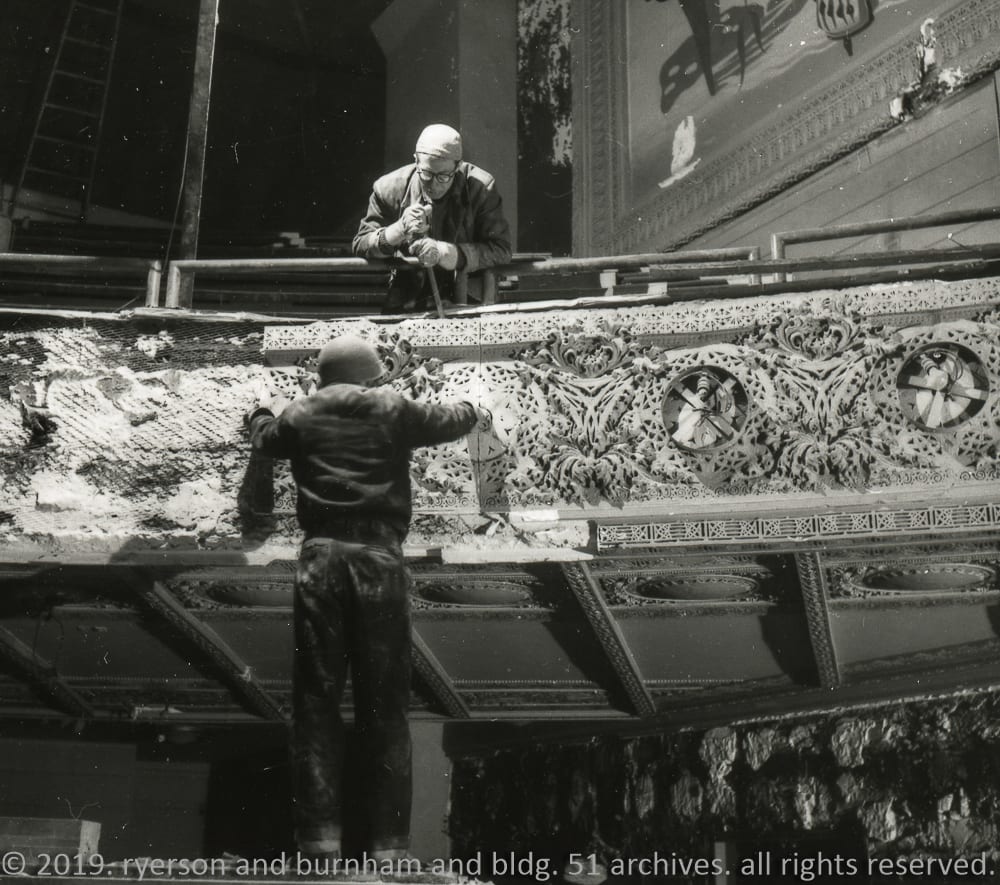
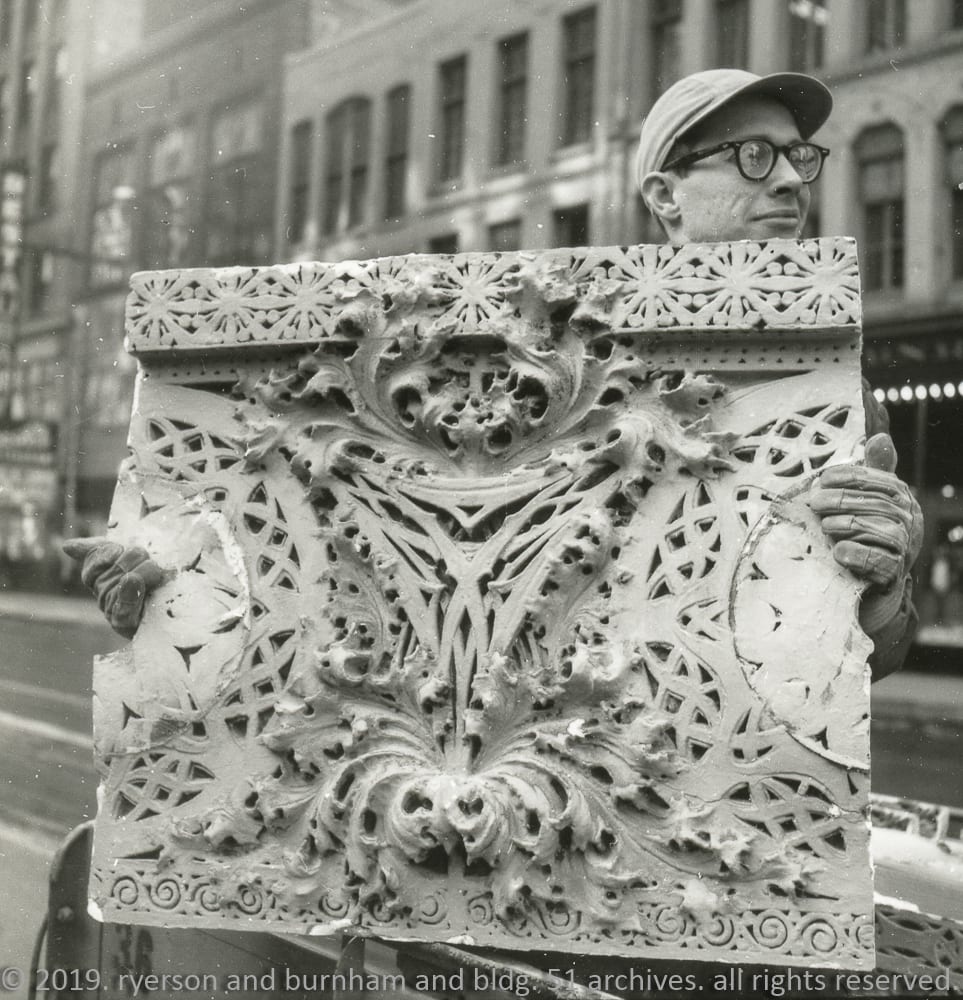
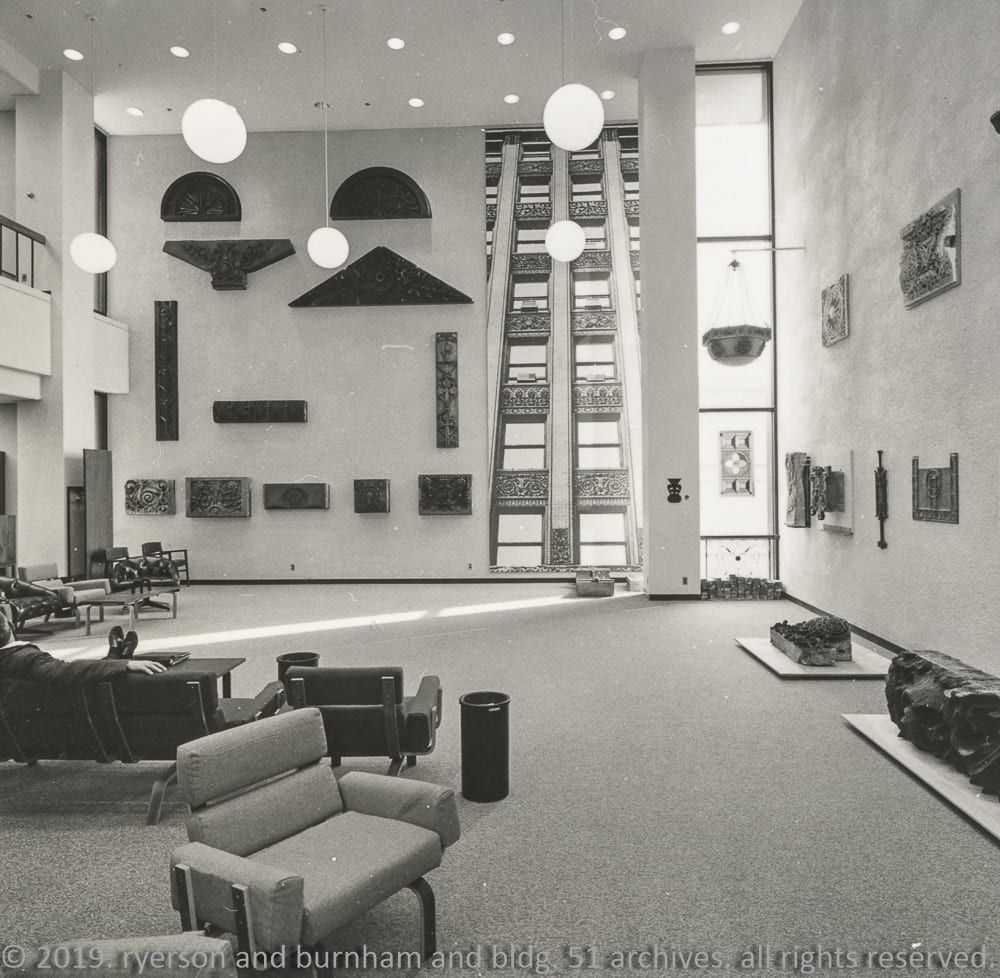
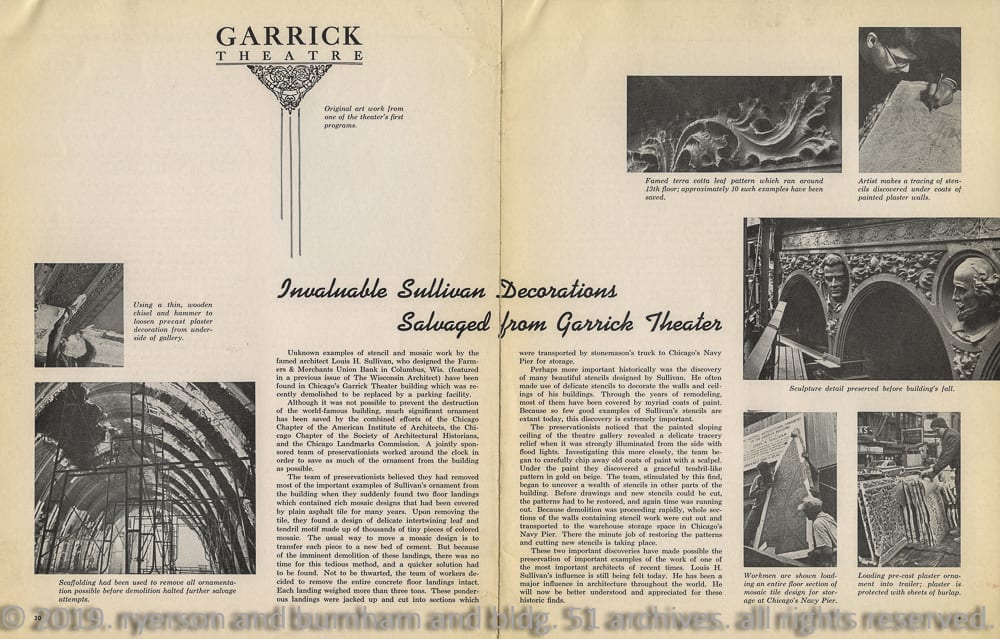
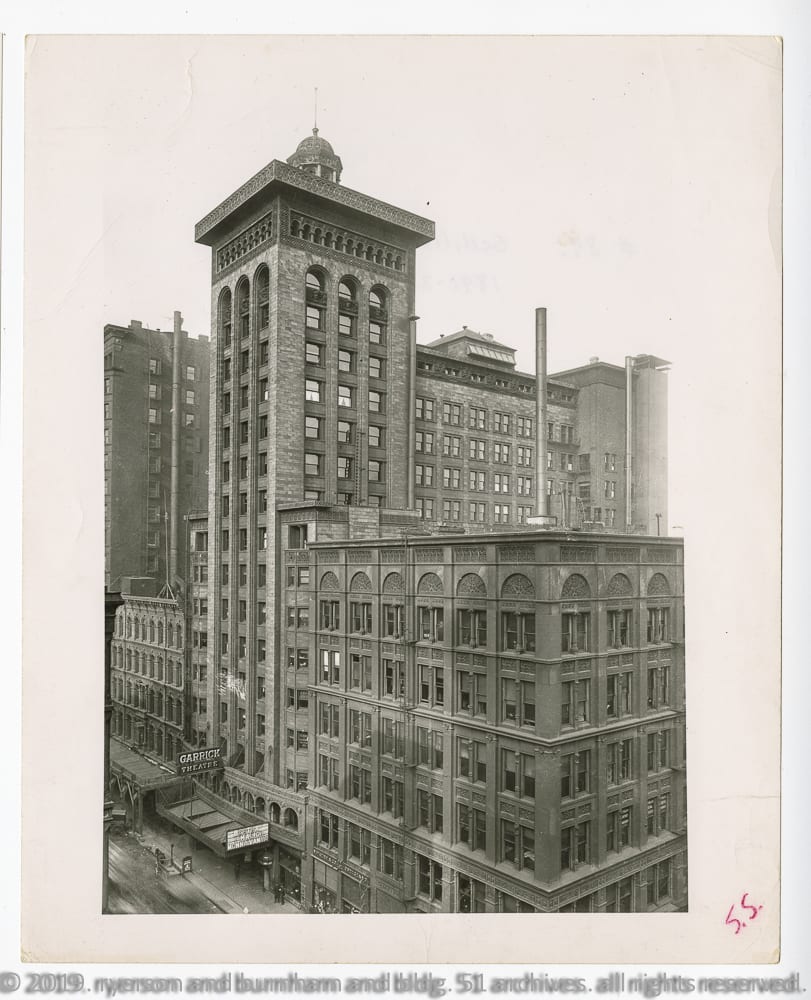
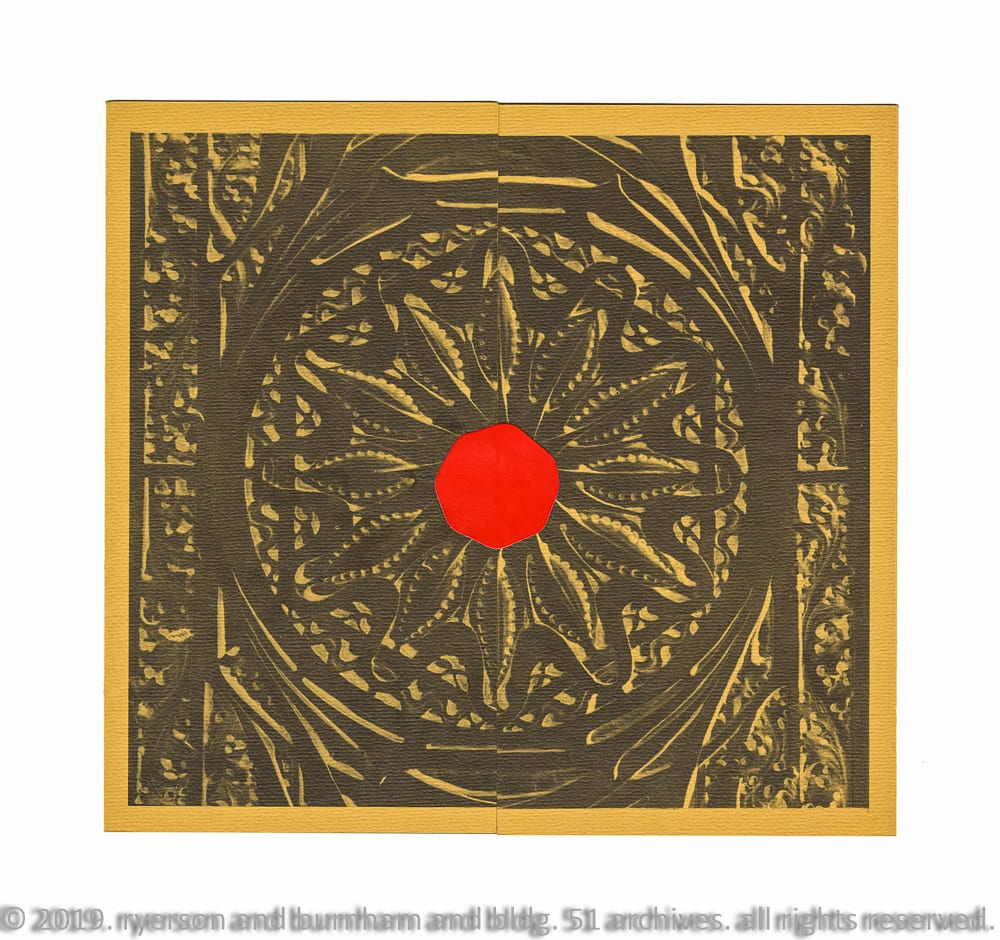
the garrick theater, also remembered as the dearborn theater, was designed by louis sullivan and dankmar adler for the german opera company. its attempted preservation was spearheaded by nickel and a collaborative labor of the joint committee for the preservation of the ornament of louis h sullivan and the chicago chapters of the american institute of architectural historians. salvaging hundreds of artifacts and ornaments, nickel kept extensive notes, diagrams, and photographs of the building, providing comprehensive and vital context for every piece salvaged. its 1300 theater seat centerpiece, mosaic floor slabs, terra cotta exterior and plaster interior were prepared in a circulation of an eight-page catalogue which included a selection of photos, dimensions, shipping, and weight. the catalogue was distributed to institutions and individuals all over the world. parties interested in preserving and owning a part of this historical legacy had only to pay crating and shipping costs for these remarkable items. large, and most outstanding, portions of the collection were given to the art institute of chicago and the fogg museum of harvard. through nickel’s painstaking efforts many more ornaments found their way to exhibitions and collections at the museum of modern art, the museum of contemporary crafts, beloit college, columbia university, cornell college, university of kansas, the frank lloyd wright foundation, yale, smith college, the international museum of modern architecture in milan, to name a few, and among individuals such as bill horowitz, john holabird, edward d. dart, mel blumberg, and ada louise huxtable where they were used in parking garages, school facades, and in personal collections. in this distribution, these artifacts became recognized for their social and political possibilities.
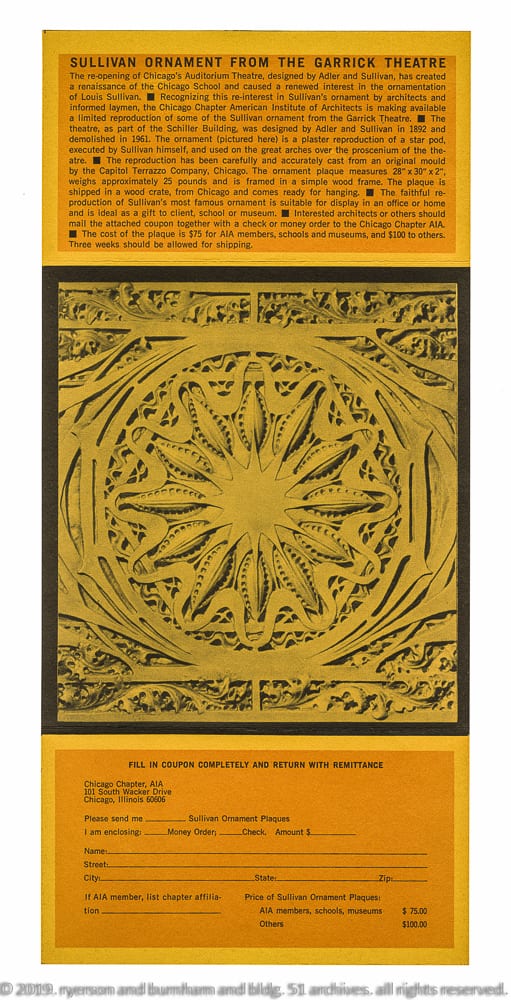
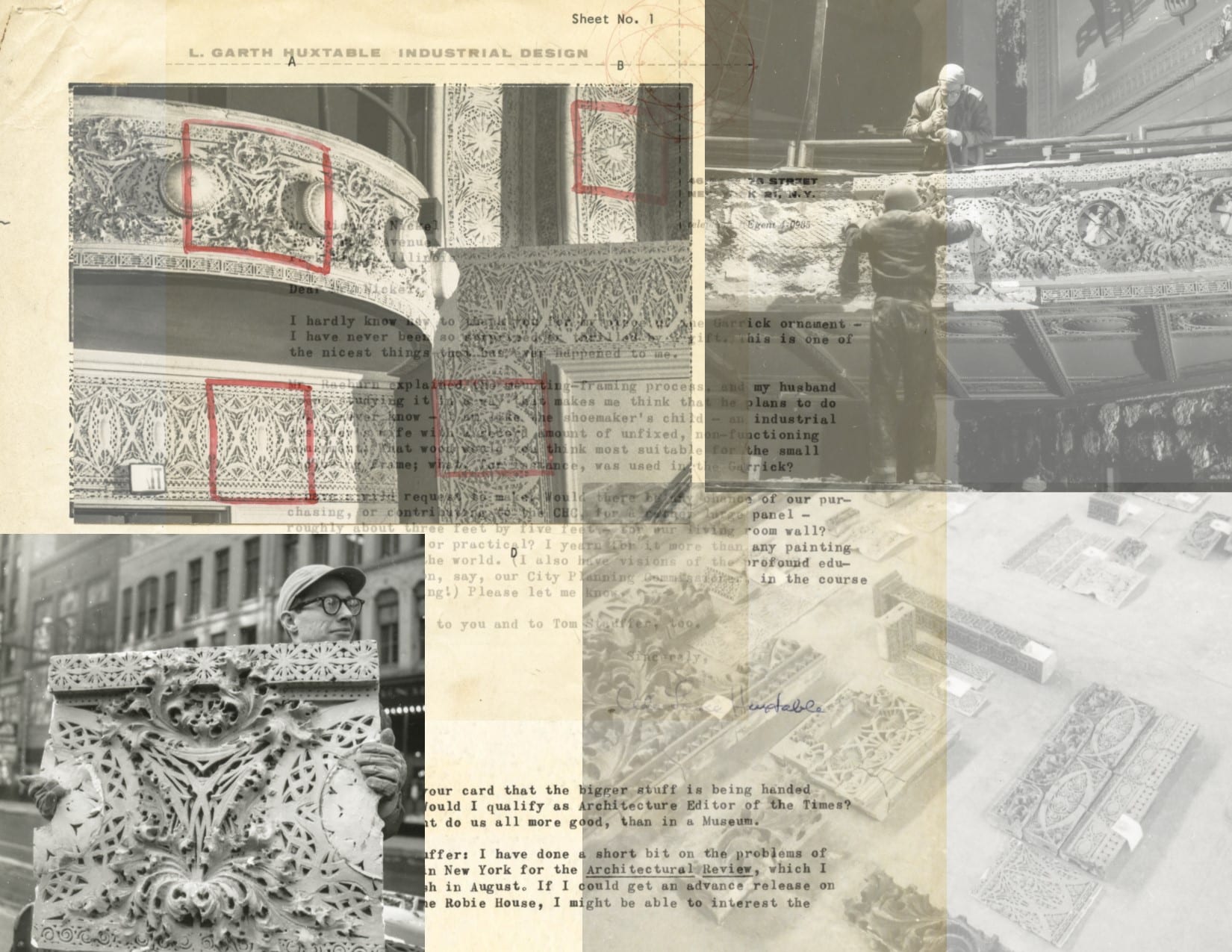
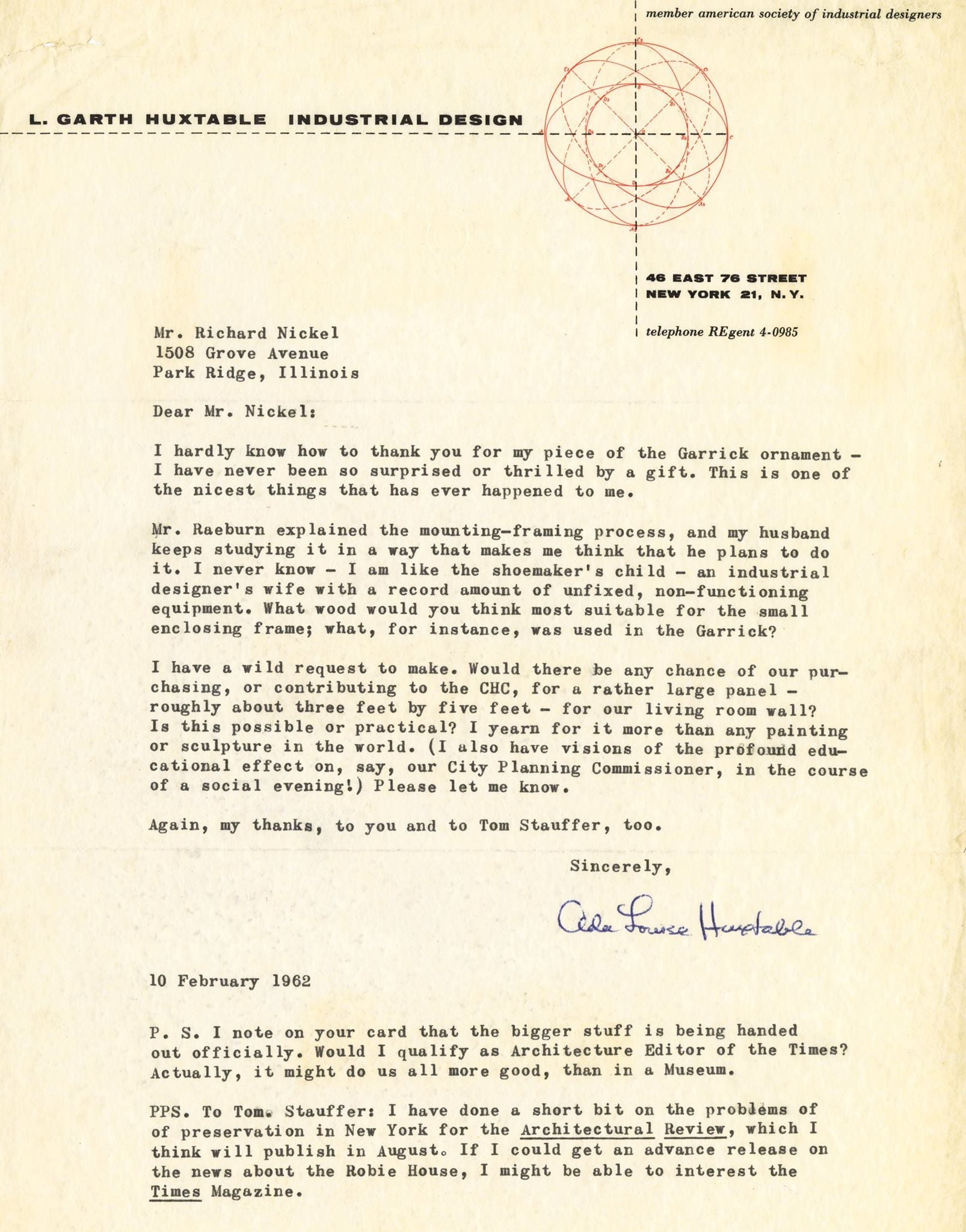
in a letter from ada louis huxtable in february 1962, a pulitzer prize winner in architectural criticism, she not only ecstatically claims a garrick ornament, but begged for a larger panel: “i yearn for it more than any painting or sculpture in the world. (i also have visions of the profound educational effect on, say, our city planning commissioner, in the course of a social evening!)” similarly, don freemen of cambridge design group writes to nickel, “i can’t tell you how much it was appreciated! and the excitement of having the tangible evidence of the great man.” the reach of these objects is a direct result of the role that nickel played in their distribution. and nickel ensured this reach extended beyond architectural-interested journals to mass media to raise more general public awareness of the destruction of historical architectural histories. in a letter between marion smith of the american institute of architects and nickel, nickel includes a list of over 29 additional mailings for the distribution of a press release about the salvage including the new york times magazine, life, look, st. louis post-dispatch, christian science monitor, the sun-times, a television series on american building art, and many more. this reach became particularly critical in the garrick theater’s ornament distribution, as nickel utilized this social network to encourage, as he said to taliesin in a letter dated december 1962, people to “put something in the money pot” in order to counter the costs of labor and transportation of artifacts.
despite these connections to important institutions and individuals, the preservation of these items did not come without significant struggle. even with nickel’s exhaustive work to promote widespread awareness of the availability and importance of the artifacts from the garrick theater salvage, it took several years, and overcoming many complications, to find proper, permanent homes for many artifacts. from labor issues and funding to storage and shipping, the correspondences of richard nickel and his collaborators also provide critical context to issues within architectural collections and their distribution at the time.
beginning in december 1961, nickel wrote to joe benson and herb fisher of the commission on chicago architectural landmarks on issues of storage of the salvage. nickel remarks on the advice of crombie taylor about the garrick theater’s valuable “stencil slabs” removed from the navy pier shed to the public works hanger: “he advises that the entire salvage of these slabs might be wasted if they are left unheated through the winter. the paint will peel and the designs may be totally lost.” he pushes these men to “waste no time in having john vinci and david norris at work on this project”, and crombie’s “offer of the use of his basement at home for this work.” this was followed by a letter in march of 1962 about the impediment of rectifying these storage issues due to funding sources to pay for this work, finding the right person to get the job done promptly, given that preferred artists john vinci and david norris are only available part-time, and suggested method for the dispersal of funds to be worked out between mr. taylor and the grand foundation in a letter from april 1962 to marion smith.
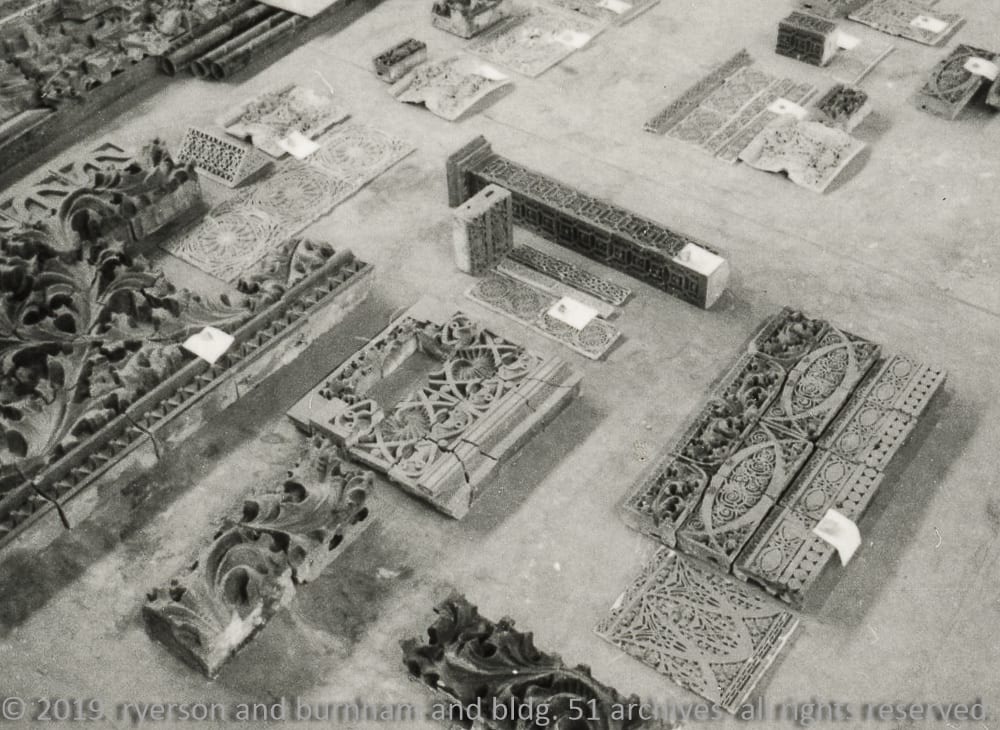
following these letters on funding and logistics of storage, there was also an issue of security noted in nickel’s personal papers. letters to john holabird of holabird & root and arnie anderson of the public works department in april of 1962, nickel recounts the piles of ornament and an inability to keep proper tabs of even his own pieces within the collection, particularly a terra cotta piece:
“your foreman was pondering over one of the ornament piles. it happened to be my own collection from early sullivan buildings, and his interest alarmed me […] i have an inventory of my own, and i noted the next day that a piece was missing. the piece could have been taken during the winter or maybe more recently. i don’t know. the pieces to me are as important as the skeletons of early humans. i spent many a cold night pulling it off walls or probing through rubble for it.”
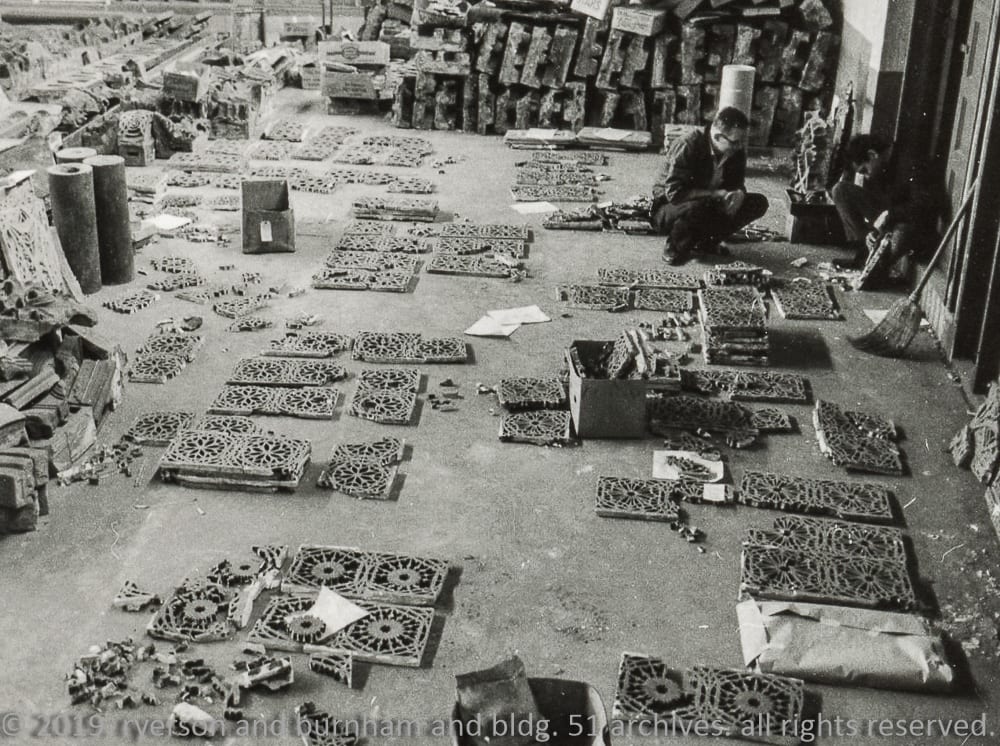
beyond storage, the issue of logistics in crating and shipping is also apparent in correspondence between joe benson and nickel from april 1962: “the main problem is how to get the ornament to the organizations that want it. i think picking it up is the best solution.” a letter from downing tomas to nickel in september 1963 provided commentary on winter delays in shipping and the werner-kennelly company’s “unprofessional job crating the ornament” in which “some cases the ornament was packed without any cardboard or excelsior. therefore many of the plaster pieces were severely broken” because of this, nickel often stepped in as a consultant on the proper installation, framing, and repairing of the ornaments with the floor by floor, feature by feature, detail he provided in descriptions and documentation of the salvage including material and ornamental makeup. when he or his co-collaborator joe benson could not be a resource for help, they had knowledge of the architect and salvage that enabled them to often serve as the go-between in correspondences to repair resources like the american terra cotta corporation, as seen in letters from january 1963 from joseph benson to the original fabricator, northwestern terra cotta corporation, and subsequent referral to the american terra cotta corporation about recreating a central terra cotta piece from a balcony front that the original fabricator could no longer produce.
nickel’s labors to preserve these pieces have become a collection in and of themselves. his correspondences, notes, and the catalogue he produced provide greater social and political context for the salvage collection of the garrick theater and enrich our understanding of the preservation legacy of richard nickel and his collaborators.