

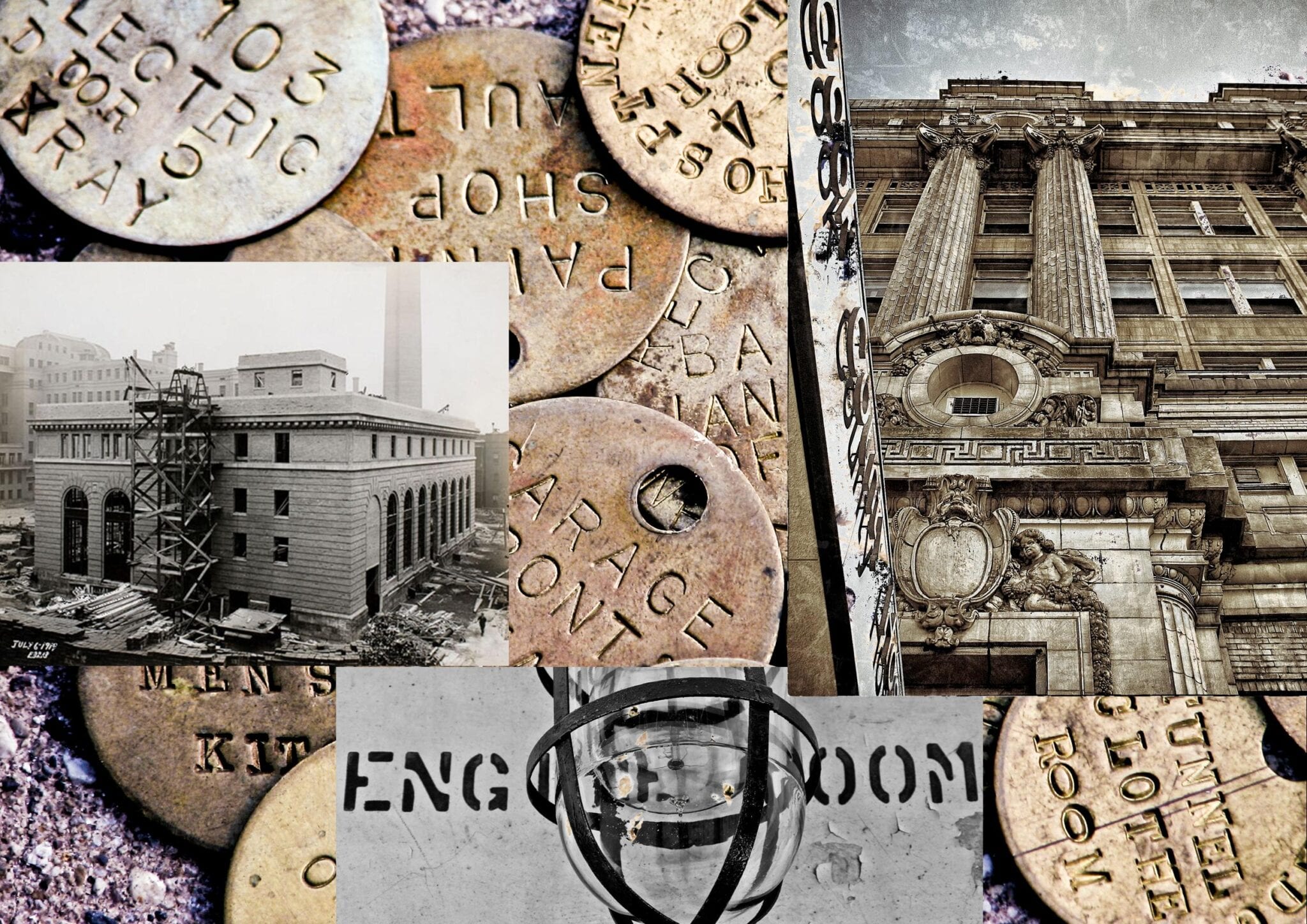
15 Dec recollections “salvaging” the cook county hospital’s power house ten years ago
it’s rather unfortunate that my recollections of exploring the partially operational (or perhaps largely crippled and chaotic) cook county hospital’s power plant are so faint and fragmented. to make matter worse, hundreds of digital photographs taken of cook county hospital’s interior during the short-lived salvage were lost due to a computer crash. i did, however, manage to extract a handful of images from another memory card which remained on a secondary camera. still, the output strongly parallels my recollections, so the reader might only get a “glimpse” at the interior design characteristics — which i distinctly remember being largely unaltered, since the structure was built in 1914 (the beaux-arts style hospital itself was completed in 1916).
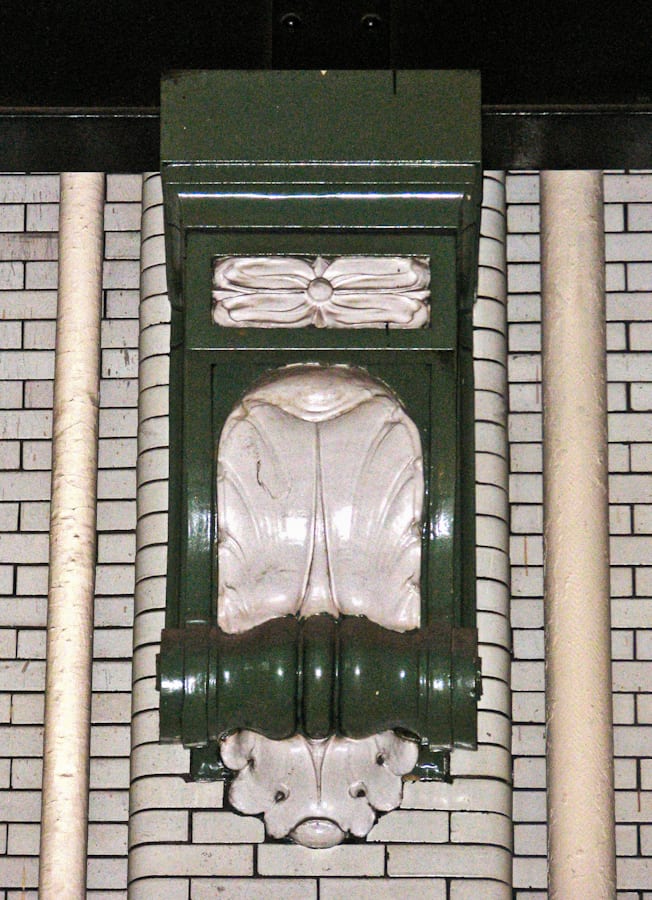
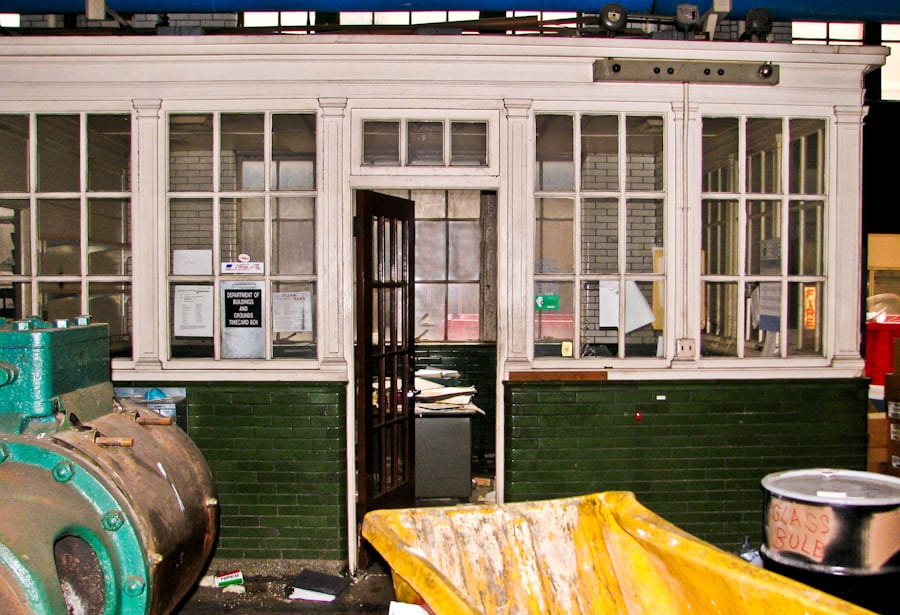
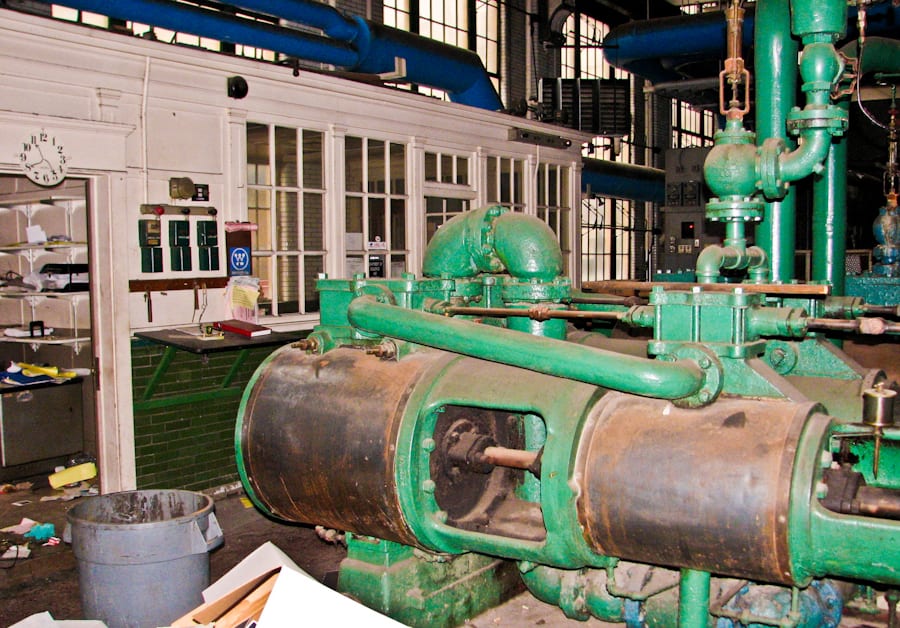
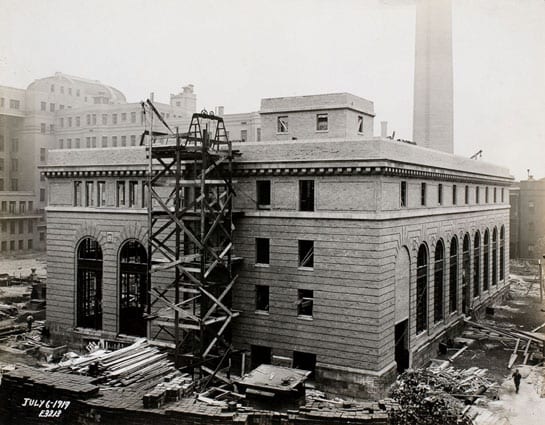
the fortified building, with its expansive interior, was designed to house the hospital’s delicate “nervous system” consisting of of a dizzying assemblage of steam pipes, boilers, switchboards, a massive overhead gantry crane, and a small collection of offices – bedecked with green and white enameled brick, neoclassical pilasters and ample natural light (for the engineers, who kept an attentive eye on the inner-workings of this complex for distributing the necessary power to keep the gargantuan hospital alive and well).
note: in addition to the office, the hospital power house’s surrounding walls was outfitted with white and green slip-glazed brick walls and accentuated with oversized corbels or brackets. the actual “slip” covers and/or gives the brick its color, by fusing and uniting with the body of the brick, thus preventing any degree of transparency that would compromise the integrity of the color applied. it should also be noted that at the time of construction (1917) several commercial structures, large and small, employed the use of enameled bricks in this exact color scheme as a popular treatment for exterior facades. the enameled and/or vitreous bricks were fabricated by the hydraulic press brick company, chicago, ills.
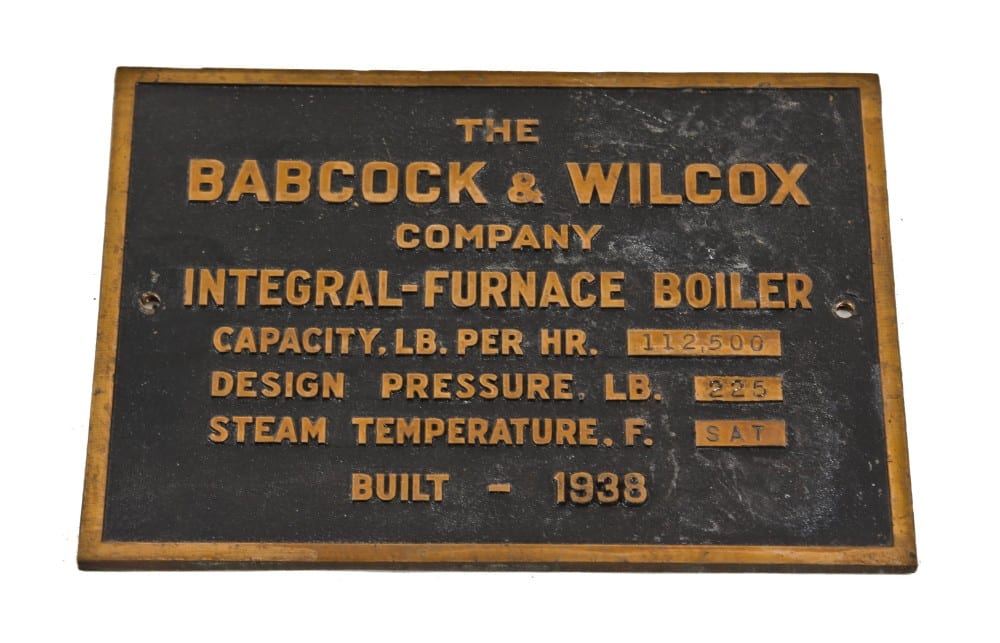
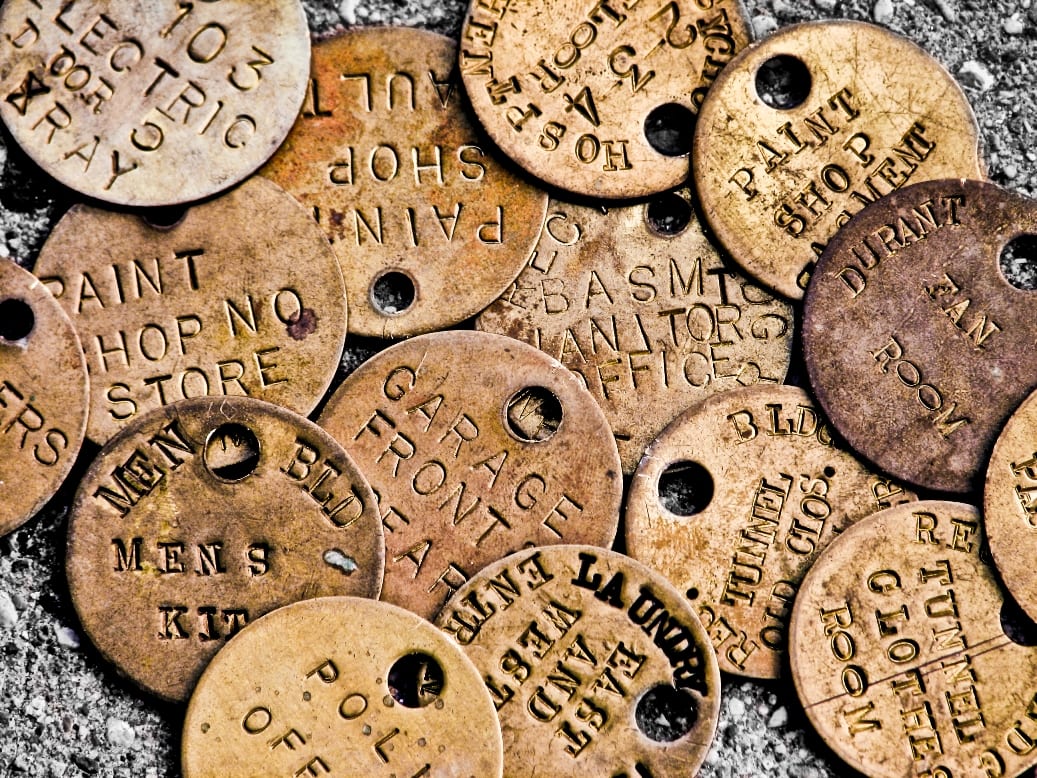
by the time i arrived, the antiquated system was slowly being powered down, as more and more areas of the surrounding hospital was stripped and shuttered in preparation for demolition. always having a soft spot for gauges, signage and plaques identifying the fabricator and/or specifications pertaining to a component’s performance, i grabbed several of these artifacts. the takeaway included the oversized babcock and wilcox boiler bronze informational plaque, added in 1938 when the hospital upgraded its power plant equipment.
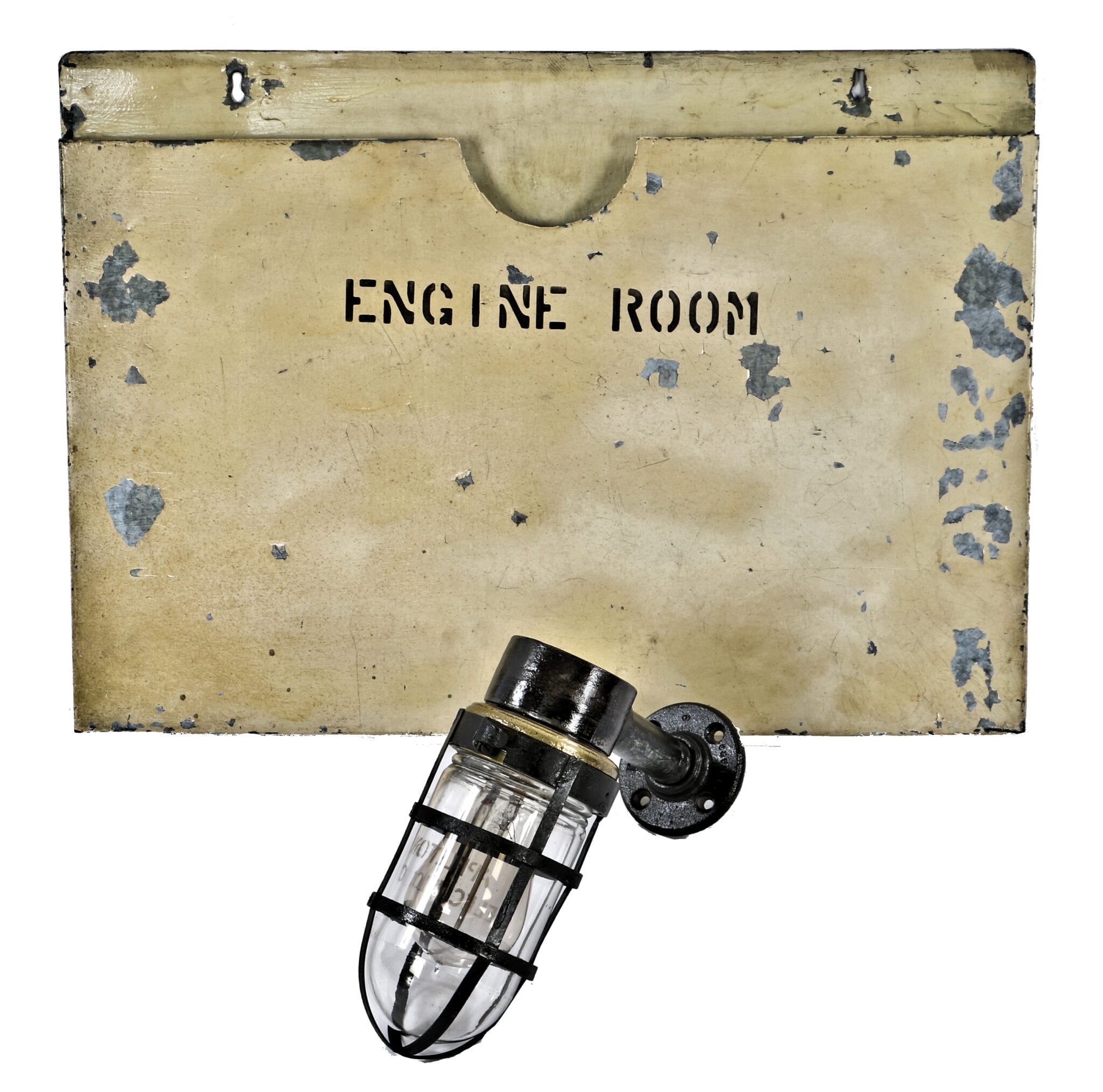
perhaps the most exciting find was an original appleton “unilet” explosion or dust-proof light fixture that was on the underside of the gantry crane. to my surprise, the fixture contained the original, or at least a very early, “tipped” incandescent light bulb with a burning bright white tungsten cage filament, still in working condition when tested.
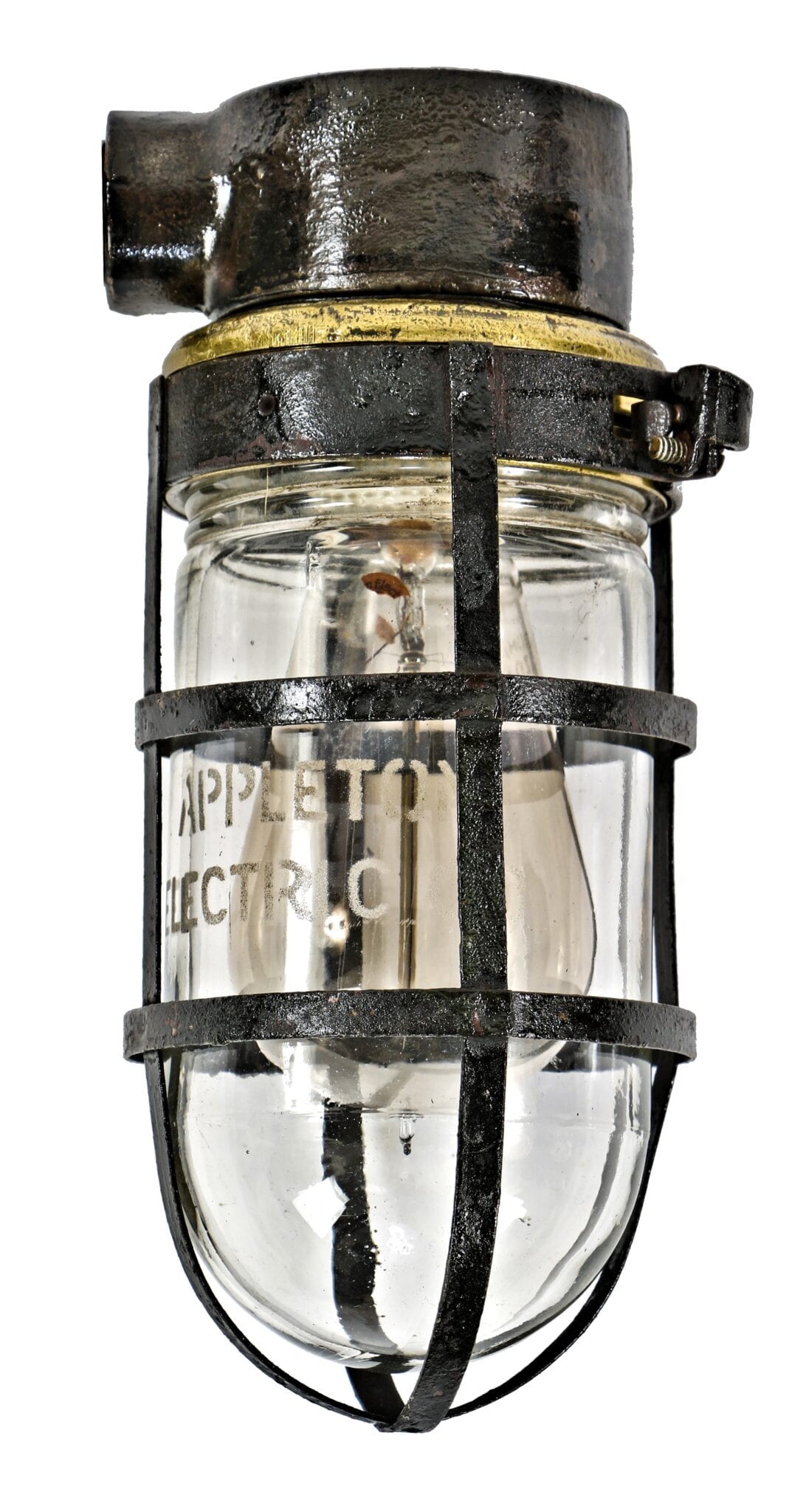
nearly ten years later, i have left the fixture exactly the way i found it and it remains one of my very favorite industrial light fixtures, tucked away in my personal collection.
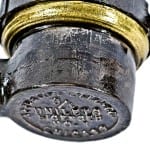
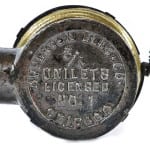
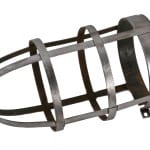
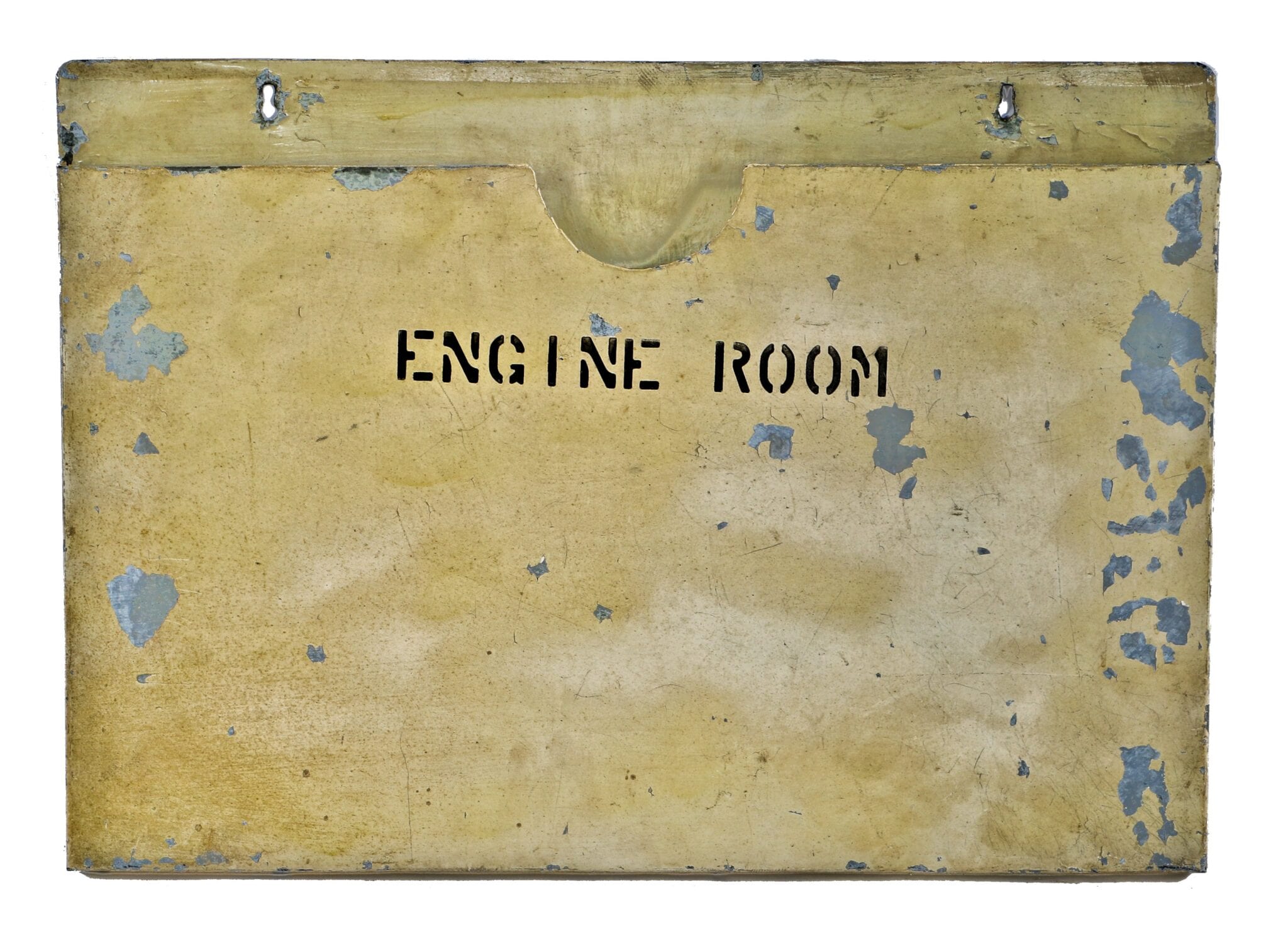
aside from the boiler plaque and appleton unilet, i held onto one other artifact that i discovered while rummaging through the mostly trashed offices. very simple and utilitarian in both appearance and functionality, i was instantly attracted to this crudely made, pressed and folded galvanized steel wall-mount folder that once held a bunch of complicated schematics. the most distinctive feature, which provides a certain distinctiveness or “character,” are the words “engine room” archaically stenciled in black paint across the front of the sleeve.
there were several more “odds and ends” that i picked up during my brief stint in the power plant, but underlying the urge to save components, i figured i should photo-document the interior as i found it, before it was quickly picked apart by scrappers, abatement teams, etc., in preparation for demolition. within no time, all asbestos would be cleared from the site and the big machines and torches would dissect and extract each and every component in a blink of an eye. there would be very little for me to photograph in terms of the antiquated equipment, once so delicately cared for and maintained, that ensured the buildings it serviced remained operational for its occupants.
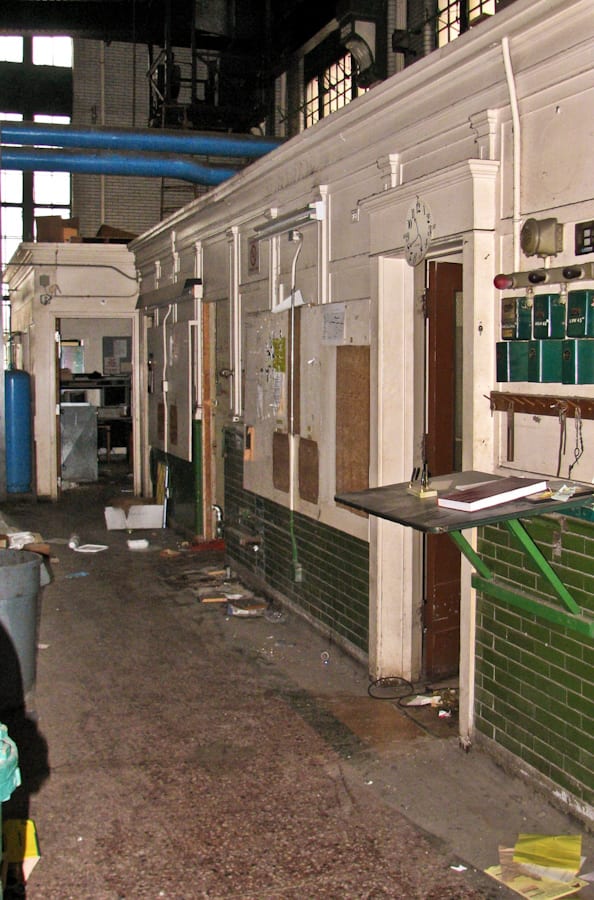
the entire structure of the old cook county hospital comprised two city blocks, and represented the preeminent example of beaux arts architecture in chicago, designed by paul gerhardt in association with the firm of schmidt, garden, & martin. the site’s beginnings as a hospital date to 1832, when a simple wooden structure accommodated several hundred patients suffering from cholera, smallpox, malaria, typhoid, and scarlet fever. this original structure burnt down and was rebuilt, gradually growing with the city’s population over the century (and suffering overcrowding along the way). a permanent hospital was built by the city in 1857 shortly after the cholera epidemics, and served as an army hospital during the civil war. the “old county hospital” was officially opened in 1866, a 3-story brick and limestone facility. this was expanded in 1876, to include a new 300-bed facility between harrison, polk, lincoln, and wood streets.

in 1912 the main building was constructed at the center of what would be a sprawling campus of 3,000 beds by 1916. at one point in time the facilities made up the largest hospital in the world, and it remains in memory as a historic training ground for medical professionals, with almost all doctors in the city being educated at the cook county hospital during its height. the hospital was replaced in 2002 when the new stroger hospital opened.
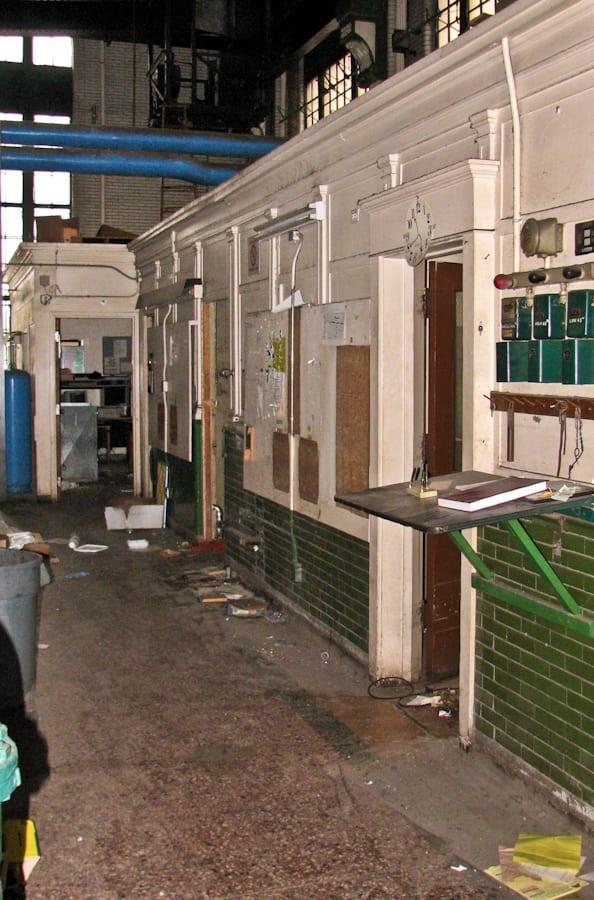
another artifact captured in situ was a commemorative plaque (believed to be saved by the city shortly before the plant’s demolition), which was added in 1944, to honor chief engineer, charles f. lumpp, for his fifty years of service to cook county hospital (from 1894-1944). if memory serves me right, the plaque was comprised of cast plaster with an “antique” metallic copper enameled finish or “wash.”
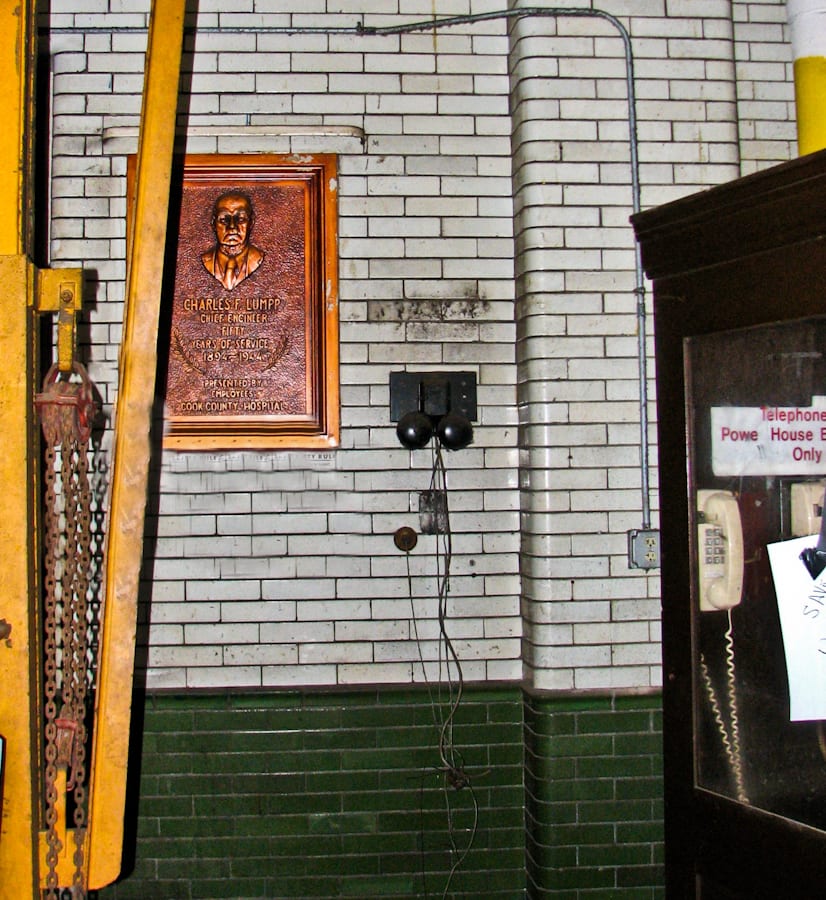
also of note in this salvage, the exterior ornament or terra cotta plaques were saved by close friend, dave felling of felling contracting, who was hired by the city specifically for the job.
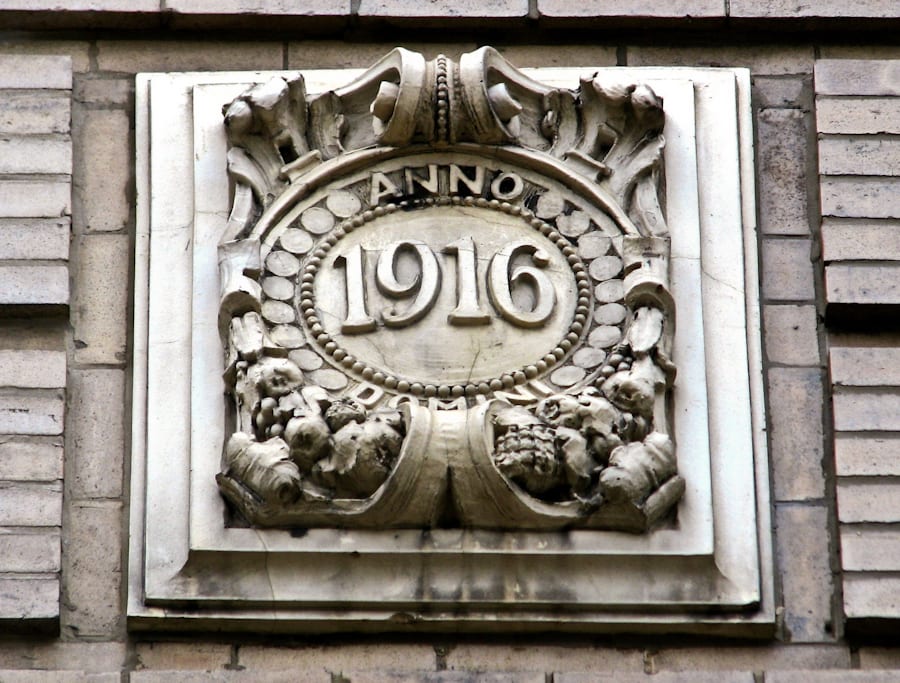
the main cook county hospital building is unquestionably of merit, a landmark that has not failed to garner public support for re-purposing rather than razing. still, the rear wings, children’s hospital, and power plant (respectively added in 1914, 1916, and 1926), were all compromised during the demolition that i was witness to way back when. the power station in particular is little documented, being a particularly neglected area of the endangered complex, so the artifacts and photos taken during the salvage remain as scarce evidence of the building’s whole story. regardless of this fragmentation, recent developments indicate the building may get new life, with existing architecture faced by possible approval to be rehabbed into retail, office, residential and hotel space.
end