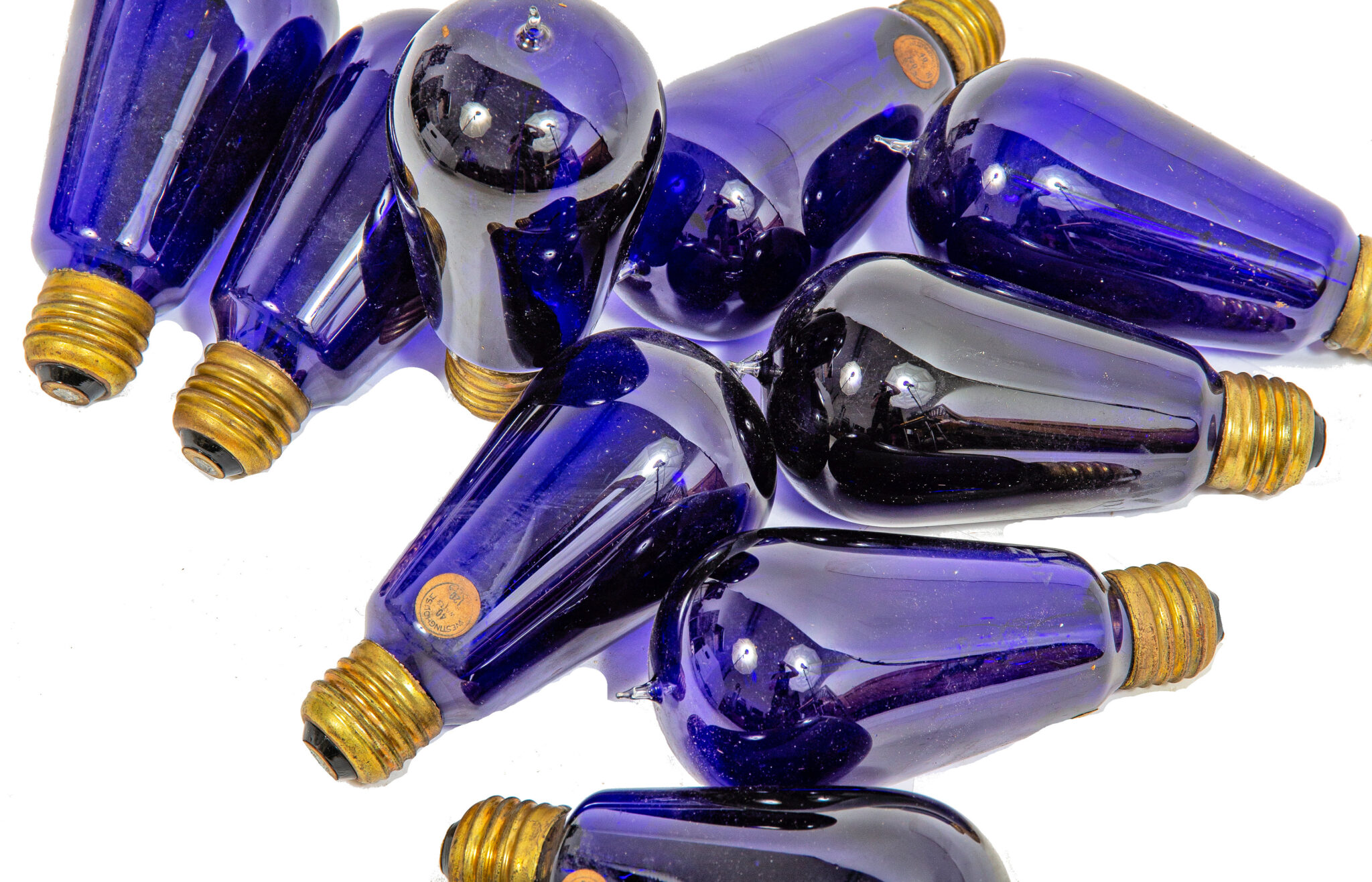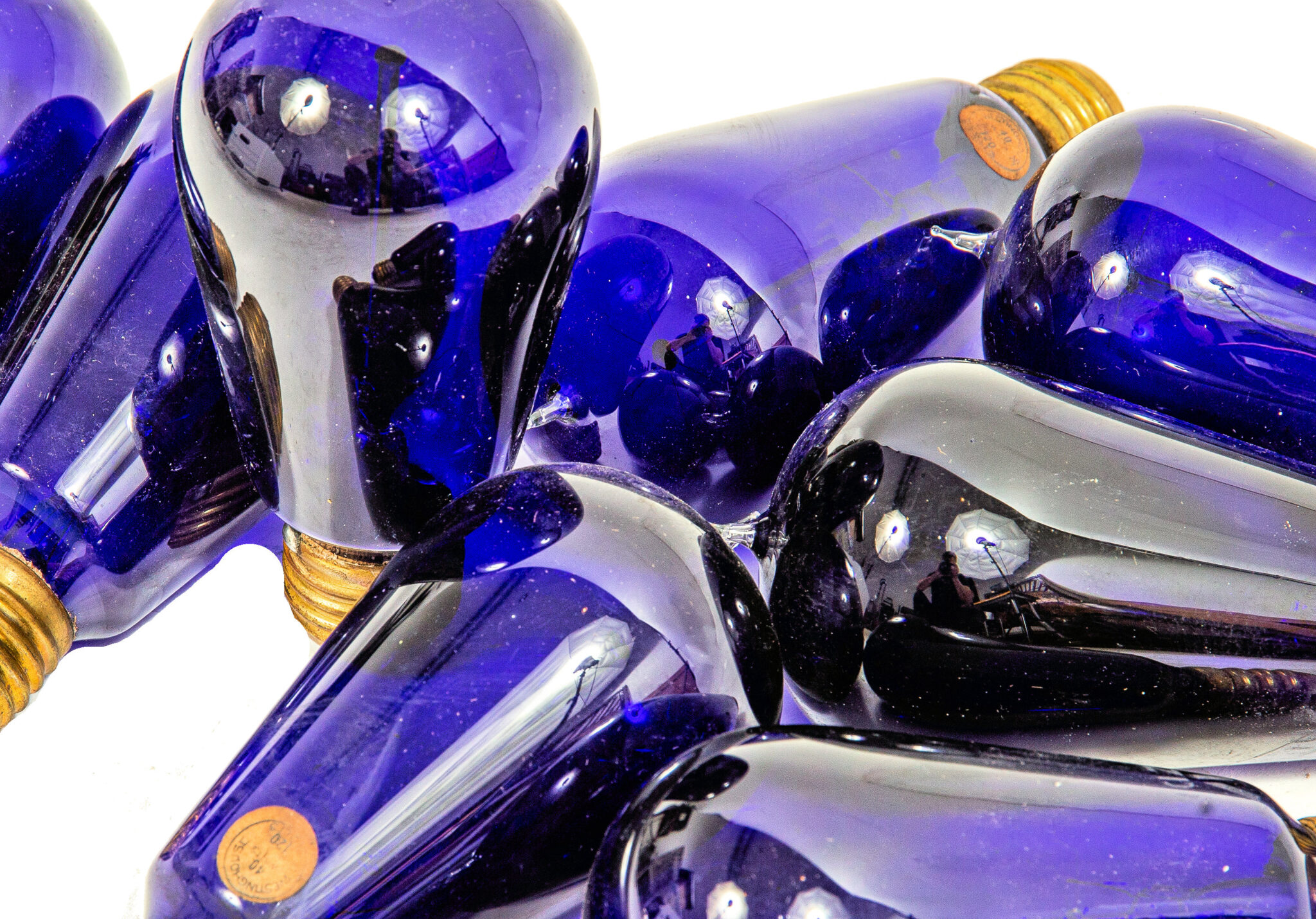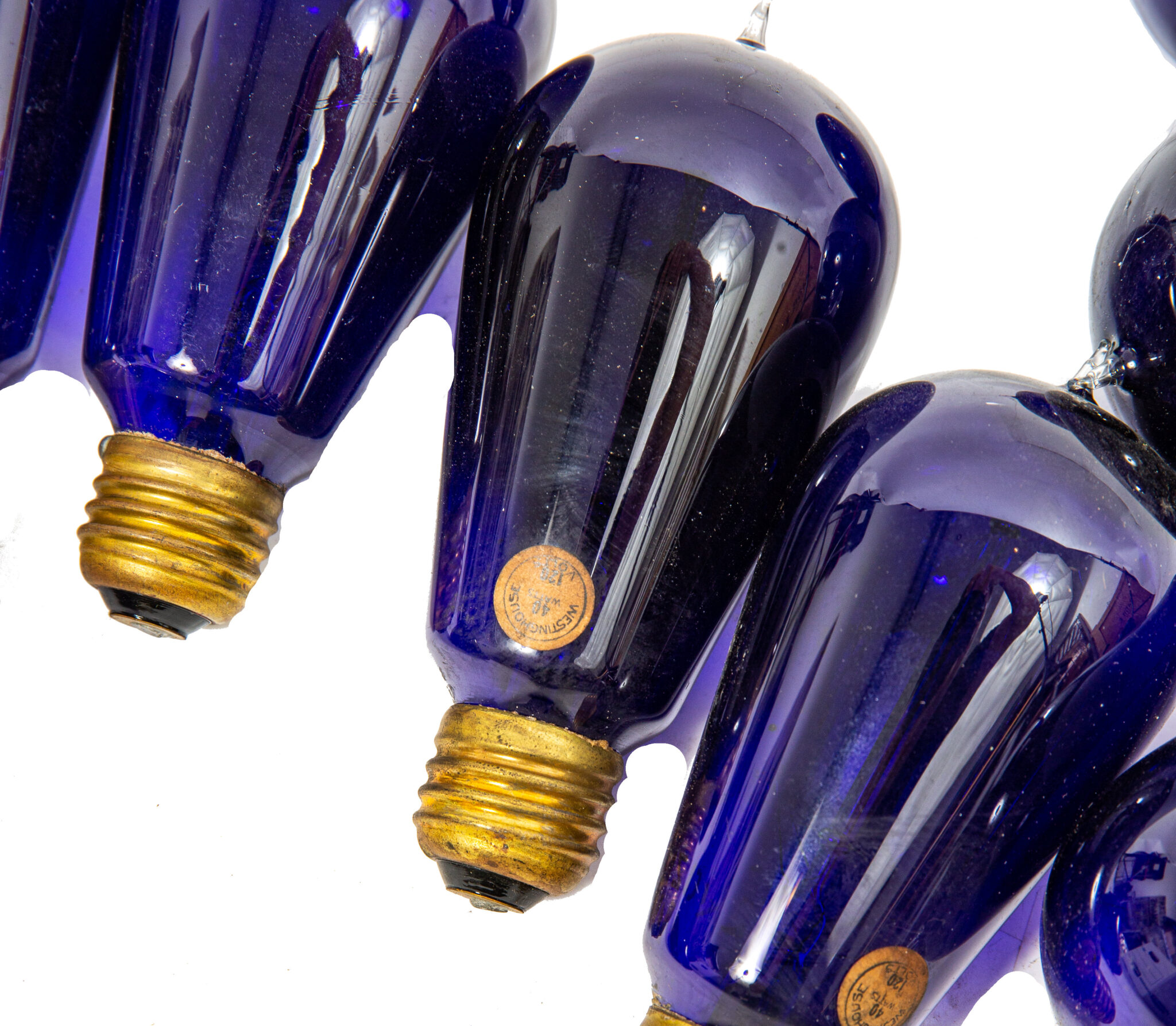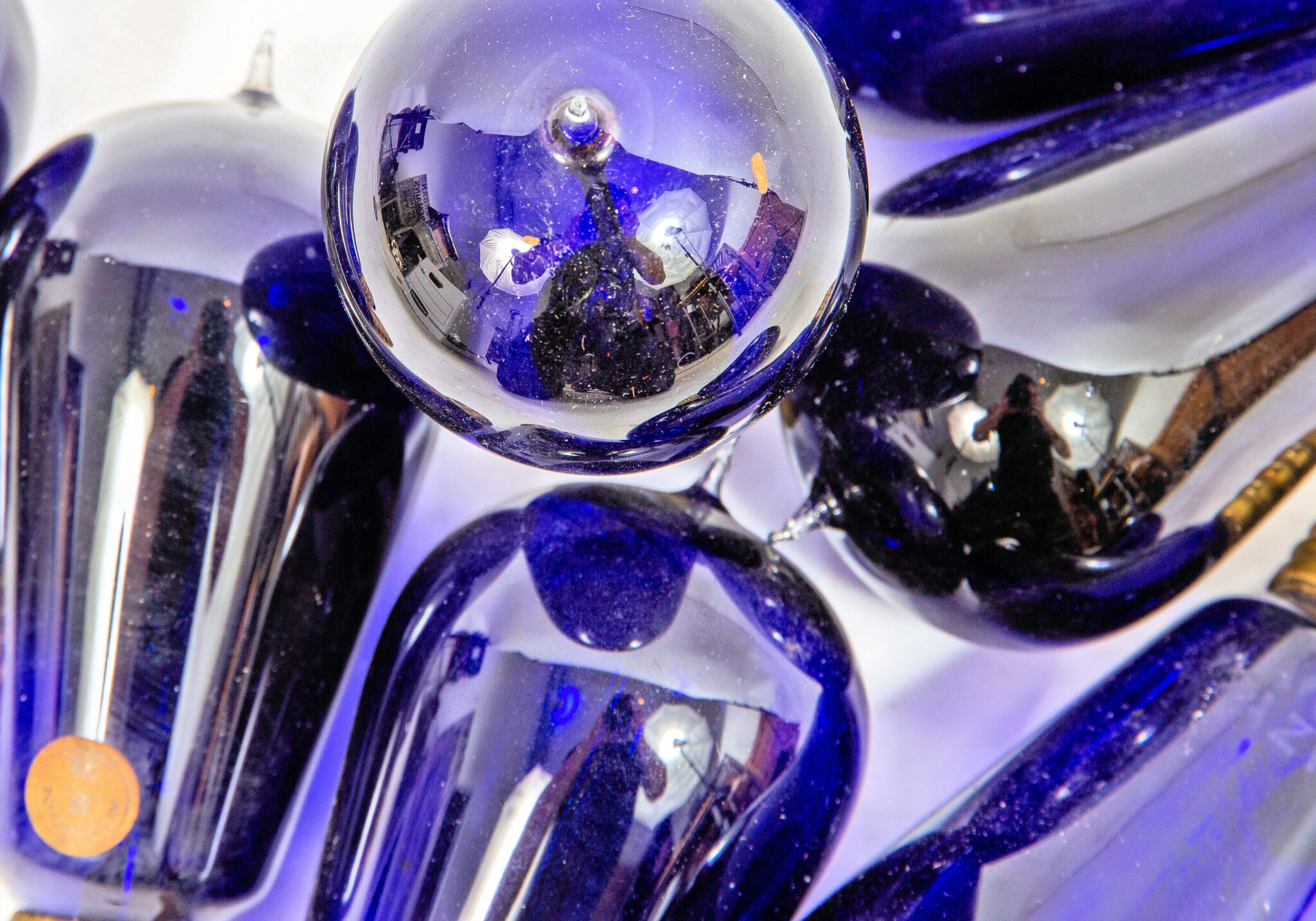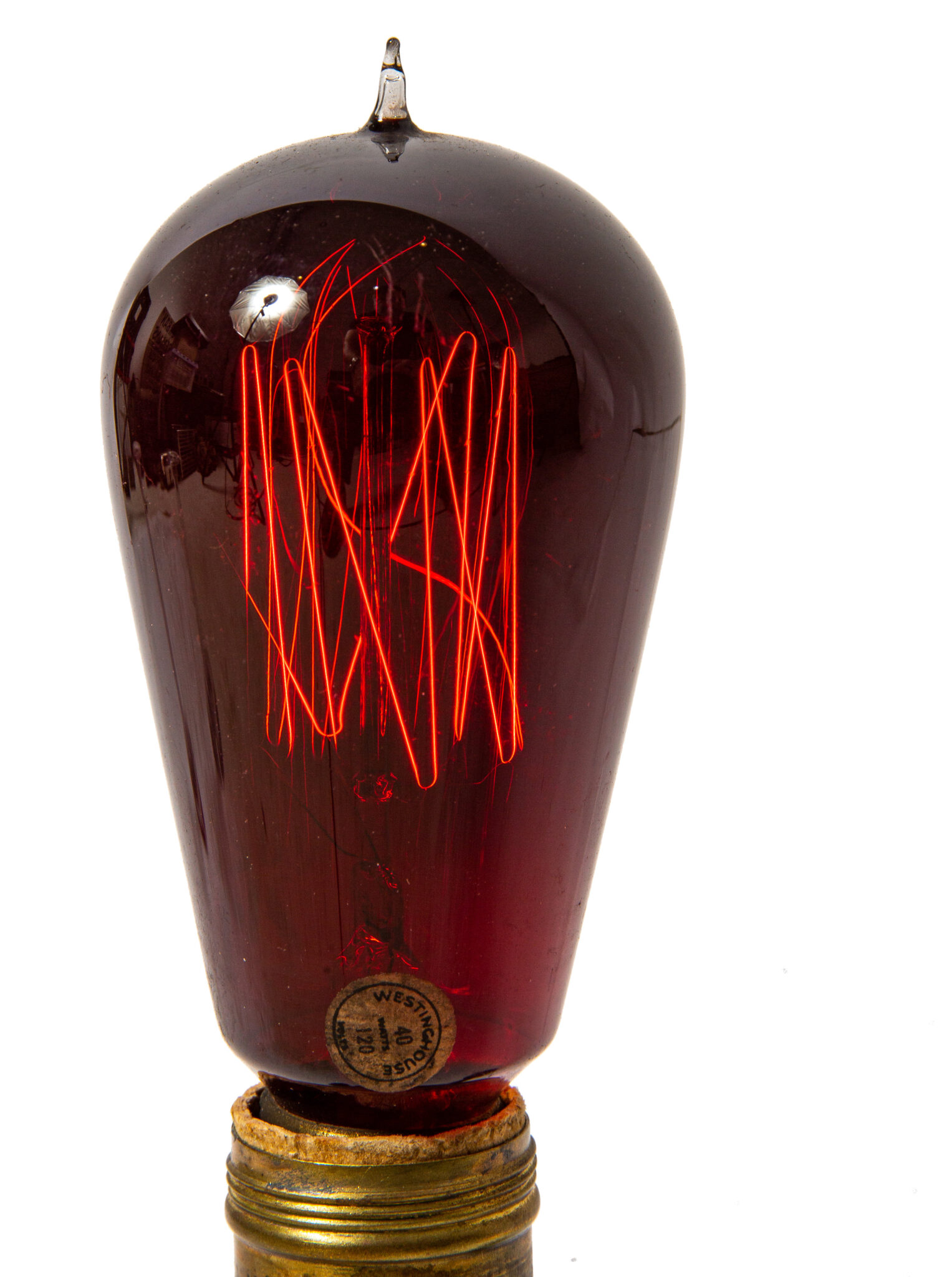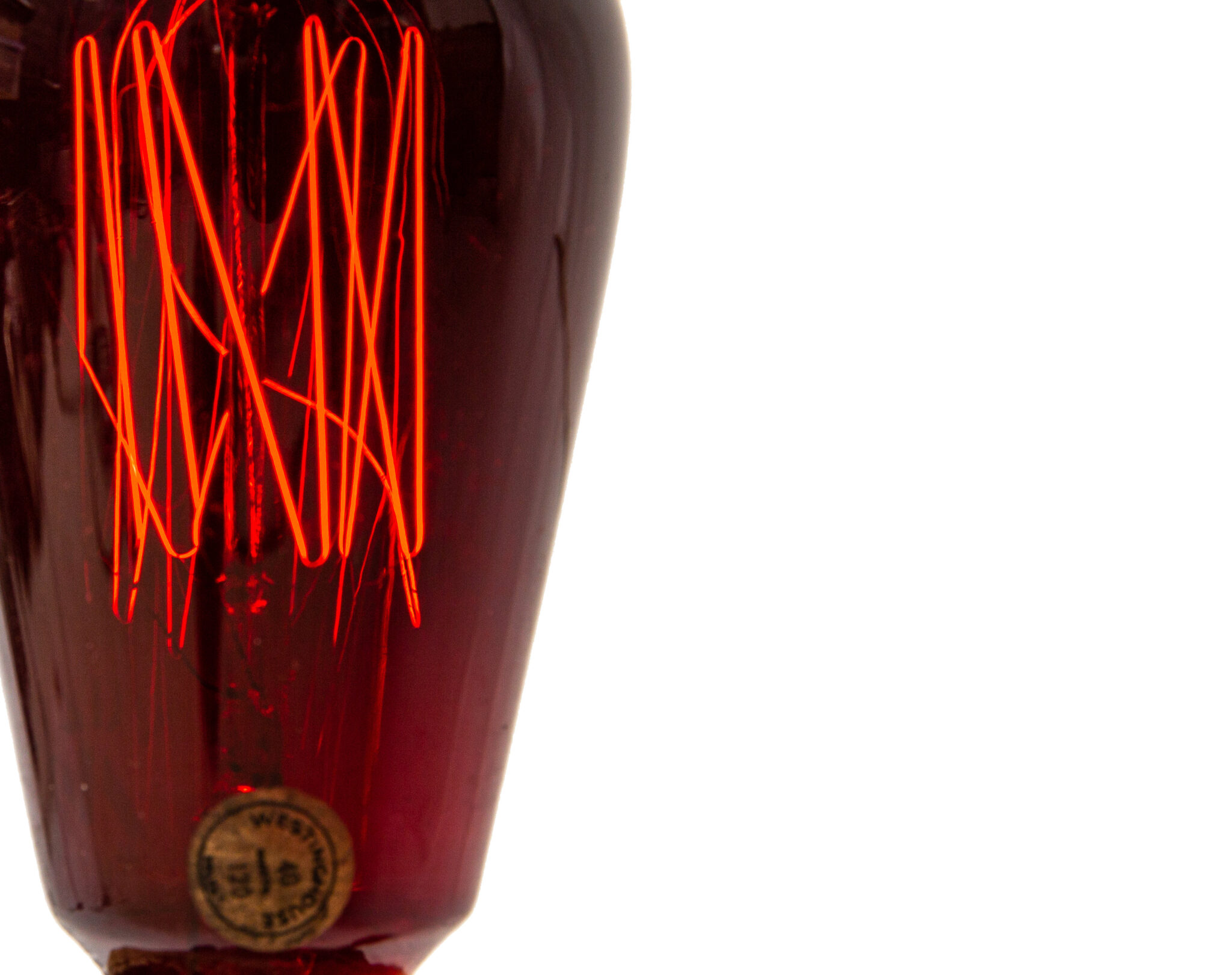

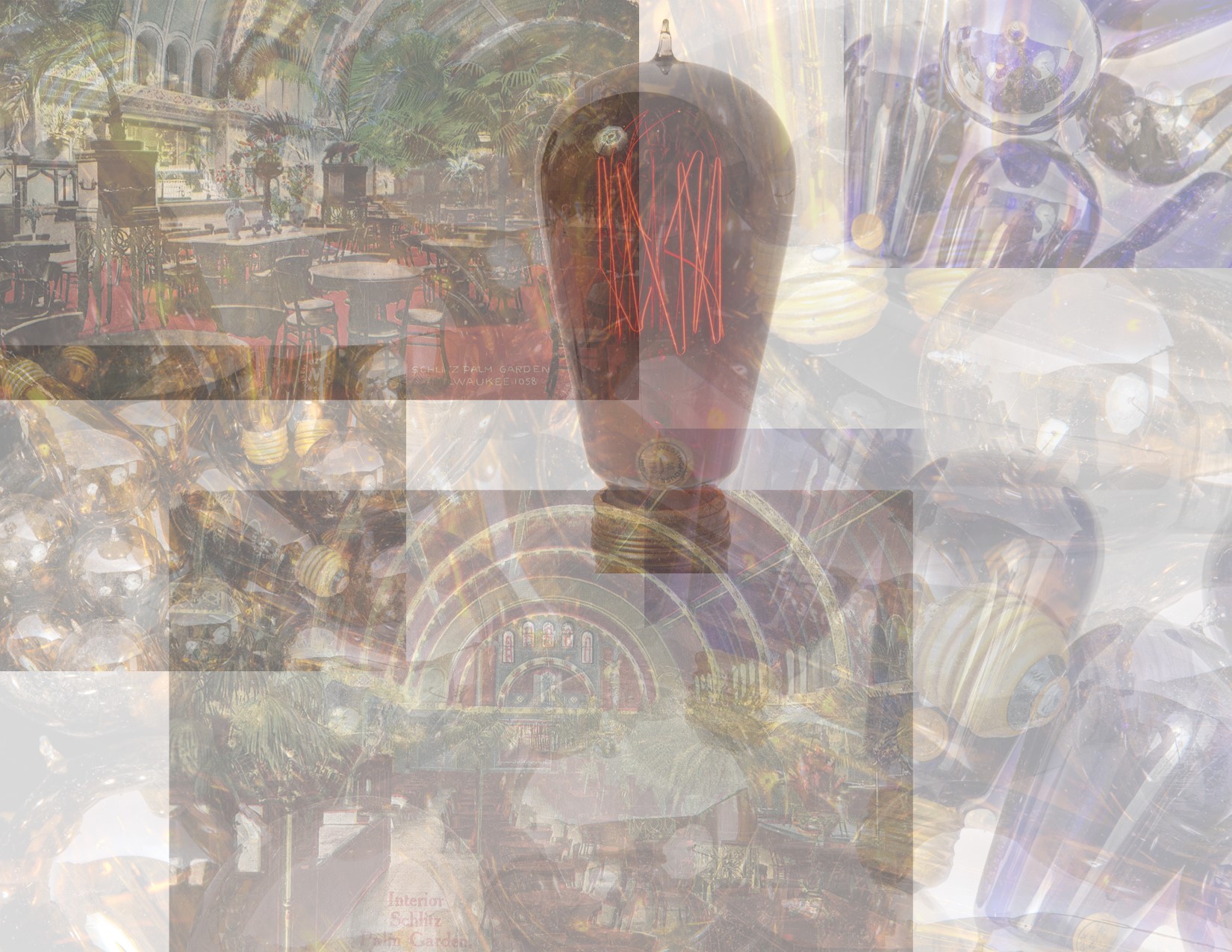
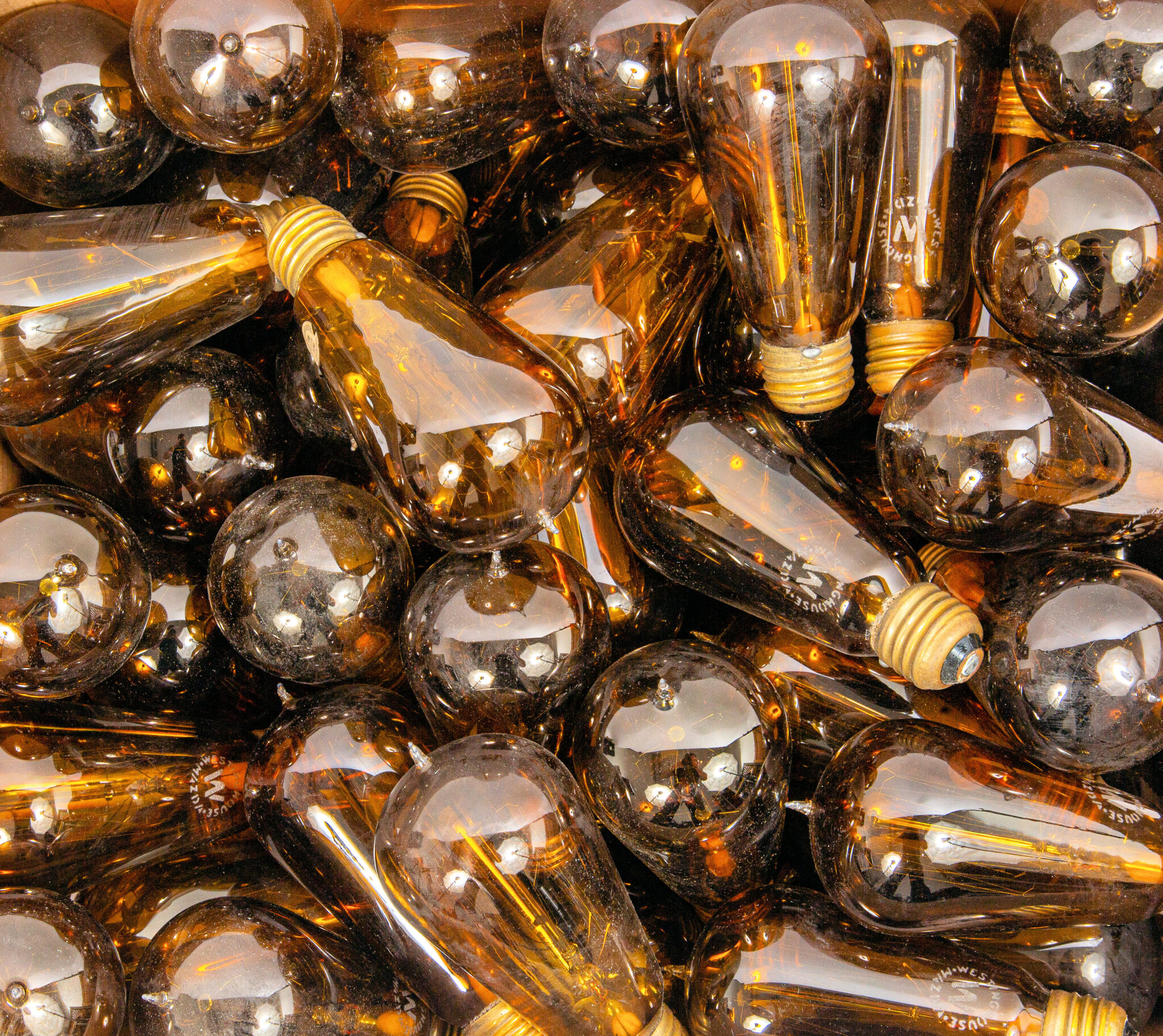
19 Jul bldg. 51 museum gifted sizeable quantity of early 20th century multi-colored tantalum filament light bulbs salvaged from schiltz palm garden
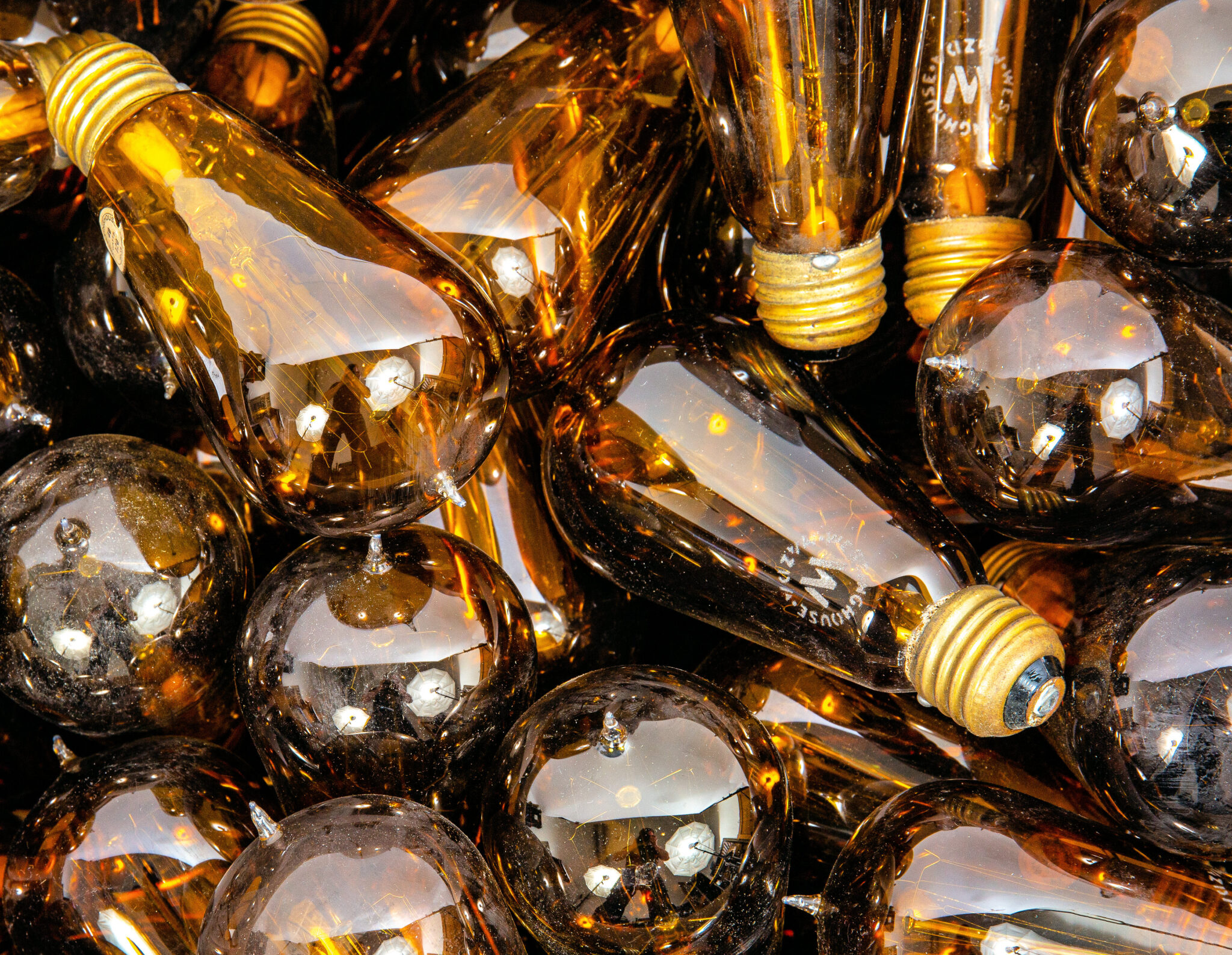
a little over a hundred original and fully functional multi-colored (i.e., golden amber, ruby red, and cobalt blue) “tipped” mazda light tantalum filament light bulbs – salvaged from the schiltz palm garden prior to its demolition in 1963 – joined the bldg. 51 museum collection last week.
after 25 years of serving “the beer that made milwaukee famous,” the schlitz palm garden closed its doors on march 6, 1921. since the 18th amendment had gone into effect a year earlier, prohibiting the manufacture and sale of alcohol, the palm garden, believed to be first of its kind in the united states, struggled to survive. it would re-open as a movie theater the next year and operate until 1960, then was razed in 1963.
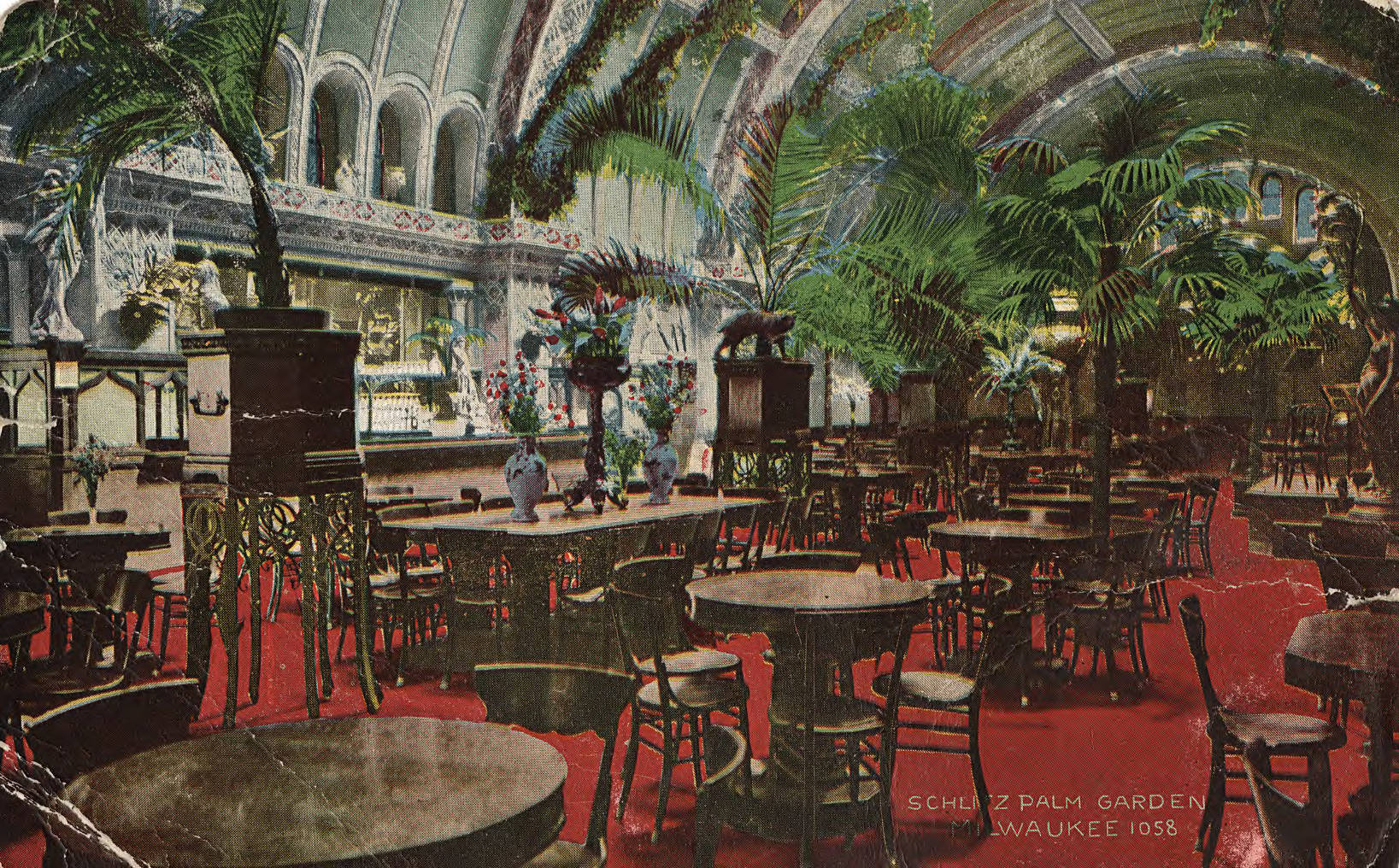
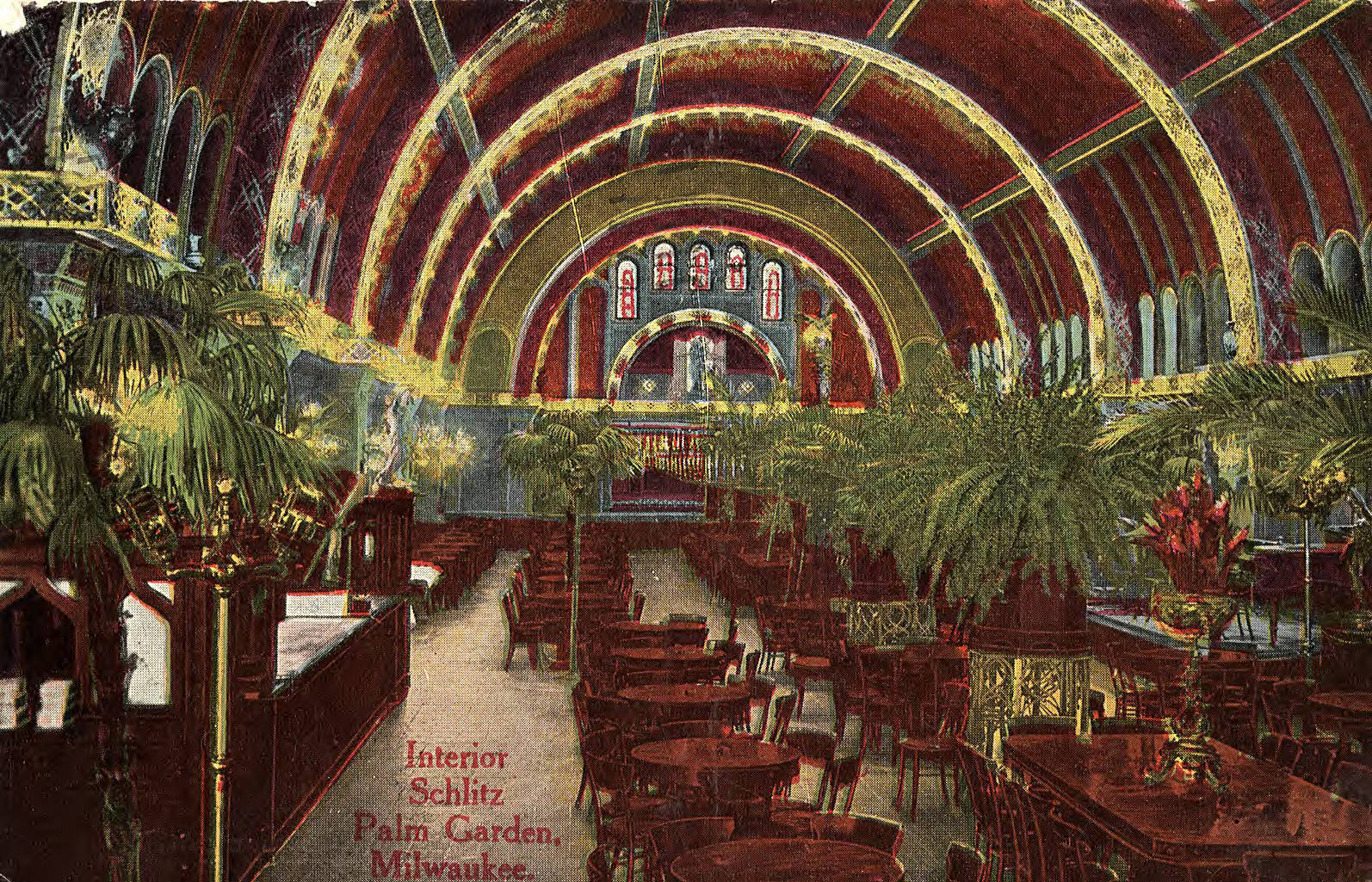
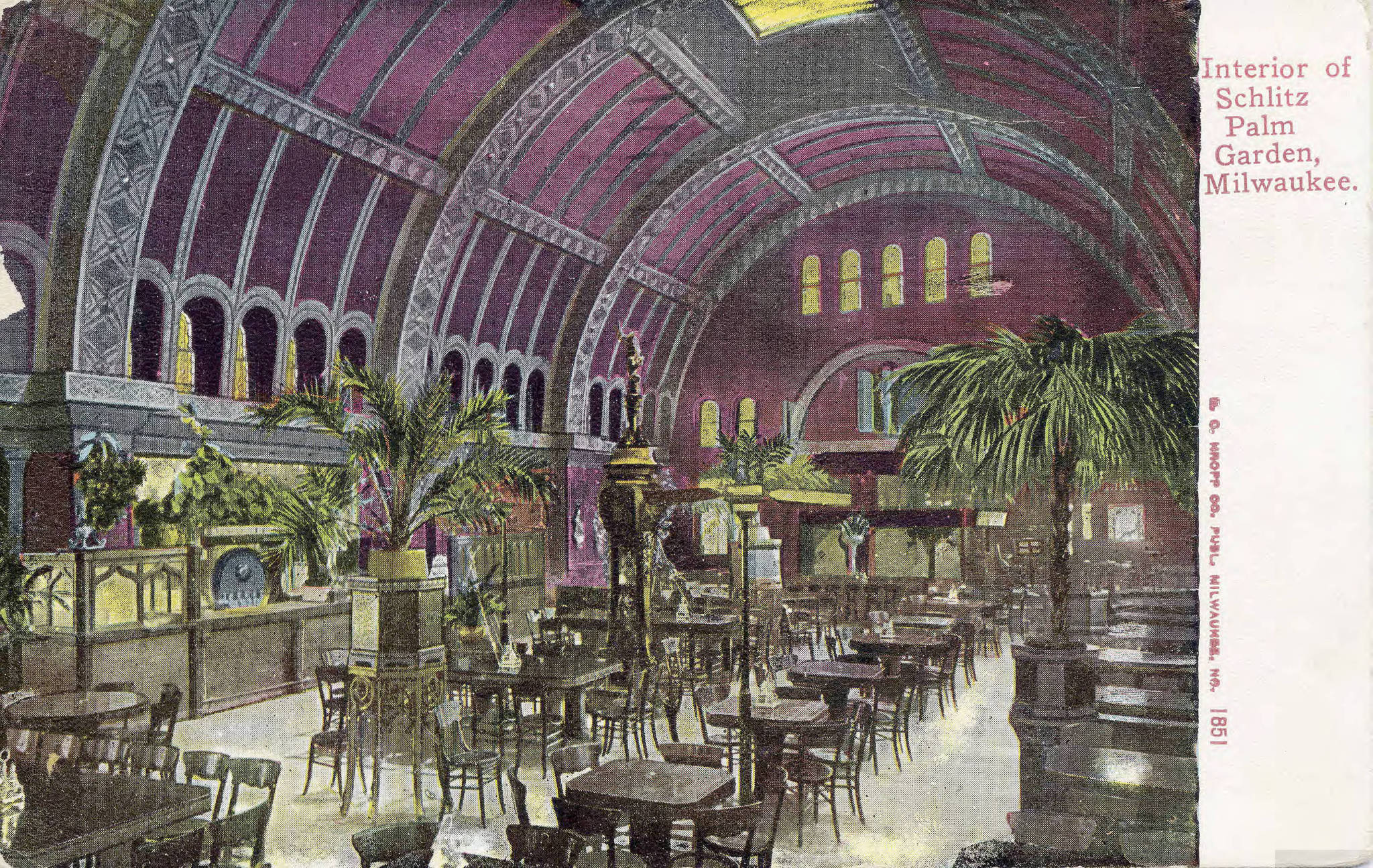
the garden, housed next to the schlitz hotel on grand avenue, was not only known for its nickel pints, but for its entertaining music. the lavishly decorated beer hall often served as a concert hall, accommodating local and internationally known orchestras and musicians. it was a place for generations to meet on a friday night, which has been resurrected in part during modern times for fish fries at the lakefront brewery’s palm garden room on commerce street.
the schlitz palm garden was a staple tourist attraction in milwaukee, as a mandatory stop for passengers aboard excursion boats on the river. the beer garden also attracted members of royal families as well as prominent businessmen and politicians, including visits from william mckinley and woodrow wilson — though, as the milwaukee journal pointed out, wilson declined to partake in a pint.
milwaukee’s beer industry had long been under attack by early temperance movements. carrie nation, on a visit to milwaukee in 1902 to promote temperance, was quoted in the milwaukee journal saying, “if there is any place that is hell on earth, it is milwaukee. you say that beer made milwaukee famous, but i say that it made it infamous.”
on that same visit, a group of young boys tricked nation into entering the schlitz palm garden, prompting her to warn the pranksters to stay away from such establishments, calling the beer garden “a foretaste of hell.”
prohibition impacted not only the local cultural scene, but also the local economy. at the time of prohibition, brewing represented the fourth largest industry in milwaukee with an annual output of over $25 million.
while the schlitz palm garden and nearly all of milwaukee’s 2,000 saloons met their demise, most breweries in milwaukee managed to stay open during prohibition, producing “near beer,” malt syrup, and soda pop. some breweries turned to unusual ventures: schlitz brewing company churned out chocolate bars, gettelman brewing made snowplows, and pabst brewing company manufactured cheese.
thirteen years later, the dry spell came to a close with the passing of the cullen-harrison act, allowing the sale of beer with an alcohol content of 3.2%. at midnight on april 7, 1933, over 100,000 milwaukeeans celebrated in the streets outside the seven main breweries to send off the first legal shipments of beer since the prohibition, including a delivery to president roosevelt with two cases of beer from each milwaukee brewery.