
22 Mar bldg. 51 museum’s collection of artifacts from burnham & root’s rookery building interior renovations
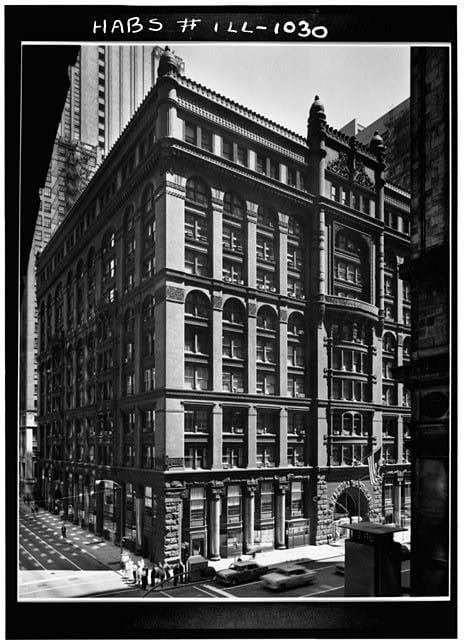
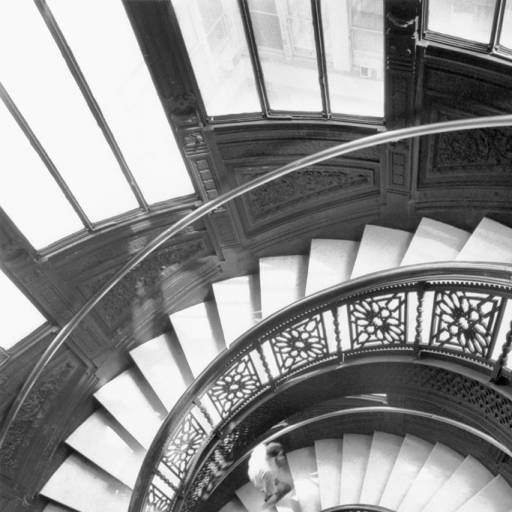
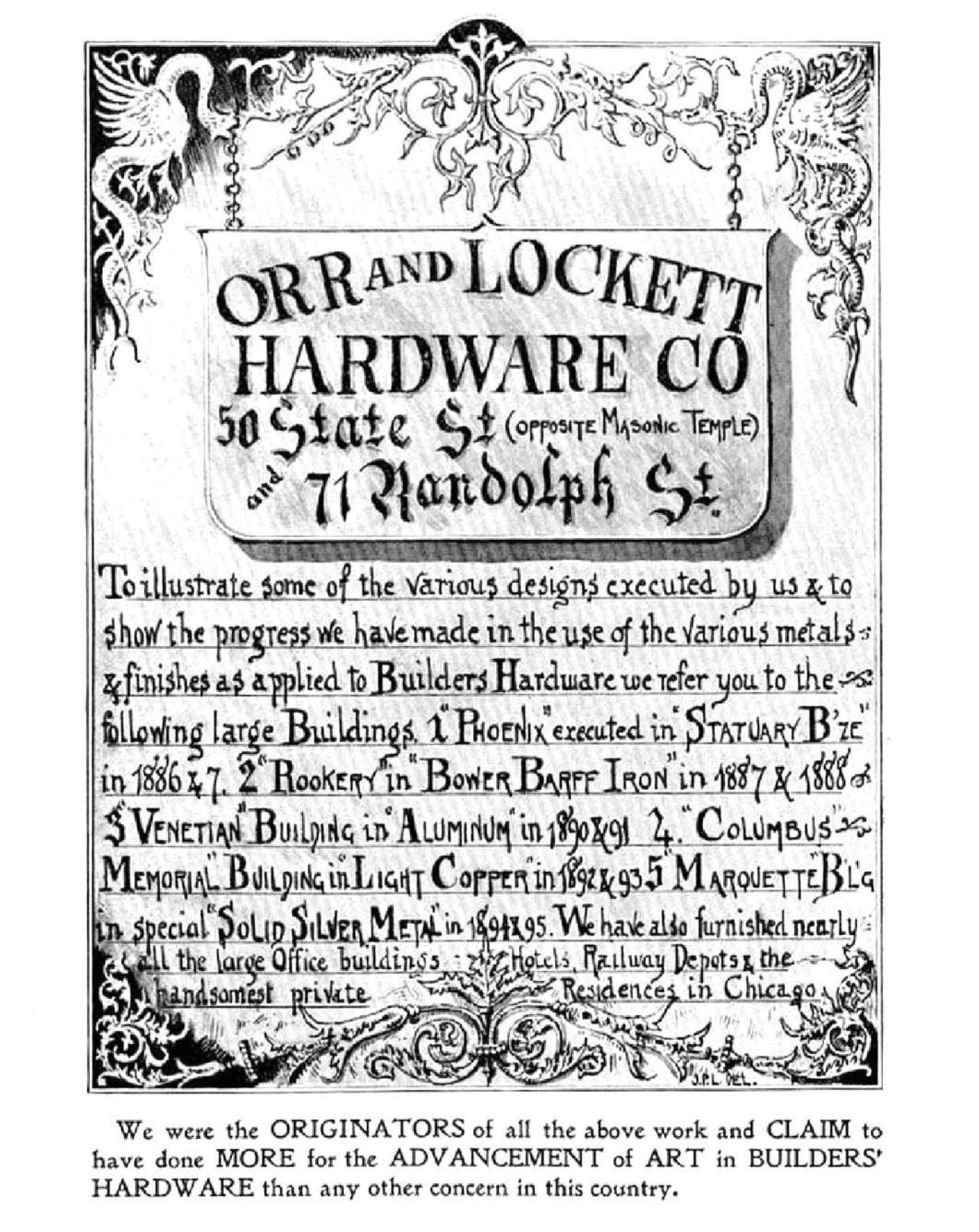
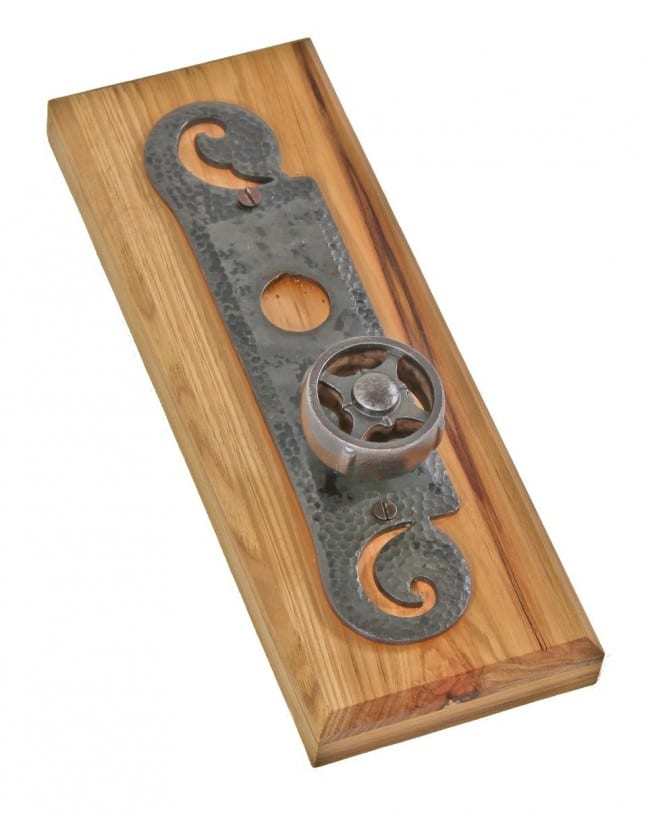
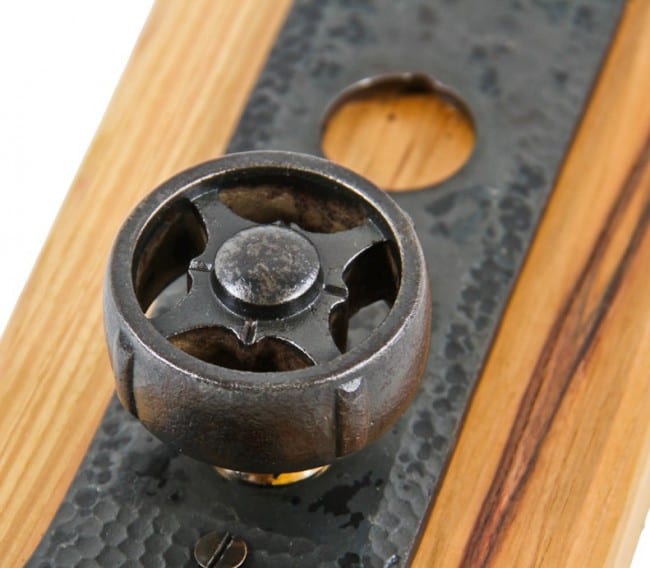
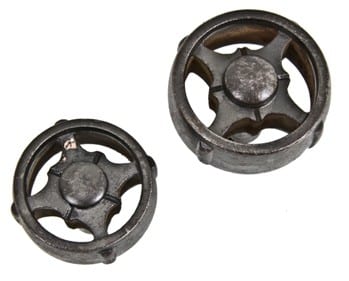
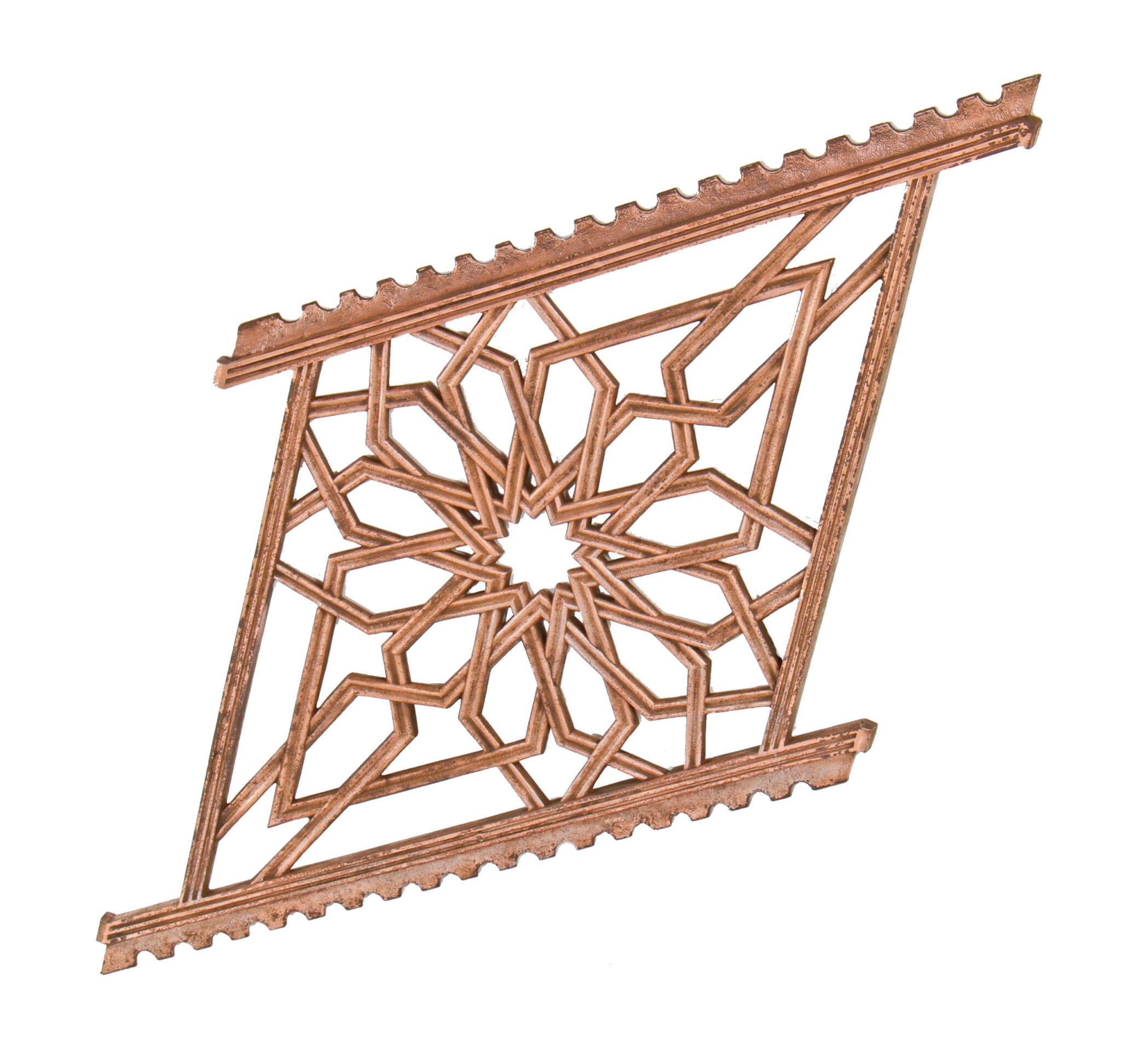
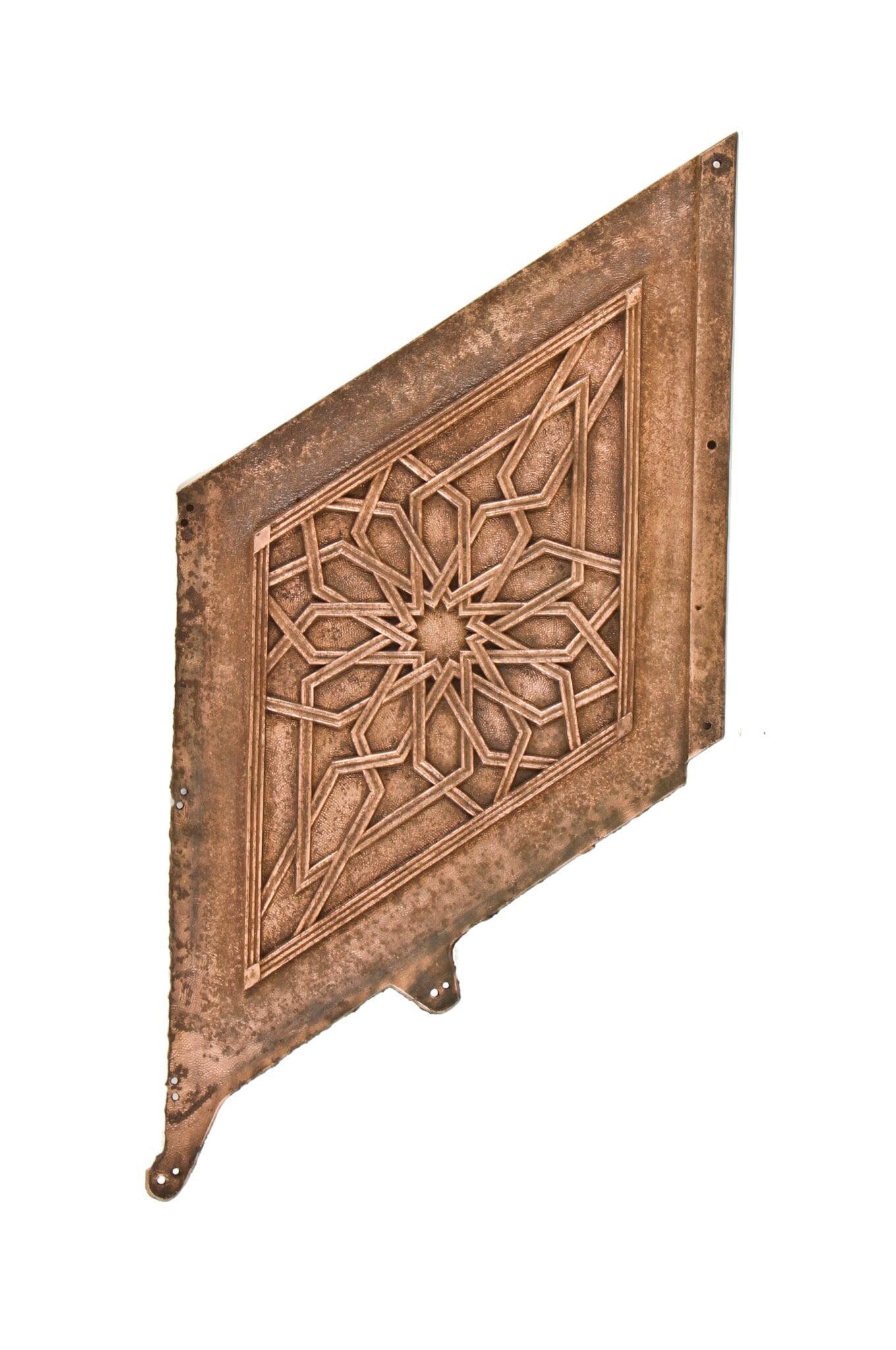
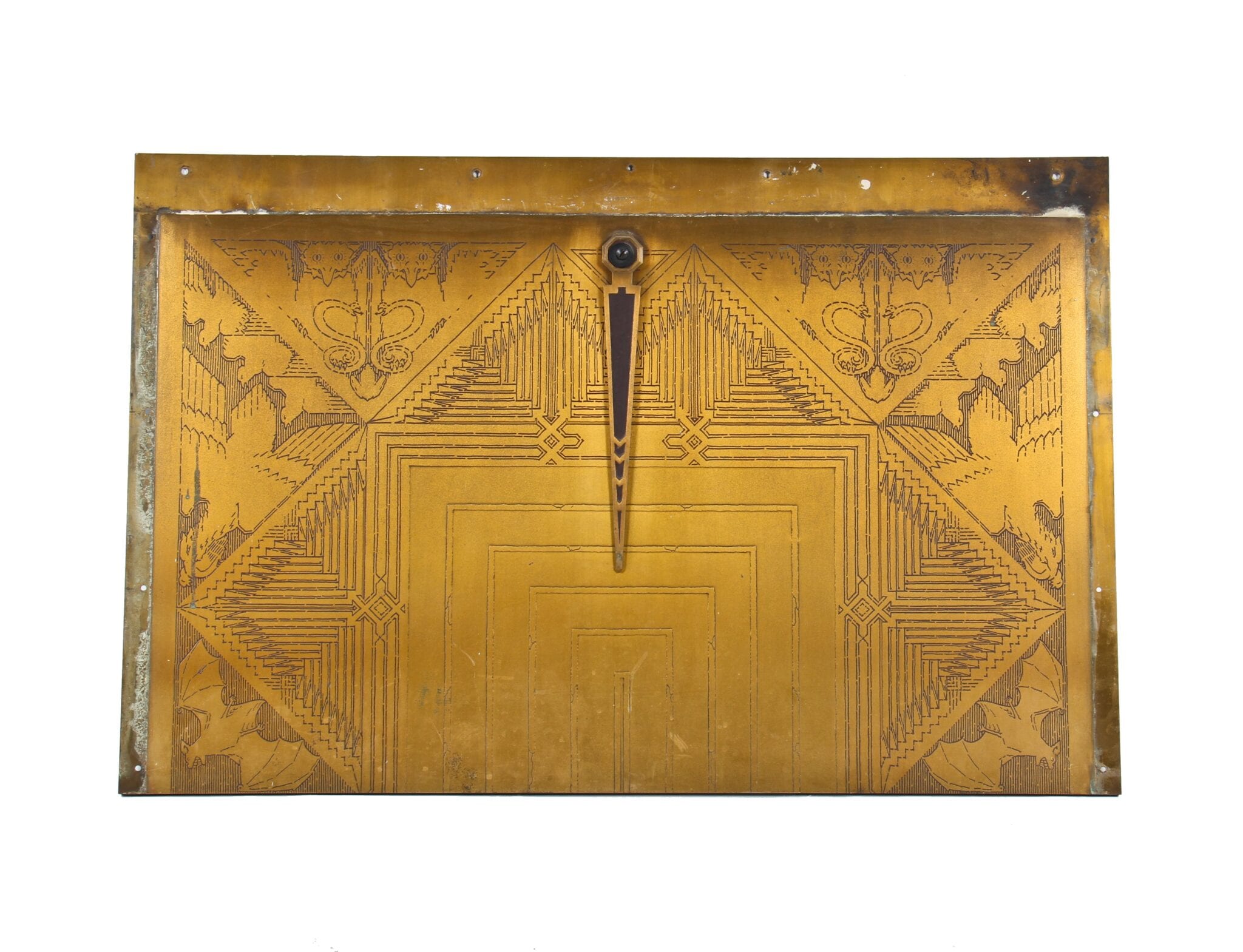
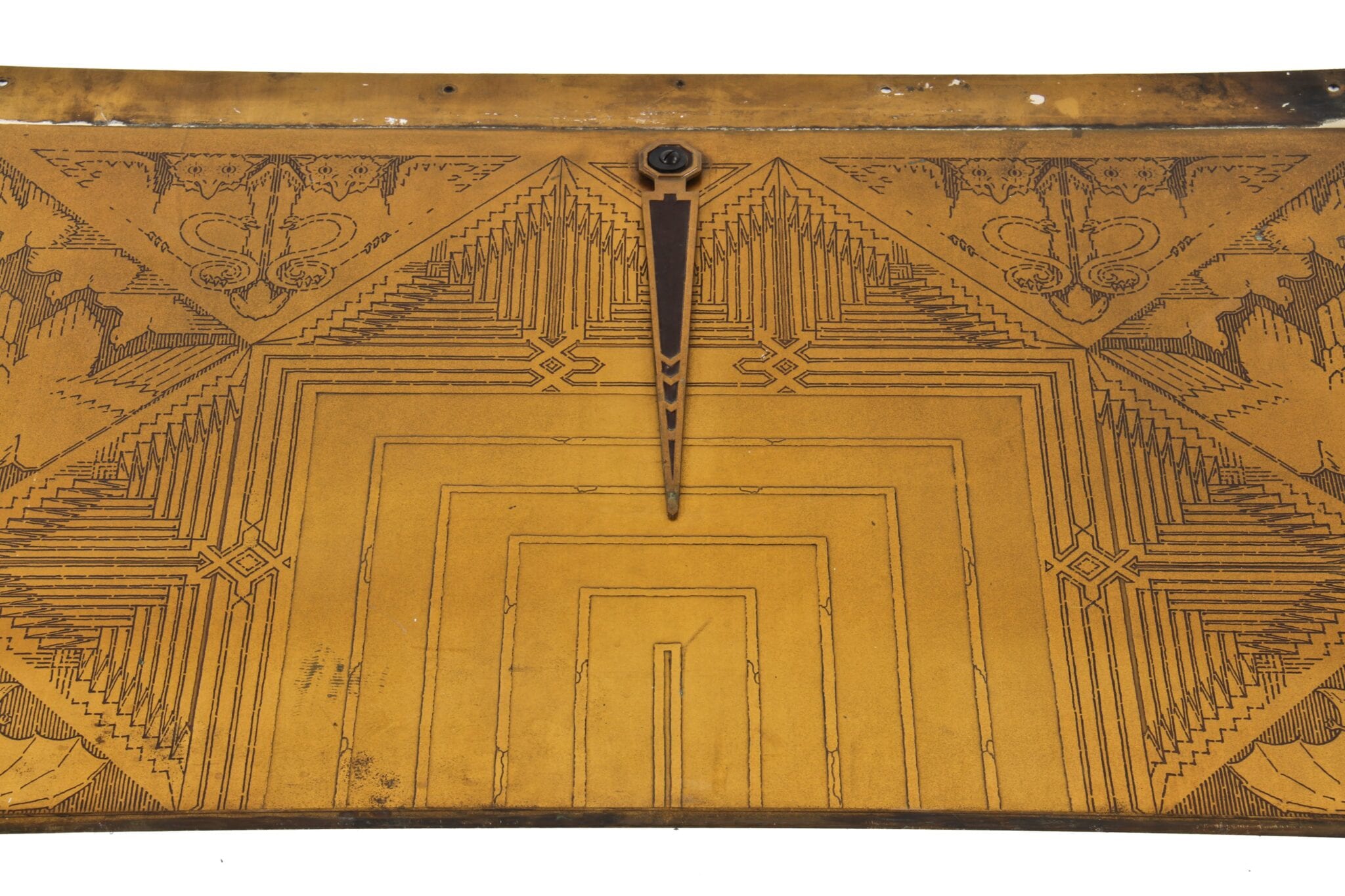
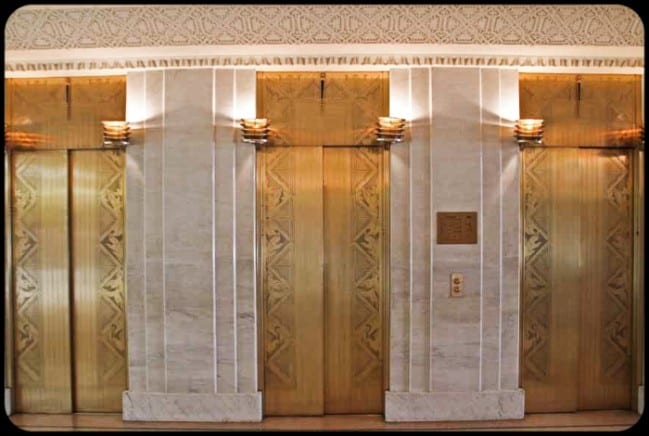
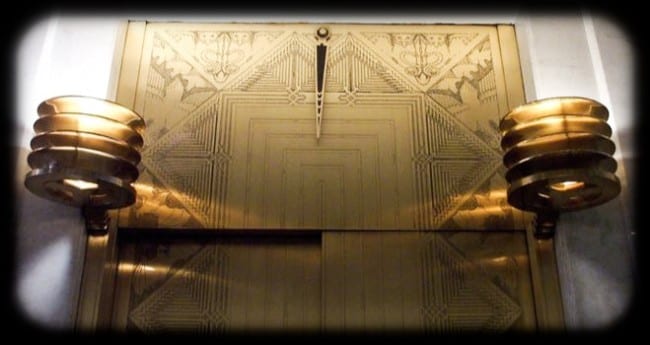
the extant historically important rookery building (1888), one of burnham & root’s top architectural masterpieces, has undergone three major renovations and/or restorations over the last century, whereby several exceptional artifacts were removed and made available through both public and private acquisition. a small assortment of these artifacts have been added to the the bldg. 51 museum collection over the past several years. the artifacts include, but are not limited to, original office door hardware fabricated by yale & towne and finished in bower-barff, root-designed copper-plated cast iron interior staircase baluster panels, spindles and risers removed from the adams street entrance, and oversized etched wrought brass elevator panels from the second major renovation undertaken by william drummond during the 1930’s.
the rookery is a well known landmark in chicago’s financial district, a technologically groundbreaking and ornate example of chicago school commercial architecture.
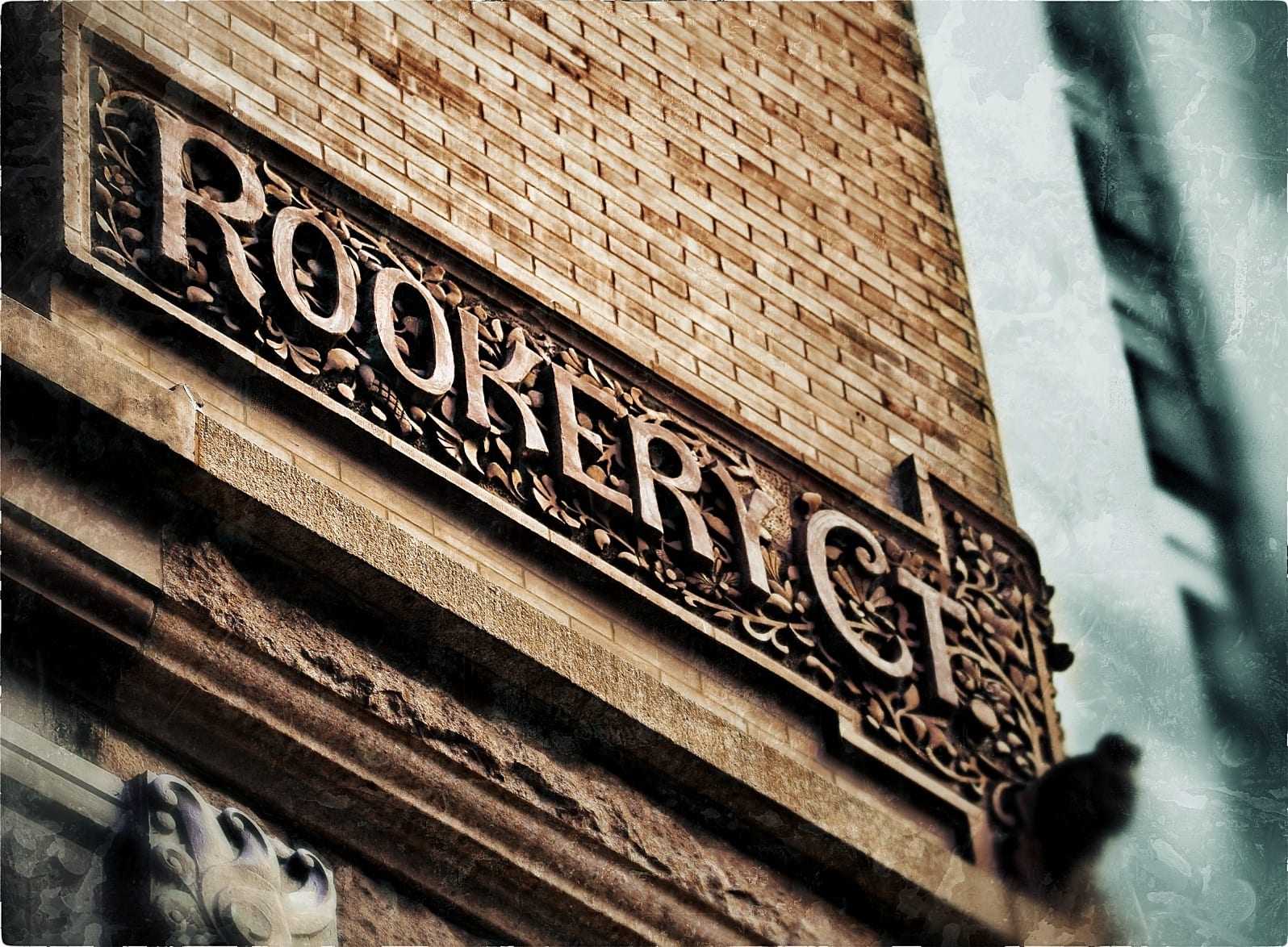
its designers aimed for a structural expressiveness that exposed its construction while also being highly decorative. the namesake derived from the prior city hall building on the site, nicknamed the ‘rookery’ for the many crows and pigeons living in its exterior walls (as well as for the crooked politicians inside).
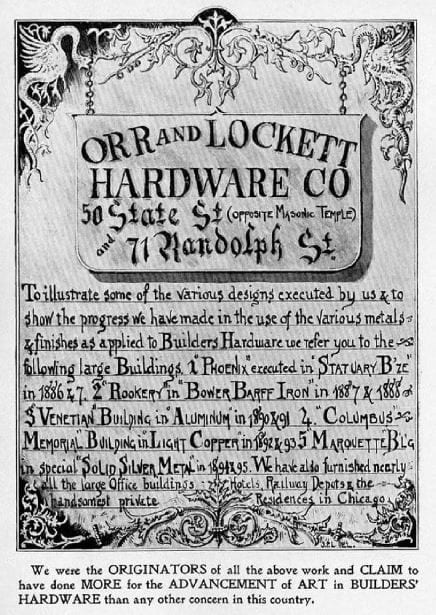
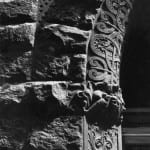
ultimately, the finished office building covered 350,000 square feet, made up of 11 stories with over 600 offices, serving 4,000 employees on a daily basis. the rookery was only the fifth commercial building commissioning burnham & root, and the architects almost immediately established their office on the 11th floor of the building, complete with library, drafting rooms, office, bath and printing facilities.
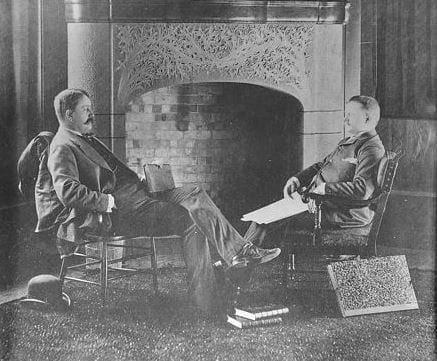
the site itself had played host to a makeshift city hall after the chicago fire, built by the city’s first architect, john mills van osdel. directly across the street, william lebaron jenney constructed the world’s first metal-framed skyscraper a little over a decade later, in 1884 — the home insurance building. the rookery was thus built in close proximity to buildings of a connected lineage. there were also abundant social connections that led to the confluence of architectural firm and building design at that location. firstly, daniel burnham had worked in 1867 as a draftsman in the firm of william lebaron jenny, and this catalyzed his passion for the field of architecture. burnham had also made important contacts, leaving chicago around 1869 for a stint of time prospecting in nevada, a relatively new territory in the union; during this time he forged a close relationship to the developer edward carson waller, who would financially back both the home insurance building and the rookery.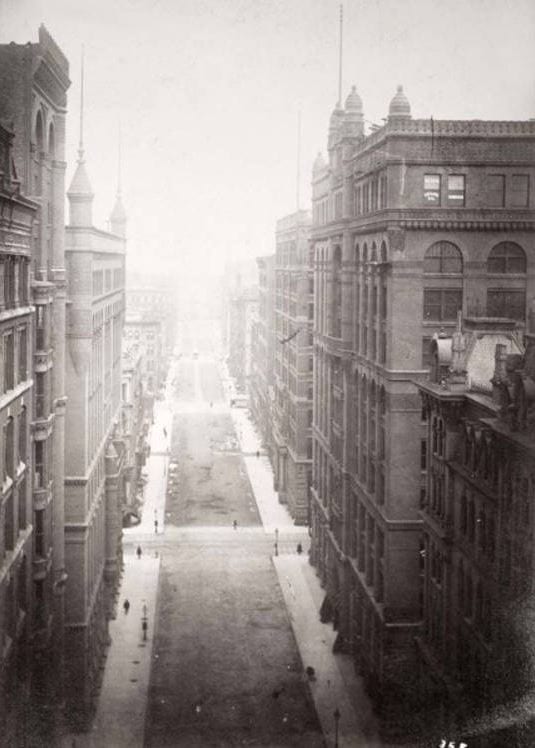
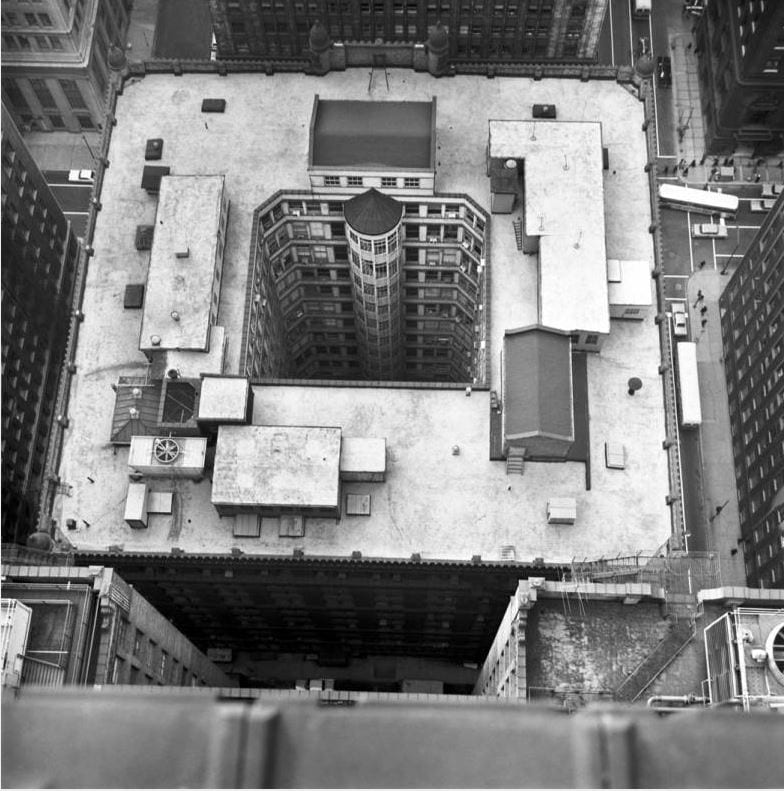
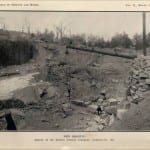
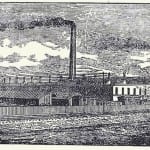
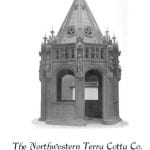
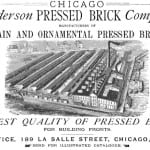
the rookery transformed the corner of lasalle and adams with a building of hybrid construction–with masonry walls on the outside and a metal frame supporting the walls of the light court within. the enormous weight of the building was supported by an innovative “grillage” foundation system designed by root, entailing use of iron rails laid in a crisscross pattern and encased in concrete, that would “float” over chicago’s soggy soil and disperse the weight of the structural columns. the romanesque facade was symmetrical in design and topped with castle-like tourelles. brick was provided by the famous chicago anderson pressed brick company, which had sprung up in the aftermath of the chicago fire (as many searched for alternative materials for building, j.c. anderson filled the demand by producing pressed brick in the region, and ornamental pressed brick that was at least half the cost of terra cotta). terra cotta trimmings, augmenting the rookery’s brickwork, were produced by northwestern terra cotta company, together beaming a reddish tan that was embellished at the parapet wall with abstract foliage motifs, interlocking ribbons and swags. much of the rough hewn granite used on the facade, including in the archway over main doorways, was quarried by the syenite granite company in missouri, its stone being colored red or dark pink with motteld gray and black (the red shades due to feldspar, and containing smoky quartz).
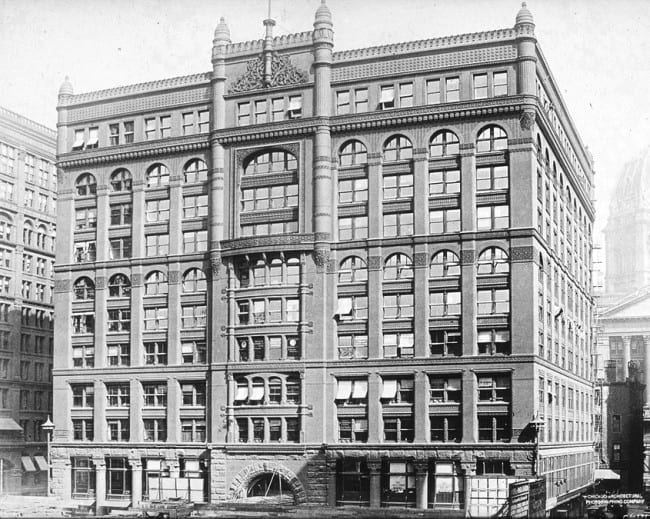
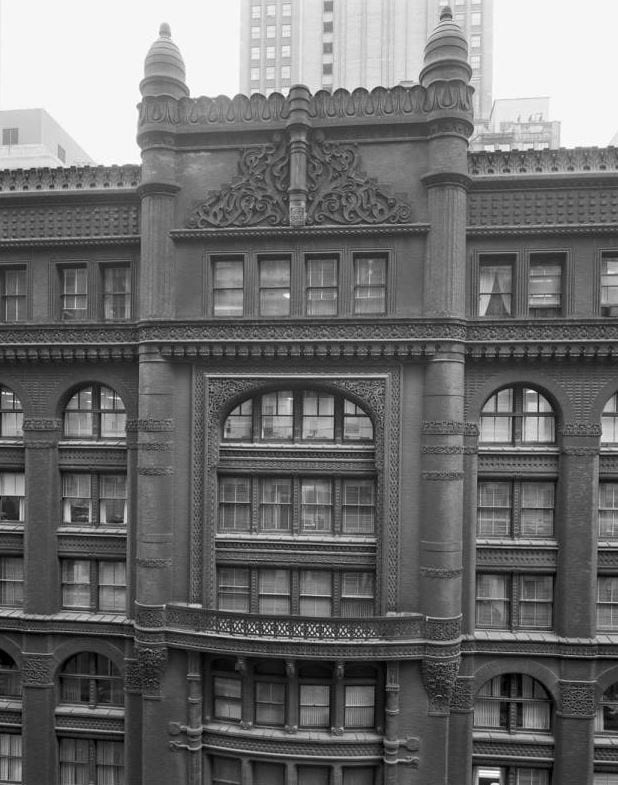
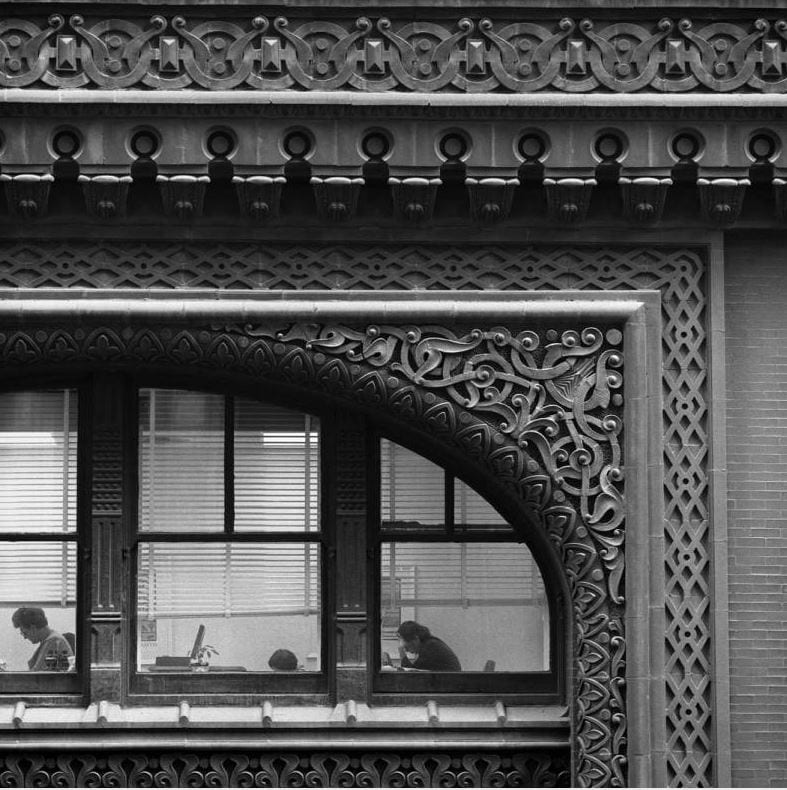
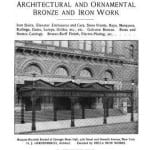
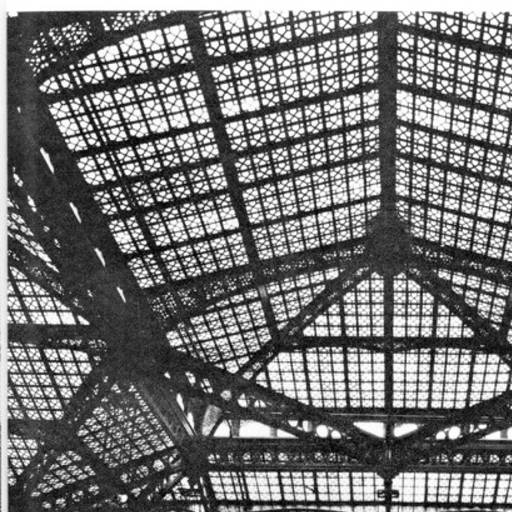 inside, the building also featured passenger elevators, fireproofing, plate glass and electrical lighting. the light court was the most impressive feature, maximizing natural light at a time when coal smoke and pollution weighed heavy on the city, and lighting technologies rarely produced enough ambient light (electricity was just beginning to become an economical choice). this atrium area also features john root’s oriel staircase, clad with decorative elements fabricated by hecla iron works in brooklyn, new york.
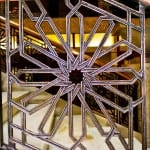
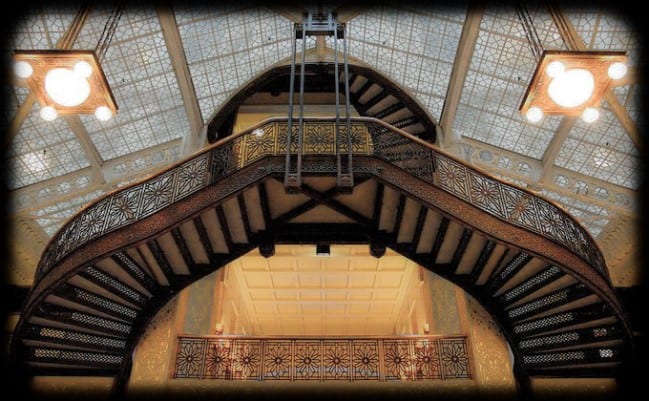
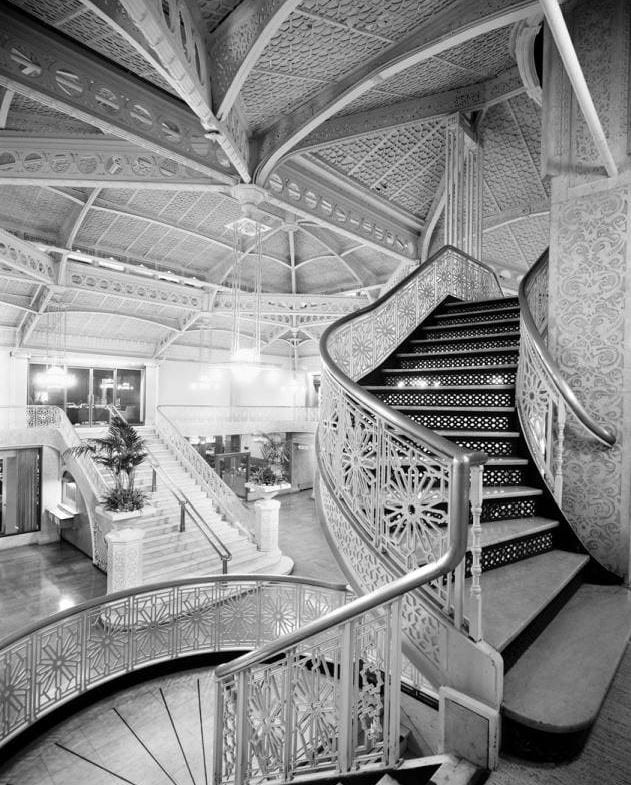
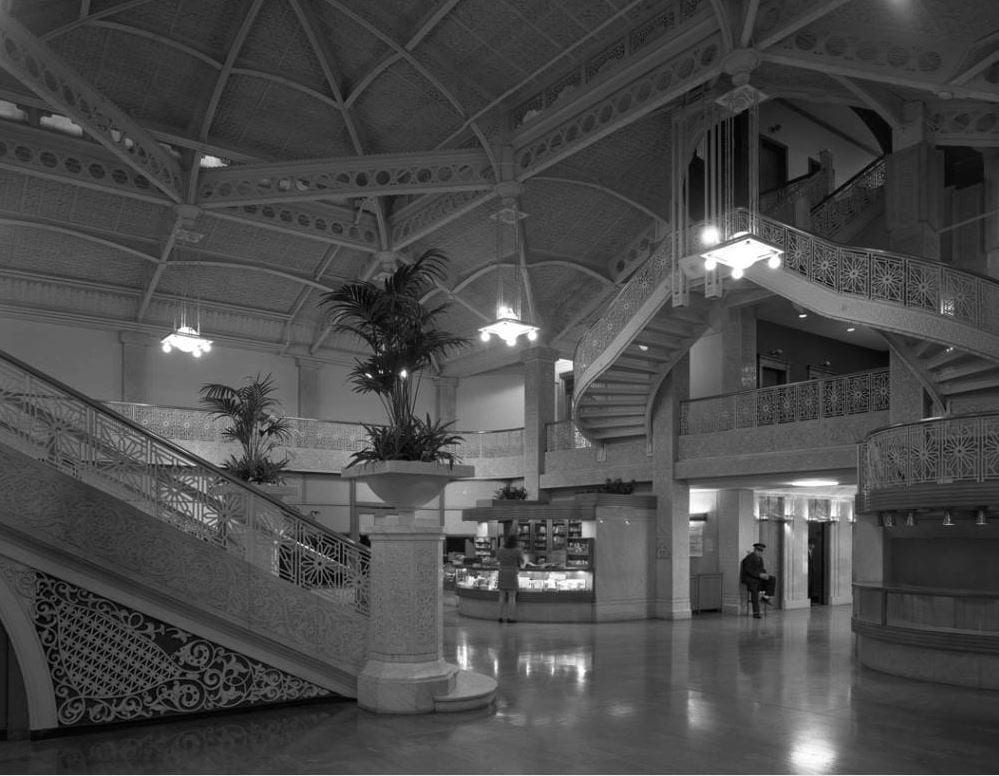
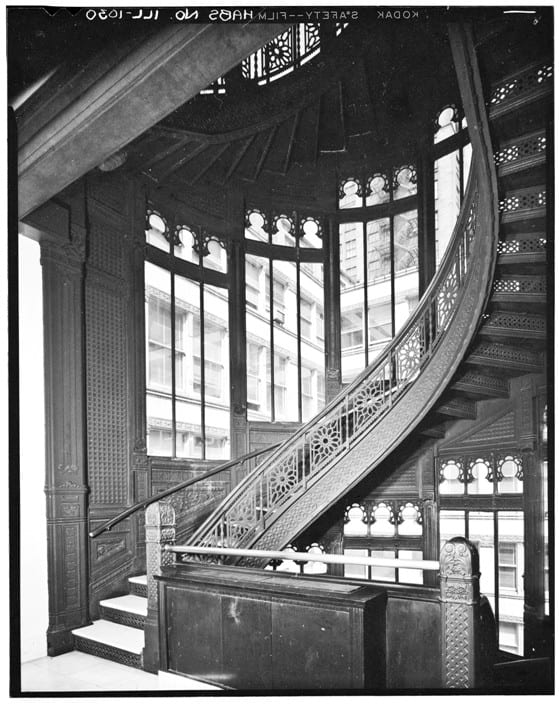
in 1905 edward waller hired frank lloyd wright (who had an office in the building for a time) to remodel the rookery’s interior, and update the design, with attention to the light court and lobbies. the remodeling was sensitive to root’s original design and enhanced these areas by encasing original columns in white marble, replacing most of the elaborate ironwork with simpler geometric ironwork, replacing electroliers that flanked the main staircase with white marble planters on simplified piers lit by pendant lighting, and adding massive geometric urns to the adams street lobby. twenty six years later, william drummond would complete the second renovation, with more extensive remodeling of the lobbies and second floor. mechanical systems were modernized alongside a re-designing of the elevator lobbies and entrances. drummond’s renovation introduced art deco aesthetics to the interior, such as etched bronze elevator doors designed by annette byrne. he also removed the double stairways and divided the lobby into separate floors. in the same manner as wright, he covered any exposed surface with marble, gilded and incised with stylistic bird motifs.
the third renovation undertaken in 1992 meticulously restored the building to its 1905 condition. today, the rookery is considered the oldest standing high-rise in chicago.