
16 Jun the death and regeneration of the chicago athletic association building’s stalactite ceiling
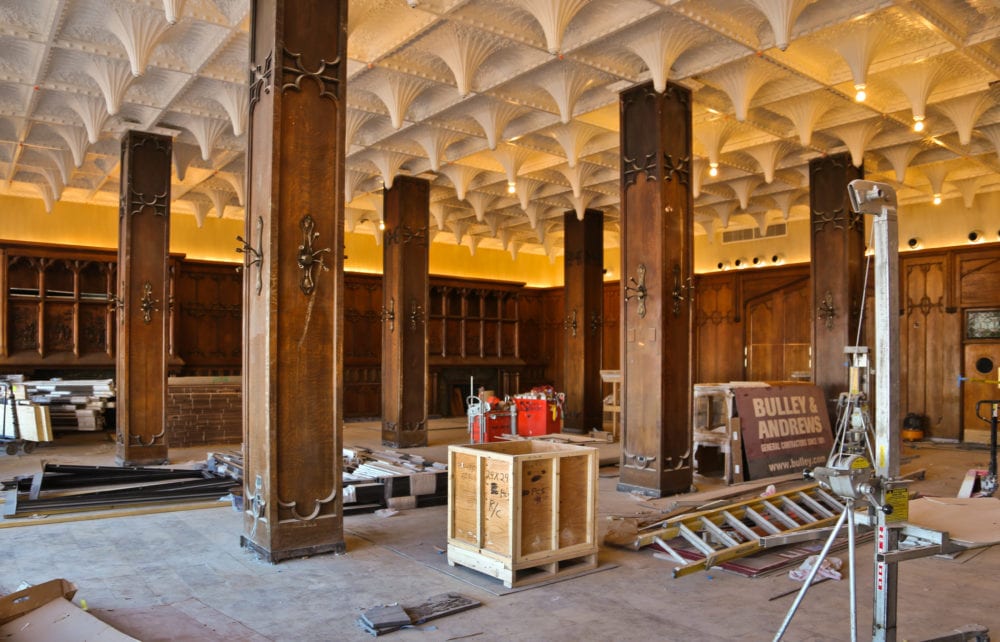
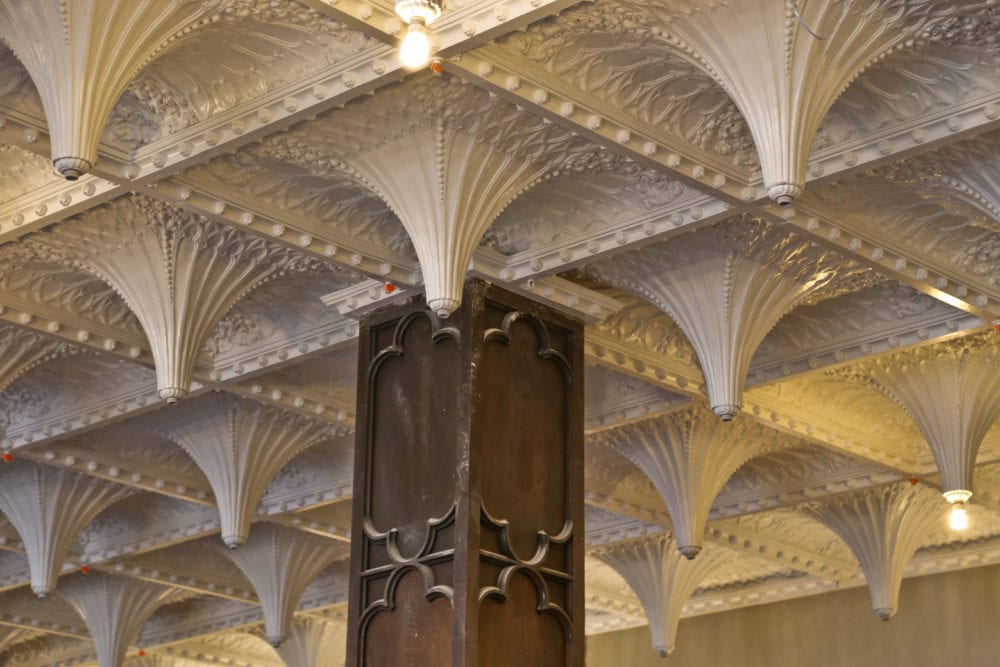
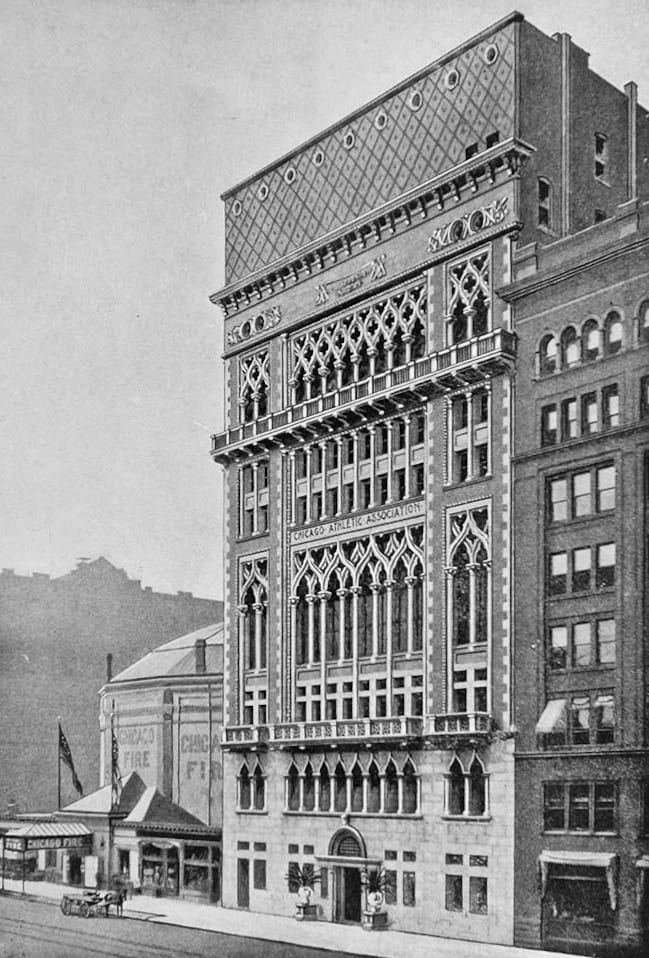
one of the most visually striking and architecturally distinctive features within notable architect henry i. cobb’s chicago athletic association building (1893) is the highly detailed, tracery-laden “drooping tip” cast plaster ceiling, comprised of interlocking gridded panels reinforced with metal mesh cones and illuminated with single incandescent “bare bulb” lights accentuating the tips.
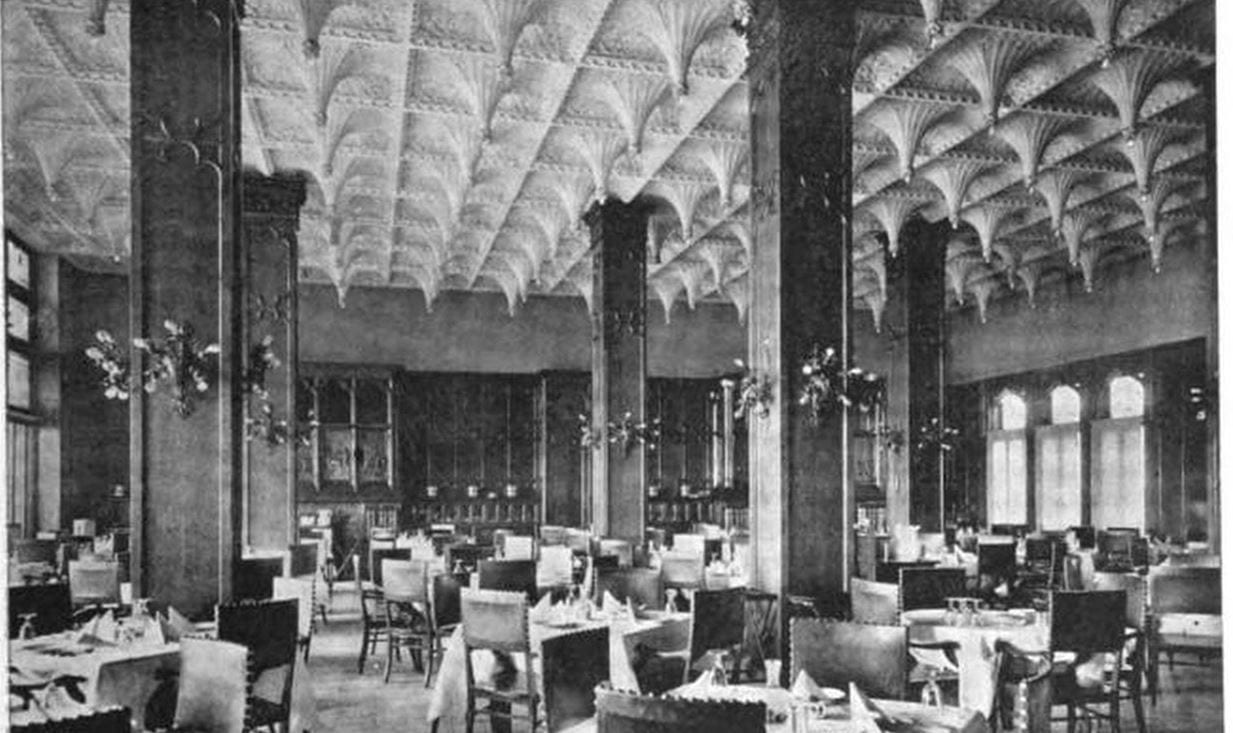
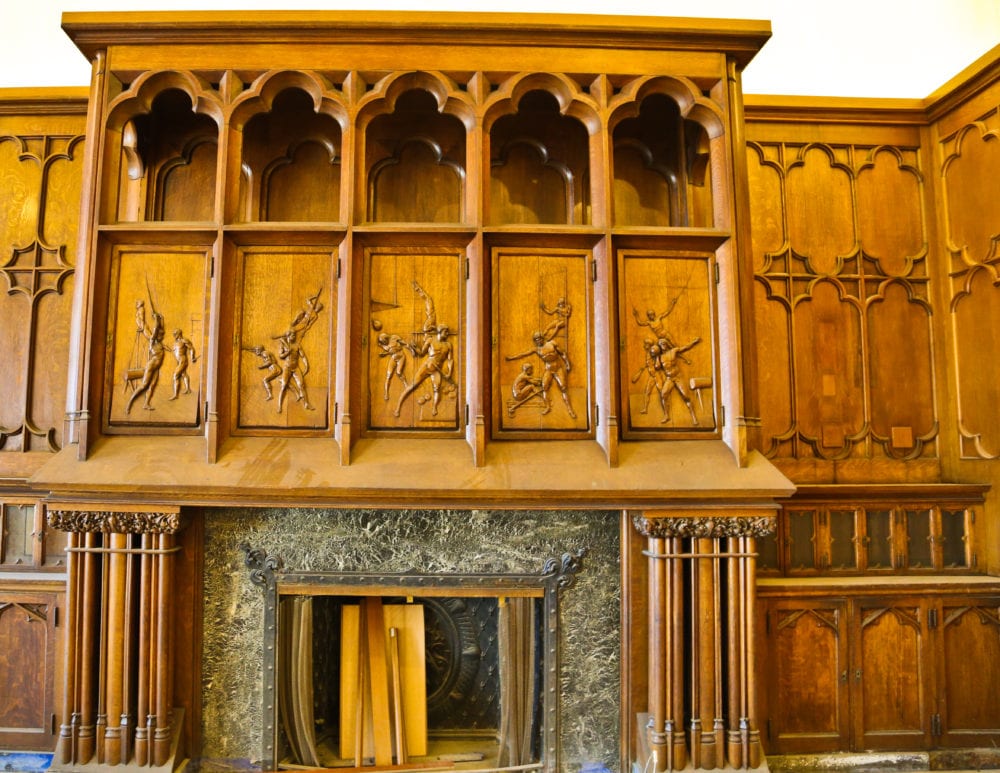
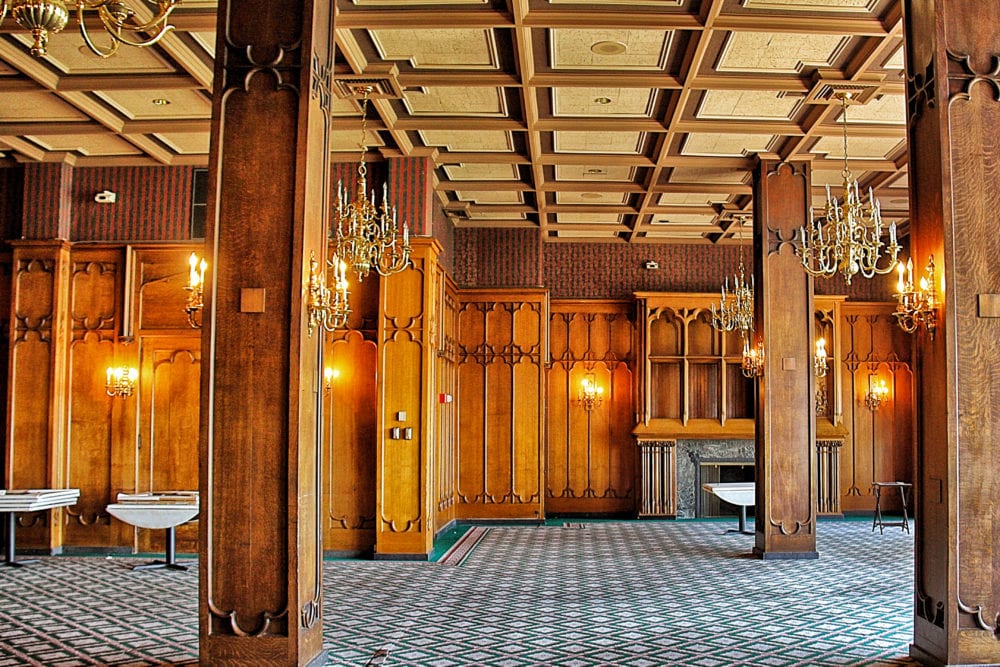
the ornamental ceiling (reconstructed in 2015) is located on the building’s 8th floor, in the spacious (6400 sq. feet) dining room, which like the reading room on the 2nd floor, was finished with quartered oak wood doors, columns, paneling and three gargantuan fireplace mantles replete with intricately carved cabinet doors.
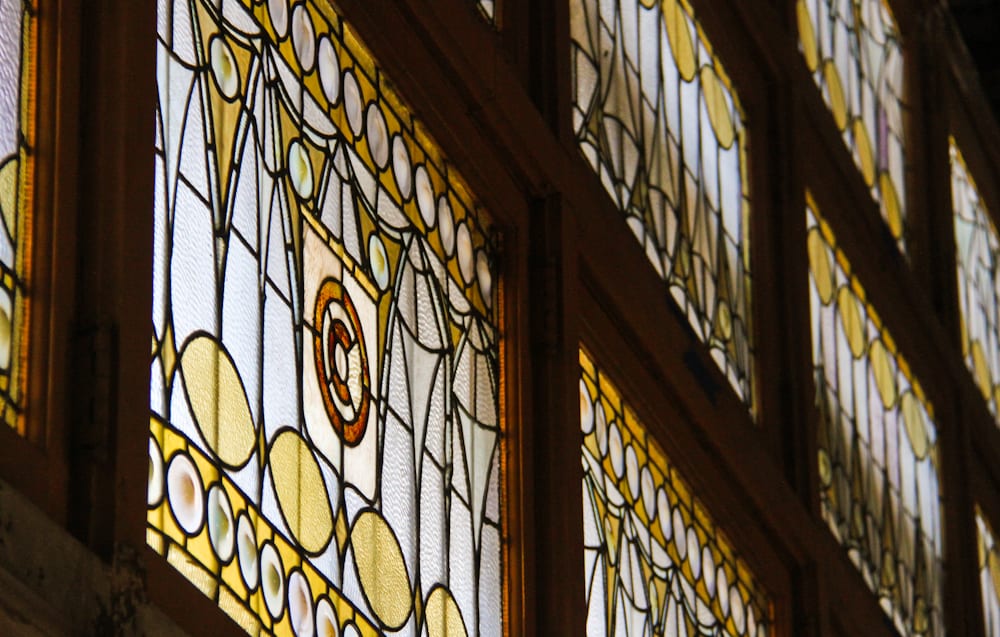
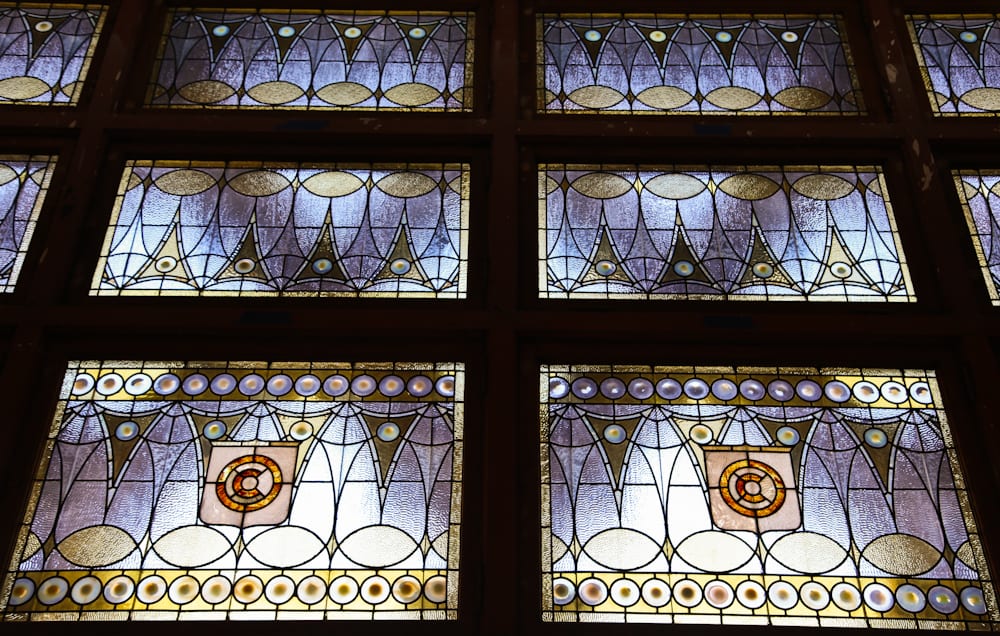
the highly unusual dining room “stalactite” ceiling was given a basic white paint finish, which may have been a “nod” to the 1893 columbian exposition’s “white city.” the room’s east wall is stacked with brilliantly colored, monogrammed variegated art glass windows (executed by chicago decorators healy & millet) likely designed to wash the neutral-colored ceiling with an array of colors that danced along to the movement of sunlight throughout the day.
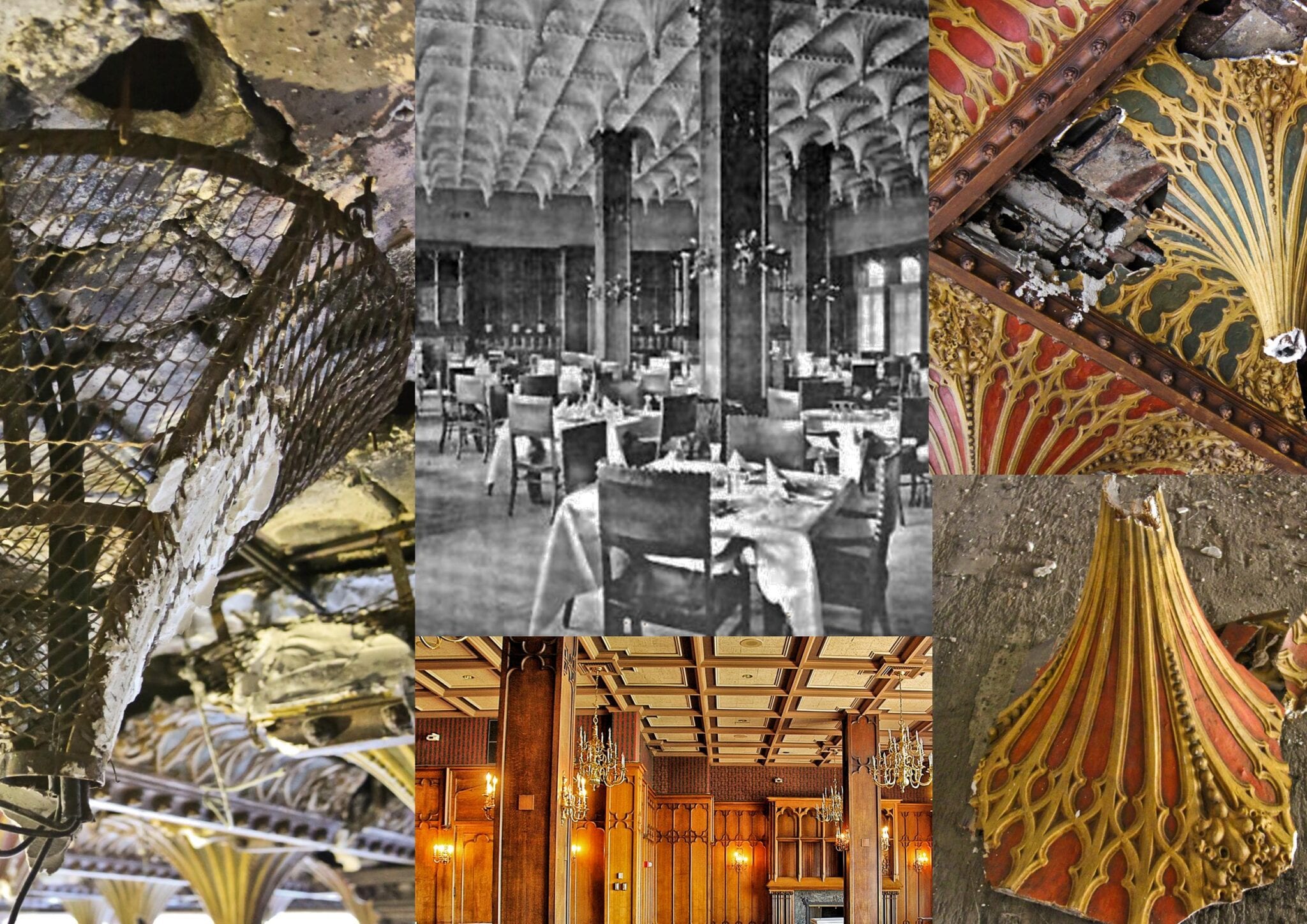
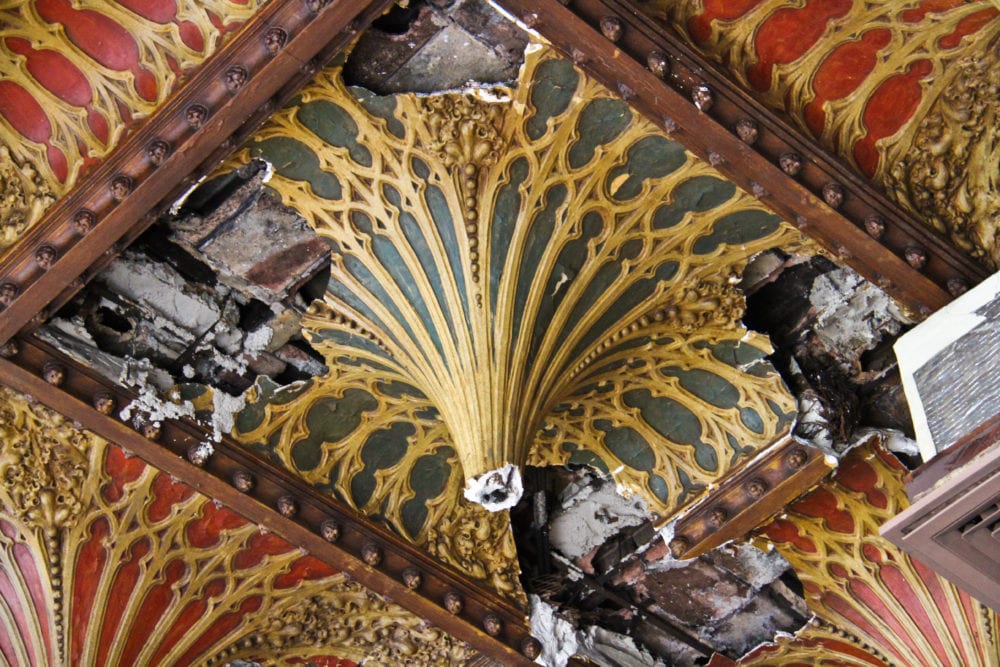
when the ceiling (or rather, what was left of it) was rediscovered under multiple drop ceilings during the building’s extensive transformation, the panels were found badly damaged and finished in an alternating red and green polychromatic paint scheme, which likely happened when the annex was added in 1907 (research still ongoing). untouched for several decades, the colors (second and last paint layer) were both lively and nicely aged, with an allover crazed and darkened finish.
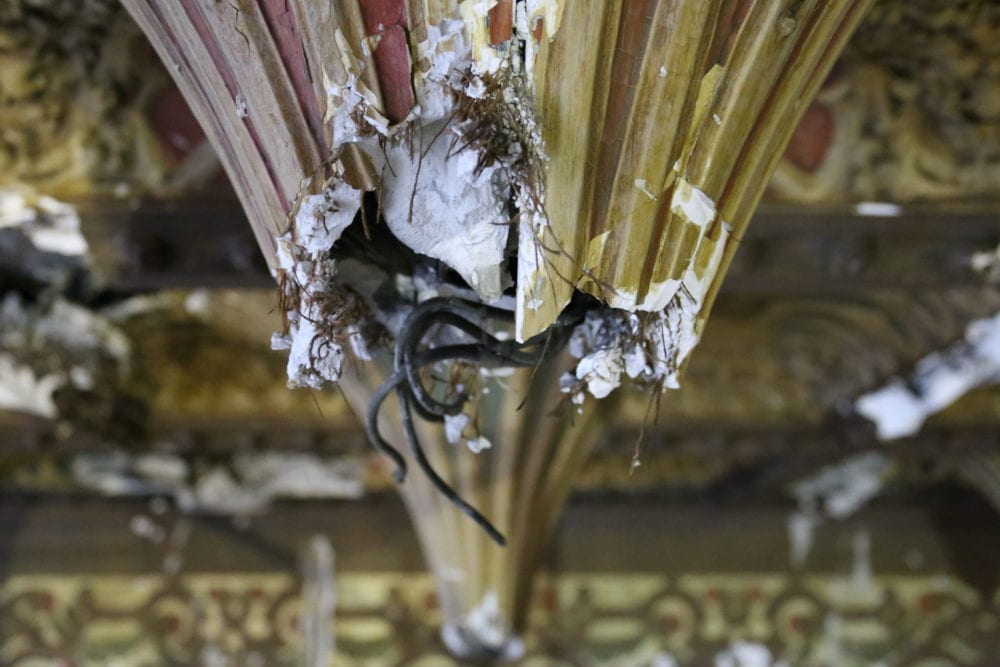
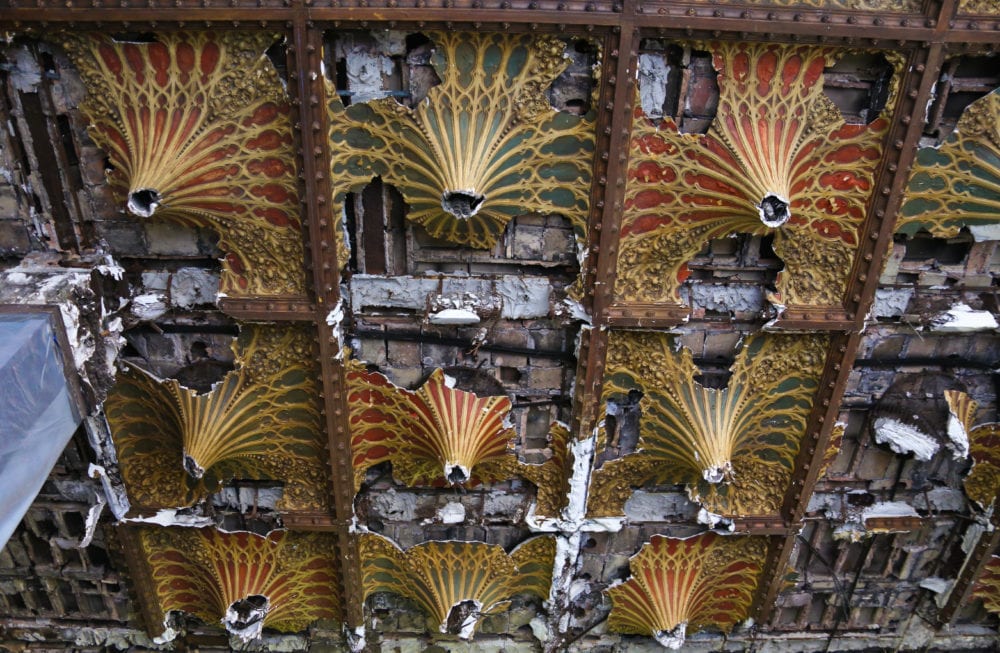
sadly, when the acoustic tile false ceilings were added, perhaps as early as the 1930’s, the decorative “drooping tips” were severed, leaving exposed cloth cords dangling from fragmented plaster panels that had to be replicated and replaced. plasterers were once again brought onboard, employing materials and methods similar to those used by 19th century tradesmen.
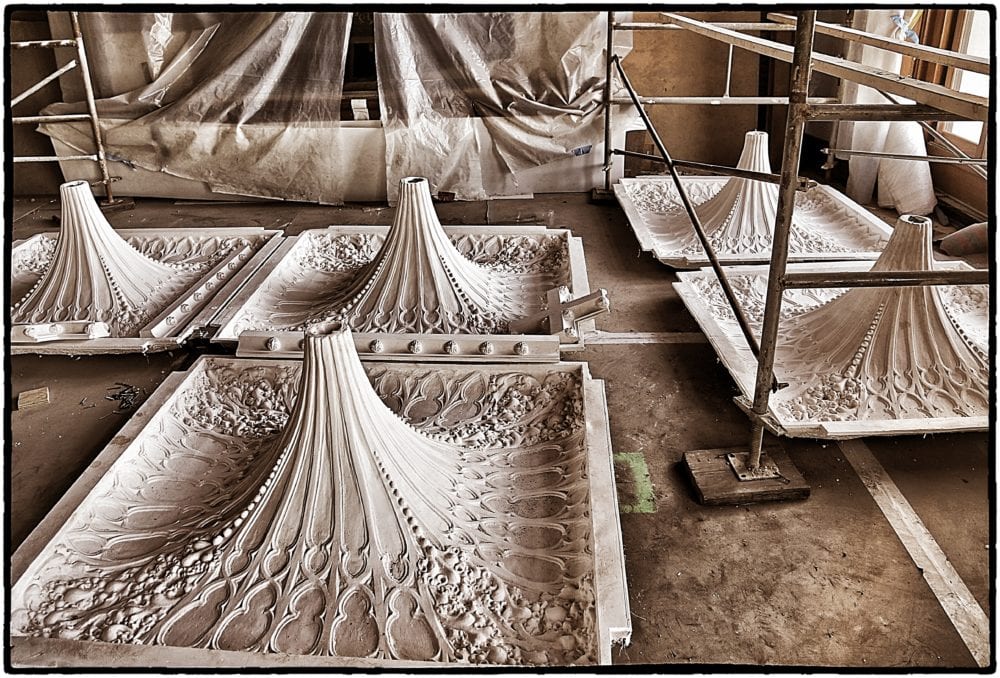
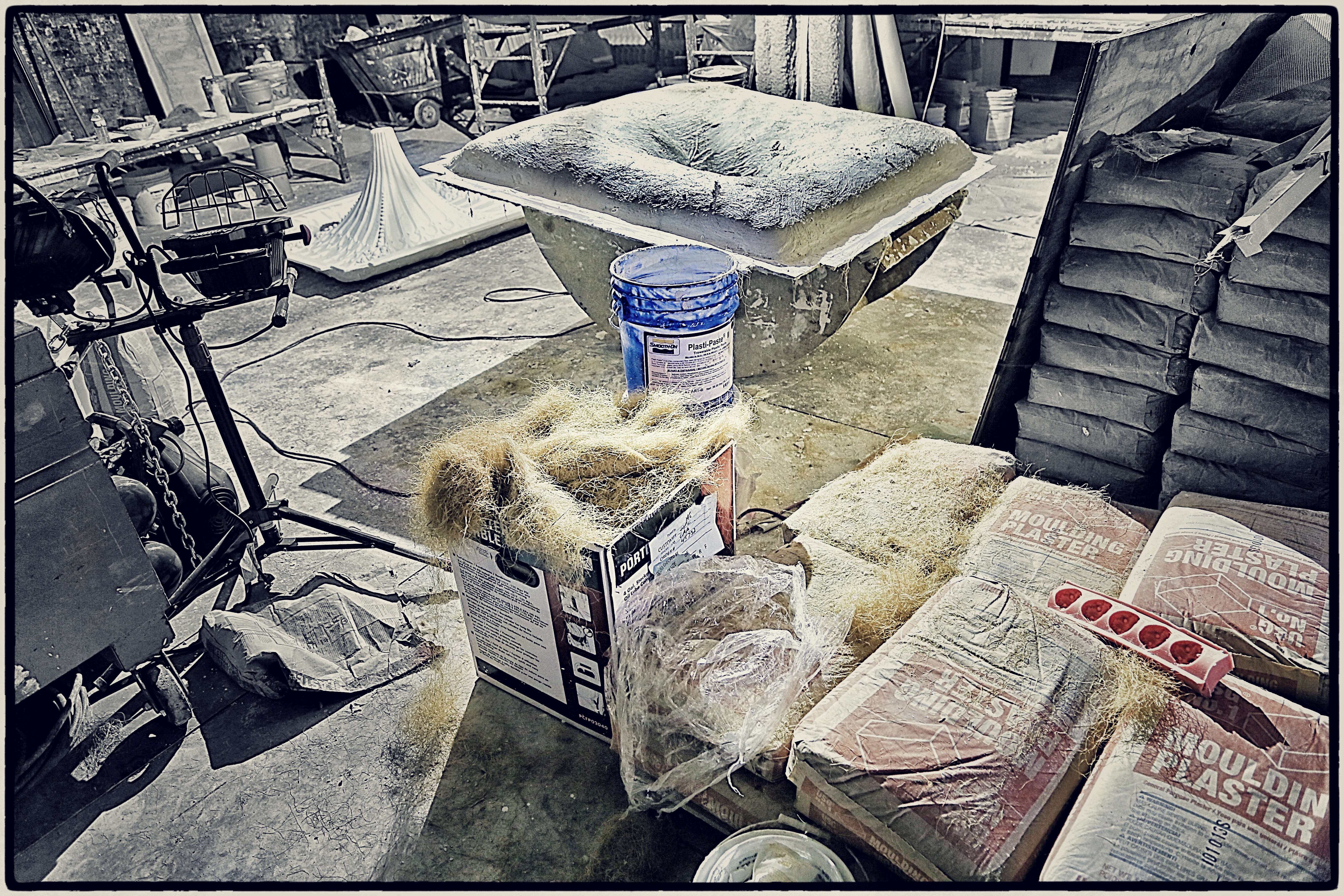
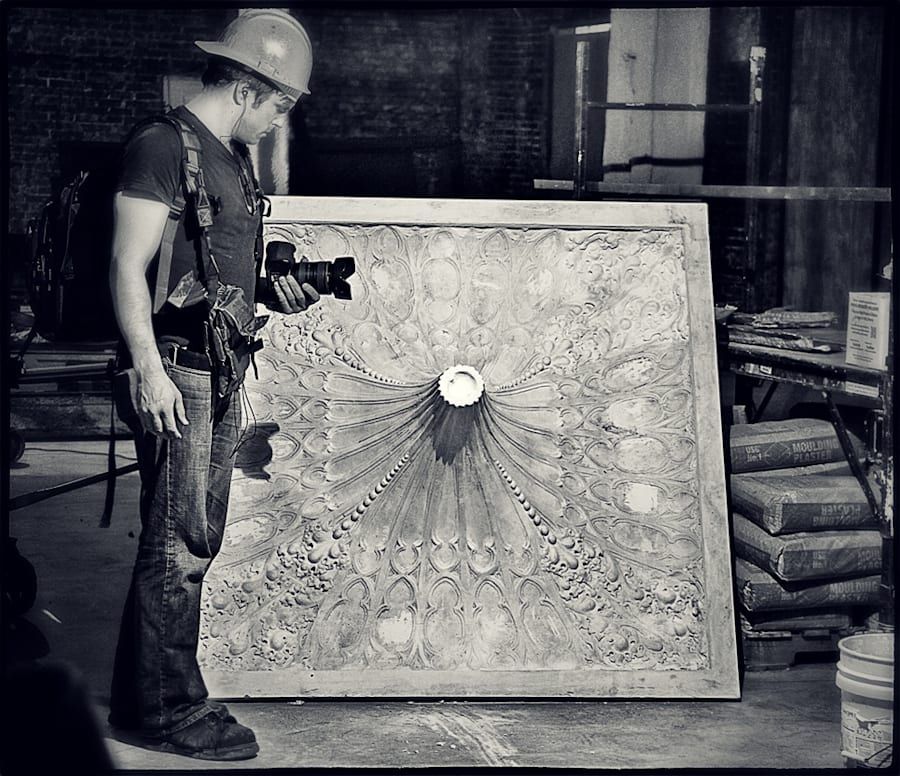
the degree of historic accuracy was achieved by carefully extracting and dissecting a few of the most intact examples to create a mold and replicate the panels (with the intention of illuminating them once again, with single socket incandescent lighting). while the originals incorporated conical-shaped wire mesh to uphold the structural integrity of each cone, advanced technology prevented the need for this device in the newly cast ones.
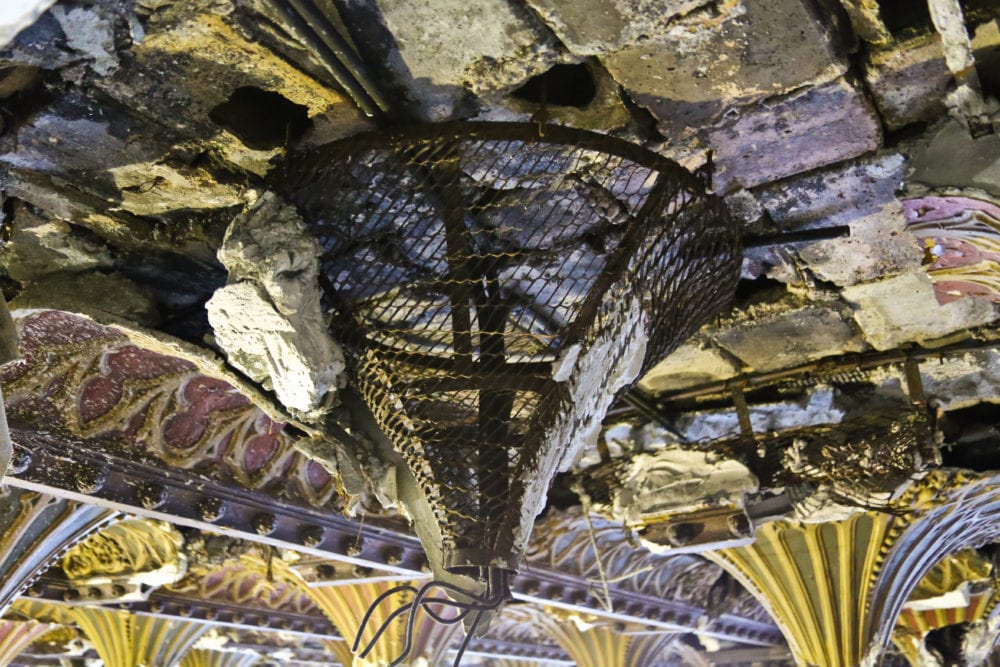
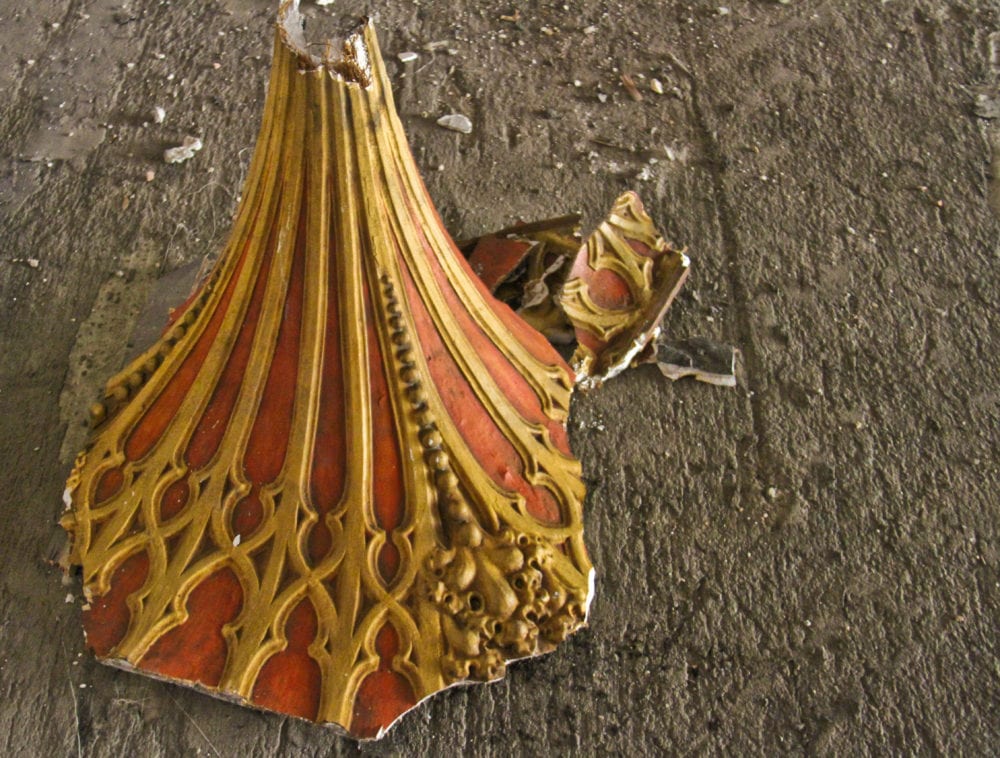
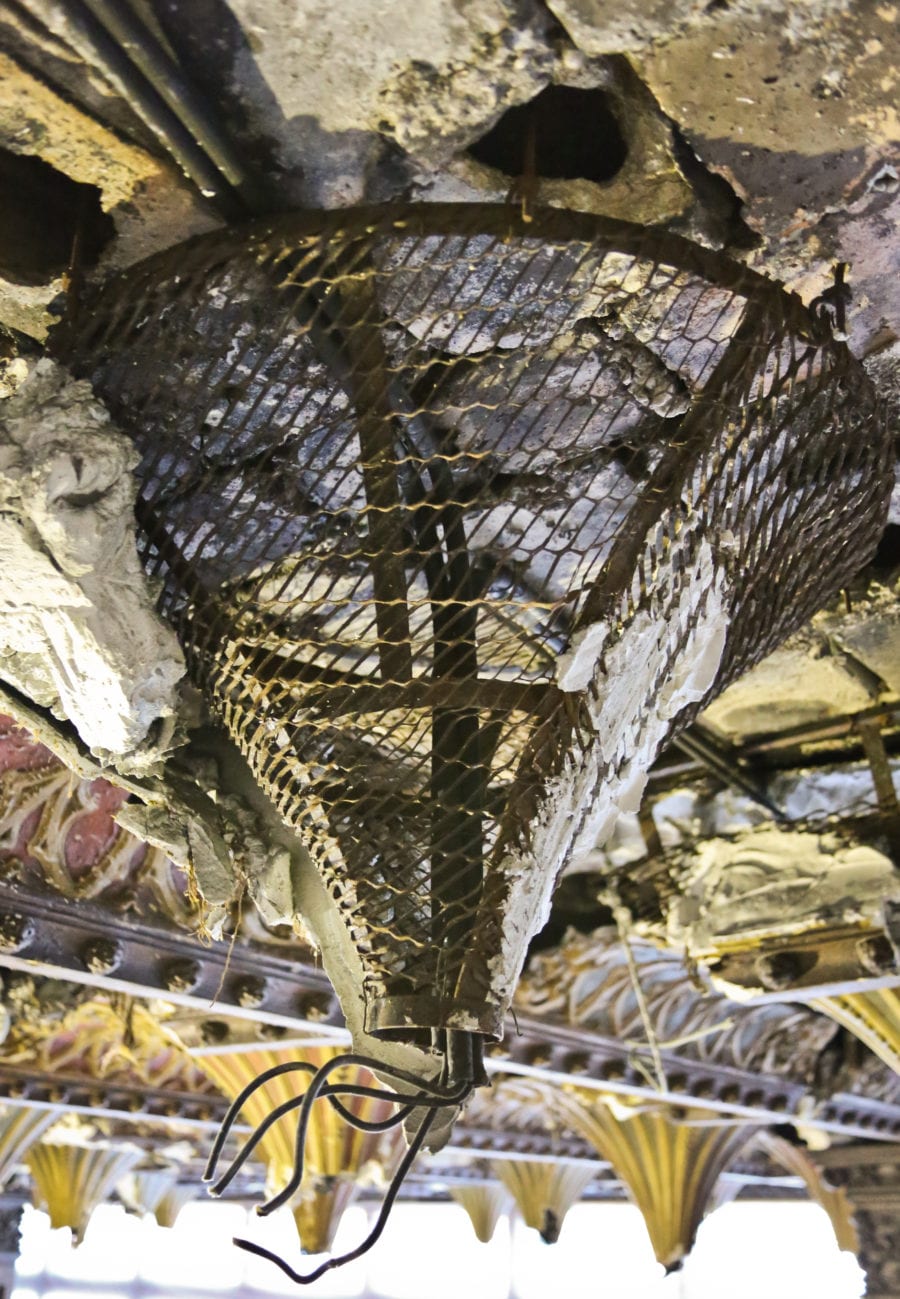
thankfully, i was there to meticulously document the original ceiling once the false ceilings were removed, to capture the unusual anatomy of the original panels – the metal mesh cones and the heavily insulated cloth cords used to electrify the original edison carbon “hairpin” filament bulbs during the late 19th and early 20th century. none of the original brass shell keyless sockets survived the destructive alterations when concealing the ceiling, so i will have to dig into period trade journals to help identify the original lighting system used and the fabricators that would have installed it.
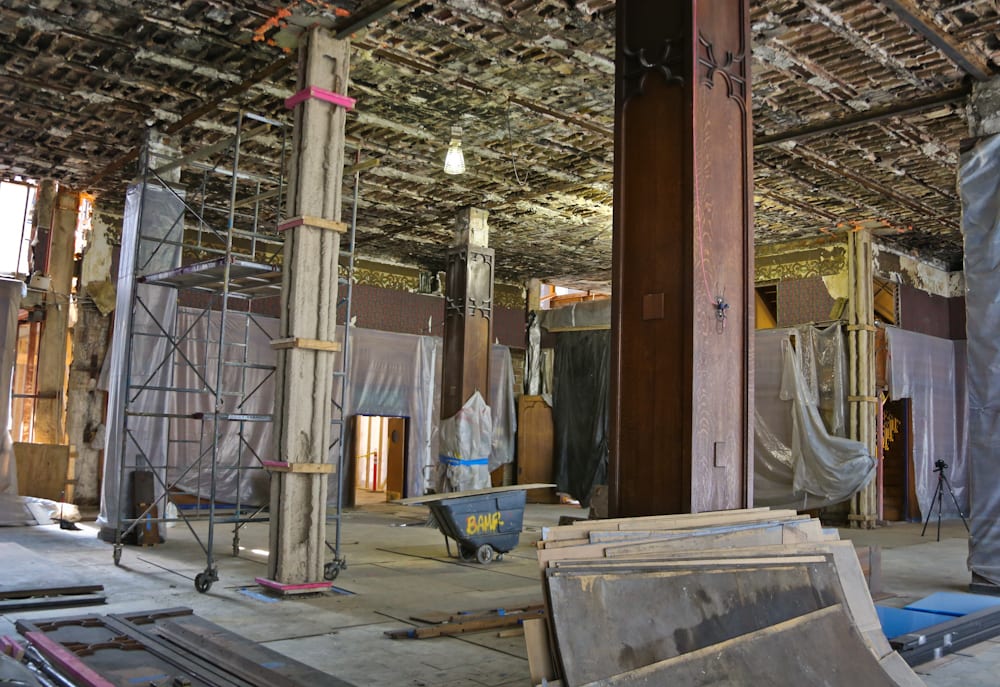
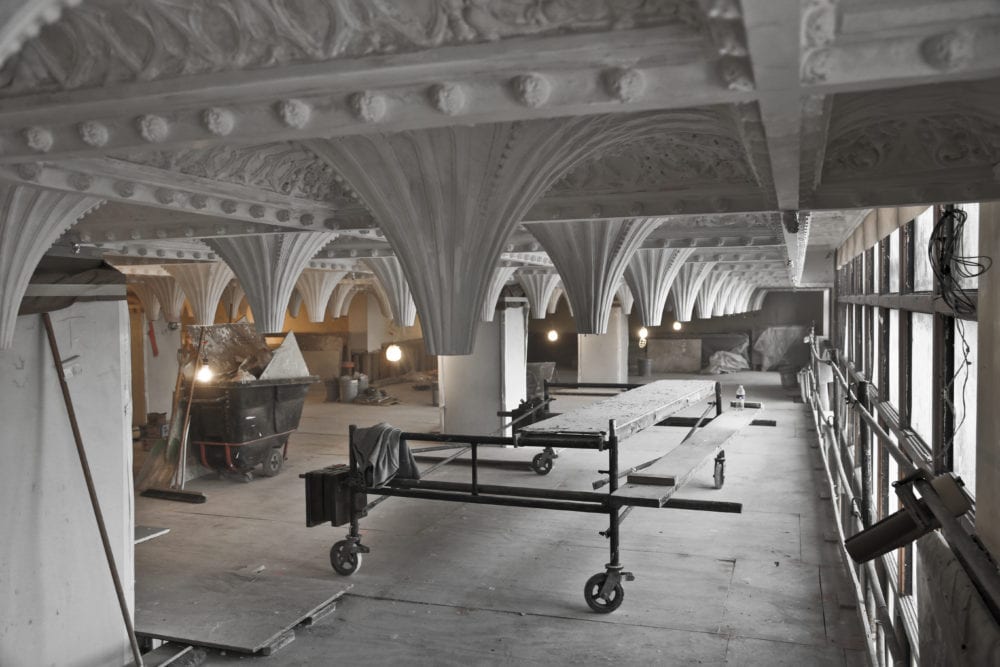
although i was saddened that the original (albeit fragmented) ceiling panels were subsequently destroyed when taken down (in preparation for their historically sensitive replacements), it is admirable that the developers green-lighted the costly recreation of the ornamental ceiling, finished in the original white color scheme and electrified with period appropriate “edison” light bulbs.