
07 Dec the frank lloyd wright windows of the bldg. 51 architectural artifact museum
the other day i was rearranging my reference library and ran across frank lloyd wright’s stained glass and lightscreens by architect and photographer thomas a. heinz.
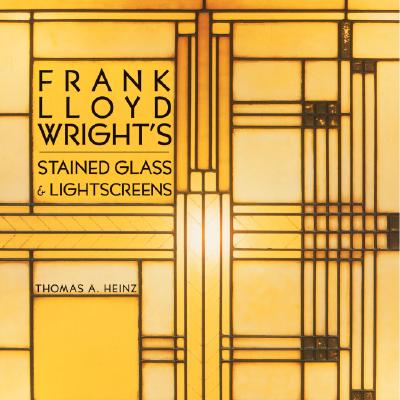
shortly after reacquainting myself with this great resource, i began combing through images taken of frank lloyd wright-designed windows housed in the bldg. 51 building museum collection, including recently acquired leaded glass windows from the arthur heurtley and robert p. parker houses.
additional artifacts salvaged from extant and non-extant frank lloyd wright commissions can be viewed by visiting the “virtual museum” found on the bldg. 51 website. historically important american architectural artifacts and ephemera (chicago and beyond) are being cataloged, photographed and added to the bldg. 51 virtual museum every month.
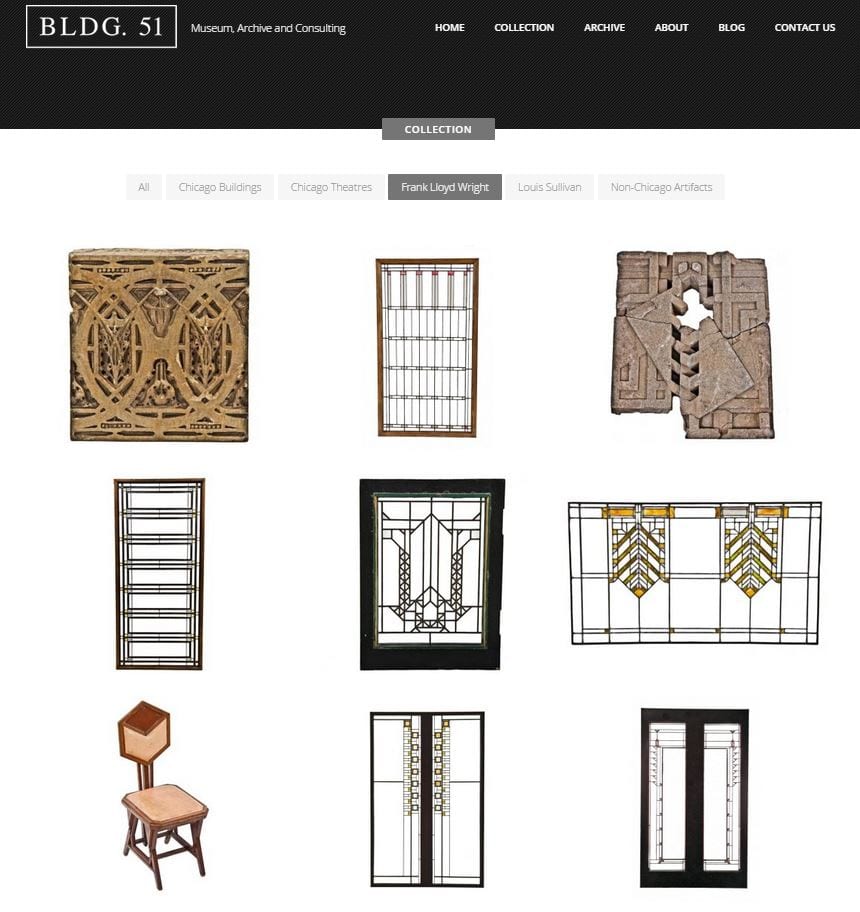
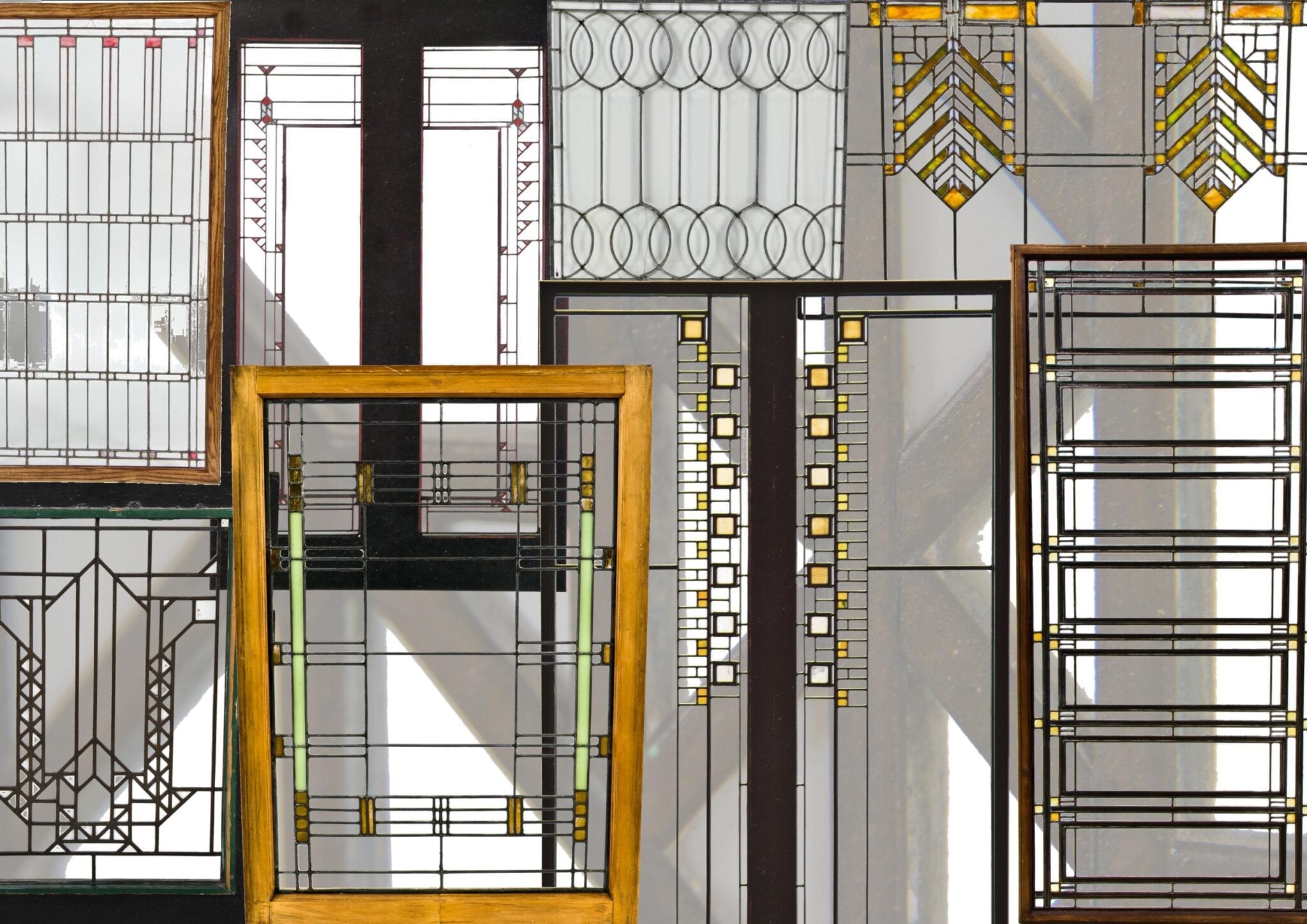
the gallery below provides several images of the museum’s frank lloyd wright windows with many concentrating on the detail and/or texture of the caming and pattern configuration. each and every window has been carefully documented from a variety of angles and lighting conditions in my studio. many more pictures – especially ones focusing on detail – are available upon request. as stated in previous posts, the bldg. 51 museum photo-archive is committed to sharing any and all hi-resolution images with researchers, architects, museum curators and enthusiasts alike.
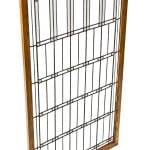
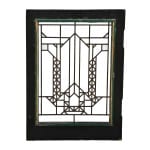
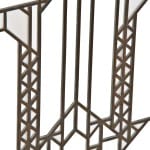
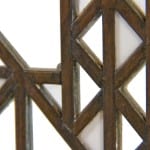
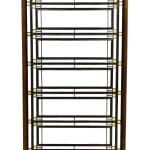
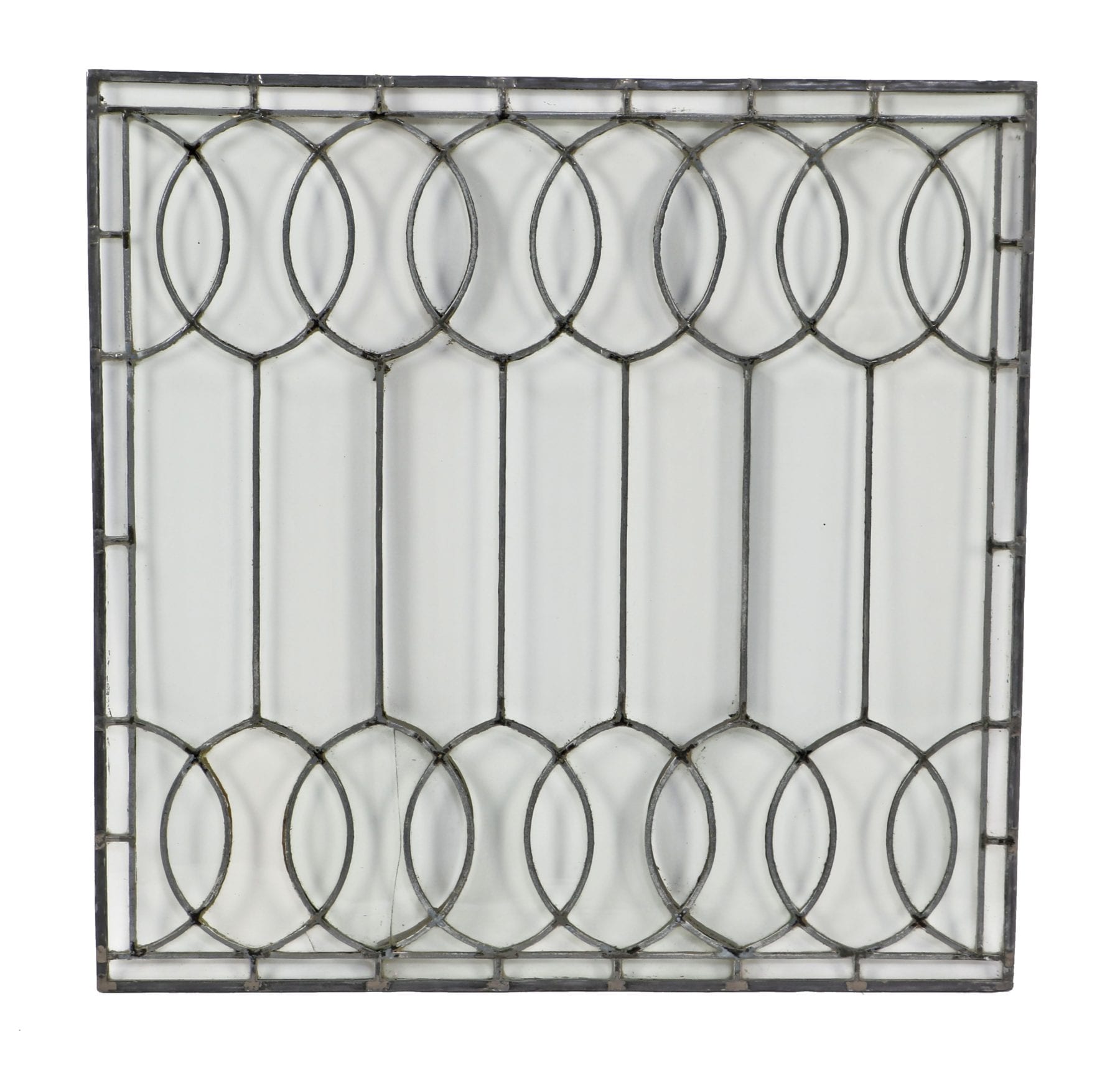
original c. 1890’s american frank lloyd wright-designed leaded clear glass window from the queen anne style robert p. parker house completed in 1892. the delicate square-shaped window retains the original clear glass and lead came, with sporadic repairs to soldered joints that were highly corroded. it is not known when the original wood sash frame was removed from the window. the simple, yet elegant geometric pattern illustrates wright’s efforts to forge his own identity and/or design while still heavily influenced by his mentors, silsbee and sulllivan. the historically important parker house, which was one of three “bootleg houses” along chicago avenue in the chicago’s oak park suburb. the two other neighboring houses include the thomas h. gale house and the walter gale house. the houses were designed by wright independently while he was still employed as a draftsman under the architectural firm of dankmar adler and louis h. sullivan. architect louis sullivan loaned wright money during the construction of his own home and studio and wright was working it off at the firm. the parker house is especially similar to the thomas h. gale house. the houses were designed on a speculative basis for wright neighbor walter gale in 1892. in all, wright designed nine “bootleg houses” moonlighting while still under contract with sullivan. since independent work was forbidden by sullivan, he was quickly dismissed from the firm in 1892 when sullivan discovered these independent commissions. the design for the parker house and the thomas gale house, and to some extent the walter gale house, were derived from the more expensive emmond house in lagrange, ills. the three 19th century homes feature irregular roof composition with high pitches and polygonal dormers. wright’s design and/or configuration of the parker house was influenced by his first teacher joseph silsbee. sullivan’s influence can also be seen in the taut masses of the house with his philosophy of “geometric simplification” evident in the parker house’s design elements, including the leaded glass window featuring two bands of overlapping ovals divided by linear lines within a rectangular form. while generally cast in the queen anne style of architecture the parker house has more ample rounded forms than the common queen anne homes being built at the time. the spaciousness of the house’s interior is bolstered by wright’s use of an an open interior rather than the typical boxy, partitioned interiors of characteristic of victorian architecture. the exterior turret bays contain large banks of windows in a manner that leaves little actual wall space on the interior in order to connect the inhabitants with the outside nature. the fireplace is positioned in the center of the house which allows it to heat and service two rooms, the parlor and the dining room. the side elevations of the parker house are symmetrical but adjacent buildings are built too close for the design to be seen clearly. despite being small in size and adorned with inexpensive detailing, the parker house bears significance as to what it reveals about frank lloyd wright’s development as an independent architect trying to break free from the influential forces of both sullivan and silsbee.
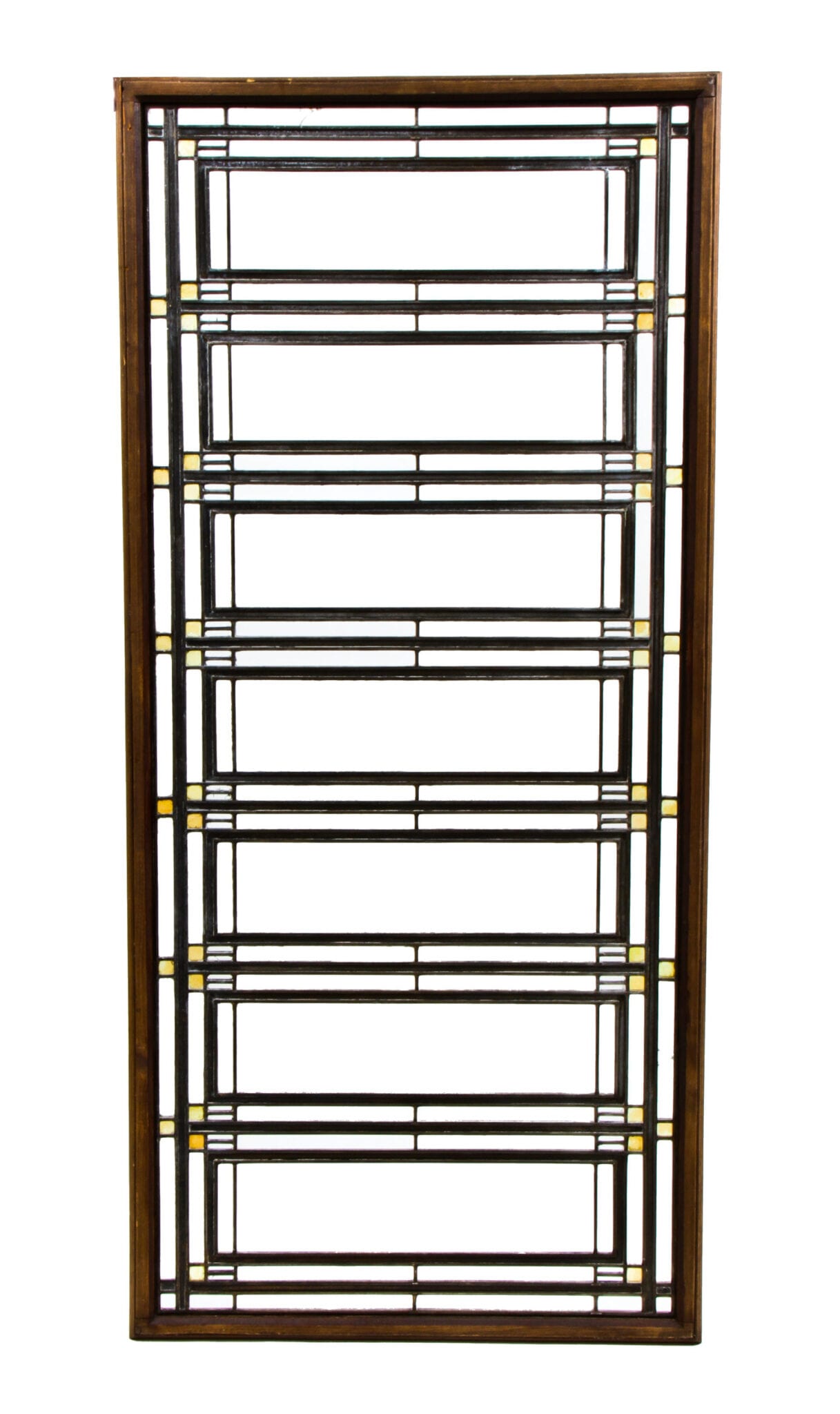
historically important, museum quality residential “daylight” lightscreen designed by notable architect frank lloyd wright for the c. 1902-3 extant w.e. martin house (oak park, il). the window represents one of wright’s distinctive innovations in leaded glass design involving the first successful integration of thick and thin caming within the same panel. the technique allowed wright to create designs or patterns of elegant simplicity with the use of relatively few materials. the sophisticated “grille” is comprised of double crowne zinc caming enclosing original panes of clear glass. the corners and edges are highlighted with iridized glass squares. likely executed by the linden glass company, chicago, il. the same base pattern was used in the fountain doors at the c. 1904 dana house (springfield, il). contains a newer wood frame. multiple hairline cracks. structurally sound. measures 69 x 23 inches. commissioned in 1902 and completed in 1903, the w.e. martin house brought frank lloyd wright eight other major commissions. wright subsequently designed the e-z polish factory, which was owned by william e. martin and his brother darwin d. martin. darwin martin was employed by the larkin company in buffalo, new york, and helped persuade the company to have wright design its new administration building. darwin also commissioned wright to design his home and a gardeners cottage in buffalo, new york, as well as a summer residence in derby, new york. in addition, homes were built in buffalo for george barton, martin’s brother in law, and for w.r. heath and alexander davidson, who were larkin company employees. image courtesy of the bldg. 51 museum collection.
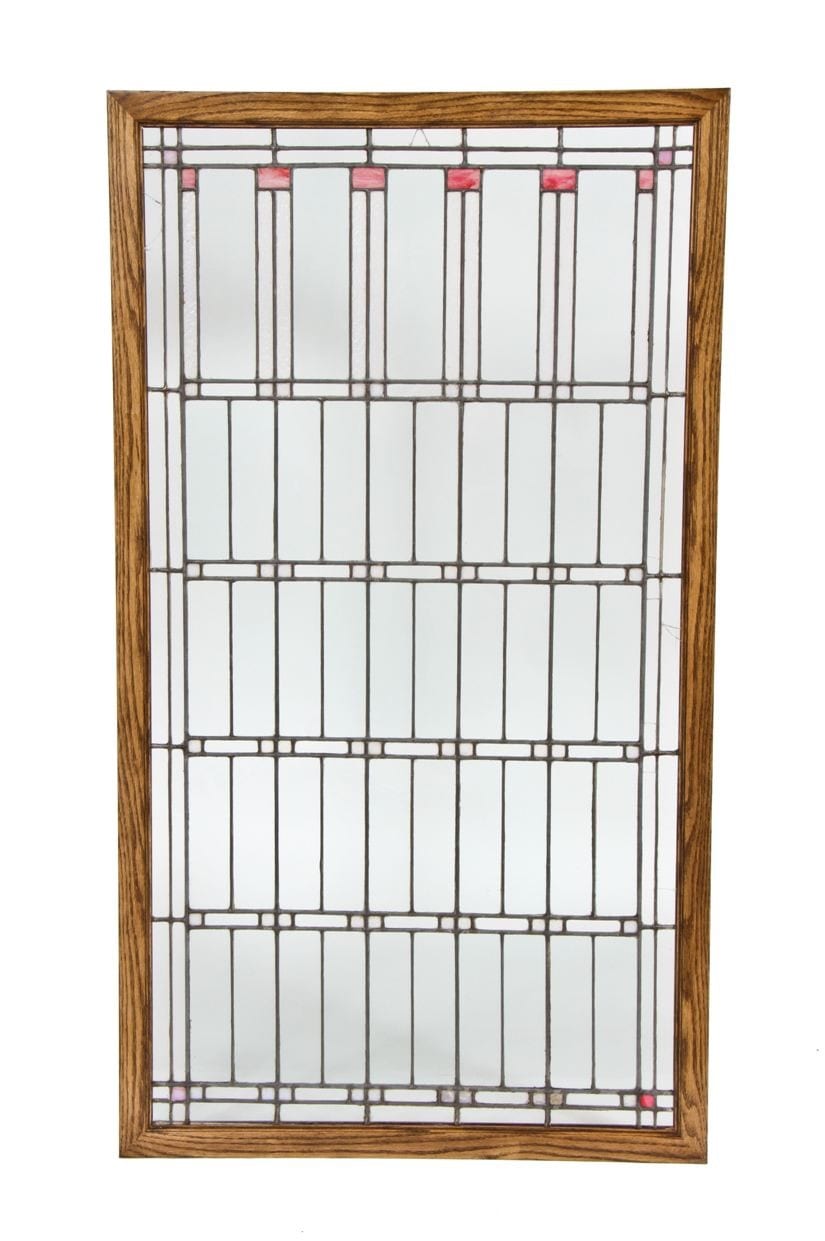
museum-quality c. 1901-02 oversized leaded art glass window or possibly door pane designed by american architect frank lloyd wright for the extant william e. fricke residence located in oak park, il. the strongly geometric “light screen” is comprised of closely arranged lead cames with clear glass, interspersed by subtle blue opalescent squares throughout. the long and narrow segmented rectangles along the top, consist of hammered texture blue opalescent glass topped with pink cathedral glass squares. the exact fabricator is not known, but could be attributed to temple art glass or possible the linden glass company. the large window was purportedly removed from the passage way leading to the the non-extant pavilion that was demolished in the 1920’s. the three-story william g. fricke house was originally designed and built in 1901-02 on the corner of fair oaks avenue and iowa street in oak park, il. while the main structure remains largely intact, the pavilion and garden walk were demolished in the 1920’s when a later owner sold the property. the lot stood vacant until 1948 when a nondescript house was erected. frank lloyd wright designed the house in 1901 during a brief partnership with webster itomlinson. by the time the house drawings were published as part of the warsmuth portfolio in 1910, the house was known as the emma martin house, after the second owner who purchased the residence in 1907. wright designed the garage for martin 1907. william g. fricke commissioned wright to build the home shortly after he became a managing partner at the weber-costello-fricke co., specializing in school supplies. the stucco-clad house is one of the first completely mature prairie style designs by frank lloyd wright. around this time wright had dropped nearly all of his classical and “sullivanesque” elements from his designs and/or commissions. the house is considered to be the most successful of wright’s three story prairie homes. to this day, it remains a private residence. the window measures 50 x 27 3/4 inches. note: measurements include oak frame. image courtesy of the bldg. 51 museum collection.
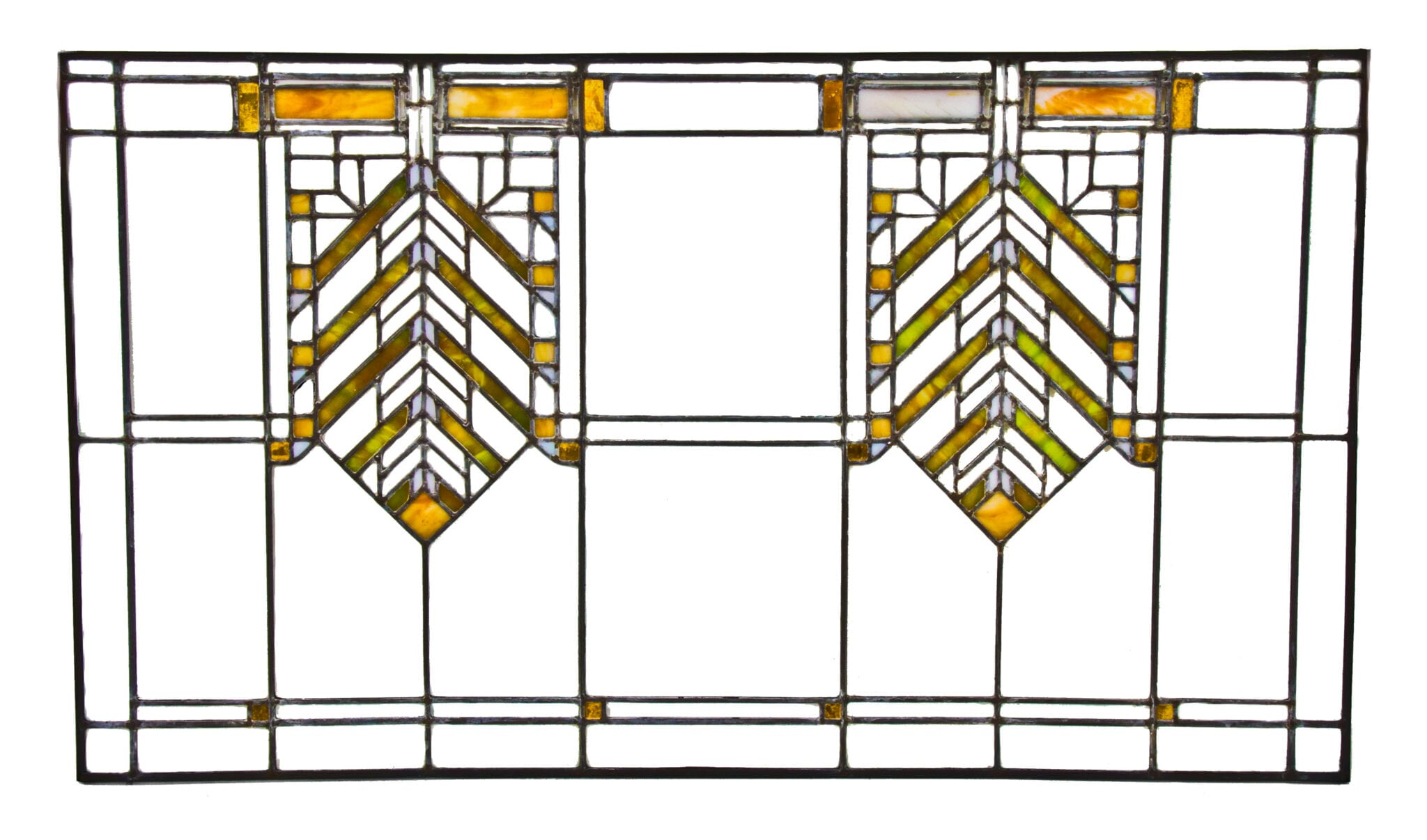
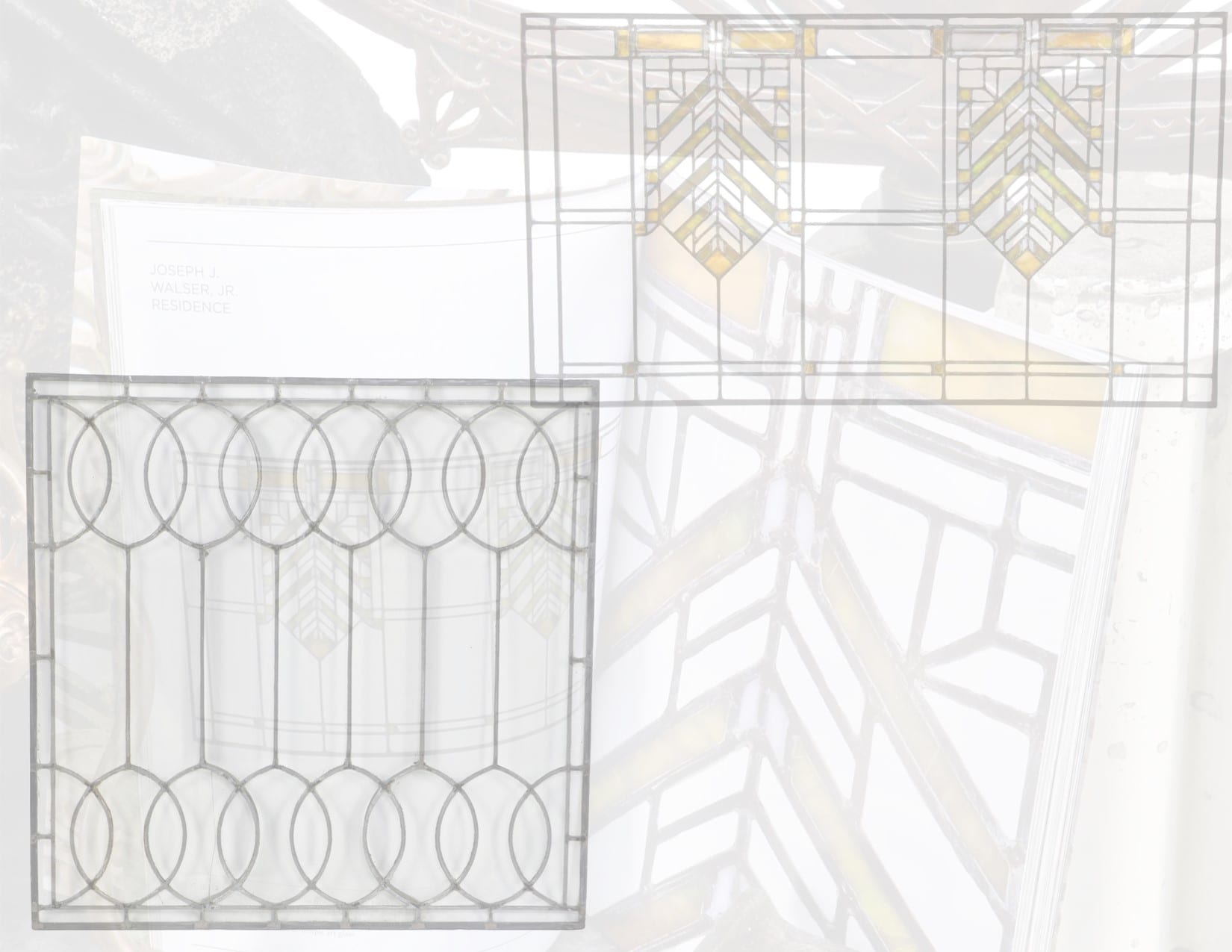
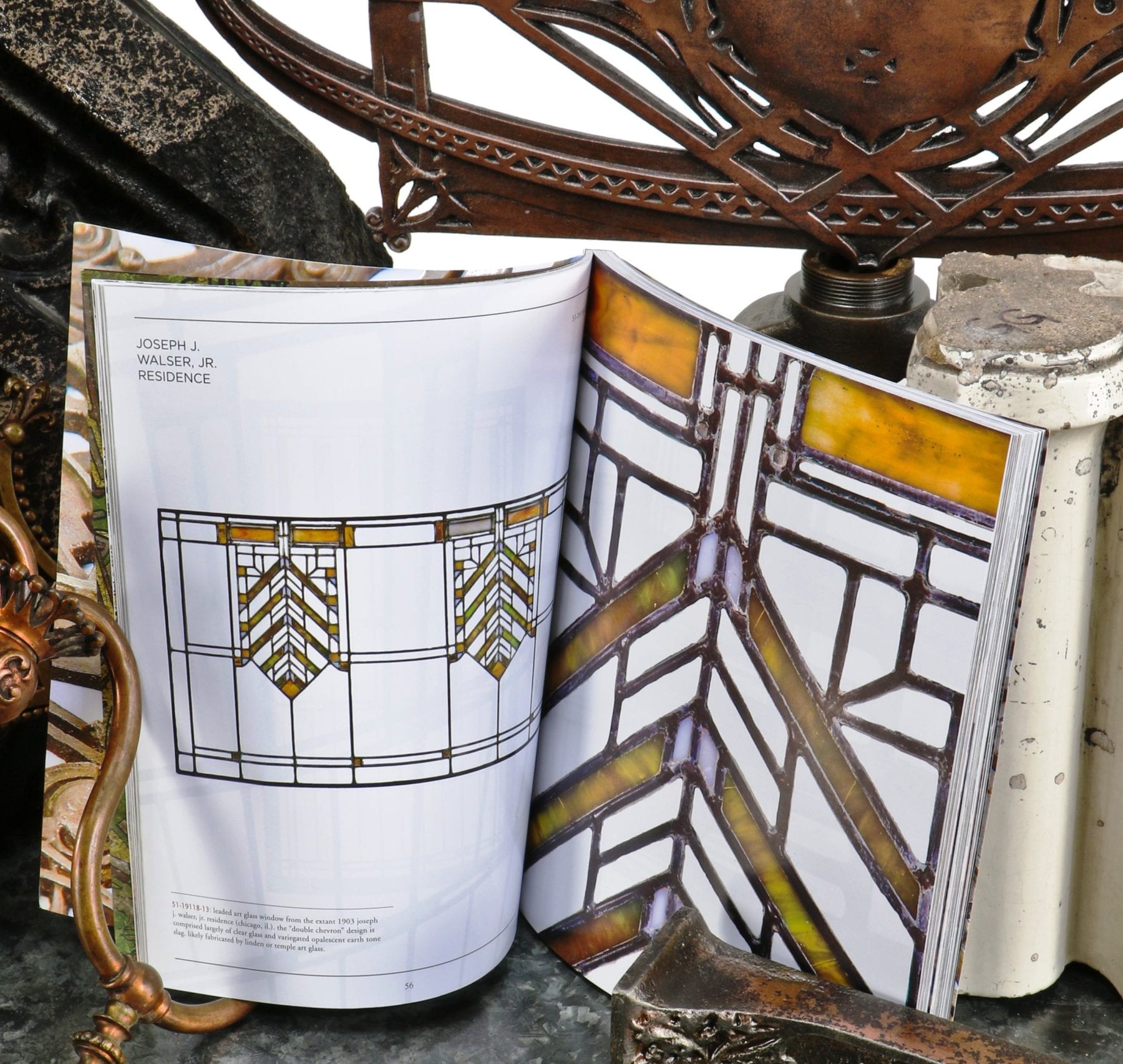
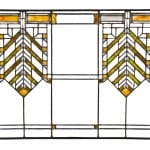
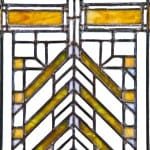
very rare and amazingly intact frank lloyd wright- designed leaded art glass window salvaged from the extant joseph j. walser residence constructed in 1903. the beautifully colored and strongly geometrically designed “double chevron” window is comrised largely of clear and variegated opalescent earth tone slag, with sandwich gold leaf glass accent. the lead caming is all original. the remarkably well-designed and rhythmic arrangement of the symmetrical geometric design motifs are most impressive and typical of wright during the early prairie years. only two of these windows in this size and configuration were made for the walser residence. frank lloyd wright designed the home for printing executive joseph j. walser in the chicago neighborhood of austin. the house is badly dilapidated from decades of neglect. nearly all of the art glass windows were removed during the 1950’s by the family who owned at the house at the time. well-documented provenance was provided when the window was sold to the bldg. 51 museum (owned and operated by eric j. nordstrom of urban remains). possibly fabricated by linden or temple art glass. measures 41 3/4 x 24 inches.
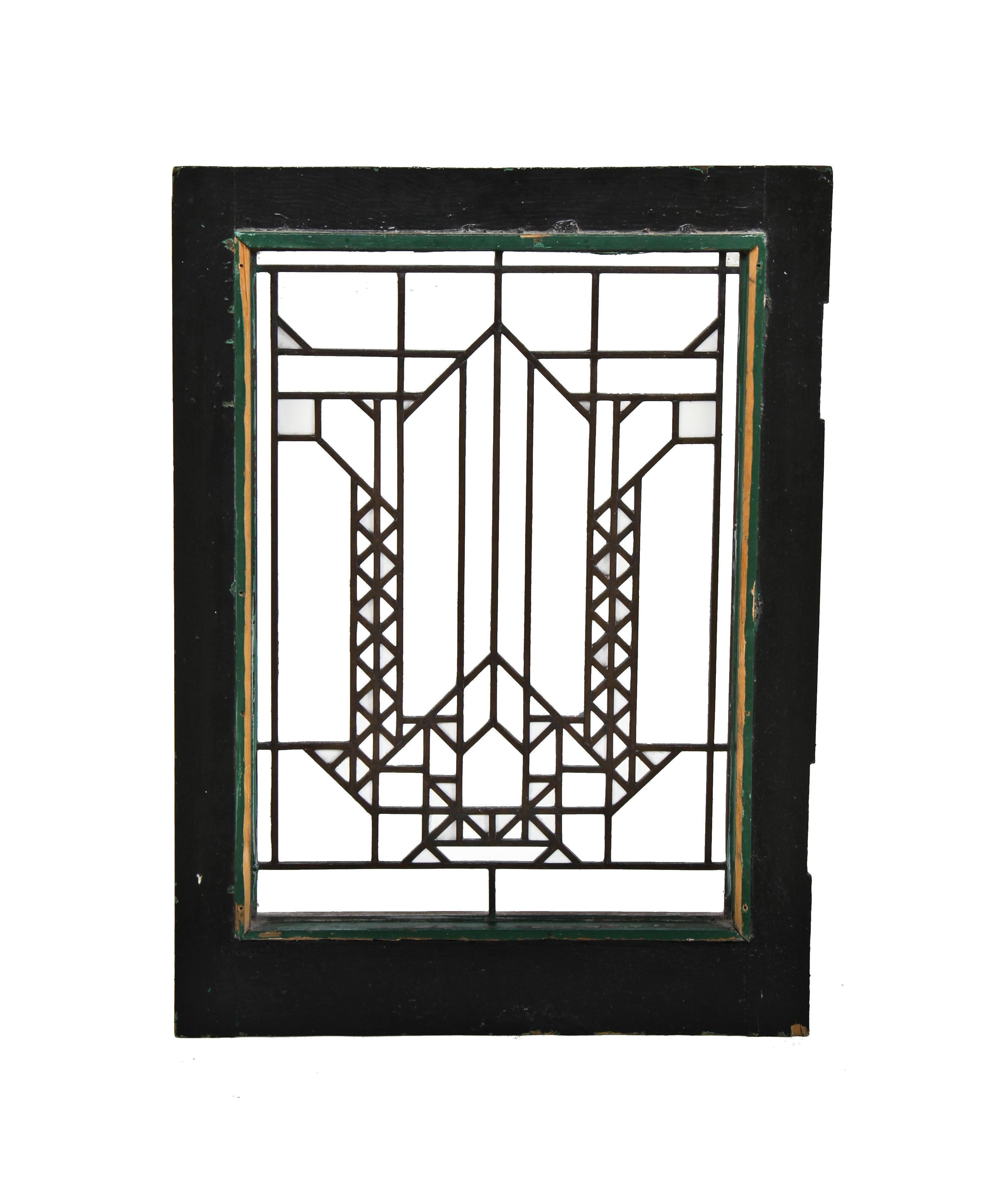
remarkably intact early 20th century frank lloyd wright-designed art glass window removed from the c. 1913 francis w. little residence shortly before the dismantlement and subsequent demolition of the house in the early 1970’s. the largely colorless prairie school style window features a distinctively abstract and strongly geometric composition consisting primarily of clear glass accentuated with small white opalescent and frosted panes of triangles and squares. the nicely patinated copper-coated zinc caming remains structurally sound and overall great condition, considering age. the polychromed painted pine wood sash frame is largely intact with surface wear evident. the frank lloyd wright-designed window was fabricated by the temple art glass company, chicago, il. around 1900 francis and mary little of peoria, il commissioned frank lloyd wright to design what was to be the first of two houses he designed for them. the littles were active founding members of the art institute of chicago, and it may have been there, where wright frequently lectured, that they and wright first came into contact. mr. little, a lawyer and owner of a utilities company, provided wright with financial assistance on more than one occasion. along with two other clients, mr. little paid for wright’s trip to europe in 1909-1911 and helped finance the 1910 berlin publication commonly known as the wasmuth portfolio – a catalogue of one hundred of wright’s drawings published by ernst wasmuth. the publication subsequently brought wright international attention. in the acknowledgments wright credited mr. little as one to whom he owed a great deal for support and faith in his work. around 1908 the littles commissioned wright to design a summer residence for them on lake minnetonka, with initial plans drawn that same year. the actual construction of the house, however, was not completed until around 1914, as wright left for europe in 1909, returned in 1911, and then spent part of 1913 in japan. although several letters from mr. little to wright indicate his frustration with the delay, the littles had a close relationship with wright and were willing to wait for him, rather than choosing another architect. during this time the littles spent their summers on the lake shore property in a small cottage that mr. little had designed in the style of wright’s work. the home that wright designed for the littles was one of his last great prairie school-style residences. the characteristic long, low, hipped-roof building “hugged” two gentle hills that rose above the lake. the house plan consisted of two offset rectangles joined at the corner which formed a single 250-foot axis parallel to the lake shore. one rectangular section played a more private role, including the bedrooms and library above and the dining room, kitchen, and additional bedrooms below which was set into the lower hill. the other rectangular section included more public spaces, such as the large living/music room, billiard room, and screened pavilion and was set atop the higher hill. wright designed nearly 300 windows for the house, which spanning the entire elevations, allowed the littles full advantage of the scenic view. mr. little died in 1923 and mrs. little subsequently moved into her husband’s cottage and gave the summer home to eleanor and her husband raymond stevenson. like mr. and mrs. little, eleanor and their four daughters also spent part of the year at a residence in minneapolis and the other at the summer home on the lake. around 1951 the stevensons sold their minneapolis home, “winterized” the summer house, and moved in full time. however, by the late 1960’s the stevensons had grown weary of the challenges of living in a wright-designed house. the large size of the house, rising property taxes, built-in furnishings that could not easily be changed, and many uninvited visitors became too much for them. not wanting to move or tear down their house, and yet wanting a smaller house, put the stevensons in a difficult position because of city zoning ordinances which would not allow two houses on the same lot. the stevensons made every effort to find a buyer, contacting architects, societies and national groups. many were interested in preserving the house, but were unable to raise the money to buy it. moreover, the only way the stevensons could begin construction on a new house was to put the wright house on the market with the stipulation that if the house wasn’t sold within two years it would be demolished. since no local buyer or institutions could be found to save the house, concerned individuals finally contacted officials at the metropolitan museum of art in new york which had a large collection of fine period rooms, to see if they might be able to purchase it for installation. director thomas hoving came to look at the house and immediately offered to purchase it for the sale price of $150,000. relieved, the stevensons sold the house to the metropolitan in the spring of 1972, while they retained the property. under the direction of metropolitan curator morrison heckscher, portions of the interior were carefully dismantled piece by piece for future installation in the metropolitan and to sell to other institutions. that same year the metropolitan sold the library to the allentown art museum in allentown, pennsylvania, a hallway to the minneapolis institute of arts, and eventually installed the large living/music room in their own museum in 1982.
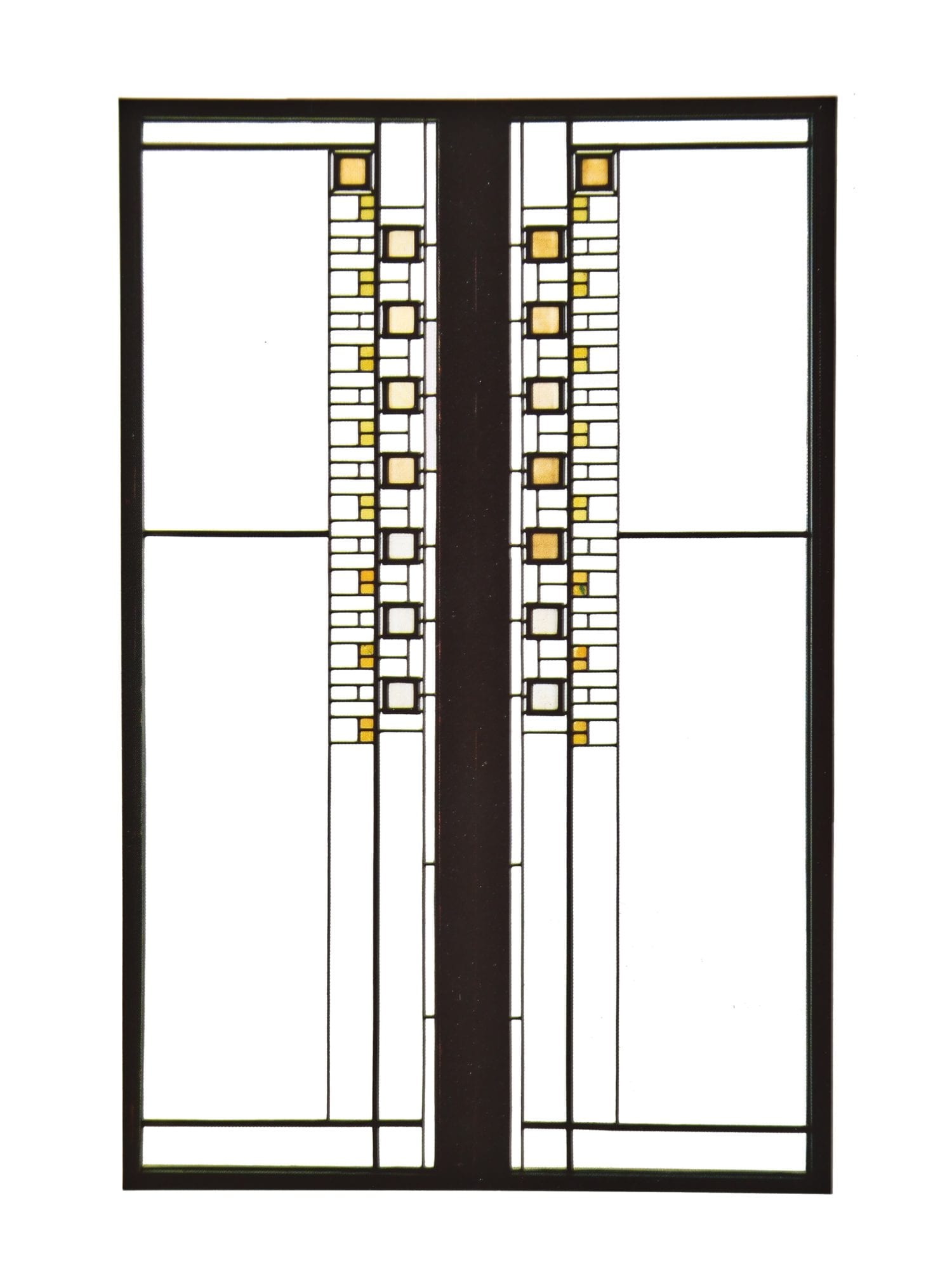
two matching original and intact museum quality early 20th century avery coonley (riverside, il.) interior living room leaded art glass door panes or insets executed by the linden glass company, chicago, il. the art glass doors were believed to be removed by frank lloyd wright in the 1911 remodeling of the home’s garden facade. the two doors containing the art glass window panes originally flanked a projecting bay of windows. during the remodel, wright replaced the doors with windows and filled the central bay with doors to allow easier access to the terrace. the well-proportioned geometric design is an extension of an existing pattern found in the living room windows, but on a much larger scale. the copper-plated zinc caming is original and structurally sound. the coonley house estate, consisting of multiple buildings, was constructed between 1907-08 on the banks of the des plaines river in riverside, il. avery coonley was heir to an industrial fortune and had an unlimited budget. the coonley family had investigated wright’s other homes and told him that they saw in his work “the countenances of principle.” wright stated in his autobiography that “this was to me a great and sincere compliment. so i put my best into the coonley house.” the extant house contains a stucco exterior that rises to an upper ceramic tile banding with a geometric pattern. the gardens contain terraces, shallow planters and a large reflecting pool. for the education of the coonley’s young daughter, wright designed a playhouse nearby. around 1960, the main house was divided into two separate residences, now with separate addresses. it was declared a national historic landmark in 1970. the other set of doors remain “in siti” at the coonley residence. measures 70 x 40 inches.
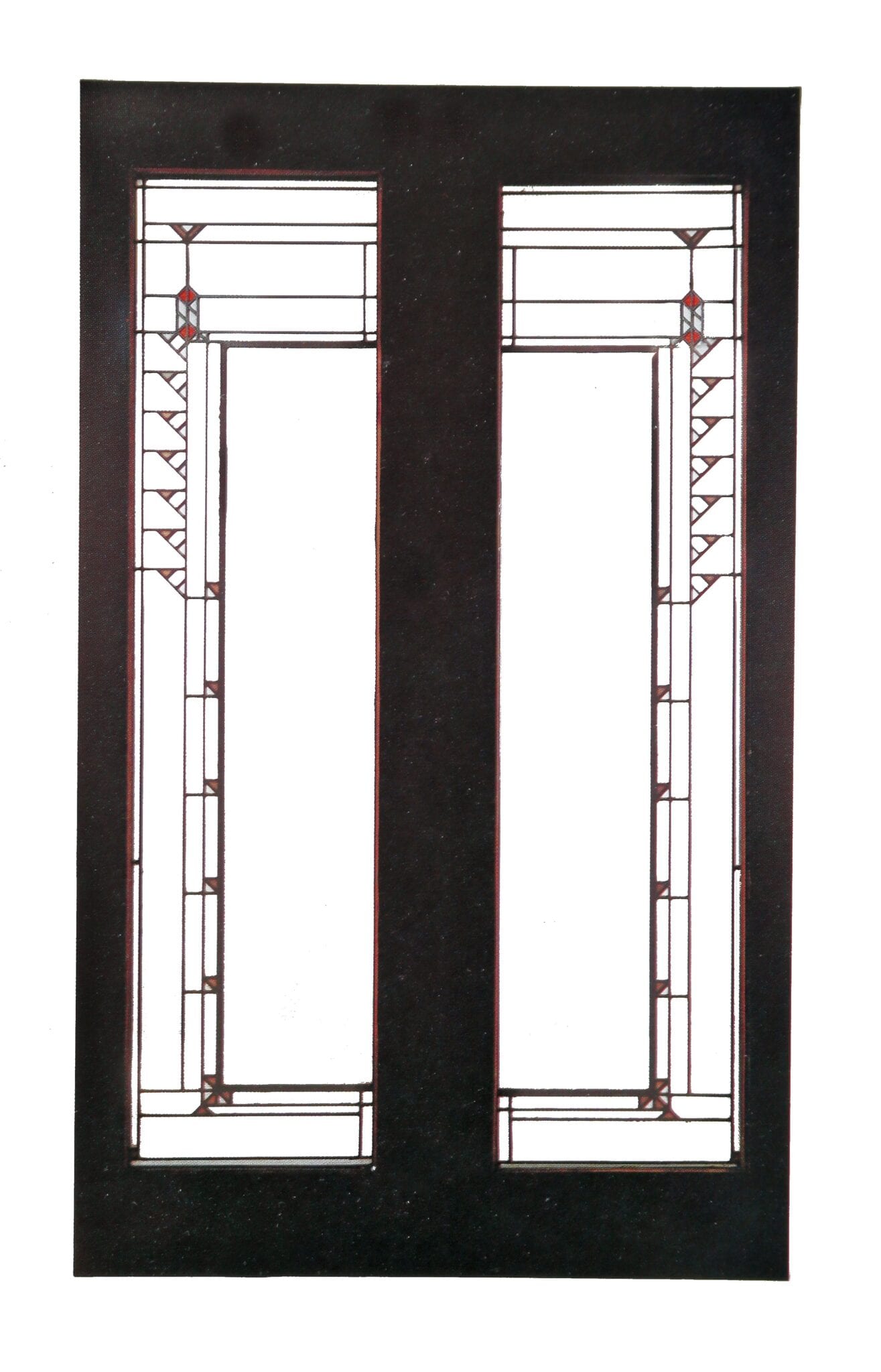
pair of leaded art glass panels within original painted wood doors. in 1908, architect frank lloyd wright had been commissioned to build a house for francis little and his wife mary in deephaven on a spot overlooking the lake. wright’s prairie school esthetic took advantage of the surrounding countryside, and he designed the house to fit into the landscape rather than the modern construction technique of clearing the land and planting new lollipop trees. soon after wright took the commission, he traveled to europe, then japan and delayed construction of the house. fortunately, little and his family still had a house in the kenwood neighborhood of minneapolis, but they were frustrated with the delay. rather than switch architects, little had a small cottage built in the prairie school style on the property so the family could take advantage of the lake while they waited for wright. wright put banks of windows all along the water side of the house so the littles could have a panoramic view of lake minnetonka. francis objected to all the small window panes that wright designed especially for the house since he preferred larger picture windows. the little house had the typical prairie school characteristic of long parallel roof lines—250 feet in this case—to fit into the horizon and the lake below. the open floor plan flowed from room to room, as wright was influenced by japanese design and the asian idea of feng shui. one of the rooms had a small concert hall specifically for mary, a virtuoso pianist who studied under composer franz liszt in cologne, germany. wright only built a dozen houses in minnesota, relatively few considering he was born just across the river in richland center, wisconsin. as one of the most famous architects in america, his houses have become tourist sites and his turbulent lifestyle has become legend since it was surrounded by axe murders, affairs and arrests—once even on lake minnetonka. during the 1960s and ‘70s, teardown mania struck and minnesota would never be the same. minneapolis’ beautiful brick buildings and mansions were leveled, and lake minnetonka was not spared. the littles had since passed on the house to new owners who were fed up with the idiosyncrasies of a wright house with built-in furniture that couldn’t be moved, and the inevitable drafts and water problems in wright’s houses. wright had been dead for more than a decade and had achieved the status of one of america’s all-time great architects. the idea of destroying this house, a perfect specimen of his prairie school phase, was blasphemy to his fans. a group of enthusiasts contacted the metropolitan museum of art to see if it could save this midwestern masterpiece. the new york museum salvaged parts of the house so the current owners, descendants of the littles’ daughter eleanor, could build a more modern, smaller house that suited them. image courtesy of the bldg. 51 museum collection.
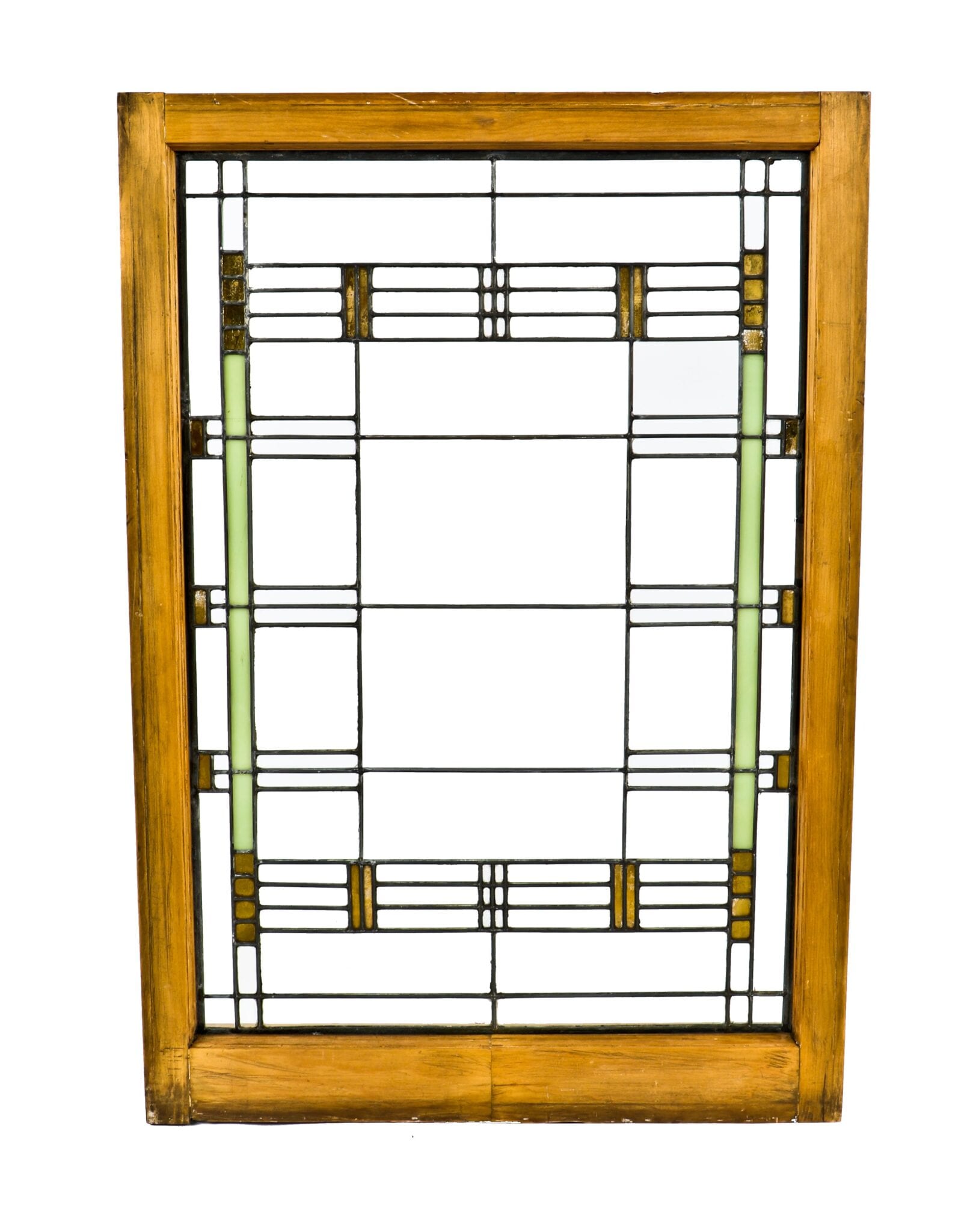
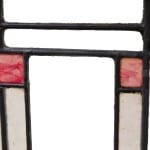
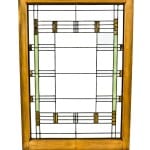
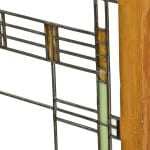
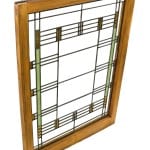
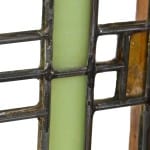
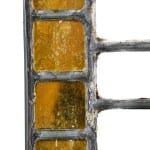
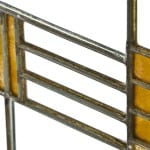
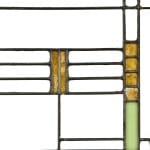
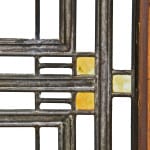
remarkable original and completely intact historically important early 20th century american arthur heurtley house leaded art glass window or “light screen” designed by frank lloyd wright and executed by the linden glass works, chicago, ills. the strongly geometric and heavily segmented window is comprised largely of clear glass panes accentuated by several clustered gold leaf sandwich glass squares and two opposed vertically oriented bands of “uranium” yellow-green glass. the zinc caming is structurally sound and stable. remarkably, the original pine wood sash frame is intact and free from damage. the early prairie style wright-designed window is free from cracks or breaks. excellent overall condition, considering age. located in oak park (a chicago suburb), the c. 1902 frank lloyd wright-designed arthur b. heurtley house is widely considered one of the earliest examples of a frank lloyd wright house in full prairie style. the design patterns and/or configurations he established within the heurtley house would eventually appear in many of his greatest works within the prairie style, including the emphasis on the exterior horizontal, with strong detail in the wooden siding and high bands of windows, low-pitched roofs, broad eaves, and terraces and balconies to bring the outside living easily to the occupants within. the interior of the heurtley house contains a grade level front door leading to a deeply colored low ceilinged entry hall. the major spaces are raised above the surrounding grounds, and as one climbs the stairs from the ground level, one is thrust into areas featuring soaring ceilings with trim echoing the exterior roof forms. this transition was used to emphasize one’s leaving of the outside world as they ascended the stairs. the fireplaces, which symbolized the hearth and home are centralized in the middle of the structure. the home’s interior is unique in that its floor plan is reversed from the traditional layout of a two story american home that was contemporary to the era in which the heurtly house was built. the traditional house contained public rooms located on the first floor level, and private spaces on the second floor level. the public living and dining were located on the top floor of the house. during the heurtleys occupancy, the residence underwent major changes, including the additions of screens to the windows on the elevated porch as well as a breakfast room on the main floor. in addition, the “wood room,” as it was known on wright’s original drawing, was converted into a pantry or food storage area. it is thought that the breakfast room addition and wood room conversion were done through frank lloyd wright’s office but the dates remain unconfirmed. in 1920 the house was purchased by frank lloyd wright’s sister, jane porter, and her husband, andrew. they converted the home into a duplex in the 1930’s and each floor was separated into apartments. the porters stayed in the heurtley house for 26 years. after the porters left the house, two other owners altered the home further. the kitchens and bathrooms were modernized, the front loggia enclosed and a black iron gate was added to the home’s entryway. a master bathroom was added in the last fifteen feet of the main floor veranda and the living room inglenook and dining room breakfront were removed. a second chimney and a furnace were also added. between 1997 and 2002, the owners of the house spent 1.2 million dollars on a complete restoration of the building.
update as of 6-7-2017:
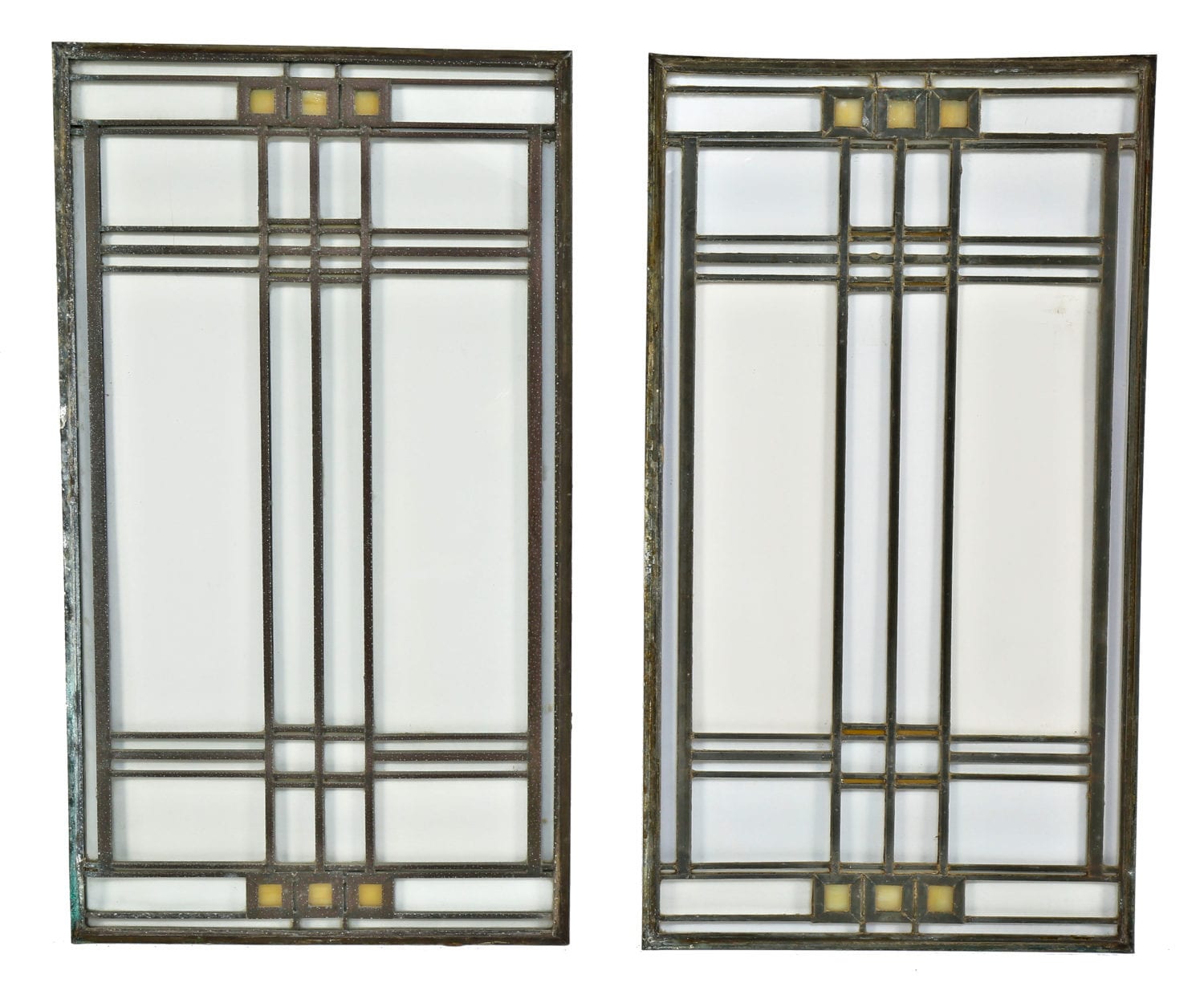
the bldg. 51 museum acquired two matching avery coonley house (1908) leaded art glass dining/living room windows at auction over the weekend. the frank lloyd wright-designed windows are comprised largely of clear glass with opalescent squares and rectangles. the zinc caming retains the original copper “wash” with wear consistent with age.