
15 Jun revisiting long-forgotten images documenting extraction of garrick theater’s brilliantly colored mosaic floor lunettes
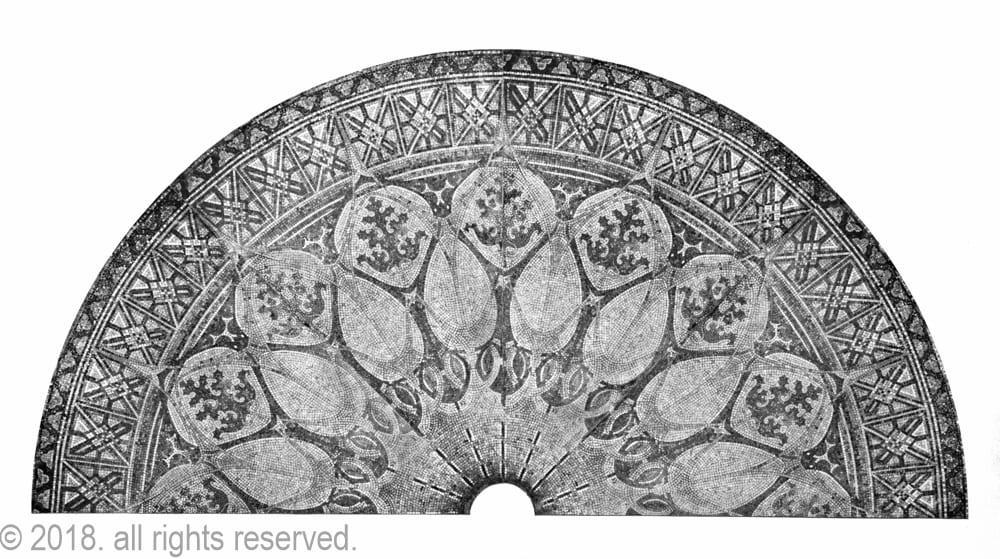
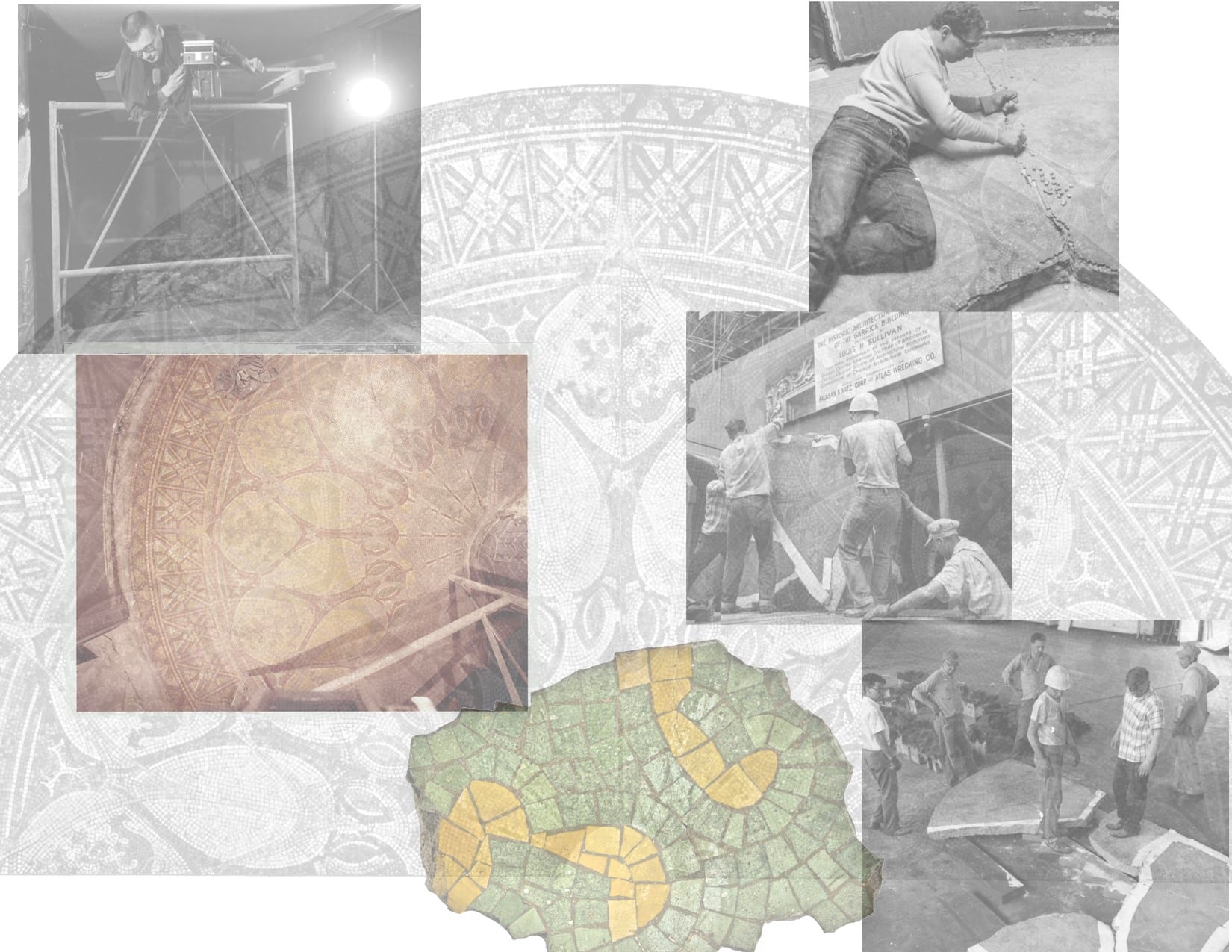
i’ve assembled a collection of long-forgotten images – pulled from richard nickel archive contact sheets – to create a cohesive visual narrative of the discovery, extraction, and reassembly of one of the two richly colored auditorium mosaic tile staircase landings discovered at the time adler & sullivan’s schiller building or garick theater (1891) was undergoing demolition.
spending hours immersed in and digitizing richard nickel’s contact prints filled with photos documenting the salvage and/or demolition of adler & sullivan’s garrick theater in 1961 has been a much-needed form of “therapy” or distraction from documenting destruction this year.
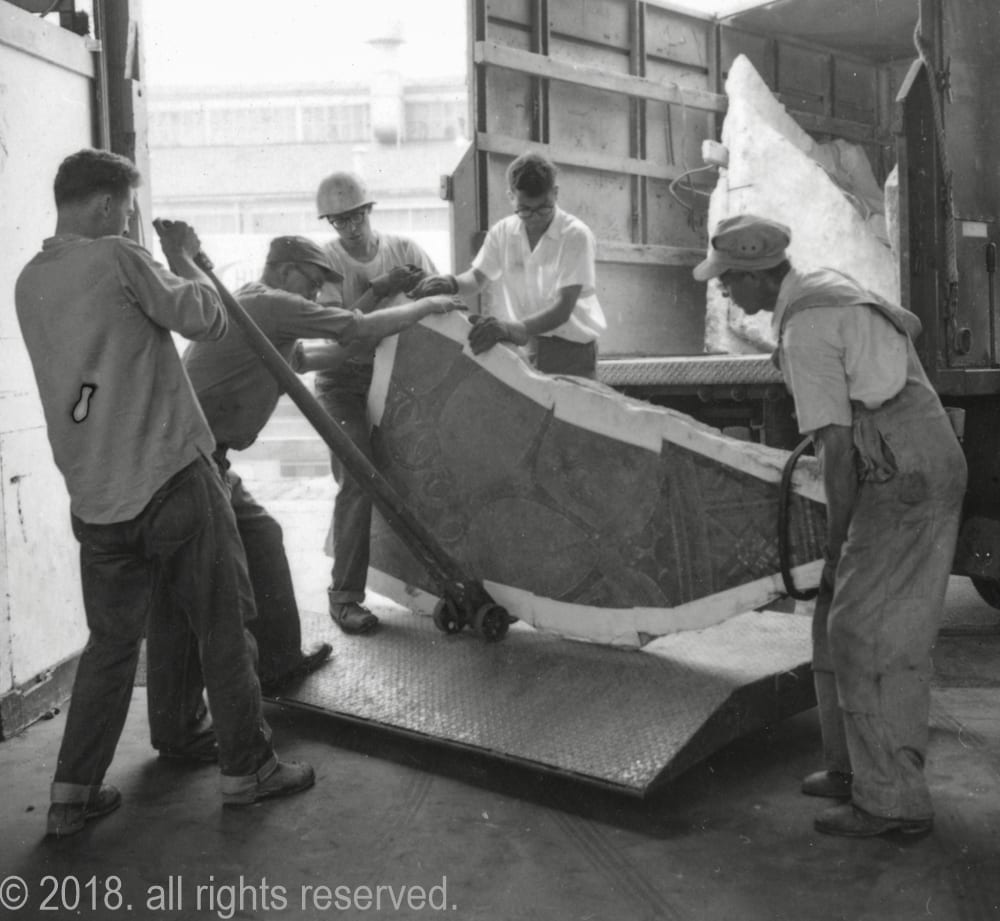
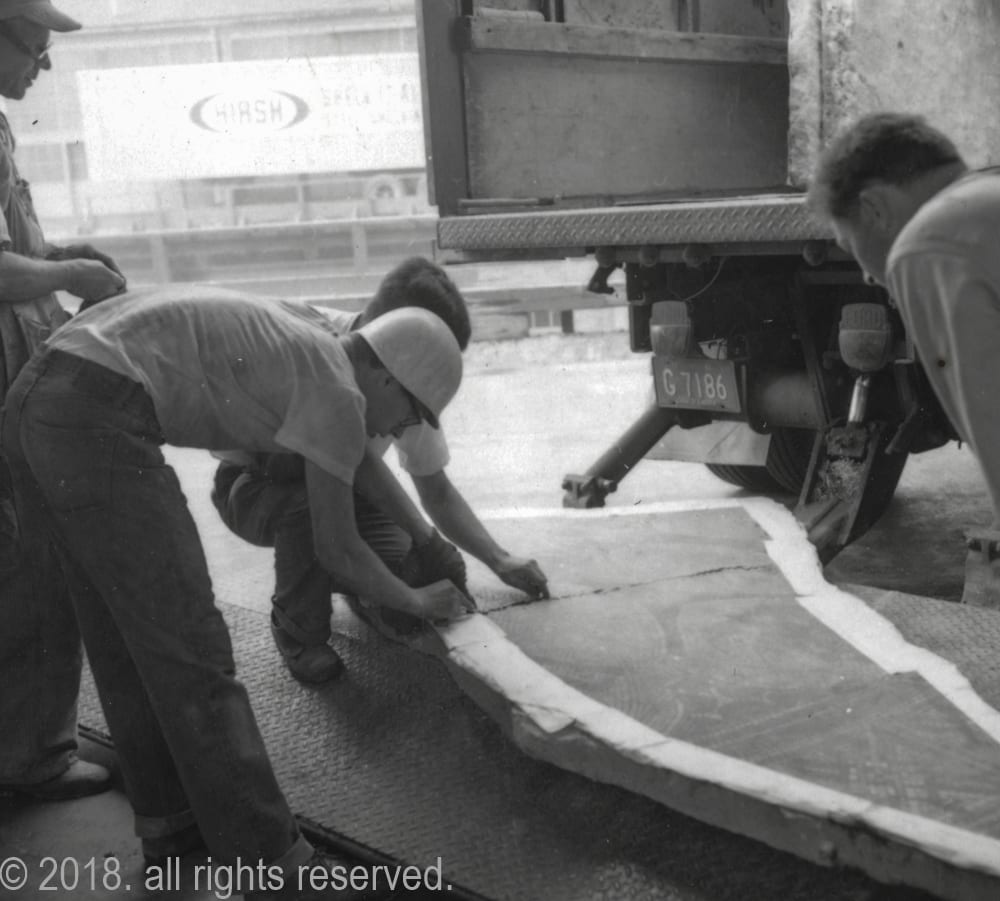
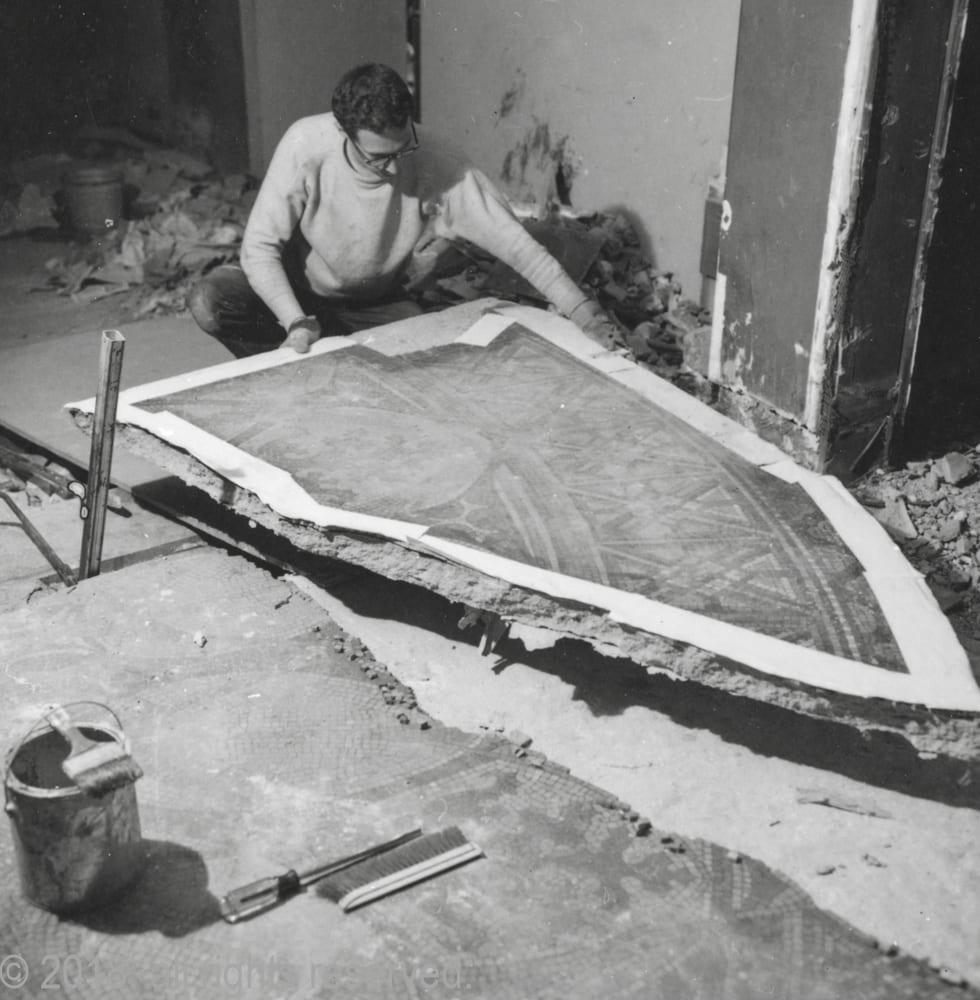
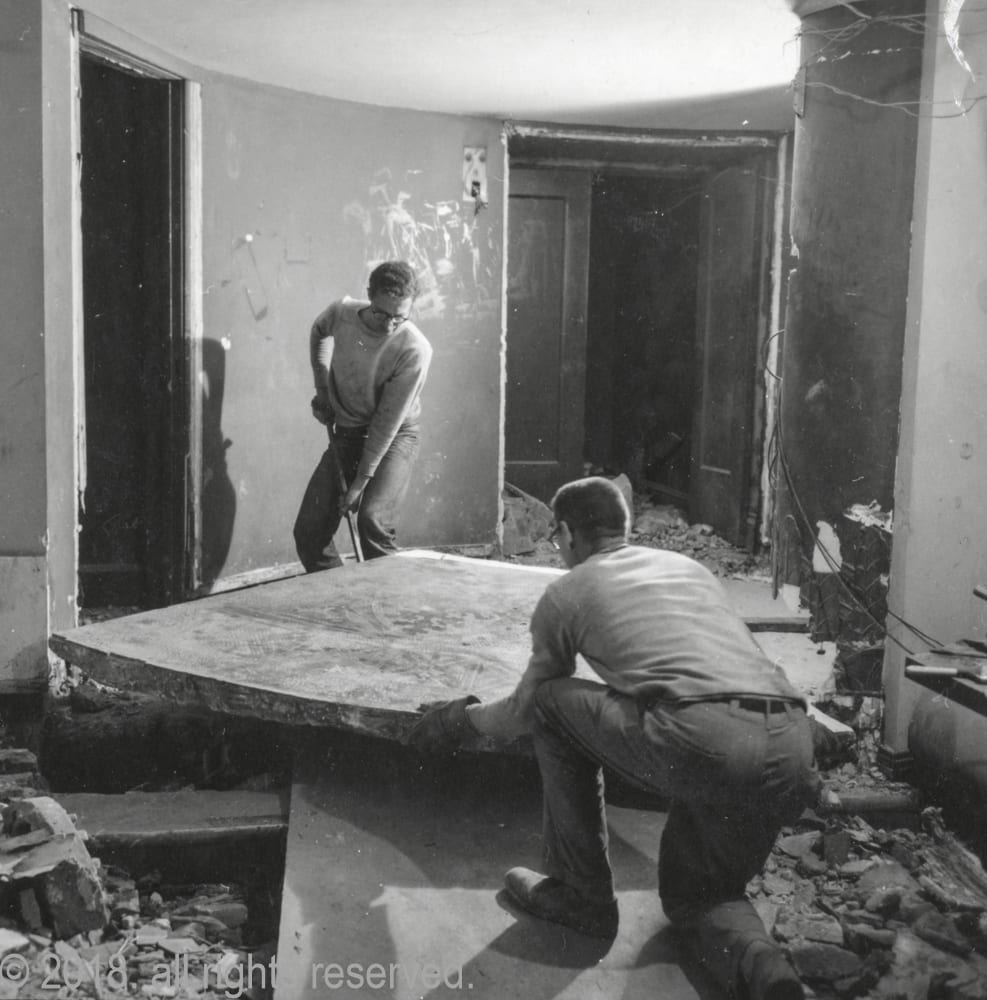
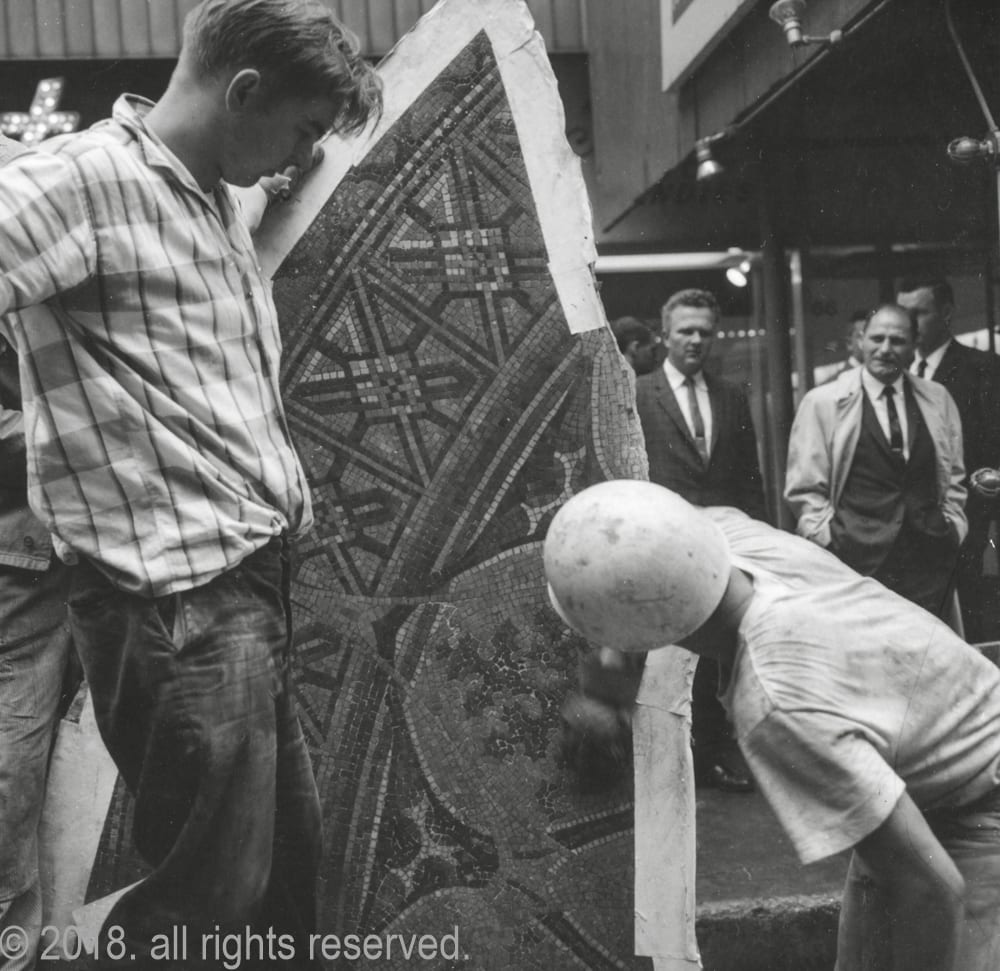
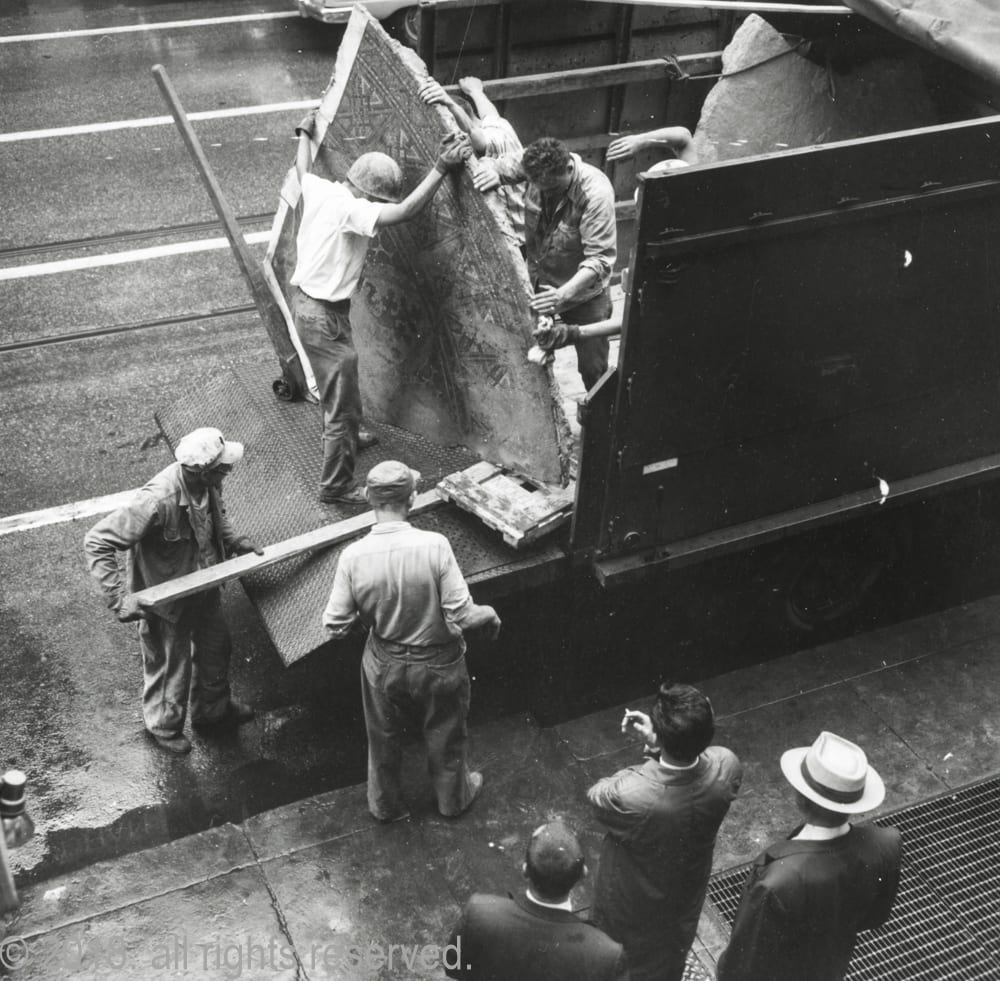
in this series – one of many to come – i’ve pieced together images and artifacts to form a rather compelling visual narrative, where richard nickel, david norris, and john vinci managed to carefully extract and transport two richly colored sullivan-designed mosaic staircase landing lunettes (located in the garrick’s auditorium) to navy pier, where one would be reassembled, documented, and displayed.
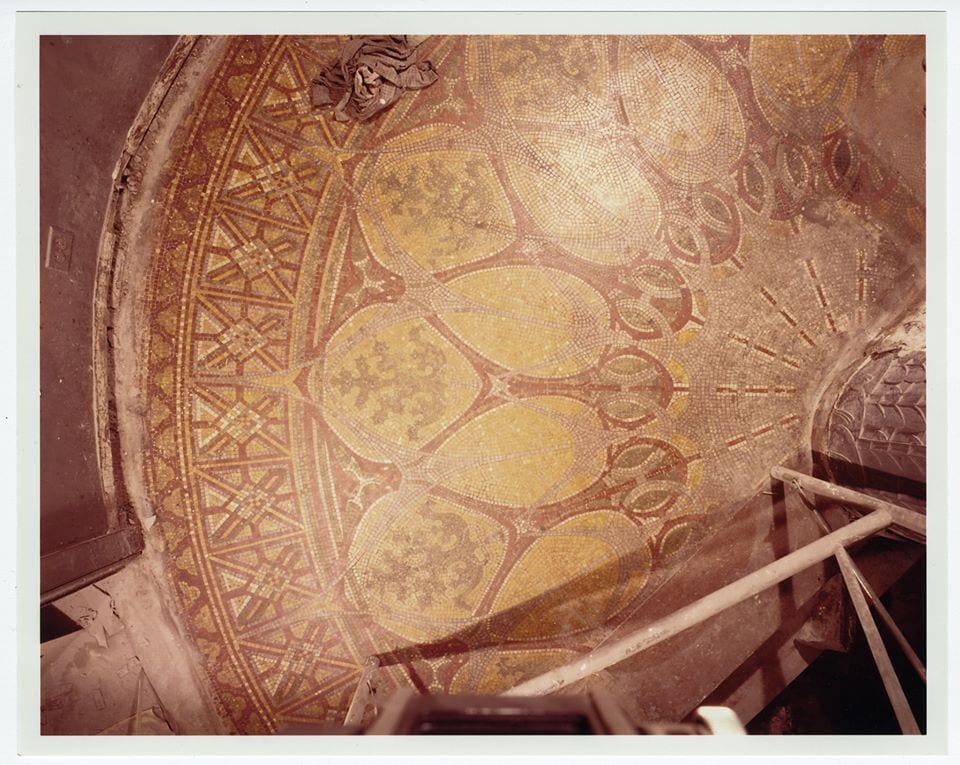

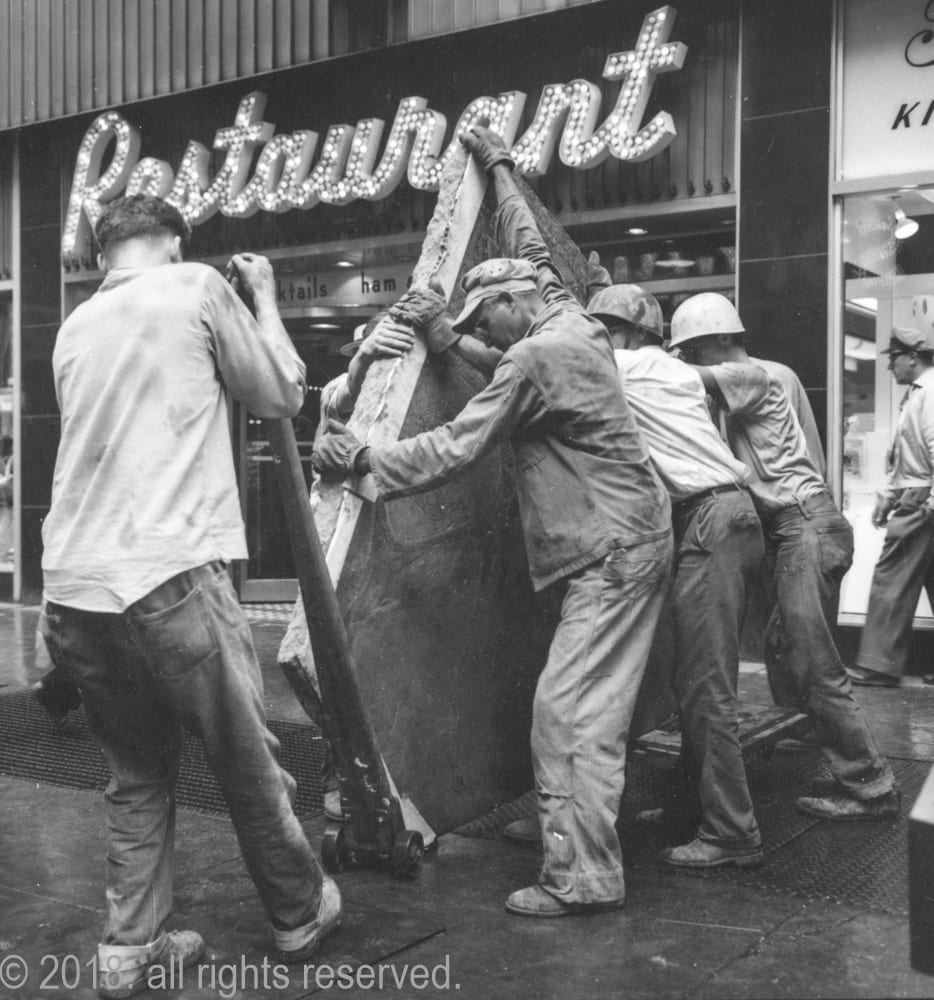
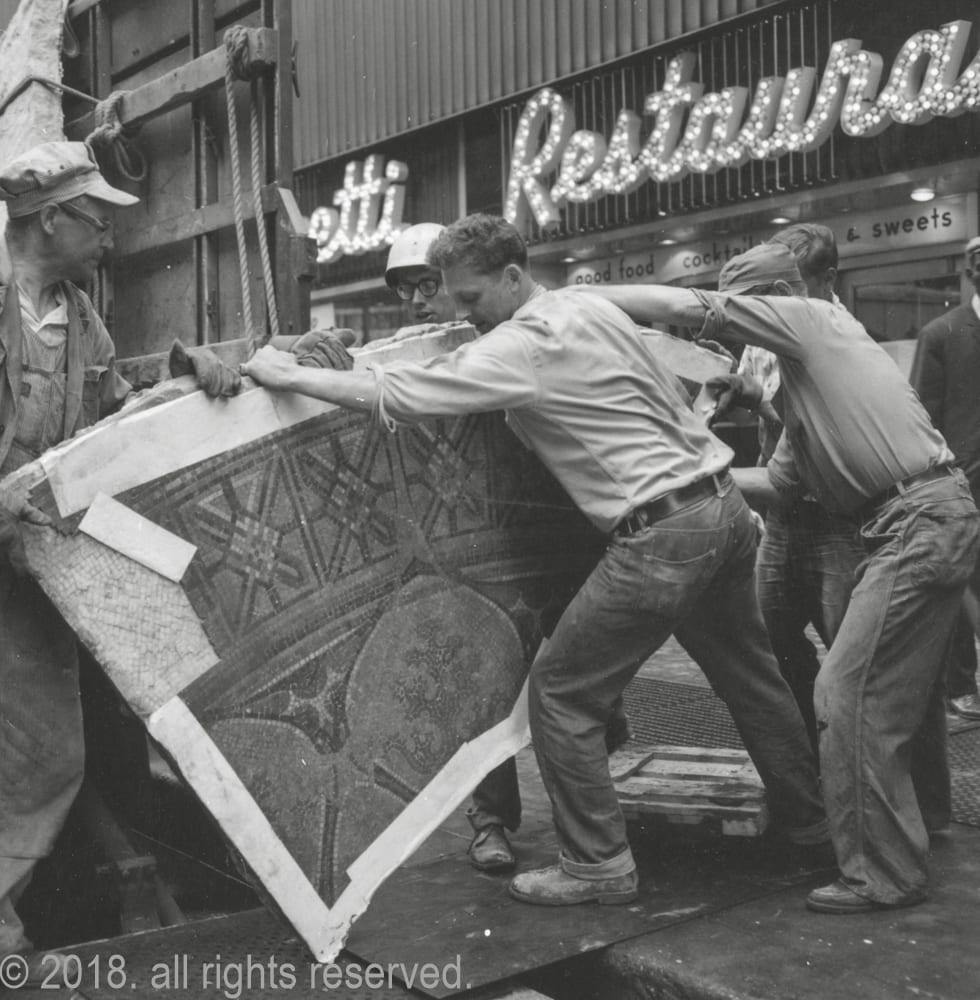
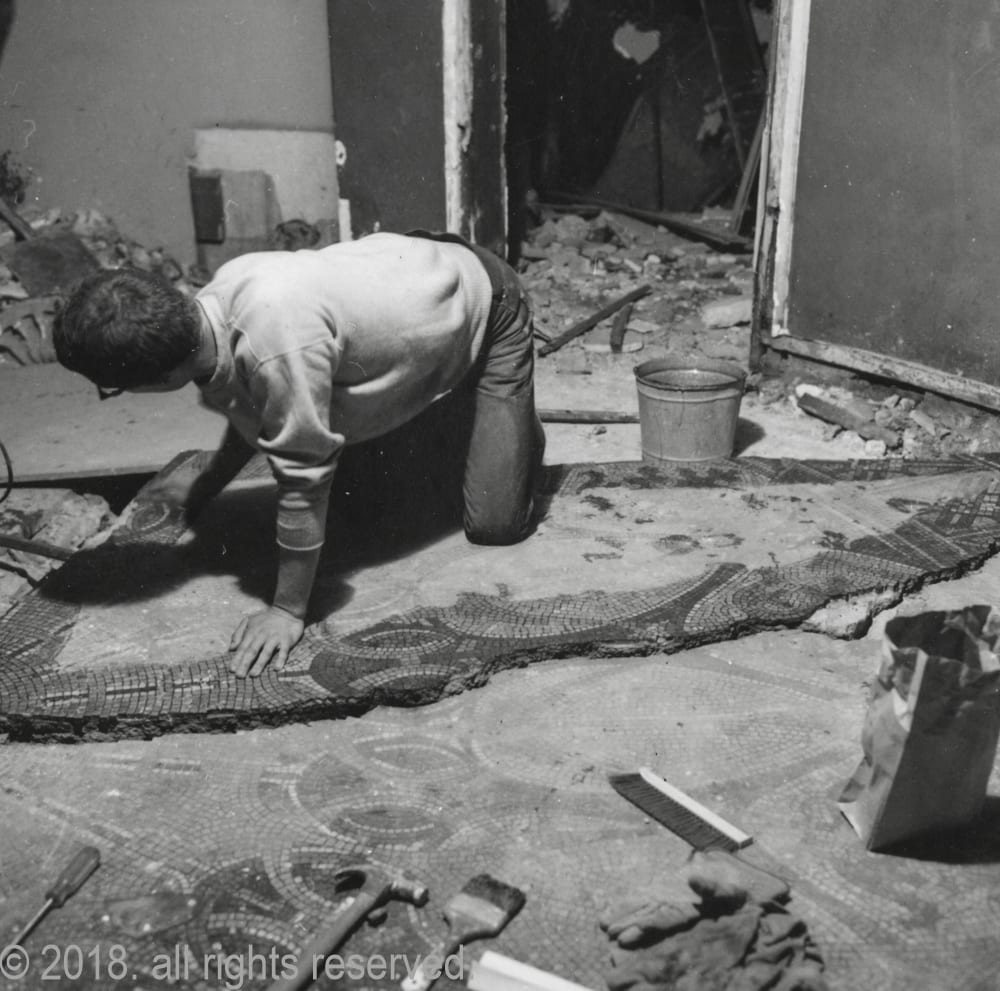
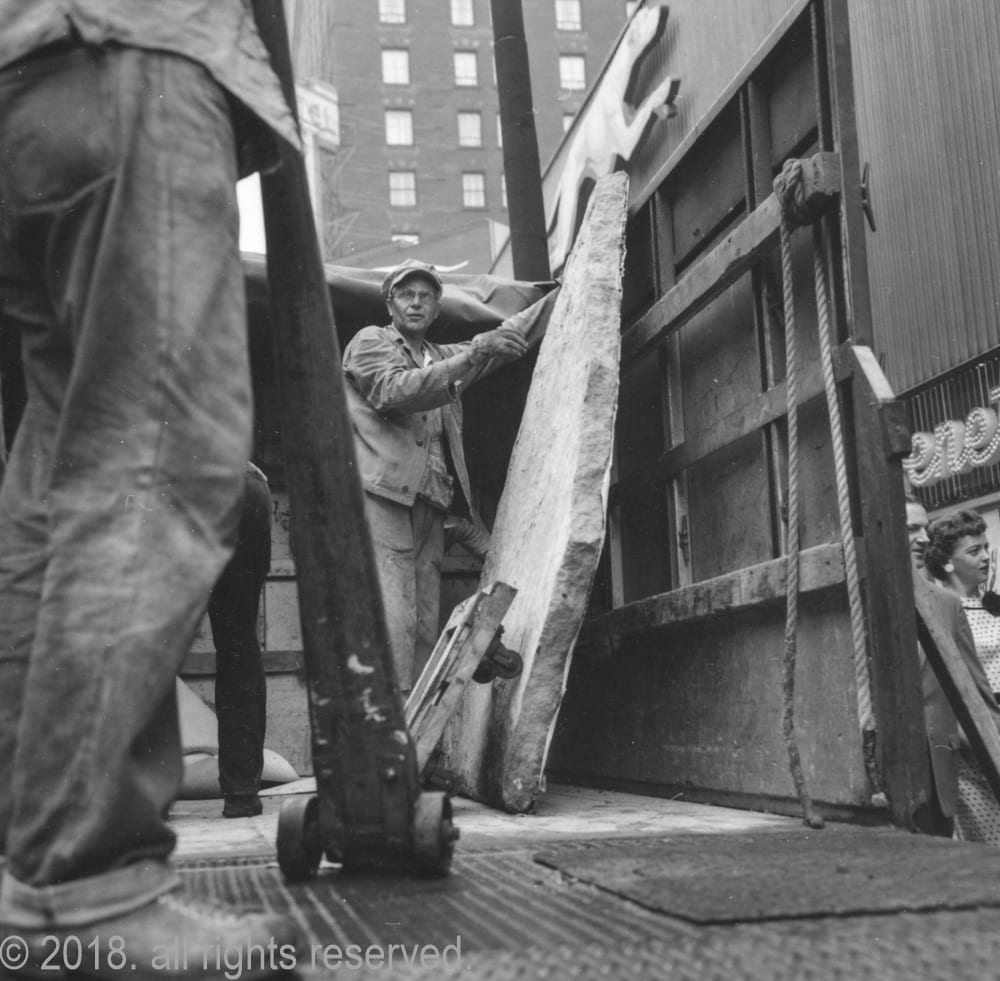
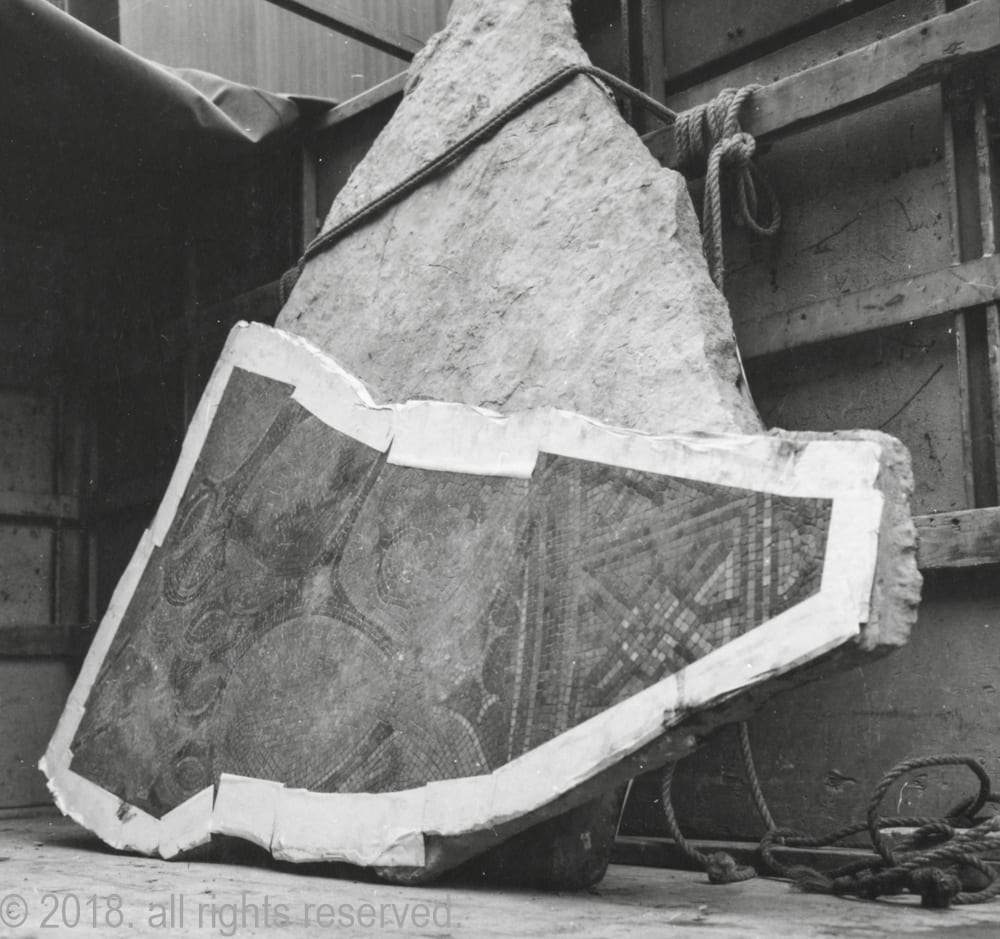
the well-preserved mosaics were first discovered by david norris after chipping away at layers of floor tiles that concealed them for decades. with very little time on their hands – wrecking of the building was well underway – norris, nickel, and vinci decided to remove the two landings in their entirety (tile and concrete) by sawing them into more manageable sections and loading them onto the trucks used to transport garrick ornament to navy pier. if i recall correctly, a single lunette weighed over three tons, so it’s no surprise that they struggled to move the panels from building to navy pier. they worked their asses off and it shows.
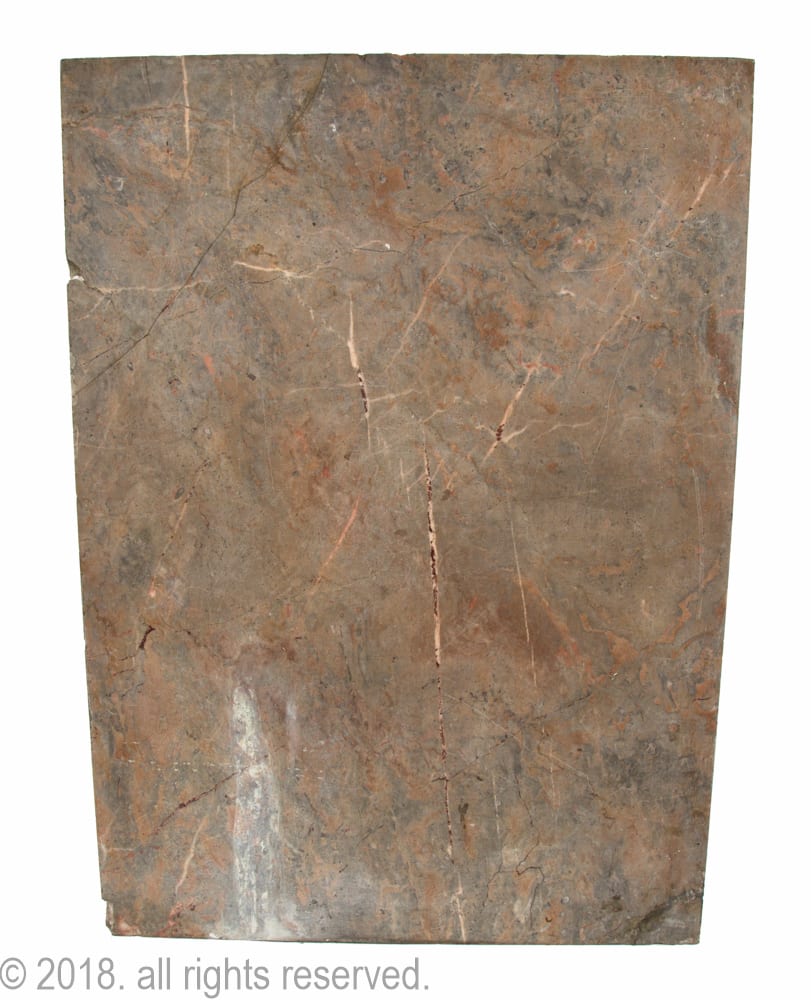
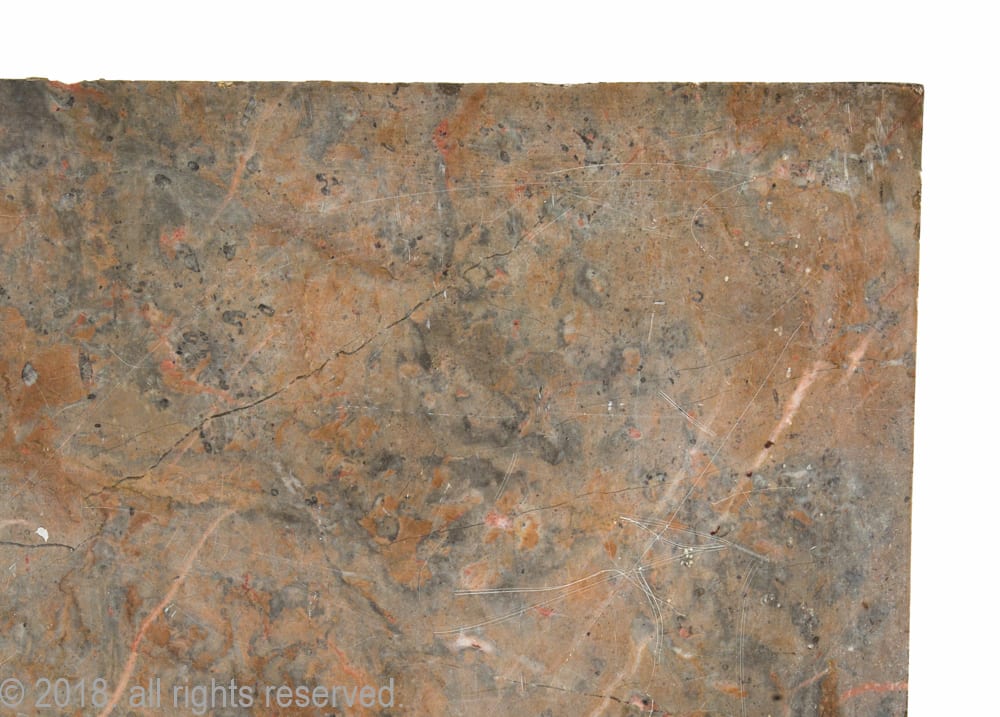
in addition to rescuing the lunettes, vinci uncovered one of the original marble wainscot wall panels surrounding the lunettes. thankfully he held onto it – taking it to his house where its been stored since 1961. after pulling it out of storage one day, i photographed the panel to include in this post.
images and artifacts courtesy of the richard nickel archive, ryerson and burnham archives, art institute of chicago, bldg. 51 museum archive, and john vinci collection.

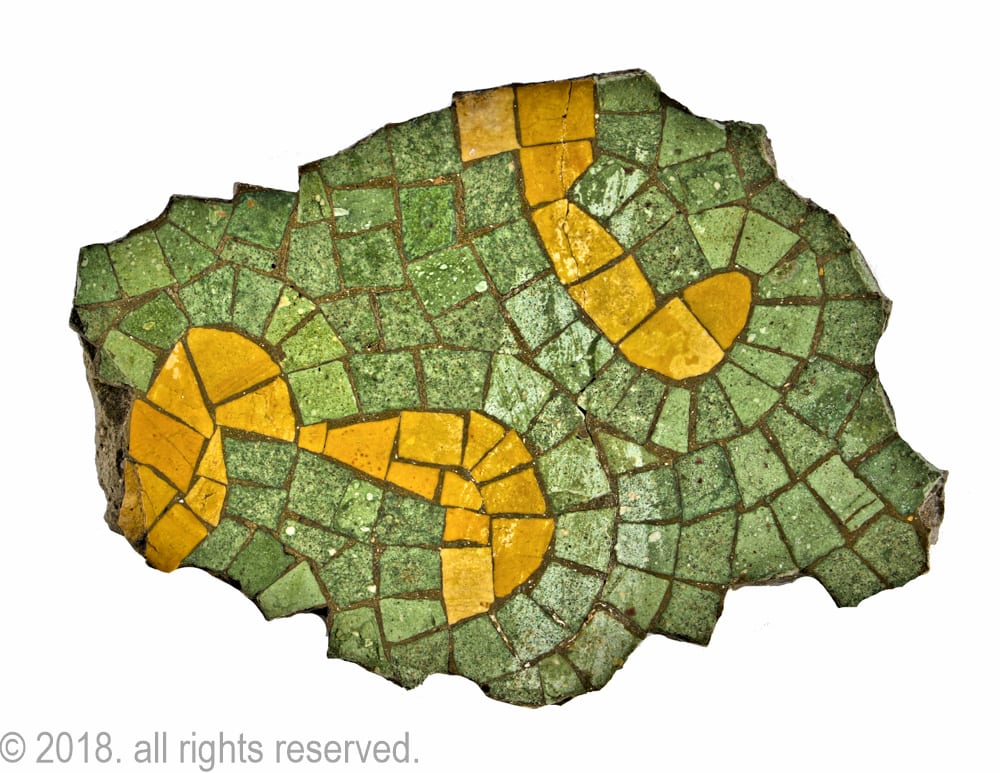
during demolition of adler & sullivan’s schiller building or garrick theater (1891) in 1960, two semicircular-shaped richly colored polychromed mosaic staircase landings (each lunette weighed over three tons), were discovered by david norris and laboriously extracted by norris, richard nickel, john vinci, and several stone masons hired by nickel to cut down the landings into more mangeable sections. the mosaic floor tile sections – including buckets of loose tiles the size of a penny – were loaded onto waiting trucks and transported to navy pier, where all of the building’s salvaged ornament was being stored.
the polychromatic mosaic panels were designed by louis h. sullivan and likely executed by william henry burke, a mosaic contractor who worked on adler and sullivan’s 1889 auditorium building. in a 1916 reminiscence, sullivan said that nearly ten million “little pieces” were used in the auditorium building. despite lacking technical knowledge of the craft, sullivan was said to be utterly obsessed with the design and execution of mosaic patterns incorporated in his buildings, which were used to emphasize ornamental themes and enhance the surfaces of a given space (and clearly to great effect in the auditorium hotel’s lobby floors).

originally named the schiller theater, the building was designed by louis sullivan and dankmar adler in 1891 at 64 west randolph street. it was intended to serve german americans, and was funded by the german opera company. at the time of construction, the schiller was one of the tallest buildings in chicago and is still widely considered one of the greatest collaborations between the two architects. the I-shaped building consisted of a 17-story tower flanked by a 9-story wing with oriel windows on either side. the exterior of the building was sheathed in buff-colored ornamental terra cotta shaped into a variety of patterns, and intertwining with lush, leafy forms. the sculptor richard bock supplied busts of famous german poets, artists and philosophers for the exterior as well.
the interior of the 1,286-seat auditorium contained a series of striking vaults, that were faced in plaster panels. these featured a repeated star-pod pattern in which central, star-like shapes are surrounded by borders of intertwining vine and leaf forms. other plaster panels had interlocking or flat circles, all originally in a color scheme of salmon, green, gold, yellow, and red.
the schiller saw many iterations and inhabitants: the german investors backed out of the project near the turn of the century and from 1898-1903 the building became the dearborn theater, showing vaudeville or touring stage shows. five years later its name was finally changed to the garrick theater under new ownership. between 1910 and 1950, the garrick building was leased, subleased, sold and put into receivership six times, but remained, nonetheless, a popular stop on the vaudeville circuit. simultaneously, and in symbiotic fashion, the early twentieth century saw the stretch of randolph street between state and clark streets become a national center for popular sheet-music publishers; filling the garrick and neighboring office buildings, they sold their new material to traveling vaudevillians.
in 1950, the theater was closed and converted into a television studio. seven years later, it was sold to balaban and katz, who reopened the building as a movie theater. eventually balaban and katz no longer considered the architectural gem commercially viable, and made a deal to wreck the building and redevelop it – tragically – as a parking structure. the garrick was razed in early 1961, but the demolition served as a clinching point in the preservation movement in chicago, instigating a major outcry from the public and becoming an important salvage for richard nickel and his associates.
corroborated by historian tim samuelson, the only people allowed on the wrecking site were the authorized team of richard nickel, john vinci, david norris, and charlie gregerson. thus, the pieces acquired by urban remains unilaterally lead back to their efforts. these very fragments were saved and likely handled by nickel himself. the entire team had been hired under the sponsorship of the world book encyclopedia and the municipal reference library of chicago to salvage materials specifically for distribution to interested museums and public institutions. the scene that is painted is a surreal one: fragments of the building were all laid-out at navy pier for curators and qualified buyers to select what they wanted for their respective institutions. without a great deal of time or interest, many ended up in private hands while some were thrown away or dumped (likely even in lake michigan).
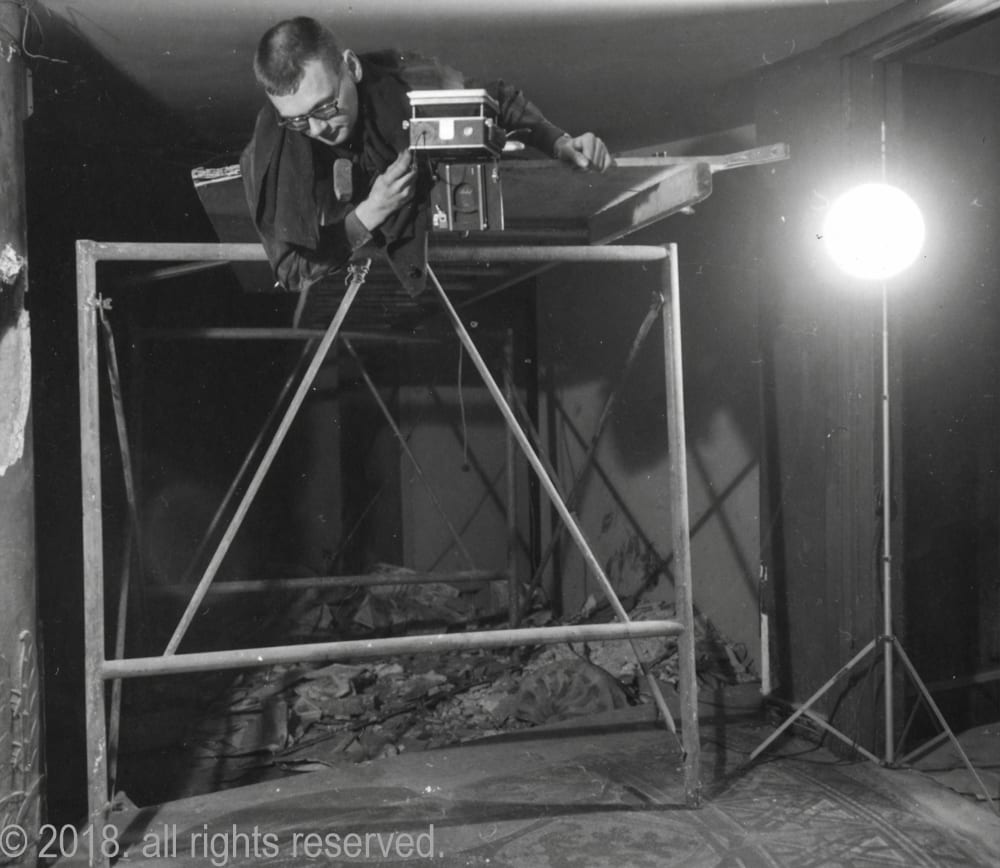
according to a publication on nickel’s preservation efforts, documenting the garrick theater was exceptionally time consuming and laborious. he even apparently worked around being denied access to the gallery of the theater by climbing into a fourth floor door via the roof of the neighboring greyhound terminal.
n the end nickel and the rest of his team salvaged hundreds of artifacts and ornaments, and recorded extensive notes, diagrams and photographs of the structure. nickel’s photographs specifically helped to record and elevate the building for posterity, rendering in black and white the sullivan-designed plaster work that had been garishly painted, thus reorienting attention to the form.
nickel passionately attempted a campaign to save the garrick, plying philanthropists to join his effort and soliciting letters from various public figures. a month before the demolition was to occur, telegrams and letters of protest poured into the mayor’s office, including from the likes of frank lloyd wright’s widow, le corbusier, arthur drexler (the director of architecture and design at the new york moma), lewis mumford, and more. a lengthy court battle, picketing, and nickel’s grassroots effort did not prevent the garrick from being turned to rubble. alternately, it did bring great attention to the vulnerable status of extant sullivan buildings, and mobilized the preservation movement.