
07 Mar ten years later: revisiting discovery subsequent documentation of vincenzo formusa, chicago’s oldest italian food importer at 710 west grand ave
March 7, 2026
in Bldg. 51, Events & Announcements, Featured Posts, Miscellaneous, New Acquisitions, New Products, Salvages, Uncategorized
Part one:
the destruction of a building occurs within a finite, and surprisingly quick time frame, but rarely is salvage such a tidy experience. each demolition spills into life outside the hours of actual wrecking, at first in the form of research to be done (and a period of agonizing over the inevitable destruction), and later in attending to the materials documented. in the event of a consequential discovery- such as a room-sized “time capsule” – this is only intensified, entailing methodically combing through artifacts and deliberating over where artifacts might belong.
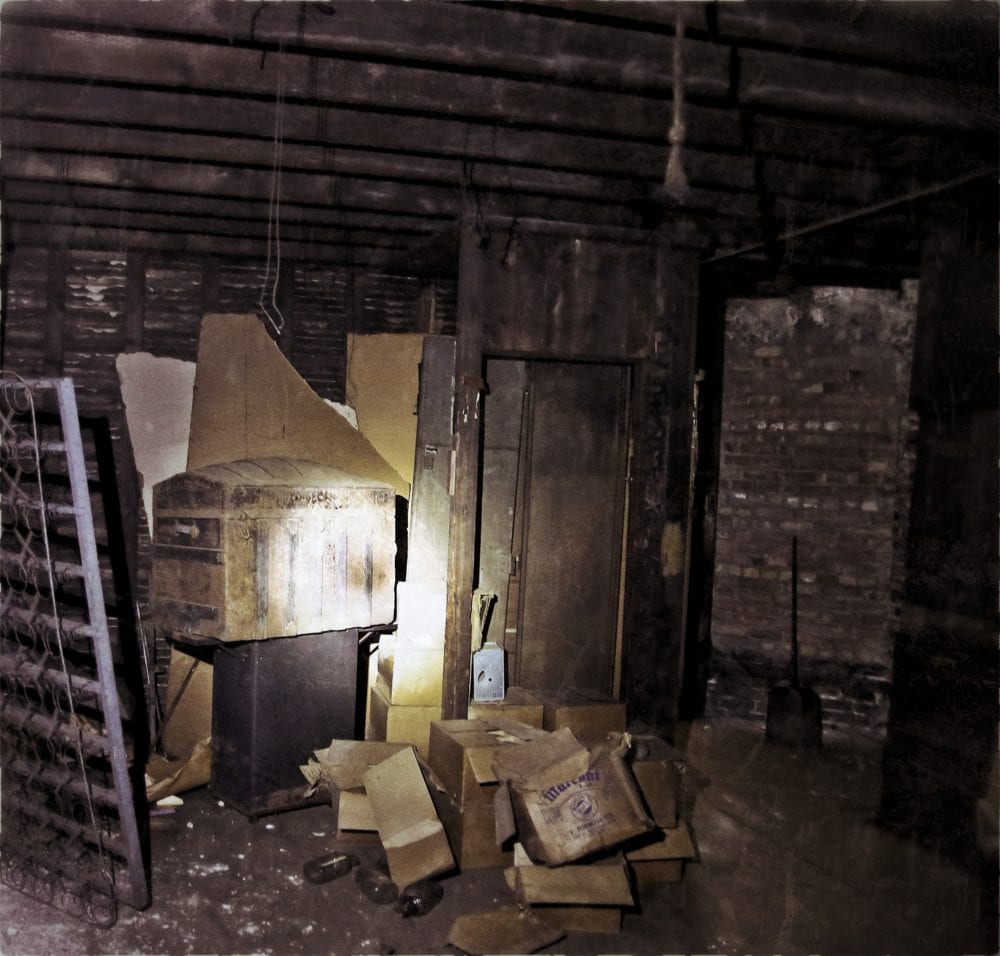
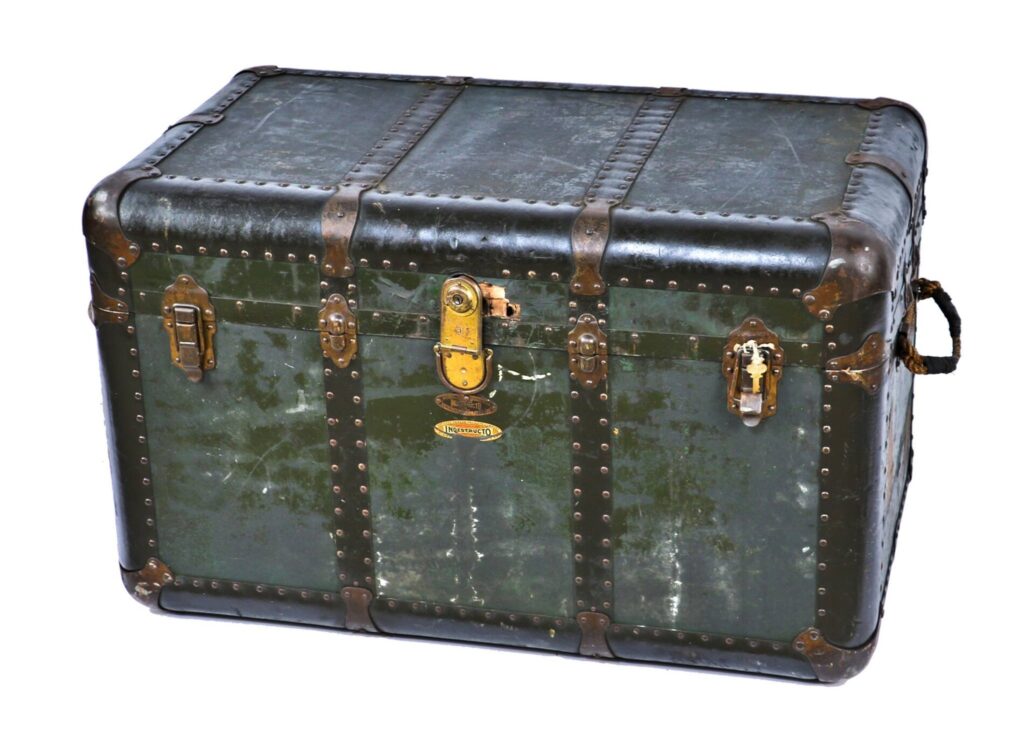
the discovery of a depression-era time capsule which preserved a great deal of an italian family’s century-long occupancy at 710 w. grand avenue, led to just this sort of afterlife for the story of the building. when the formusa family (who just last year moved their operations to des plaines), caught wind of the salvage, they naturally got in touch to reclaim some of their family’s belongings. surprisingly they had already rescued much of what existed on the “time capsule” floor, but they still had somehow missed these heirloom-filled trunks, which were so incredible to stumble across.
aside from the fourth generation of the formusa family getting in contact, the building itself is finally being razed this week. as the lath is ripped from the walls, so is the history of a family that lived and operated there for over a hundred years. I did find out, however, that the building will be painstakingly disassembled in order to recycle building materials (an ecological demolition is similarly happening with the moffat street church, which is soon to be taken apart brick by brick in logan square). the plaster, as well as wood (and anything else for that matter) from the interior and exterior components from the facade, will be recycled into future construction projects big and small. the narrative – beginning in 1898 – will live on through the remnants currently being deconstructed.
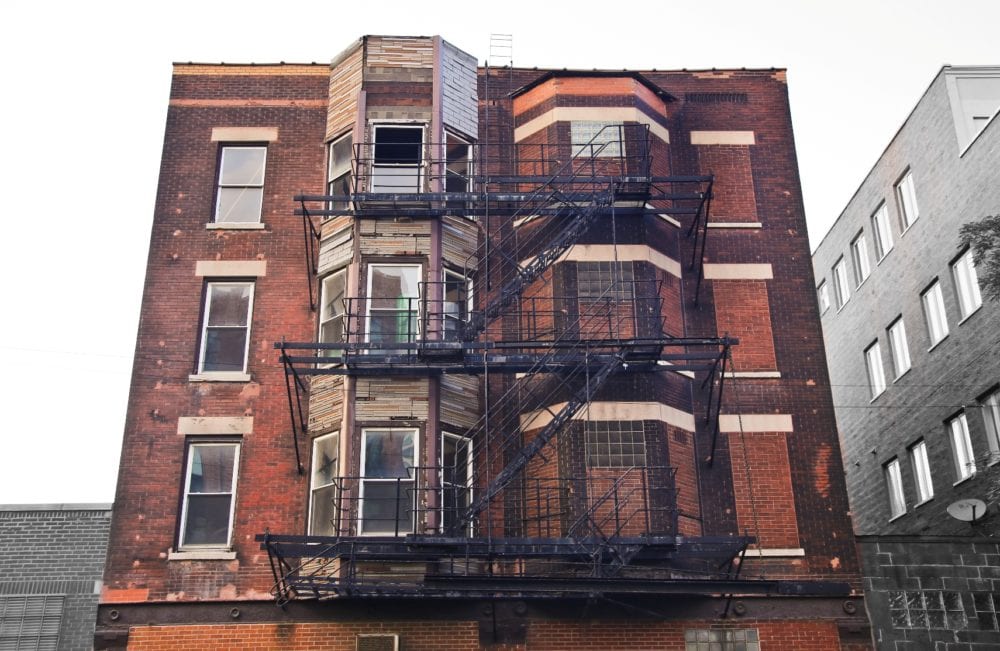
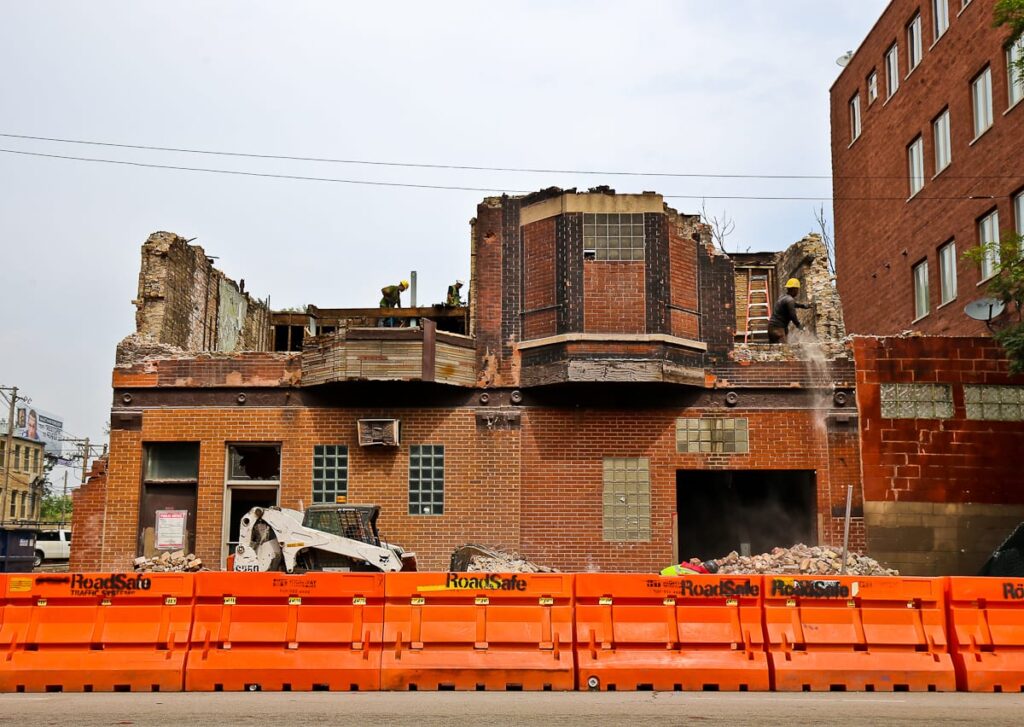
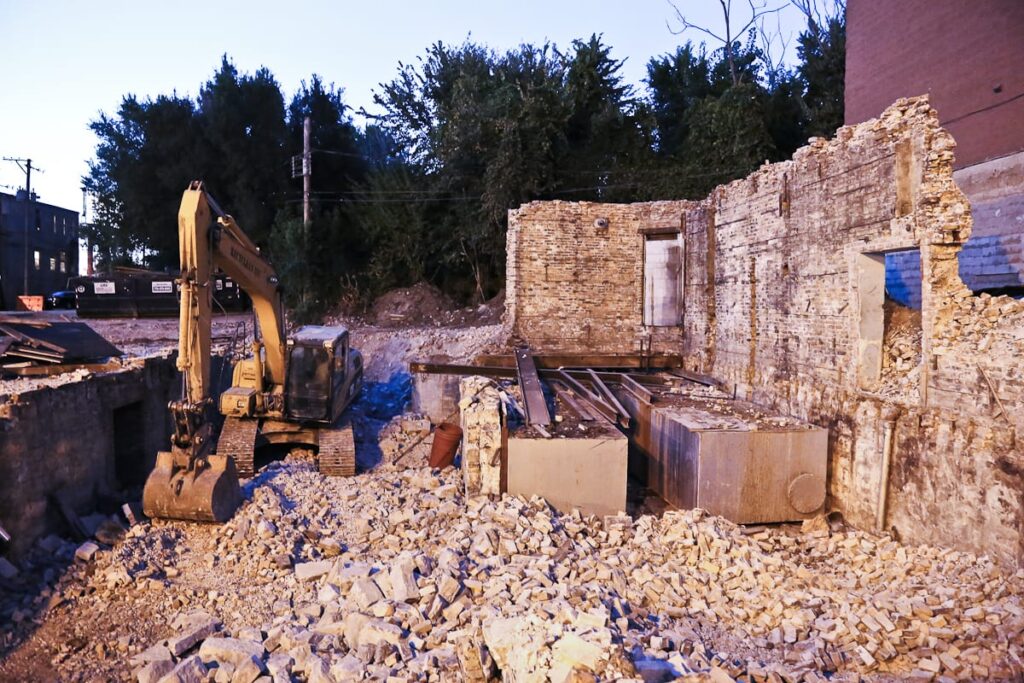
if it has to be done, this unusually methodical and conscientious way of taking apart a building sits a little better than wholesale wreckage which not only neglects the long-lasting soul of the place but ensures its history is forgotten when it gets pushed deep into the landfill. especially for the formusa factory building, it is in some sense cyclical, in that at least the building’s deconstruction will be witnessed at a decidedly slower pace, marked by valuing the individual components of the building — not to mention, the wreckers will laboriously go through those same motions that were made during construction over 100 years ago.
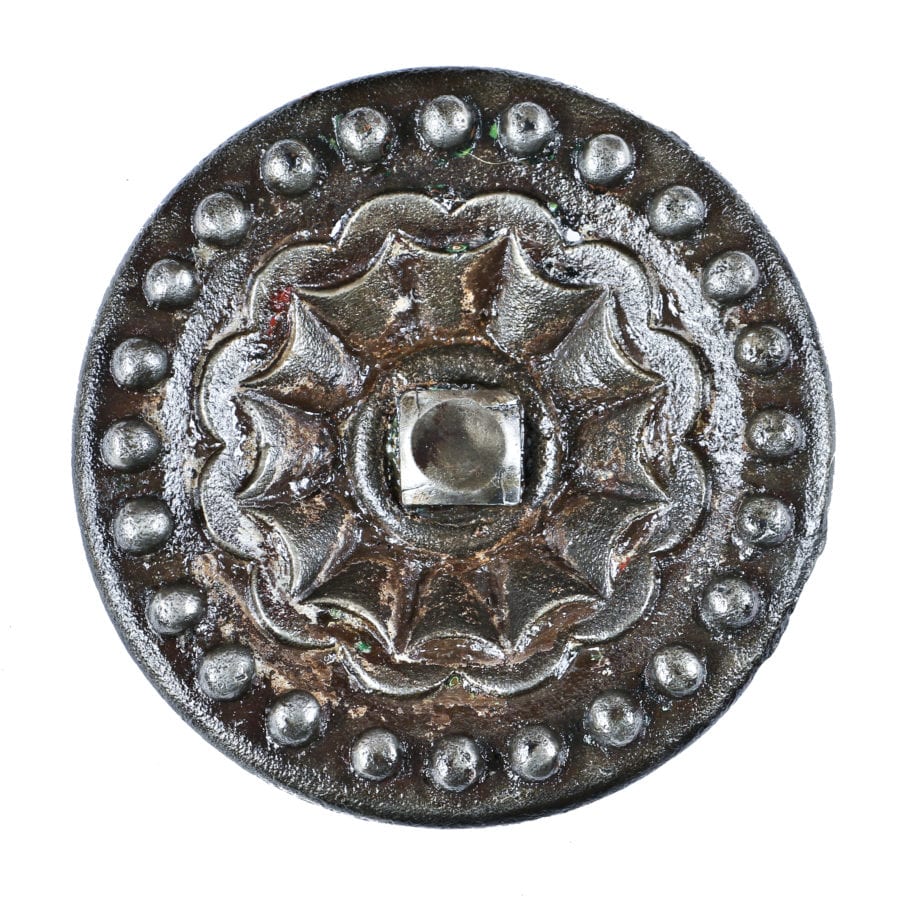
if demolition and/or a death sentence is handed down to a given structure, i find this to be one of the best approaches to honor the time, labor and resources that went into its construction. documenting the deconstruction is the least i can do to put forth a mutual respect in recognition of the importance of historic buildings and building materials.
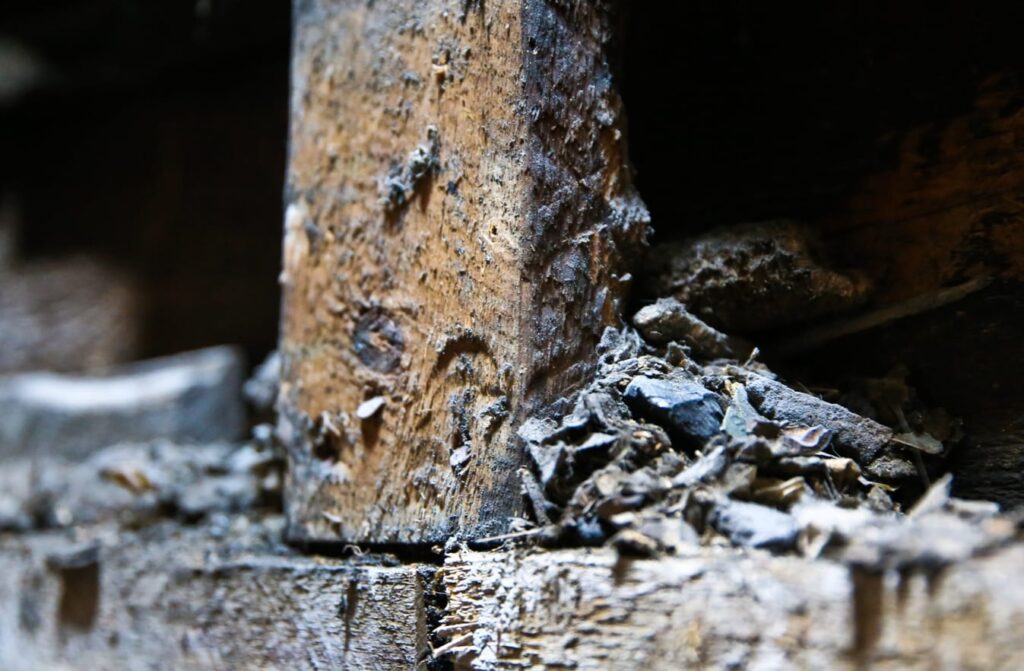
small remnants from the past found between floorboards and the cavities enclosed by stud and wall. turn of the century newspaper, buttons, hairpins and the like. some of it mistakenly dropped and forgotten about, while other fragments, including peanut shells were left there by mice who used it for nesting material. by collecting these specimens – big and small – i feel i’m developing a stronger connection to the way the formusa family went about their lives so long ago.
part two:
as covered in a prior post, last week brought about the salvage of a century-old three-flat commercial masonry structure located near grand and halsted (710 west grand avenue), set to be demolished in the near future (2016). the facade belies somewhat its historic character as residence and production space of the city’s first italian food importer.
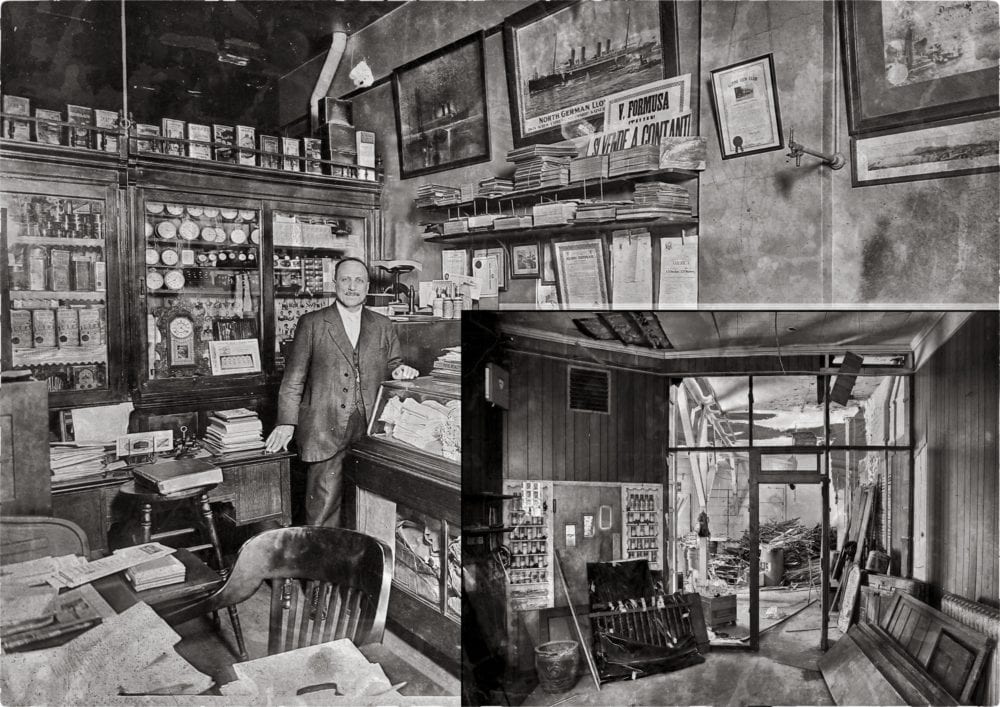
astoundingly, the building’s interior upper floors had essentially been sealed off, seemingly since the depression era, and within one of these dark and neglected rooms were a number of strapped wooden and pressed tin steamer trunks (impressive in scale and even adorned with decorative leatherwork) filled with unusual ephemera, clothing, bottles and other memorabilia belonging to the family who lived and worked within its walls for a century.
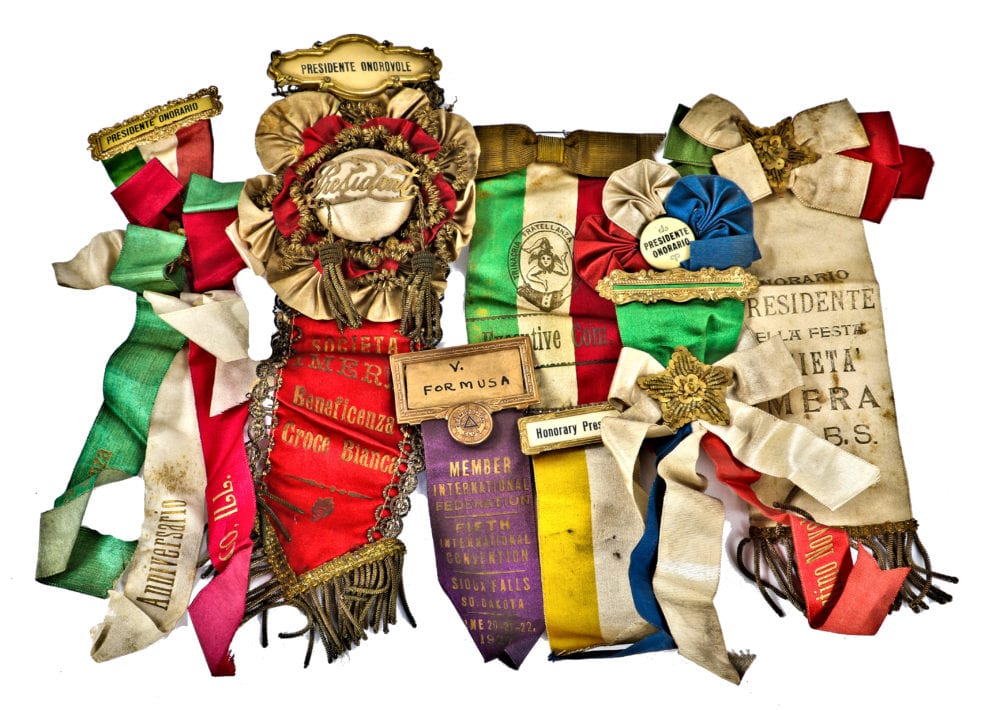
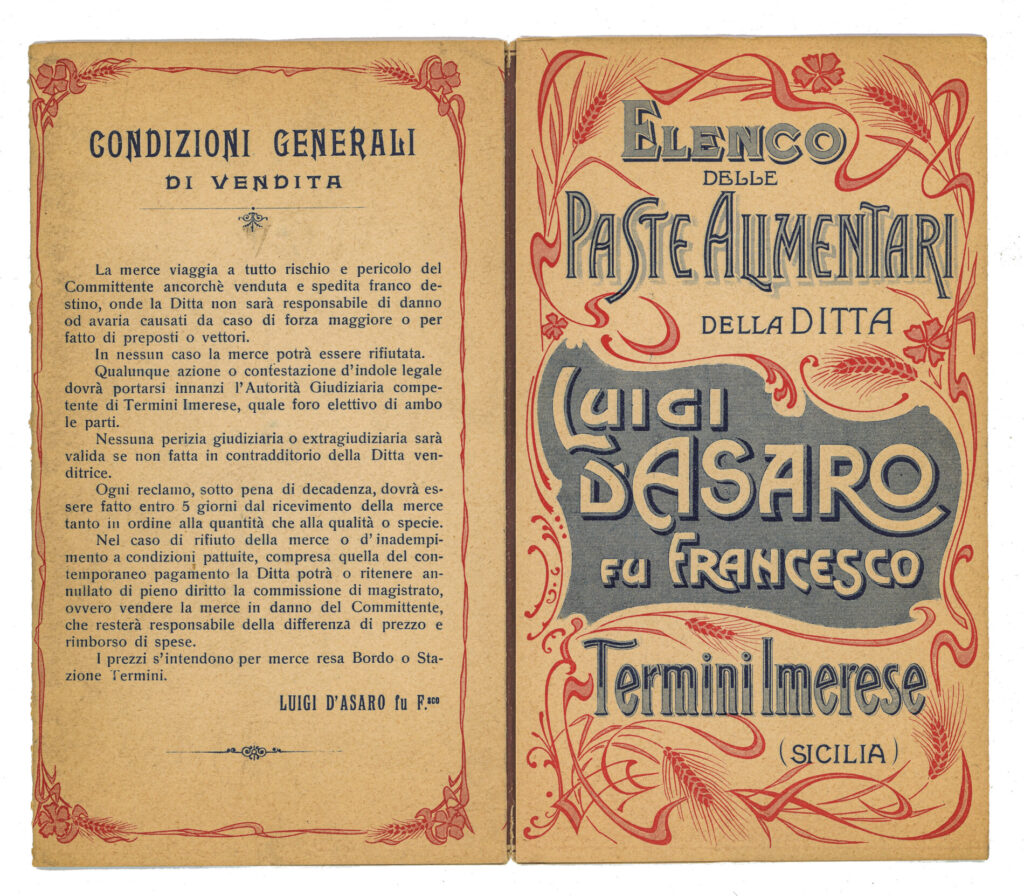
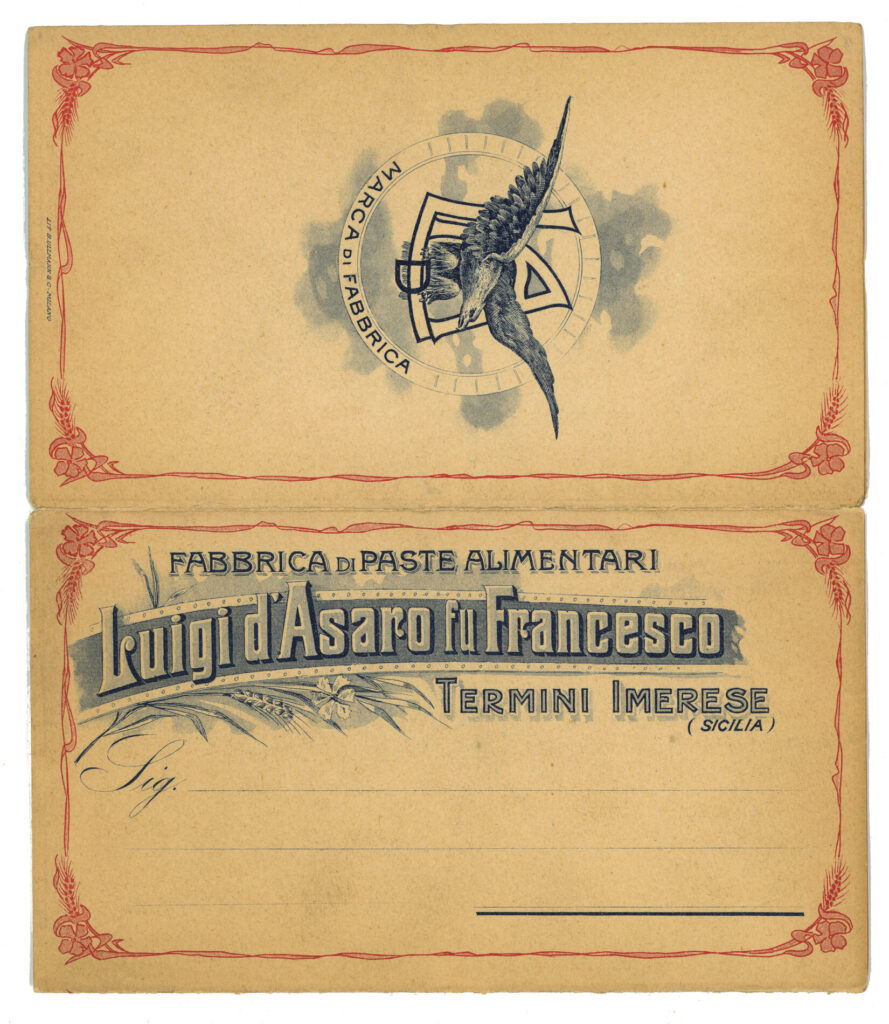
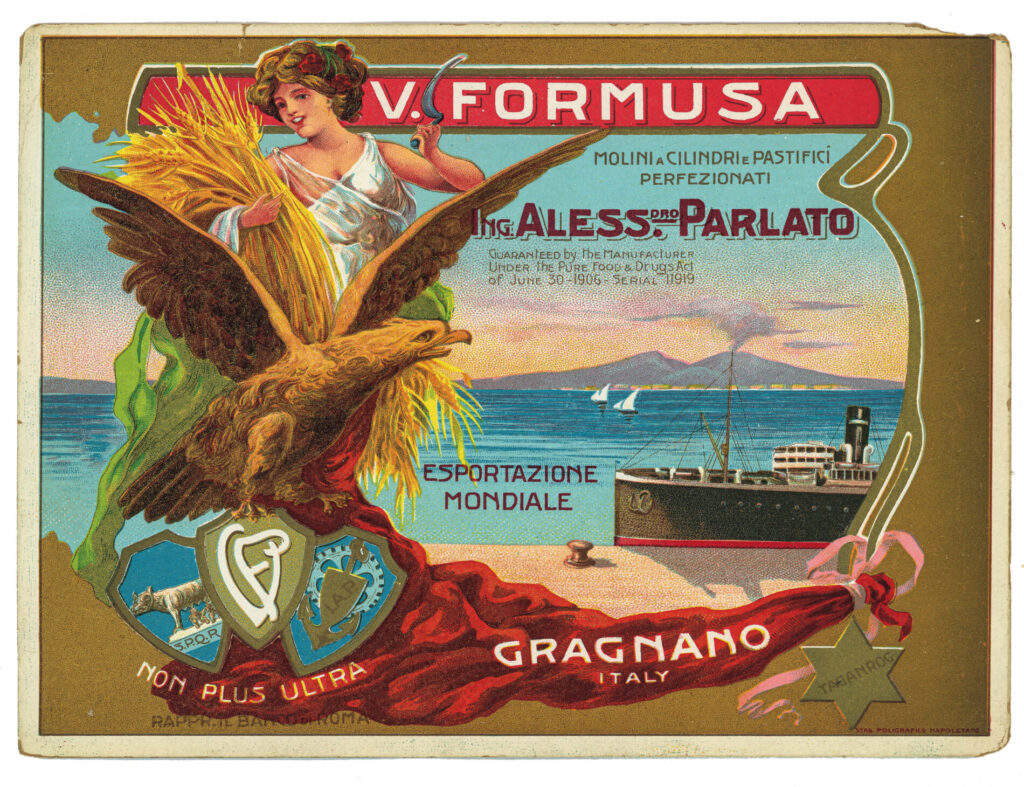
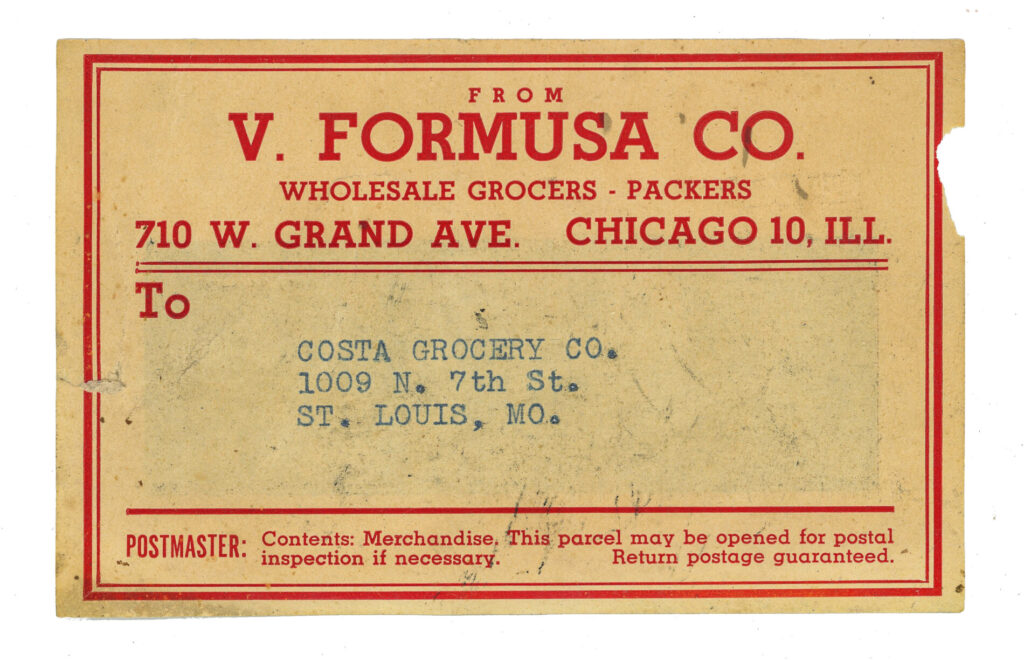
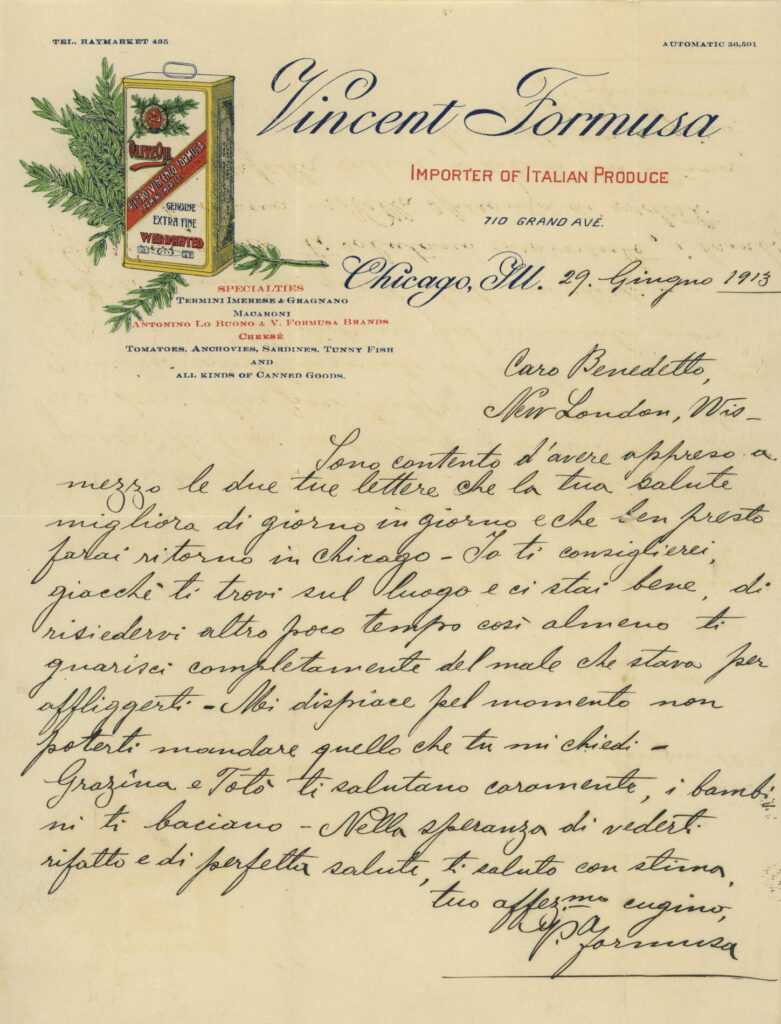
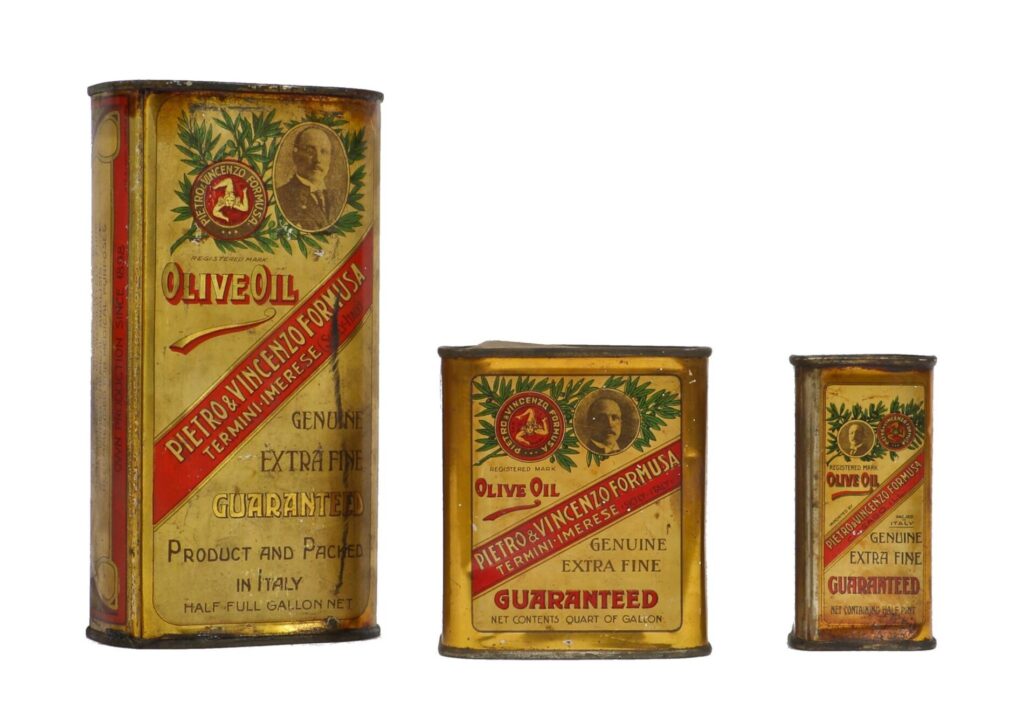
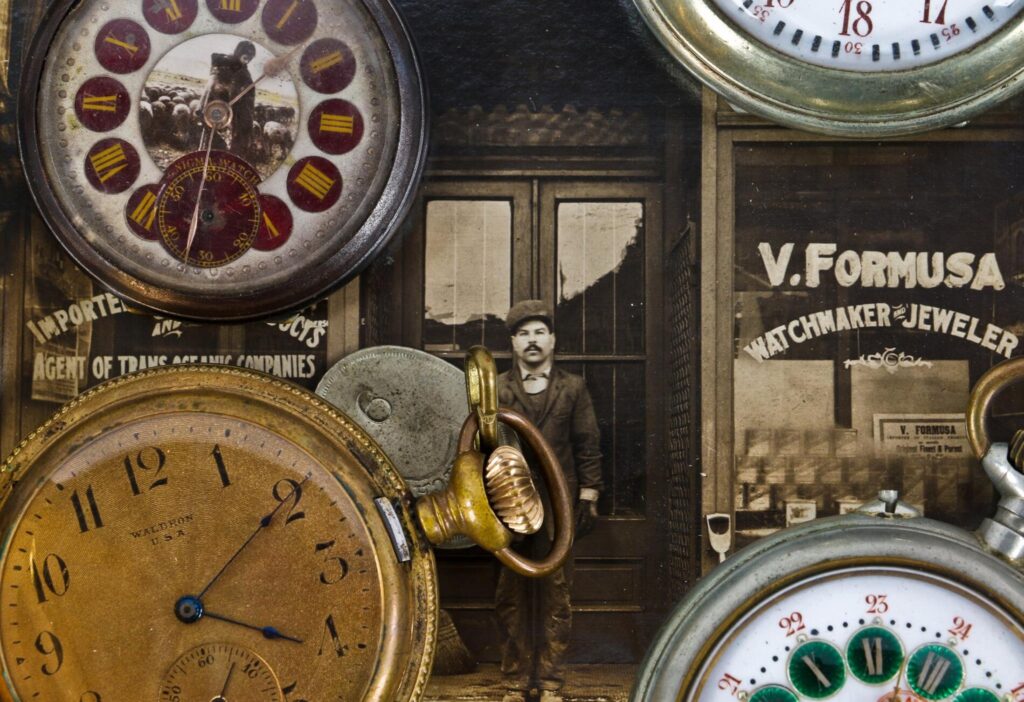
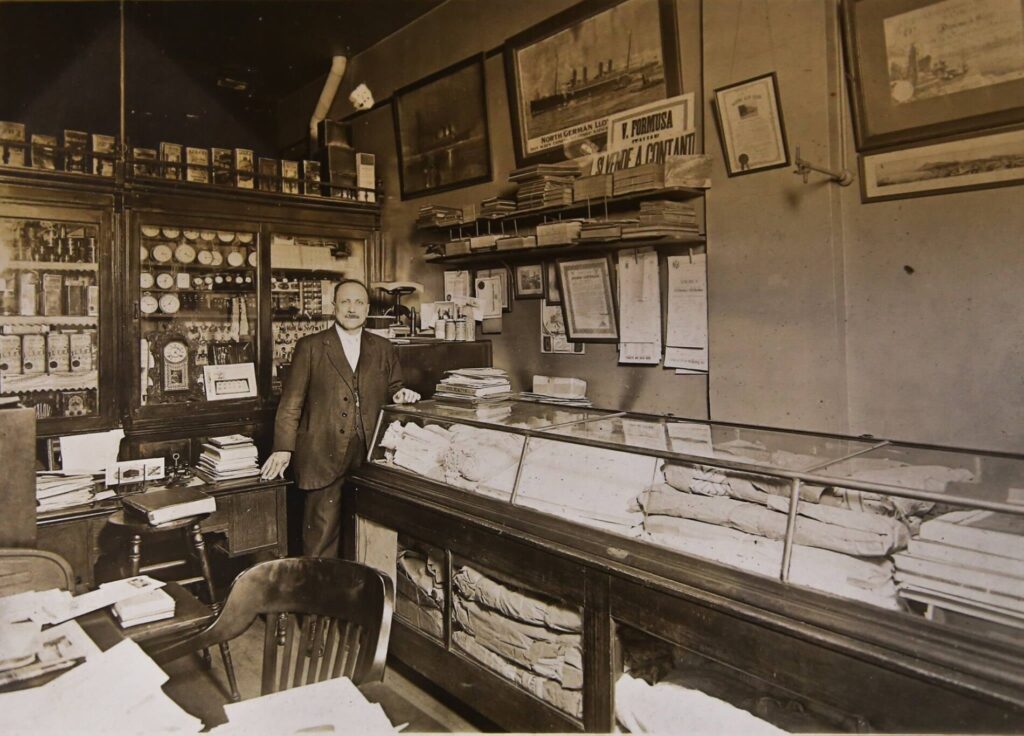
artifacts within bore witness to a well-recorded but lesser known history, of an eminent sicilian who made chicago his home during the late 19th century. in this doomed building on grand avenue, vincenzo formusa got his start by selling jewelry and watches, and soon after created his import business in the city, an enterprise which flourishes to this day.
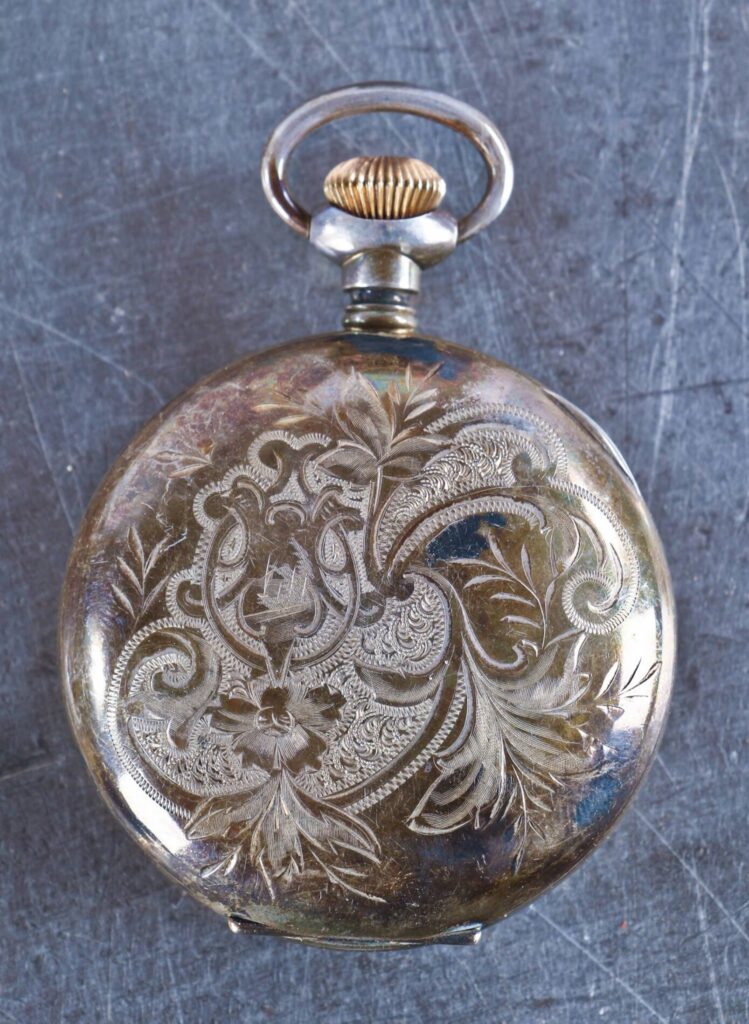
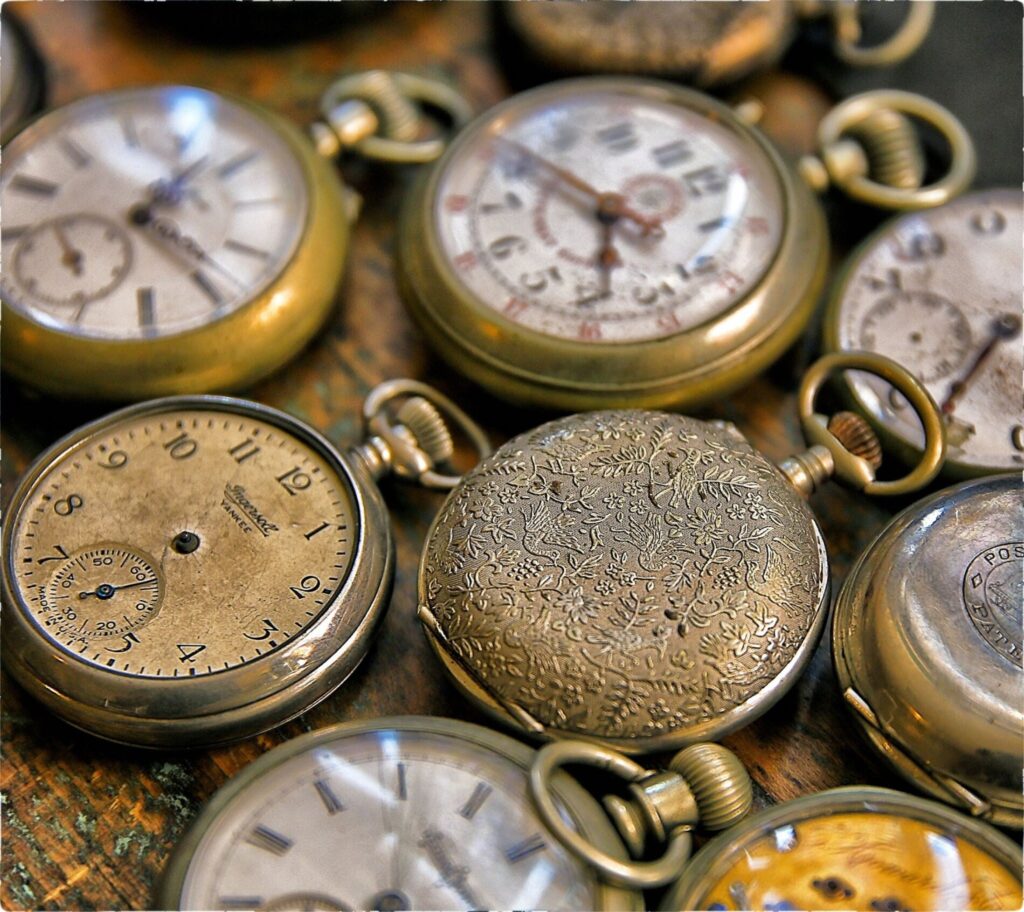
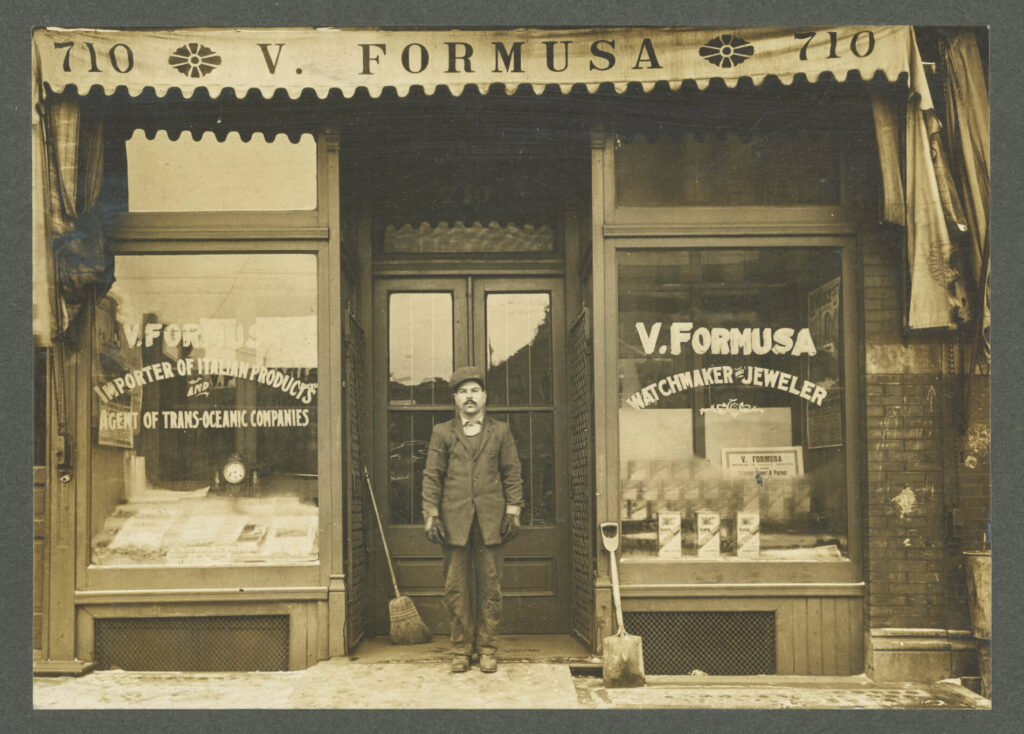
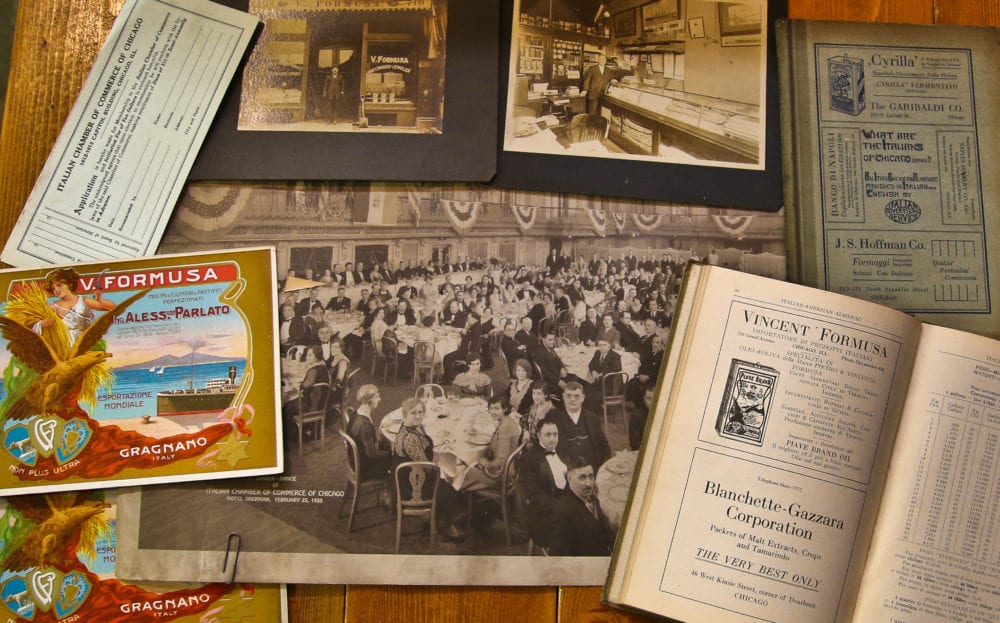
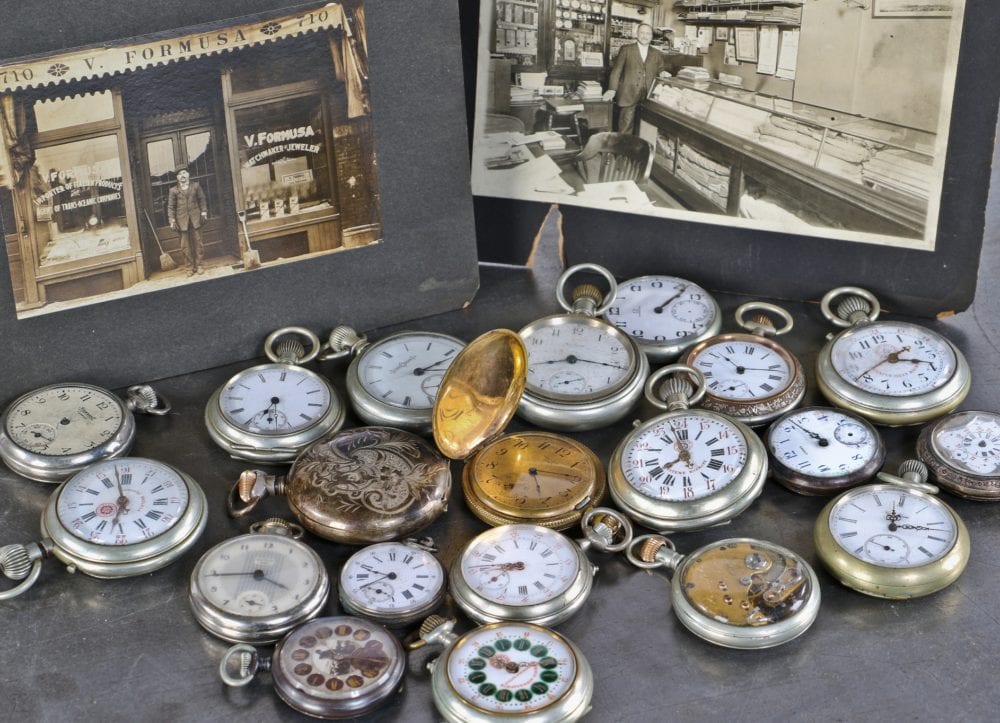
items unveiled in what was essentially a walk-in “time capsule” corroborate every phase of the family’s life, from old black and white photographs depicting the original storefront, to delicate metal timepieces, and tin containers of olive oil with original product still inside.
ribbons and pins reflect formusa’s network in new york and chicago, where he assisted italians traveling or migrating to the united states. as for his life before arriving to america, several ribbons indicate his membership in or fraternity with sicilian society by the trinacria, a gorgon forming a triangular configuration with three bent legs around a central head.
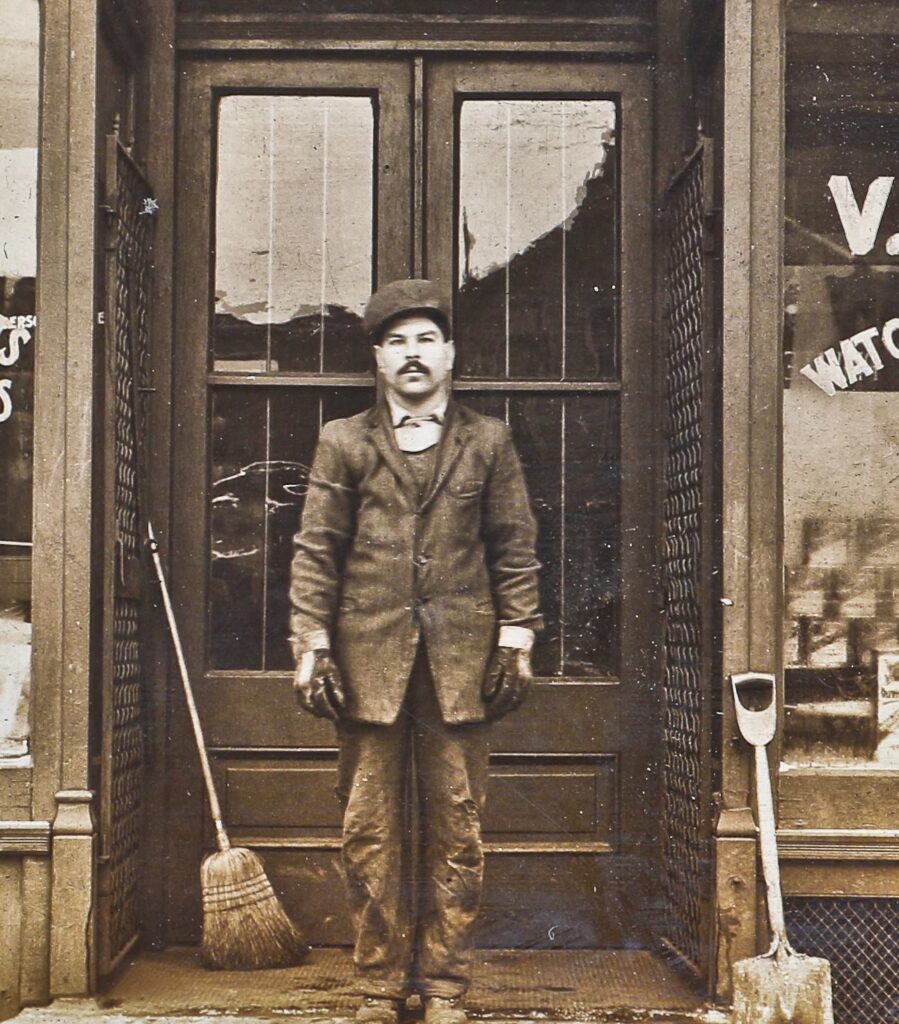
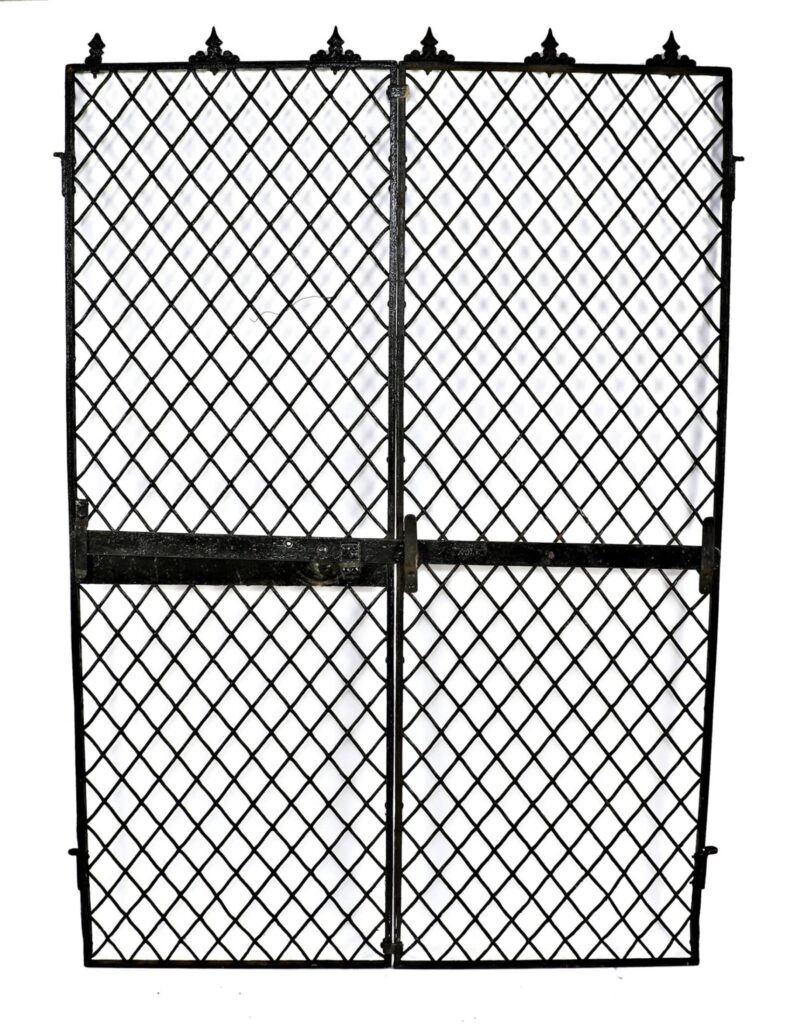
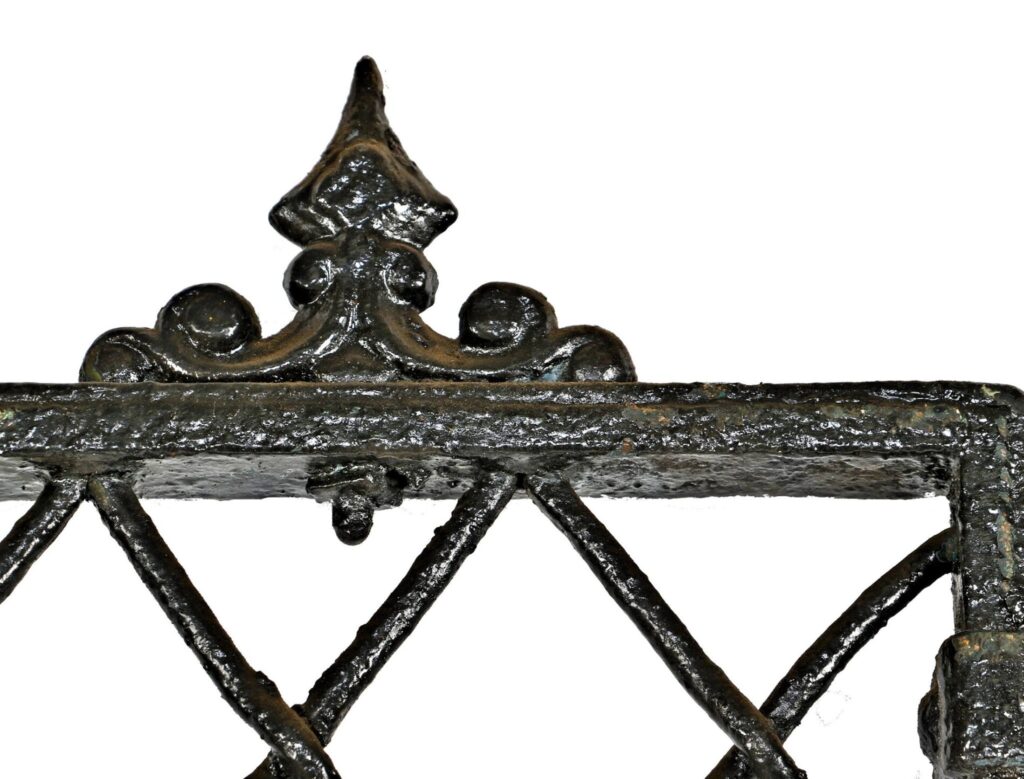
one of the more thrilling finds, among all the odd remnants, was a pair of decorative wrought iron gates which early on guarded the entryway to formusa’s original storefront. taken alongside this architectural piece is a haunting black and white photo which depicts “marconi” founder and/or family member (possibly son) and original tenant, standing in the doorway of his family’s watchmaking business. the formusa family member appears much shorter than the metalwork– a man from another time and place lending human scale to the building which would outlast him.