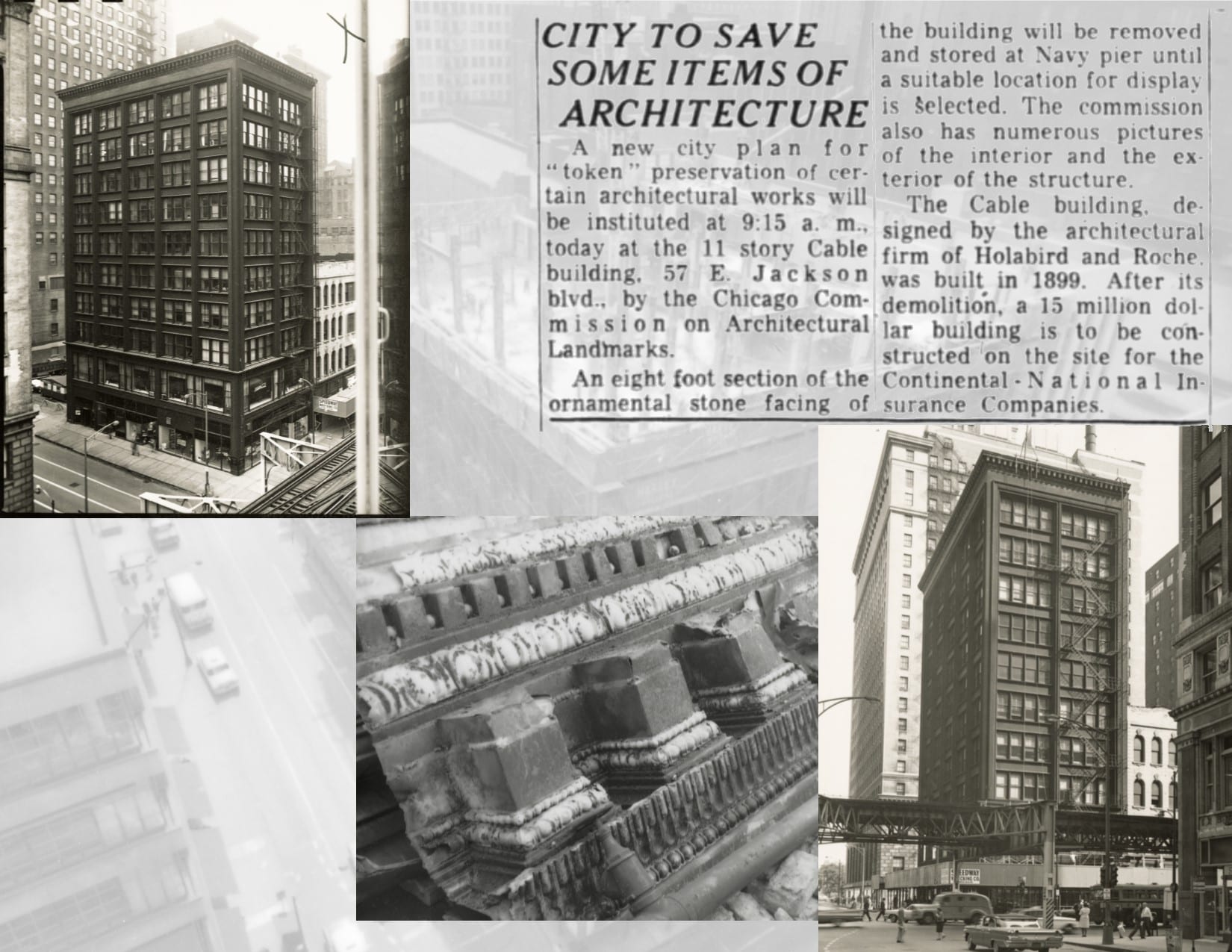

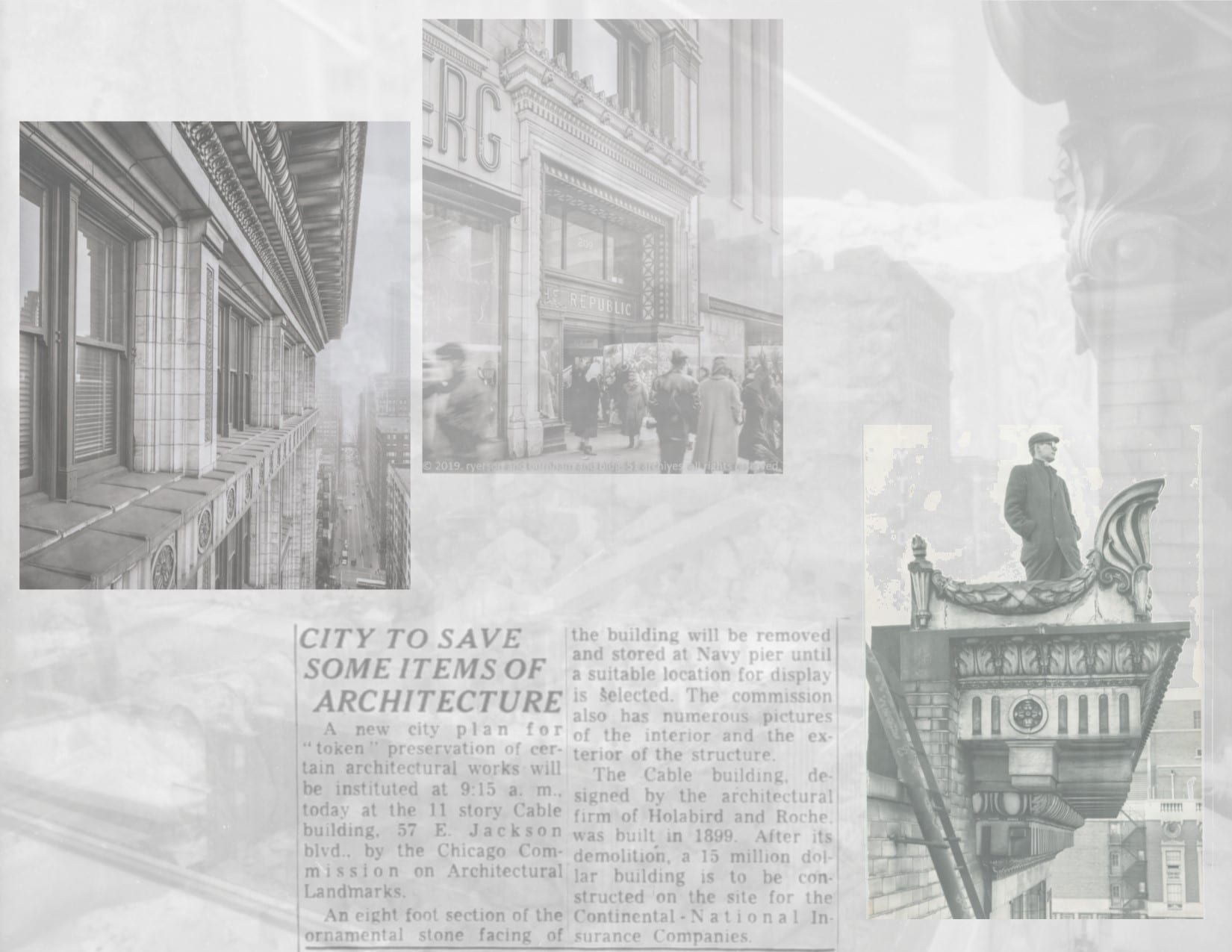
03 Aug photographic images taken shortly before and during demolition of holabird and roche’s republic building
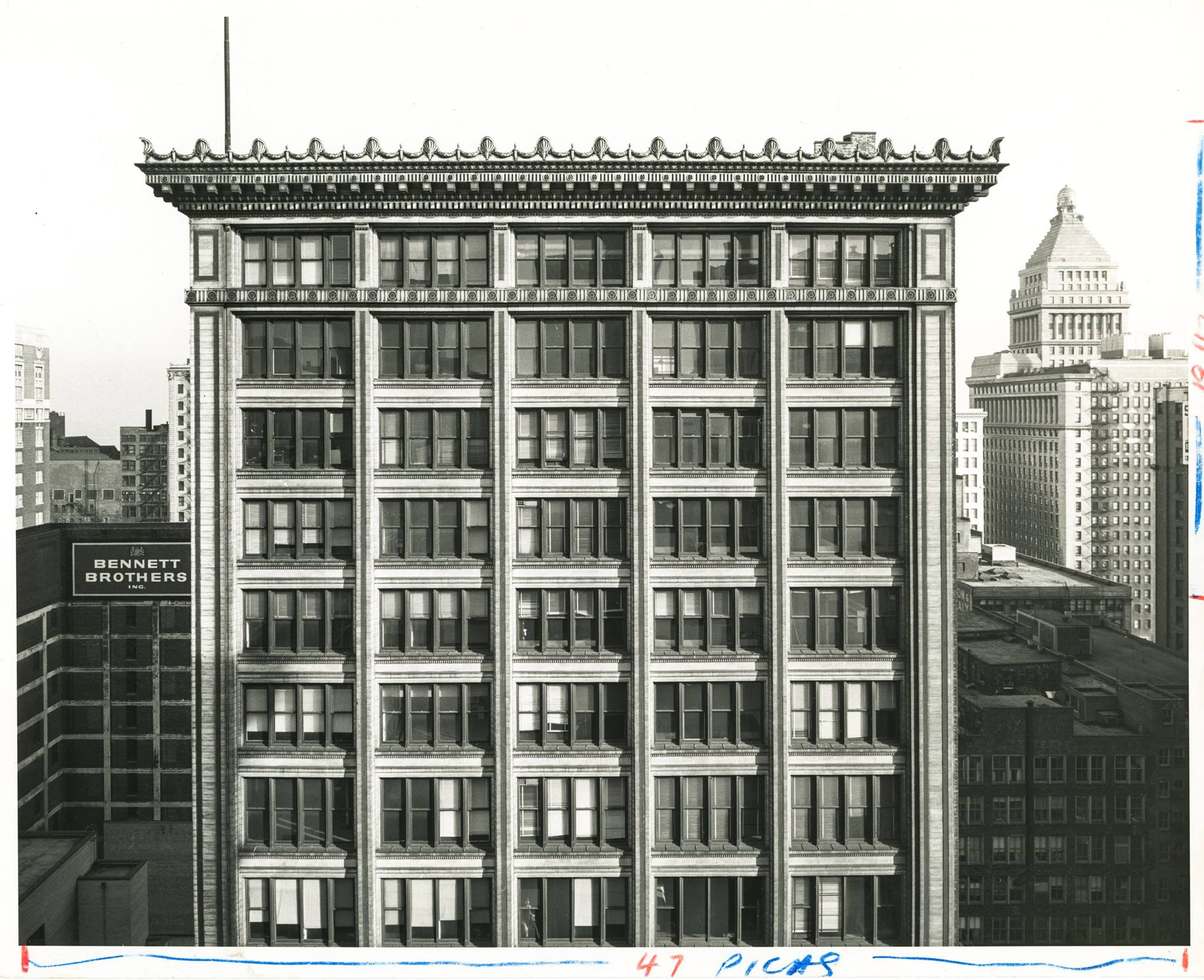
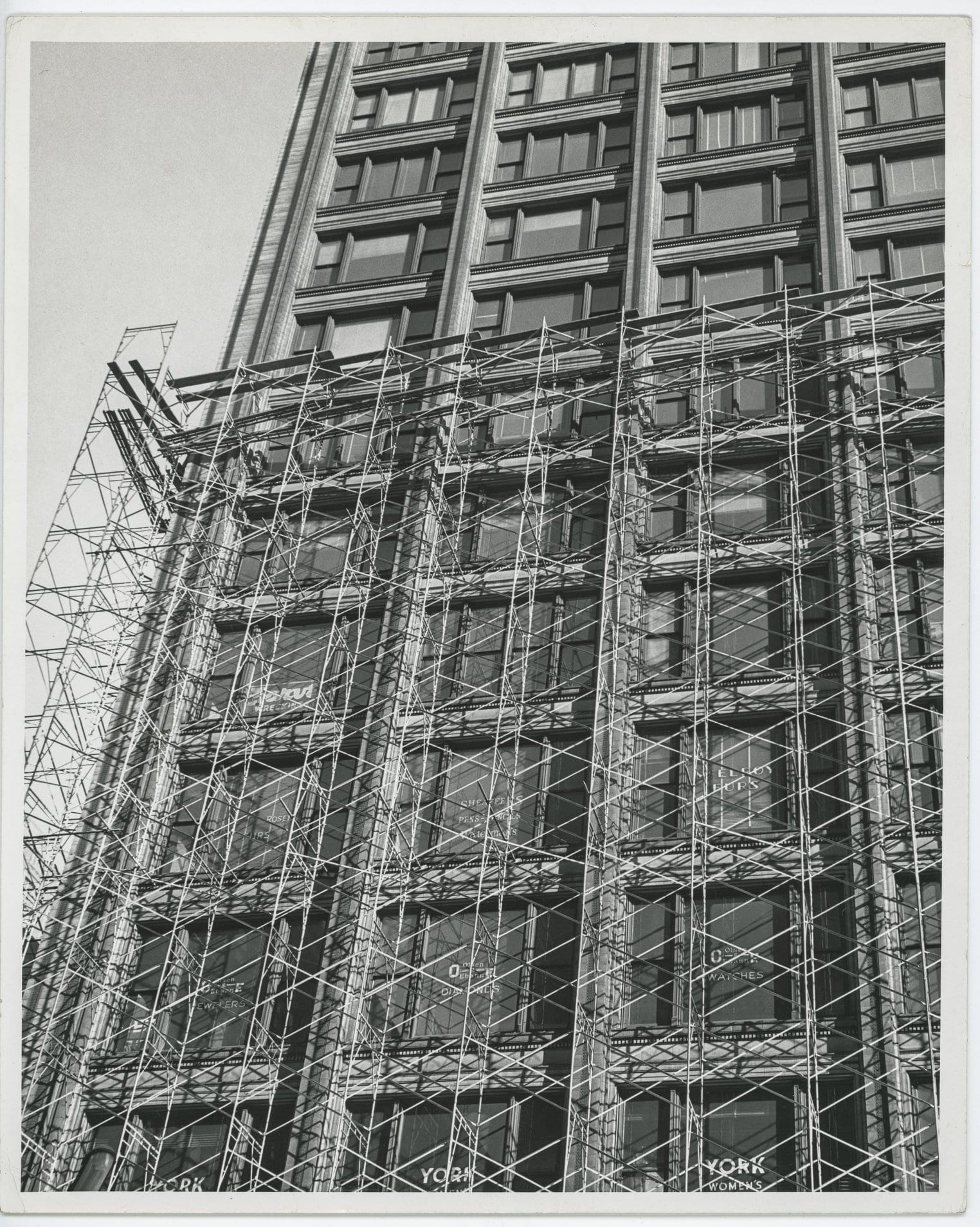
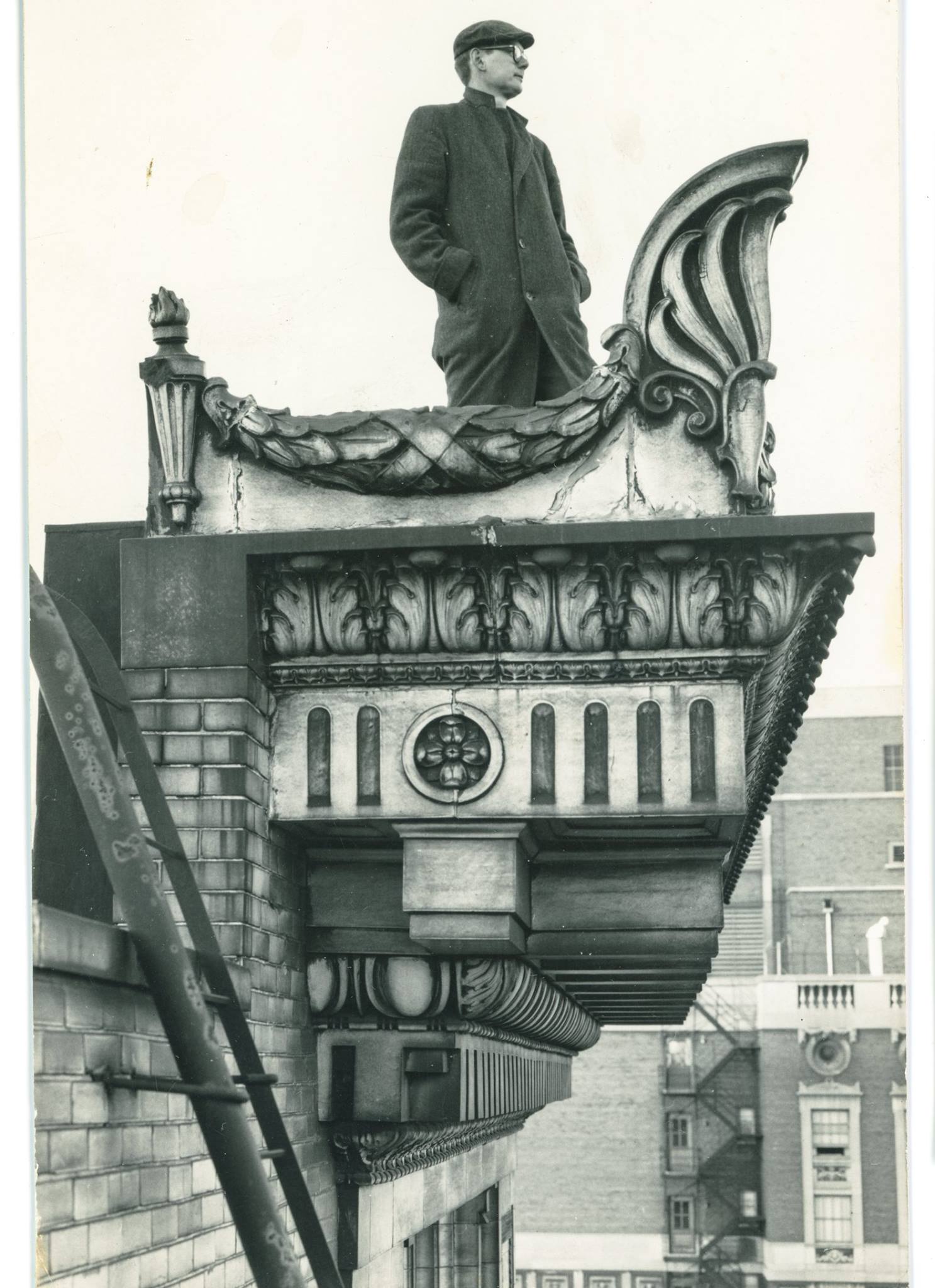
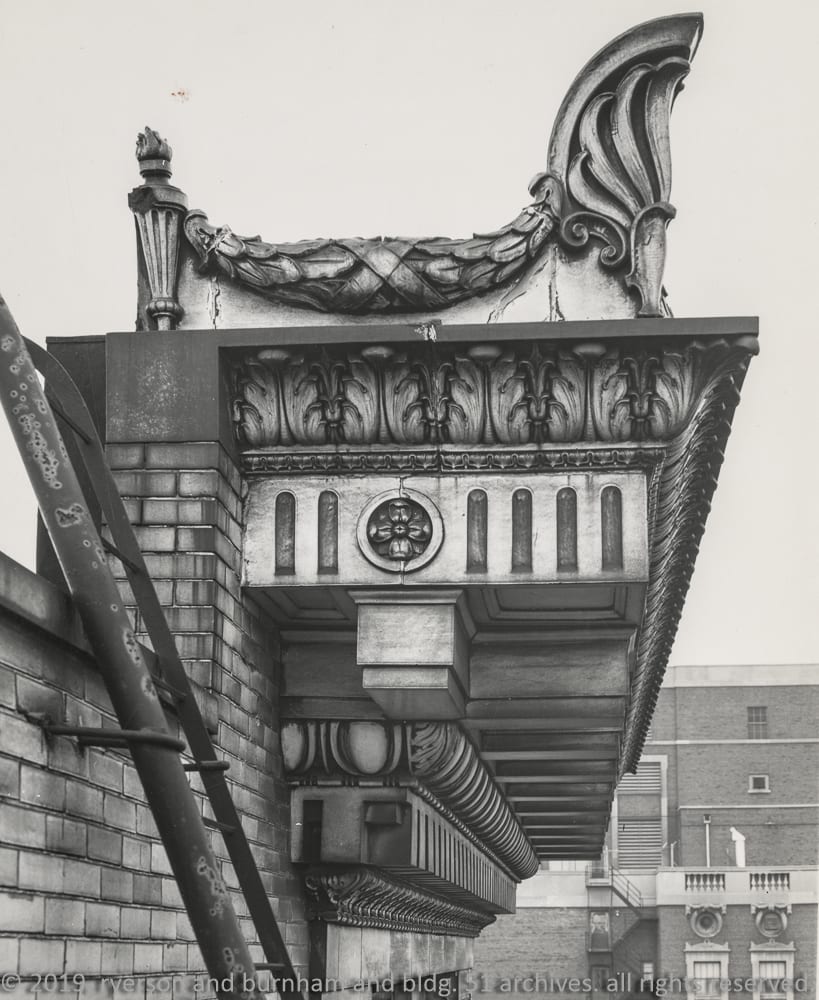
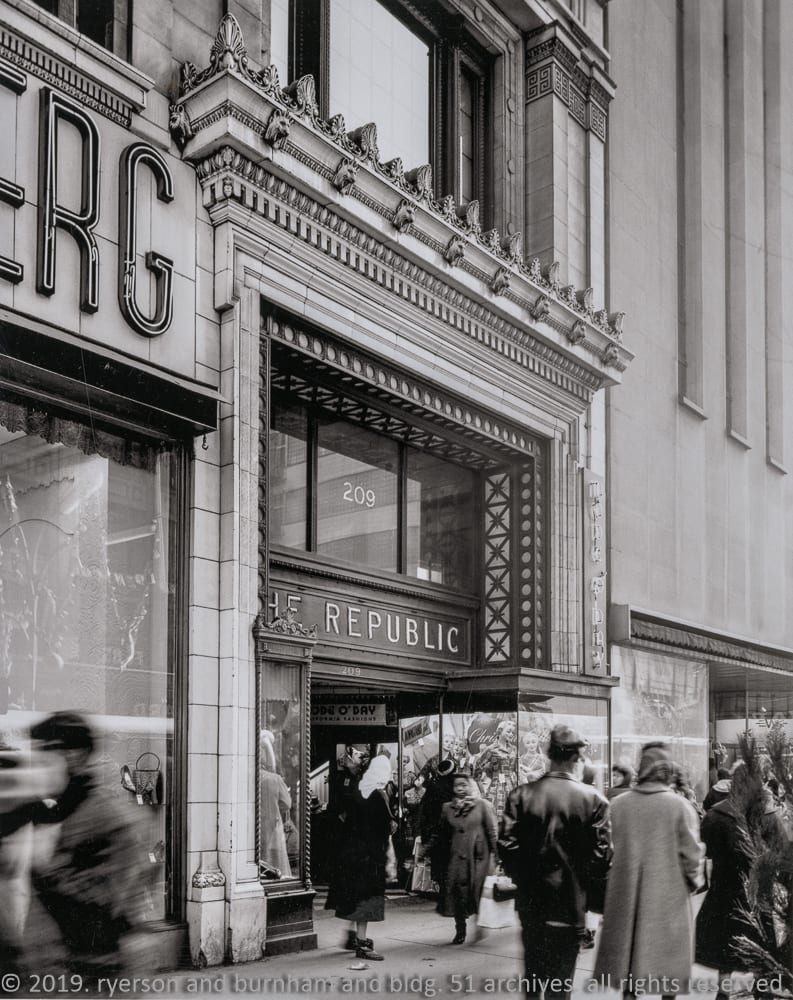
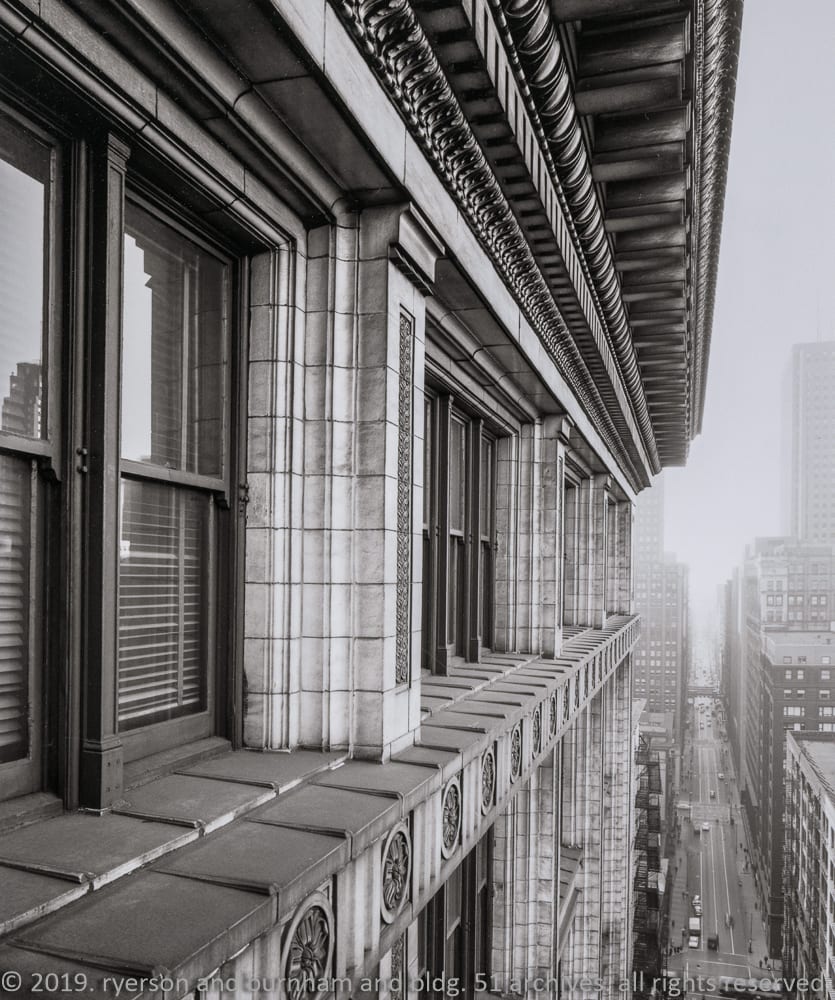
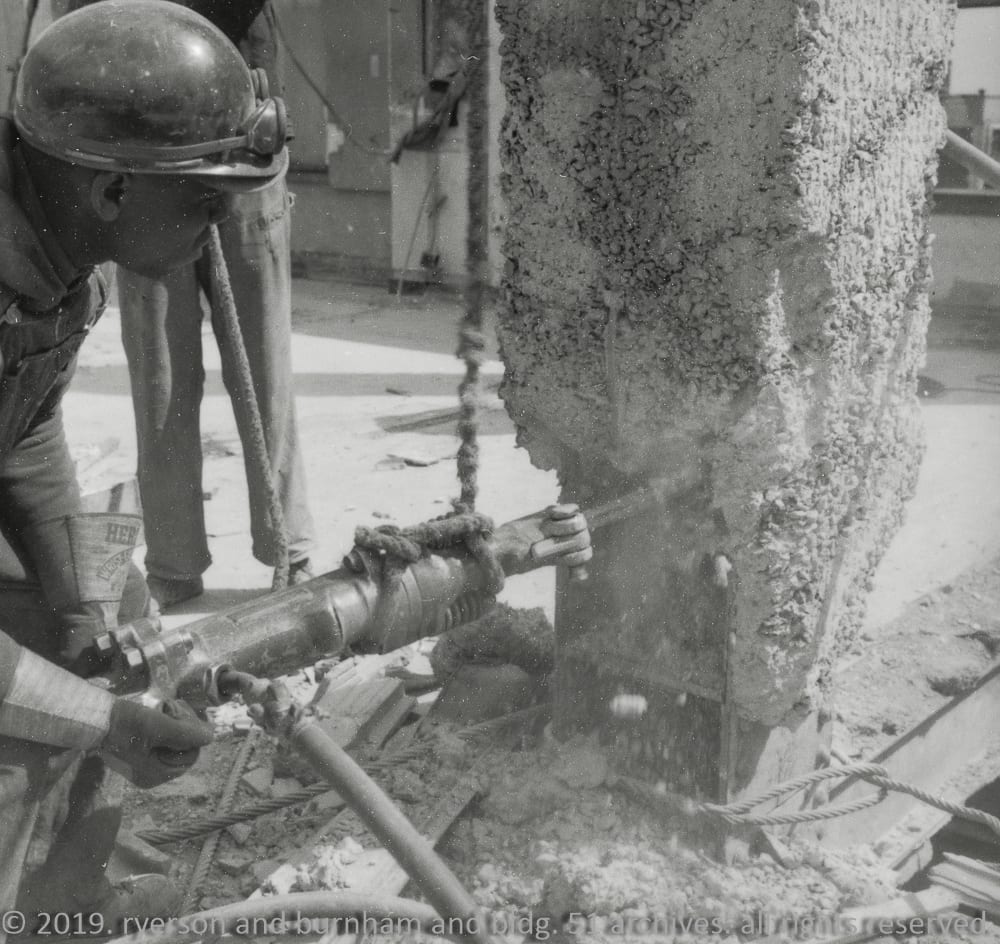
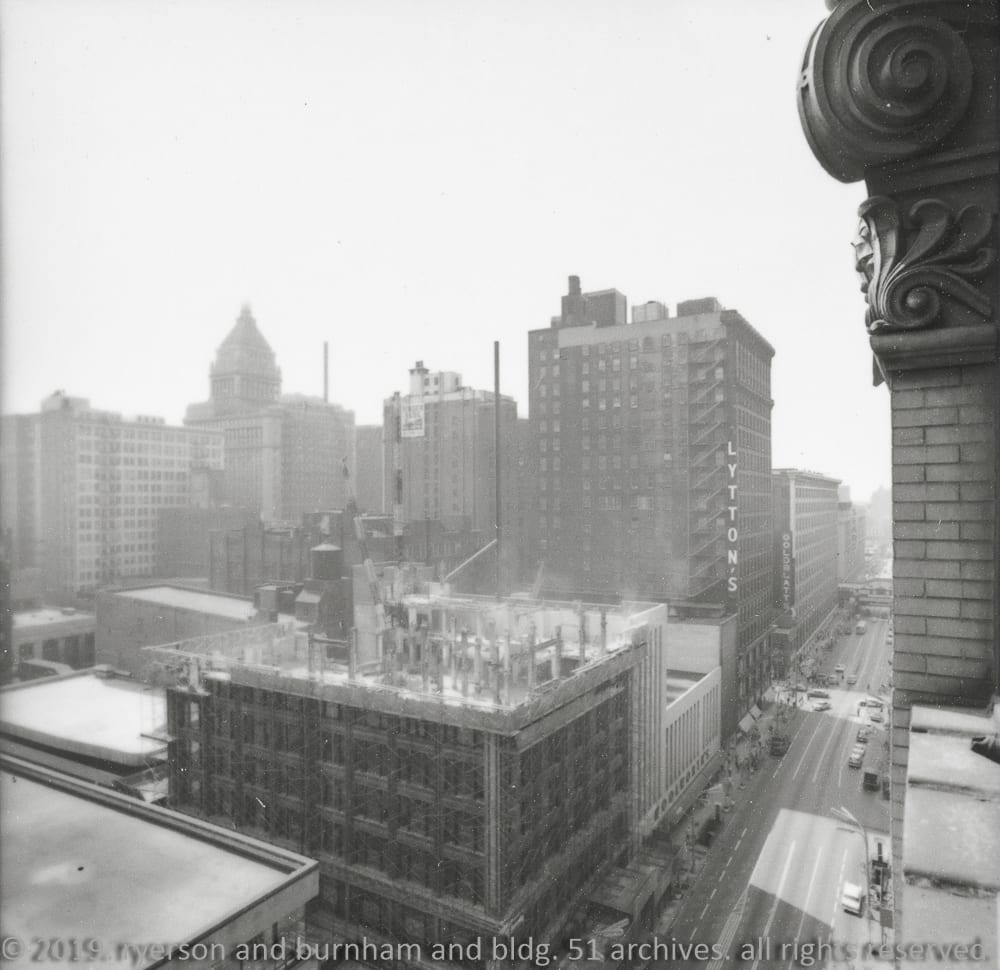
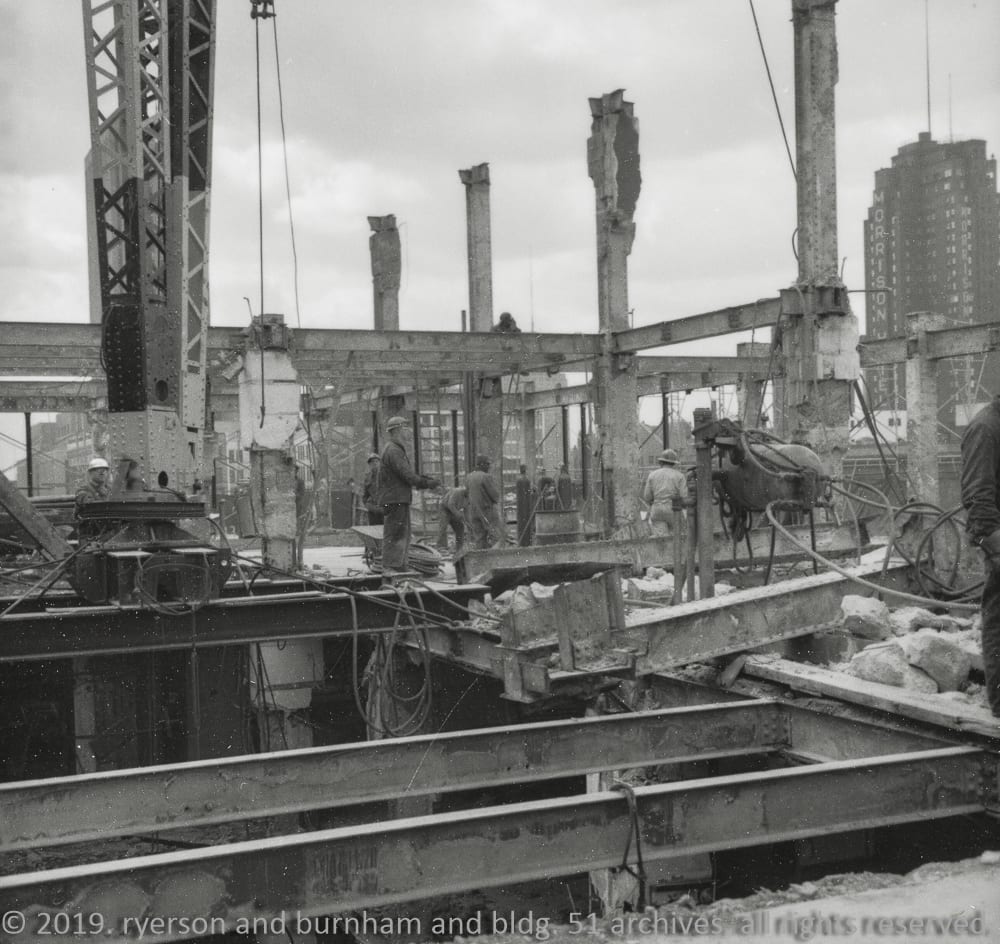
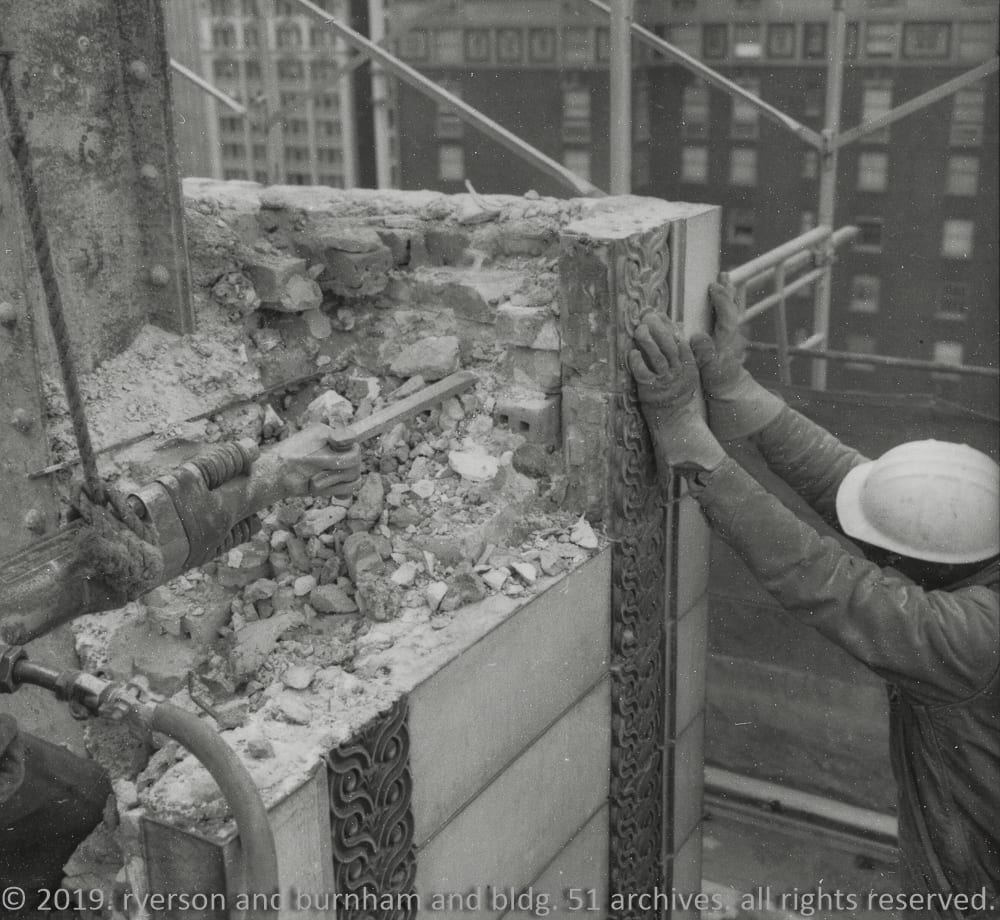
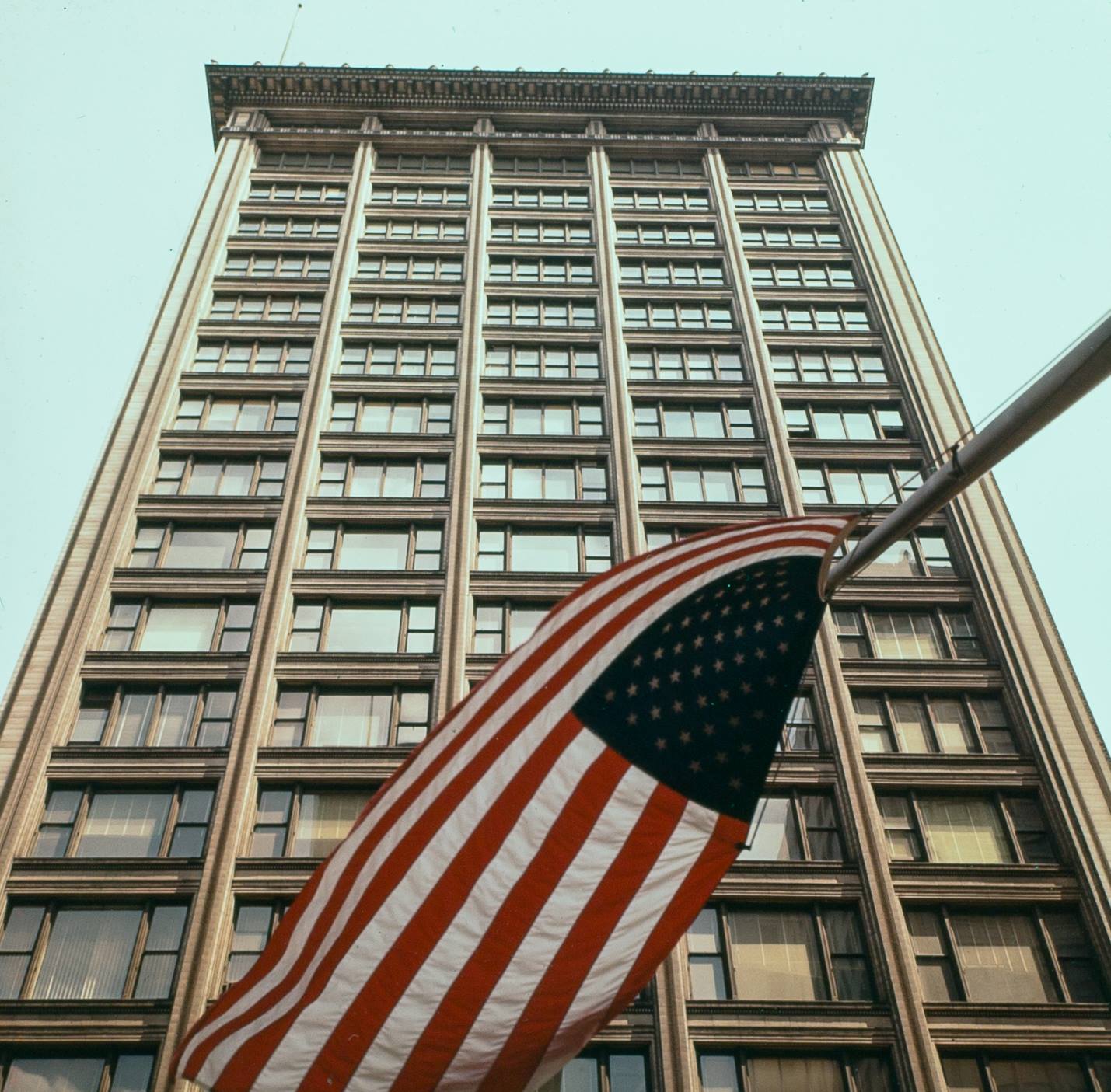
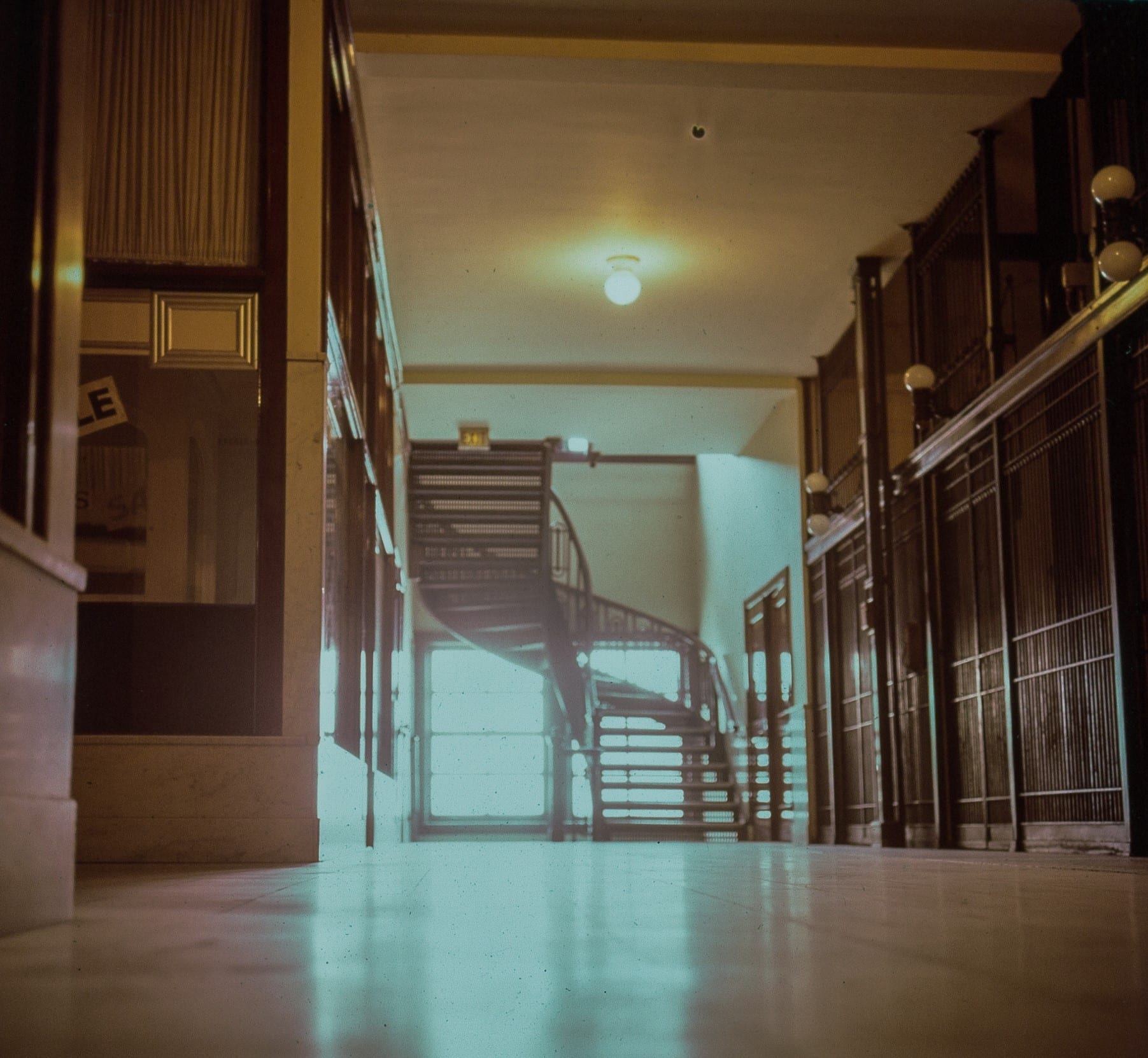
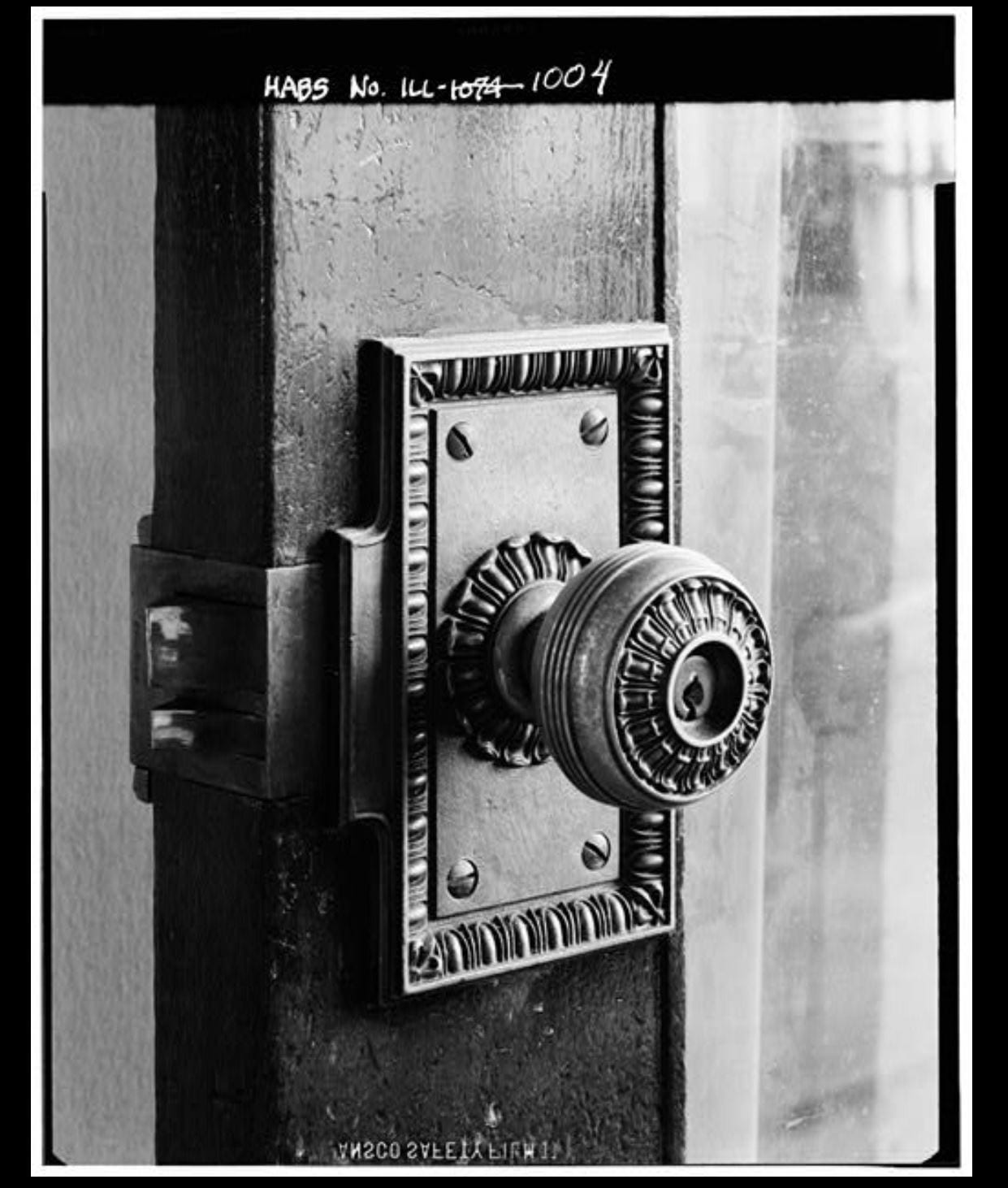
the following images were taken by richard nickel, who was assigned to methodically document holabird and roche’s republic building inside and out shortly before its demolition by harvey wrecking in 1961. in addition to providing a visual record of the early 20th century “chicago school” building, he was given access to document its demolition and salvage some of its ornament, including exterior white glazed terra cotta executed by the northwestern terra cotta company, door hardware, and other relevant ornament.
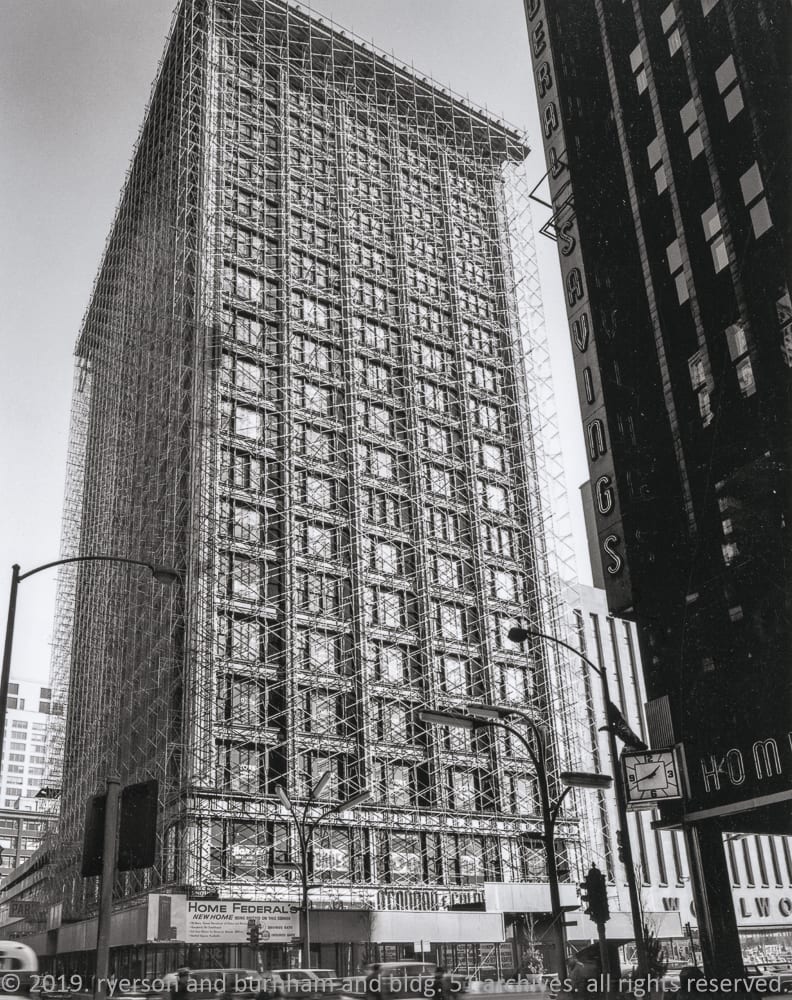
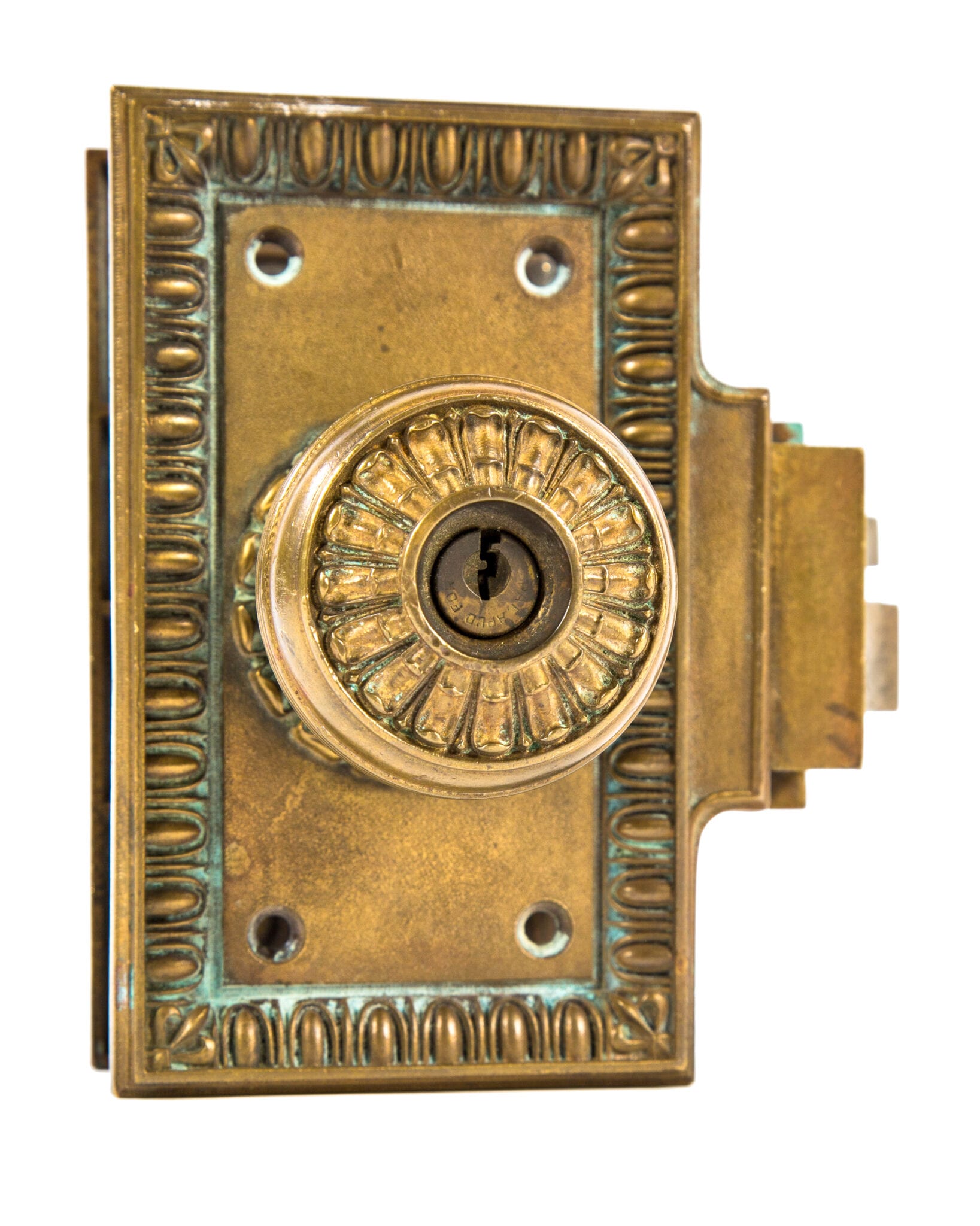
sadly, nearly all of the exterior terra cotta ornament (stored along side adler and sullivan’s garrick theater artifacts) was later trucked off to a landfill. some of the door hardware did survive (see images below) and is housed in private and musuem collections. the images represent only a fraction of nickel’s work when the building was still standing. however, the images representing the building during its demolition and salvaging of its ornament are limited to only a few contact sheets. i suspect nickel was given a very limited time window to salvage terra cotta ornament for the city. thankfully he took advantage of his time onsite reflected in his images of the wrecking crew torching columns and beams from one floor to the next.
image gallery:
historic background of the cable building:
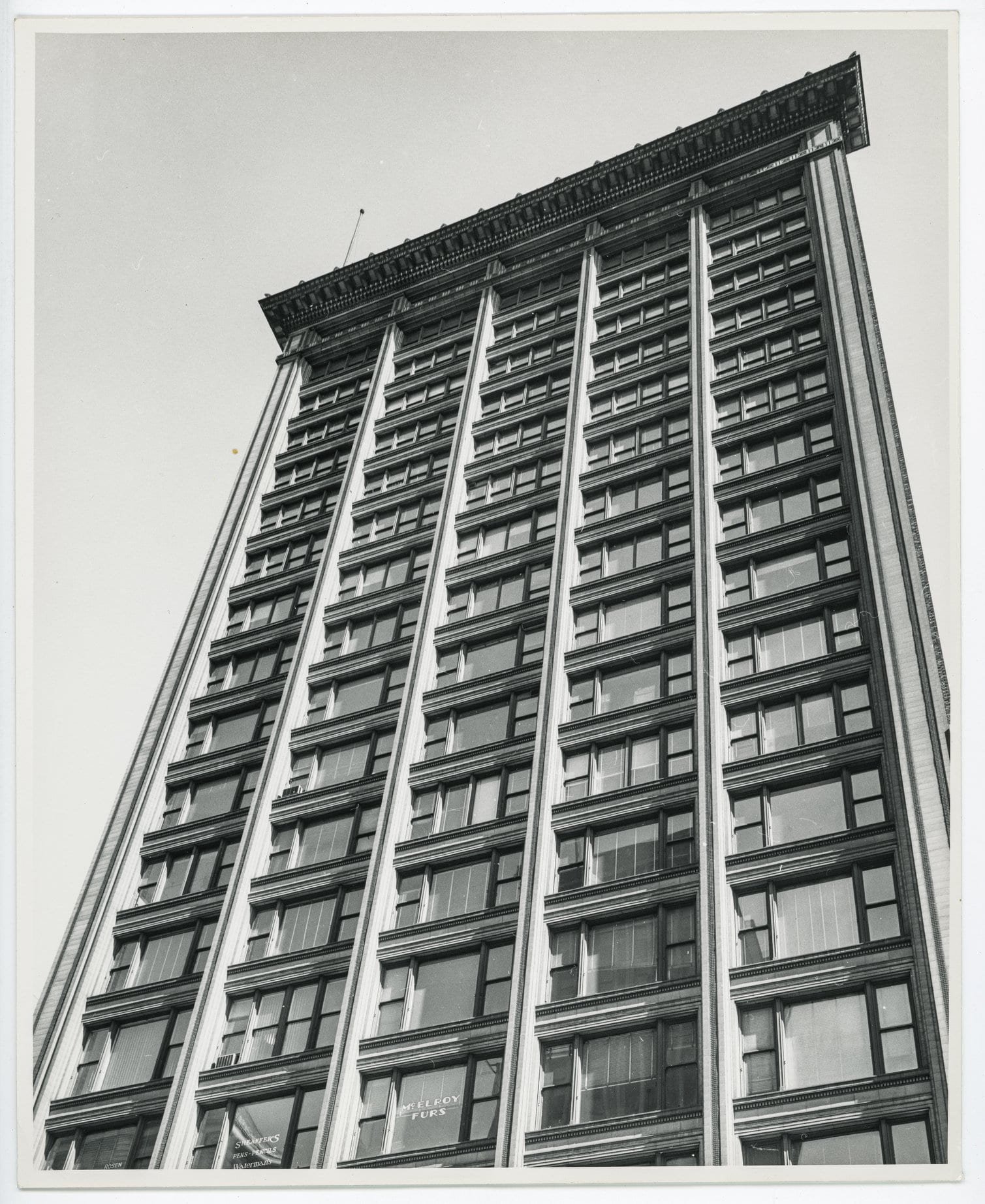
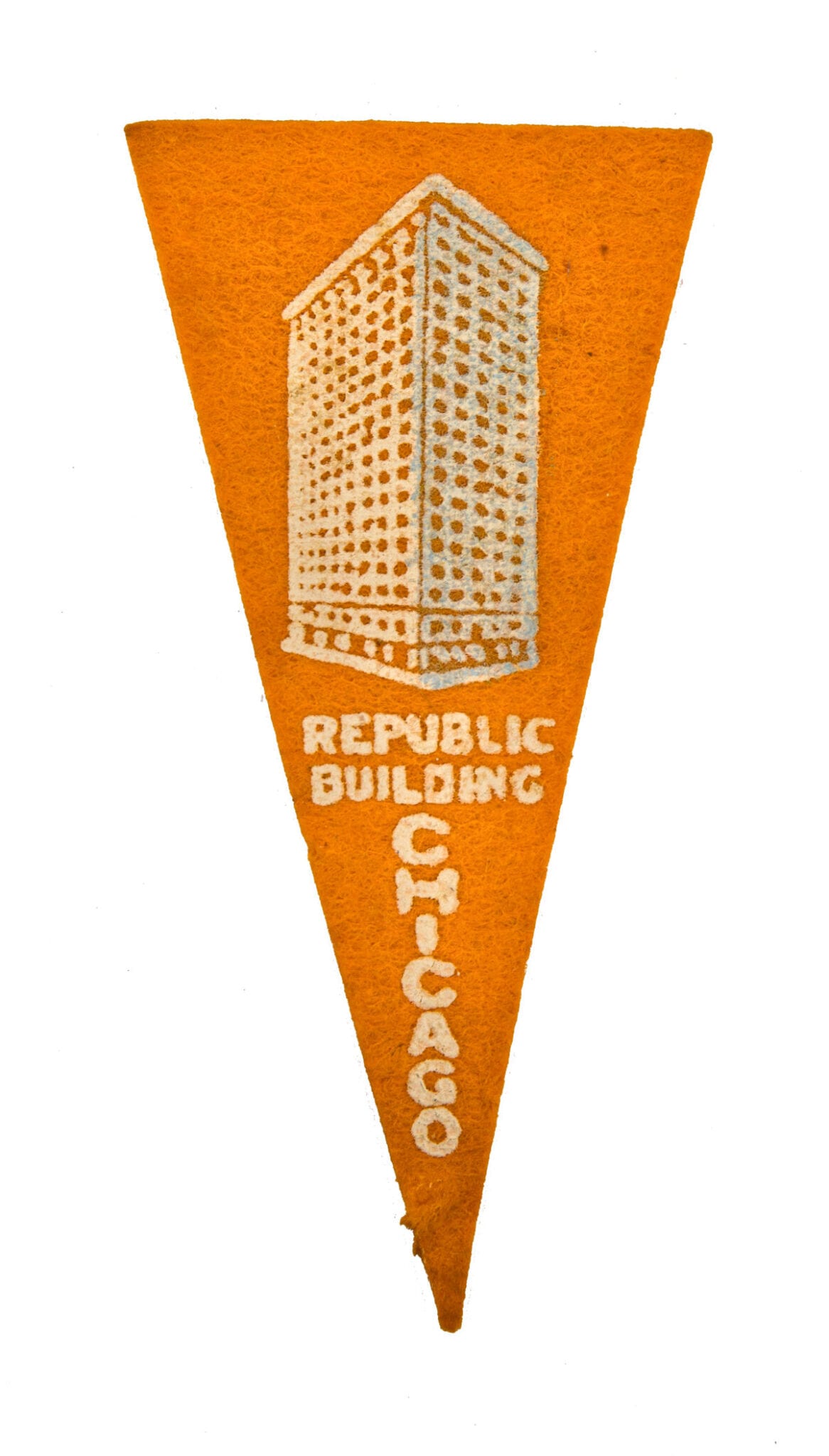
the republic building was designed by the architectural firm of holabird and roche and built in 1905 by the wells brothers company, general contractors and purdy and henderson were the structural engineers. located at the southeast corner of state and adams streets in chicago’s loop, the initial building contained a basement, sub-basement and twelve stories above grade. in 1909 an addition of seven stories raised the building to its final height of 270 feet.
henry strong, the original owner, and his son gordon strong, the manager, conceived the building as a location for the smaller retailing merchants on state street, giving them, upstairs, display opportunities equivalent to the ground floor stores and creating, in essence, a multistory retail facility with direct contact with the shopping public. this represented an entirely new approach to retail merchandising, and the success of the building was a tribute to the progressive ideas of the owners. shop tenants could display their merchandise in generous well-lighted shop windows while the wide “sidewalk” corridors provided uncrowded access and window shopping. the idea caught on quickly and space in the off-ground floors was taken rapidly by. firms that had never been considered as other than first floor tenants. generally, the first ten floors were used for the purpose of retail sales, while the floors above that were devoted to the offices of wholesalers’ and manufacturers1 representatives. the original structure contained a fine dining facility in the first basement known as the “states restaurant.” this room developed into one of chicago’s most popular refectories. it was reached from a canopied entrance on the adams street side of the building. about 1915, this entrance was expanded to include an open-air arcade through the first floor space to the elevator lobby, which was located against the south wall of the building. the arcade featured large display windows on both sides used by the upper floor shops to attract customers. these windows played an important part in the success of the building as a commercial venture
as time went on, the basement restaurant gave way to mercantile interests and a modest public restaurant was installed on the nineteenth floor which met with reasonable success. during the early days of the life of the republic building, a need for an organization to deal with their common problems became evident to several of the more progressive merchants in the building. so, in march of 1910, the republic merchants’ association was incorporated. this group, with financial support and enthusiastic cooperation from colonel gordon strong, the manager, was instrumental in developing a healthy community spirit among the tenant shop-holders. among the activities of this group was the publishing of an association magazine known as “the republic item,” produced each month and circulated to the 10,000 customers of the building merchants. the group took full responsibility for guaranteeing satisfaction to the customers of any individual member. a club room with gymnasium paraphernalia was established in the building for the use of the members, as well as a combined tea room and social center which was located on the eleventh floor. the association elected officers, including president, vice president, treasurer and secretary with a board of directors and a full time executive secretary. among the standing committees were executive & finance, publicity & item, show case, electric lighting, rental, membership, entertainment and grievance. part ii. architectural information considered in terms of its architectural and structural characteristics, the building measured 100′-8″ along state street and 145′-3-5″ along adams street. it was bounded on the east by a public alley and by a party wall to the south. minor setbacks occurred along the alley wall at the second and sixteenth floors. a steel framework, fireproofed with porous terra cotta, was supported on 5 ! -0″ diameter concrete caissons carried to hard pan. the tops of the caissons lay just below the sub-basement floor at 27 feet below grade and were approximately 17 feet apart in both directions. floors were constructed throughout of steel built-up girders carrying “i” beams 6 feet apart, which, in turn, supported a flat terra cotta tile arch. the republic building was faced on the exterior with white glazed terra cotta tile on the north, west and a portion of the east walls. the remainder of the east wall was white glazed brick. the south party wall was common brick. with the exception of the ground floor, window frames were of painted wood on the west, north and a portion of the east wall. all other frames were of metal. from the second to the tenth floors each window bay was divided into three parts: one large central panel of fixed glass flanked by smaller double-hung operating sash. this window was characteristic of the famous “chicago” window so frequently seen in the area. at the eleventh and twelfth floors this same design became slightly altered to include a central post dividing the large fixed glass panel into two equal parts. at the thirteenth through the nineteenth floors, the window bays were divided into four equal double hung sash, a device which allowed for smaller subdivision of offices spaces. typical rental space floors were finished with hardwood floors set on wood sleepers in the concrete fill, except for the corridors which were marble. ceilings were plaster
ed directly to the underside of the floor construction. typical corridor walls were of mahogany trim with plate glass windows or marble wainscoting. elevator service for the building, designed along department store rather than office building standards, consisted of seven passenger cabs and one freight car. the hoist way enclosures were of black ornamental iron grillwork and the elevator cab walls themselves were of similar open grillwork. there were no doors on the passenger cabs. sanitary facilities were concentrated at the eleventh, twelfth and nineteenth floors, a plumbing concept common to many office buildings in the city of similar size and age. jh 1958, the republic building was sold to the home federal savings and loan association of chicago, whose quarters at that time were directly across state street. the new owners purchased the property with the idea of achieving greater and more convenient space for their operation. they had planned to remodel the republic building to better. suit their needs and occupy the first four floors with their entire organization. the upper floors were to have been rented as up-dated office space. exhaustive studies, from cost, engineering and design standpoints showed, however, that such a remodeling program was not feasible. after consultations with reputable real estate research firms in the city, it appeared that a new building on the same site, would better serve the, needs of the client in all respects. consequently, in february of 1961, the republic building was demolished.
prepared by skidmore, owings & merrill
architects engineers.
further reading: