

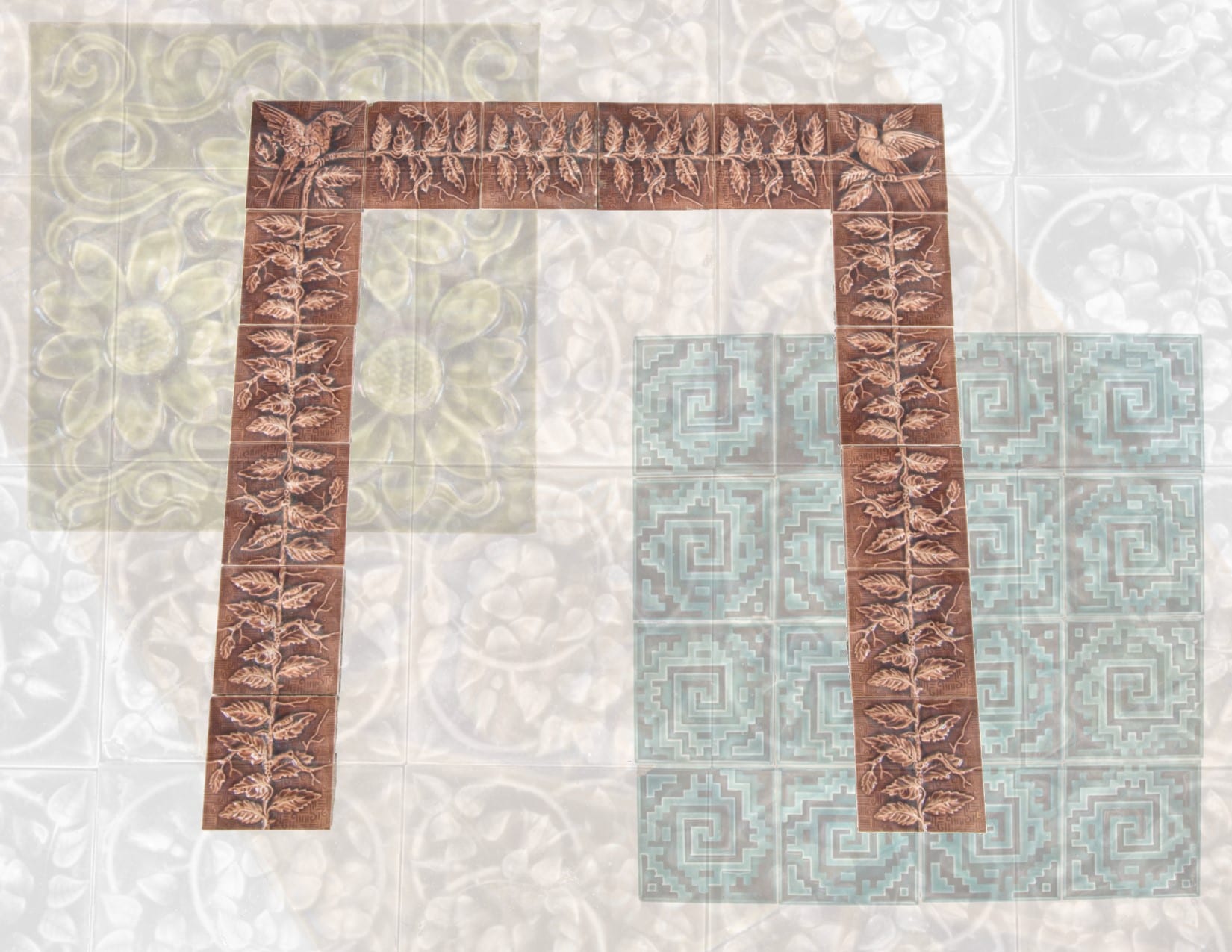
09 Mar urban remains secures massive repository of 19th century american victorian-era majolica tiles from lifelong collector
late last week urban remains purchased a massive collection of 19th century american victorian era majolica glazed residential fireplace tile sets salvaged over the past few decades from chicago two and three-flat greystones undergoing demolition. the majority of the richly ornamented and deeply embossed fireplace tiles were executed by the trent tile company or american encaustic (see brief company history below).
the salvaged chicago tile sets – with prices and dimensions – are gradually being added to the website catalog with many more being organized, documented, cleaned and prepared for inclusion in the ever-expanding “majolica tile” website category.
examples provided below:
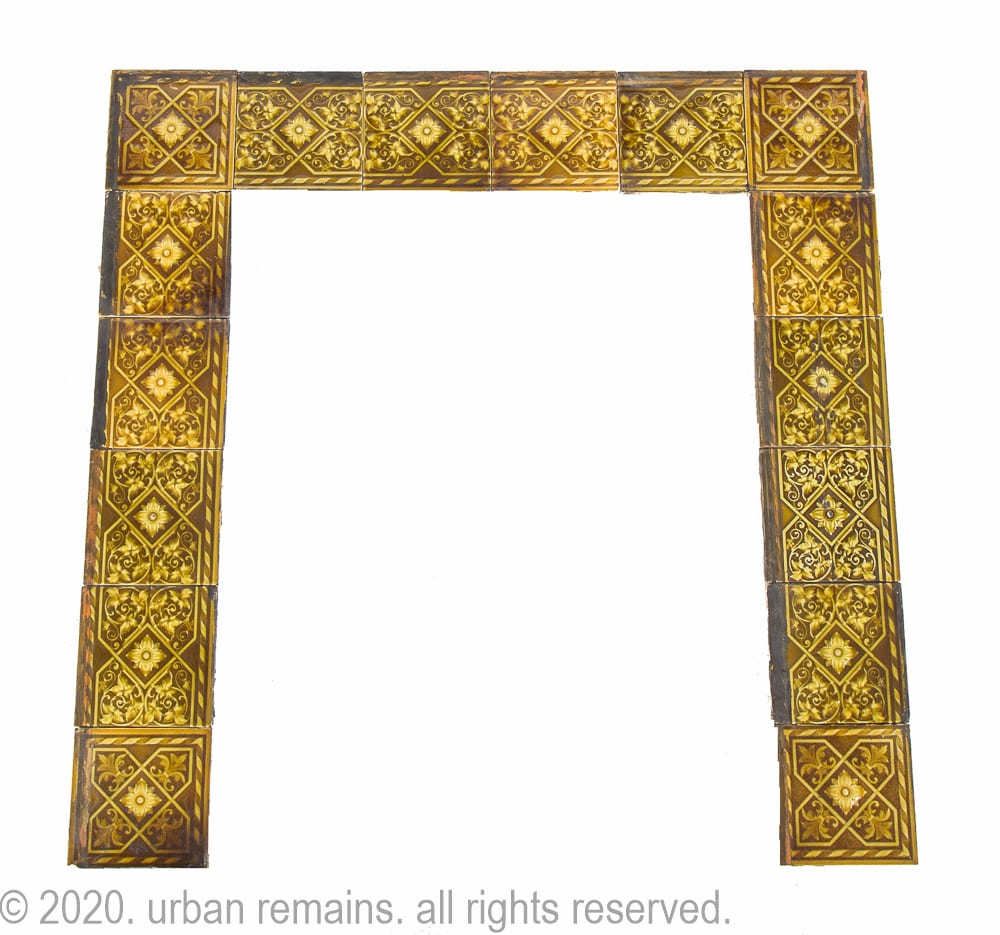
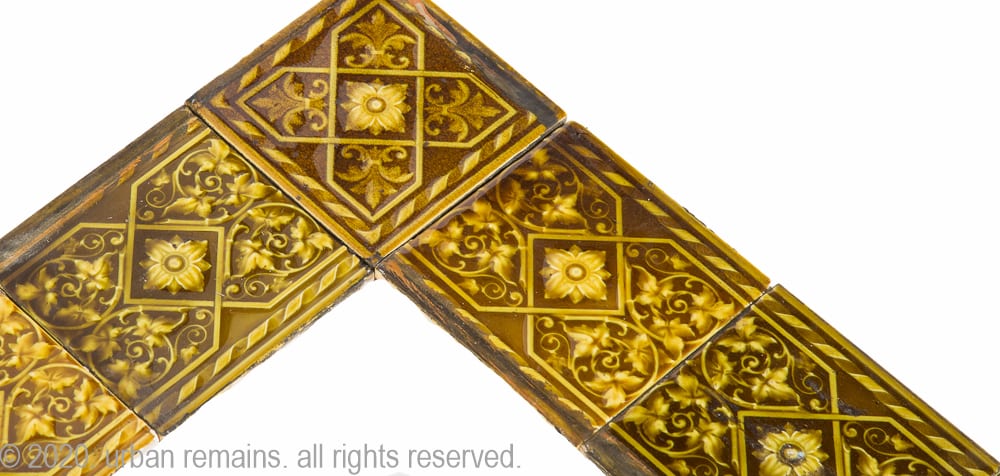
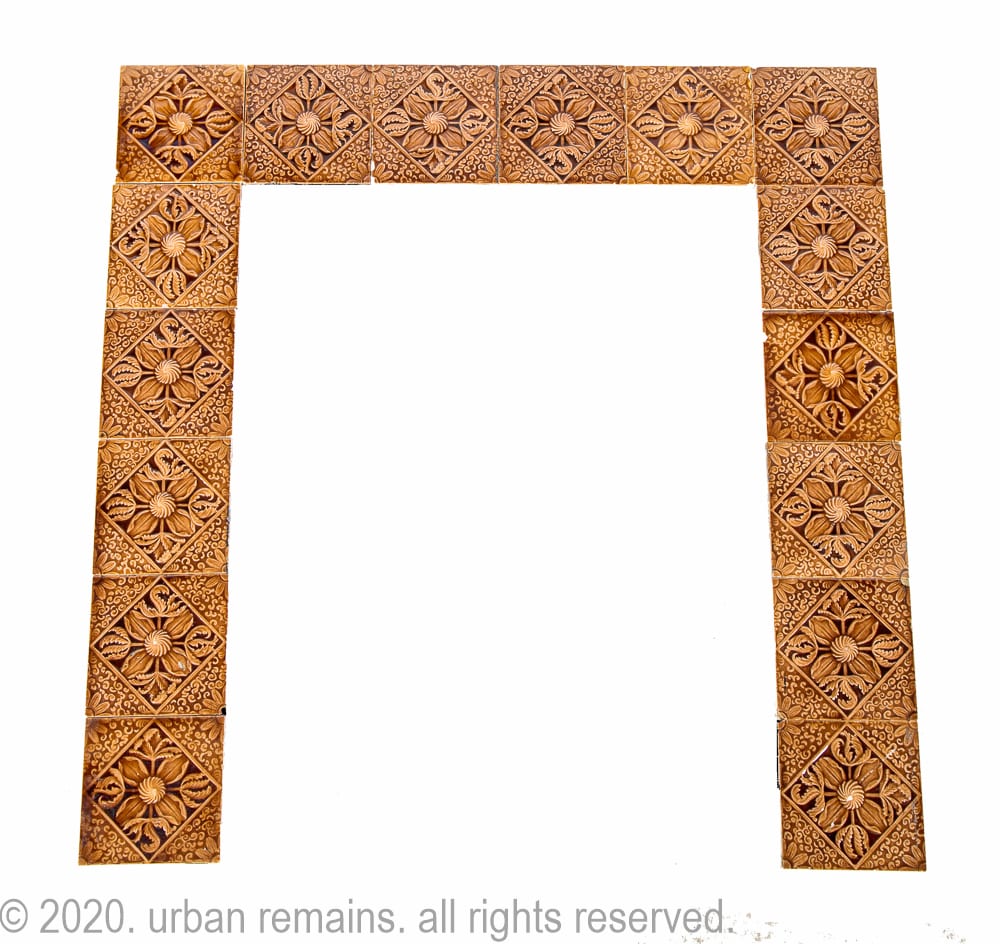
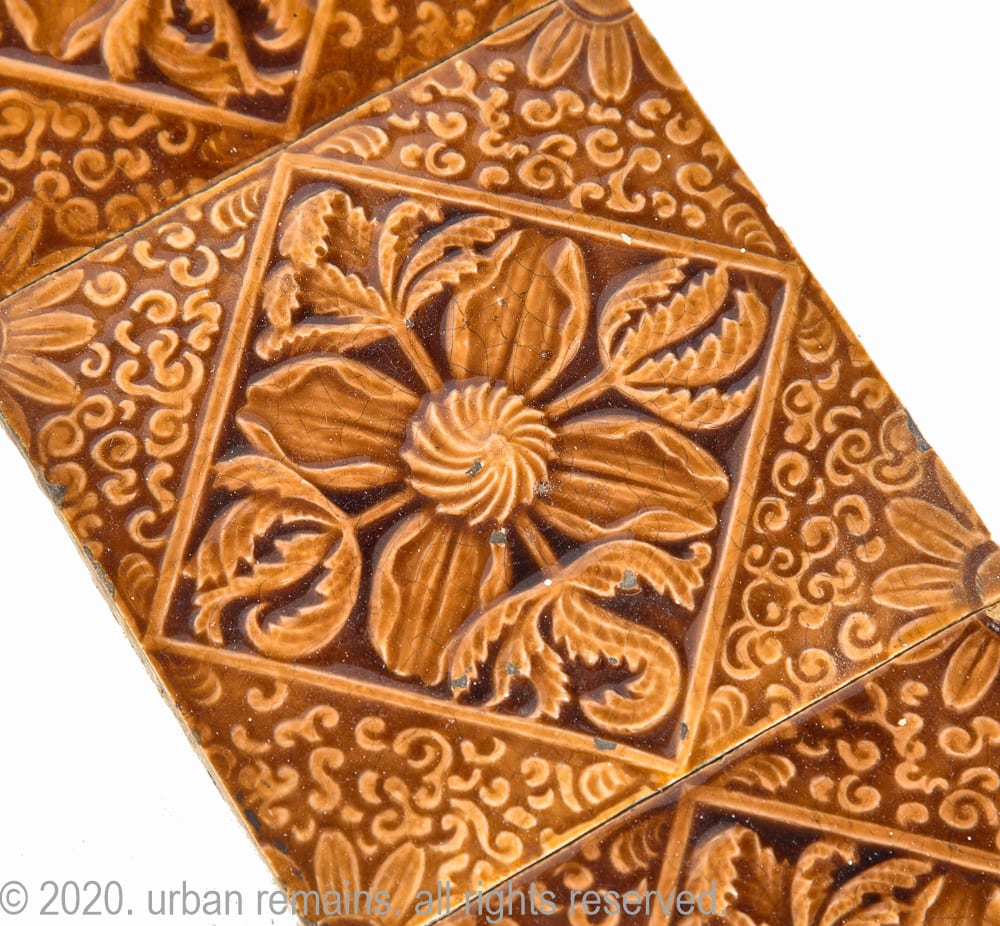
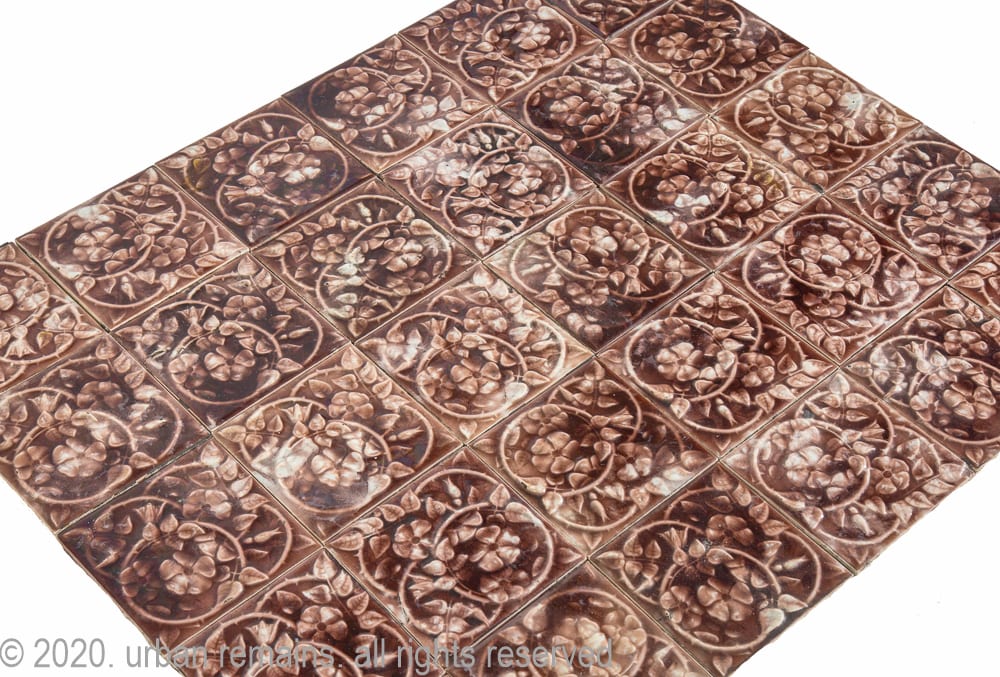
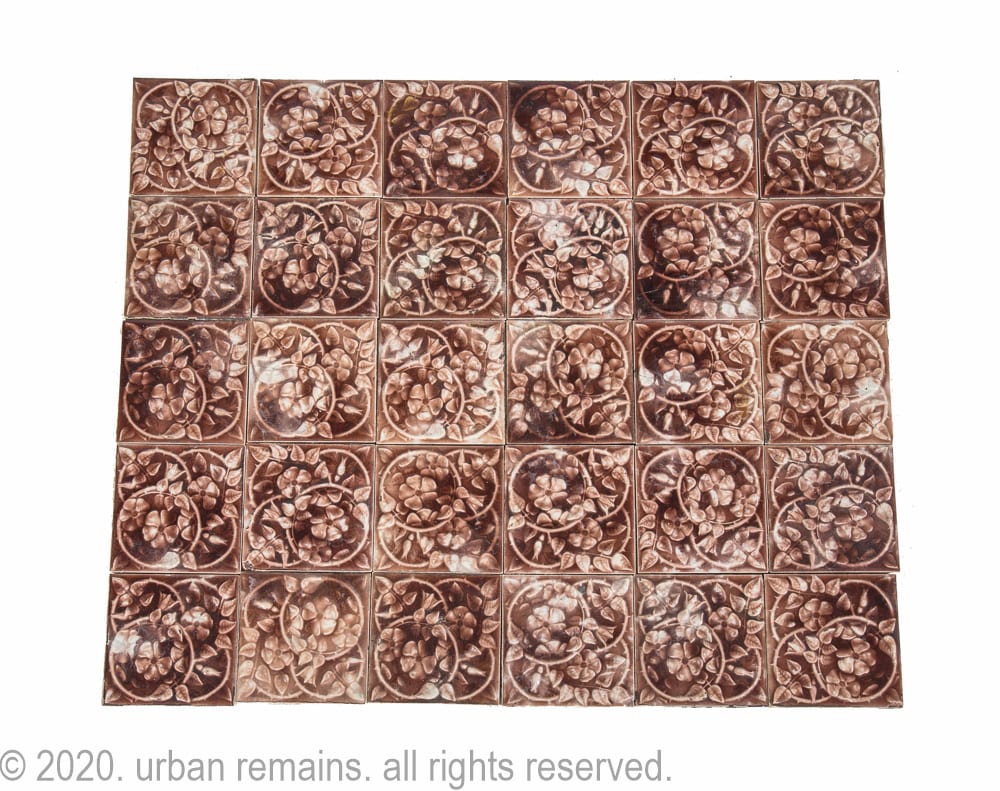
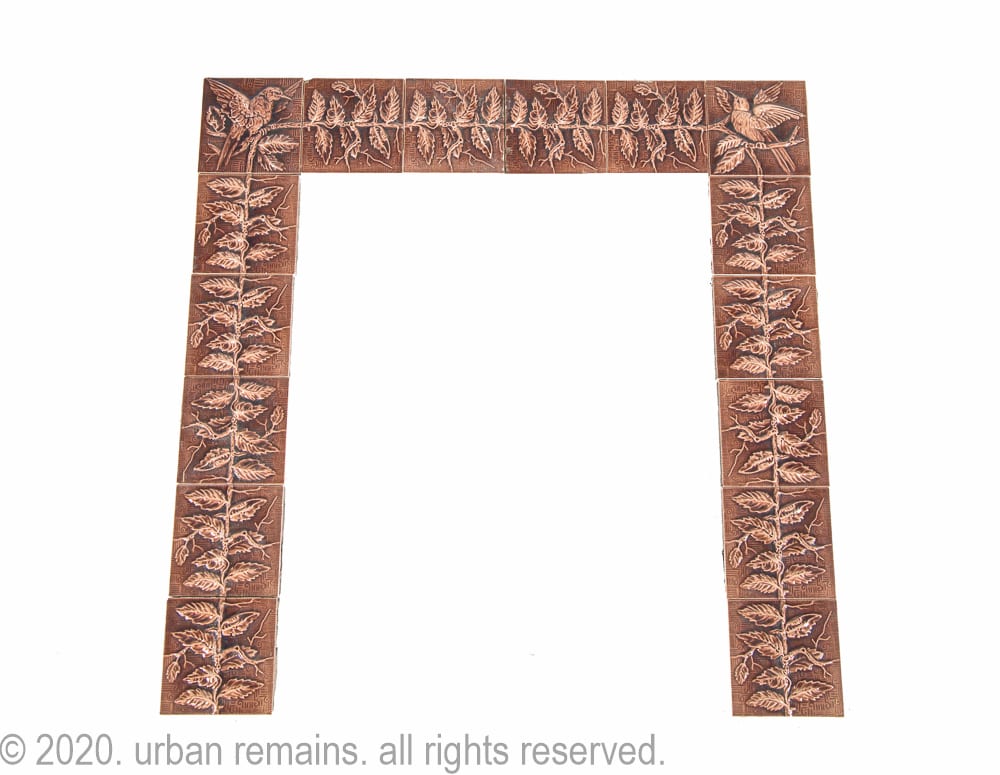
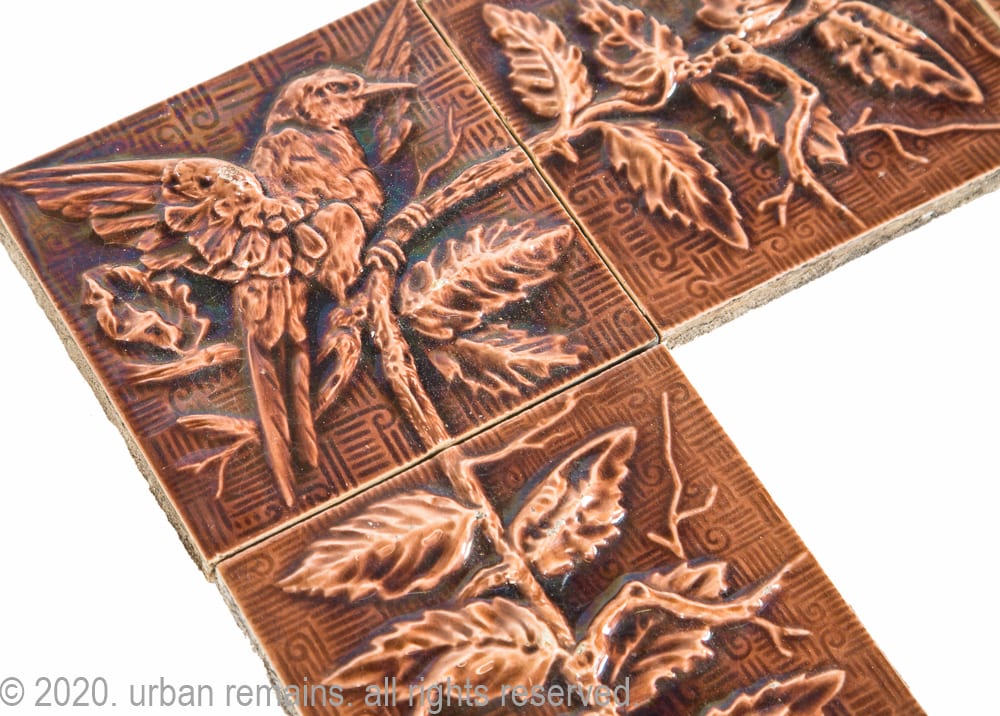
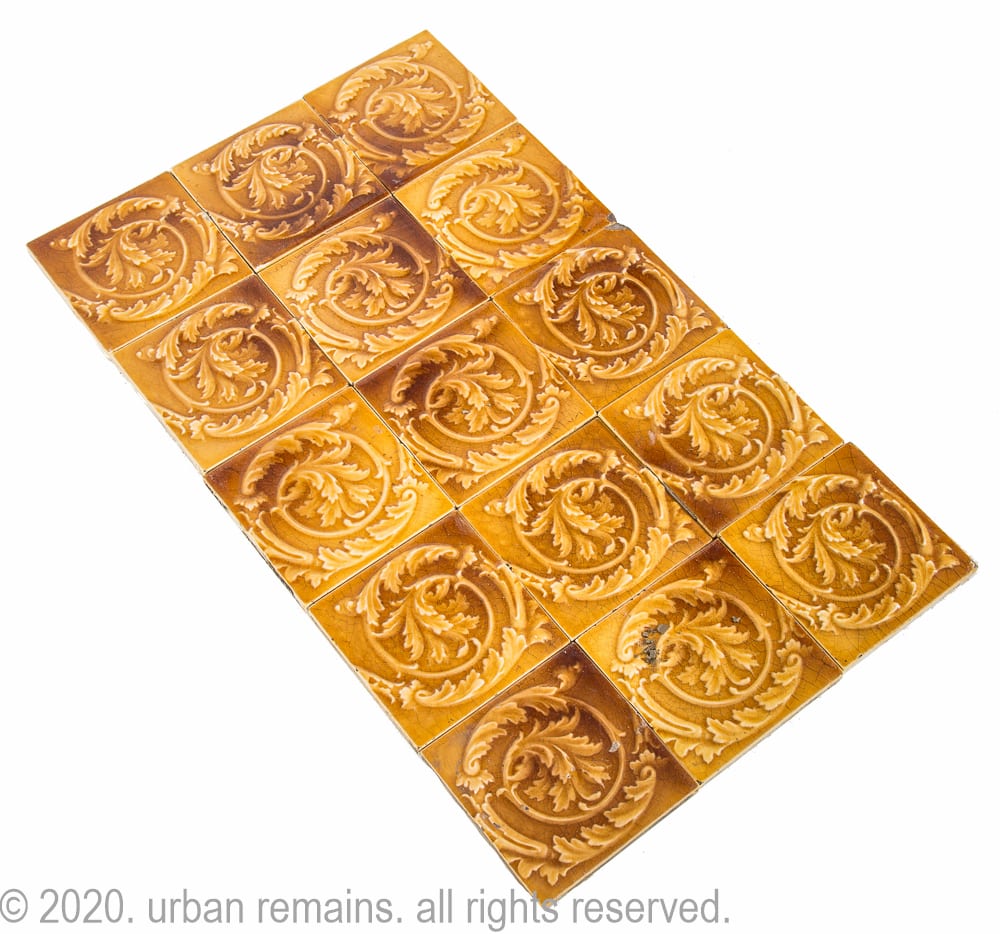
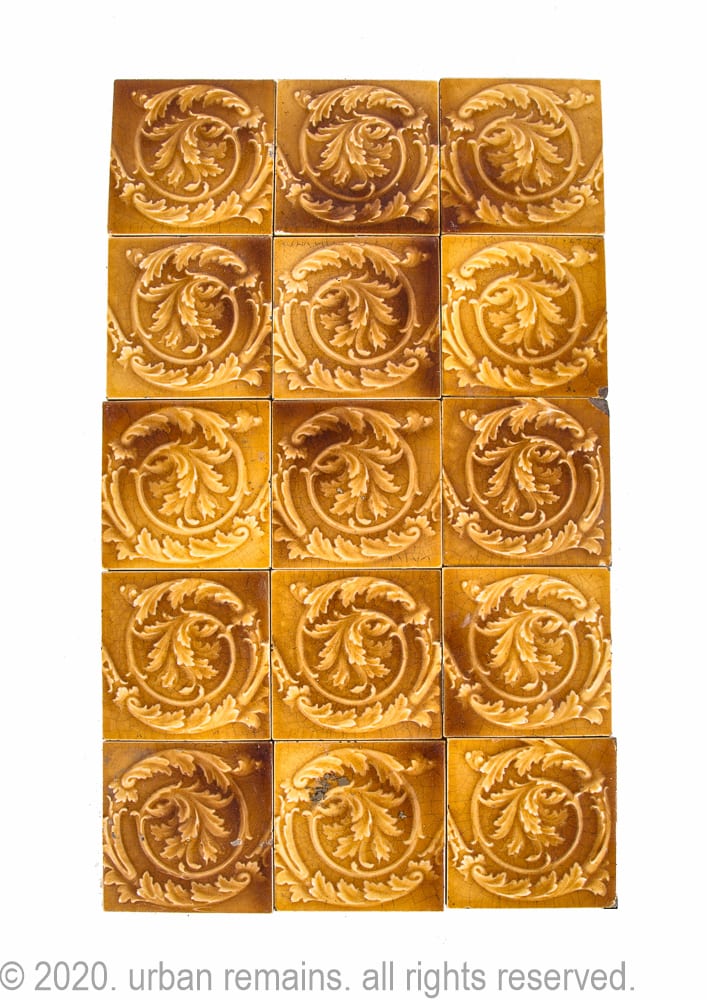
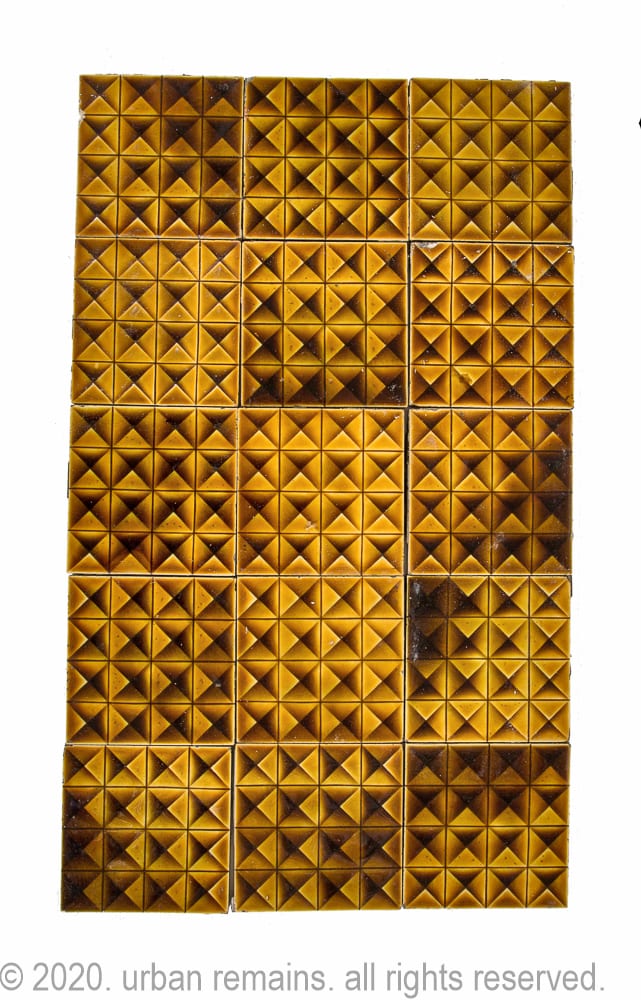
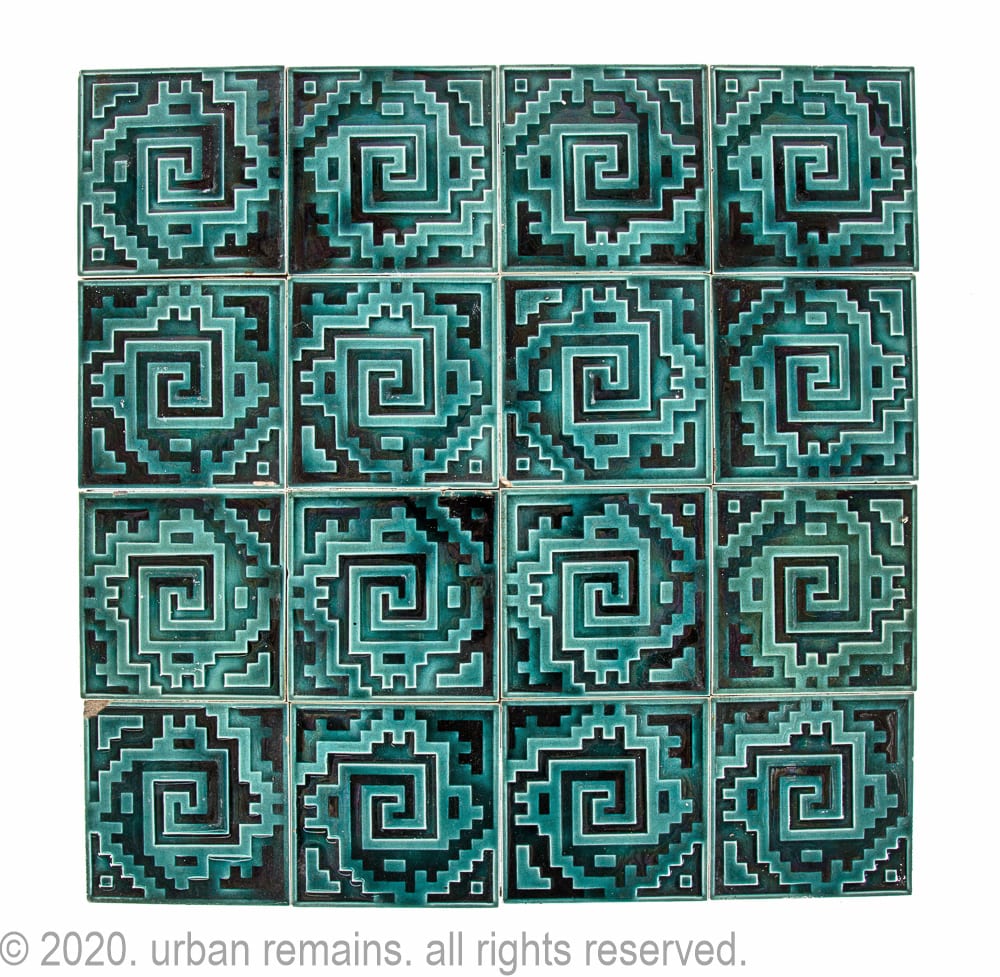
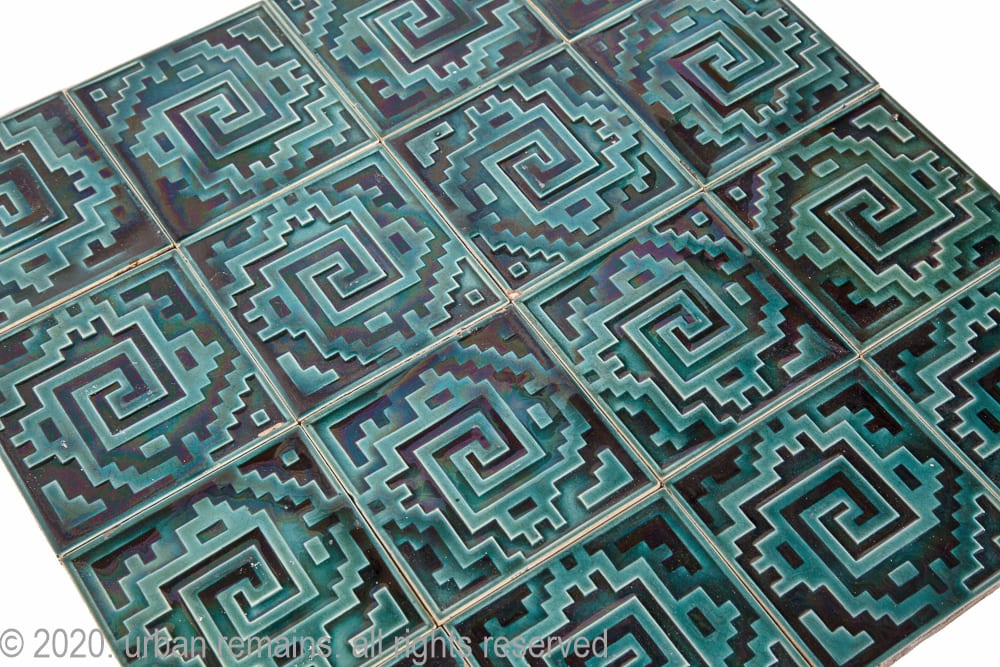
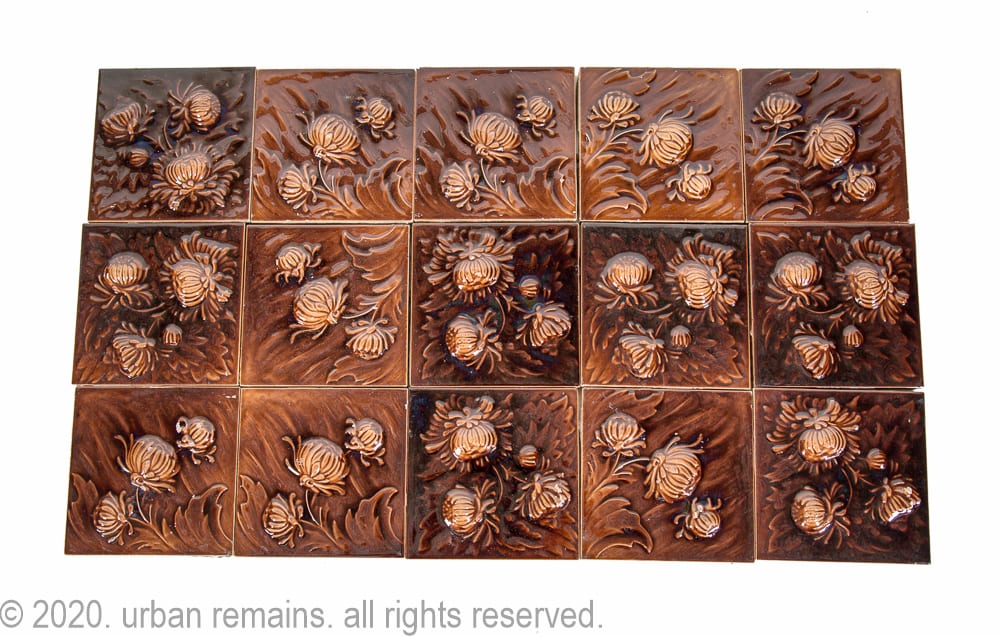
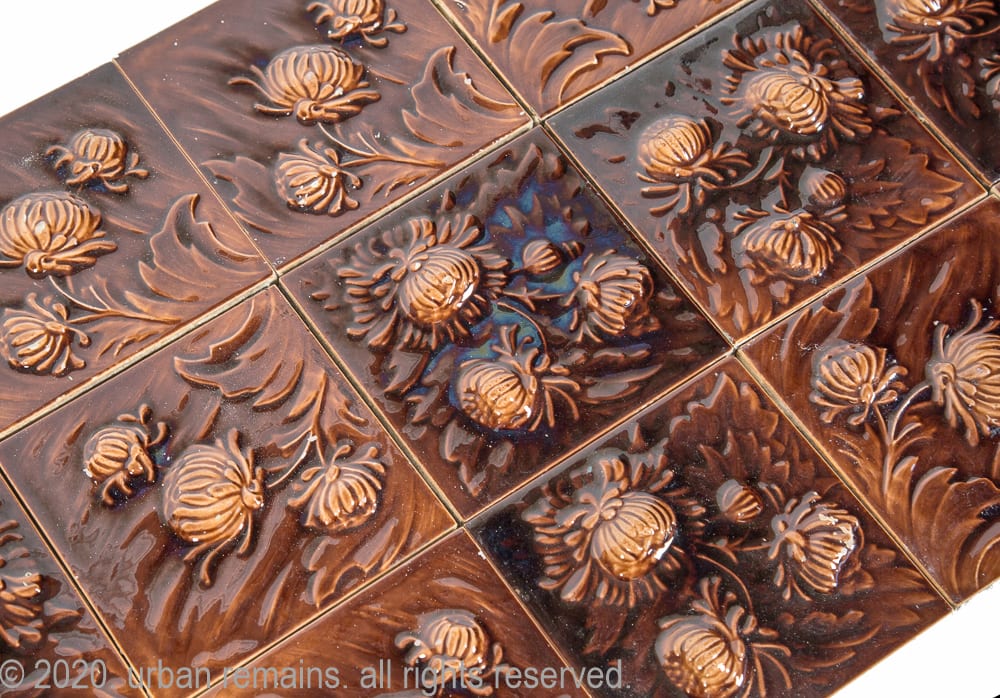
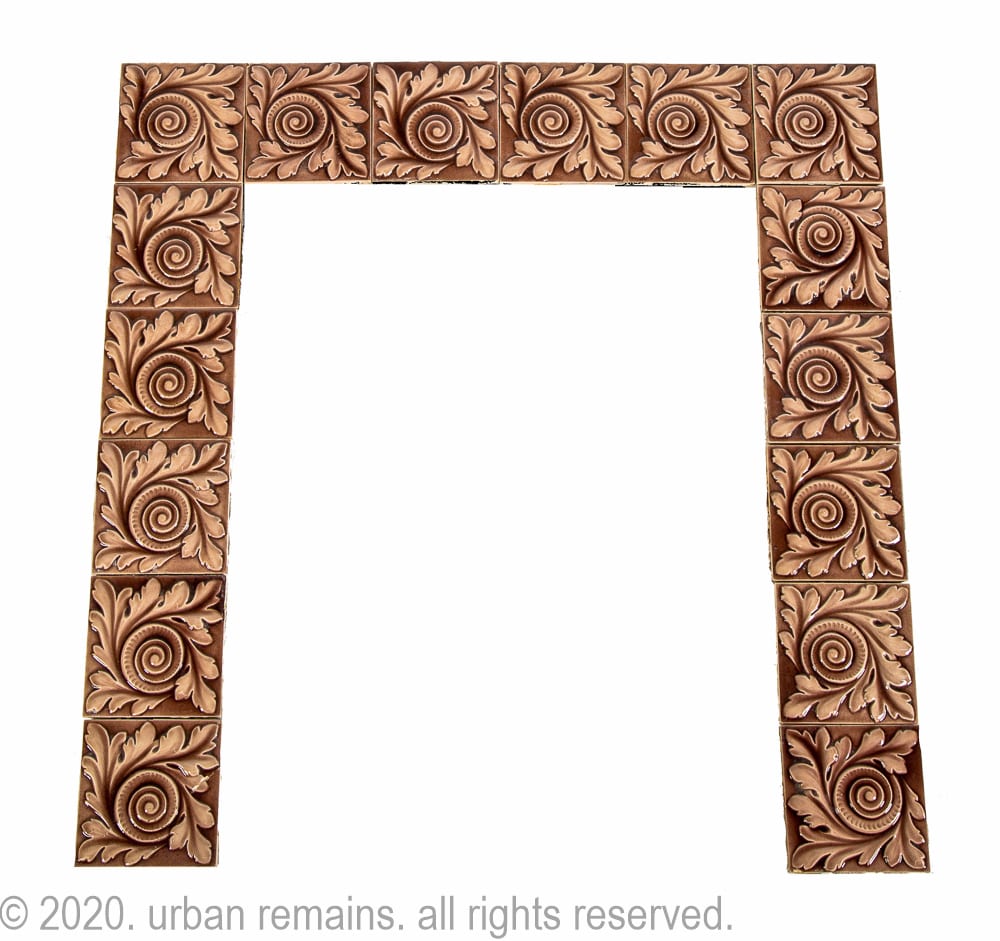
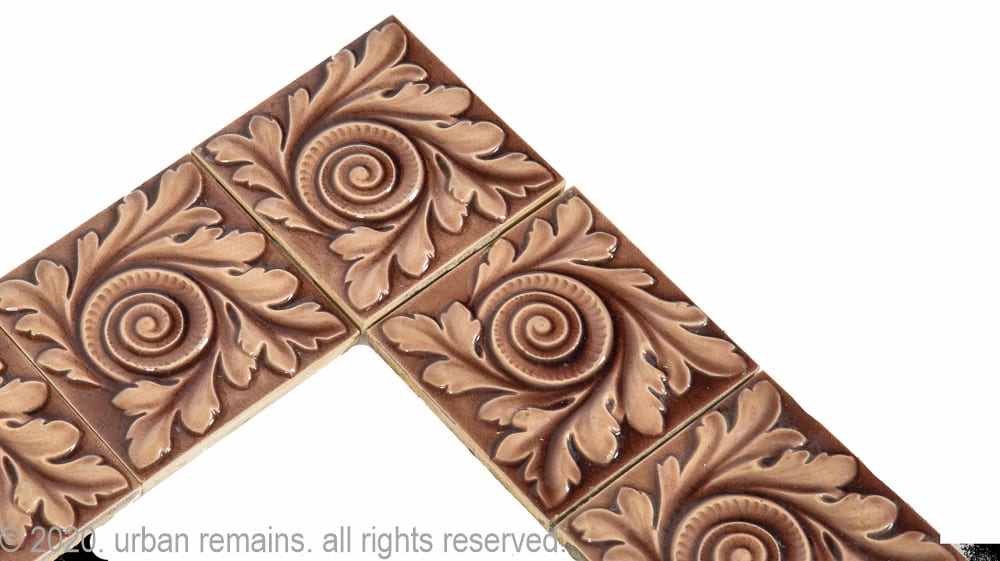
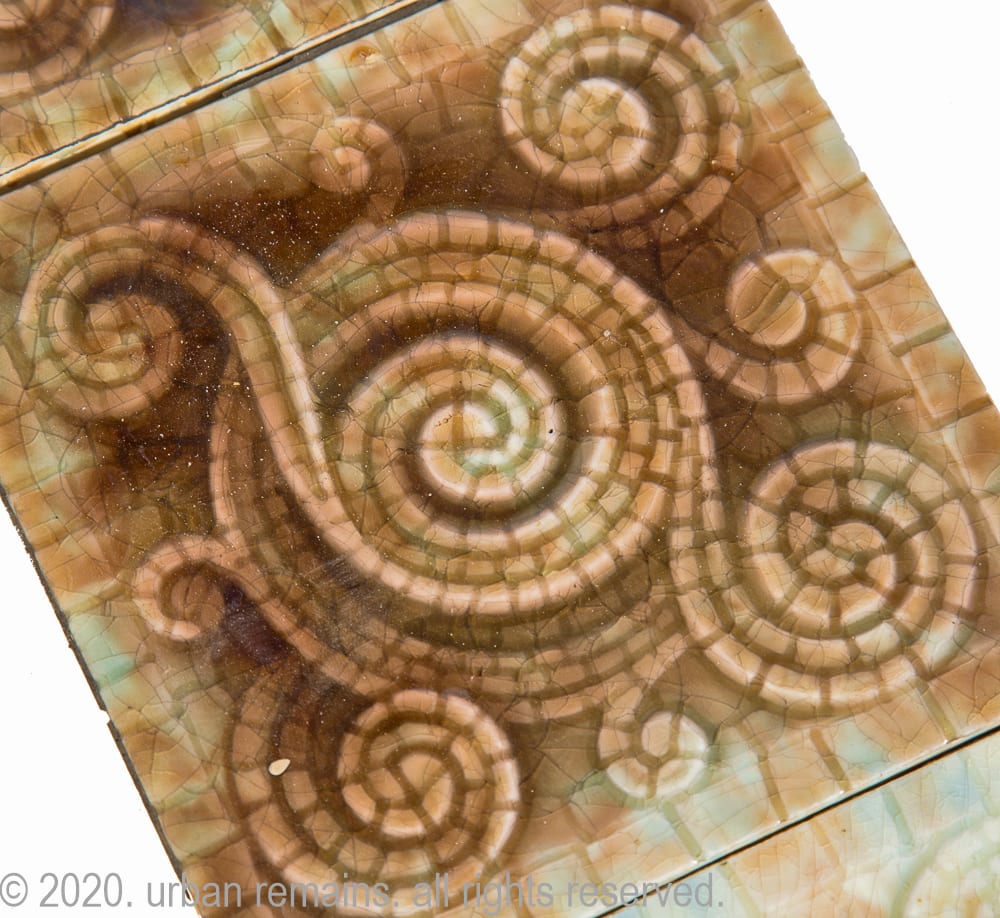
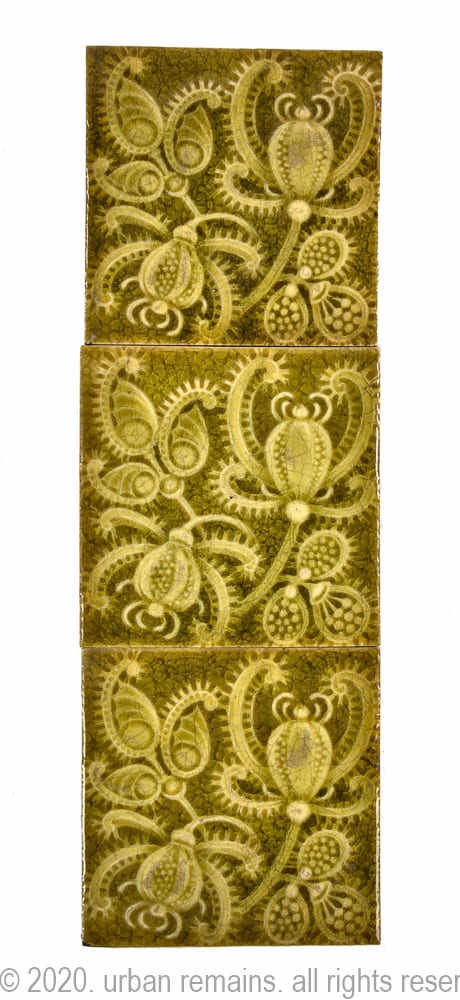
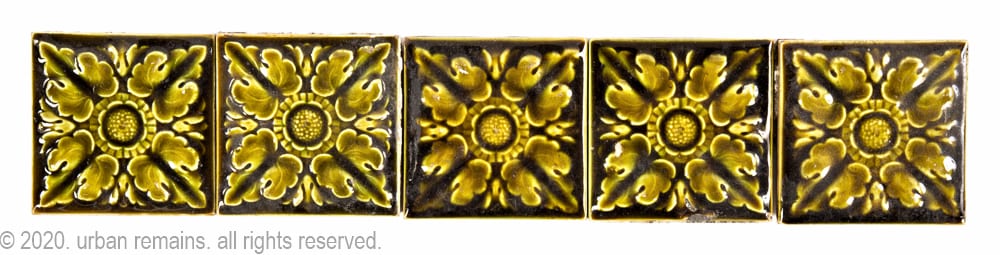
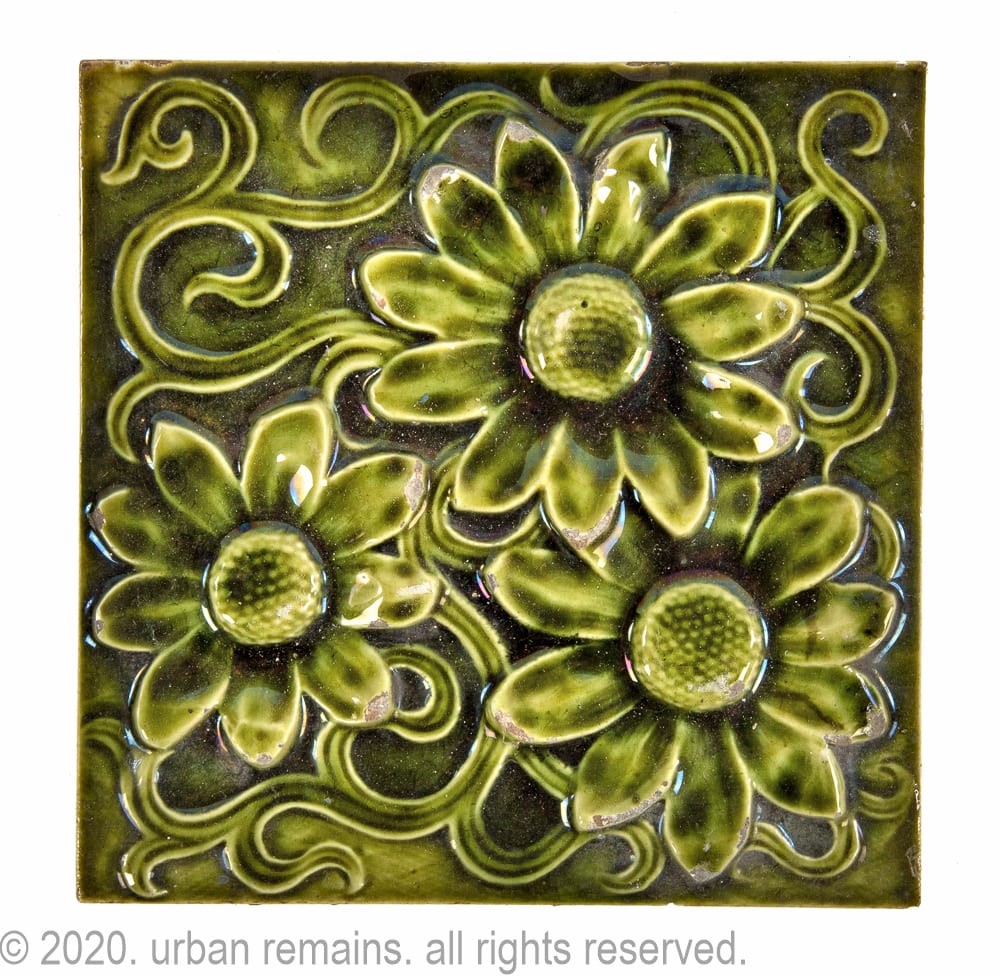
all images courtesy of eric j. nordstrom and urban remains chicago.
trent tile company, trenton, nj.
the trent tile co. first began operations in 1882 as the harris manufacturing company. by 1883 the name was changed to trent tile company. in 1883, isaac broome, a designer and modeler, came to trent to work. he was highly qualified, boasting 8 years of experience at the ott and brewer pottery. he left the company in 1886, but trent was able to keep producing new broome designs after he left, because of the amount he designed while he was employed there. after broome left, william wood gallimore, an artist and modeler, took his position. in 1912, the factory had financial troubles, and was bought by thomas h. thropp in 1916. under his ownership, trent produced 8 million square feet of tile each year. when thropp died in 1931, his son, h.w. thropp took over. r.p herrold purchased trent in 1936 with a loan from the government. in 1939, the factory was once again in trouble, and it closed down. in 1940, it was bought by wenczel tile company. tiles from trent were used on fireplaces, mantels, counter fronts, wainscoting, soda fountains, doorways, and as independent art panels. trent tiles were available in 118 colors, and countless designs.
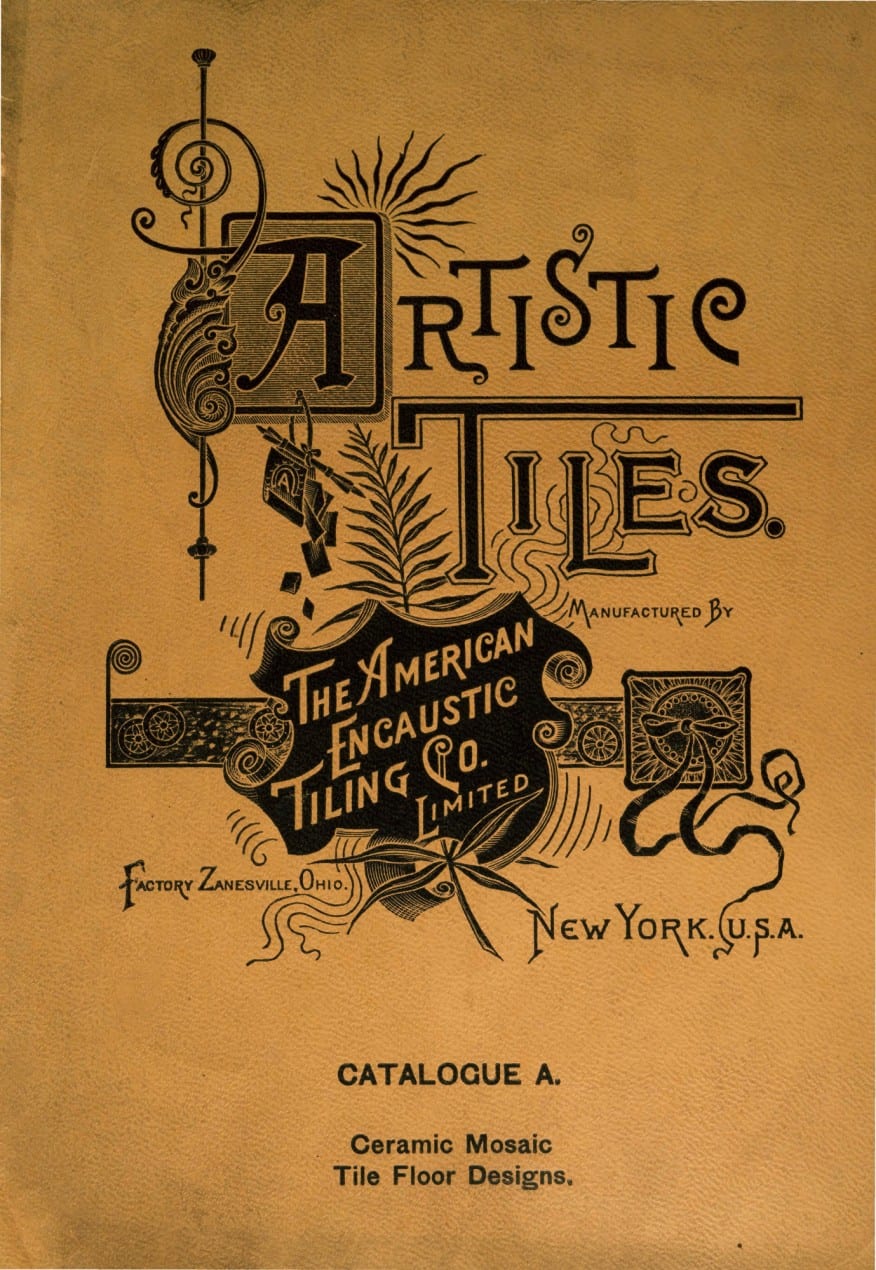
american encaustic tile company, zanesville, oh.:
in 1874, a man named e.h. hall began tile production under the name of fischer and lansing in zanesville, ohio. american encaustic tiling company (a.e.t.) was founded in 1875. the production of encaustic tiles involves a complicated process in which powdered clays of different colors are pressed together to form a pattern or design. in 1876, hall left a.e.t, to be replaced by a man named gilbert elliot. in 1877, george stanberry became the superintendent, and produced a machine that mass produced tiles like never before in america. production increased, and the factory moved to a bigger building. in 1880, a.e.t. began making glazed tiles; embossed tiles came shortly after in 1881. a showroom was built in new york city around this time. herman mueller was hired in 1887, bringing with him many new techniques. he produced many large relief tiles, as well as panels of female figures, mythological symbols, and portraits. renaissance motifs influenced much of his work. he also produced intaglio-modeled tiles, portraits or scenes in which the design was carved into a tile, then glazed. the glaze darkened in the more deeply carved areas; in the shallow areas, the tones would be more delicate, giving certain tiles the appearance of a photograph. in 1890, a man named karl langenbeck, left rookwood pottery to work with a.e.t. he introduced many new colors to the company. once again, the factory was too small, and a.e.t. moved to a new plant, and was self proclaimed to be the largest tile factory in the entire world. mueller and langenbeck left a.e.t to start their own factory called the mosaic tile company. a man named christian nielson replaced mueller. in the 1890s a.e.t. produced a series of at least eleven printed decal tiles with designs by walter crane, taken directly from the original plates of babys own aesop fables and babys own opera, popular childrens books of the era. in 1913, cecil jones began working at a.e.t, where he became the head of the decoration department. he left in 1930. frederick hurten rhead came in 1917, to be the head of a research department. he created many new designs including painted, molded, and cuenca pieces, as well as some pottery. he stopped working at a.e.t. in 1927. leon v. solon was hired in 1912, and worked there until 1925. in 1932, a.e.t. had some financial problems, and sold off two of their factories. the original plant in zanesville closed in 1935, which was sold to the shawnee pottery company. a company named franklin tile combined with a.e.t. and kept their name. in the 1930s, franklin merged with olean tiles, to create a company called american franklin olean tiles, inc., which sold all of the companies tiles. in 1959, a.e.t acquired olean tile and murray tile company, and 1964 the whole consortium became the american olean tile company.