

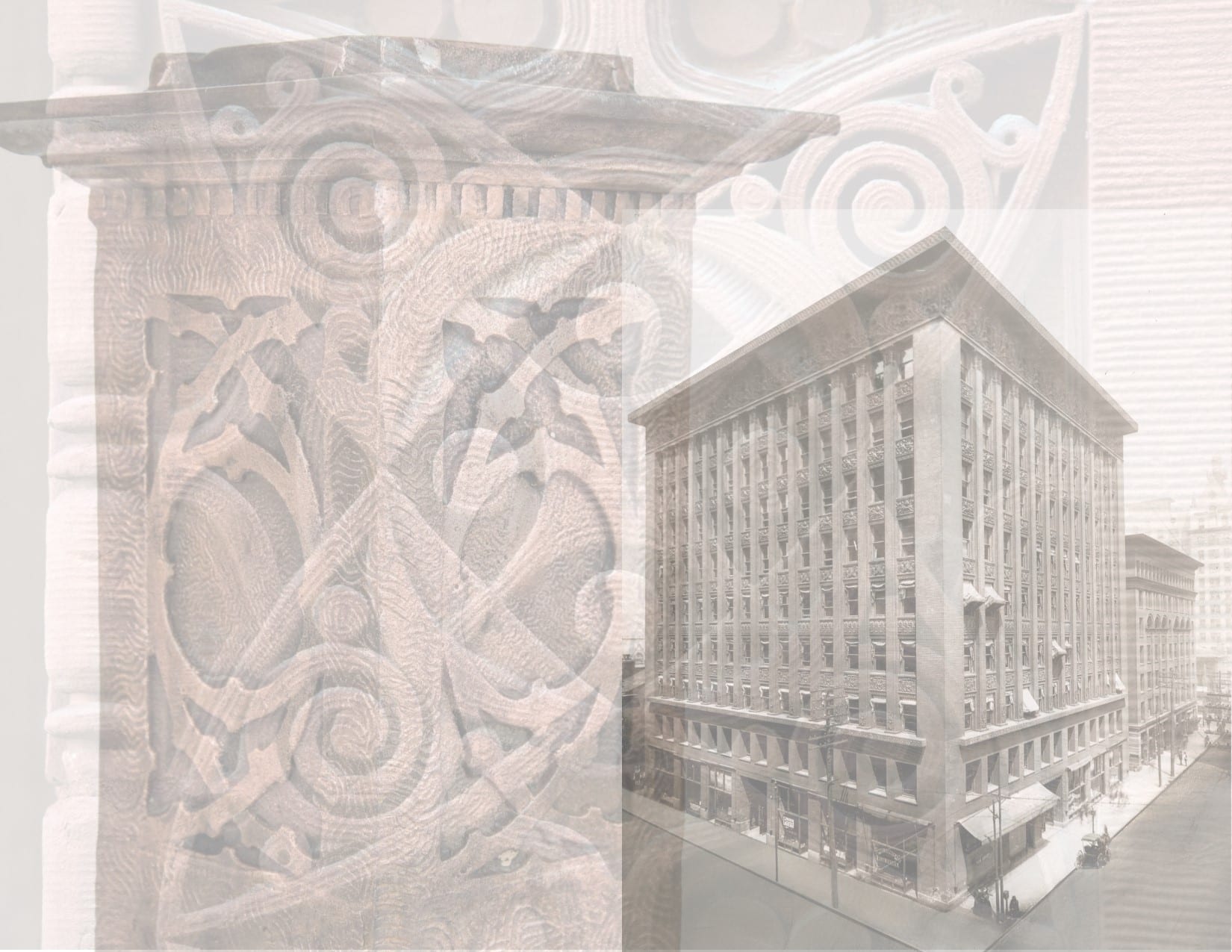
18 Apr photographic images and artifacts of adler and sullivan’s wainwright building (1891)
the 10-story wainwright building is an early skyscraper designed by the architectural firm of dankmar adler and louis sullivan in 1891. The steel-framed commercial building was named for local brewer, building contractor, and financier ellis wainwright. the wainwright building was the second major commission for a tall office building by adler & sullivan, which had grown to international prominence after the creation of the ten-story auditorium building in chicago (designed in 1886 and completed in 1889).
aesthetically, the wainwright building exemplifies sullivan’s theories about the tall building, which included a tripartite (three-part) composition based on the structure of the classical column, and his desire to emphasize the height of the building. despite the classical column concept, the building’s design was deliberately modern, featuring none of the neoclassical style that sullivan held in contempt.
historian carl w. condit described the wainwright as “a building with a strong, vigorously articulated base supporting a screen that constitutes a vivid image of powerful upward movement.” the base contained retail stores that required wide glazed openings; sullivan’s ornament made the supporting piers read as pillars. above it the semi-public nature of offices up a single flight of stairs are expressed as broad windows in the curtain wall. a cornice separates the second floor from the grid of identical windows of the screen wall, where each window is “a cell in a honeycomb, nothing more”. the building’s windows and horizontals were inset slightly behind columns and piers, as part of a “vertical aesthetic” to create what sullivan called “a proud and soaring thing.”
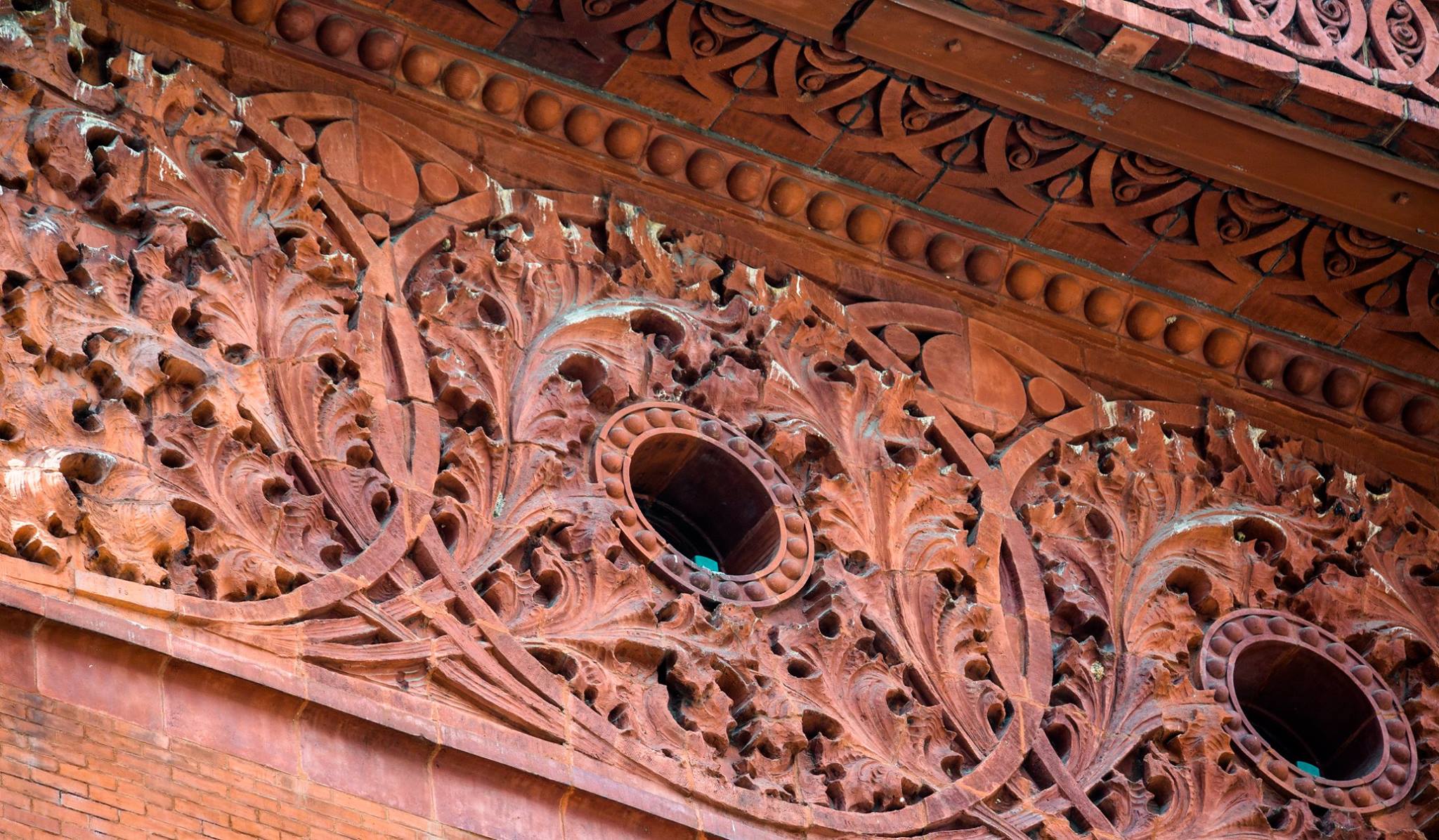
the ornamentation for the building includes a wide frieze below the deep cornice, which expresses the formalized yet naturalistic organic leaf foliage typical of sullivan and published in his system of architectural ornament, decorated spandrels between the windows on the different floors and an elaborate door surround at the main entrance. the frieze is pierced by unobtrusive bull’s-eye windows that light the top-story floor, originally containing water tanks and elevator machinery. the building is accentuated with terra cotta on its upper floors, a building material that was gaining popularity at the time of construction.
one of sullivan’s primary concerns was the development of an architectural symbolism consisting of simple geometric, structural forms and organic ornamentation. the wainwright building where he juxtaposed the objective-tectonic and the subjective-organic was the first demonstration of this symbolism.
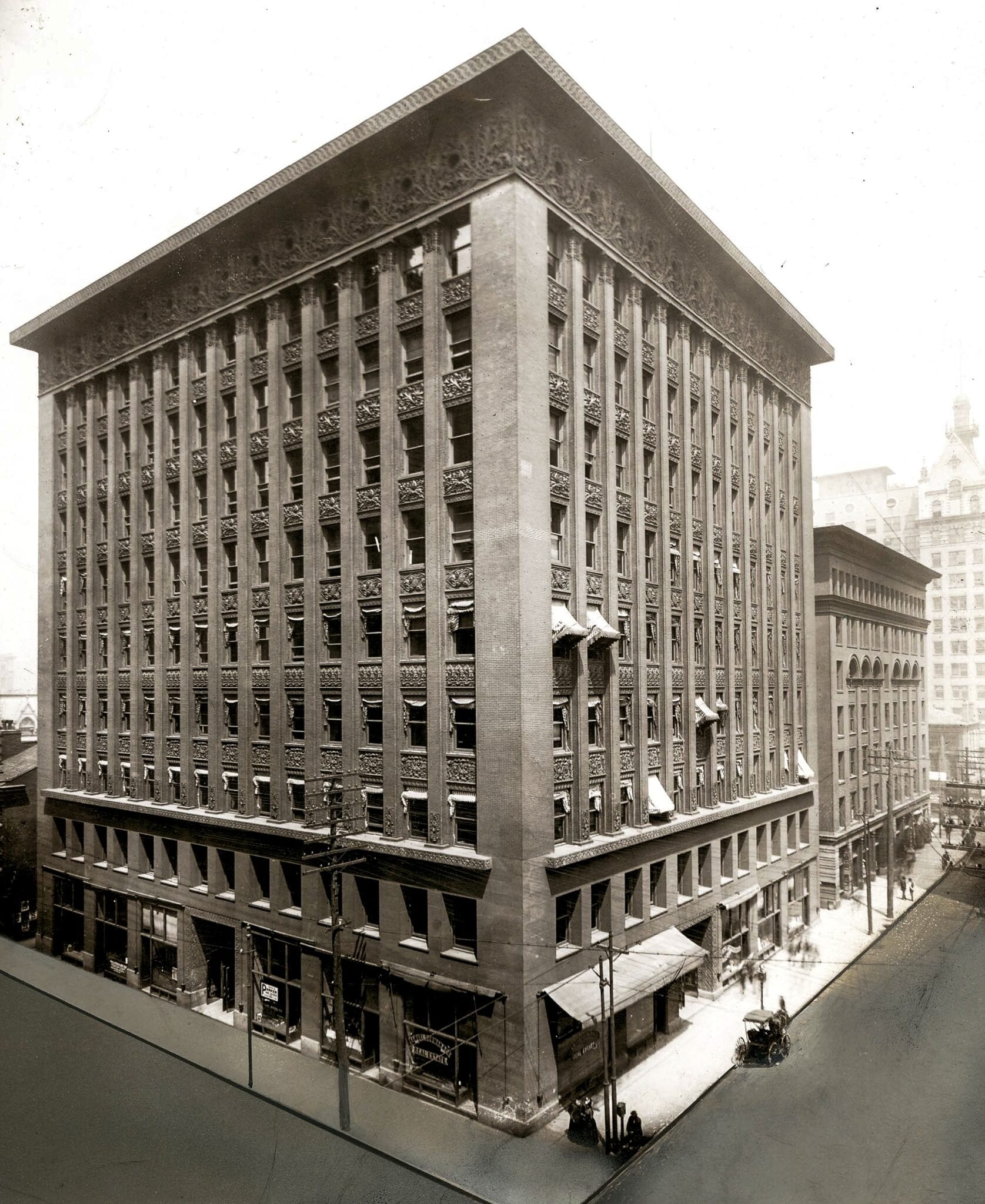
Wainwright Building. 709 Chestnut Street. Adler, Sullivan, and Ramsey, Architects. Photograph by Emil Boehl, 1907. Missouri History Museum Photographs and Prints Collections. Commercial Buildings. N10484.
Wainwright Building. 709 Chestnut Street. Adler, Sullivan, and Ramsey, Architects. Photograph by Emil Boehl, 1907. Missouri History Museum Photographs and Prints Collections. Commercial Buildings. N10484.
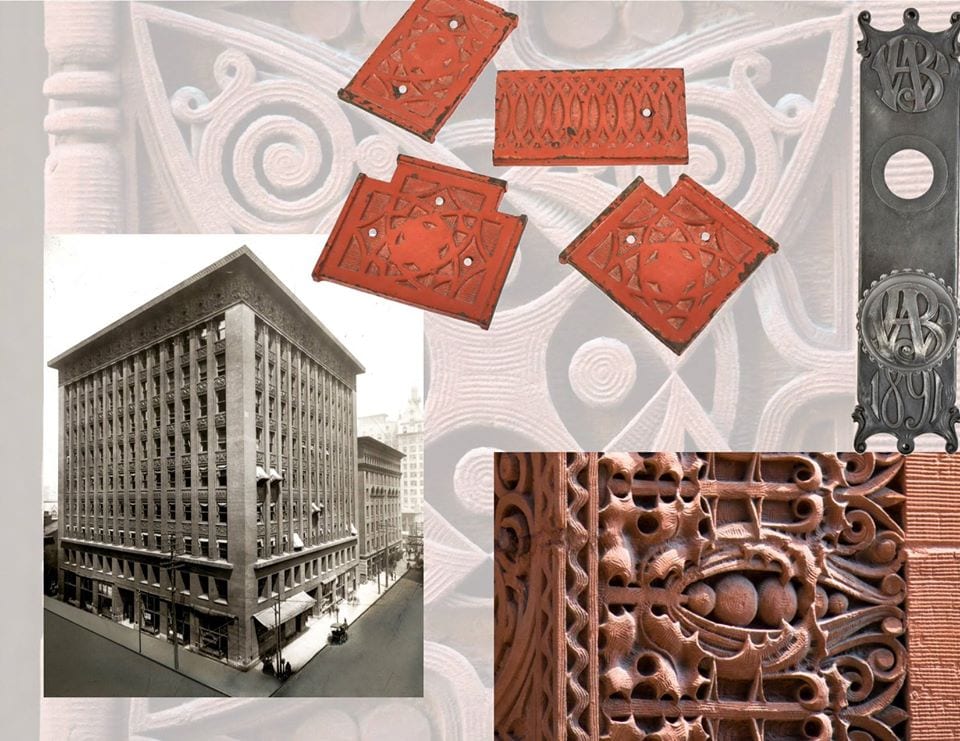
https://bldg51.com/news-and-events/2018/07/13/a-photographic-survey-of-adler-and-sullivans-wainwright-building-ornament/
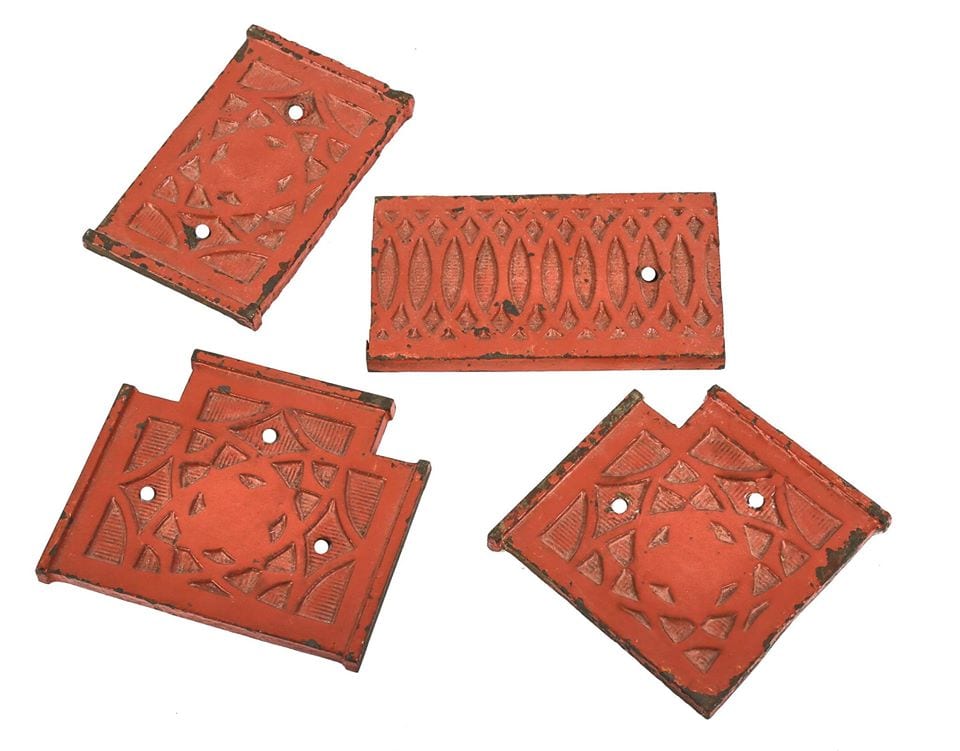
original painted cast iron wainwright building (1891) storefront mullion sections. adler and sullivan, architects.
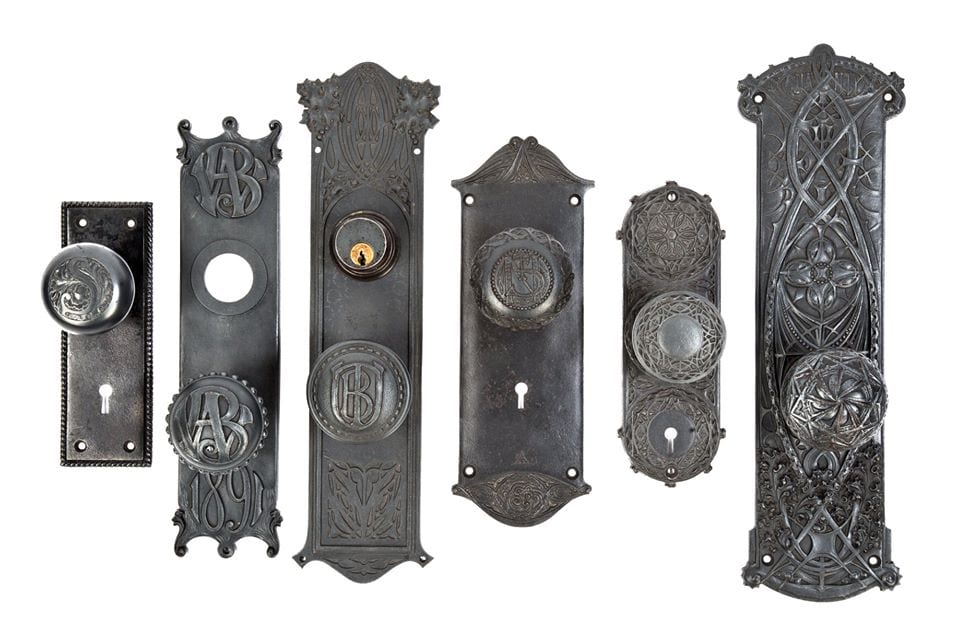
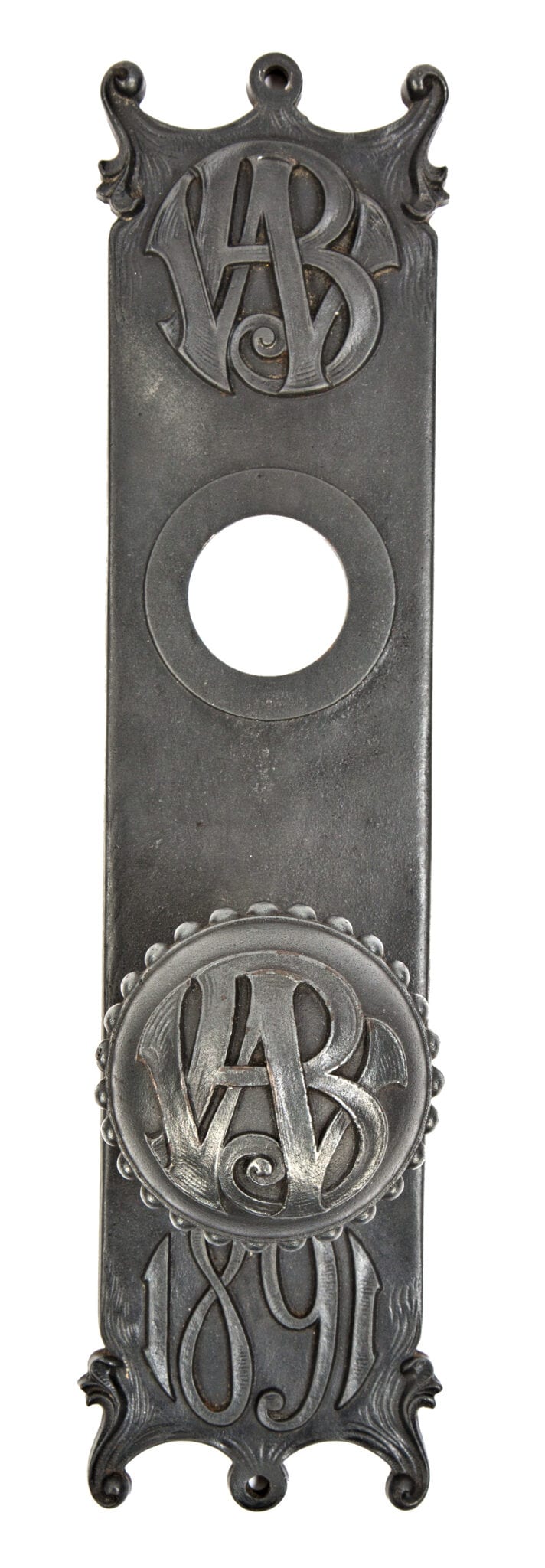
commercial building door hardware designed by louis h. sullivan. with the exception of the schiller building (chicago hardware company), all of the hardware was fabricated by yale & towne, stamford, ct. the office door hardware was generally comprised of cast iron with a bower-barff finish.
from left to right: schiller building (1891), wainwright building (1891), union trust building (1893), st. nicholas hotel (1893), chicago stock exchange (1894), guaranty building (1896).
when i grouped it together chronologically, i thought it was an interesting way to view adler & sullivan’s greatest commercial commissions through the use of hardware. the two chicago buildings (i.e., garrick and stock exchange) are gone, while the others – 3 located in st. louis and one in buffalo – remain standing. hardware courtesy of bldg. 51.
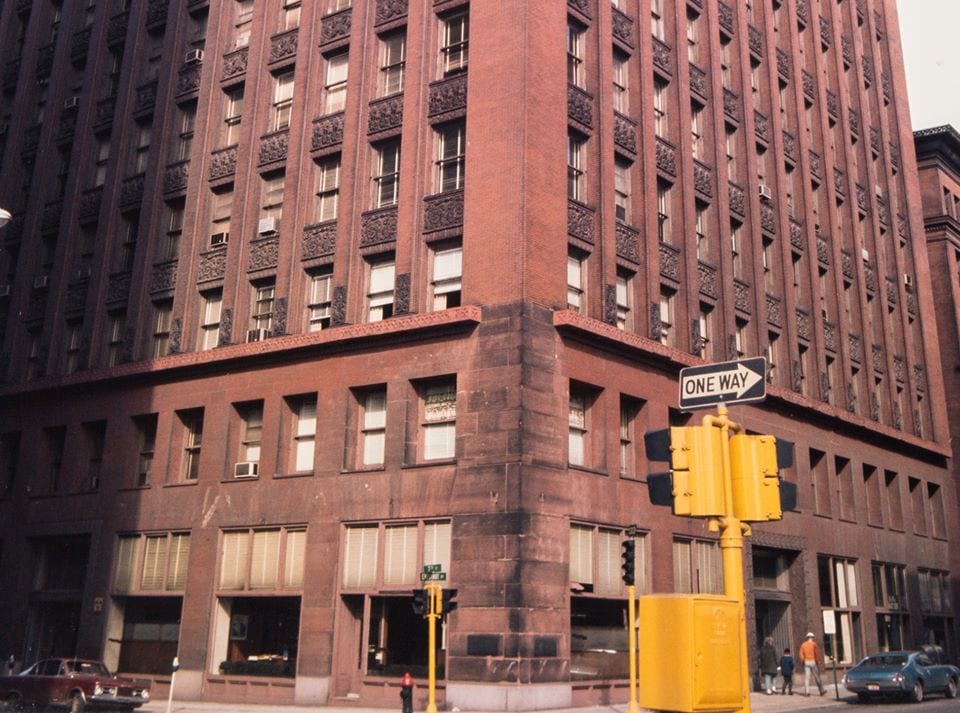
undated kodachrome slide of adler & sullivan’s wainwright building (1891). photographed by john vinci.
courtesy of john vinci collection.
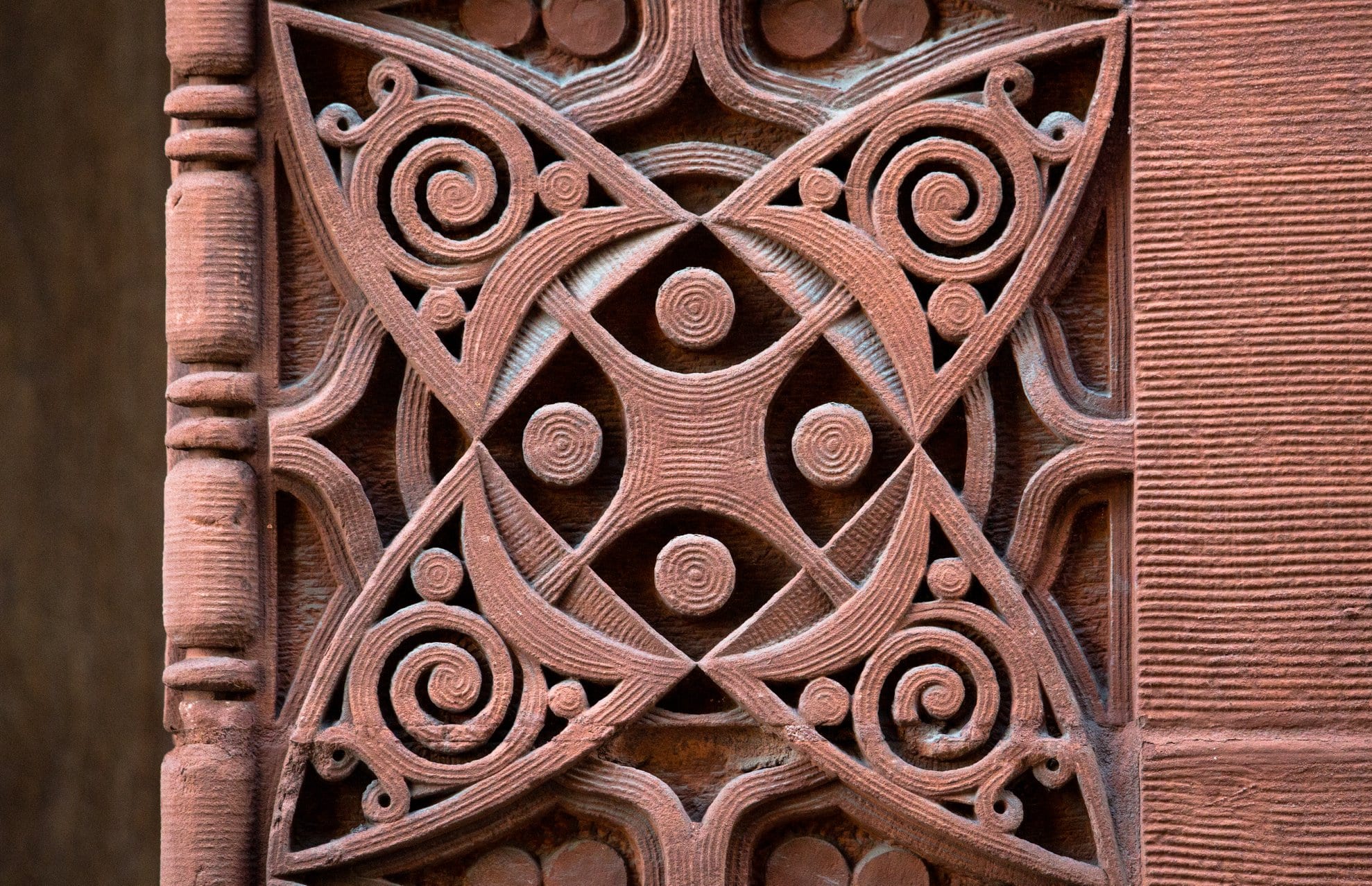
documenting 19th and early 20th century architectural ornament in st. louis has been a colossal task. i’m fixated on adler & sullivan’s wainwright (1891) and union trust (1892), so i’m slowly working my way through those images – taken again and again since we arrived on thursday.
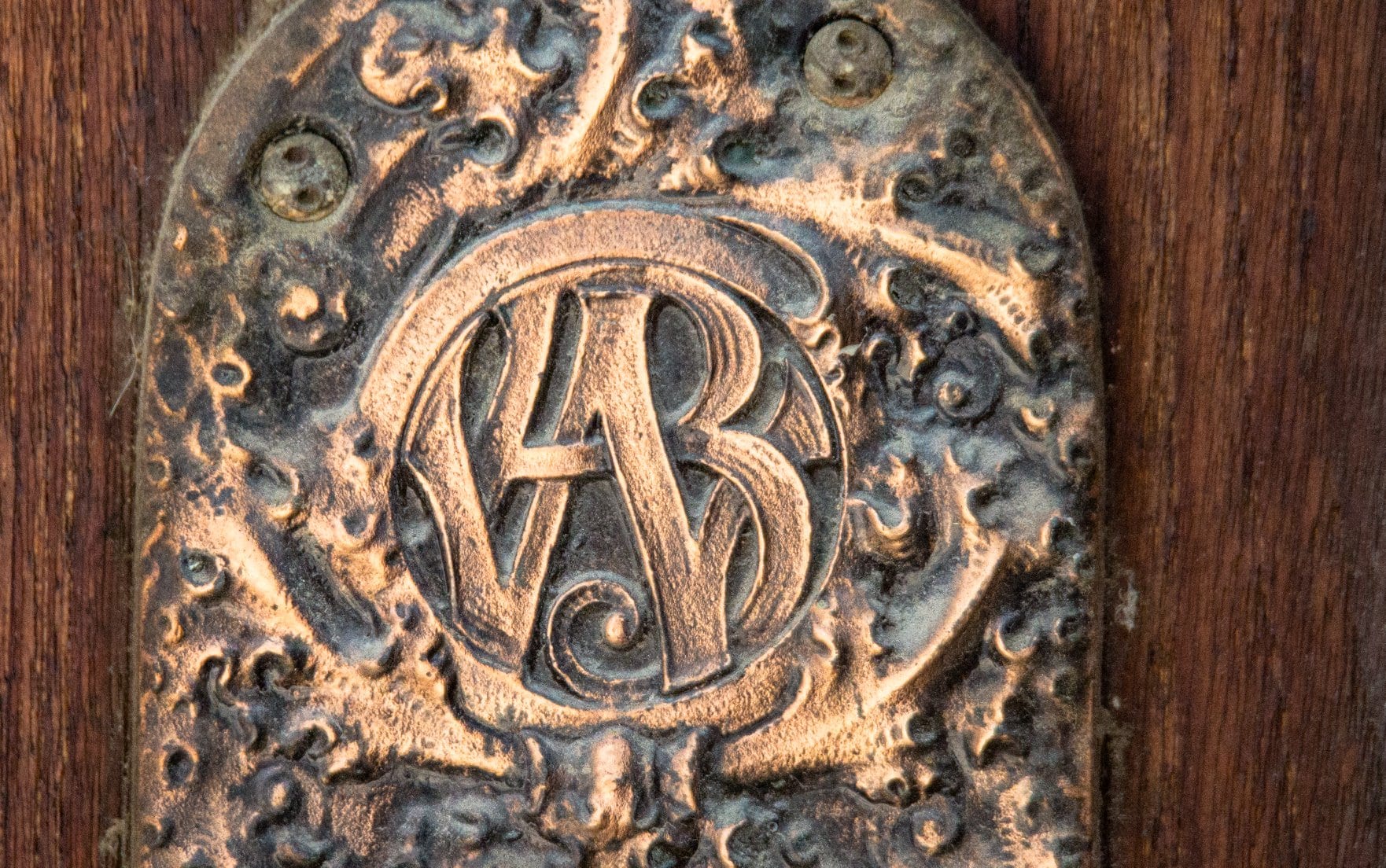
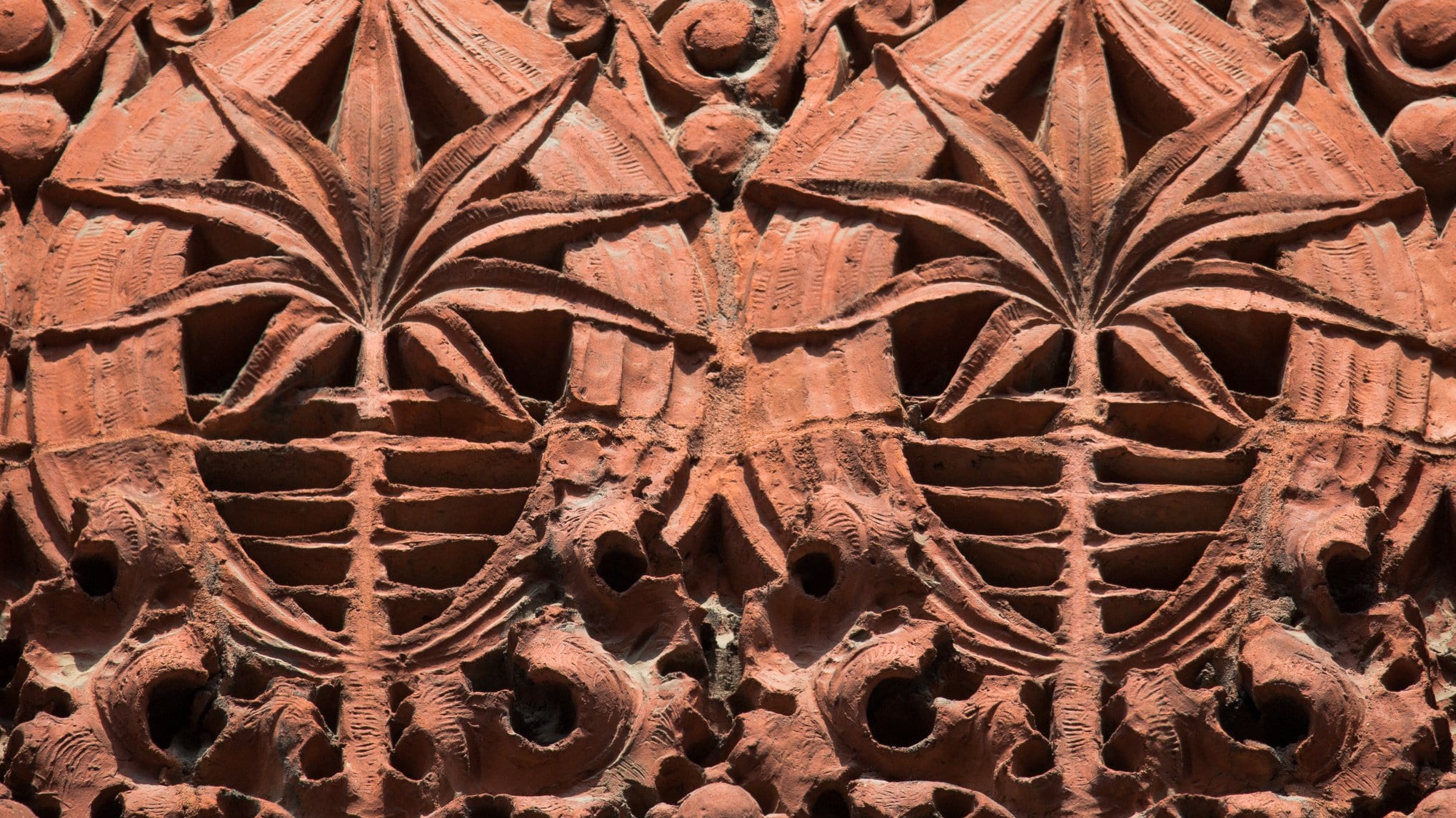
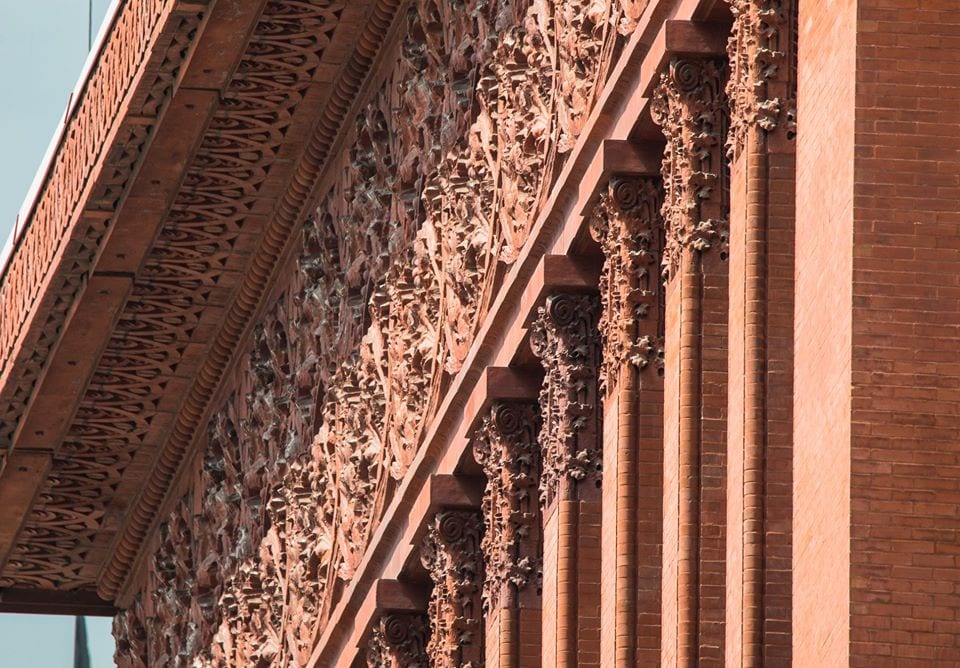
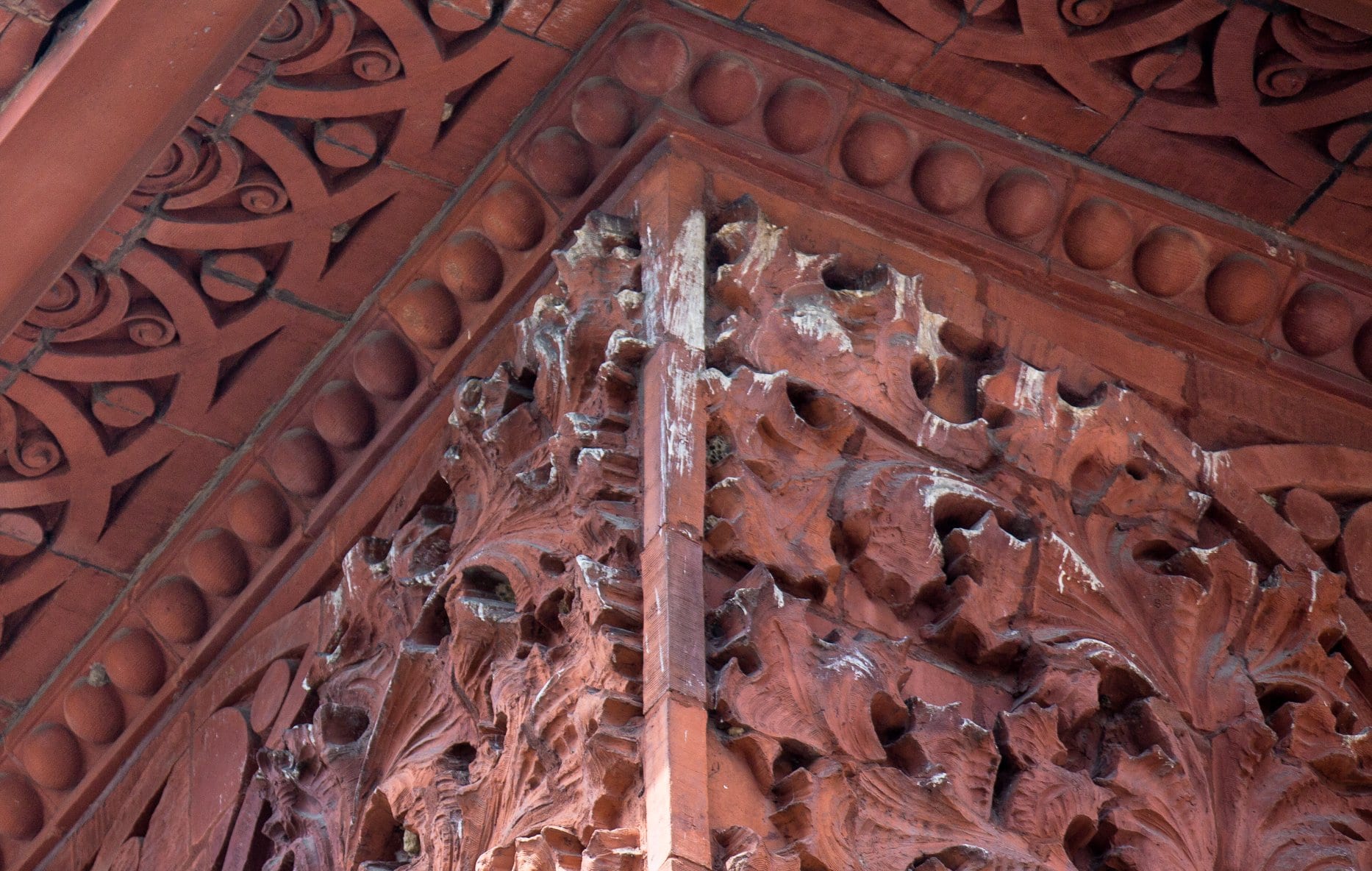
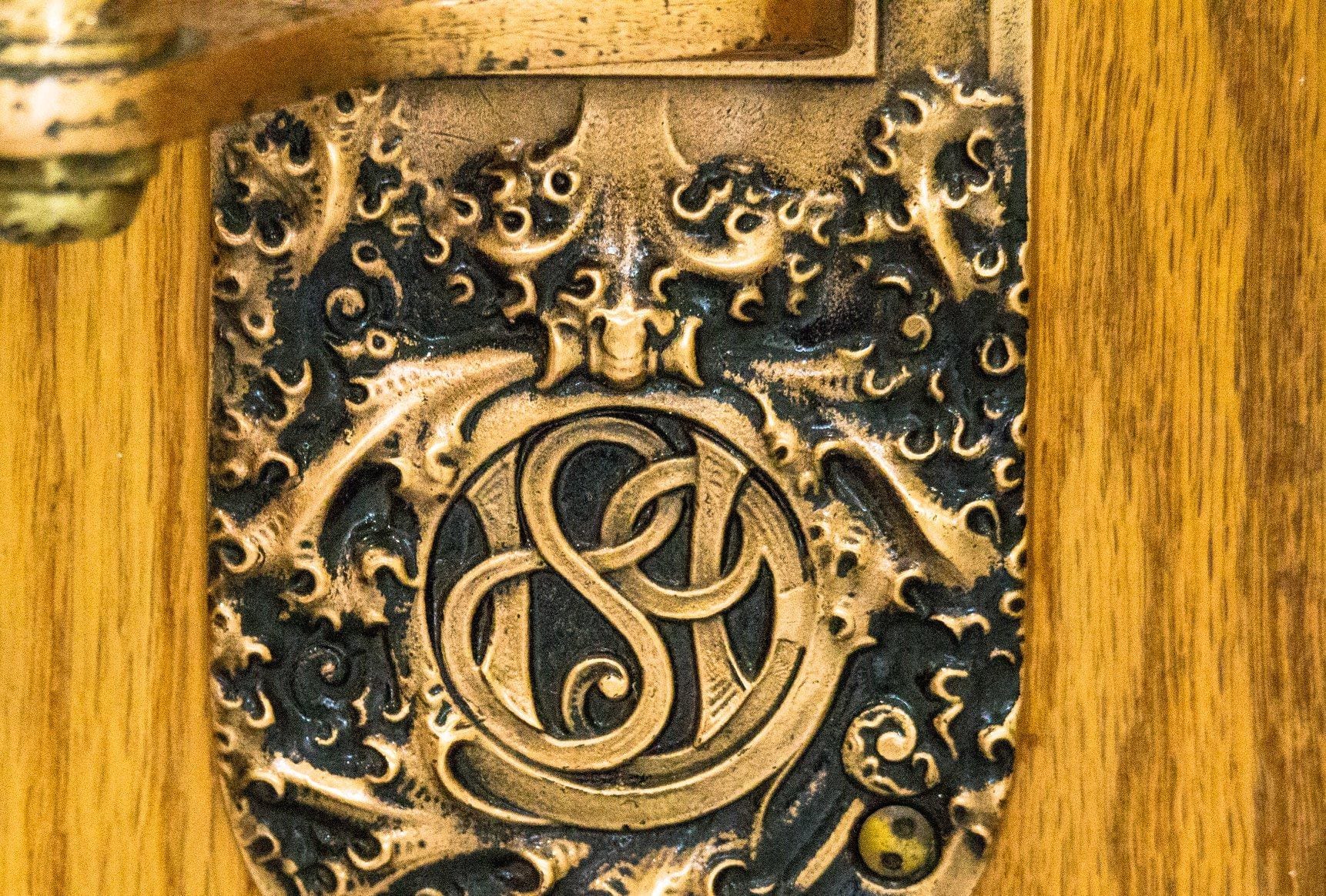
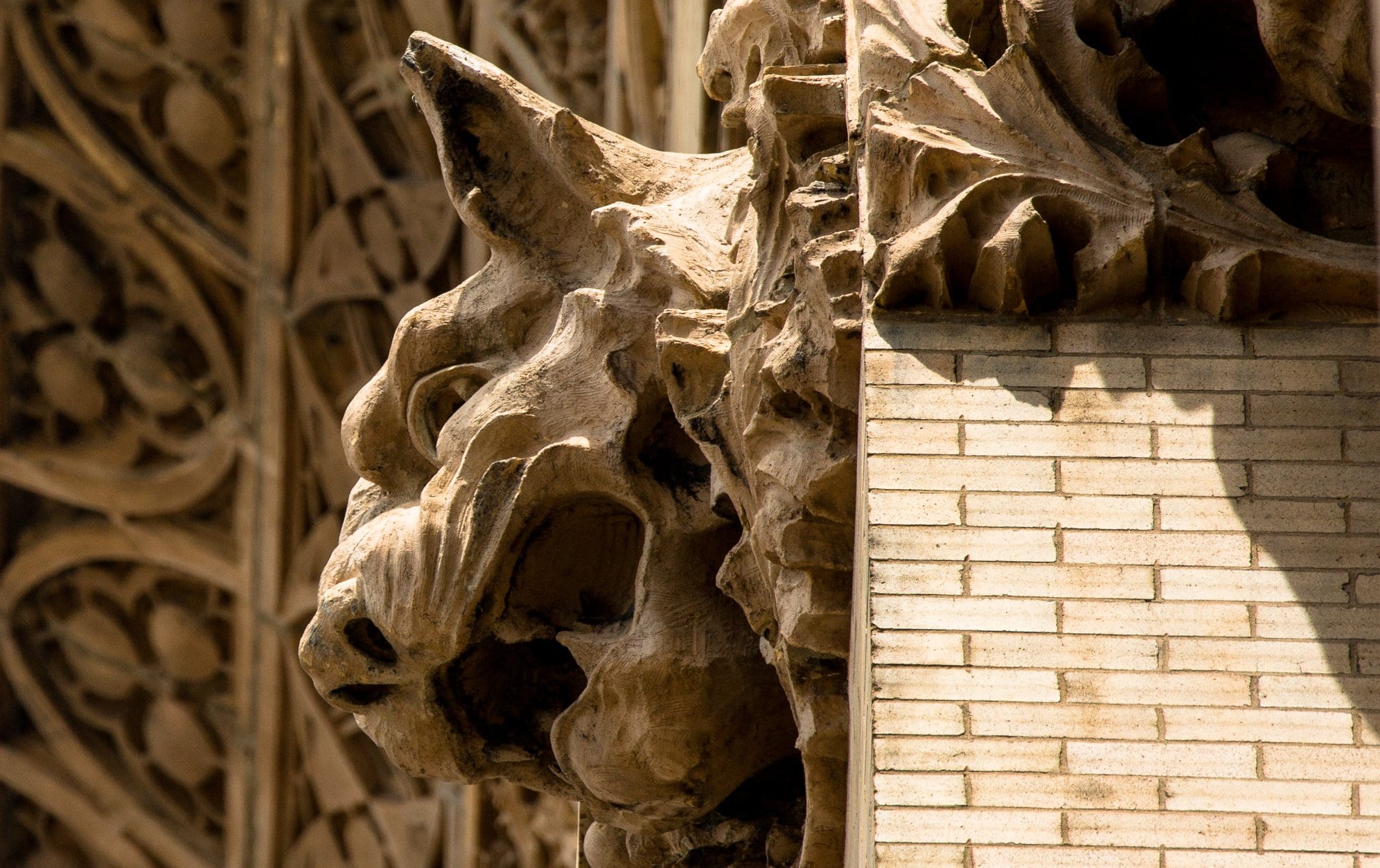
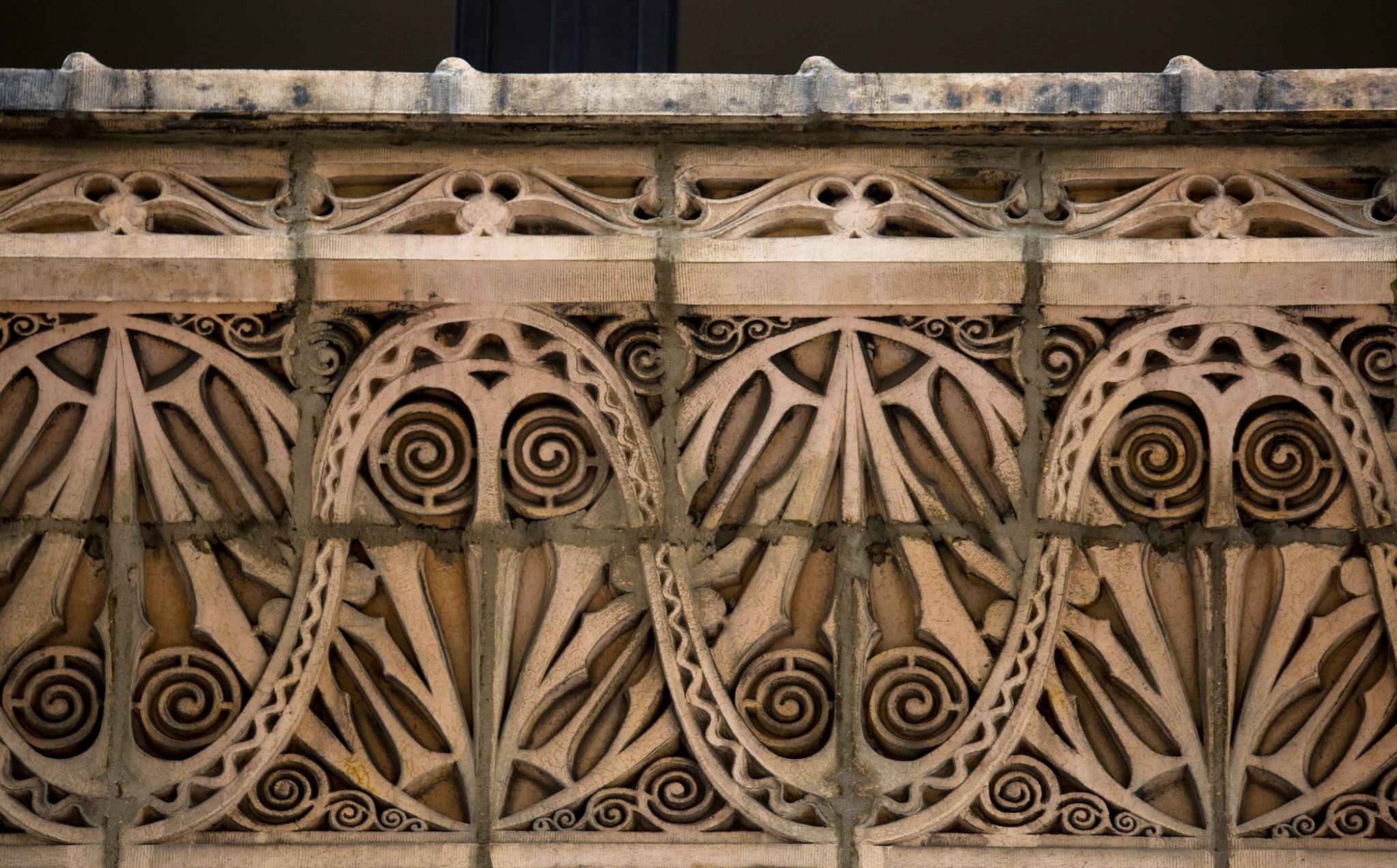
taken together, i now have a few thousand images of the nickel collection at siue, other buildings in st. louis, and architectural ornament exhibits at city museum to sort through. no pressure…
in the meantime, more wainwright and union trust ornament.
images courtesy of bldg. 51 archive.
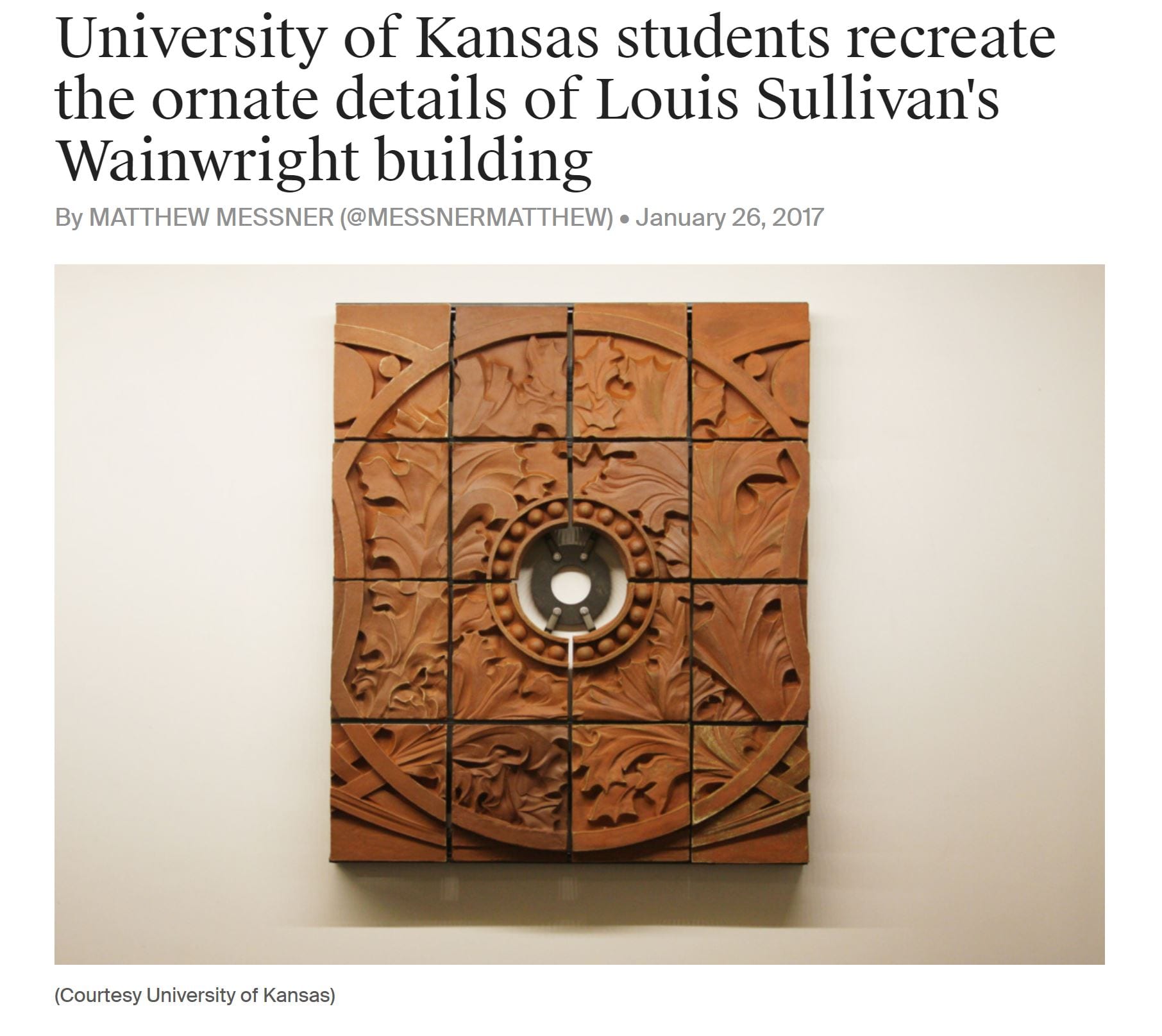
University of Kansas students recreate the ornate details of Louis Sullivan’s Wainwright building
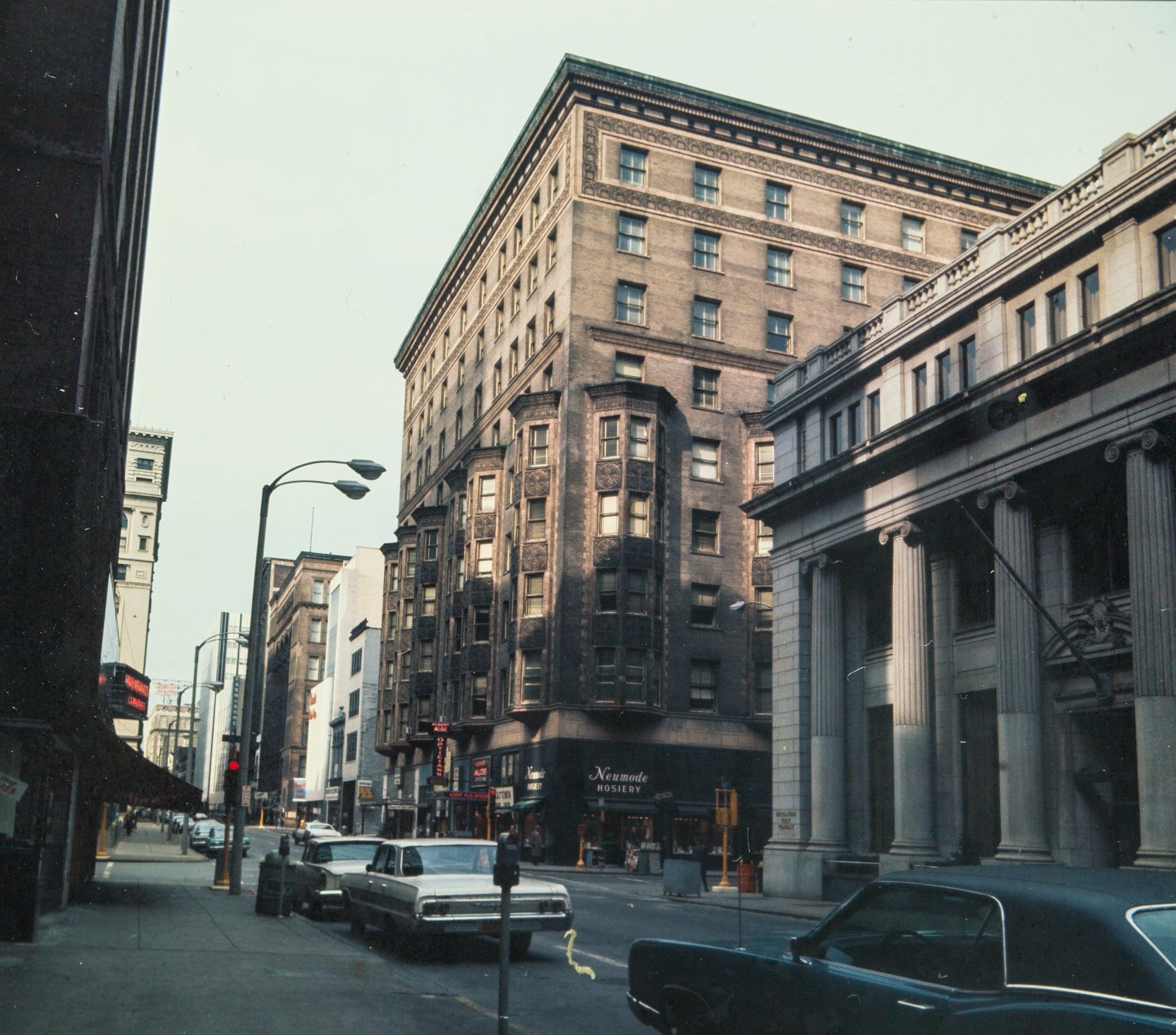
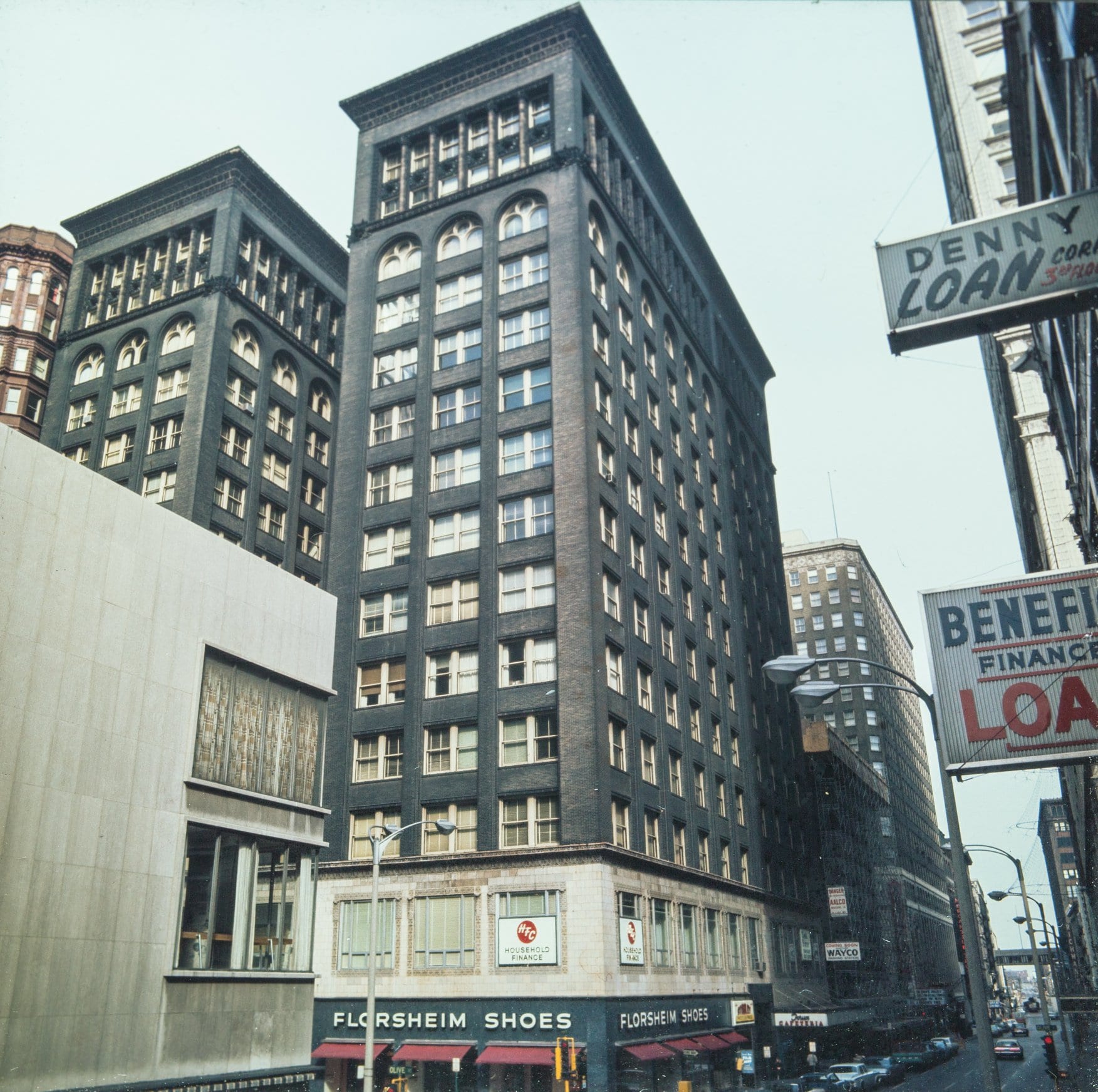
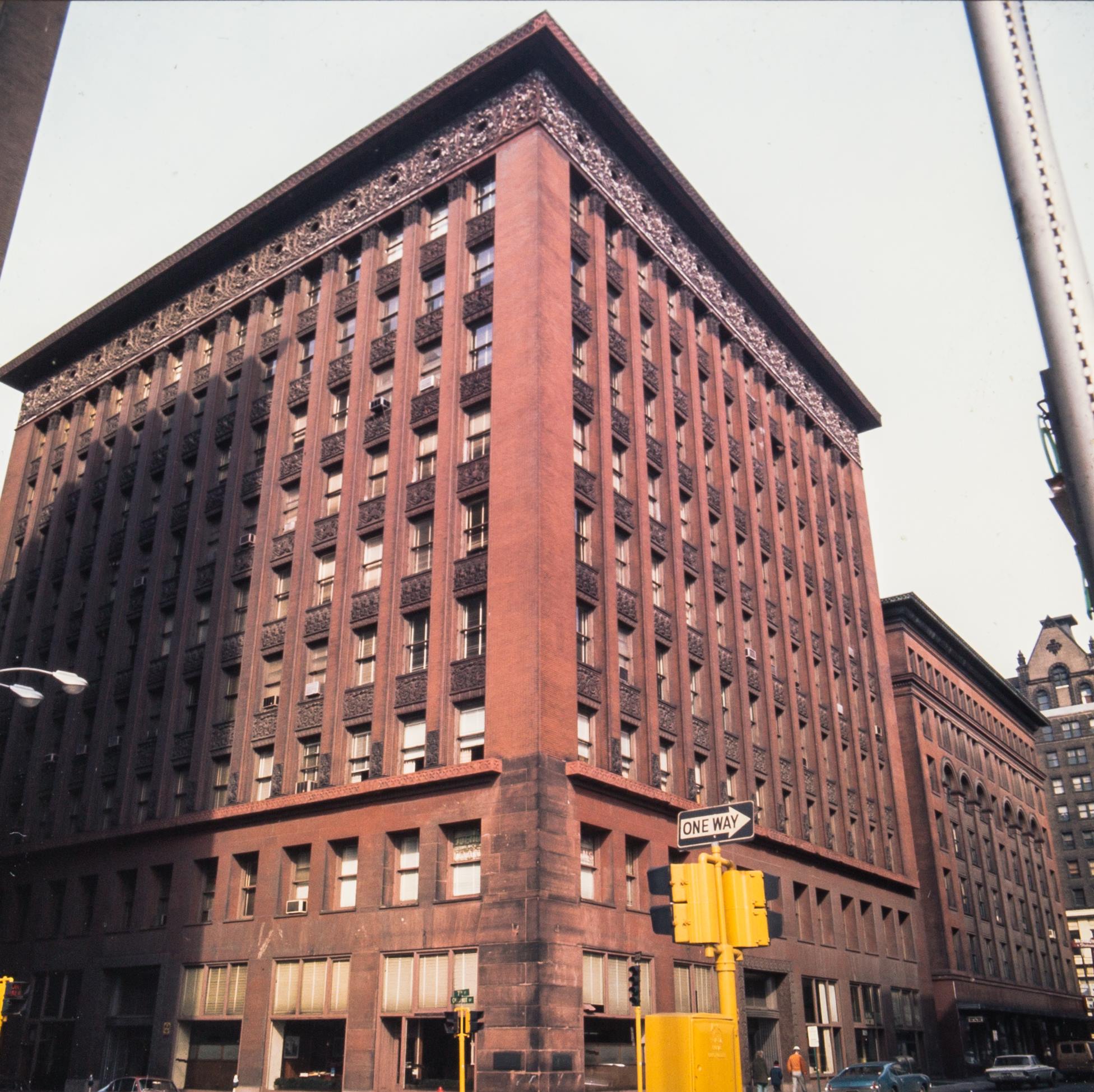
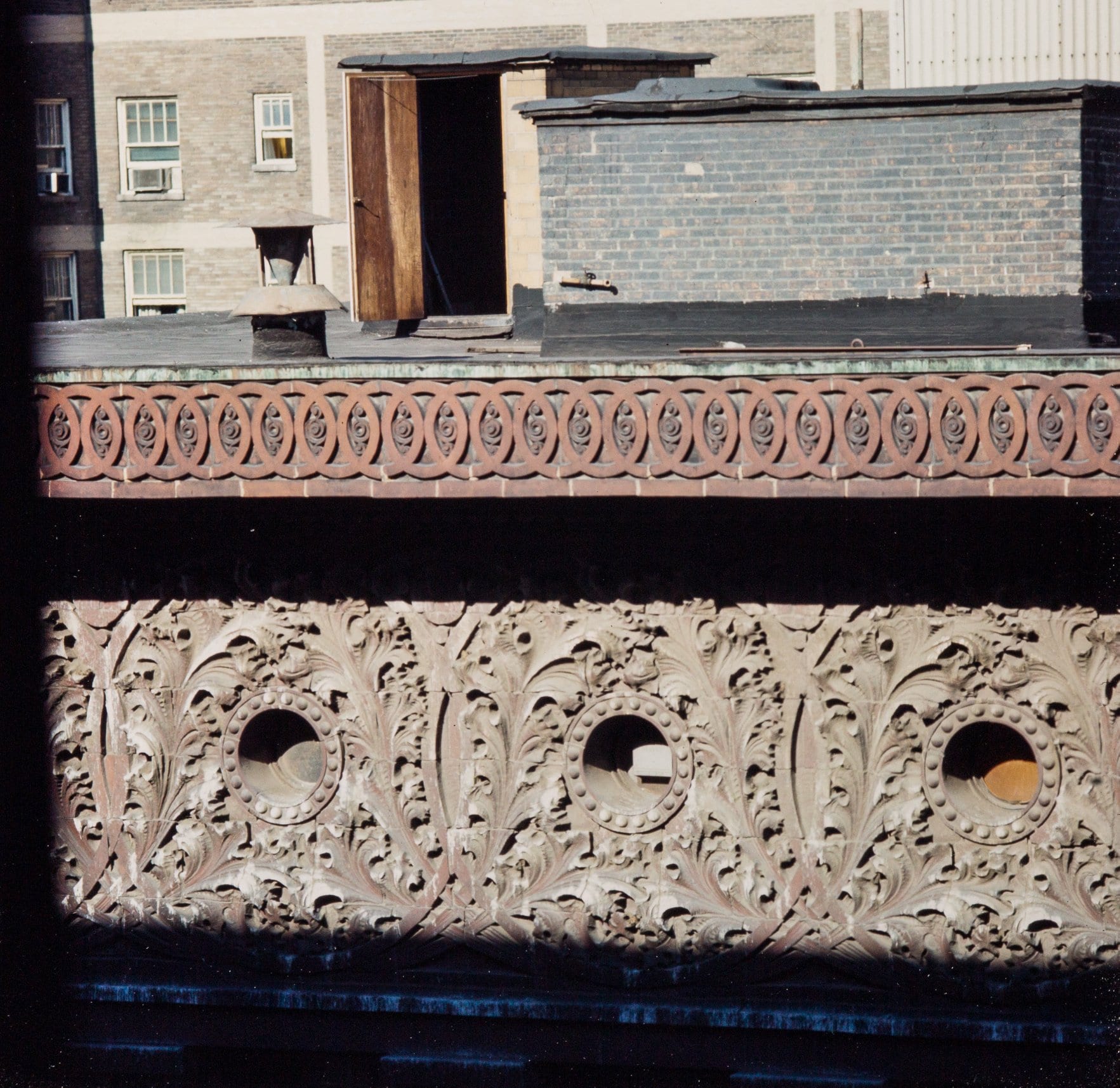
undated john vinci kodachrome slides of adler & sullivan buildings in st. louis. the st. nicholas hotel (1893) was demolished in 1974. the wainwright was completed in 1891 and union trust 1892.
courtesy of john vinci collection.
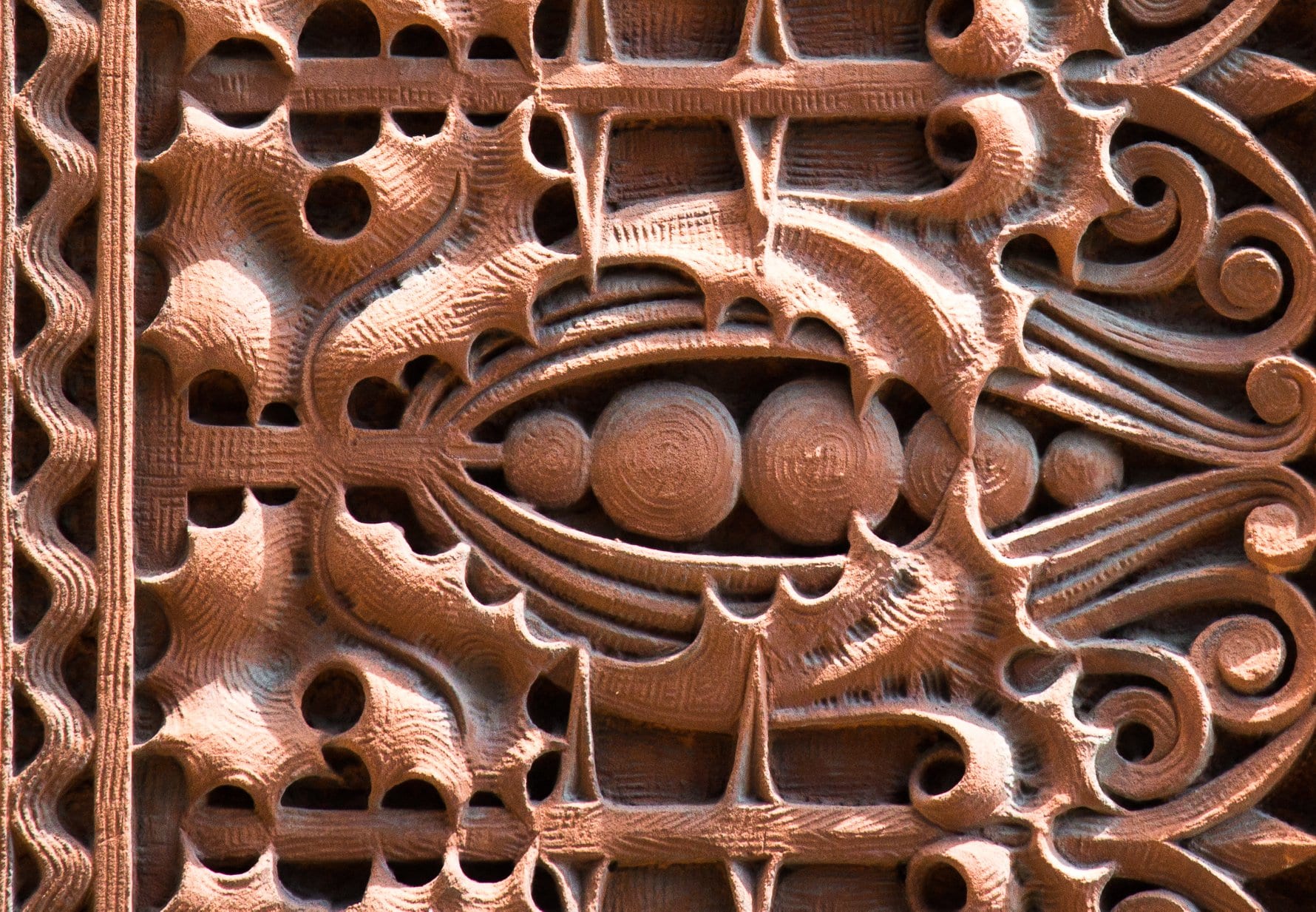
detail of louis sullivan-designed carved reddish-brown sandstone ornament (first two floors are faced with sandstone quarried in michigan). adler and sullivan’s wainwright building (1891).
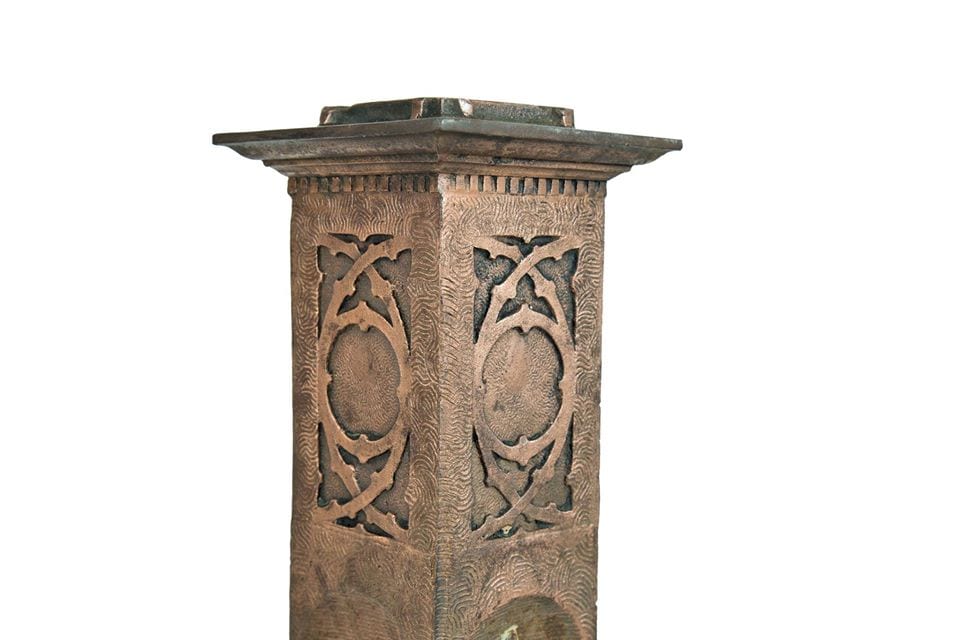
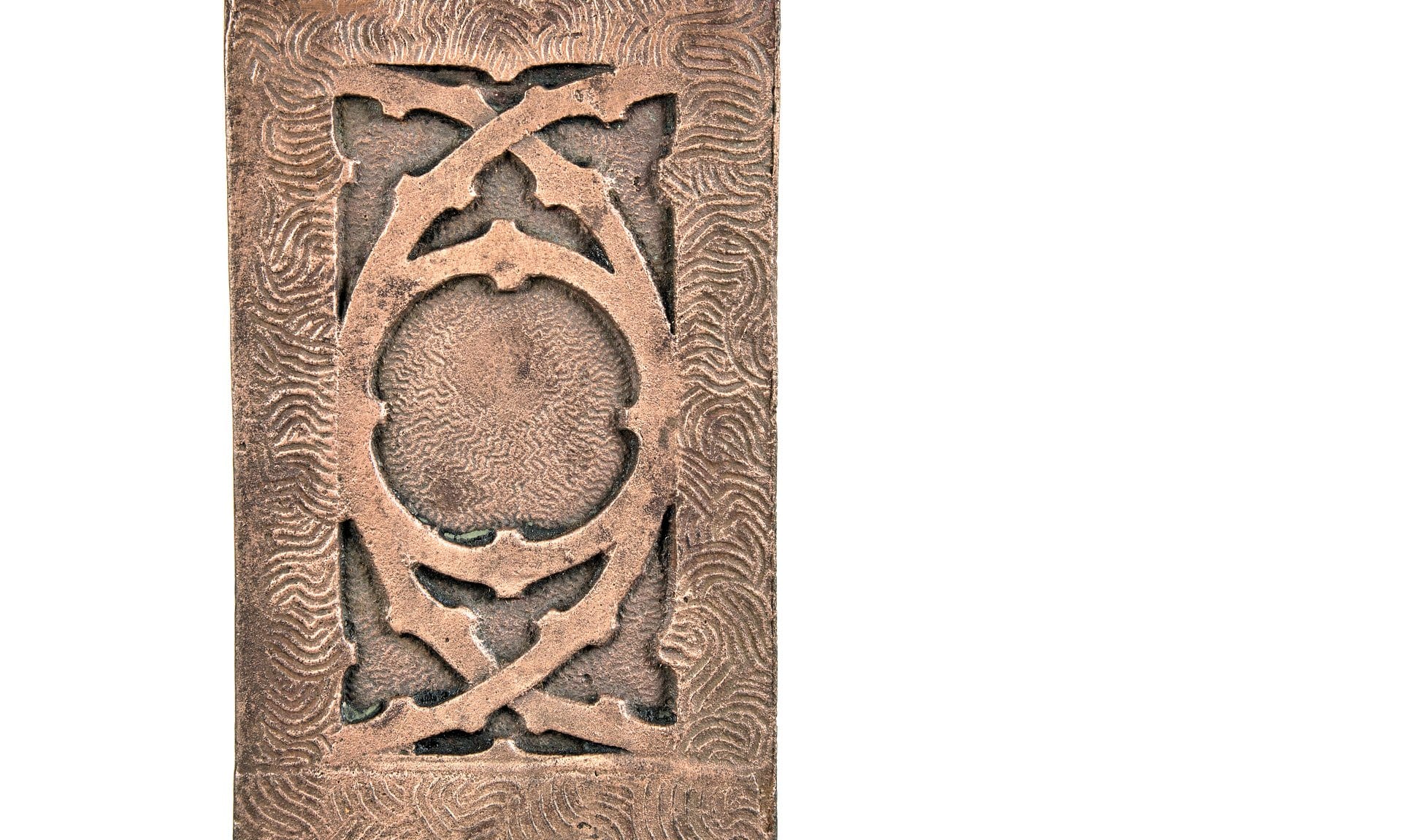
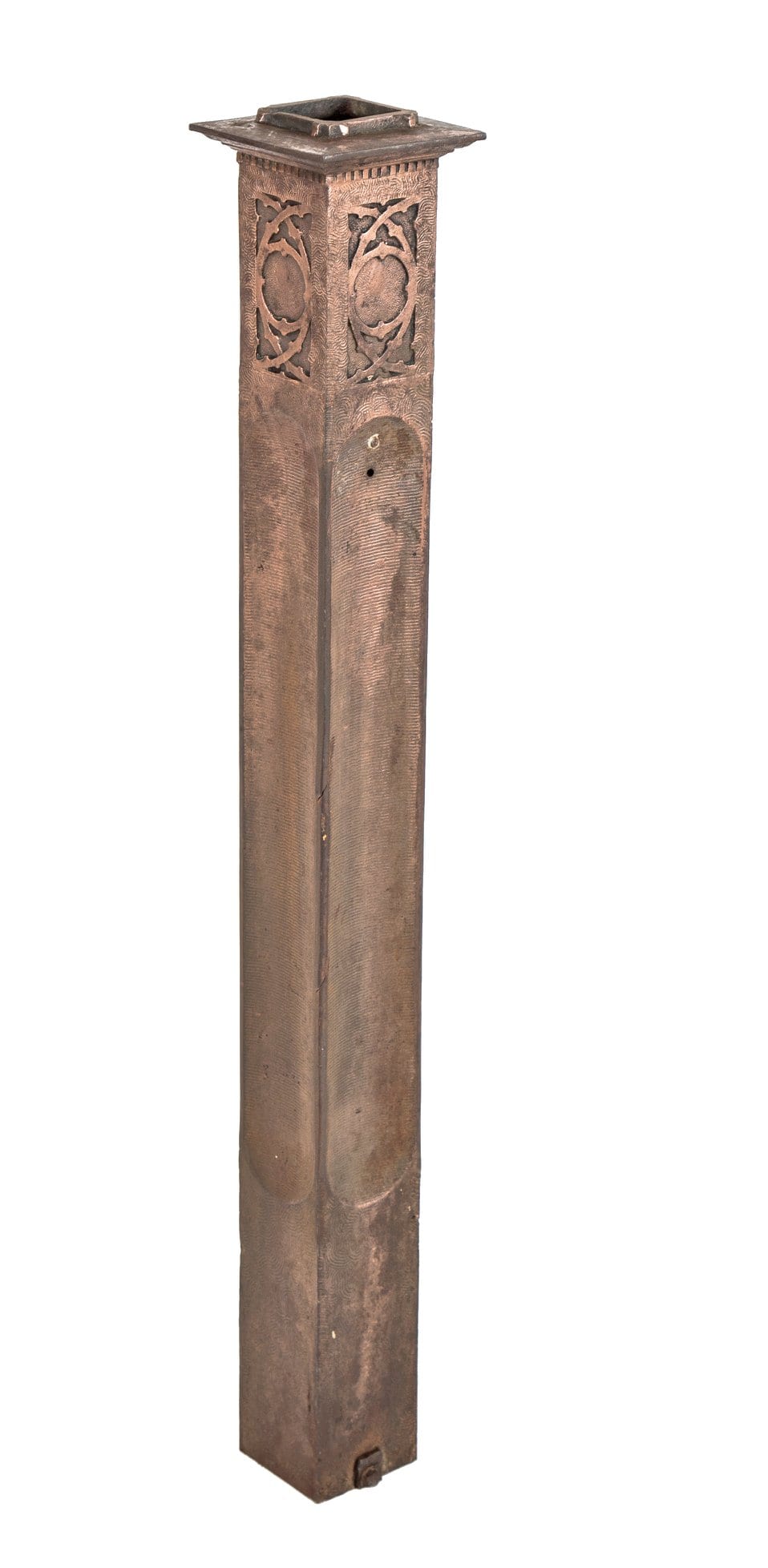
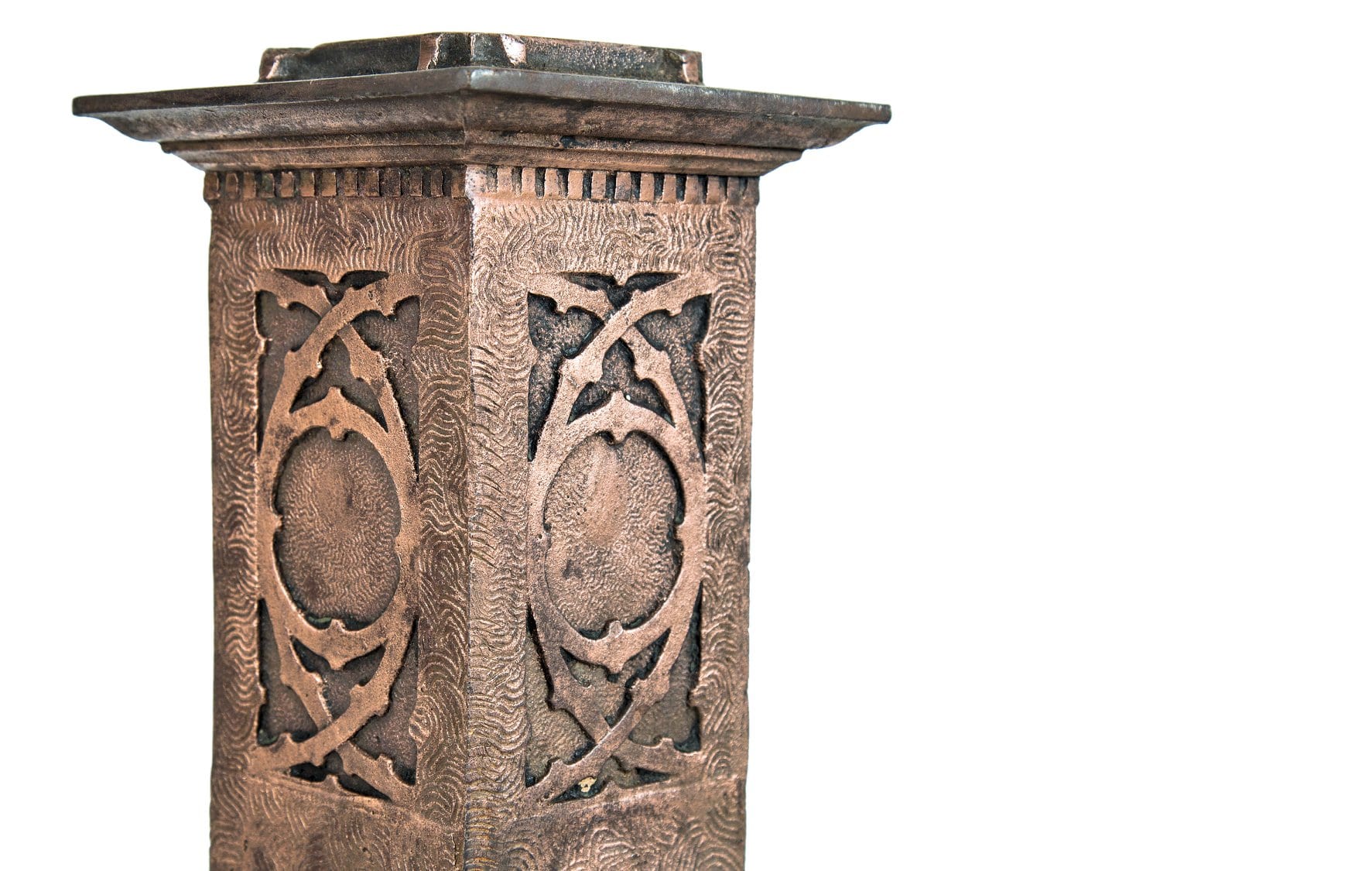
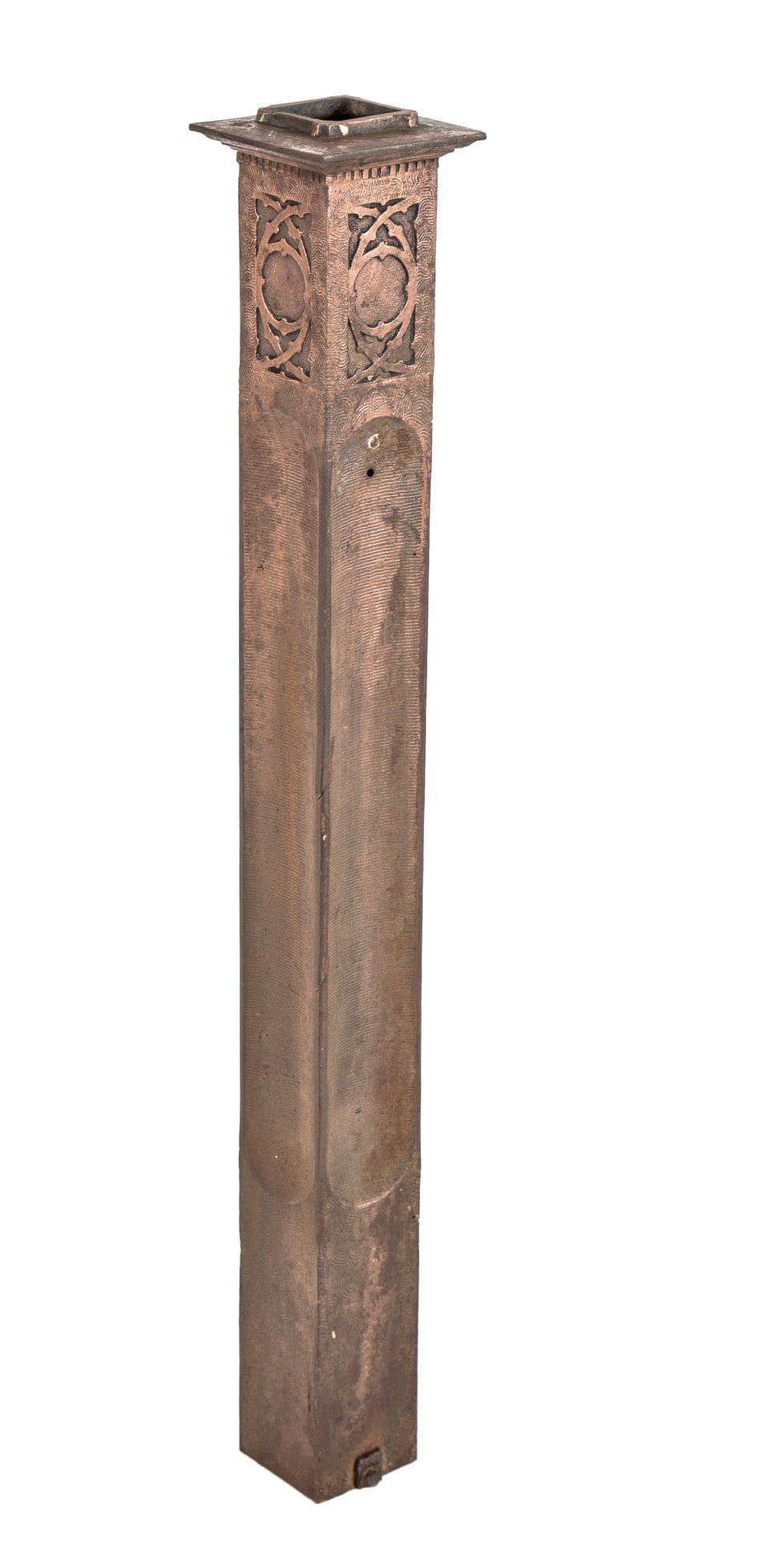
original copper-plated ornamental cast iron newel post salvaged from adler and sullivan’s wainwright building (1891) during extensive interior renovations that virtually gutted the building of its original sullivan-designed ornament – including staircases, elevators, woodwork, door hardware, etc.
the newel was likely executed by the winslow brothers, chicago, ills. it’s possible wright did some of the detailing with the gothic tracery and dentil molding as primary example.
the oak wood staircase newel posts for adler and sullivan’s loeb apartments featured a similar fret-sawn gothic treatment applied below the cap.
courtesy of bldg. 51 museum collection.
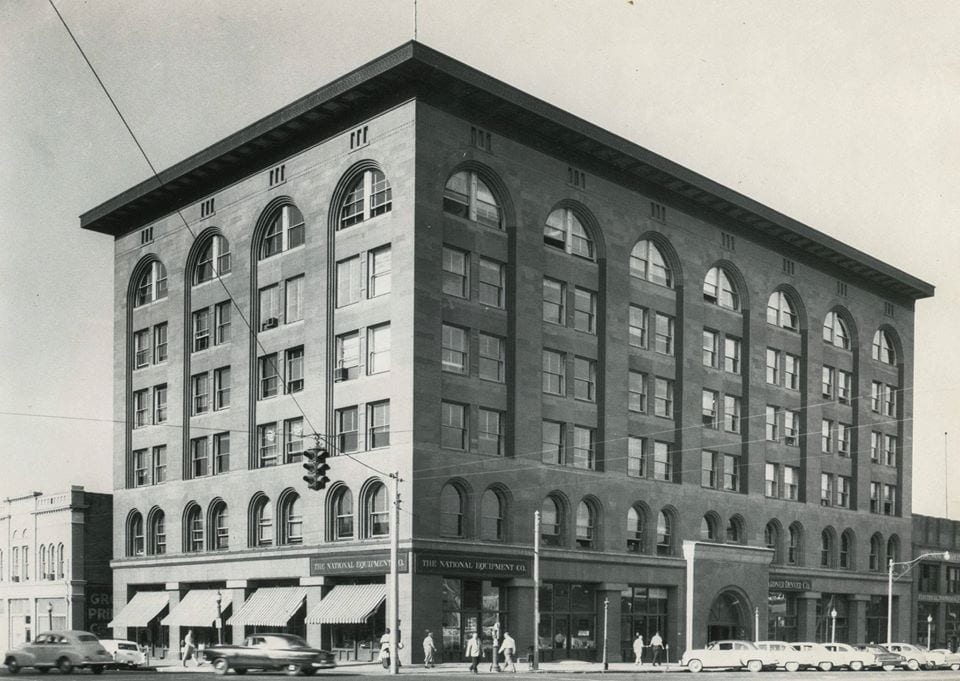
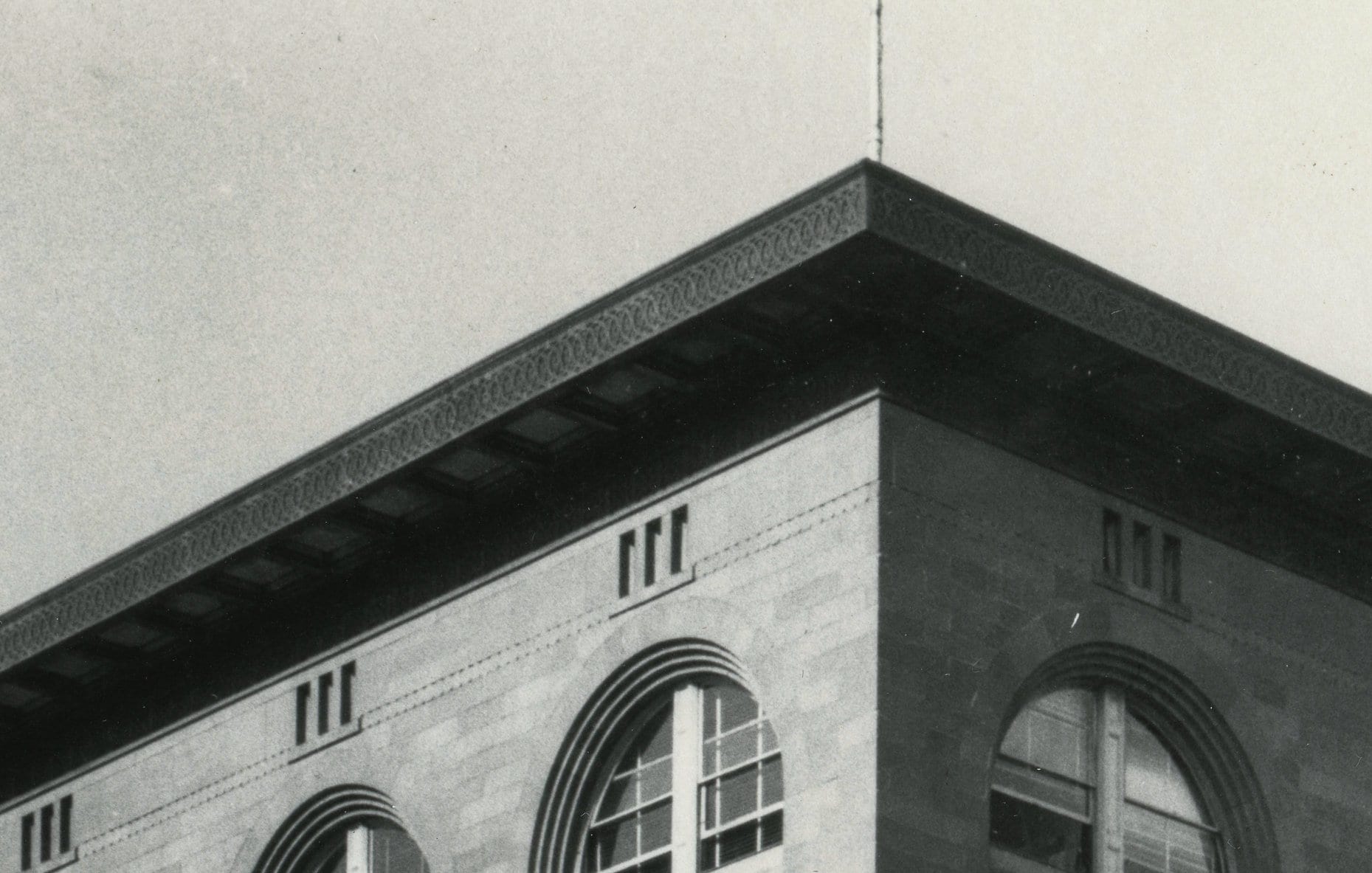
marvin e. newman silver gelatin print of adler and sullivan’s dooly block (1890-1892). the six-story romanesque style building featured load-bearing walls faced with red-brown sandstone and projecting ornamental copper cornice with a strongly geometric design that would reappear on the terra cotta cornices of the wainwright and schiller building.
the dooly block was demolished in 1964.
courtesy of bldg. 51 archive.
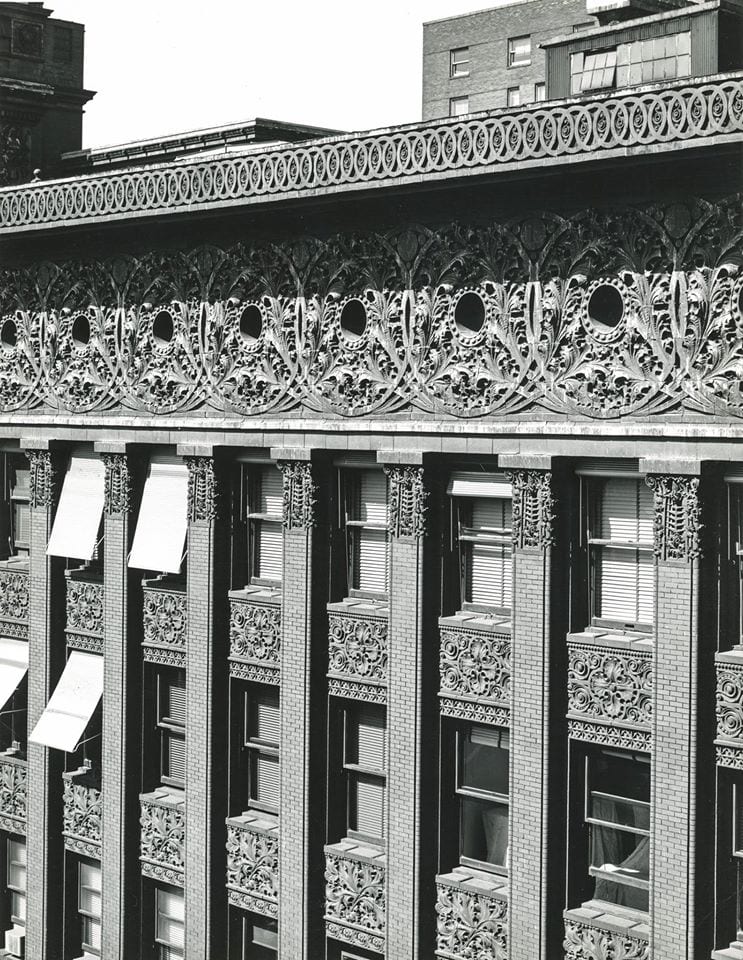
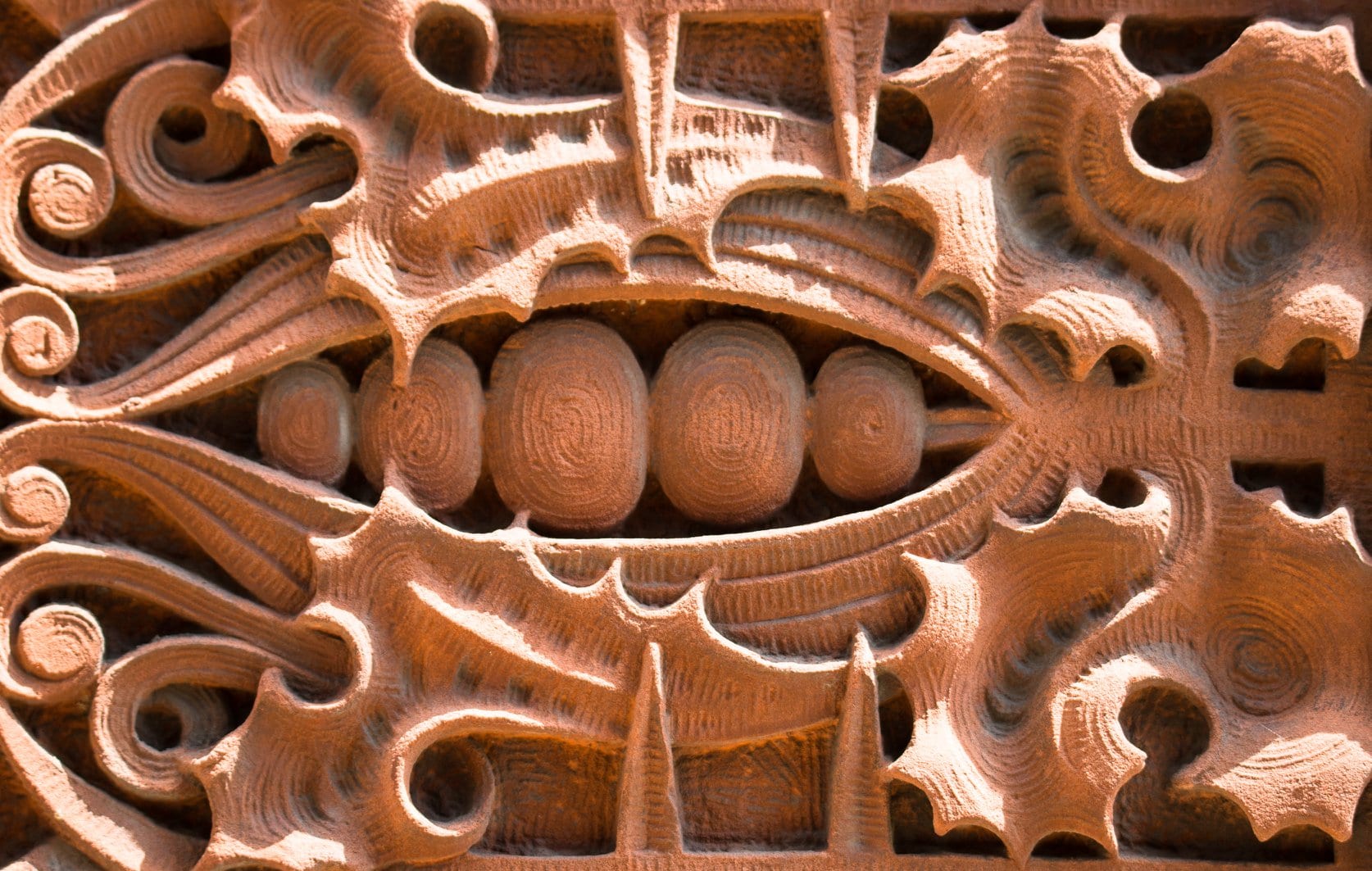
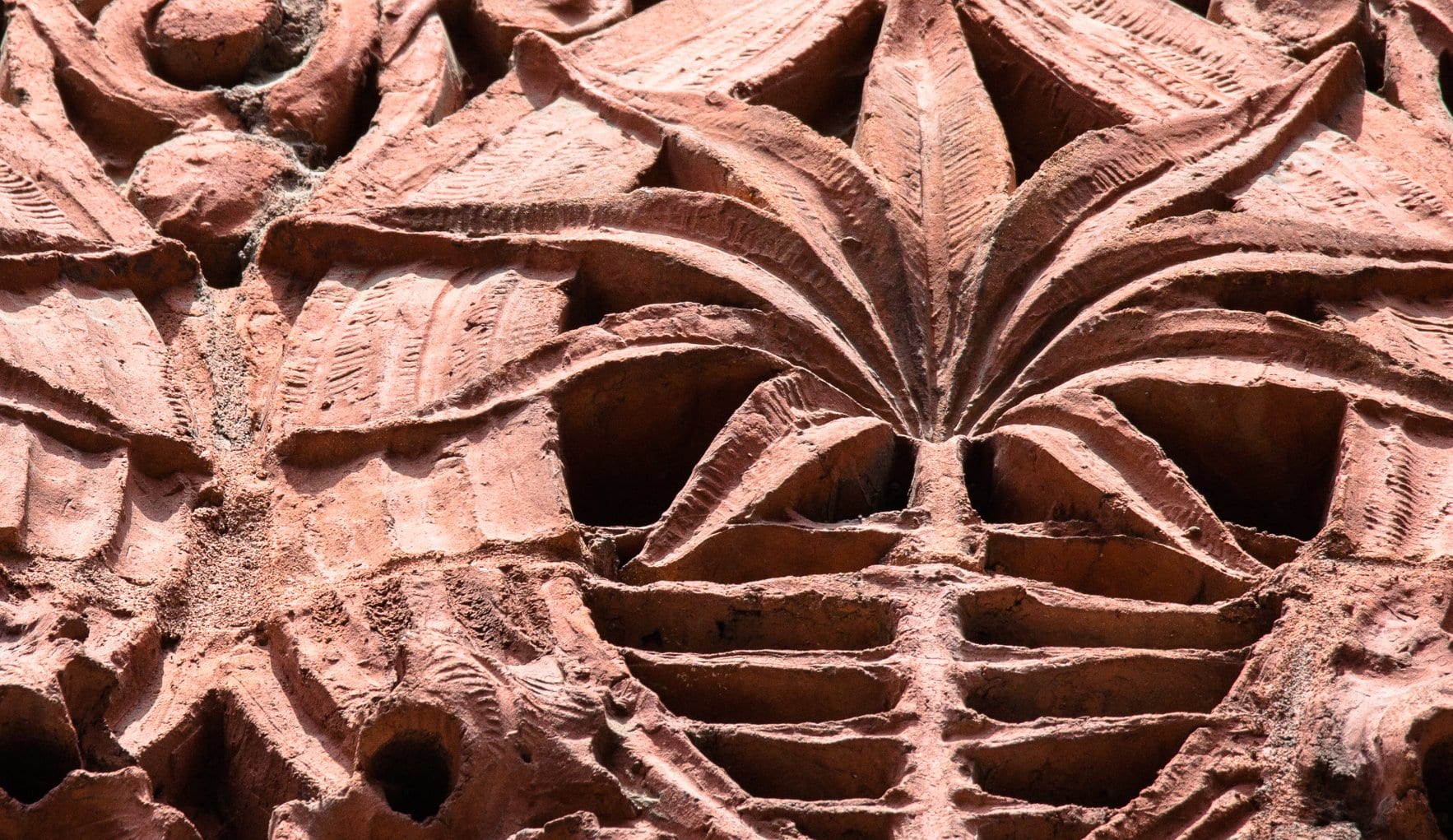
detailed image ornamental red terra cotta on the spandrels, piers, oculus windows, and cornice of adler and sullivan’s wainwright building (1891). the terra cotta ornament was fabricated by the winkle terra cotta company, st. louis, mo. image taken by richard nickel.
courtesy of the ryerson and burnham, art institute of chicago.
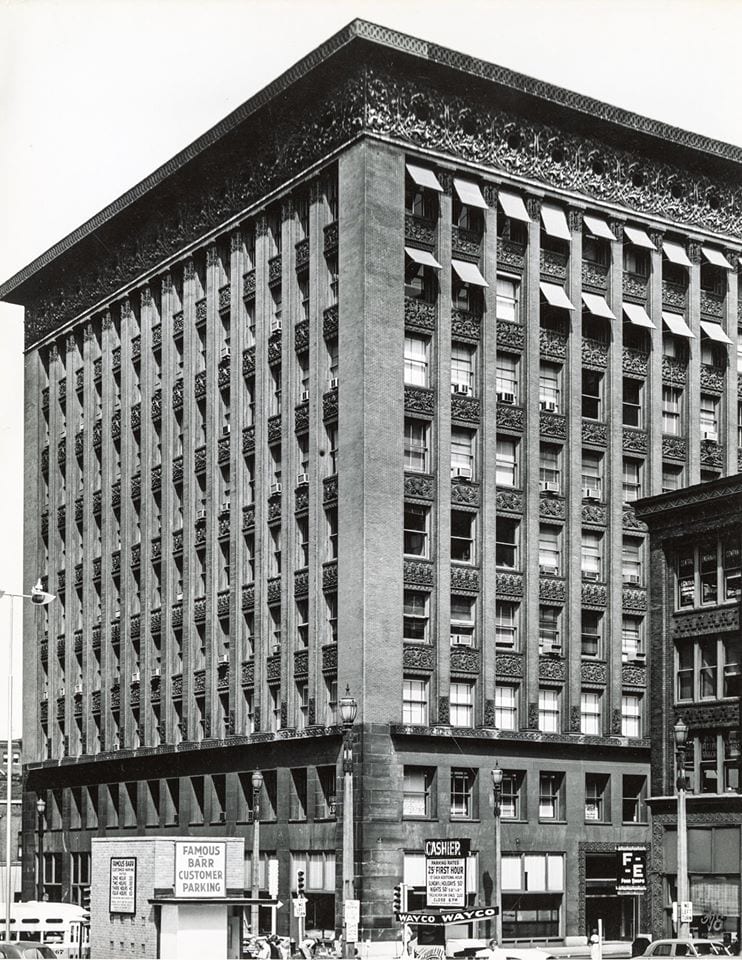
ralph marlow line photograph of adler and sullivan’s 10-story wainwright building (1891) taken in the 1940s. much of line’s work pre-dates the work of harold allen and richard nickel.
courtesy of ryerson and burnham, art institute of chicago.
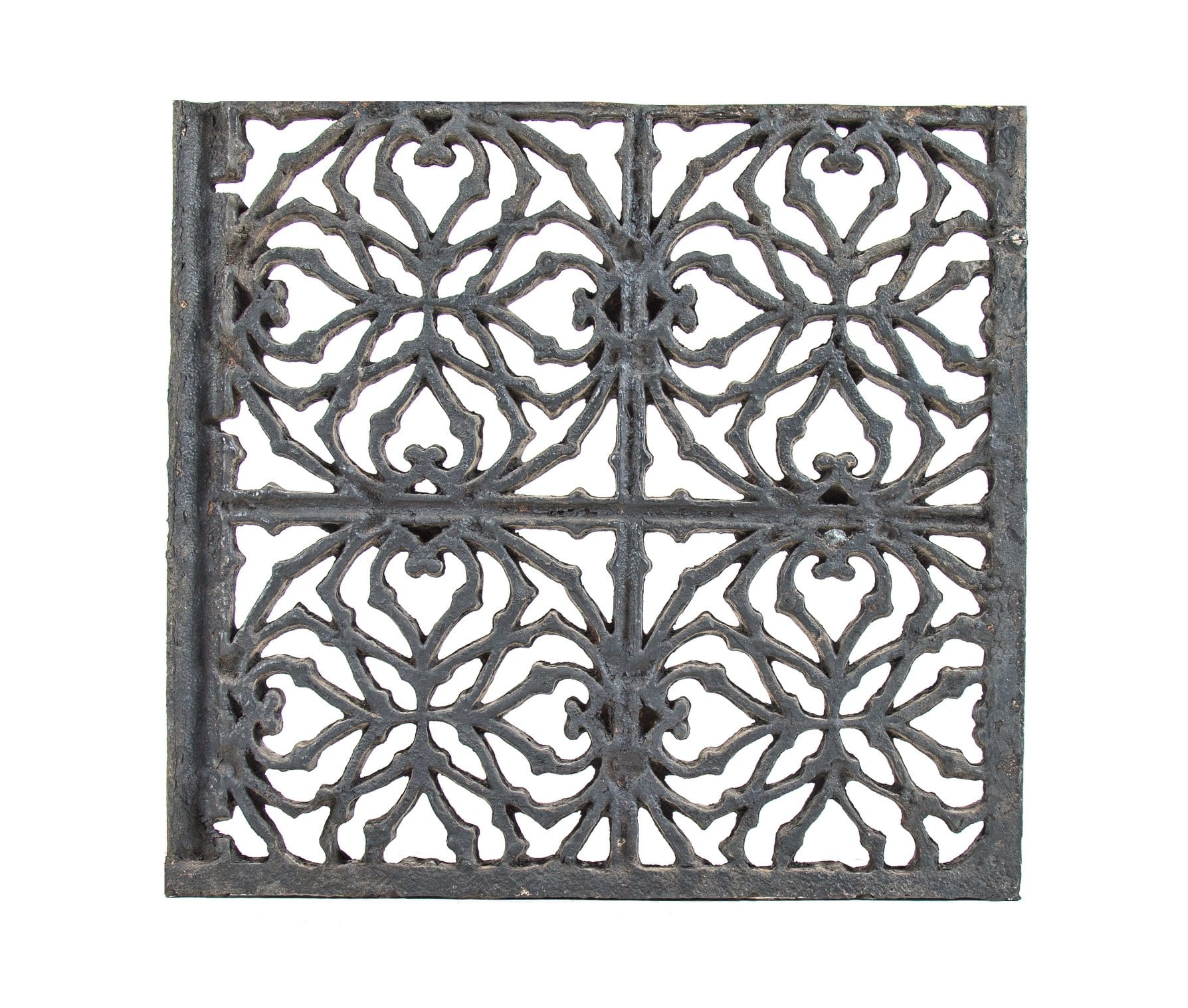
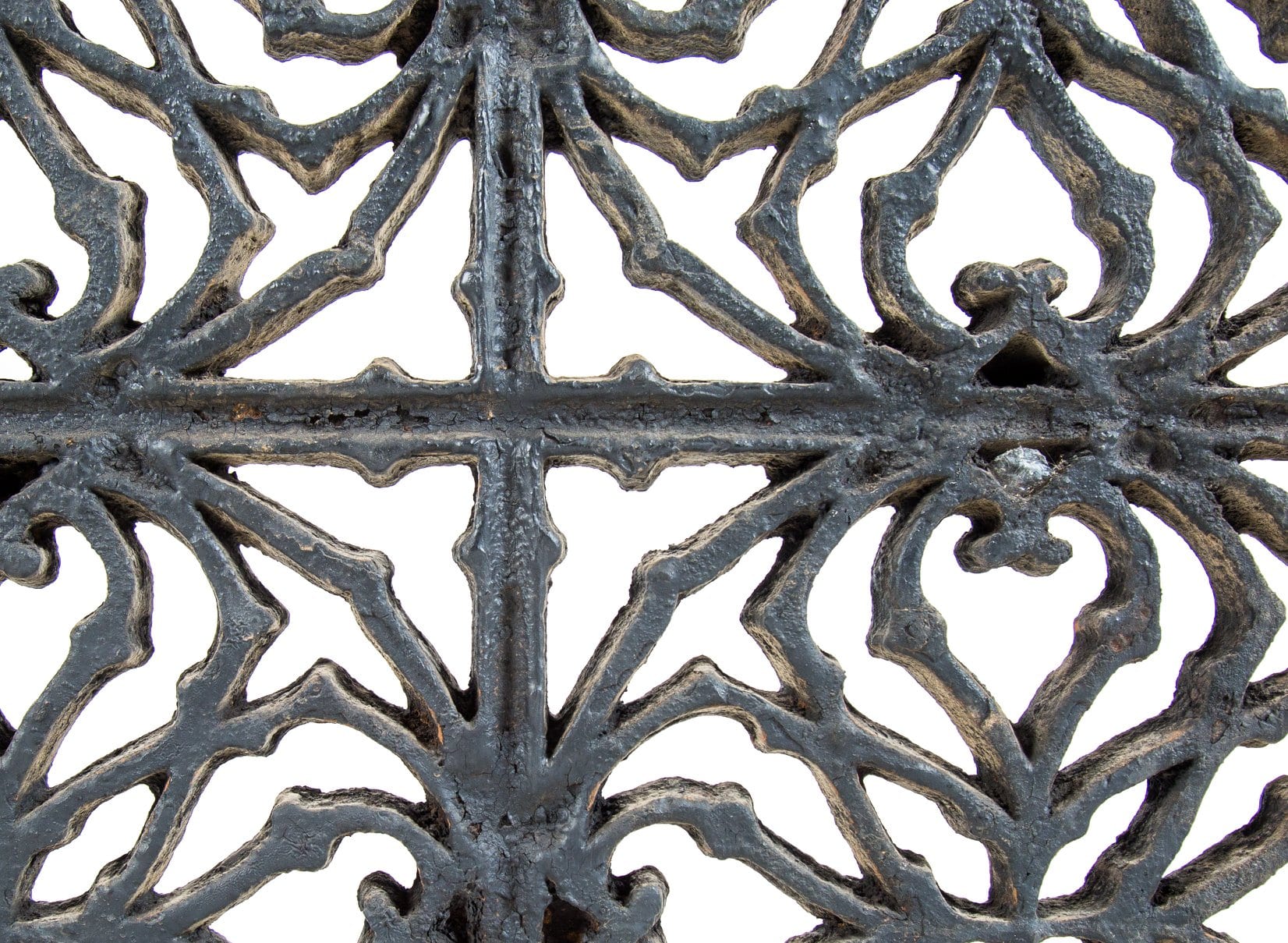
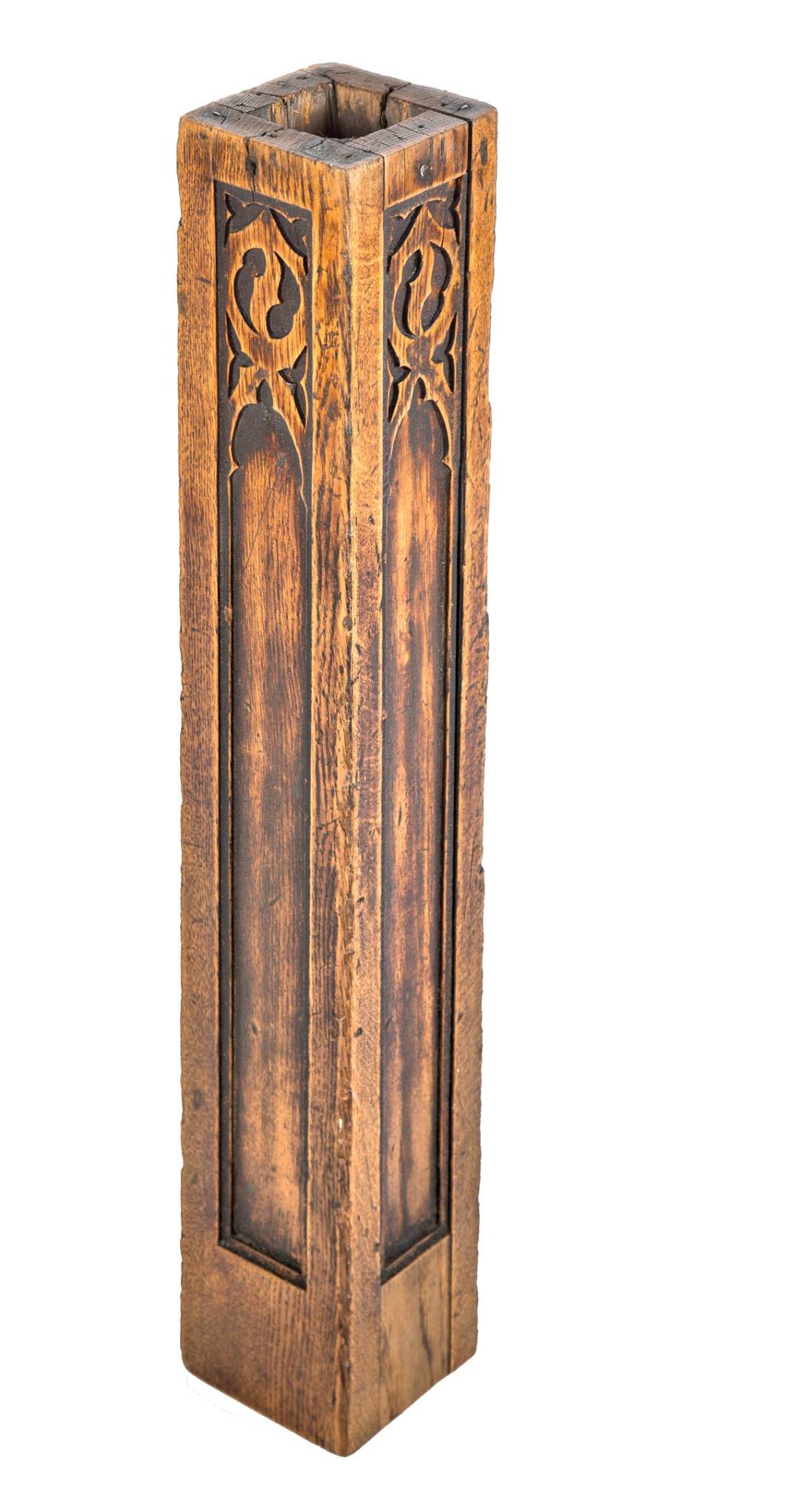
still debating whether this adler and sullivan meyer building (1892) fire escapee panel is “stock” pattern or designed/detailed by frank lloyd wright. he was definitely dabbling in gothic motifs during this time, including the use of nearly identical tracery found on the copper-plated cast iron newel posts in adler and sullivan’s wainwright building (1891) and oak wood staircases in loeb apartments (1891-1892).
richard nickel clearly thought these panels were important and worthy of further investigation. thankfully, he documented them “in situ” and also salvaged several during the meyer building’s demolition in 1968.
ornament courtesy of bldg. 51 museum collection. images courtesy of ryerson and burnham, art institute of chicago.
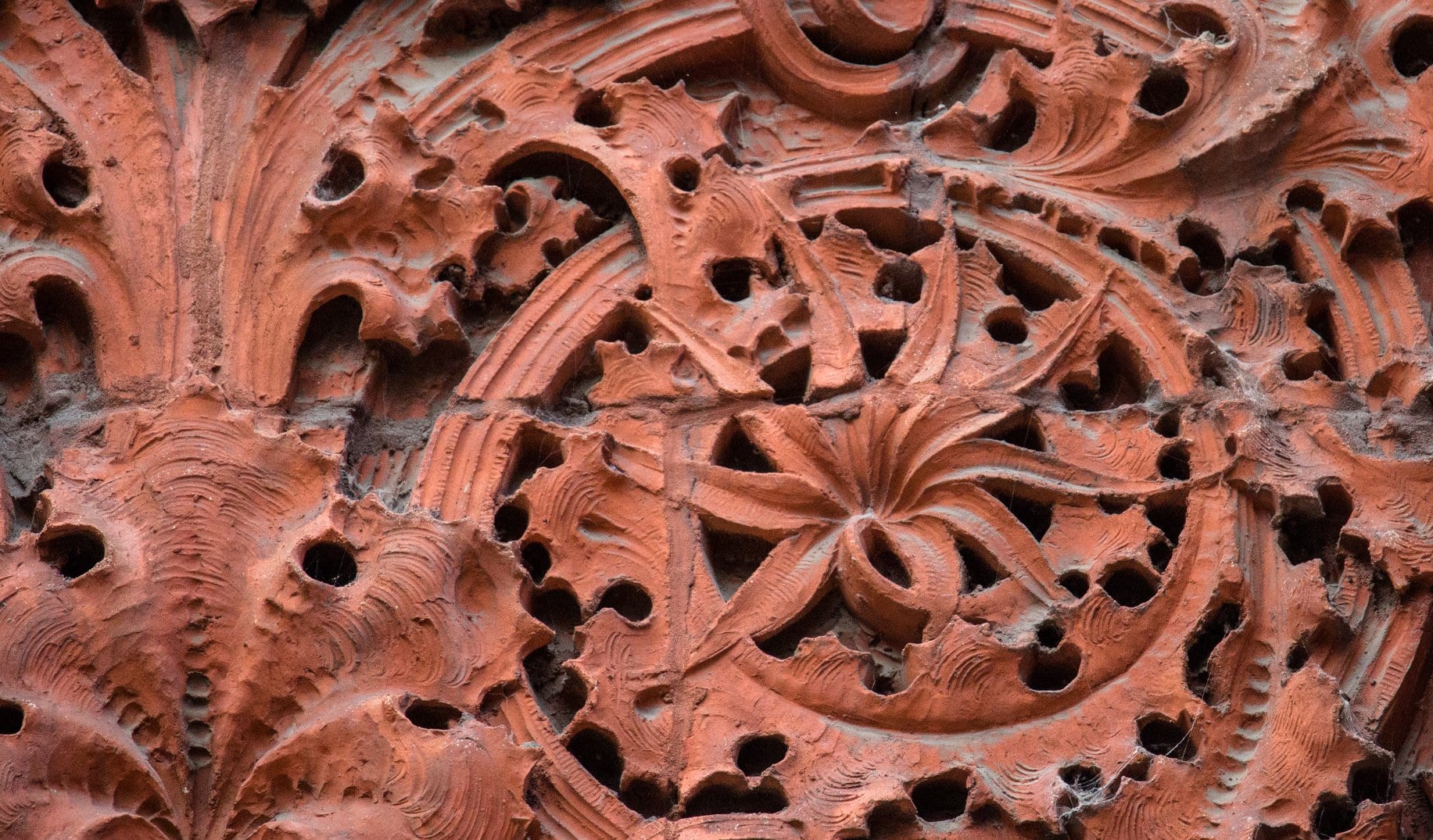
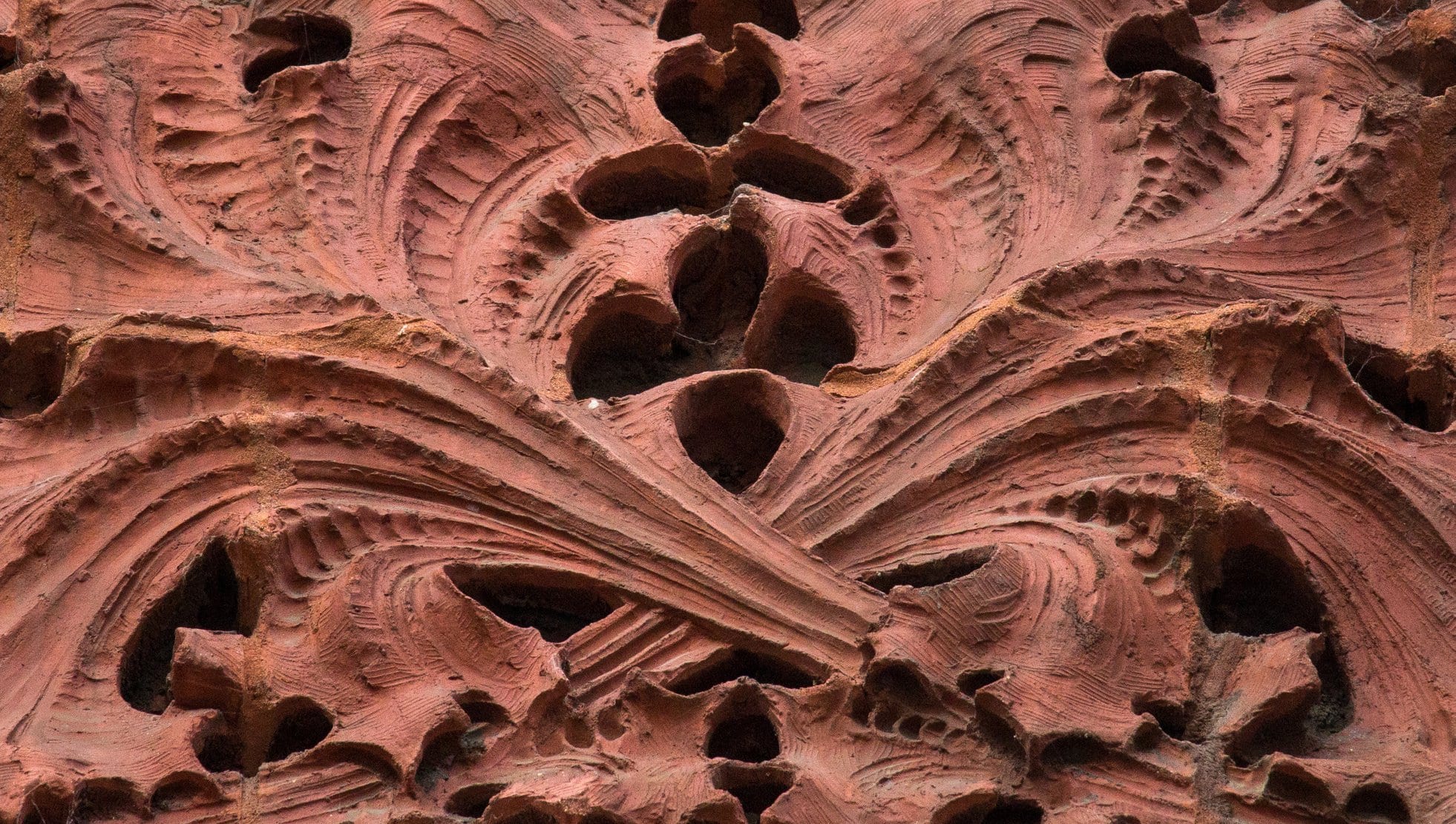
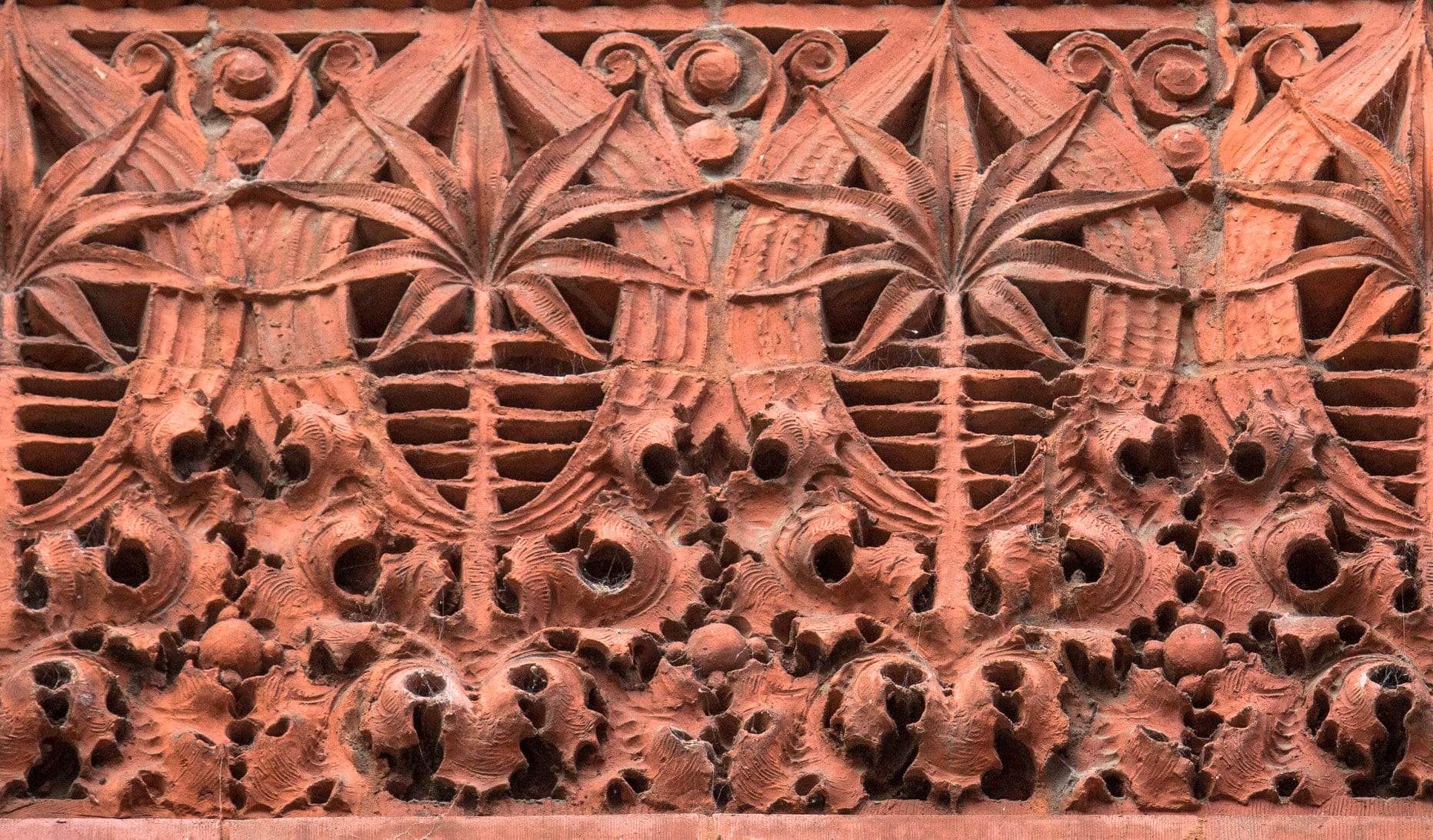
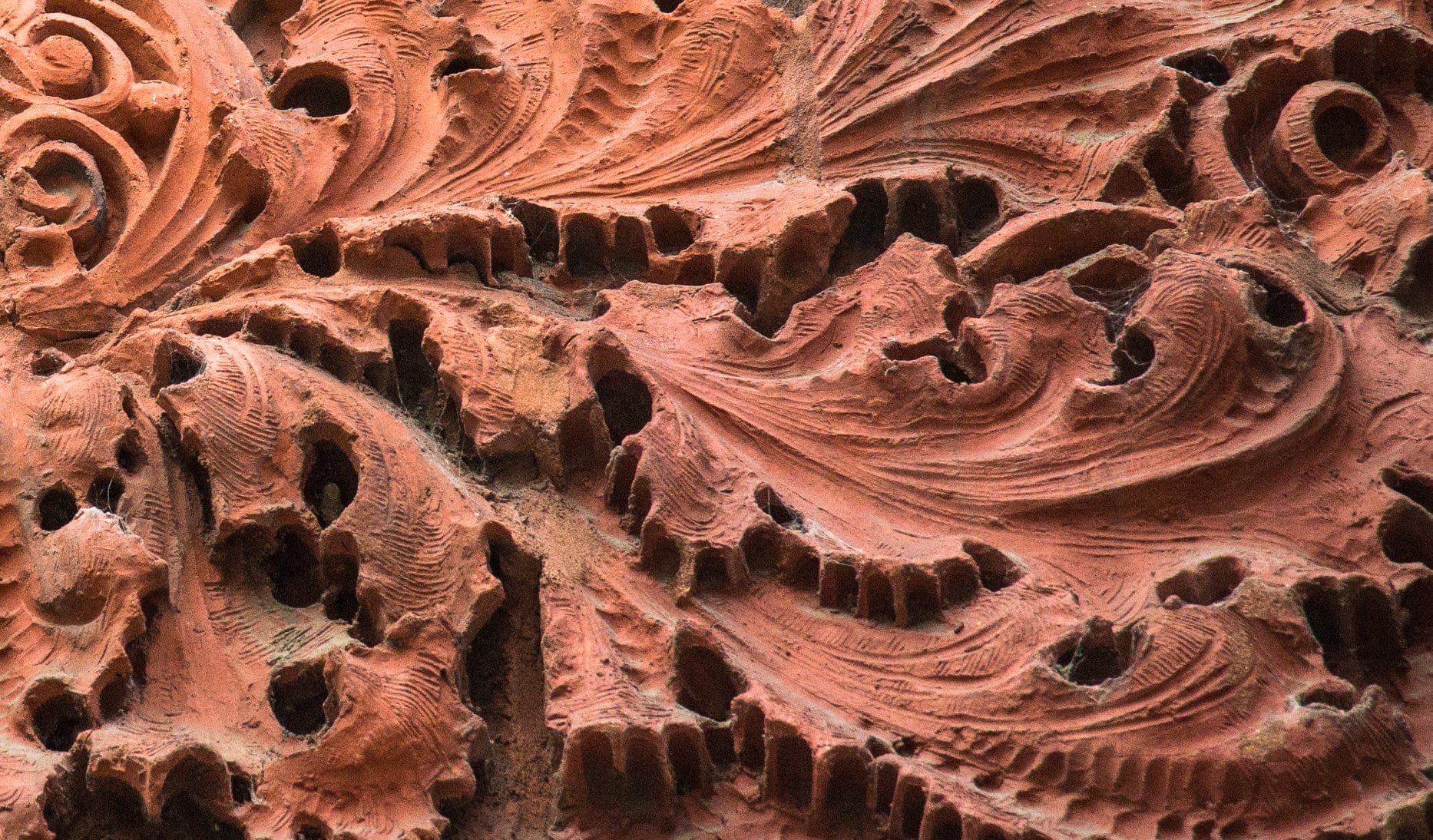
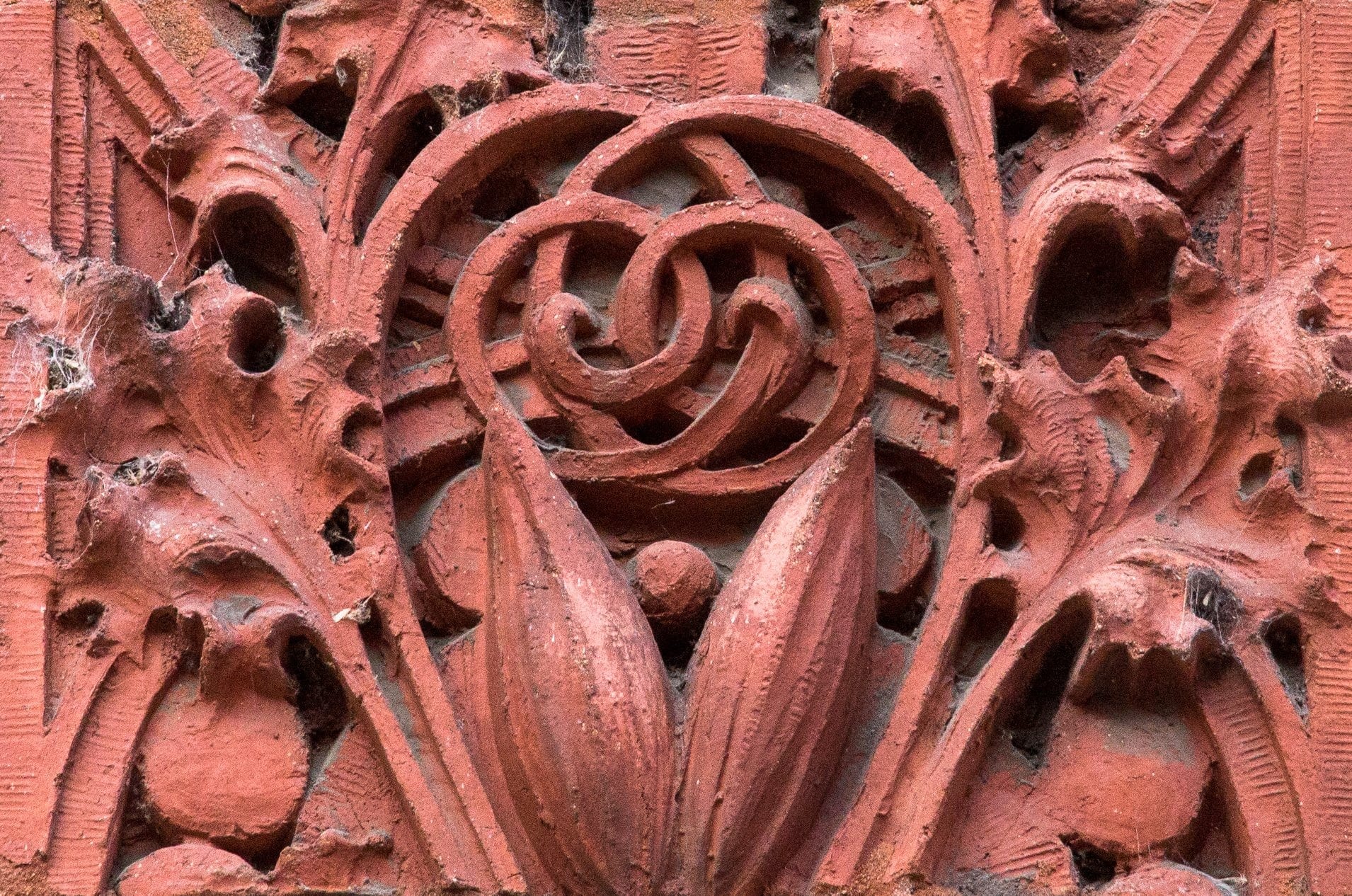
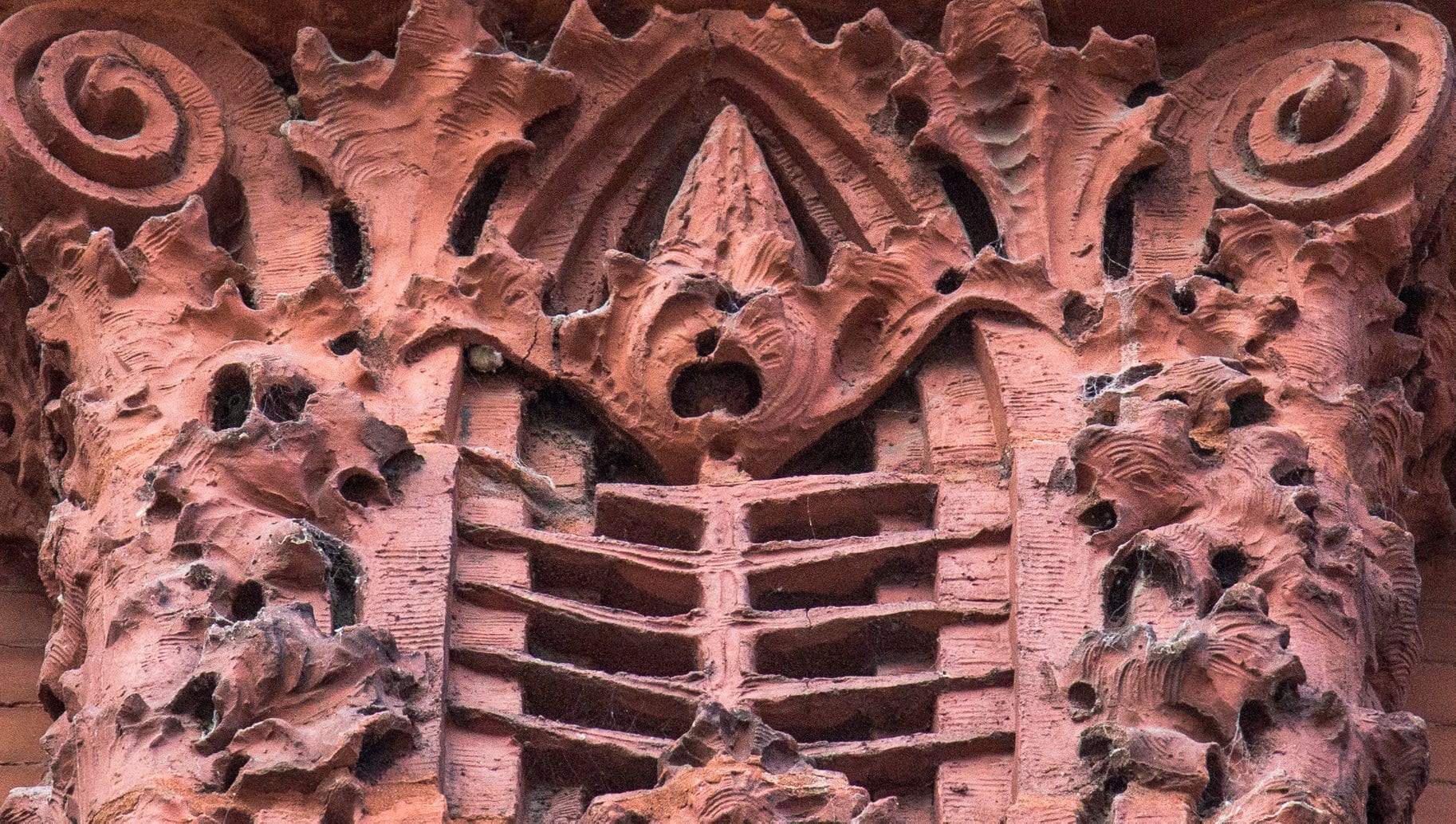
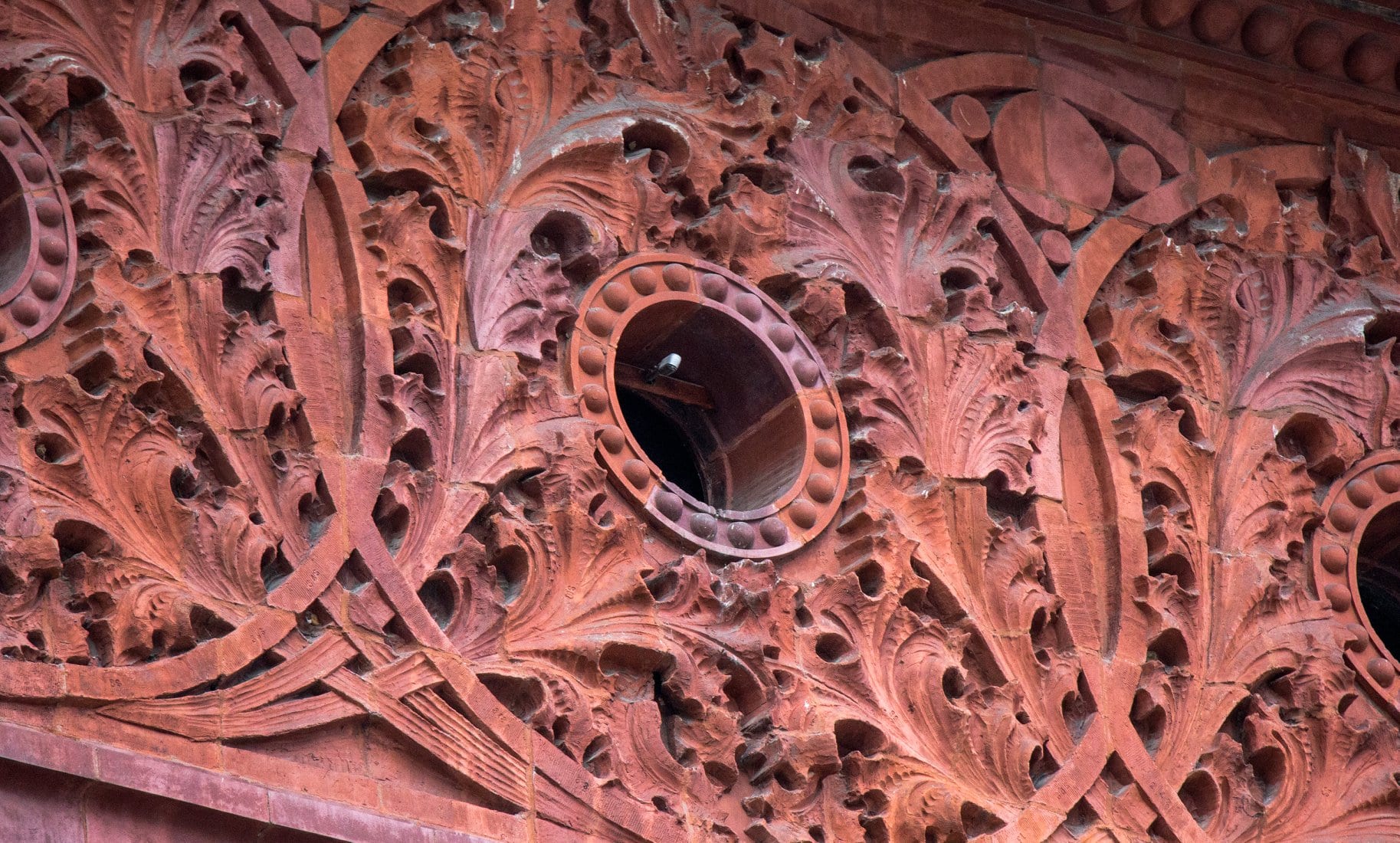
photographic study of sullivan-designed red slip terra cotta spandrel panels, capitals and cornice on wainwright building by adler and sullivan and c.k. ramsey (1891).
the 10-story building’s terra cotta ornament was fabricated by the winkle terra cotta company (incorporated in 1889), st. louis, mo.
i haven’t been able to identify the modeler of sullivan’s ornament for wainwright. it’s not as fluid as kristian schneider’s work.
images courtesy of bldg. 51 archive.