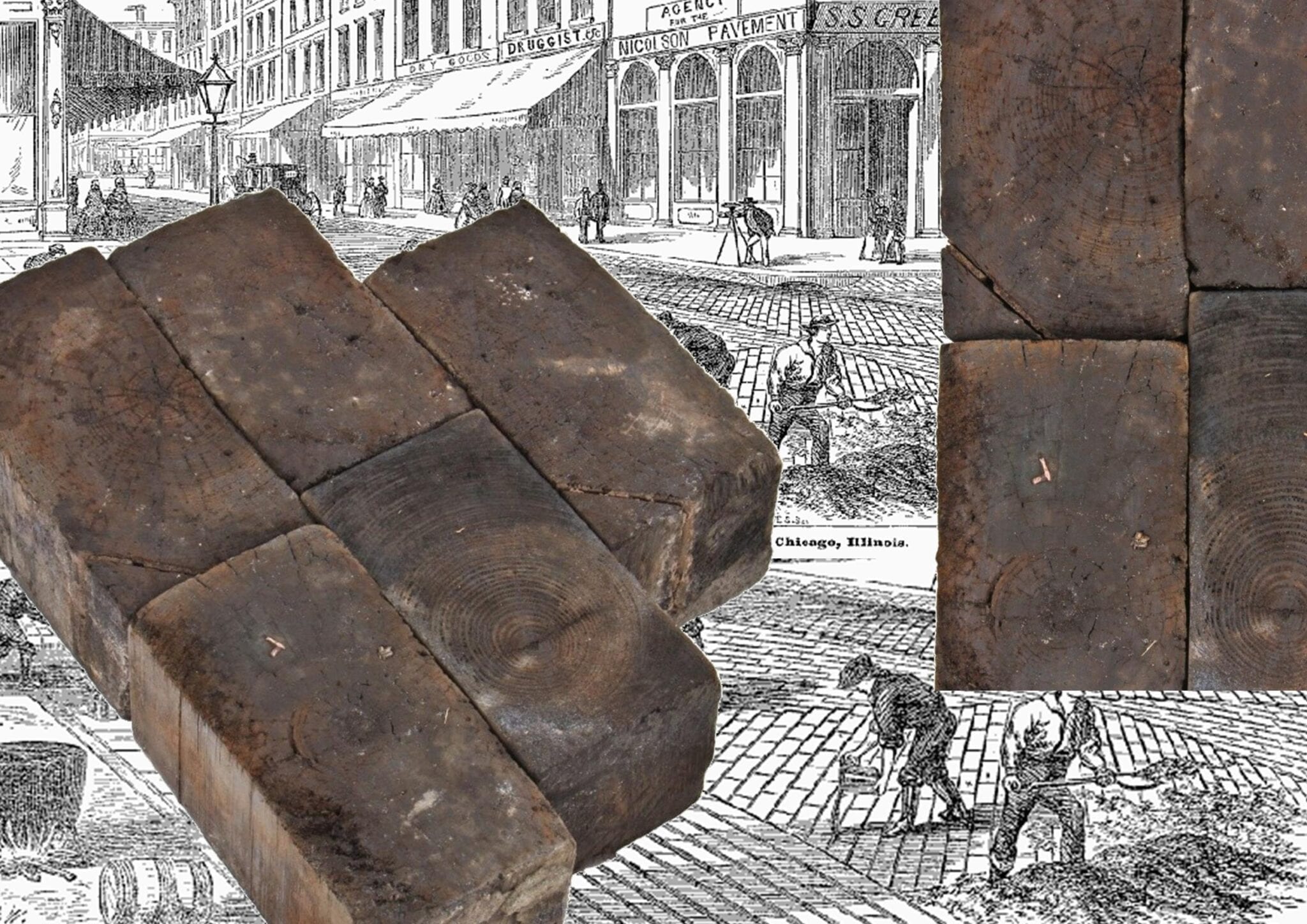

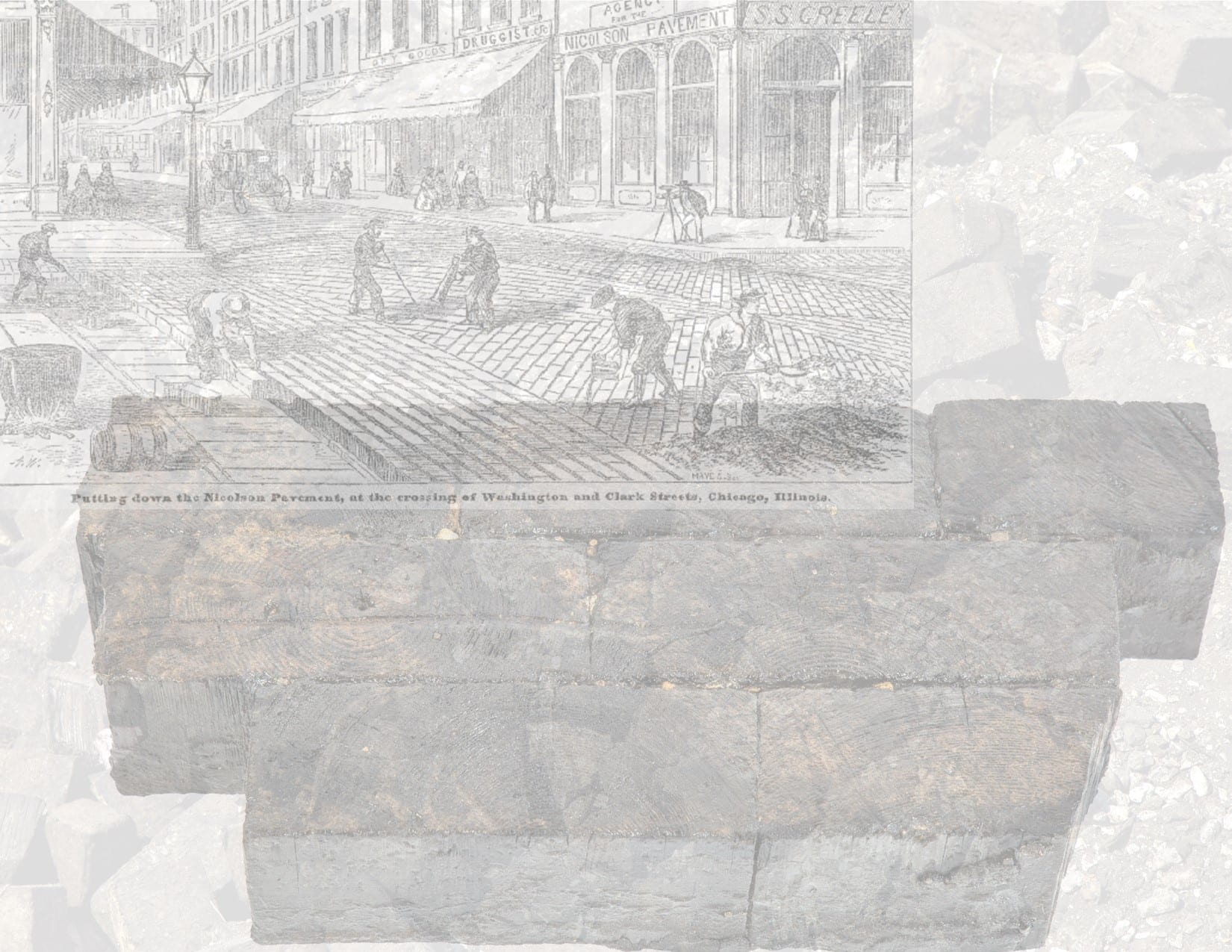
10 Nov large cache of amazingly intact creosoted cedar wood-block street pavers unearthed in fulton market
when companies are contracted by the developers to extricate structurally unsound vaulted sidewalks and alleys in and around sites to be excavated for future construction, work continues with subsequent digging to remove concrete and asphalt, which in many cases, leads to the discovery of well-preserved 19th or early 20th century fired red brick or granite pavers, and in rare cases, creosote wood street pavers.
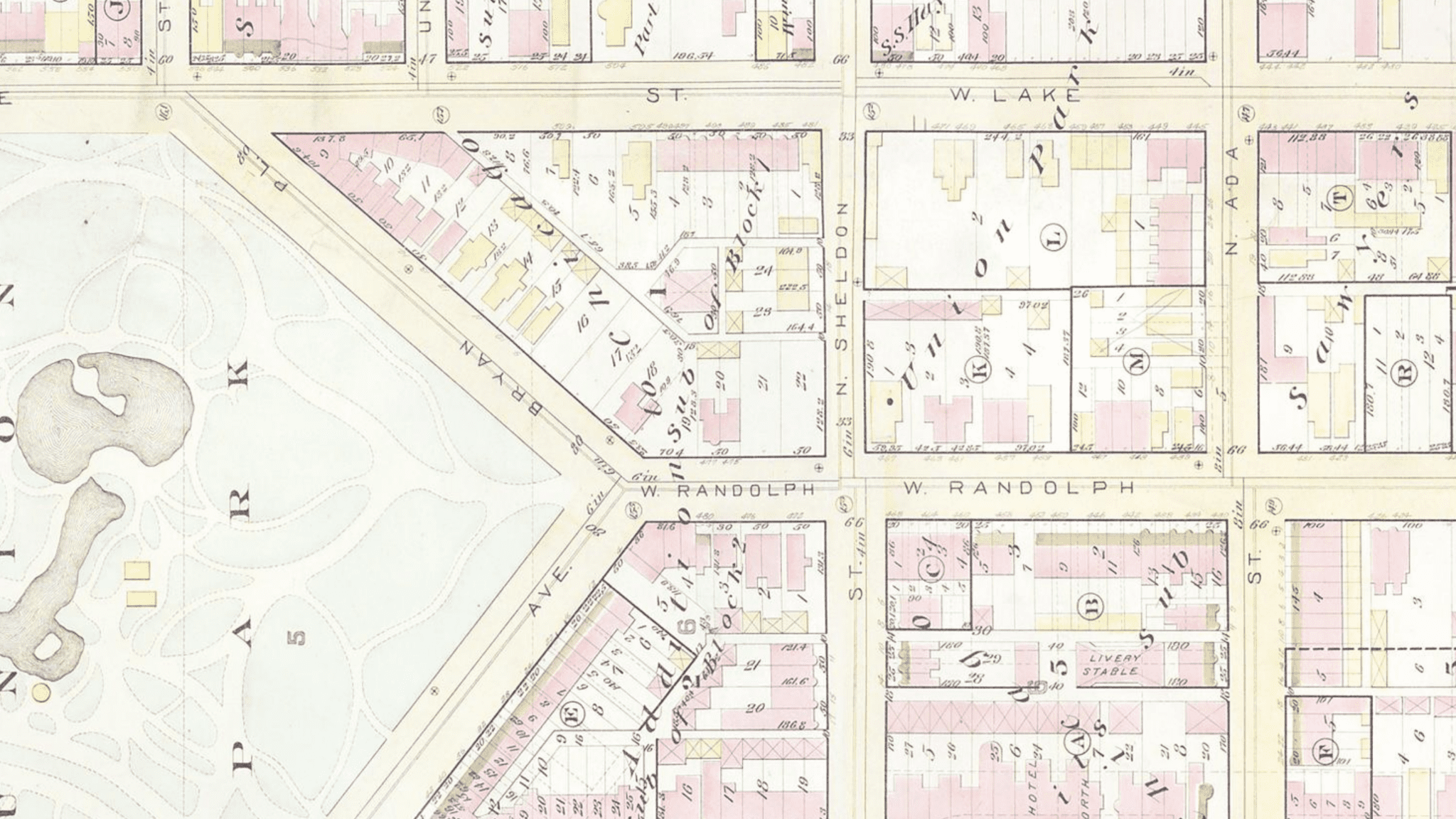
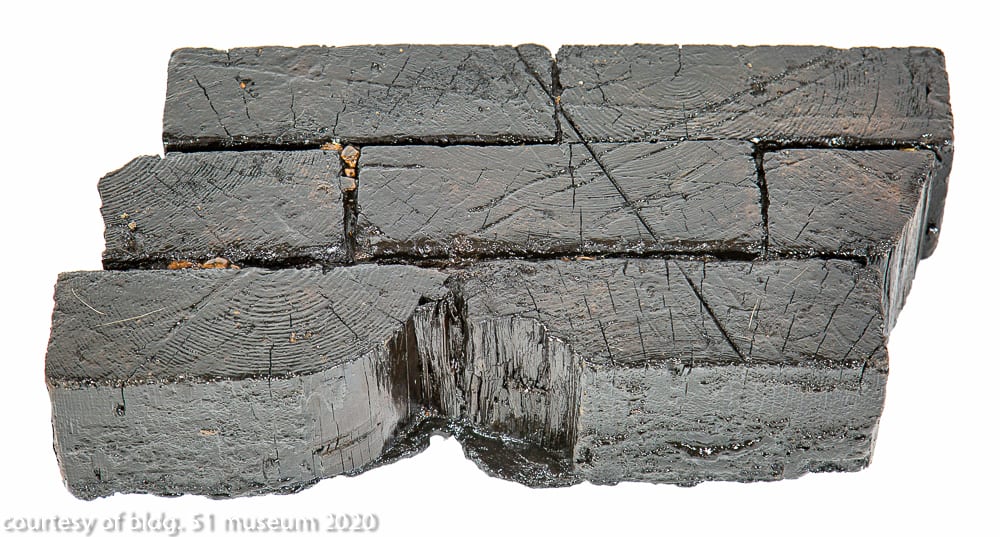
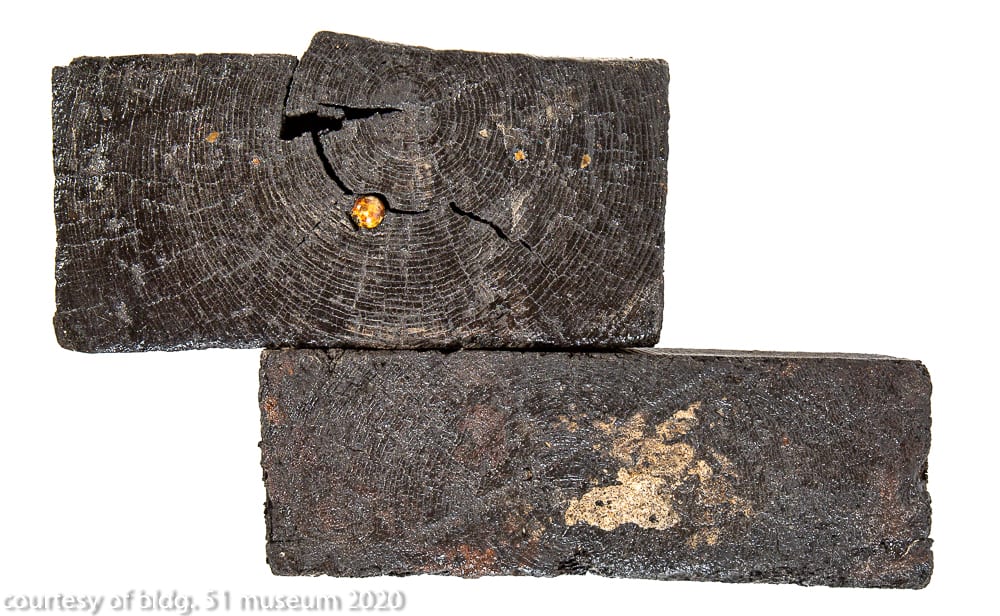
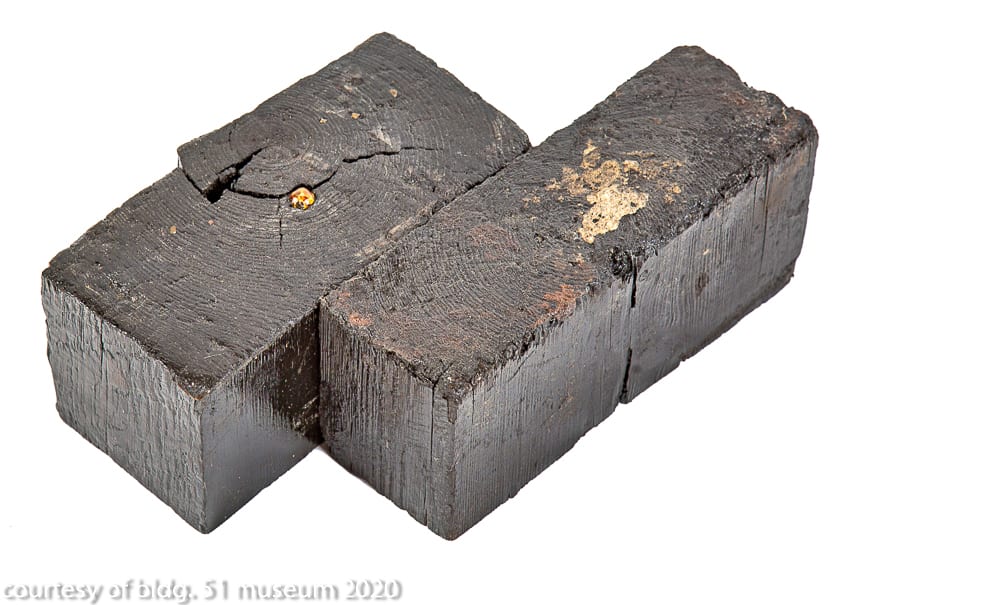
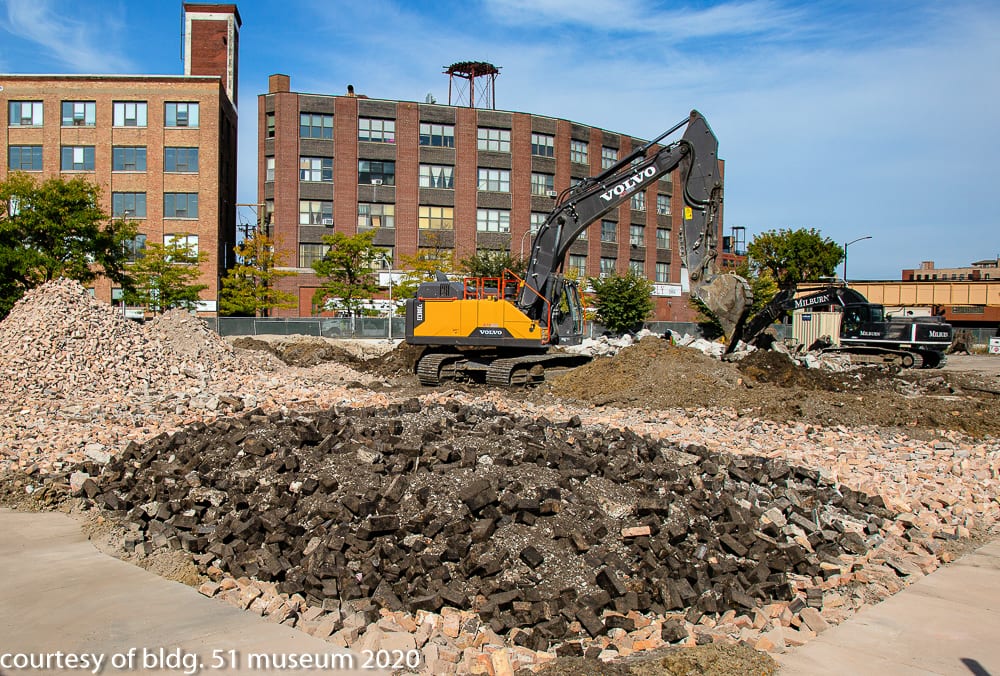
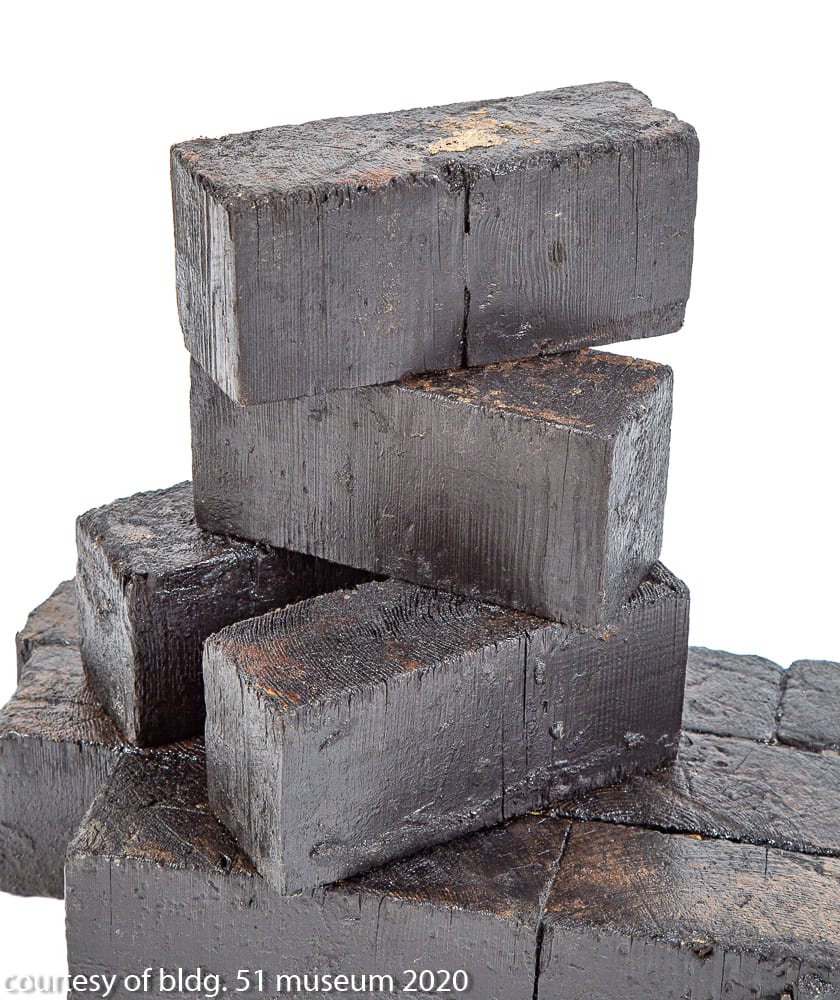
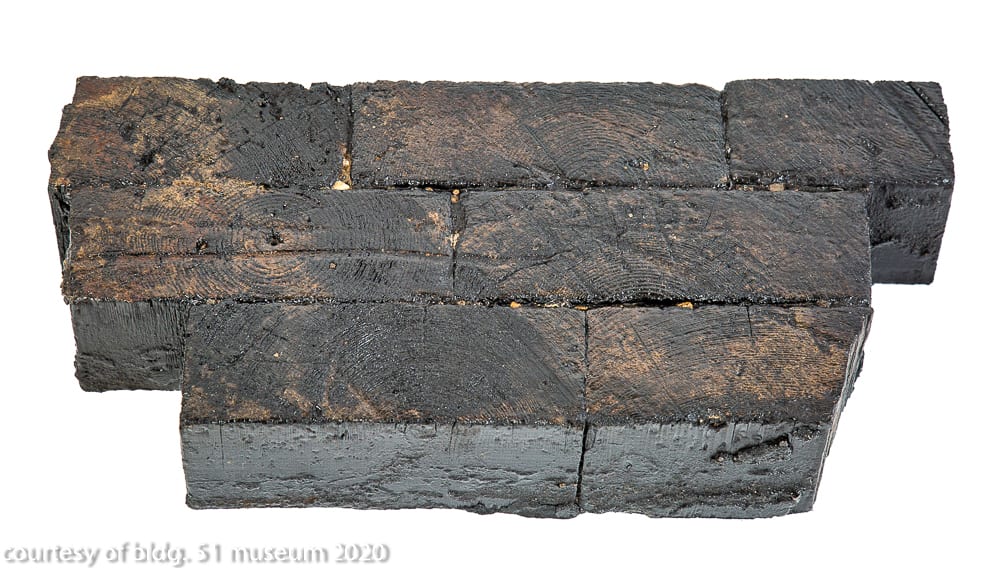
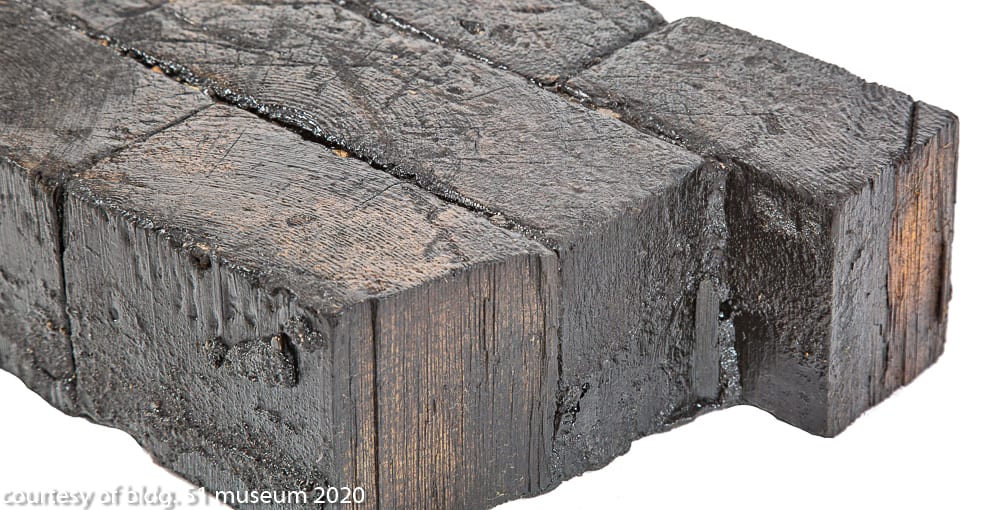
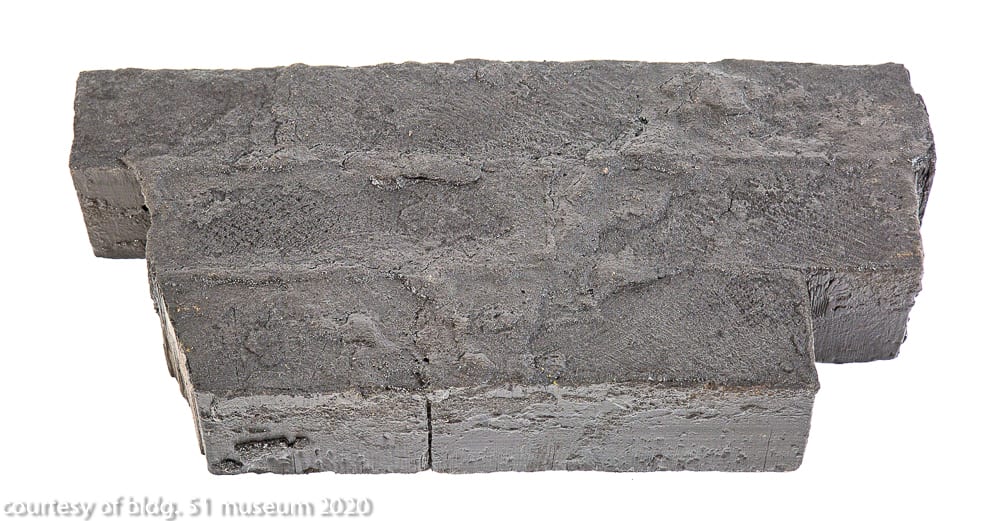
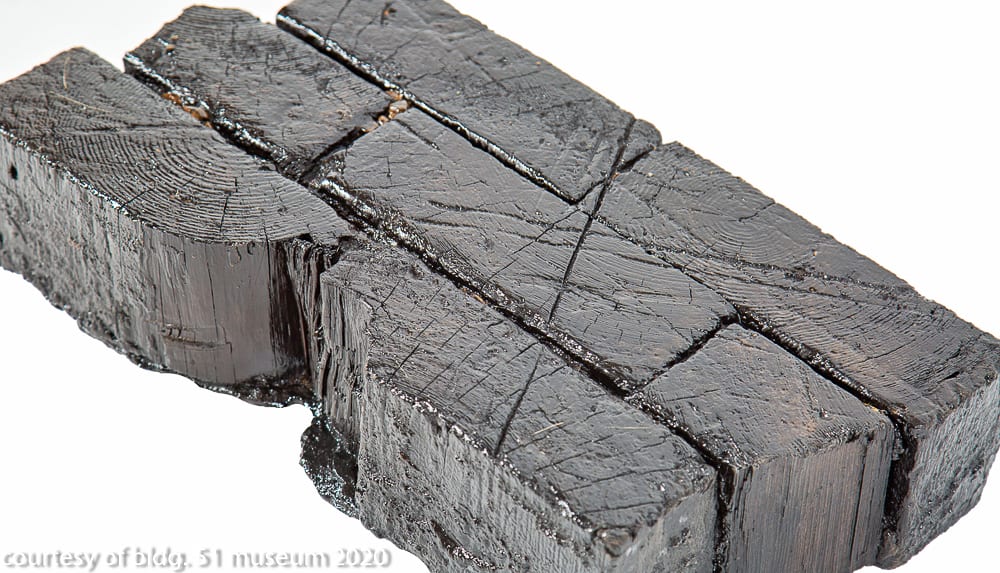
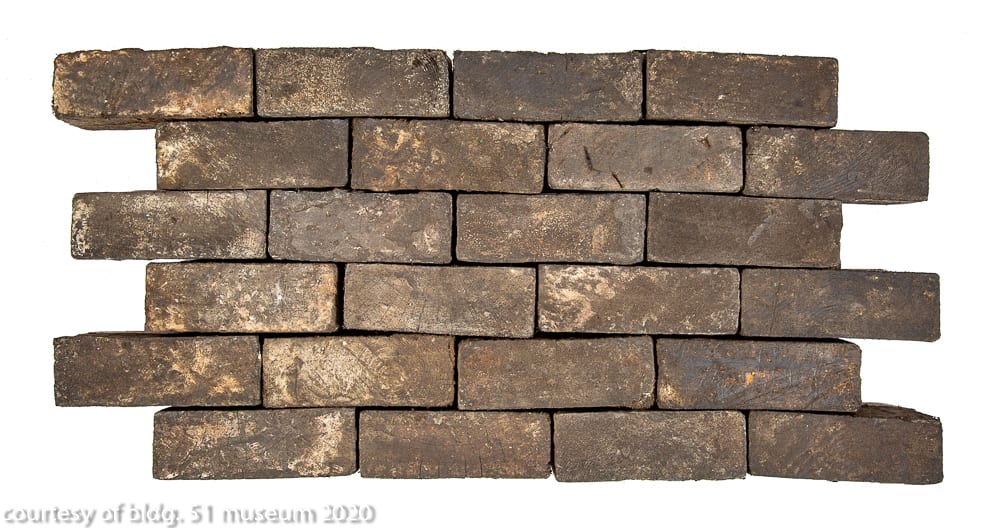
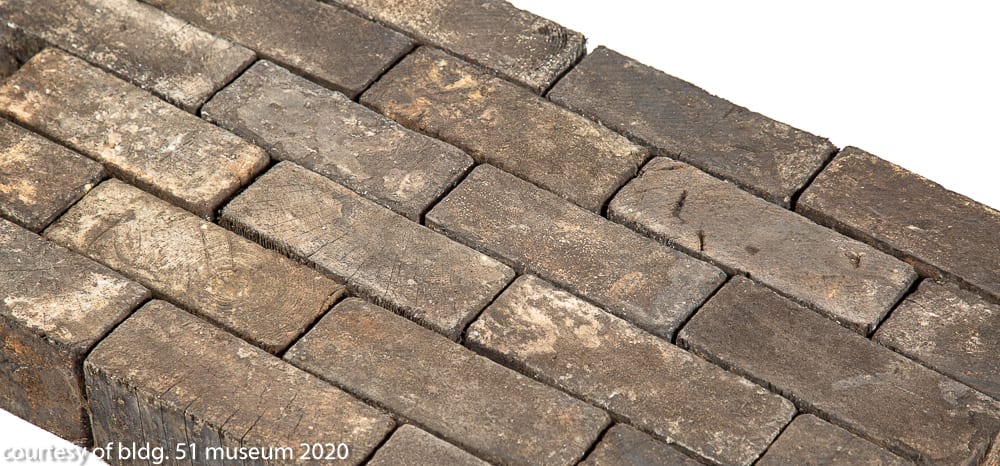
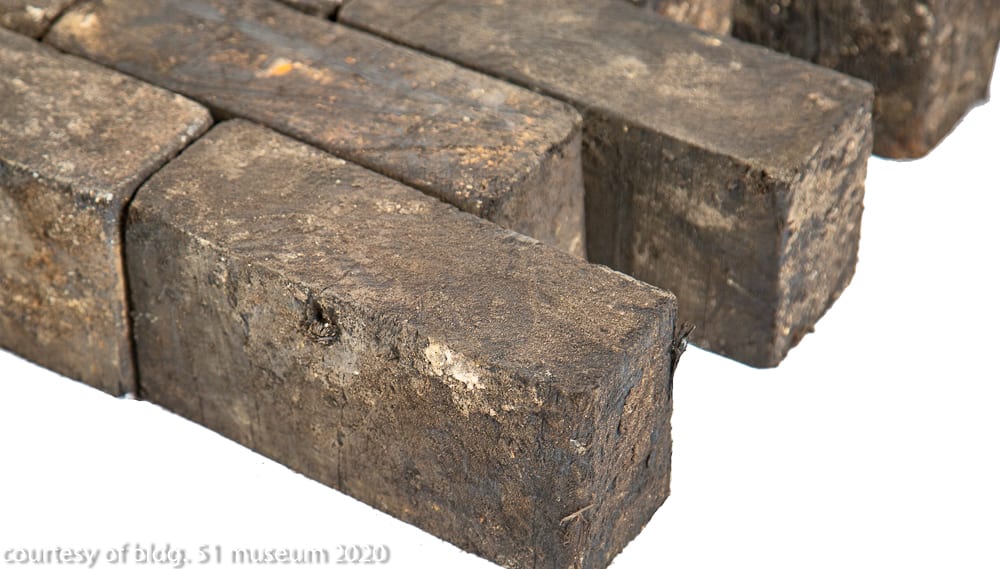
during one of these jobs in the spring of 2020, i discovered such a site, where piles of unearthed well-preserved 19th century city street pavers were relocated to a nearby site where they were awaiting to be disposed of – given their carcinogenic properties. i rescued approximately 50 intact blocks with residual asphalt painstakingly removed to fully expose every side of the very dense and heavy tar-laden bricks. some will be donated to various institutions (including the bldg. 51 museum), while the remainder will be given away in “as found” condition. images in the gallery component of this blog post show a small sampling of the salvaged wooden blocks after being lightly cleaned and/or dissected to determine the level of tar saturation used in any given block.
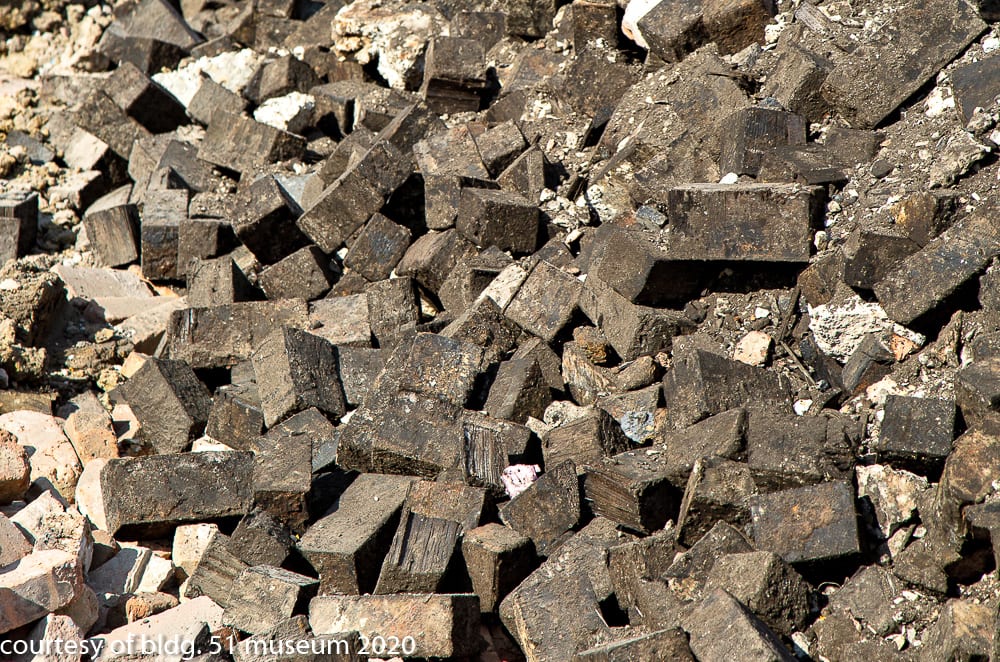
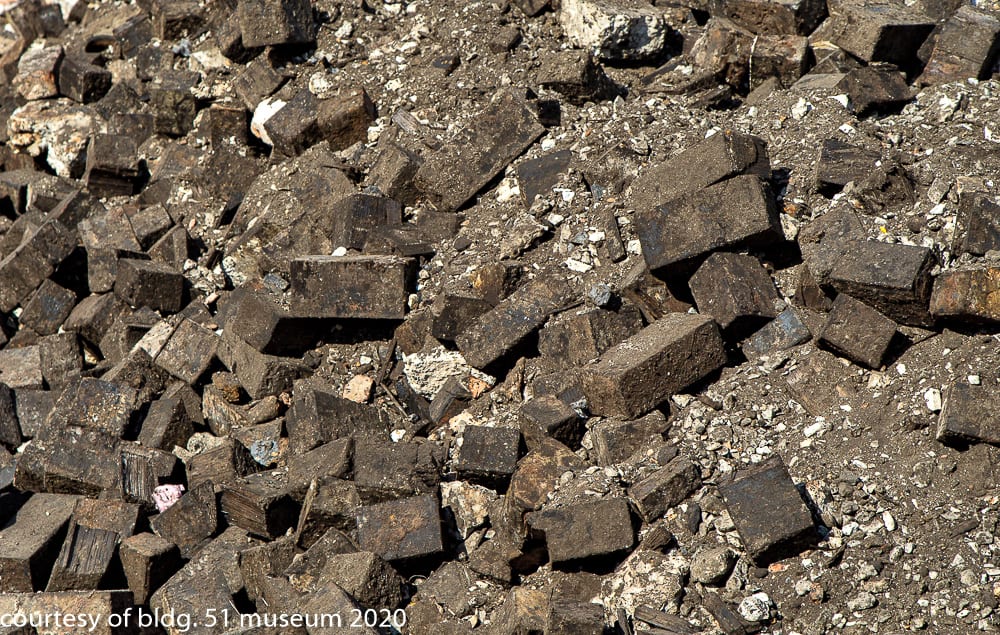
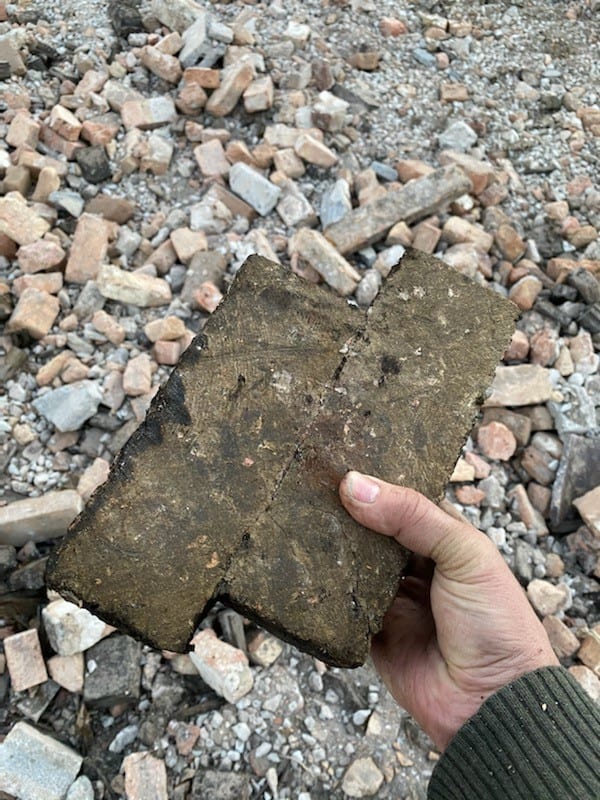
aside from this extraordinary find, the only other documented example of wood pavers existing in chicago (that is, to my knowledge) is the paved alley (built between october 29 and november 23rd of 1909), located on north avenue between astor and state streets. the extant alley was placed on the national register of historic places in 2002 and in the summer of 2011, was completely restored. however, only a small fraction of the original cedar pavers were saved due to extensive damage from prolonged exposure to the elements and virtually no maintenance. so in actuality, the majority of the pavers had to be recreated and reinstalled to coexist with the 1909 pavers deemed salvageable.
several amazingly intact street “fragments” or sections, along with individual blocks were carefully cleaned and photographed in my studio.
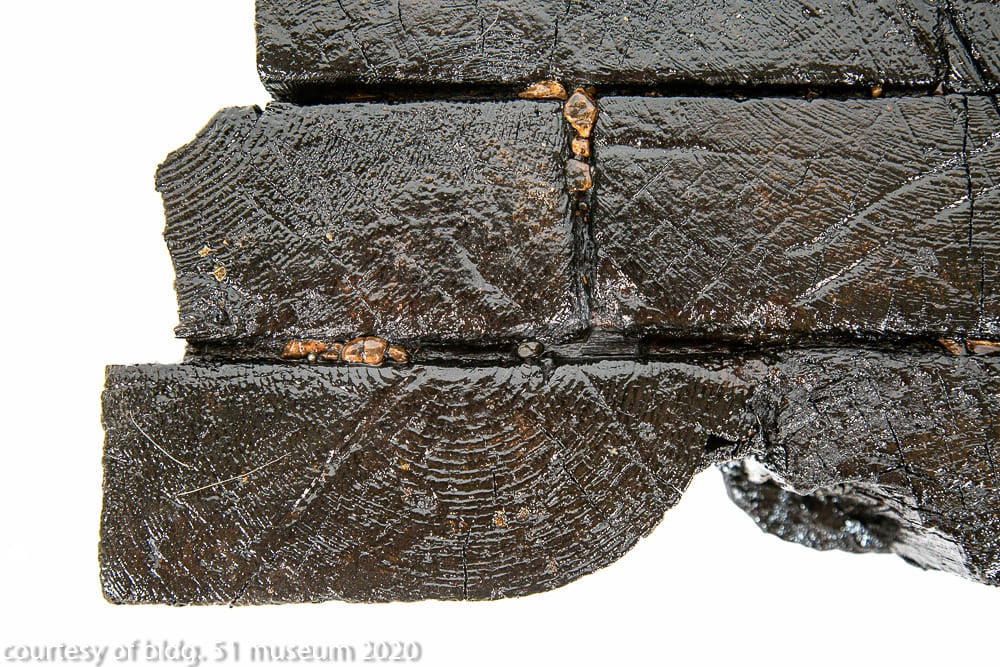
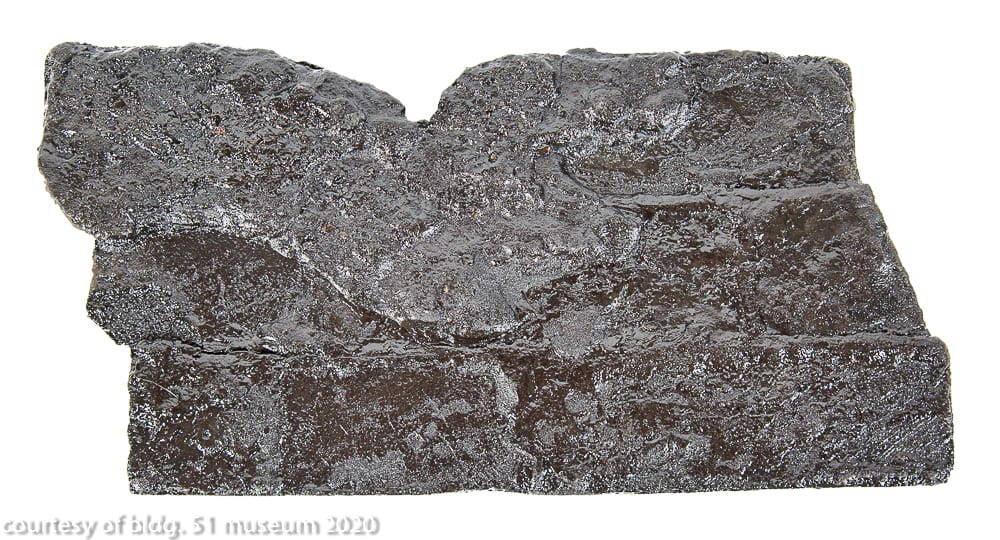
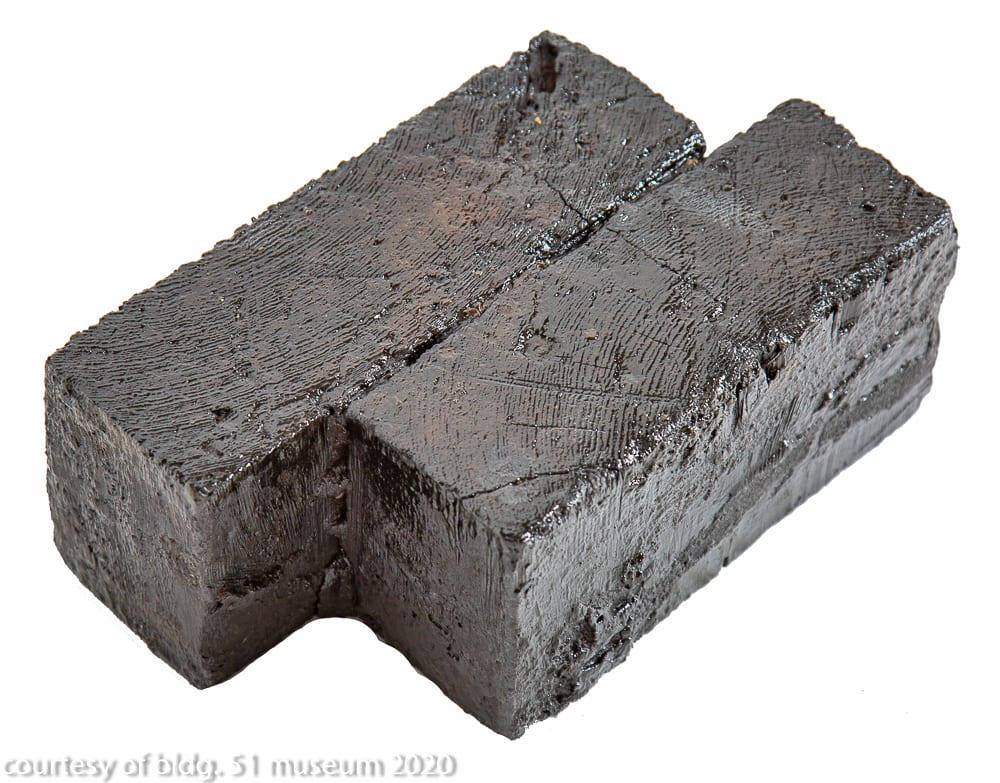
a brief history of wood paver use in chicago streets from the time the city was incorporated in 1837:
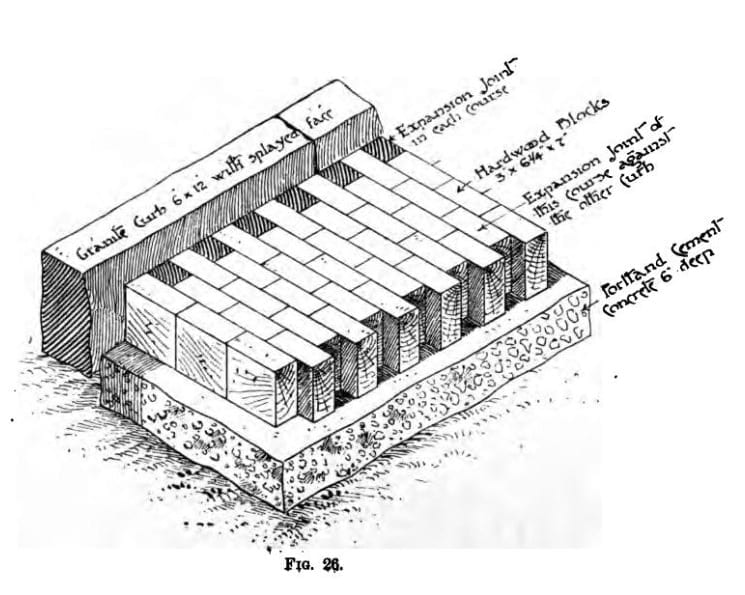
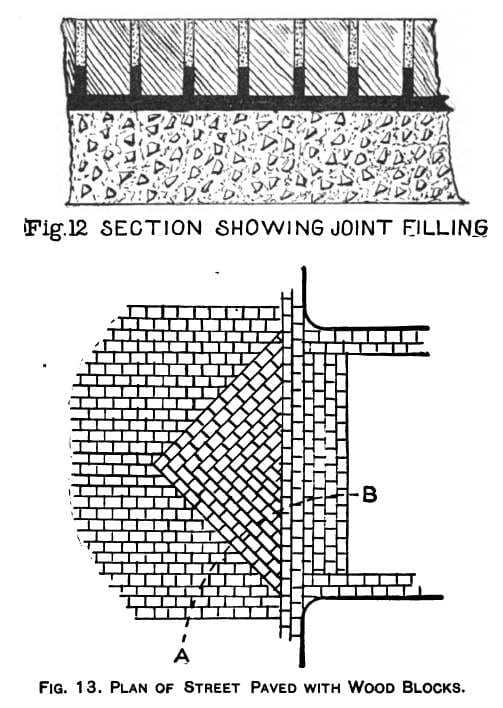
when chicago was incorporated in 1837, the city streets consisted of either dirt or an ever-changing experimentation with crude wood planks that often fell into rapid disrepair time and again. by the mid-19th century, chicago became the first western city to usher in samuel nicolson’s patented wood paving system, which consisted of a “checkerboard” arrangement of creosote cedar wood blocks resting on both tar and gravel with a foundation comprised of tar-soaked wood planks. cresote (no longer used due to its toxicity) is a coal-tar derivative designd to make the wood blocks “waterproof” or prevent moisture from causing wood rot.
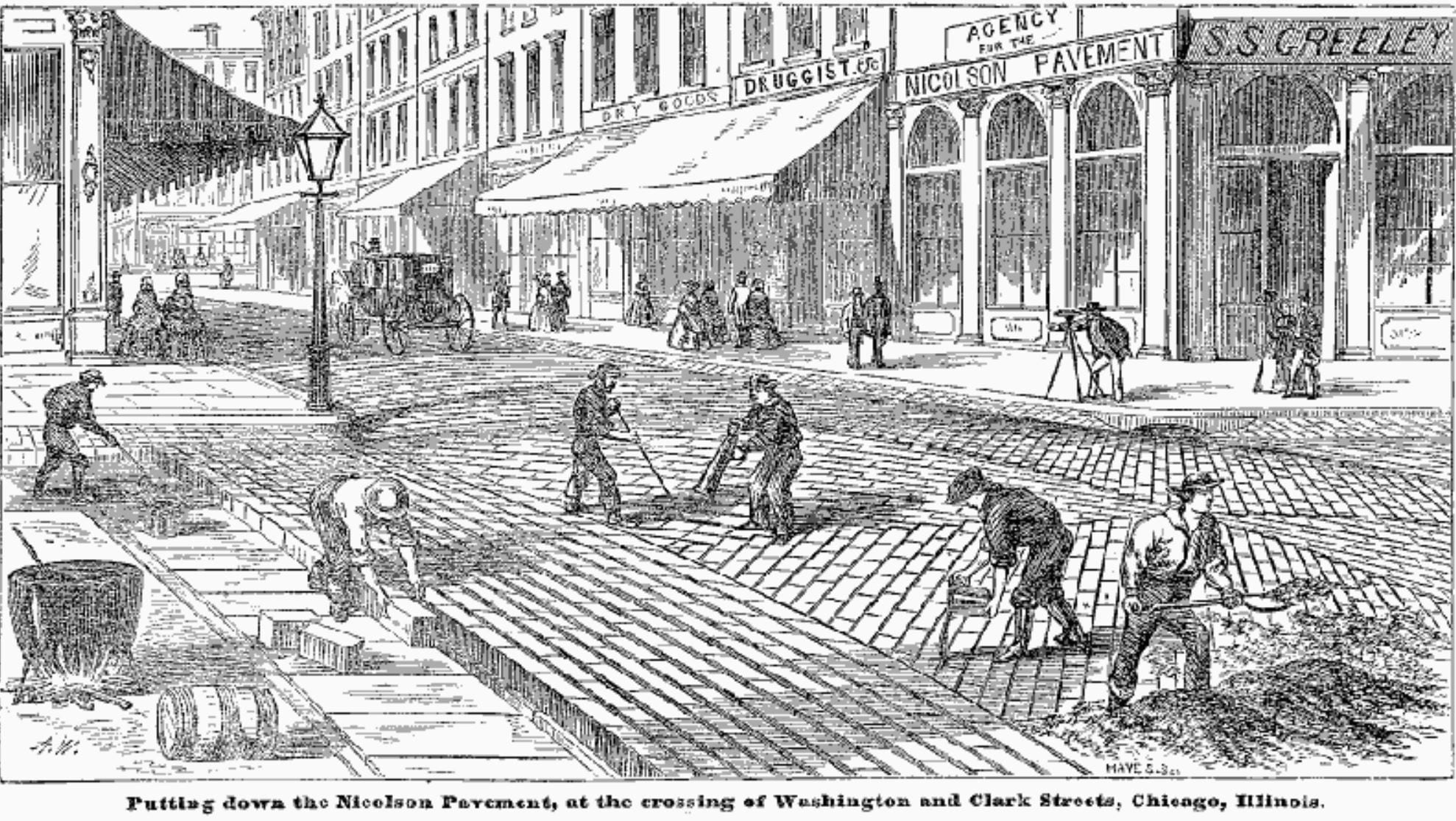
by 1891, more than half of chicago’s city streets were utilizing wood pavers on approximately 774 miles of roads running in all directions across the increasingly dense urban landscape.
interestingly, despite the widespread destruction left by the great chicago fire of 1871, the wood paved street system remained mostly intact, despite numerous accounts that suggested the overwhelming presence of wood-framed structures and wood block streets were factors in fueling the fire. nevertheless, wood pavers won out and continued to be used long after the flames were put out.
despite the fact that cobblestone pavers were judged to be far more superior and much more durable and/or resistant to the elements, the primary factor in the continued existence of wood pavers boiled down to economics, which involved the highly profitable late 19th century chicago lumber market, where wood was plentiful and cheap. in addition, the cedar wood blocks were preferred over the granite cobblestones because they were less noisy (no “clickety-clack” from the horse’s wrought iron foot gear) and much easier on the feet of people and animals alike.
the use and/or production of wood pavers began to fall out of favor during the first half of the 20th century, when chicago and nearby cities exhausted the forests of wisconsin, michigan, minnesota and other midwestern regions resulting in greatly increased prices for lumber. by the 1930’s the overall cost to install a wood block street was much greater than using asphalt.
despite the complete disappearance of wood pavers on modern day city streets (with the exception of the extant and completely exposed landmarked alley), i suspect several extant and well-preserved wood-paved streets are simply buried under many layers of asphalt added time and again since the depression or perhaps earlier. more of these streets will likely be discovered over time. i’m just pleased that i happened to be at the right place at the right time when an observant contractor who made the extra effort to discover and save what otherwise would have been discarded brought these remarkable wood pavers to me to fully document and share my findings with others interested in the historical significance or evolution of chicago’s infrastructure, etc.
any and all images courtesy of eric j. nordstrom and the bldg. 51 archive.
further reading: