
05 Mar bldg. 51 museum acquires turn of the century open-ended electric switchboard components from one of last chicago buildings to convert from dc to ac power
March 5, 2025
in Bldg. 51, Events & Announcements, Featured Posts, Miscellaneous, New Acquisitions, New Products
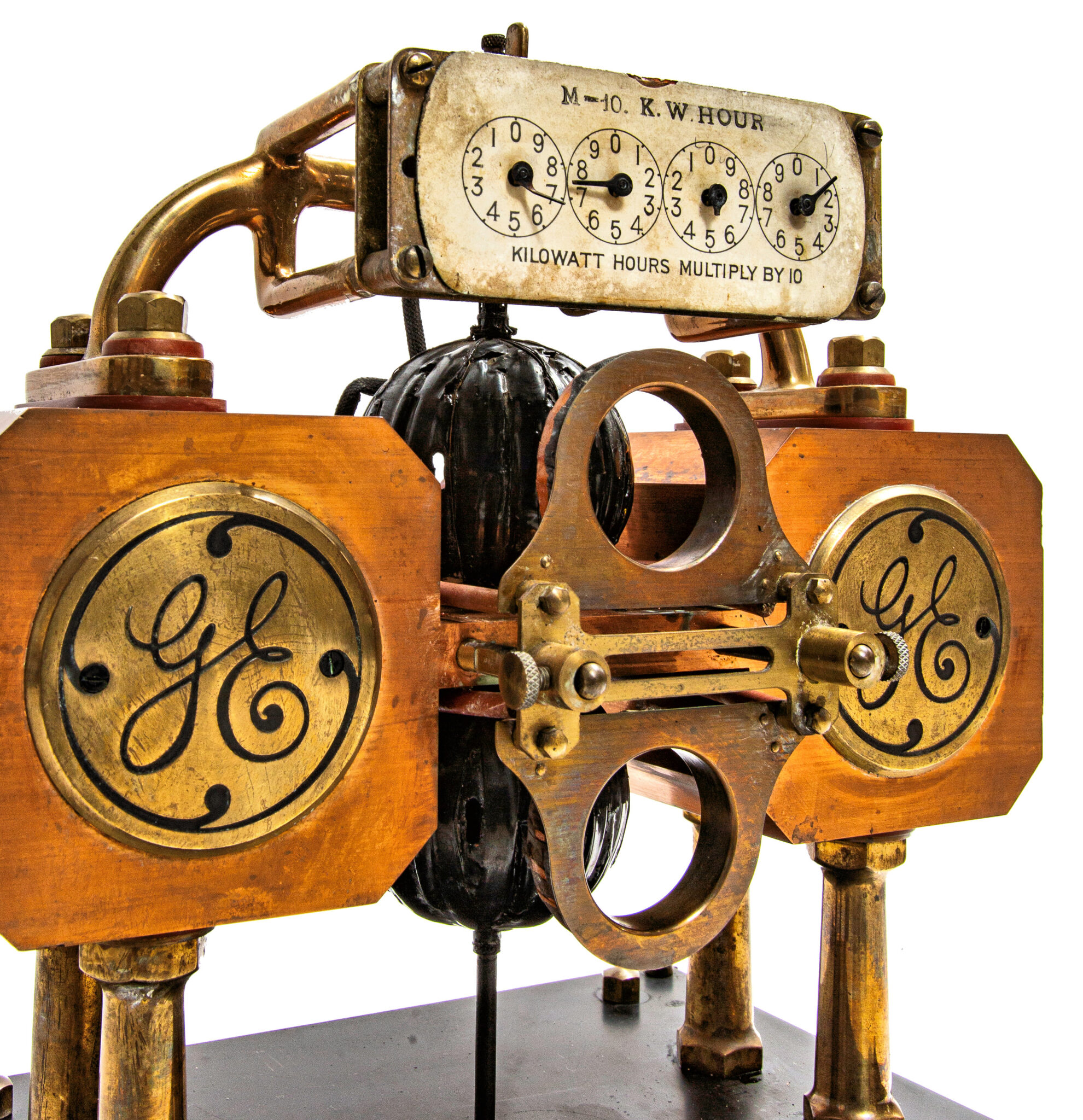
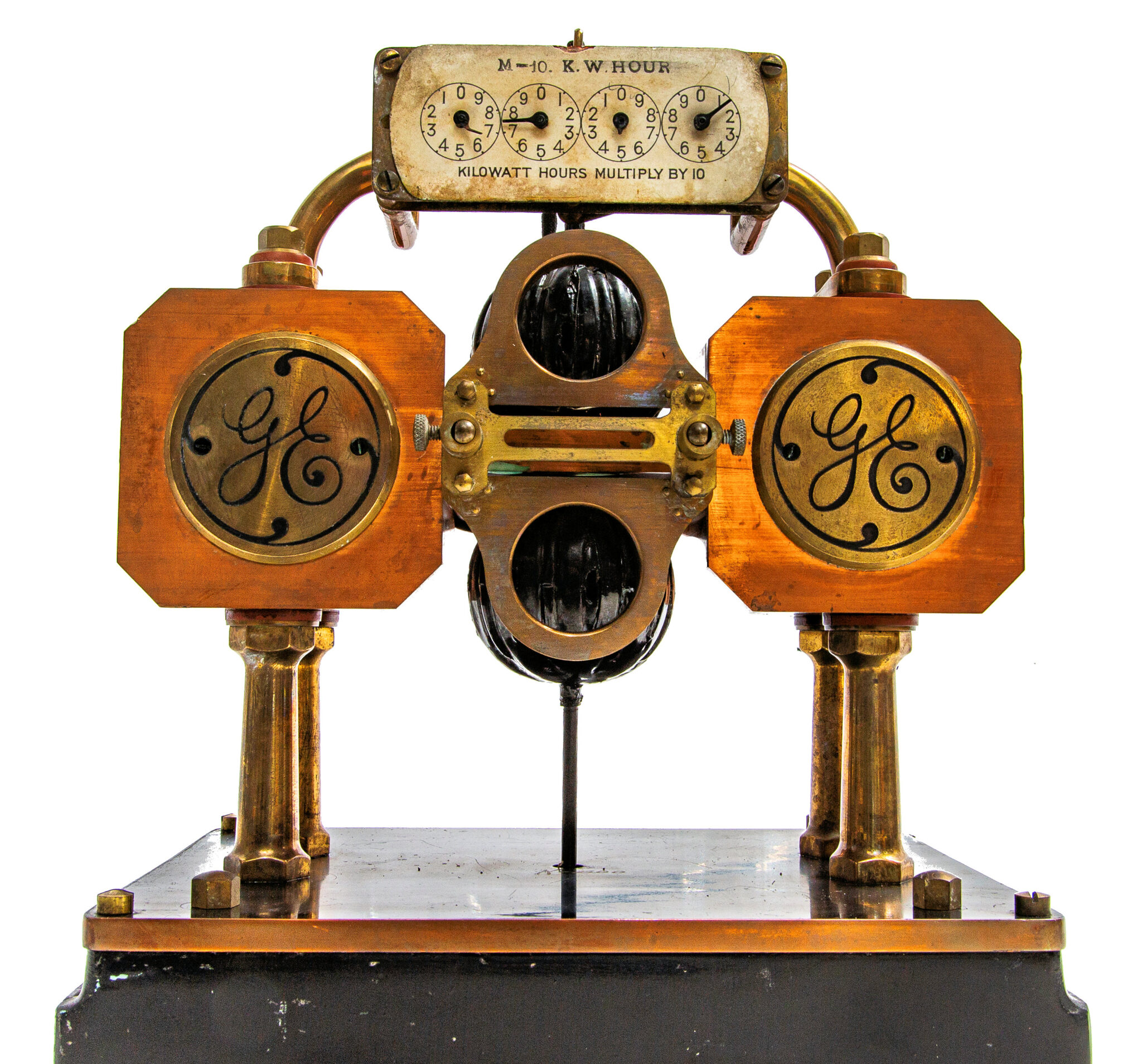
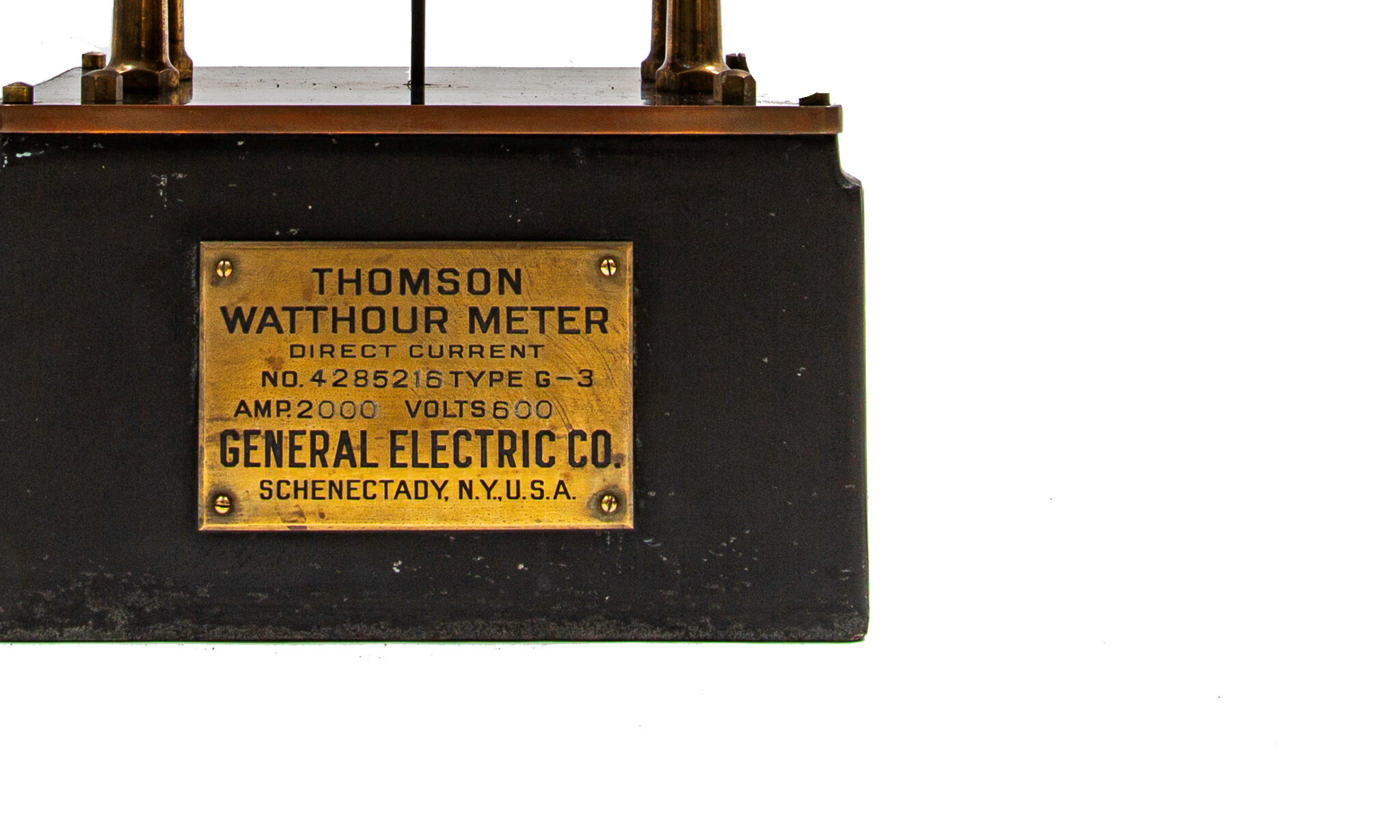
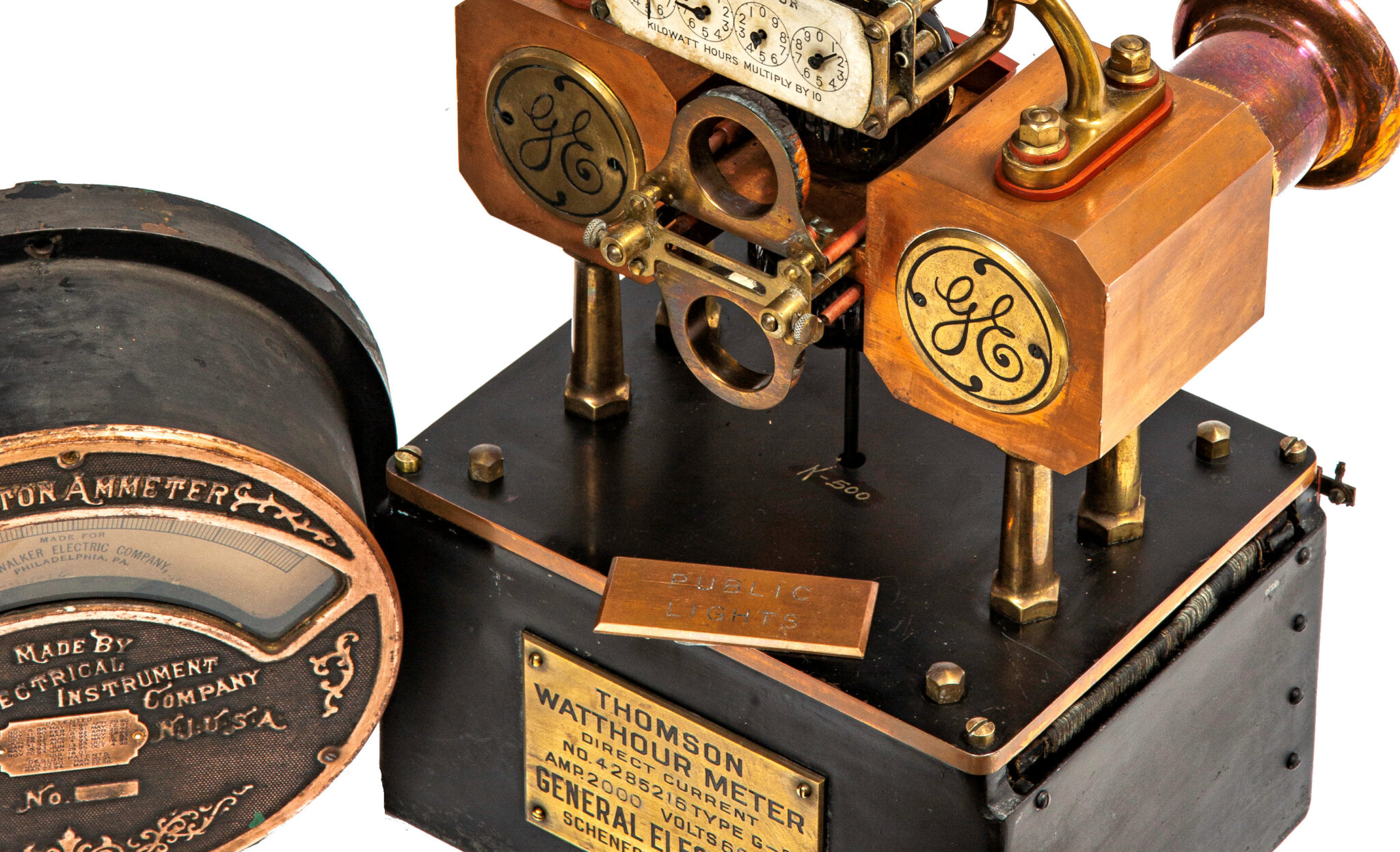
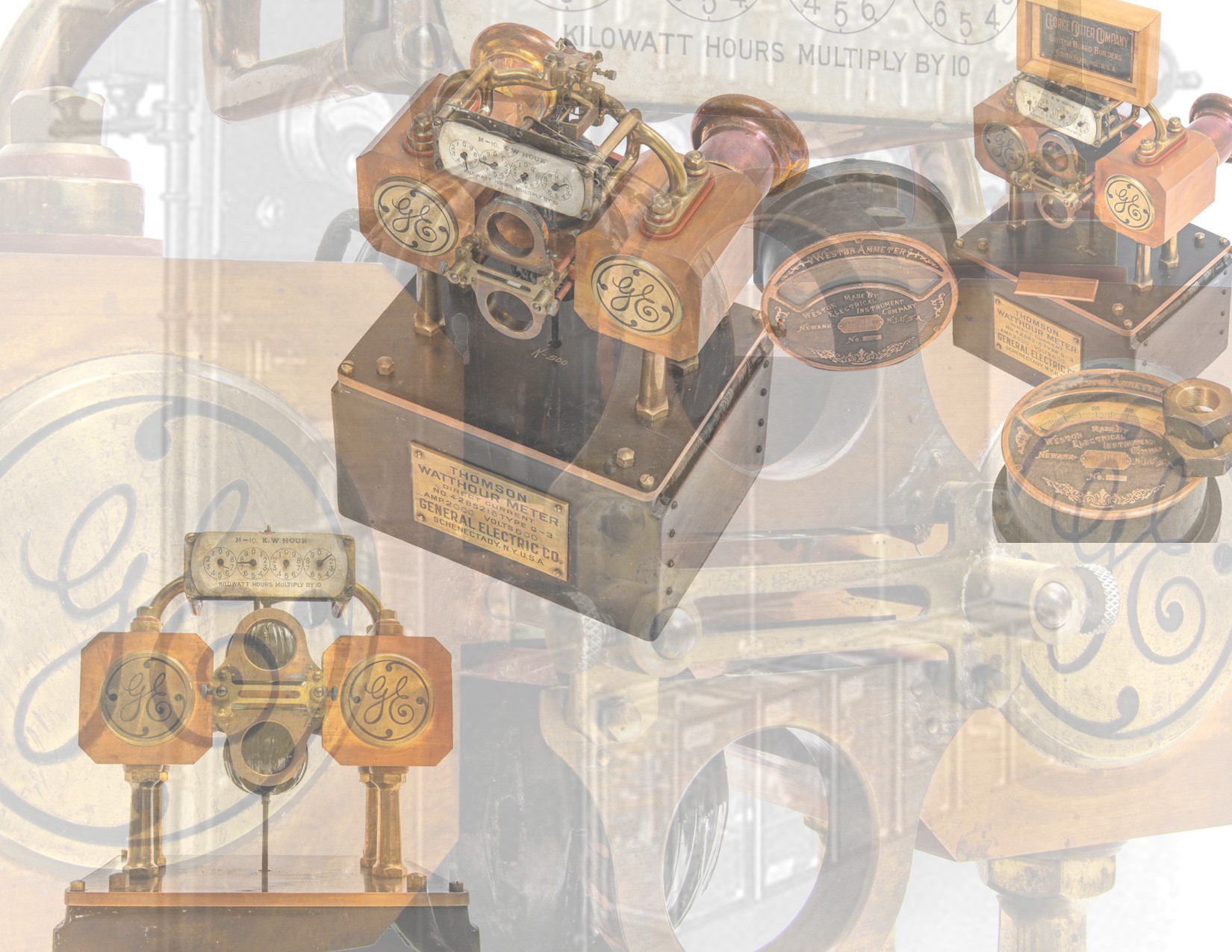
early 20th century 2000 amp direct current thomson watthour recording meter salvaged in the 1960s from open-ended basement switchboard in the pope building (h.g. hodgkins, 1903), located at 121-127 south plymouth court, chicago, il.
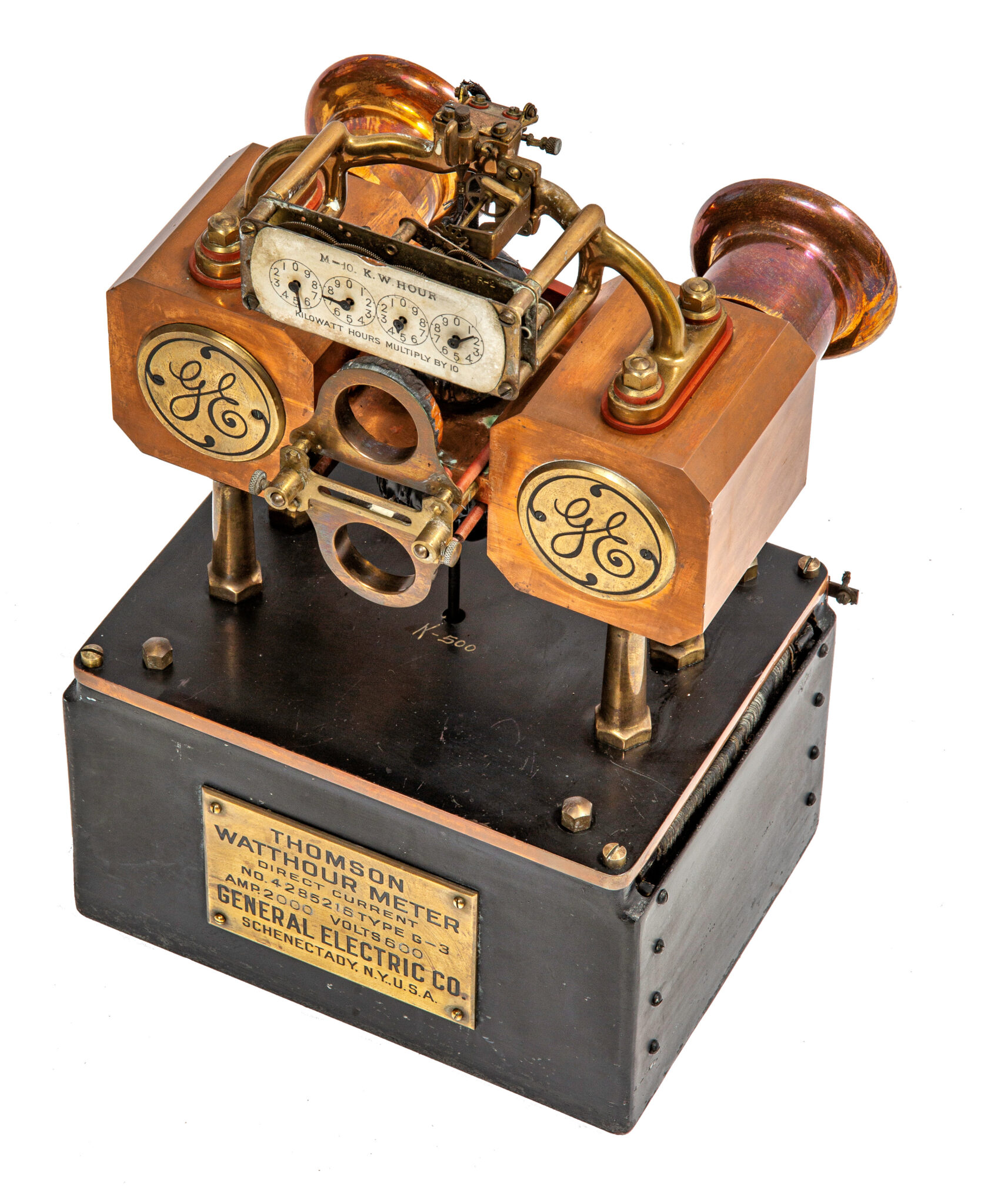
one of the electricians involved in dismantling the board claims pope was one of the last buildings in chicago to convert from dc to ac.
the well-maintained early 20th century “g3” electric station direct current watthour recording meter was designed and manufactured by the general electric company, schenectady, ny. during the late 19th century the measurement of electrical substation output was a constant effort on the part of meter engineers, which was necessary to keep pace with the rapidly multiplying requirements incident to progress. early meters had been looked upon as a “small affai,” until the late 1890’s when meters of enormous capacity with 10,000-16,000 amperes were becoming the most common meters in operation.

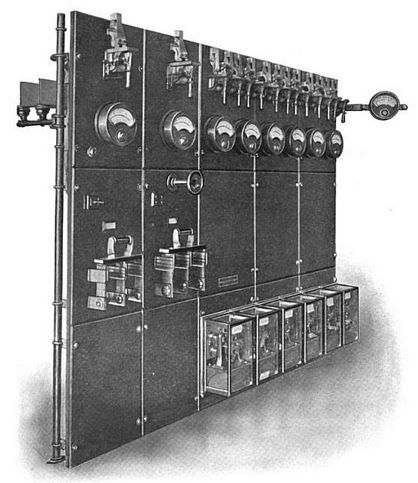
it was manifestly impossible to use any form of wound meter field for these very large capacities, so the thomson recording watt-meter had therefore to be greatly modified to meet the conditions of this very heavy service. the rapidly growing tendency to crowd the bus-bars close together and to bring the switchboard into the least possible space had rendered it imperative also that these large meters when intended for the most modern boards should be astatic.
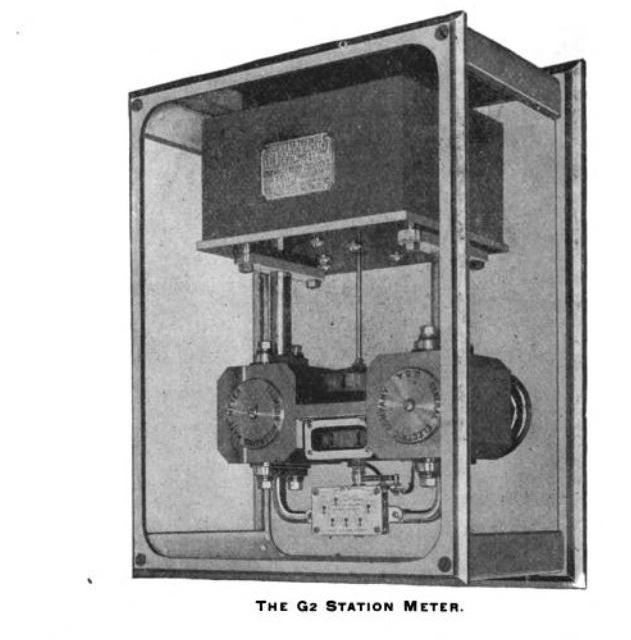
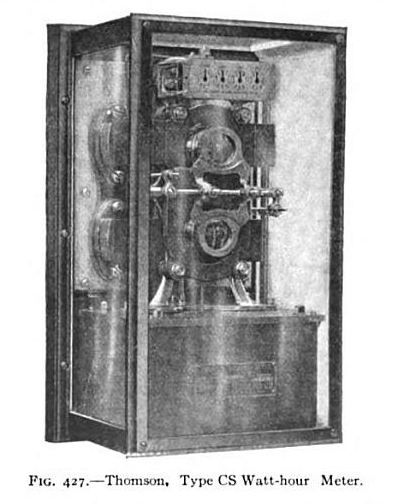
the outcome of those needs was meet with what was termed the g2 and/or g3 type of recording meter. the field of this meter consists of a single straight bar of forged copper, above and below which are situated two armatures, astatically arranged, and having a common commutator. the damping device is also double and astatic. the polarity of the upper and lower group of damping magnets being opposite. the damping mechanism is also enclosed within an iron shielding box which prevents the entrance of any stray leakage lines of an unbalancing character.
the complete g3 meter structure in this form is independent of local and stray fields installed directly in front of the heaviest buses without the introduction on any inaccuracy. loss of vitreous white enameled along the copper metal dial display is evident. the reinforced paneled glass housing was removed long ago.